What a false albacore is
Oh, the false albacore! If you've spent any time on the Massachusetts coast in the late summer or early fall, you've likely seen the frenzied boils on the water, felt the electric tug on a hook, or perhaps even confused this speedster with a bonito or a small tuna. These fish are a true enigma and a source of immense excitement for anglers, but their true nature, from identification to how to catch them, can be a bit of a mystery. This guide is here to unravel the secrets of the false albacore, helping you understand exactly what this incredible fish is and how to experience the sheer joy of battling one.
Unmasking the False Albacore: A True Speed Demon of the Shalllows
Let's cut through the confusion right away. The false albacore, often affectionately called an "albie" by those who pursue them, is one of the most exciting and challenging fish to encounter in Massachusetts waters. It's not a true tuna, nor is it a bonito, though it shares characteristics with both. What it is is a pure adrenaline rush, pound-for-pound one of the fastest and hardest-fighting fish you'll find in our coastal regions.
Physical Characteristics and Identification
Imagine a sleek, torpedo-shaped missile designed for pure speed, and you've got a false albacore. Their bodies are built for chasing down baitfish with incredible agility and acceleration. They typically range from about 3 to 15 pounds in Massachusetts, though bigger ones are certainly out there, capable of pulling more line than you'd believe for their size.
Here are the key features to help you identify a false albacore:
- Coloration: Their back is a striking dark blue or greenish-blue, fading to bright silver on their flanks and belly. This countershading helps them blend in both from above and below.
- Body Shape: Very robust and fusiform (spindle-shaped), built for hydrodynamic efficiency.
- Dorsal Fins: They have two dorsal fins, with the first being much taller than the second, and a series of small finlets (usually 7-9) running along their back toward the tail.
- Pectoral Fins: One of the most critical identification clues! The pectoral fins on a false albacore are relatively short and triangular, not extending much past the beginning of their first dorsal fin.
- Tail: A deeply forked, crescent-shaped tail, characteristic of fast-swimming pelagic fish.
- Unique Markings: Look closely at their flanks, just below the lateral line, behind the pectoral fin. False albacore almost always have distinct, wavy, broken lines or spots, often described as "vermiculations." These markings are a dead giveaway.
- Teeth: If you dare to inspect their mouth (carefully!), you'll find their teeth are very small, almost sandpaper-like, not the prominent, sharp teeth of a bonito.
Understanding these features is key to differentiating them from other species, especially when the fishing frenzy is on and you're trying to quickly identify your catch.
Distinguishing False Albacore from Bonito and Young Tuna
This is where the confusion often lies! False albacore, Atlantic bonito, and young bluefin tuna are all fast, pelagic fish that share similar habitats and often chase the same baitfish. They can even appear in the same "blitzes," making quick identification a challenge. However, there are clear distinctions:
- Atlantic Bonito: Bonito are probably the most commonly confused species with false albacore. They have a similar body shape and size. The primary difference is in their markings: bonito have distinct, straight, oblique dark stripes running along their back and upper sides, unlike the wavy, broken lines of an albie. Bonito also possess very sharp, conical teeth that are quite noticeable, whereas albie teeth are almost non-existent. Their meat is also generally lighter in color and firmer than an albie's. If you're wondering about the specifics, check out How to catch bonito off Cape Cod.
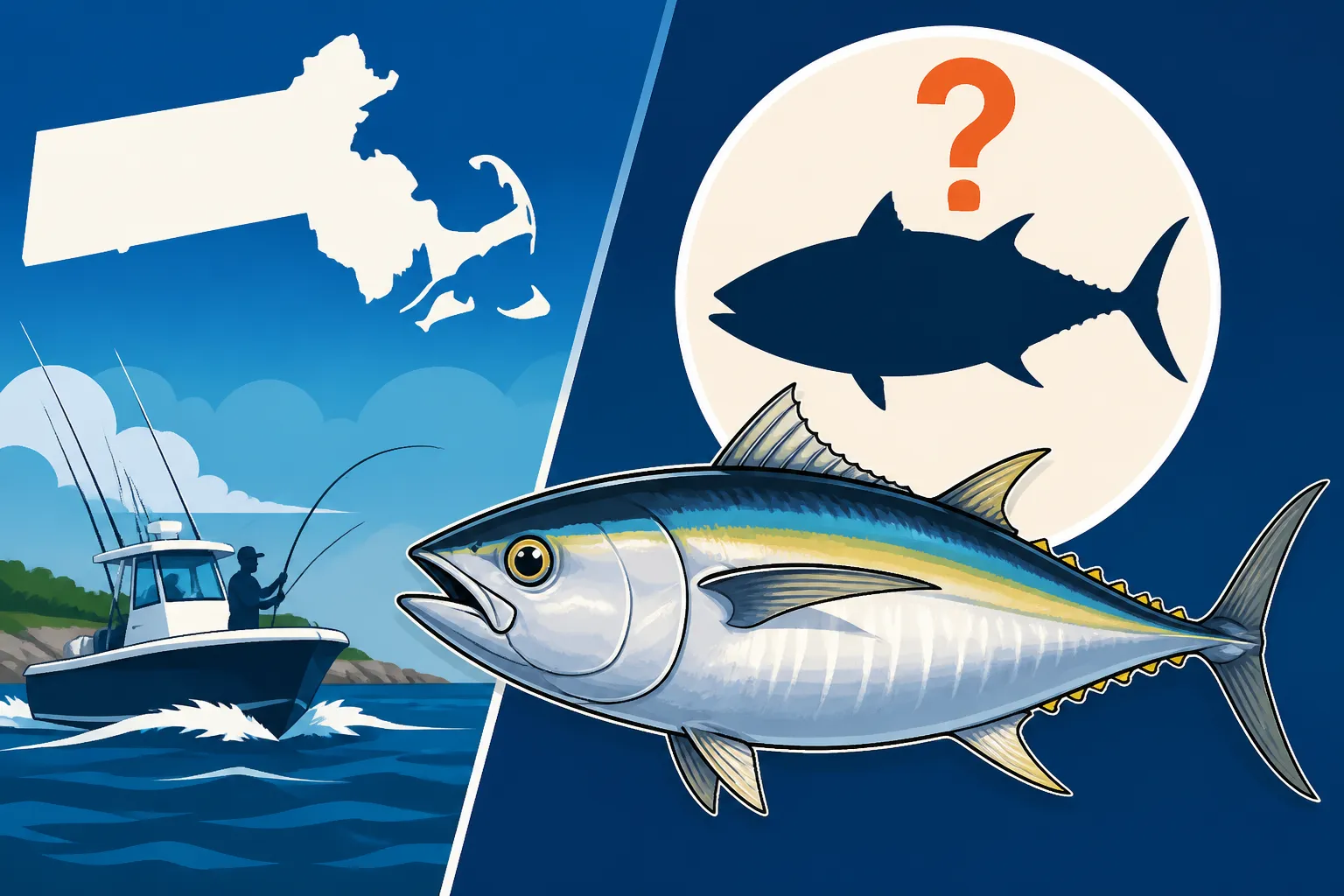
- Young Bluefin Tuna: While both are in the tuna family, a small bluefin tuna is a different beast entirely. Young bluefin have much longer pectoral fins that typically extend well past the front of their first dorsal fin, sometimes almost reaching their anal fin. Their body is generally much thicker and more robust for their length than an albie's, and they lack the distinct wavy patterns of the false albacore. Their coloration is often a deeper, darker blue/black on the back with a more uniform silver belly, without the bronze sheen you sometimes see on albies. The fight, while powerful for a bluefin, is generally more of a deep, sustained pull rather than the screaming, line-peeling runs of an albie.
- Skipjack Tuna: Less common in nearshore Massachusetts waters, but occasionally caught. Skipjack have very prominent dark longitudinal stripes on their belly, which neither false albacore nor bonito possess.
To make it easier, here's a quick comparison table:
| Characteristic | False Albacore (Little Tunny) | Atlantic Bonito | Young Bluefin Tuna |
|---|---|---|---|
| Scientific Name | Euthynnus alletteratus | Sarda sarda | Thunnus thynnus |
| Back Markings | Distinct, wavy, broken lines/spots below dorsal fin. | Straight, oblique dark stripes on upper sides/back. | Generally uniform dark blue/black. No distinct patterns. |
| Belly Markings | Clean, silvery. | Clean, silvery. | Clean, silvery. |
| Pectoral Fin | Short, does not extend past first dorsal fin. | Short, similar to albie. | Long, extends well past first dorsal fin. |
| Teeth | Very small, almost imperceptible. | Distinctly sharp, conical. | Small, conical. |
| Fight Style | Incredibly fast, screaming runs, relentless stamina. | Fast and strong, but often less sustained. | Powerful, deep-diving pulls. |
| Meat Quality | Dark, very oily. Best smoked or for specific preparations (e.g., sashimi if bled immediately). | Lighter, firmer than albie, but still dark. Good grilled or seared. | Prized, firm, red meat for sashimi and steaks. |
When you see a blitz and your reel starts screaming, knowing these differences can help you quickly identify your catch and manage your tackle appropriately. For a broader view of what you might encounter, check out Massachusetts Saltwater Fish Species.
The Seasonal Hunt: Where and When False Albacore Invade Massachusetts Waters
The arrival of false albacore in Massachusetts is a highly anticipated event, marking the transition from summer to fall. These fish are migratory, following baitfish and favorable water temperatures, making their presence a somewhat ephemeral but incredibly exciting phenomenon.
Prime Locations and Habitats
False albacore are coastal pelagic fish, meaning they live in the open ocean but often move into shallower, nearshore waters, particularly when pursuing bait. In Massachusetts, they are most reliably found around the major baitfish highways and structures.
- Cape Cod: This is ground zero for albie fishing in Massachusetts. The entire outer and southern coast of Cape Cod, especially areas like Monomoy, the rips around Chatham, and the shoals, can hold massive schools. The protected waters of Nantucket Sound and Buzzards Bay also see strong runs.
- Martha's Vineyard and Nantucket: These islands are legendary for their albie fishing. The rocky shores, rips, and shallow flats around the Elizabeth Islands, Cuttyhunk, and the main islands themselves become hotbeds of activity. The currents and abundant baitfish create perfect ambush points for these speedsters. You can explore more about these areas in Nantucket Sound and Martha's Vineyard Fishing Areas in Massachusetts.
- Buzzards Bay: The rocky coastline and numerous inlets of Buzzards Bay offer excellent habitat, especially where current meets structure.
- Rhode Island and Connecticut Borders: Often, the albie run starts to the south and pushes north, so areas closer to the state lines can be productive early in the season.
Look for areas with strong currents, rips, and plenty of baitfish. They love shallow, clear water where they can herd schools of peanut bunker, silversides, and mullet against structure or the surface. Keep an eye out for diving birds (terns, gulls) – a sure sign of bait being pushed to the surface, and often, albies beneath them. Fishing from shore, jetties, or small boats and kayaks are all popular and effective ways to target them in these areas. For a general overview of coastal spots, take a look at Best Saltwater Fishing Spots on Cape Cod, Massachusetts.
The Elusive "Albie Run" Season
The false albacore season, often referred to as the "albie run," is a relatively short but intense period that drives anglers into a frenzy.
- Timing: The run typically begins in late August and continues through September and October, sometimes even into early November if water temperatures remain mild. The peak is usually from mid-September to mid-October.
- Water Temperature: This is the primary driver for their migration. Albies prefer water temperatures generally above 65°F (around 18°C), and they will move out of the area as the water cools down. A strong cold front can shut down the bite quickly.
- Baitfish Presence: Their arrival and continued presence are entirely dependent on the availability of their food source. When schools of peanut bunker, silversides, sand eels, and mullet are abundant, the albies will be close behind. A scarcity of bait can make them scattered and difficult to find.
- Weather and Tides: Calm, sunny days with light winds are often ideal, as they make it easier to spot surface activity. Strong tides, particularly outgoing tides around inlets and rips, are excellent for concentrating bait and, therefore, albies.
It's truly a "run-and-gun" fishery, where anglers stay mobile, constantly scanning the horizon for signs of surface activity. The fish can appear and disappear in a matter of minutes, making quick reactions essential. Missing the albie run means missing some of the most exciting fishing Massachusetts has to offer. For more detailed insights into their arrival, you'll want to read Best time of year for false albacore fishing. The overall Massachusetts Saltwater Fishing Seasons article can also give you context on other species you might encounter.
The Thrill of the Chase: Why False Albacore Are So Prized
For many anglers, the false albacore isn't just another fish; it's an obsession. The pursuit of albies is less about filling a cooler and more about the exhilarating experience, the unmatched fight, and the sheer challenge they present.
The Unforgettable Fight: A Pound-for-Pound Champion
If you've never hooked a false albacore, prepare yourself. These fish are widely considered one of the hardest-fighting, fastest-running species you can encounter in temperate coastal waters, especially on light tackle.
- Initial Blitz: The strike itself is often violent and unexpected. Albies hit lures with incredible force, and before you even register what's happened, your reel will be screaming. The sound of a drag peeling off braid at an alarming rate is the signature music of an albie hookup.
- Blistering Runs: Their initial run is legendary. They can empty half your spool in seconds, pushing your gear to its limits. This isn't a long, drawn-out fight like a bottom-dweller, but a series of explosive, high-speed dashes.
- Relentless Stamina: Unlike some fish that make one strong run and then tire, albies are notorious for multiple, powerful runs. They don't give up easily, making every fish a hard-earned victory. You'll work for every inch of line you gain.
- Light Tackle Challenge: The challenge is amplified by the fact that you often need to use light tackle and small lures to match the bait and avoid spooking these wary fish. This means every fight is a test of your knot strength, drag setting, and angling skill. Many compare them to small tuna for their fighting prowess, and it's easy to see why they earn the nickname "little tunny."
This combination of speed, power, and tenacity is what makes false albacore so addictive. It's an unparalleled experience that leaves your arms tired and your heart pounding.
Catch and Release Ethos and Culinary Notes
Given their incredible fighting ability, false albacore are overwhelmingly pursued as a sportfish.
- Catch and Release: The vast majority of anglers practice catch and release with albies. This is partly due to their sporting nature and partly due to their culinary reputation. Responsible handling is crucial to ensure their survival after release. Use circle hooks if fishing with bait (though lures are more common for albies), minimize air time, and revive them gently if they seem lethargic.
- Culinary Considerations: False albacore meat is very dark, oily, and has a strong, distinct flavor that many find unappetizing if prepared simply. It's not like the delicate white flesh of a cod or the milder taste of striped bass. For those who do eat them, specific preparations are key. They are often bled immediately, iced thoroughly, and then smoked, canned, or used in preparations like sashimi where the strong flavor is appreciated. However, if you're looking for dinner, you might be better off targeting other species. For general catch limits and regulations that apply to all species, including potential future changes to false albacore, refer to Massachusetts Recreational Fishing Rules and Bag Limits. While there's typically no bag limit on false albacore, it's always good practice to stay informed.
Ultimately, targeting false albacore is about the adventure, the hunt, and the raw power of the fish at the end of your line. It's a high-octane fishery that rewards skill, patience, and a bit of luck.
Mastering the Art of Albie Fishing: Gear and Techniques
So, you're ready to chase these speed demons? Great! But be warned: albies are notorious for being incredibly picky and challenging. They have excellent eyesight, are easily spooked, and can be frustratingly selective about what they'll hit. Having the right gear and refining your techniques are paramount to success.
Essential Rod, Reel, and Line Setup
Matching your tackle to the fish is critical, especially when you're dealing with a powerful species that demands both finesse and strength.
- Rods: A fast-action spinning rod, typically 7 to 8.5 feet long, in a medium-light to medium power rating, is ideal. This length gives you casting distance, which is often crucial for reaching breaking fish without spooking them, and the fast action provides the sensitivity for light lures and the backbone to fight strong fish. Brands like St. Croix, Tsunami, or even some of the more affordable options available on Amazon can offer great performance for the money.
- Reels: A high-quality spinning reel in the 2500 to 4000 series (like a Shimano Stradic or a Penn Battle) is perfect. Look for a reel with a smooth, reliable drag system, as it will be tested repeatedly. A high retrieve rate (often indicated by a gear ratio like 6.2:1 or higher) is also a significant advantage, allowing you to crank lures in at the blistering speeds albies demand.
- Line: This is perhaps the most crucial component. You'll want to spool your reel with 10 to 20-pound test braided line. Braided line offers superior casting distance, incredible strength-to-diameter ratio, and zero stretch for maximum sensitivity. The thin diameter also cuts through the wind and water better, helping your lure sink faster and retrieve quicker.
- Leader: This is where stealth comes in. Albies are incredibly line-shy, especially in clear water. You must use a fluorocarbon leader. A good starting point is 15 to 25-pound test fluorocarbon, about 2-3 feet long. Connect your braid to your fluorocarbon leader with a strong, low-profile knot like an FG knot or an Alberto knot. These knots retain high breaking strength and pass through rod guides smoothly. For top-tier fluorocarbon, you can find excellent brands like Seaguar or Berkeley Vanish on Amazon. Don't skimp on your leader; it's often the difference between a hookup and a frustrating refusal.
Having your tackle dialed in before you even leave the dock will save you a lot of heartache. These fish expose any weaknesses in your setup.
Lures and Presentations That Entice
Albies are often keyed into very specific bait sizes and profiles. "Matching the hatch" is paramount.
- Small Metal Jigs: These are the bread and butter of albie fishing. Think slender, aerodynamic jigs in the 1/2 ounce to 1.5 ounce range. Epoxy jigs (like those from Hogy, Game On!, or Albie Snax), Deadly Dick lures, and Kastmaster spoons are all highly effective. Their weight allows for long casts, and their shape provides a fast, erratic retrieve that mimics fleeing baitfish. Silver, white, olive, and pink are consistently good color choices. You'll find a wide selection of these versatile lures on Amazon, often in multi-packs which are great for experimenting. Many of the same lures that work for albies can also be effective for striped bass, so checking out Best Lures for Striped Bass in Massachusetts can give you additional ideas.
- Soft Plastics: Small, skinny soft plastics (2-4 inches) on light jig heads (1/4 to 3/4 ounce) can be incredibly effective, especially when albies are feeding on very small bait like silversides or sand eels. Paddle tails or slender 'fluke'-style soft plastics are popular. Rigging them weedless can also be an advantage in grassy areas.
- Topwater Lures: While less common than subsurface lures, small poppers or "walk-the-dog" style baits can be absolutely electrifying when albies are aggressively feeding on the surface. The visual strike is unforgettable. Ensure they are small, as albies rarely hit large topwater presentations.
The Retrieve is Key: This cannot be stressed enough – retrieve your lure fast. Faster than you think you need to. Albies chase down their prey, and a slow retrieve looks unnatural to them. Reel as fast as you possibly can, often adding twitches and pauses to mimic a panicked baitfish. If you think you're reeling too fast, reel faster!
Reading the Water and Effective Techniques
Albie fishing is as much about observation and mobility as it is about casting and retrieving.
- Spotting Activity: Keep your eyes peeled for signs of feeding fish:
- Diving Birds: Terns and gulls are often the first indicators. When they're diving, it means baitfish are being pushed to the surface by predators from below.
- Surface Busts: Look for splashes, boils, and ripples on the surface. Sometimes it's a solid boil of fish, other times it's just subtle "nervous water" indicating bait being harassed.
- Baitfish Jumping: Seeing schools of peanut bunker or silversides leaping out of the water is a sure sign of predators below.
- The "Run-and-Gun" Approach: Albies are constantly moving. If you see a bust, motor or paddle quickly and quietly to within casting distance, make a few casts, and if no hookup, move on to the next sign of activity. Don't linger too long in a dead zone. From a kayak, this means quick paddling; Best Kayak Fishing Spots on Cape Cod can offer locations well-suited for this mobile approach.
- Don't Spook the Fish: This is critical. False albacore are incredibly wary. Approach quietly, cast around the edges of a blitz first, and avoid running your motor directly through schooling fish. Long casts are often necessary.
- Fan Casting: When you see a blitz, don't just cast straight into it. Fan cast, covering the area around and ahead of the moving school. This increases your chances of intercepting fish that might be on the periphery.
- Dealing with "Boat-Shy" or "Finicky" Fish: Sometimes, albies will be boiling all around you, but won't touch a thing. This is the ultimate frustration. Try downsizing your lure, switching colors, or using a longer, lighter fluorocarbon leader. Sometimes a different retrieve speed or angle is all it takes. Persistence and experimentation are your best friends. For more specialized techniques, especially around challenging areas, you might find valuable tips in How to catch false albacore near Chatham.
Fishing for false albacore is not for the faint of heart, but the rewards are immense. The sheer challenge and the unparalleled fight make it one of Massachusetts' most sought-after angling experiences. If you're ready for the ultimate light tackle battle, the albie run is calling your name.
Disclaimer
This article is for general informational purposes only and does not constitute professional advice. Laws, prices and regulations vary by location and change over time. Consult a qualified professional for guidance on your specific situation.