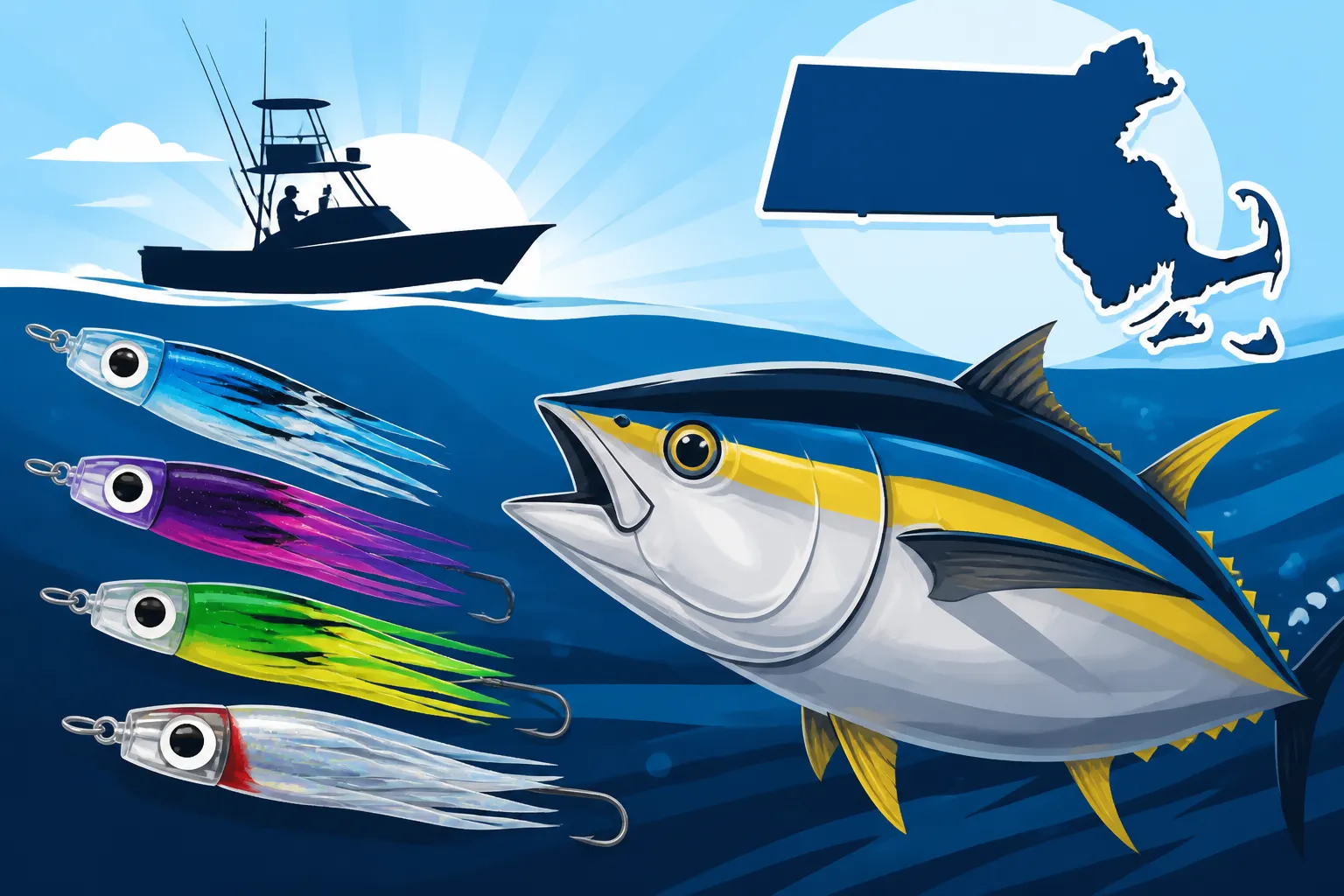
Best trolling lures for tuna off Massachusetts
Landing a massive tuna off the Massachusetts coast is an angler's dream, but let's be real, these powerful fish aren't just going to jump into your boat. They're intelligent, fast, and demand that you bring your A-game, especially when it comes to lure selection for trolling. Many seasoned captains and recreational anglers alike grapple with the endless choices, wondering which lures truly make a difference in our diverse waters. This comprehensive guide will cut through the noise, detailing the most effective trolling lures for bluefin and other tuna species that frequent the rich fishing grounds of Massachusetts, helping you gear up for that unforgettable offshore battle.
Understanding Tuna Behavior and Trolling Basics in Massachusetts Waters
Before we dive into the specific lures, it's crucial to grasp a bit about tuna behavior in our local waters and the fundamental principles of trolling. Bluefin tuna are the kings of the North Atlantic, and they are what most anglers primarily target off Massachusetts. However, further offshore, particularly in the warmer waters of the Canyons, you might also encounter yellowfin tuna, especially during the peak summer months. Both species are highly migratory and follow baitfish concentrations, which means understanding their diet is paramount to lure selection.
Tuna in Massachusetts primarily feed on a smorgasbord of forage, including mackerel, herring, sand eels, squid, butterfish, and even smaller bonito or false albacore. Their diet dictates the size, color, and action of the lures that will prove most effective. Trolling is a highly effective method because it allows you to cover vast expanses of water, presenting multiple lures simultaneously at varying depths and distances, mimicking a school of distressed baitfish. Key offshore fishing grounds include the renowned Stellwagen Bank, various ledges and humps east of Cape Cod, and, for the adventurous, the deeper canyons far southeast of Nantucket. Successfully fishing these areas requires not just the right lures, but also keen observation of sea conditions, bird activity, and bait schools on your sonar.
Top Trolling Lures for Bluefin Tuna in Massachusetts
When it comes to enticing these pelagic powerhouses, a few categories of trolling lures consistently outperform the rest. Each has its place in a well-rounded spread, designed to trigger the predatory instincts of a hungry tuna.
Skirted Lures and Baits
Skirted lures are perhaps the most iconic and versatile tuna trolling baits. They consist of a weighted head, often made of lead or resin, covered by a colorful plastic skirt that creates a pulsating, lifelike action in the water. Many anglers swear by a combination of a skirted lure over natural bait, particularly ballyhoo.
- Green Machines: These are a legendary choice, especially for bluefin. Typically a simple, bullet-headed green lure with a translucent skirt, they're deadly when tuna are feeding on small baitfish or squid. They're often run in spreader bars or daisy chains to amplify their appeal.
- Chugger-style Skirts: Lures like the Iland Lure series (e.g., Iland Smasher, Iland Express) or offerings from Joe Shute Lures are fantastic. These lures have concave faces that create significant commotion, splashing, and a smoke trail as they're trolled. Paired with a properly rigged ballyhoo, they're incredibly effective. Common color patterns include blue/white, green/yellow, and pink/white. The "chugging" action simulates a frantic baitfish trying to escape, drawing strikes from aggressive tuna.
- Bullet Heads: These lures are designed for speed and stability. They run clean and straight, even at higher trolling speeds, making them excellent choices for the "shotgun" position way back in the spread. They typically don't create as much surface commotion as chuggers but are great for mimicking fleeing baitfish or small squid.
Rigging these lures is critical. For ballyhoo, ensure it's straight, swimming naturally, and protected by a robust skirt. Using high-quality leaders is non-negotiable; many anglers opt for fluorocarbon in the 80-150 lb range, depending on the target size of tuna and water clarity.
Spreader Bars and Daisy Chains
If you want to create the illusion of an entire school of baitfish behind your boat, spreader bars and daisy chains are your best friends. These aren't single lures but rather entire "rigs" designed to maximize your chances by presenting multiple teasers that lead to one or more "stinger" baits equipped with hooks.
- Spreader Bars: These are T-shaped bars, usually made of stainless steel or heavy plastic, with multiple "teaser" squids or lures running off dropper lines. At the end of the main line, a "stinger" bait, often a skirted lure or natural ballyhoo, is rigged with a hook. The whole setup looks like a frenzied school of bait to a hungry tuna. Squid spreader bars, mimicking a school of squid, are particularly popular and effective. Some bars also incorporate small "birds" or floats to create more splash and commotion on the surface.
- Daisy Chains: Similar to spreader bars but simpler, a daisy chain is a series of teasers (squids, small lures, or plastic birds) strung together in a line, with the last one being the hooked bait. They're lighter and easier to deploy than spreader bars but still create an enticing "school" effect.
These setups are particularly effective because tuna are often opportunistic predators, drawn to the largest concentration of what appears to be an easy meal. The visual footprint of a well-rigged spreader bar can cover a significant amount of water, drawing fish up from deeper thermoclines. Finding durable and effective spreader bars or the components to build your own is easy online, with many options available on platforms like Amazon.
Diving Plugs
While many tuna trolling strategies focus on surface action, there are times when tuna are holding deeper, particularly when targeting yellowfin in the canyons or when bluefin are gorging on squid or sand eels beneath the surface. This is where diving plugs come into their own.
- Large Diving Plugs: Lures like the Rapala X-Rap Magnum series or Nomad Design's deep-diving lures are excellent choices. These hard-bodied lures feature large lips that allow them to dive to specific depths, typically from 15 to 50 feet or more, depending on the model and trolling speed. Their erratic, wobbling action is highly effective at mimicking larger baitfish.
- Color and Size: Choose natural baitfish patterns such as mackerel, bunker, or squid imitations. Size should be appropriate for the target species – larger plugs for larger tuna.
Diving plugs are fantastic for fishing specific depths, creating a layer of attraction below the surface. They run true and are typically very durable, standing up to multiple tuna encounters. They can be particularly deadly when tuna are feeding on smaller bait that is deeper in the water column.
Cedar Plugs
The cedar plug is a timeless classic in the tuna fishing world, and for good reason. It's deceptively simple yet incredibly effective.
- Description and Action: Cedar plugs are typically made from cedar wood, cylindrical in shape, with a hole drilled through the middle for the leader and a weighted head. Their unique action is a wild, erratic darting and skipping motion, as if a small baitfish is panicking.
- Effectiveness: They are particularly deadly for schoolie bluefin tuna but can also entice larger fish. Their natural wood finish often works wonders, though models with painted heads (red, green, blue) are also popular. They're often fished far back in the spread as a "shotgun" bait or as part of a daisy chain.
- Durability: Made of wood, they are incredibly tough and can withstand countless strikes.
The simplicity and effectiveness of the cedar plug make it a must-have in any tuna angler's tackle box. It's a reliable workhorse that has been catching tuna for generations, proving that sometimes, less is more.
Key Considerations When Choosing and Rigging Tuna Trolling Lures
Selecting the right lure is only half the battle; how you rig and deploy it is just as crucial. Attention to detail can mean the difference between an empty fish box and a freezer full of tuna steaks.
Lure Size and Color Matching the Hatch
One of the most important rules in fishing is "match the hatch." This means choosing lures that imitate the size, shape, and color of the prevalent baitfish in the area you're fishing. For example, if tuna are feeding on small sand eels, a large skirted lure might be ignored, while a cedar plug or a small green machine could be a game-changer. Conversely, if they're crashing on large mackerel, you'll want a bigger profile lure.
Water clarity also plays a role in color selection. In clear, blue offshore water, natural colors (blues, greens, silvers) often excel. In murkier or greener water, brighter, more contrasting colors (pinks, oranges, chartreuse) might get more attention. Many anglers have their favorite "magic" color, but being adaptable is key.
Rigging for Battle
Tuna are powerful fish, and any weakness in your rigging will be exposed.
- Leaders: Always use heavy-duty leaders, typically fluorocarbon, which is nearly invisible underwater and highly abrasion-resistant. Leader strength usually ranges from 80 lb for smaller schoolie bluefin up to 200 lb or more for giants or yellowfin in the canyons.
- Hooks: Use high-quality, sharp, heavy-gauge hooks. Many charters and conservation-minded anglers prefer circle hooks, which typically result in a hook-up in the corner of the fish's mouth, making for easier release and better survival rates for non-keepers. J-hooks are also effective but require a more direct hook set.
- Connections: All connections – swivels, snaps, crimps – must be incredibly strong and properly made. Inferior crimps or weak knots are common failure points. Invest in good quality crimping tools and sleeves, and practice your knots. Remember, a chain is only as strong as its weakest link. For reliable rigging components, you can often find a wide selection of crimps, swivels, and leader material on Amazon.
The Art of the Spread and Trolling Speed
A well-organized trolling spread is vital to prevent tangles and maximize your chances. You want to present lures at different distances behind the boat and, if possible, at varying depths.
- Trolling Speed: Generally, a trolling speed of 5-8 knots is effective for tuna. However, conditions matter. You'll need to adjust based on sea state (rougher water often means slower speeds), current, and how the lures are swimming. Watch your lures; they should be working naturally, not tumbling or skipping excessively.
- The Spread Layout:
- Flat Lines: Lures run closest to the boat, often from rod holders mounted on the gunwales.
- Outriggers: These extend lines out to the side, allowing lures to be trolled further from the boat's wake, covering more width.
- Downriggers/Planer Boards: These tools can take lures deeper or wider than the boat, respectively, adding another dimension to your spread.
- Shotgun/Center Rigger: A lure run far back, directly in the center of the wake. This is often where a cedar plug or a smaller skirted lure shines.
- Prop Wash: Some lures are designed to run effectively in the turbulent water directly behind the boat.
A common tactic is to use a combination of skirted baits on the flat lines and outriggers, a spreader bar or two further back, and a cedar plug or similar smaller lure as the "shotgun" bait. This creates a full "school" effect that tuna find irresistible. Keep an eye on your Massachusetts Recreational Fishing Rules and Bag Limits for tuna, as these can influence your strategy.
Seasonal Strategies and Advanced Trolling Tips for Massachusetts Tuna
Tuna fishing in Massachusetts is a dynamic sport, heavily influenced by the seasons and the ever-changing ocean environment. Adapting your lure choices and techniques to the time of year can significantly boost your success.
Seasonal Strategies
- Early Season (June – Mid-July): This period often sees the arrival of "schoolie" bluefin tuna (fish under 73 inches) closer to shore, particularly around Stellwagen Bank and off Cape Cod. They're often feeding on sand eels and mackerel. Smaller lures like cedar plugs, small green machines, and smaller skirted lures (e.g., 6-inch squids on a daisy chain) are excellent choices. Trolling speeds might be slightly faster to imitate fleeing bait. For typical start dates, refer to information on the Bluefin Tuna Charter Season Out of Boston, Massachusetts.
- Mid-Season (Mid-July – September): As the summer progresses, larger bluefin move in, and the opportunity for yellowfin tuna opens up further offshore in the canyons. This is when you'll want to deploy a more diverse spread, including larger skirted lures, big spreader bars, and perhaps deep-diving plugs. Ballyhoo rigged under colorful skirts become particularly effective. This is often the Best Month for Bluefin Tuna Charters off Massachusetts as the action heats up.
- Late Season (October – November): This can be prime time for "giant" bluefin tuna, especially off the Outer Cape and further offshore. The fish are often bulking up for migration, feeding aggressively on larger baits like mackerel and herring. Your lure selection should reflect this, with larger skirted baits and heavy-duty spreader bars. This period often requires heavy gear and dedicated effort to land a true trophy. Knowing the broader Massachusetts Saltwater Fishing Seasons helps plan these late-season pushes.
Advanced Trolling Tips
- Reading the Water: Beyond just watching your electronics, look for visual cues. Diving birds (gannets, shearwaters, terns) are often a dead giveaway for baitfish being pushed to the surface by feeding tuna. Whales and dolphins also feed on similar prey and can indicate the presence of bait. Keep an eye out for temperature breaks on your electronics or through online sea surface temperature charts – tuna often congregate along these fronts. The Best Fishing Spots in Massachusetts for tuna are often identified by these very signs.
- Currents and Tides: Strong currents can significantly affect your lure presentation. Troll with or against the current, not directly across it, to ensure your lures swim naturally. Tuna often position themselves facing into the current, ambushing bait as it drifts by.
- Electronics Mastery: Your fishfinder/sonar is your most valuable tool. Learn to distinguish bait schools from tuna marks. Sometimes, if you mark tuna holding deeper, you might consider methods like How to Jig for Bluefin Tuna Near Cape Cod in conjunction with trolling, or deploy a diving plug to reach them.
- Constant Maintenance: Offshore fishing is brutal on gear. Routinely check your lines, leaders, knots, and hooks for abrasion, nicks, or dullness. Saltwater corrodes quickly, so rinse all your gear thoroughly after each trip. Keeping a spare supply of pre-rigged leaders, hooks, and even replacement skirts for your favorite lures can save a trip. Having extra rigging supplies on hand, easily purchased from retailers like Amazon, is a smart move.
- Vary Your Spread: Don't be afraid to experiment. Change lure colors, sizes, and positions until you find what the tuna are responding to on a given day. Sometimes a single cedar plug running way back will outfish an elaborate spreader bar.
Remember that Bluefin Tuna Fishing off Massachusetts is a challenging but incredibly rewarding endeavor. Persistence, attention to detail, and a willingness to learn are just as important as the lures you choose. And always, always consult the latest Massachusetts Recreational Fishing Rules and Bag Limits before you head out, and for specific age requirements for permits, check out the information on Massachusetts Saltwater Permit Age Requirements.
| Lure Type | Primary Target Tuna | Trolling Speed Range (Knots) | Best Conditions | Pros | Cons |
|---|---|---|---|---|---|
| Skirted Lures | Bluefin, Yellowfin | 5-8 | Versatile for many conditions and bait types. | Highly customizable, lifelike action. | Can tangle if not rigged properly. |
| Spreader Bars | Bluefin (especially schoolies and larger fish) | 5-7 | When tuna are feeding on large bait schools. | Creates a massive visual footprint, very effective. | Bulky, more complex to deploy and retrieve. |
| Diving Plugs | Deeper-holding Bluefin, Yellowfin (often in canyons) | 6-9 | When tuna are deeper, or for fast trolling. | Reaches specific depths, stable at speed. | Less surface commotion, limited erratic action. |
| Cedar Plugs | Schoolie Bluefin, smaller Yellowfin | 5-10 | Fast trolling, mixed spread, shotgun position. | Durable, simple, classic erratic action. | Smaller profile, less flash than other lures. |
Disclaimer
The information provided in this guide is for general informational purposes only and is not intended as legal advice. Fishing regulations, seasons, and bag limits in Massachusetts can change frequently. Always consult the most current regulations published by the Massachusetts Division of Marine Fisheries or MassWildlife before embarking on any fishing trip. Adherence to all local, state, and federal laws is the sole responsibility of the angler.