What a chain pickerel looks like
You’ve just hooked into something long, slender, and absolutely packed with teeth in a Massachusetts pond, and as it thrashes at the surface, you find yourself asking, "What is this thing?" For many freshwater anglers in our great state, that moment of confusion often comes with the chain pickerel. This guide is here to clear up that mystery, helping you confidently identify this feisty, often misunderstood freshwater predator the next time it strikes your lure.
The Distinctive Look of a Massachusetts Chain Pickerel
The chain pickerel (scientifically known as Esox niger) is a classic sight in many Massachusetts freshwater bodies. While its elongated, predatory form might make you think of its larger cousins, the northern pike or muskellunge, the pickerel has its own unique charm and identifying marks. Knowing these key features isn't just about showing off your fish ID skills; it's essential for responsible angling and understanding the species you're encountering.
Signature Chain-Link Pattern and Greenish Hue
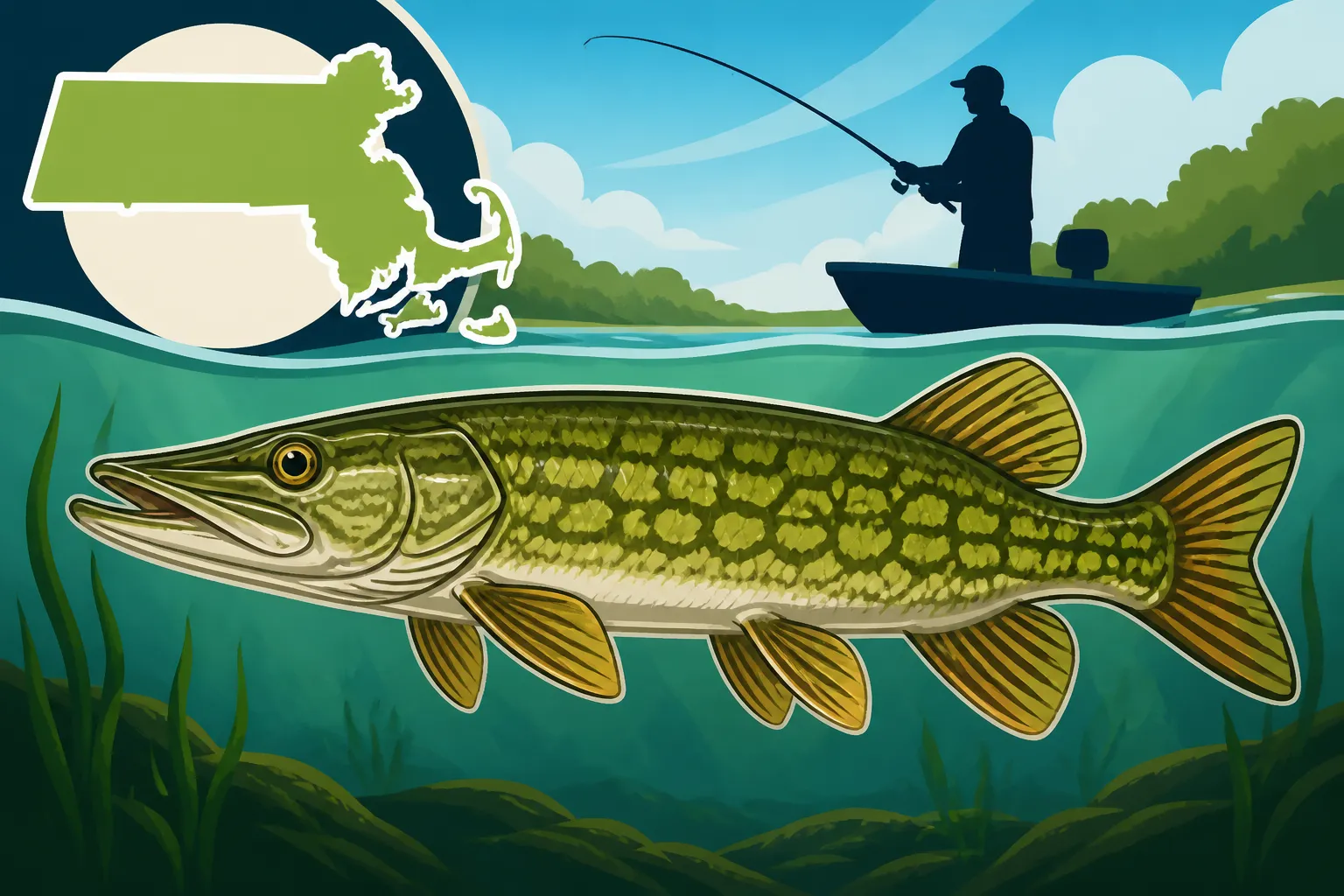
When you first lay eyes on a chain pickerel, its namesake pattern is usually the most striking feature. Picture a network of dark, interconnected, chain-like markings woven across its lighter, typically olive-green to yellowish-green flanks. This intricate design is remarkably consistent from fish to fish, though the intensity of the colors can vary based on the water clarity and the fish's specific habitat. The back of the pickerel will often be a darker olive or brownish-green, fading smoothly down its sides into that distinctive chain pattern, and finally lightening to a creamy white or pale yellow belly.
These markings are not just beautiful; they’re incredibly effective camouflage, allowing the pickerel to blend seamlessly into the vegetated shallows where it loves to ambush prey. The scales themselves are quite small and cover the entire body, giving it a sleek, streamlined appearance perfect for darting through weeds. Sometimes, anglers new to the species might mistake a general greenish tint for a different fish, but once you train your eye for that specific chain-link pattern, it becomes unmistakable.
Head and Jaw Features of a True Predator
A chain pickerel’s head is as distinctive as its body, perfectly adapted for its predatory lifestyle. It boasts a long, flattened, and somewhat duckbill-shaped snout. This broad, shovel-like mouth is lined with numerous sharp, needle-like teeth, capable of seizing and holding onto slippery prey. Be very careful when handling these fish; a pair of long-nosed pliers is an absolute must for safe hook removal, something you can easily find on Amazon.
One of the most crucial identification markers lies on its head: both the gill covers and the entire cheek area are fully scaled. This is a key differentiator from its larger relatives, which we'll discuss shortly. Look closely at the area behind the eye and down towards the gill plate; if it's covered in scales, you're almost certainly looking at a pickerel. Another consistent feature is a prominent dark, often vertical, bar or "teardrop" mark located directly beneath the eye. This mark helps break up the outline of the eye, further enhancing its camouflage. The eyes themselves are typically yellowish-golden and set high on its head, giving it excellent visibility for spotting prey.
Fin Placement and Body Shape
Beyond the head and body pattern, the overall body shape and fin placement offer more clues. The chain pickerel has an elongated, cylindrical, or torpedo-shaped body, built for sudden bursts of speed. Its single dorsal fin is positioned very far back on its body, almost directly above its anal fin. This posterior placement of fins, along with a powerful tail, allows for rapid acceleration from a standstill, enabling it to ambush unsuspecting fish or frogs hiding in the weeds.
The fins themselves typically have a yellowish-orange hue, especially noticeable on the pectoral, pelvic, and anal fins. The caudal (tail) fin is usually forked. In terms of size, most chain pickerel caught in Massachusetts range from 15 to 22 inches, though larger specimens pushing 2 to 3 feet can certainly be found. While they don’t reach the gargantuan sizes of northern pike or musky, a two-foot pickerel is still a formidable catch and can provide a thrilling fight on light tackle. Anglers exploring Massachusetts Freshwater Fish Species will often find the pickerel to be one of the more common predatory fish encountered.
Telling Chain Pickerel Apart from Their Cousins
One of the most common challenges for Massachusetts anglers is distinguishing between the chain pickerel and other members of the pike family, especially the northern pike and the muskellunge. While they share a similar body plan and predatory nature, a few key details will help you tell them apart with confidence. Misidentification can sometimes lead to inadvertently breaking regulations, so paying attention to these nuances is vital.
Chain Pickerel vs. Northern Pike
The northern pike (Esox lucius) is arguably the most frequently confused species with the chain pickerel, particularly by anglers who haven't caught many of either. Both are long, toothy, and dwell in similar freshwater environments. However, the differences are quite distinct once you know what to look for.
The primary distinguishing feature lies on the head. Remember how we mentioned the chain pickerel has fully scaled cheeks and gill covers? Well, the northern pike does not. A northern pike has fully scaled cheeks but only the upper half of its gill covers are scaled, with the lower half being bare. This difference is subtle but incredibly reliable.
Beyond the scales, the body patterns are also distinct. While the pickerel has dark, interconnected chain-like markings on a lighter background, the northern pike typically has lighter, often bean-shaped or elongated spots, usually yellowish or white, against a darker body background (often dark green or olive). It's more like light spots on dark, rather than dark chains on light. Northern pike also tend to grow significantly larger than chain pickerel in Massachusetts, with trophy pike often exceeding three feet in length. You can learn more about What a northern pike is and whether Massachusetts has them in our detailed guide.
Chain Pickerel vs. Muskellunge
Muskellunge (Esox masquinongy), often simply called "musky," are the true giants of the pike family. While they are much rarer in Massachusetts than pickerel or pike, they do exist in certain waters, and knowing how to distinguish them is important.
The most obvious difference is size. Muskies are simply enormous compared to even the largest pickerel. A common musky length can be three to five feet, making a pickerel seem tiny by comparison. If you've just landed a freshwater leviathan, it's probably not a pickerel!
Similar to the pike, the muskellunge also has distinct scaling patterns on its head that differ from the pickerel. A musky typically has only the upper half of its cheek and gill cover scaled, with the lower half of both being bare. This is even less scaled than a northern pike, and a clear contrast to the pickerel's fully scaled head. In terms of body pattern, muskies usually have dark vertical bars, spots, or sometimes clear flanks, but rarely the intricate, interconnected chain pattern of the pickerel. These markings can be highly variable, leading to classifications like "barred musky," "spotted musky," or "clear musky." While pickerel are a common catch in many Massachusetts ponds, a musky is a truly special, once-in-a-lifetime encounter for most local anglers.
Other Slimy Suspects
While less common, some anglers might briefly confuse a small pickerel with other long, slender fish. For instance, a fallfish, a large minnow species, might be momentarily mistaken due to its elongated body, but it lacks the prominent teeth and distinctive chain pattern of a pickerel. Their mouths are also very different – pickerel have that obvious duckbill shape, while a fallfish has a more typical, smaller, terminal mouth. The aggressive strike and sharp teeth of a pickerel are usually immediate giveaways.
Where and How Chain Pickerel Are Encountered in Massachusetts
Understanding where chain pickerel live and how they behave can further aid in their identification and, of course, increase your chances of catching them. These fish are masters of ambush and have a definite preference for certain types of habitat across Massachusetts.
Preferred Habitats in Freshwater
Chain pickerel are quintessential freshwater fish, thriving in a variety of environments across Massachusetts. They absolutely love calm, vegetated waters. Think lily pads, dense weed beds, submerged logs, brush piles, and shallow coves of ponds, lakes, and slow-moving rivers. These areas provide perfect cover for them to lie in wait, blending in with their chain-link camouflage, ready to burst out and snatch an unsuspecting baitfish, frog, or even a smaller rodent.
You'll find them in many of our state's popular fishing destinations. Places like Lake Quinsigamond Fishing Spots in Massachusetts or Long Pond Fishing in Southeastern Massachusetts are classic pickerel haunts. They are not typically found in fast-moving, clear, cold streams that are prime trout habitat, preferring the warmer, nutrient-rich waters that support abundant forage and aquatic vegetation. If you’re fishing a pond or lake with plenty of weed growth, especially around the edges, there’s a very good chance you’ll encounter a chain pickerel. They are highly territorial, and once you catch one in a particular weed pocket, another might move in to take its place.
Common Fishing Methods and Gear for Pickerel
Catching a chain pickerel can be a blast! They are known for their aggressive strikes and spirited fights, especially on lighter tackle. Because they are ambush predators, methods that allow you to cover water and entice a reaction strike often work best.
Many anglers target pickerel with artificial lures. Spoons, especially those with a wobbly action in silver, gold, or red/white patterns, are incredibly effective. Spinnerbaits, particularly those with brightly colored skirts, work wonders when reeled through weed edges. Jerkbaits and crankbaits that imitate baitfish can also provoke explosive strikes. The key is often to retrieve these lures erratically, mimicking an injured baitfish. Live bait, particularly shiners or small golden shiners, suspended under a bobber near weed lines, is also a highly productive method. You'll often find these types of lures and baits, along with other essential fishing gear, readily available on Amazon.
Given their sharp teeth, it's crucial to use appropriate gear. Many anglers opt for a steel leader or heavy fluorocarbon leader (20-30 lb test) to prevent bite-offs, as standard monofilament line is no match for their dental work. And as mentioned earlier, a sturdy pair of long-nosed pliers or a de-hooking tool is absolutely essential for safely removing hooks without injuring yourself or the fish. Keep a tape measure handy too, as pickerel can look deceptively long.
Why Accurate Identification Matters on the Water
While simply knowing what you've caught is rewarding in itself, accurately identifying a chain pickerel (or any fish) has practical implications that every responsible angler should be aware of. It's not just about bragging rights; it's about adherence to regulations and contributing to conservation efforts.
Regulations and Bag Limits
Massachusetts, like most states, has specific fishing regulations designed to manage fish populations and ensure sustainable angling for future generations. These regulations often differ between species. For instance, the bag limits and minimum sizes for a chain pickerel might be entirely different from those for a largemouth bass or a northern pike. If you mistakenly identify a chain pickerel as a northern pike, and the regulations for pike are more restrictive, you could inadvertently be keeping a fish that is illegal to possess, leading to fines or other penalties.
It’s always a good practice to consult the latest Massachusetts Recreational Fishing Rules and Bag Limits before heading out. These regulations are periodically updated, so what was legal last year might have changed. Knowing exactly what you’ve caught ensures you’re playing by the rules and doing your part to protect our precious natural resources. Furthermore, for those who participate in events like fishing derbies, accurate identification is critical, as prizes are often awarded based on specific species categories. Many anglers find it helpful to carry a physical copy of the Massachusetts fishing regulations pamphlet, which can often be found at tackle shops or online.
| Feature | Chain Pickerel (Esox niger) | Northern Pike (Esox lucius) | Muskellunge (Esox masquinongy) |
|---|---|---|---|
| Body Pattern | Dark, interconnected chain-link markings on lighter background (olive-green/yellow). | Lighter, often bean-shaped spots on a darker body background (dark green/olive). | Dark vertical bars, spots, or clear body on a lighter background. Highly variable. |
| Cheek Scalation | Fully scaled | Fully scaled | Scaled only on upper half |
| Gill Cover Scalation | Fully scaled | Scaled only on upper half | Scaled only on upper half |
| Teardrop Mark | Prominent dark bar/teardrop mark below eye. | Usually absent or indistinct. | Usually absent or indistinct. |
| Average Size (MA) | 15-22 inches (can exceed 2 feet) | 20-35 inches (can exceed 3 feet) | 30-50 inches (can exceed 5 feet) |
Conservation and Responsible Angling
Beyond regulations, accurate identification ties directly into the broader picture of conservation. When anglers correctly identify and report their catches, it provides valuable data to wildlife agencies like MassWildlife. This data helps them monitor fish populations, understand habitat health, and make informed decisions about stocking, regulations, and management strategies. For instance, knowing the prevalence of pickerel in a certain pond helps evaluate the overall health of that aquatic ecosystem.
For catch-and-release anglers, correct identification is paramount. If you intend to release a fish, knowing its species allows you to handle it appropriately. For toothy fish like pickerel, minimizing handling time, using wet hands, and employing proper de-hooking tools (like those long-nosed pliers you got from Amazon) are crucial to ensure its survival. Some anglers may ask Are Pickerel Good to Eat?, and while they are, responsible angling also means being mindful of what you keep, especially if you're targeting a meal.
Ultimately, being able to identify a chain pickerel contributes to being a more knowledgeable and responsible angler, respecting both the fish and the regulations put in place to protect them. It adds another layer of enjoyment to your time on the water, knowing precisely what magnificent creature you've just brought to hand.
Disclaimer
This article is for general informational purposes only and does not constitute professional advice. Laws, prices and regulations vary by location and change over time. Consult a qualified professional for guidance on your specific situation.