Do You Need a Boat Registration to Kayak Fish in Massachusetts?
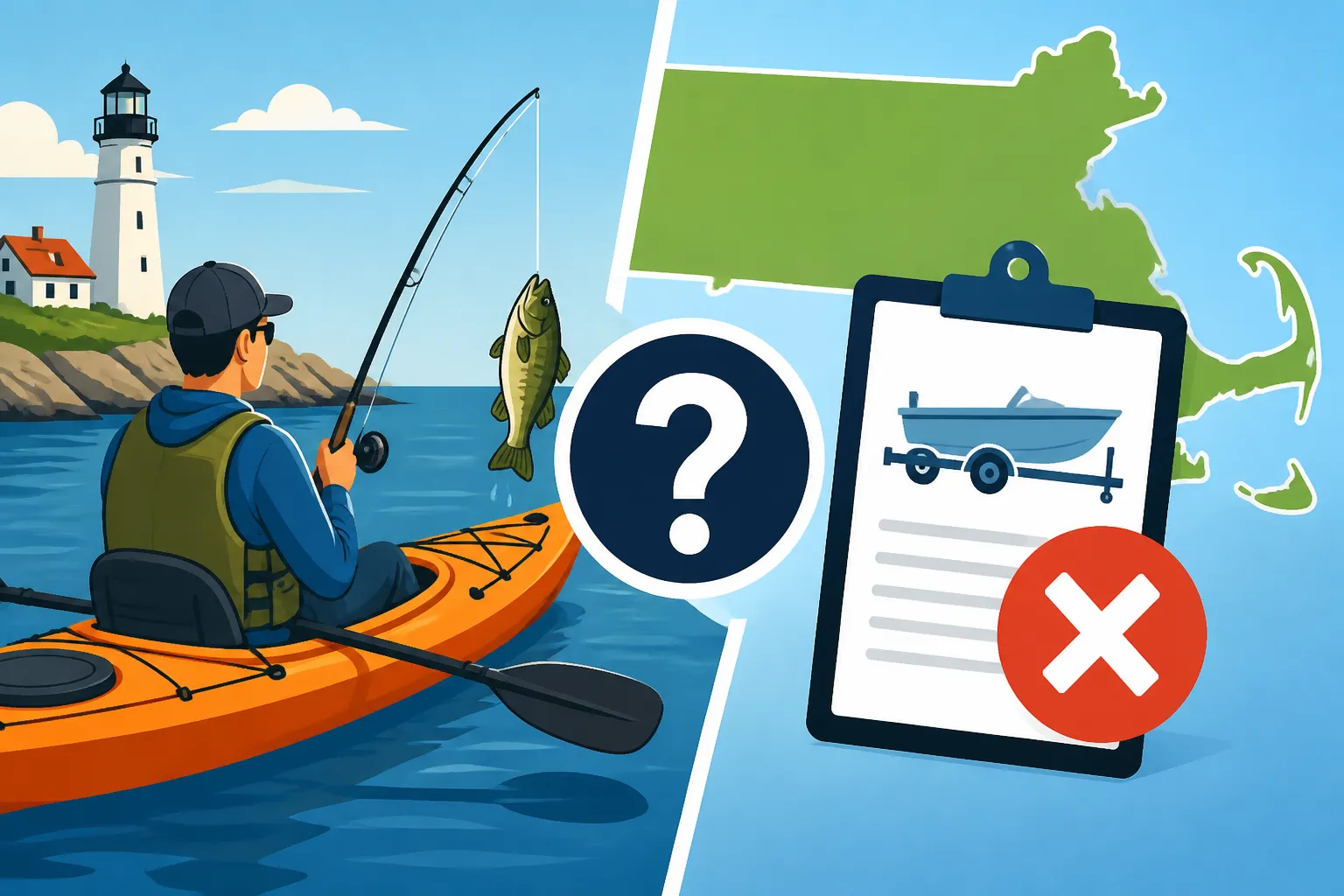
It's a fantastic feeling to paddle out onto a calm pond or a quiet bay in your kayak, a rod in hand, ready for some peaceful fishing. But that moment of Zen can quickly turn into a nagging worry: "Do I actually need to register this thing?" The rules around boat registration in Massachusetts, especially for smaller vessels like kayaks, can feel like a tangled line, leaving many anglers scratching their heads. This guide is here to untangle that confusion, explaining exactly when your fishing kayak needs to be registered and what other important regulations you need to keep in mind to stay on the right side of the law.
The Foundations of Vessel Registration in Massachusetts
Navigating the waters of Massachusetts requires a basic understanding of how the state defines and regulates watercraft. It’s not just about horsepower; size, propulsion, and even where you launch can sometimes play a role. Let's break down the fundamentals that determine if your beloved kayak falls under the state’s registration umbrella.
Defining a "Vessel" Under Massachusetts Law
First things first, what exactly does Massachusetts consider a "vessel" for registration purposes? According to the Massachusetts Environmental Police (MEP) and state law (M.G.L. c. 90B, § 2), a "vessel" is pretty broadly defined as every description of watercraft, other than a seaplane on the water, used or capable of being used as a means of transportation on water. This sweeping definition means everything from a yacht to a canoe could potentially be considered a vessel.
However, the key here isn't just being a "vessel," but whether it falls into the category of vessels that require registration. For most of us, our kayaks fit the general description of a watercraft used for transportation. The crucial step is understanding the specific criteria that trigger the registration requirement, which often comes down to how it's propelled and its overall size. It's easy to get bogged down in the legalese, but essentially, if it floats and you move it across the water, it's a vessel. The next step is whether the state needs to know about it.
When Registration Becomes Mandatory
The mandatory registration trigger in Massachusetts boils down to two primary factors: propulsion and length. This is where many kayak anglers get tripped up, especially as technology advances and small electric motors become more common.
Generally, any vessel that is mechanically propelled – meaning it has an engine, whether gasoline, electric, or any other type of motor – must be registered with the Massachusetts Environmental Police, regardless of its length. This includes even tiny electric trolling motors you might attach to your kayak. If there’s an engine, even if it’s only 0.5 horsepower, it needs to be registered.
For non-mechanically propelled vessels, the rule is different. Human-powered boats, like canoes, rowboats, paddleboards, and indeed, most kayaks, are not required to be registered unless they exceed a certain length. This length threshold is usually 16 feet. So, if your kayak is propelled solely by your paddle and is less than 16 feet long, you’re likely in the clear when it comes to registration.
Key Exemptions for Smaller Vessels
Thankfully, Massachusetts offers some very clear exemptions that cover the vast majority of kayak anglers. If your kayak is:
- Human-powered: This means you're using a paddle, oar, or pedaling system, and there's absolutely no motor (electric or gas) attached or aboard for propulsion.
- Less than 16 feet in length: Most recreational fishing kayaks fall into this category.
If both of these conditions are met, your kayak does not require state registration. This is fantastic news for the purists who love the quiet glide of a paddle-powered craft. It reduces a layer of bureaucracy and expense, letting you focus more on the fishing and less on paperwork. This exemption is explicitly designed to keep the process simple for those enjoying the smaller, more traditional forms of boating. It's one of the reasons kayak fishing has exploded in popularity; the barrier to entry is relatively low when it comes to official requirements.
Kayaks and the Massachusetts Boat Registration Law
Now that we understand the general rules, let's zoom in specifically on kayaks. This is where the details really matter, as even a small addition to your kayak can change its legal standing.
Human-Powered vs. Motorized Kayaks: The Critical Distinction
This is the absolute core of whether your kayak needs to be registered. The law draws a very firm line here:
-
Human-Powered Kayaks: If your kayak relies solely on your physical effort – paddling, pedaling, or rowing – for propulsion, and it's under 16 feet in length, it does not need to be registered in Massachusetts. This is the case for most recreational and fishing kayaks you see out on the water, whether it's a sit-on-top, a sit-inside, or even a specialized peddle-drive kayak like those from Hobie or Old Town. The "pedal-drive" system, while mechanically assisted, is still considered human-powered because you are providing the energy, not an engine.
-
Motorized Kayaks: This is where things change dramatically. If you attach any motor to your kayak, no matter how small or how infrequently you use it, your kayak becomes a "motorized vessel" in the eyes of Massachusetts law. This means it must be registered, regardless of its length. This includes electric trolling motors, small outboard gas motors, or even experimental electric propulsion units. Even if you just use the motor to get to your fishing spot faster and then paddle, the presence of the motor triggers the registration requirement. The moment you introduce an engine, even if it's typically found on a much larger boat, your kayak's classification changes.
This distinction is crucial because many kayak anglers are now adding small electric motors for convenience, especially in larger bodies of water or against strong currents. While these additions can enhance your fishing experience, they also bring new legal obligations.
The "No-Motor, No-Registration" Rule for Most Kayak Anglers
For the vast majority of kayak anglers in Massachusetts, the good news is that if your kayak is solely human-powered, you do not need to register it. This applies to traditional paddle kayaks, stand-up paddleboards, canoes, and even advanced pedal-drive kayaks. As long as you're providing the propulsion through your own effort and it's less than 16 feet long, you are exempt from state registration.
This simplicity is a big part of the appeal of kayak fishing. You can purchase a kayak from a local retailer or even a national online store like Amazon, grab your paddle and fishing gear, and hit the water without jumping through the hoops of vehicle or vessel registration. It's a direct path to enjoying the abundant fishing opportunities across the Commonwealth, whether you're targeting bass in a local pond or chasing striped bass in a calm saltwater estuary. Just make sure you understand the rules for a Massachusetts Fishing License Guide, which is a separate but equally important requirement.
Small Motors and the Registration Threshold
Let's say you've decided to enhance your kayak with a small electric trolling motor to cover more water or fight the tide in Buzzards Bay. The moment you add that motor, regardless of its horsepower or whether you primarily paddle, your kayak becomes a motorized vessel and requires registration. There is no minimum horsepower exemption for motors on kayaks; if it has an engine, it needs to be registered.
This means you'll need to go through the process of applying for a Massachusetts boat registration through the Massachusetts Environmental Police. This involves providing proof of ownership, paying a fee, and receiving a registration number (like "MA-1234-AB") and a decal. You'll then need to properly display this registration number on the bow of your kayak in block letters, at least three inches high, contrasting with the hull color, and the registration decal near the number.
It’s a different world once that motor is attached, and it’s important not to overlook this step. Ignoring the registration requirement for a motorized kayak can lead to fines and other penalties, which no one wants when they're just trying to enjoy a day on the water.
Summary of Massachusetts Kayak Registration Requirements
| Kayak Type | Propulsion Method | Length Requirement | Registration Required? |
|---|---|---|---|
| Standard Fishing Kayak | Human-powered (paddle/pedal) | Any length | No* |
| Kayak with Electric Trolling Motor | Electric Motor | Any length | Yes |
| Kayak with Small Gas Outboard | Gasoline Engine | Any length | Yes |
| Kayak over 16 feet, Human-Powered | Human-powered (paddle/pedal) | Over 16 feet | No* |
| Kayak over 16 feet, with any Motor | Electric or Gas Motor | Over 16 feet | Yes |
*Note: The exemption for human-powered vessels is often clarified as "under 16 feet in length" for most practical purposes, though many state resources broadly state human-powered vessels are exempt.
Understanding Your Responsibilities Beyond Registration
Even if your kayak doesn't need to be registered, hitting the water in Massachusetts comes with other important responsibilities. These aren't just good ideas; they're legal requirements designed to keep you and other recreational users safe.
Essential Safety Gear for Kayak Anglers
Regardless of registration status, every kayak angler is legally obligated to carry specific safety gear. These are fundamental rules of the water, and they can literally save your life.
- Personal Flotation Device (PFD): This is non-negotiable. Every person on a vessel must have a Coast Guard-approved wearable PFD (life jacket) readily accessible. For children 12 years old and younger, wearing the PFD at all times while underway on any vessel is mandatory. This also applies to adults on kayaks, canoes, and paddleboards from September 15th to May 15th. It's a cold reality that Massachusetts waters can be unforgiving, so don't skimp on this. You can find excellent quality, comfortable PFDs specifically designed for fishing on platforms like Amazon.
- Sound-Producing Device: You need a whistle or some other sound-producing device that can signal for help. This is often overlooked but crucial for alerting others to your presence or signaling distress.
- Visual Distress Signals (VDS): For nighttime operation or certain larger bodies of water, visual distress signals may be required. For most kayaks operating during the day on inland waters, this might not be a primary concern, but if you're out at night or far offshore, you'll need a bright white light (such as a flashlight or headlamp) to show when approaching other vessels.
- Paddle/Oar: Always carry a paddle, even if you have a motor. Motors can fail, and you don't want to be stranded.
These items aren't optional; they're vital parts of responsible boating. The Massachusetts Environmental Police are quite diligent in enforcing these safety regulations, and fines can be substantial. For more details on what's expected, you might check out resources like the Massachusetts Recreational Fishing Rules and Bag Limits for broader fishing regulations.
Displaying MA Environmental Police Decals (When Applicable)
While your human-powered kayak might not need a registration number, there are situations where you might need to display other decals or permits. For instance, if you plan to fish in specific regulated areas like the Quabbin Reservoir, you'll need to secure a separate access permit. This permit might come with its own decal that needs to be displayed on your vessel.
Always check the specific rules for the body of water you intend to fish. Massachusetts has many unique and protected waterways, and some have their own specific boating and access requirements. These decals are generally a way for local authorities to ensure compliance with specific environmental or safety rules for that particular area, rather than a statewide registration.
The Importance of a Massachusetts Fishing License
Regardless of whether your kayak needs registration or what safety gear you carry, if you plan to fish, you absolutely need a Massachusetts fishing license. This is a separate requirement from boat registration and applies to almost all anglers over the age of 15, whether fishing from shore, a boat, or a kayak.
You'll need either a freshwater fishing license or a saltwater recreational fishing permit, depending on where you plan to cast your line. Or, you can get a combination license if you plan to do both. It's a common misconception that if you're on a non-registered boat, you don't need a license, but that's simply not true. Fishing licenses fund critical conservation efforts, including fish stocking programs and habitat restoration, which directly benefit all anglers.
You can learn more about how to get your license by reading our guide on How to Buy a Massachusetts Fishing License Online or finding out the Massachusetts Freshwater Fishing License Costs and Rules. Make sure you understand the Massachusetts Fishing License Requirements by Age before you head out. Always carry proof of your fishing license with you, either a physical copy or a digital one on your phone, as wardens can and do check.
Where to Find More Information and Gear
Staying informed and properly equipped are two of the best ways to ensure a safe and enjoyable kayak fishing experience in Massachusetts.
Massachusetts Environmental Police (MEP) and MassWildlife Resources
When in doubt, always go to the source. The Massachusetts Environmental Police (MEEP) is the primary law enforcement agency responsible for enforcing boating and fishing regulations in the Commonwealth. Their website and offices are the best places to get the most accurate and up-to-date information regarding vessel registration, safety equipment requirements, and general boating laws. They also publish helpful brochures and guides.
Similarly, MassWildlife (the Massachusetts Division of Fisheries and Wildlife) is your go-to for all fishing-related regulations, including licensing, bag limits, season dates, and information on fish species. Their website is a treasure trove of information, from trout stocking schedules to guides on Massachusetts Fishing Seasons Explained and even where to find the Massachusetts Fishing Regulations Pamphlet, Explained. Both agencies are dedicated to preserving Massachusetts' natural resources and ensuring public safety, so their resources are invaluable. Don't be afraid to reach out to them directly if you have a specific question that isn't clearly answered online.
Outfitting Your Kayak for Fishing
Even if your kayak doesn't need registration, outfitting it properly for fishing can make a world of difference in your comfort, efficiency, and safety. There's a huge array of specialized gear designed for kayak anglers.
- Rod Holders: Essential for hands-free paddling and safely storing rods while moving or fighting a fish. Many kayaks come with flush-mount holders, but adjustable, rail-mounted holders are popular additions.
- Anchoring System: A small anchor (grapple or drag chain style) is crucial for staying put in currents or windy conditions. Many kayak anglers use a trolley system to deploy their anchor from various points on the kayak.
- Storage: Dry bags, tackle boxes, and crate systems help keep your gear organized, dry, and secure. Look for waterproof storage solutions to protect your electronics and personal items.
- Fish Finder/GPS: Modern portable fish finders can be easily mounted on kayaks, helping you locate fish and navigate. Brands like Lowrance and Humminbird offer compact units perfect for kayaks. You can find a vast selection of these items, from basic rod holders to advanced electronics, on online retailers like Amazon, offering convenience and a wide range of price points.
- Visibility Gear: If you plan to be in areas with other boat traffic, a bright flag or light pole can significantly increase your visibility, especially when fishing areas like the Best Fishing Spots in Massachusetts where larger vessels might be present.
- Cooler/Livewell: A small cooler for drinks and snacks, or a dedicated livewell for bait or keeping your catch fresh, is a must-have for longer trips.
Investing in the right gear, available from tackle shops or online stores like Amazon, not only enhances your fishing experience but also contributes to your safety and preparedness on the water.
Disclaimer
The information provided in this guide is for general informational purposes only and does not constitute legal advice. While we strive to provide accurate and up-to-date information, fishing and boating regulations in Massachusetts can change. It is always the responsibility of the individual angler to verify all current regulations with the Massachusetts Environmental Police (MEP) and MassWildlife before engaging in any fishing or boating activity. Failure to comply with regulations can result in fines or other penalties.