Best Time of Day to Fish the Cape Cod Canal
There's a common frustration among anglers when it comes to the legendary Cape Cod Canal: you can spend hours casting, brimming with anticipation, only to realize you've completely missed the prime bite. It's not just about being there; it's about being there at the right time. This comprehensive guide will pull back the curtain on the often-mystifying dynamics of the Canal, revealing the precise tidal windows, light conditions, and local insights that transform a hopeful outing into a successful Massachusetts fishing adventure.
Understanding the Cape Cod Canal's Unique Environment
Fishing the Cape Cod Canal isn't like fishing a typical ocean beach or a tranquil freshwater pond. This place is a beast of its own, a powerful, man-made waterway that demands respect and a deep understanding of its rhythms. If you've ever tried to cast into a raging current, you know exactly what I mean. The Canal's environment is truly one-of-a-kind, and recognizing its peculiarities is the first step toward cracking its code.
The Power of Tidal Currents
The Cape Cod Canal acts as a vital conduit, connecting the expansive waters of Buzzards Bay to the south with the vastness of Cape Cod Bay to the north. Imagine a gigantic bathtub being drained from one end and filled from the other, twice a day – that's essentially what's happening here. The sheer volume of water that surges through this relatively narrow channel is staggering, creating some of the strongest and most predictable tidal currents you'll find anywhere on the East Coast. These currents, often reaching speeds of several knots, are the lifeblood of the Canal's fishery. They churn the water, disorient baitfish, and create a constantly changing landscape that striped bass and bluefish exploit with predatory efficiency. Understanding these currents isn't just helpful; it's absolutely crucial. Without them, the Canal would just be a very long ditch.
This powerful flow means that traditional fishing strategies often need to be adapted. Casting a lightweight lure into a 5-knot current is a futile exercise; your offering will be swept away before it has a chance to sink or present naturally. Conversely, learning to work with these currents, using heavy jigs and specialized techniques, allows you to put your bait right into the feeding zones. Many seasoned anglers will tell you that the Canal "fishes" differently on an incoming tide versus an outgoing tide, with specific spots firing up only when the current is moving in a certain direction. It's a complex dance, but one that yields incredible rewards when mastered.
How Tides Influence Baitfish Movement
Think of those powerful currents as a conveyor belt for food. The strong tidal flow is constantly pushing vast schools of baitfish – everything from mackerel and river herring to plentiful pogies (menhaden) – through the Canal. These baitfish, often disoriented and struggling against the relentless current, become easy targets for the apex predators lurking below. Striped bass and bluefish aren't just swimming aimlessly; they are strategically positioning themselves in key ambush points along the Canal's rocky banks, submerged structure, and current breaks. They wait for the current to deliver their next meal right to their mouths.
When the tide is ripping, these baitfish are forced to exert immense energy to hold their position or move with the flow. This vulnerability is exactly what the larger game fish are looking for. On a strong west-moving (outgoing) tide, bait might be flushed out of Cape Cod Bay, while an east-moving (incoming) tide can push bait from Buzzards Bay. Observing the types of baitfish present, whether you see schools rippling on the surface or hear reports from other anglers, can offer critical clues about what the predators are feeding on and, consequently, what lures or baits you should be using. This intimate relationship between tide, bait, and predator is the core mechanism that drives the Canal's incredible fishing.
Seasonal Considerations for Canal Fishing
While tides are a daily rhythm, the seasons dictate who is dancing in the Canal. The flow of migrating fish, driven by water temperature and spawning cycles, means that what works in May might not be effective in August. Spring brings the first wave of migratory striped bass, often hungry after their long journey north. These early fish might be targeting herring that are making their way into freshwater spawning grounds. As summer progresses, bluefish move in, bringing their aggressive feeding habits and razor-sharp teeth, often alongside larger schools of mackerel and pogies. The fall run, often considered the grand finale, sees massive schools of striped bass and bluefish staging in the Canal, feasting heavily as they prepare for their southward migration.
Understanding these seasonal shifts allows you to adjust your expectations and techniques. You wouldn't typically target bluefish in early May, just as you might not expect to encounter the largest stripers until later in the season. The baitfish available also change with the seasons, influencing the preferred forage of game fish. For a deeper dive into the broader fishing calendar, check out our guide on the Best Time of Year to Fish in Massachusetts. Paying attention to these annual cycles, alongside the daily tidal charts, provides a comprehensive picture of when and how to approach the Canal for the best chance of success.
The Absolute Best Tides for Cape Cod Canal Fishing
When it comes to the Cape Cod Canal, the tide isn't just a factor; it's the factor. Many anglers learn this the hard way, spending hours during what they thought was a good time, only to be skunked. Success here is meticulously tied to understanding and predicting the Canal's unique tidal flow. Forget what you think you know about fishing "high tide" or "low tide" in other places; the Canal operates on its own distinct rules.
Slack Tide: A Brief Respite or a Missed Opportunity?
Slack tide is that brief, often fleeting moment when the powerful current in the Canal pauses, seemingly holding its breath, as it transitions from an incoming to an outgoing flow, or vice versa. For many fishing spots, slack tide can be a productive time, offering a window of calm. However, in the Cape Cod Canal, it's generally not the prime feeding time for the most sought-after species, like striped bass and bluefish. These predators rely heavily on the moving current to disorient baitfish and create ambush opportunities. When the current slows to a standstill, the baitfish can orient themselves, making them harder to catch, and the predators often become less active.
That's not to say slack tide is completely dead. Sometimes, if you're targeting bottom-dwellers like tautog (though they're less common in the main Canal current) or trying to drop a jig straight down without it immediately getting swept away, slack tide can offer a unique, albeit brief, opportunity. However, for those chasing the thrill of a hard-fighting striper or bluefish, this window is usually best used for rigging up, grabbing a snack, or scouting the banks for potential feeding activity. Most experienced Canal anglers view slack tide as the calm before (or after) the storm, a short pause before the real action kicks in.
The Power of the Moving Tide: East and West
The heart of Canal fishing lies in the moving tide. This is when the water truly comes alive, and with it, the predatory instincts of the fish. The Canal experiences two primary moving tides: the east-moving tide (water flowing from Buzzards Bay towards Cape Cod Bay) and the west-moving tide (water flowing from Cape Cod Bay towards Buzzards Bay). Each of these powerful flows creates distinct feeding opportunities, and successful anglers understand how to fish them differently.
On an east-moving tide, the current pushes baitfish, often including mackerel and squid, from Buzzards Bay into the Canal. Fish will typically orient themselves facing west, holding in current breaks, eddies, or behind structure, waiting to ambush anything swept past them. Popular spots like the East End, especially around the jetties and bridges, can light up during this flow. Anglers often cast jigs or large swimming plugs up-current and work them back with the flow, mimicking struggling bait.
Conversely, a west-moving tide sees water and bait pushed from Cape Cod Bay into Buzzards Bay. During this period, fish will face east, using similar ambush tactics. The West End, including areas near the railroad bridge and the rocky shores leading out to Buzzards Bay, often become hotspots. Again, heavy jigs and robust lures are key to getting down to where the fish are holding in the powerful current. Understanding these directional flows and how fish position themselves is fundamental to productive fishing in the Canal. For specific details on where to position yourself, our guide on Cape Cod Canal Striped Bass Fishing Spots offers great insights.
The "Sweet Spot" – The Hour Before and After Slack
Now, for the golden rule, the absolute sweet spot that most veteran Canal anglers swear by: the hour or so immediately surrounding the change of tide, specifically as the current begins to pick up pace. This isn't exactly slack tide; rather, it's the period when the current is transitioning from slow to fast, or fast to slow. This window, roughly 45 minutes to an hour before true slack and 45 minutes to an hour after true slack, is when the Canal often comes alive with feeding activity.
Why is this period so magical? As the current starts to accelerate after slack, baitfish are still somewhat disoriented and struggling, but the current isn't yet so strong that it becomes impossible for predators to chase them down. It's the perfect balance of current flow: strong enough to bring the food, but not so strong that fish can't actively hunt. The same principle applies as the current begins to slow down before the next slack; baitfish might be easing their guard, and larger fish can make a move without expending too much energy fighting the full-strength current.
During this "sweet spot," fish are often more willing to chase a lure or bait. This is when those topwater plugs might get explosive strikes, or when a perfectly presented jig elicits a crushing hit. Many anglers will arrive well before slack tide, get their gear ready, and be in position to capitalize on the first signs of current movement. Missing this narrow window can often mean missing the best bite of the day. It’s a delicate balance, and requires constant monitoring of the current.
To help visualize, here's a table outlining the typical fishing activity around tidal changes in the Canal:
| Tidal Phase | Current Strength | Typical Baitfish Behavior | Predator Activity | Recommended Approach |
|---|---|---|---|---|
| Full Slack | Minimal | Re-orienting, seeking temporary refuge | Low to moderate, less aggressive chasing | Good for rigging, scouting. Some bottom fishing. |
| 1 Hour After Slack | Increasing | Becoming disoriented, beginning to struggle | High, actively ambushing. Predators face current. | Heavy jigs, live bait, large swimming plugs. Cast up-current. |
| Mid-Tide (Strong Flow) | Very Strong | Swept quickly, struggling significantly | Moderate, holding tight in eddies/breaks, conserving energy. | Very heavy jigs, deep-diving plugs. Focus on current seams. |
| 1 Hour Before Slack | Decreasing | Less strained, still moving with flow | High, actively ambushing as current eases. | Jigs, swimming plugs, surface lures if activity is visible. |
Beyond Tides: Understanding Optimal Light and Weather Conditions
While the tides are undeniably king in the Cape Cod Canal, they aren't the only piece of the puzzle. Overlooking other environmental factors, particularly light levels and weather patterns, can mean the difference between a memorable catch and a frustrating day. Savvy anglers combine their tidal knowledge with an understanding of these conditions to pinpoint the ultimate windows of opportunity.
Low Light: Dawn and Dusk's Magic
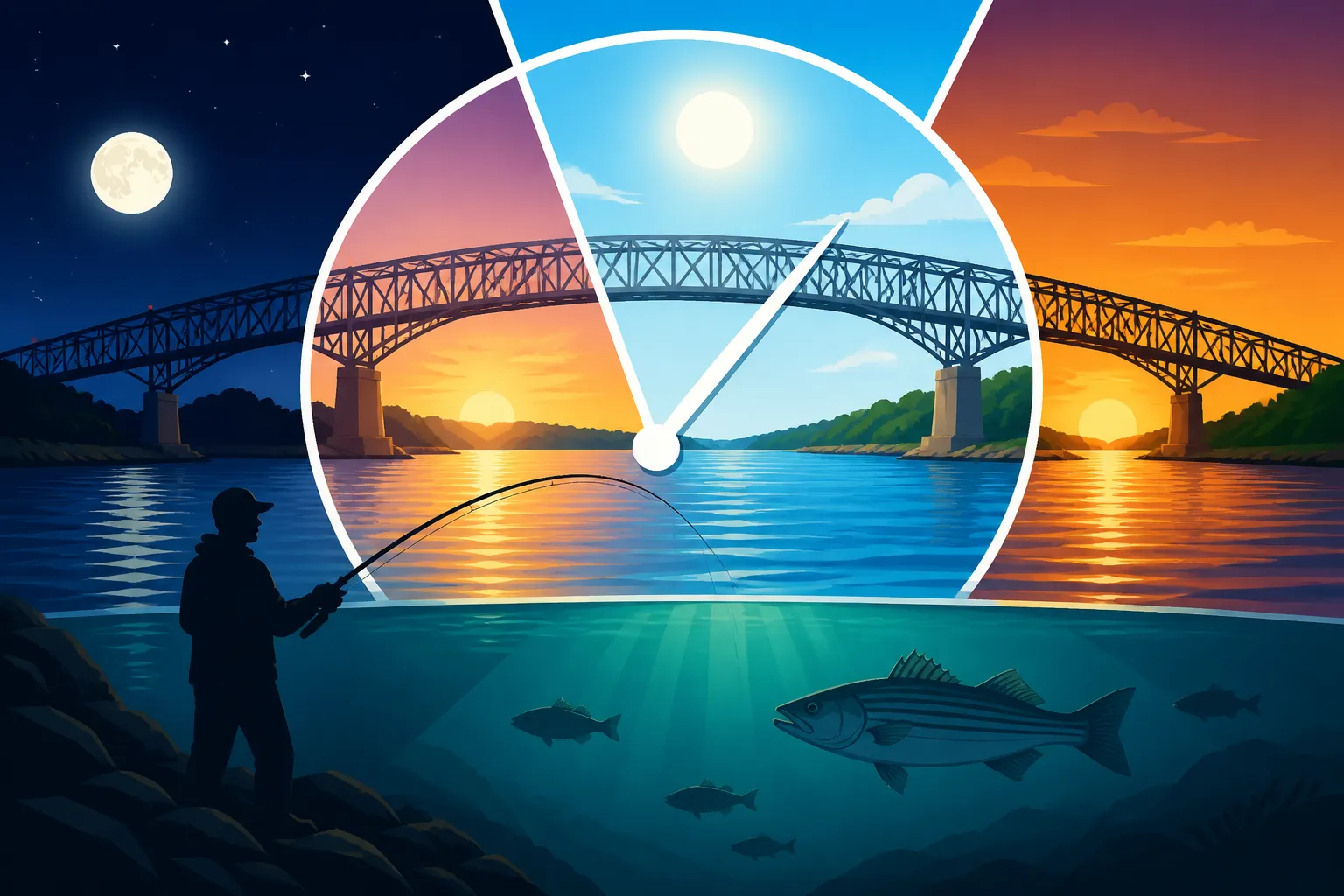
Ask any seasoned angler, and they'll likely tell you that dawn and dusk are magical times to be on the water. In the Cape Cod Canal, this holds particularly true, especially for targeting striped bass. Stripers are ambush predators, and low light conditions provide them with a significant advantage. The dim light allows them to hide in the shadows and camouflage themselves against the bottom or structure, making them harder for baitfish to spot. For the baitfish, the reduced visibility makes it harder to detect an incoming threat.
This isn't just about stealth; it's also about comfort. Striped bass are often more active feeders in cooler water, and the early morning and late evening hours usually present the lowest water temperatures of the day, particularly during the hot summer months. Furthermore, boat traffic tends to be minimal during these periods, reducing disturbances and allowing fish to move more freely. Many of the most epic blitzes and trophy catches in the Canal happen when the sky is still painted with the hues of sunrise or sunset. If you're serious about landing a big one, setting your alarm for an hour before sunrise or planning to stay until well after dark, especially during the peak tidal "sweet spots," is a strategy that pays dividends. Our guide on How to Fish the Cape Cod Canal at Night for Stripers elaborates on maximizing these opportunities.
Overcast Days and Rainy Weather
Don't let a cloudy sky or a drizzle deter you from fishing the Canal. In fact, these conditions can often extend the productive "low light" bite well into the day. Overcast skies mimic the subdued light of dawn and dusk, providing that crucial camouflage for predators and making them more comfortable feeding throughout the day. Instead of a short burst of activity at sunrise, you might find consistent action for several hours.
Rain can also be a catalyst for fishing success, especially lighter, steady rain. Not only does it help to obscure visibility for baitfish, but it can also wash terrestrial insects and small bait from the banks into the water, creating an additional food source that can draw in fish. The added turbulence on the surface caused by raindrops can further disorient bait and make your lure presentations appear more natural. Of course, safety is paramount; heavy downpours, lightning, or strong winds can quickly turn a good fishing day into a dangerous one. Always prioritize safety and be prepared for changing weather conditions, but don't shy away from a little "liquid sunshine."
Wind Direction and Its Impact
While not as dominant as the tide, wind can certainly play a role in your Canal fishing success. It affects everything from casting distance to the way your lure behaves in the water, and even how comfortable you are on the banks. A strong wind blowing directly against the current, for instance, can create a choppy, confused sea state that makes it incredibly difficult to present a lure effectively. It can also create strong "bowing" in your fishing line, making it hard to feel subtle bites.
Conversely, a wind that blows with the current can sometimes enhance the presentation of your lure, giving it a more natural drift. A crosswind, blowing from one side of the Canal to the other, can be particularly challenging for shore anglers, limiting casting angles and making it hard to maintain a straight retrieve. When fishing from a boat (if permitted and you have the necessary Quabbin Reservoir boat permit requirements in Massachusetts for other relevant bodies of water, though the Canal is mostly shore-based), wind can make boat control a nightmare, pushing you off your desired drift. Always check the wind forecast alongside the tidal charts, and be prepared to adjust your tactics or even your fishing location based on how the wind is interacting with the powerful currents. Sometimes, simply moving to a more sheltered section of the Canal can make a world of difference.
Planning Your Cape Cod Canal Fishing Trip for Success
Fishing the Cape Cod Canal is less about luck and more about meticulous planning. You can't just show up and expect to hit the jackpot; the Canal demands homework. Successfully navigating its powerful currents and predicting those prime feeding windows requires diligent preparation and a strategic approach.
Checking Tide Charts and Current Predictions
This is, without a doubt, the most critical step in planning a Canal trip. You absolutely must consult accurate tide charts and, ideally, current predictions for the Canal itself. Standard coastal tide charts might give you general high and low tide times for Cape Cod Bay or Buzzards Bay, but the actual current changes within the Canal can differ significantly due to the constricting effect of the waterway. Reputable sources like NOAA (National Oceanic and Atmospheric Administration) provide detailed current predictions for specific locations within the Canal, such as the Bourne Bridge or the Railroad Bridge. These predictions will tell you not just when the current changes direction (slack tide), but also its anticipated speed and peak flow times.
Look for a chart that shows the maximum current velocity and the times of slack. Your goal is to identify those "sweet spots" an hour before and after slack, both for the east-moving and west-moving tides. If you're planning a full day, you might be able to hit two separate "sweet spots" on opposing tides. Apps and websites like Saltwater Tides or Tide Charts Pro are invaluable tools for anglers, offering real-time data and forecasts. Don't just glance at it; study it. Know exactly when the current will be ripping, when it will be slowing, and when it will be dead calm. This knowledge is your most powerful weapon in the Canal angler's arsenal.
Integrating Light and Tide for Peak Windows
Once you've mastered the tide chart, the next step is to overlay it with the optimal light conditions: dawn and dusk. This combination creates the absolute peak fishing windows in the Cape Cod Canal. Imagine this scenario: The tide is scheduled to go slack at 7:00 AM, and sunrise is at 5:30 AM. This means the prime feeding window would likely be from 6:00 AM (as the current slows before slack) through 8:00 AM (as the current starts to pick up after slack), all occurring during the magical low-light period of dawn. This is a time when you're most likely to encounter actively feeding fish, eager to strike.
Similarly, if high slack is at 8:00 PM, and sunset is at 7:30 PM, you're looking at a fantastic evening bite from 7:00 PM to 9:00 PM. These overlapping windows are when you want to be on the water, prepared and focused. It's not always possible to hit both the ideal tide and ideal light, but when you can, that's when legendary Canal fishing stories are made. Be flexible, though. Sometimes, even if the light isn't perfect, a strong tide combined with active baitfish can still produce incredible results. Always prioritize getting those crucial tidal swings right, and layer the light conditions on top for an even greater edge.
Preparing for Different Times of Day
Successful Canal fishing, especially during those early morning or late evening windows, requires specific preparation. For pre-dawn starts, a reliable headlamp is non-negotiable for tying knots, rigging lures, and safely navigating the rocky banks. Layered clothing is also essential; a cool pre-dawn chill can quickly turn into a warm, sunny morning, and you'll want to be able to adjust. Don't forget sturdy, non-slip footwear – those Canal rocks can be treacherous, especially when wet or in low light.
Hydration and sustenance are also key. Long hours of casting, particularly in strong currents, can be physically demanding. Pack plenty of water, energy bars, and perhaps a hot coffee for those early starts. Ensure your tackle box is organized with a variety of lures suitable for different current speeds and depths, including heavy jigs, large swimming plugs, and potentially some topwater options. Having a selection of the Best Lures for the Cape Cod Canal readily available will save you precious time during a hot bite. Always bring a first-aid kit, and let someone know your fishing plans, especially if you're venturing out alone. Being prepared means you can focus entirely on the fishing when that prime window finally opens.
Local Insights and Advanced Tips for Canal Anglers
The Cape Cod Canal, while predictable in its tidal cycles, holds many subtleties that only local knowledge and experience can truly unlock. Beyond the fundamental understanding of tides and light, there are nuanced factors that can further refine your timing and elevate your success.
The Role of Moon Phases
For generations, anglers have understood the profound influence of the moon on tidal dynamics, and the Cape Cod Canal is a prime example of this connection. The gravitational pull of the moon, combined with the sun, dictates the strength of the tides. During a full moon and a new moon (when the sun, moon, and Earth are aligned), you experience what are known as "spring tides." These are characterized by exceptionally high tides and very low tides, resulting in maximum tidal range and, crucially for the Canal, the strongest possible currents.
What does this mean for fishing? When the spring tides are ripping through the Canal, the "sweet spot" before and after slack can be even more intense. The sheer volume of water moving, and the speed at which it travels, can create powerful feeding frenzies as disoriented baitfish are flushed through the system. Predators like striped bass often become incredibly aggressive in these conditions. Conversely, during the quarter moon phases, you have "neap tides," which exhibit a smaller tidal range and weaker currents. While you can still catch fish during neap tides, the overall intensity of the bite might be less pronounced, and the feeding windows around slack might be a bit more subtle. Understanding the current moon phase allows you to anticipate the strength of the tides and adjust your expectations and techniques accordingly.
Observing the Canal: Reading the Water
One of the greatest lessons you can learn as a Canal angler is how to "read the water." This means more than just looking at the surface; it's about interpreting the subtle (and sometimes not-so-subtle) signs that indicate where fish are holding and feeding. Look for birds diving, which often signals baitfish being pushed to the surface by predators below. Keep an eye out for surface commotion – boils, splashes, or even full-on blitzes where fish are visibly crashing bait. This is often the clearest sign that you're in a productive area.
Pay close attention to current seams, eddies, and rips. These are areas where fast-moving water meets slower water, creating a natural ambush point for game fish. Striped bass and bluefish will often hold just outside the main current in these calmer pockets, waiting for food to be swept past them. Watch how other experienced anglers are fishing: where they cast, what they're catching, and what techniques they're using. While respecting their space and privacy, observing their methods can provide invaluable real-time insights into what's working on a given day. The Canal is a dynamic environment, and continuous observation is key to adapting and finding success. For a detailed look at the fish you might encounter, our Massachusetts Fish Identification Guide is an excellent resource.
Utilizing Fishing Charters and Guides
Let's be real, the Cape Cod Canal can be intimidating. Its powerful currents, specific techniques, and ever-changing conditions can be a lot for a newcomer, or even an experienced angler, to figure out. Sometimes, the best way to accelerate your learning curve and truly unlock the Canal's secrets is by enlisting the help of a professional fishing guide or booking a charter. These captains and guides spend countless hours on the Canal, often multiple trips a day, and possess an unparalleled understanding of its nuances. They know the precise tidal movements for specific spots, the subtle changes that trigger a bite, and the exact lures and techniques that are most effective at any given moment.
A good guide won't just put you on fish; they'll teach you why the fish are there and how to catch them. They can explain the intricacies of jigging techniques for Cape Cod Canal stripers, demonstrate how to properly work a plug in the current, and share invaluable insights into reading the water. When planning your next Canal adventure, consider browsing platforms like FishingBooker to connect with knowledgeable captains who specialize in fishing this iconic waterway. Many anglers, myself included, have used platforms like FishingBooker to find guides who can demystify the Canal's complex currents and dramatically improve their chances of success. Booking a trip through FishingBooker can provide invaluable hands-on experience and accelerate your learning curve far beyond what you might achieve on your own. For anyone serious about conquering the Canal, investing in a guided trip through a reputable service like FishingBooker is often money well spent.
Disclaimer
The information provided in this guide is for general informational purposes only and should not be considered legal advice. Fishing regulations, license requirements, and safety guidelines can change. Always consult the latest Massachusetts Division of Fisheries and Wildlife (MassWildlife) regulations and local authorities before fishing. Prioritize safety on and near the water.