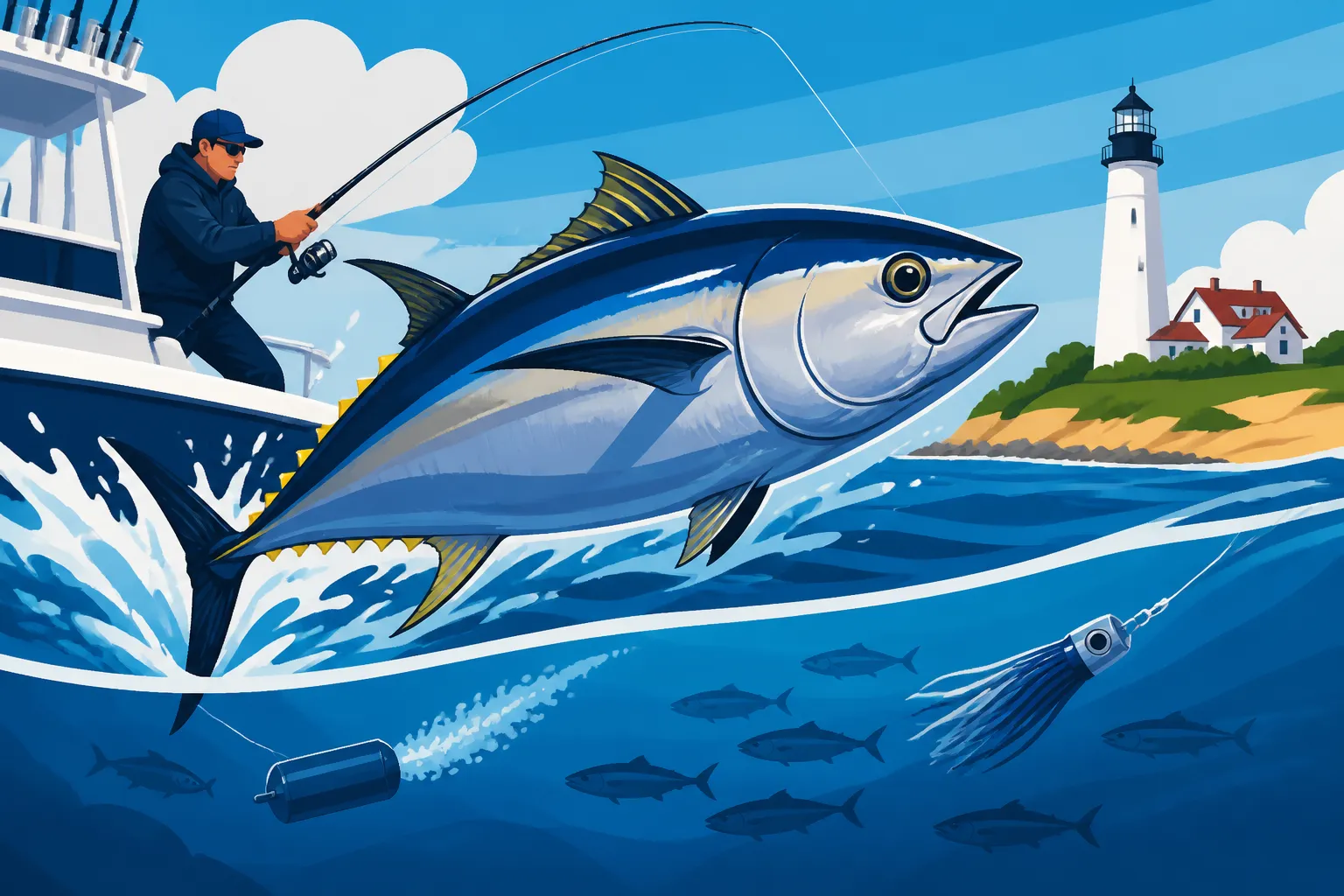
Bluefin Tuna Fishing Techniques Near Cape Cod
There's nothing quite like the electrifying thrill of chasing bluefin tuna off Cape Cod, but let's be honest, it's also one of the most demanding and often frustrating pursuits in saltwater fishing. You spend countless hours, invest in expensive gear, and battle the elements, all for a chance at connecting with these powerful giants. This comprehensive guide is here to demystify the art and science of bluefin tuna fishing, breaking down the techniques, gear, and strategies you need to increase your odds of success in the challenging waters of Massachusetts.
Understanding Bluefin Tuna Behavior Near Cape Cod
Bluefin tuna are apex predators, built for speed and power, and understanding their seasonal migrations, feeding habits, and preferred habitats is your first step toward success. These magnificent fish are highly migratory, and their presence off Cape Cod is largely dictated by baitfish movements and water temperatures.
Seasonal Migrations and Feeding Patterns
The bluefin tuna season off Massachusetts typically kicks off in late spring, around June, and can run well into the fall, sometimes even early winter. Early season fish are often smaller, referred to as "schoolies" or "footballs," ranging from 40 to 150 pounds. They follow vast schools of mackerel, herring, and sand eels into the nearshore waters and bays. As summer progresses, larger, more mature bluefin, often exceeding 300 pounds, arrive, pursuing bigger bait like menhaden (pogies) and squid further offshore, particularly in areas like Stellwagen Bank and the offshore canyons.
It's a dynamic fishery, meaning what worked last week might not work today. Factors like water temperature, currents, and the specific bait species present heavily influence where the tuna are and what they're willing to eat. Keeping an eye on fishing reports, engaging with local bait shops, and even monitoring commercial fishing activity can provide crucial clues. Remember, these fish are constantly on the move, so flexibility in your game plan is key. Understanding the Best time of year to fish in Massachusetts overall will give you a leg up, but for bluefin specifically, mid-summer through early fall is often peak.
Preferred Habitats and Hotspots
Off Cape Cod, bluefin tuna can be found in a variety of environments, from relatively shallow waters close to shore to deep offshore canyons. Early in the season, they often congregate in areas where strong currents create rips and upwellings that concentrate baitfish. The waters around the "inner" Cape, near Stellwagen Bank, and south of Martha's Vineyard and Nantucket are prime spots. As the season progresses and the water warms, the larger tuna tend to move to deeper, cooler waters, often associated with structure like underwater banks, canyons, and ledges.
Popular hotspots include areas like Crab Ledge, the Regal Sword wreck, and the sprawling expanse of Stellwagen Bank, known for its rich biodiversity and abundant baitfish. Further offshore, the canyons like Veatch, Hydrographer, and Atlantis hold giant bluefin, but these trips require larger, more capable boats and are considered true deep-sea expeditions. Don't forget to consider areas around the best fishing spots on Cape Cod, Massachusetts as they might draw in bait, and thus, tuna. Each location presents unique challenges and requires specific approaches, making local knowledge invaluable.
Essential Gear for Bluefin Tuna Fishing
Tackling bluefin tuna demands serious gear. These aren't your typical freshwater bass; they're ocean athletes capable of peeling hundreds of yards of line in seconds and testing the limits of even the most robust equipment. Skimping on tackle is a surefire way to end up with a broken heart and an empty cooler.
Rods, Reels, and Line Selection
For bluefin, you're looking at heavy-duty conventional setups, often rated for 80-pound or even 130-pound test line. Rods need to be powerful, with a strong backbone to lift heavy fish and absorb punishing runs. Brands like Penn, Shimano, and Accurate are industry staples, offering reels specifically designed for big game. Think Penn International, Shimano Talica or Stella, or Accurate Valiant series. These reels boast incredible drag capabilities and high line capacities.
Your line choice is equally critical. Most anglers opt for braided line as a main line due to its incredible strength-to-diameter ratio and zero stretch, which provides excellent sensitivity. A 600-yard spool of 80-pound braid is a common starting point, but many go heavier. This is almost always backed with a monofilament top shot, typically 100-200 yards of 80-130 lb monofilament or fluorocarbon, connected with a strong knot like a Bimini Twist or a PR knot. These connections are absolutely crucial and must be tied perfectly. You can find robust braided line and high-quality leaders on platforms like Amazon.
Terminal Tackle and Bait Rigs
When it comes to terminal tackle, every component must be chosen for maximum strength and reliability. Swivels, snaps, and hooks need to be rated for extreme loads. For hooks, circle hooks are almost universally required or highly recommended for most recreational tuna fisheries, including bluefin, to promote clean hooksets in the corner of the fish's mouth, aiding in release if necessary. Sizes will vary depending on your bait, from 7/0 to 16/0.
Leader material is another critical component, typically heavy fluorocarbon ranging from 80 lb to 200 lb, or even higher for giants. The length of your leader will depend on your technique, but a 10-20 foot section is common for trolling or chunking. When chunking, you'll often use a "topshot" of fluorocarbon that's invisible in the water, matched with a small, discreet lead weight if needed to keep your bait at depth. For live bait, you might use a shorter, heavier leader connected directly to a strong swivel. Remember to have plenty of leader material on hand, as you'll be re-rigging often.
Top Techniques for Targeting Bluefin Tuna
Bluefin tuna are pursued using a variety of methods, each with its own nuances and ideal conditions. Knowing which technique to employ and when can make all the difference.
Trolling Spreader Bars and Drones
Trolling is a popular and effective method, especially for locating scattered schools of bluefin. Spreader bars, which are essentially a mainline with multiple "teaser" lures designed to simulate a school of baitfish, are highly effective at drawing tuna to the surface. These teasers often surround a "stinger" bait or lure, which is the actual hook bait. Drones, also known as green sticks, are long, flexible poles that extend high above the boat, allowing multiple lines to be deployed simultaneously and mimicking birds diving on bait.
When trolling, boat speed, lure depth, and pattern are all critical. A typical spread might involve several spreader bars at different distances behind the boat, along with daisy chains or single lures. The goal is to cover as much water as possible while creating the illusion of a chaotic bait ball. Once a fish is hooked, the challenge shifts to clearing the other lines quickly to avoid tangles. This is a team effort and requires a well-drilled crew. The effectiveness of trolling often depends on the specific baitfish the tuna are currently targeting, so matching your lures to the local forage is key.
Chunking and Live Baiting
Chunking involves slowly drifting with the current, deploying a steady stream of cut bait (chunks of menhaden, mackerel, or herring) into the water. This creates a "chum slick" that draws tuna to the boat. Your hook baits are then presented naturally among the free offerings, often with minimal weight or a small split shot to allow them to drift at the same rate as the chum. This technique requires patience and a good understanding of current and wind to maintain an effective slick.
Live baiting, on the other hand, involves presenting a lively baitfish – often a mackerel, bunker, or even a small bluefish – on a circle hook, either drifted or slow-trolled. The natural action of a live bait can be irresistible to a tuna. Keeping live bait healthy in a good livewell is crucial, as a sluggish bait is far less enticing. Both chunking and live baiting are often most effective when tuna are concentrated in an area or feeding aggressively. The key to both methods is presenting your bait as naturally as possible. Many of the techniques discussed in Jigging and Popping for Bluefin Tuna can be complementary to these methods.
Jigging and Popping
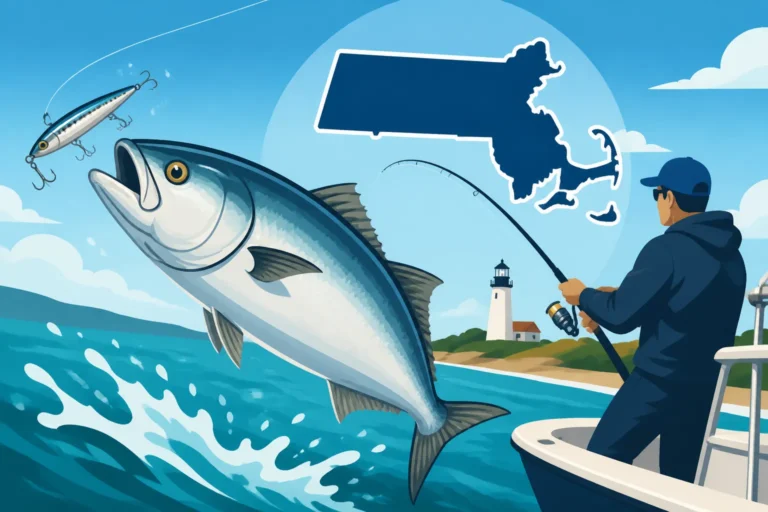
For a more active and exhilarating experience, jigging and popping have gained immense popularity. Popping involves casting large, surface-splashing lures (poppers) and retrieving them aggressively to mimic a fleeing baitfish. This method is incredibly exciting as you often witness the tuna exploding on the surface lure. It requires heavy-duty spinning gear, typically 8000-20000 series reels on stout popping rods.
Jigging involves dropping heavy metal jigs (butterfly jigs, slow-pitch jigs) to depth and working them back up with a specific retrieve pattern to imitate a wounded baitfish. This is often done when tuna are marked on the fishfinder below the surface. Both techniques are physically demanding but can be incredibly rewarding. They are especially effective when tuna are actively feeding on surface or subsurface bait and can be a great way to target individual fish. For more specific insights, check out our guide on Jigging and Popping for Bluefin Tuna.
Navigating the Seasons and Prime Windows
Timing is everything when it comes to bluefin tuna fishing. The season off Cape Cod isn't just one long stretch; it's a series of distinct phases, each offering different opportunities and requiring adapted strategies.
Early Season Opportunities (Late Spring to Early Summer)
As the waters around Cape Cod begin to warm in late May and June, the first wave of bluefin tuna typically arrives. These are often the "footballs" – smaller, but still incredibly powerful fish ranging from 40 to 150 pounds. They follow the spring migrations of mackerel, herring, and sand eels into shallower, more inshore waters. This is an excellent time for anglers targeting their first bluefin, as the fish are often more accessible.
During this period, trolling with smaller spreader bars, daisy chains, and swimming plugs that mimic mackerel or sand eels can be highly effective. Finding areas with active bird play or bait schools is a major indicator. The waters around the "inner" Cape, Nantucket Sound, and Buzzards Bay can hold these early-season fish. While not as massive as their fall counterparts, these smaller tuna still put up a fantastic fight and are superb table fare. Understanding the broader Best month for bluefin tuna off Cape Cod is vital, but don't overlook these early windows.
Peak Season Action (Mid-Summer to Early Fall)
The summer months, particularly July, August, and September, represent the peak of the bluefin tuna season off Cape Cod. This is when the larger, mature bluefin, sometimes exceeding 500 pounds, arrive in greater numbers, pushing further offshore to deeper banks and canyons. They are often chasing larger baitfish like menhaden, squid, and even smaller bonita or false albacore. This is the time for serious big-game anglers.
During this period, all techniques can be effective. Trolling large ballyhoo or strip baits, chunking in the canyons, and live baiting with big menhaden or mackerel are go-to methods. Jigging and popping can also be explosive when tuna are feeding aggressively on the surface. The weather can be more stable in the summer, allowing for longer runs offshore. However, the fishing pressure also increases significantly, making it essential to scout diligently and stay flexible. Many anglers consider booking a Massachusetts Bluefin Tuna Charters during this time to tap into experienced captains' knowledge.
Late Season Hunts (Late Fall to Early Winter)
As fall progresses and water temperatures begin to drop, the bluefin tuna start their southbound migration. However, this period can offer some of the most spectacular fishing opportunities, often for truly giant fish. These late-season giants are aggressively feeding to fuel their migration, and they can be found both on the banks and occasionally inshore, depending on bait availability.
The weather becomes more unpredictable in the late fall, meaning shorter windows of opportunity between storms. However, for those willing to brave the colder temperatures and choppier seas, the rewards can be immense. Techniques often involve heavy trolling with large lures or natural baits, and chunking can also be productive. This is not for the faint of heart, but connecting with a massive late-season bluefin is an experience that stays with you forever.
Safety and Regulations for Bluefin Tuna Anglers
Bluefin tuna fishing, especially offshore, comes with inherent risks and strict regulations. Prioritizing safety and knowing the rules is non-negotiable.
Essential Safety Gear and Practices
Offshore bluefin tuna fishing takes you far from shore, often into challenging conditions. Therefore, your safety gear must be top-notch. This includes a properly maintained and fully charged VHF radio (and ideally a satellite phone or inReach device for backup), a well-stocked first-aid kit, EPIRB (Emergency Position Indicating Radio Beacon) or PLB (Personal Locator Beacon), flares, sufficient life jackets for everyone on board, and a throwable device. Make sure everyone on board knows where this gear is and how to use it.
Beyond gear, practicing good seamanship is paramount. Always check the marine forecast before heading out and be prepared for rapidly changing conditions. File a float plan with someone ashore, detailing your intended fishing location and estimated return time. Ensure your boat is well-maintained, with all systems (engine, electronics, bilge pumps) in perfect working order. Don't overload the boat, and ensure everyone on board is familiar with basic boat safety procedures. For information on other fishing rules, refer to Massachusetts Recreational Fishing Rules and Bag Limits.
Understanding Permits, Size, and Bag Limits
Fishing for Atlantic bluefin tuna in federal waters is regulated by NOAA Fisheries under an international quota system. This means that rules can change frequently throughout the season, sometimes with very short notice, so staying informed is critical. All recreational anglers targeting tuna must possess a valid HMS (Highly Migratory Species) Angling permit, even if fishing from a for-hire vessel. This permit is distinct from your general Massachusetts Saltwater Recreational Fishing Permit Explained.
Bluefin tuna have specific size limits and retention limits (bag limits) that vary by permit category and even by area or time of year. For instance, there might be a "slot limit" for general category vessels, or specific minimum and maximum lengths for different classes of recreational vessels. It's not uncommon for recreational limits to be "one per vessel per day" for certain size classes, or even "no retention" if a sub-quota has been met. Always check the most current NOAA Fisheries regulations before you head out. These regulations are designed to manage the stock sustainably, and non-compliance can result in hefty fines and penalties. Knowing the Bluefin Tuna Size Limits off Massachusetts is absolutely critical.
Releasing Tuna Responsibly
Even if you intend to keep a bluefin tuna, you may encounter fish that are undersized, oversized, or simply not within your vessel's bag limit. Practicing responsible catch and release is vital for the conservation of this species. Always use circle hooks whenever possible, as they significantly reduce gut hooking. Have a dehooking tool readily accessible.
If you must release a fish, do so quickly and efficiently, minimizing the time it's out of the water. Avoid dragging the fish onto the boat if possible; instead, remove the hook while the fish is still in the water, or alongside the boat. If the fish is too large to easily handle, cutting the leader as close to the hook as possible is often the best option. Consider carrying a venting tool if you're fishing in deeper waters where barotrauma (swim bladder expansion) might be an issue, though proper use requires training. Our guide on How big bluefin tuna get off Cape Cod emphasizes the sheer size and power of these fish, making responsible handling even more important.
Common Challenges and Troubleshooting
Bluefin tuna fishing is notoriously tough, full of challenges that can test the patience and skill of even the most seasoned angler. It’s part of the allure, but also a source of real frustration.
Dealing with Tough Bites and Finicky Fish
There are days when the ocean seems alive with bait, the birds are diving, and your fishfinder is lit up with tuna, yet they refuse to bite. This is a common and incredibly frustrating scenario. Bluefin can be incredibly finicky, especially when they're gorging on a particular bait, or when there's an abundance of natural food. The old adage, "matching the hatch," is paramount here.
If they're not biting, it's time to troubleshoot. Are your lures matching the size and color of the local baitfish? Are you presenting your chunk baits naturally, at the right depth and drift speed? Sometimes a subtle change in lure color, a slower troll speed, or even a different type of live bait can trigger a strike. Consider changing locations if the fish are completely unresponsive. Perhaps they're pressured, or simply focused on bait elsewhere. Staying adaptable and having a diverse tackle box, easily organized with products from Amazon, is key to overcoming these tough days.
Battling Big Fish and Equipment Failure
Hooking into a large bluefin is just the beginning of the battle. These fish are pound-for-pound some of the strongest in the ocean, capable of sustained, blistering runs that can strip hundreds of yards of line in seconds. Fighting a giant bluefin can last for hours, pushing both angler and tackle to their absolute limits. Rods snap, reels seize, and lines break. It's a brutal sport.
To minimize equipment failure, ensure all your knots are tied perfectly, your drag is set correctly (often around 30-40% of the line's breaking strength, but adjusted during the fight), and your tackle is regularly inspected for wear and tear. During the fight, communicate with your captain and crew. Keep the rod bent and apply constant pressure, but don't try to horse a fish that's still green. Let the drag do its job, and slowly gain line whenever the fish pauses. Having a good fighting belt and harness is crucial for endurance. If you're considering a longer trip, exploring Massachusetts Deep Sea Fishing Charters might provide you with more robust equipment and expert guidance.
Navigating Weather and Sea Conditions
The ocean off Cape Cod can be unforgiving. Calm, sunny mornings can quickly turn into rough, windy afternoons, especially in the late season. Fishing for bluefin often means venturing far offshore, where conditions can be significantly worse than near shore. Swells, choppy seas, and strong winds can make for a miserable, and even dangerous, trip.
Always keep a close eye on the marine weather forecast from multiple sources. Pay attention to wind speed and direction, wave height, and swell period. If the forecast looks marginal, it's always better to err on the side of caution and postpone your trip. No fish is worth risking your life or the lives of your crew. If you do encounter rough weather, ensure all loose gear is secured, everyone on board is wearing a life jacket, and maintain a safe speed. A skilled captain knows when to call it a day, even if the fish are biting.
Table: Bluefin Tuna Fishing Techniques at a Glance
This table offers a quick overview of common bluefin tuna fishing techniques, their typical applications, and what gear you might need.
| Technique | Best for | Gear & Approach | Pros | Cons |
|---|---|---|---|---|
| Trolling | Locating scattered fish, covering large areas | Heavy conventional gear, spreader bars, daisy chains, natural/artificial lures | Efficient search, multiple lines, visual attraction | Requires boat movement, potential for tangles |
| Chunking | Concentrated fish, picky eaters | Heavy conventional gear, cut bait (chum), circle hooks, fluorocarbon leaders | Natural presentation, effective for shy fish | Requires steady chumming, slow method, draws other species |
| Live Baiting | Active fish, larger tuna | Heavy conventional gear, live bait (mackerel, pogies), circle hooks, heavy leaders | Highly effective, natural attraction | Requires livewell, bait availability, bait can be expensive |
| Popping | Surface feeders, aggressive strikes | Heavy spinning gear, large surface poppers, braided line | Visually exciting, active technique | Physically demanding, limited to surface activity |
| Jigging | Subsurface feeders, marked fish | Heavy spinning/conventional jigging gear, metal jigs, braided line | Active, great for deep-sitting fish | Physically demanding, requires good boat control & fishfinder |
Disclaimer
Please remember that fishing regulations, especially for highly migratory species like bluefin tuna, are subject to change. Always consult the latest rules and regulations from NOAA Fisheries and the Massachusetts Division of Marine Fisheries before heading out on your trip. This guide is for informational purposes only and should not replace official regulatory documents or professional guidance.