Best drift speed for fluke fishing
There’s nothing quite as frustrating as heading out for a day of fluke fishing, feeling the boat drift, and just knowing you’re missing something. Are you moving too fast? Too slow? Is your presentation all wrong because of the current? It's a common dilemma that can turn a hopeful fishing trip into a head-scratching exercise. This comprehensive guide will pull back the curtain on the art and science of drift speed for fluke fishing in Massachusetts, helping you dial in your technique for a more productive day on the water.
Understanding Fluke Behavior and Habitat Preferences
Before we even talk about how fast to drift, it's crucial to understand the fish we're after. Fluke, or summer flounder as they're officially known, aren't like striped bass that actively chase down prey. They are masters of disguise and ambush, and their entire predatory strategy hinges on this.
The Fluke's Ambush Predator Strategy
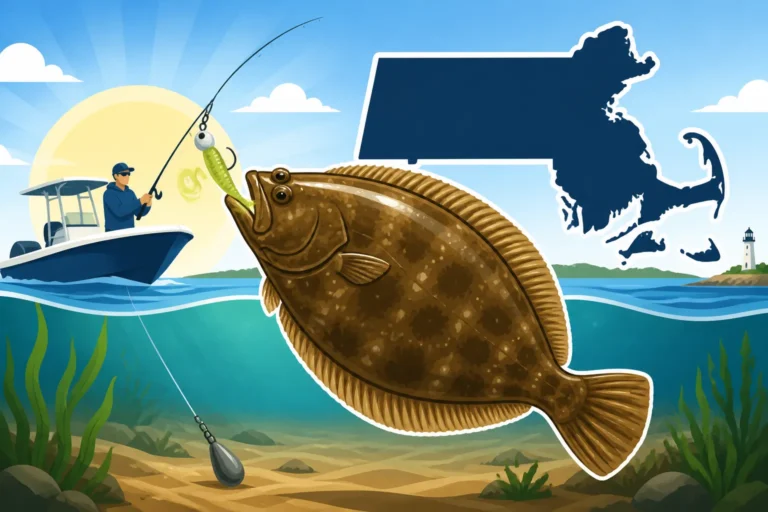
Imagine lying flat on the seafloor, perfectly camouflaged, with just your eyes peeking up. That's a fluke. They are perfectly adapted bottom dwellers, blending seamlessly with sand, gravel, and rubble. Their hunting strategy is to lie in wait, half-buried in the substrate, letting the current bring prey right to them. When an unsuspecting baitfish, squid, or crab drifts by, they erupt from the bottom with incredible speed, engulfing their meal in a swift, powerful strike.
This behavior is key to understanding why drift speed is so important. If your bait or lure moves too quickly, a fluke simply won't have enough time to identify it, decide it's prey, and then launch its attack. It'll just blow right past them. Conversely, if your drift is too slow, your bait might not cover enough ground to encounter active fish, or it might appear lifeless and unappealing. You need that goldilocks zone – just right. This predatory nature is a core element of how to catch fluke in Massachusetts.
Preferred Bottom Structure and Currents
Fluke aren't just lying anywhere; they're strategic. They favor areas where they can maximize their ambush opportunities. This often means places with some kind of bottom structure that creates current breaks, eddies, or distinct habitat changes. Think about it: why would a fluke sit out in the middle of a barren, flat sandy bottom with no current if they could position themselves in a more advantageous spot?
Look for areas with:
- Edges and Drop-offs: The transition zone where a flat sandy area meets a deeper drop-off is prime real estate. Prey often gets swept along these edges, and fluke will position themselves at the lip of the drop to ambush.
- Channel Edges: Similar to drop-offs, the edges of tidal channels or navigation channels create distinct current patterns and funnels for baitfish.
- Mussel Beds and Rocky Patches: These areas provide cover and attract smaller baitfish and invertebrates, which in turn attract fluke.
- Submerged Humps and Bumps: Any slight change in bottom contour can create a "feeding lane" on one side and a sheltered ambush point on the other.
- Inlets and Estuaries: As tides flow in and out, these areas create strong currents that concentrate bait and provide perfect ambush points.
Understanding these preferred habitats helps you predict where fluke will be sitting and, consequently, where your optimal drift path should be. It’s about putting your bait directly in their strike zone, and drift speed dictates how effectively you can do that in these specific areas.
Optimal Drift Speed for Fluke Fishing in Massachusetts
Okay, so we know fluke are ambush predators and where they like to hang out. Now, let's get down to the numbers: what’s the "best" drift speed? The truth is, there isn't one single magical number that applies to every single fishing scenario in Massachusetts, but there is certainly a productive range.
The "Sweet Spot" for Productive Drifts
For most fluke fishing scenarios, anglers aim for a drift speed somewhere between 0.5 and 2.0 knots. This range allows your bait or lure to cover ground, appear natural, and still give those bottom-dwelling fluke enough time to react and strike.
- 0.5 to 1.0 Knots: This slower end of the spectrum is often ideal when fishing in shallower waters (say, 10-30 feet), in areas with intricate bottom structure where you need to present your bait precisely, or when using lighter tackle and smaller baits. It's also excellent for when the fish are less aggressive or when the bait is particularly dense. If you're drift fishing techniques for summer flounder, starting slow can be very effective.
- 1.0 to 1.5 Knots: This is arguably the most common and often productive speed for a wide variety of conditions, especially when targeting fluke in moderate depths (30-60 feet) with typical jigs and bucktails. It allows for good coverage without being too fast.
- 1.5 to 2.0+ Knots: You might push to this faster range when covering large, relatively featureless flats to locate active fish, in deeper water (60+ feet), or when the fluke are particularly aggressive and chasing bait. When the currents are running hard, you may find yourself naturally drifting at these speeds, and it's essential to adjust your weight and presentation accordingly.
It's crucial to have a reliable GPS unit or depth sounder with a speed indicator on board. You can find excellent options, even portable ones for smaller boats, on platforms like Amazon. Monitoring your actual speed over ground (SOG) is far more important than just guessing by looking at the water.
Factors Influencing Ideal Drift Speed
Several environmental factors conspire to dictate your actual drift speed and, consequently, how you should adapt your approach.
- Wind Strength and Direction: This is often the biggest external factor. Strong winds can push your boat significantly, sometimes at a different angle and speed than the underlying current. A strong crosswind, for instance, might cause your boat to "crab" sideways faster than the current is actually flowing, making it hard to keep your bait near the bottom.
- Tidal Current Strength: The tide is the true current that moves the water your bait is in. A ripping outgoing tide can send you flying, while slack tide might leave you barely moving. Strong currents often require heavier weights to keep your bait down, which in turn affects how it moves.
- Depth of Water: In shallower water, even a slight current or wind can have a pronounced effect on your drift speed and the angle of your line. In deeper water, the wind might push the boat, but the drag of your line and weight through hundreds of feet of water can somewhat mitigate the surface speed's impact on your bait’s movement closer to the bottom.
- Bottom Structure: Drifting over sticky bottom, like rock piles or mussel beds, will naturally slow your drift due to the drag on your line and weight. Open sandy flats allow for a smoother, often faster drift.
- Bait/Lure Type: Are you using a heavy bucktail jig that cuts through the water, or a light dropper rig with a live minnow that flutters? Heavier, more streamlined lures are less affected by drift speed than lighter, more buoyant baits.
Adjusting Your Drift for Different Conditions
So, you're out there, and the wind is howling, or the tide is ripping, pushing you outside that ideal 0.5-2.0 knot window. What do you do? This is where true angling skill comes into play.
- Use a Drift Sock (Sea Anchor): This is your absolute best friend for drift control. A drift sock deploys in the water, creating drag that slows your boat down. By deploying one or even two (one off the bow and one off the stern for directional control), you can dramatically reduce your speed, especially in windy conditions. Different sizes are available, and having a couple on board for various conditions, easily found on Amazon, is a smart move for any serious fluke angler.
- Vary Your Weight: This is the most common adjustment. If you're drifting too fast and your line angle is too steep (meaning your weight is lifting off the bottom), increase your weight. Go from a 2-ounce to a 3-ounce, or even a 4-ounce bucktail or sinker. The goal is to keep your line as vertical as possible, typically at a 45-degree angle or less, to maintain bottom contact. If you're struggling to maintain bottom contact, check out the Massachusetts Fluke Size Limits Explained – because if you can't keep your bait down, you won't be catching any legal fish anyway!
- Change Your Drift Angle: Sometimes, slightly altering your boat's heading can change how the wind or current affects you. You might motor upwind/upcurrent and then let the boat settle into a new, slightly different drift.
- Utilize Boat Power: For very subtle adjustments, some anglers will "bump" their engine in and out of gear to maintain a slower drift or to steer the boat along a specific contour line, effectively using the engine to fight the natural drift. This requires a good feel for your boat and the conditions.
- Seek Current Breaks: If the main current is too strong, look for nearby areas that might offer a reprieve. The lee side of an island, a large shoal, or a distinct change in bottom contour can offer slower currents where fluke will concentrate.
Gear and Techniques for Effective Drift Control
Having the right equipment and knowing how to use it are non-negotiable for consistent fluke success, especially when you're meticulously managing your drift.
Essential Equipment for Monitoring and Modifying Drift
You wouldn't drive a car without a speedometer, so why fish without knowing your speed over ground?
- GPS Unit (with Speed Over Ground – SOG): This is your eyes on the drift. Your GPS will tell you precisely how fast your boat is moving. Most modern chartplotters or even handheld units will display SOG. This is absolutely critical for dialing in that sweet spot. You can often find reliable marine GPS devices or apps for smartphones that do the job on Amazon.
- Depth Sounder/Fish Finder: Not only does this show you the bottom structure where fluke lie, but it also helps you visualize your line angle. If your weight is showing up far behind your boat on the screen, you're drifting too fast for your current weight. It’s also invaluable for identifying where to start your drift by finding those key features.
- Drift Socks (Sea Anchors): As mentioned, these are invaluable. Don't cheap out. Get a robust drift sock appropriate for the size of your boat and the conditions you typically face. Deploying it off the bow or stern can slow you down, and even steer you somewhat. Remember, if you're out on the water and your drift is too fast, you might as well pack up if you don't have one of these. You want to make sure you're always following the Massachusetts Recreational Fishing Rules and Bag Limits, and a good drift ensures you're able to.
- Weighted Lures and Sinkers: Have a wide assortment of bucktail jigs and lead sinkers in various weights (from 1 oz to 6 oz, or even more for very deep or fast current situations). This allows you to quickly adjust to maintain bottom contact as drift speeds change throughout the day.
Mastering Your Presentation at Speed
Once you've got your drift speed dialed in, the next challenge is ensuring your bait or lure is presented effectively at that speed.
- Matching Weight to Speed and Depth: This is a constant game. The heavier the current and the deeper the water, the more weight you'll need. The goal is to keep your line as close to vertical as possible while still allowing your bait to bounce along the bottom. If your line is trailing far behind your boat, you're not making good contact. This is particularly important for fluke size limit for boat anglers in Massachusetts, as proper presentation helps avoid foul hooking and ensures legal catches.
- Line Choice: Using braided line is a huge advantage for fluke fishing. Its thinner diameter cuts through the water with less resistance than monofilament, allowing you to use lighter weights to maintain bottom contact. The lack of stretch in braid also means you feel every subtle tap and bump from the bottom, and more importantly, those soft fluke bites. Attach a fluorocarbon leader for abrasion resistance and stealth.
- Jigging and Bouncing: Even when drifting, your presentation shouldn't be static. Actively jigging your rod tip, lifting and dropping your bait, creates movement and puffs of sand that mimic a fleeing or feeding baitfish. This action is crucial for attracting the attention of those camouflaged fluke. Experiment with the cadence – sometimes a slow, deliberate lift is best, other times a quick twitch.
- Bait/Lure Selection: Whether you're using live bait like peanut bunker or spearing, or artificials like Gulp! Swimming Mullet on a bucktail, ensure your bait is rigged cleanly and naturally. A bait that spins or looks unnatural as it drifts will deter strikes. For example, if you're trying to figure out "when fluke season starts in Massachusetts in 2026", remember that having your tackle ready, including a variety of jigs and sinkers, is key from day one.
- Fan Casting (Optional): If you're on a boat with multiple anglers, have everyone fan cast in different directions to cover a wider swath of the bottom. This helps locate fish faster and determines if fluke are holding in specific areas relative to the boat's drift path.
| Drift Speed Range (Knots) | Ideal Conditions | Recommended Weight (Approx.) | Best Application |
|---|---|---|---|
| 0.5 – 1.0 | Light wind, slow current, shallow water (10-30ft) | 1-3 oz | Precise structure fishing, finicky fish |
| 1.0 – 1.5 | Moderate wind/current, typical depths (30-60ft) | 2-4 oz | General fluke fishing, good coverage |
| 1.5 – 2.0+ | Strong wind/current, deep water (60ft+), searching | 3-6+ oz | Covering large flats, aggressive fish |
Note: Weight recommendations are highly variable based on line diameter, bait/lure size, and specific water conditions.
Remember, fluke fishing is often a game of finesse and adaptation. Don't be afraid to experiment with your drift speed, adjust your weight, or even change your lure if what you're doing isn't producing. Pay attention to what other successful anglers are doing, or ask charter captains in your area what they've found most effective. The waters around Massachusetts, from Buzzards Bay to the numerous productive spots on Cape Cod, Massachusetts, each present unique current and depth challenges that require thoughtful adjustment to your drift. Continuously learning and refining your approach will lead to more fish in the cooler.
Disclaimer
Please note that fishing regulations, including size and bag limits, can change. Always consult the latest rules and regulations from the Massachusetts Division of Marine Fisheries (MassDMF) before heading out on the water. This guide provides general information and best practices.