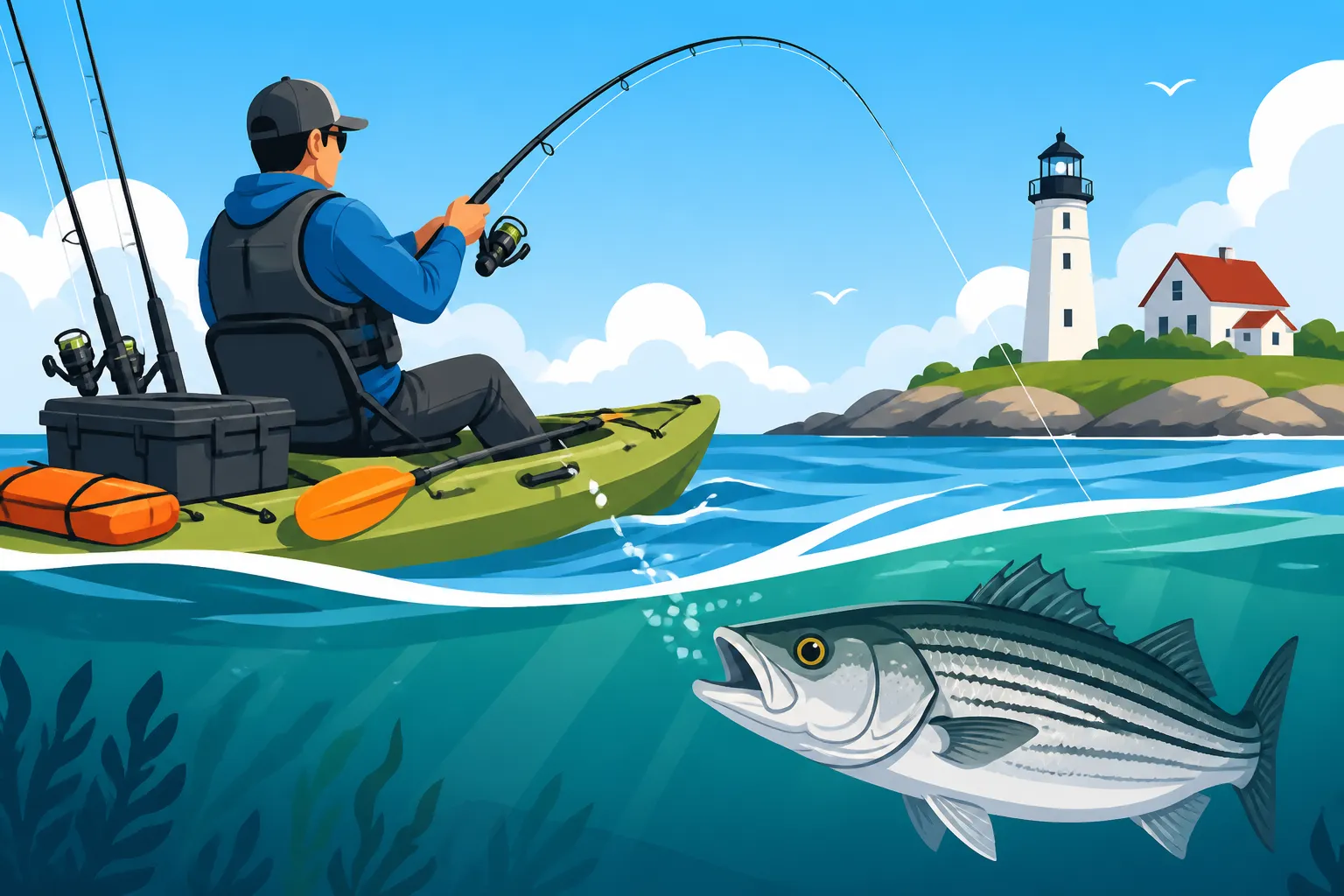
How to fish for striped bass from a kayak safely
The thrill of launching your kayak into the still, pre-dawn waters, paddling silently towards a prime striper spot as the sun begins to paint the sky – it's an experience many Massachusetts anglers dream about. There's a deep satisfaction in reaching those shallow coves and rocky outcroppings that larger boats can't access, getting up close and personal with a feisty striped bass that pulls hard against your lightweight craft. But let's be real, kayak fishing, especially in saltwater for powerful fish like stripers, comes with its own set of serious challenges and risks. This guide is all about helping you understand how to embrace that exhilarating freedom while keeping yourself safe, well-equipped, and prepared for whatever the rich Massachusetts waters throw your way.
The Unique Allure and Real Risks of Kayak Striper Fishing
There's no doubt about it, kayak fishing for striped bass offers an unparalleled connection to the marine environment. You're low to the water, paddling with your own power, and often finding yourself in places where the roar of an outboard motor would simply scare the fish away. But that intimacy also means you're more exposed to the elements and potential hazards.
Why Kayak Fishing for Striped Bass is So Appealing
Many anglers, myself included, are drawn to kayak fishing for stripers because it feels like the ultimate personal challenge. You're not just fishing; you're paddling, navigating, fighting a fish, and managing your gear all from a relatively small, unstable platform. This often allows for an incredible stealth factor. Imagine silently gliding into a shallow estuary just as the tide starts to turn, spotting a school of stripers busting bait against a marsh grass bank, and being able to cast a topwater plug right into the heart of the action without disturbing them. You can reach those skinny water back bays and rocky shorelines that are inaccessible to even small skiffs, opening up a whole new world of fishing possibilities.
The fight itself is also amplified. When a powerful striped bass hits your line while you're sitting inches above the water in a kayak, every head shake and powerful run is felt directly through your paddle, your seat, and your rod. It’s an adrenaline rush that's hard to replicate from a larger vessel, creating a memory that lasts long after the fish is released. This level of engagement and the sense of self-reliance are core to the appeal, fostering a deeper appreciation for the fish and the environment.
Understanding the Unique Dangers of Kayak Fishing
However, it's crucial to acknowledge the flip side. That low-to-the-water position that gives you such an advantage also makes you vulnerable. Kayaks, by their nature, are less stable than even small boats. A sudden shift in weight, a rogue wake from a passing vessel, or an unexpectedly powerful fish can all lead to capsizing. Once you're in the water, especially in the cooler spring and fall waters of Massachusetts, hypothermia becomes a serious concern.
You're also exposed to the elements in a way that anglers on larger boats often aren't. Wind can quickly make paddling impossible and blow you off course, tides and currents can swiftly carry you away, and sudden thunderstorms can turn a pleasant outing into a life-threatening situation. Boat traffic, particularly in busy areas like Boston Harbor or around Cape Cod, poses a significant collision risk, as kayaks are small and difficult for larger vessels to spot. Plus, managing fishing gear, a powerful fish, and potentially navigating simultaneously requires a high level of situational awareness and practice. Without proper planning and equipment, what starts as a peaceful fishing trip can quickly become a dangerous predicament.
Essential Gear for Safe Kayak Striper Fishing
Getting the right gear isn't just about catching fish; it's about ensuring you make it home safely. When you're out there, just you and your kayak, every piece of equipment serves a vital purpose. Think of it as your personal safety net.
Personal Safety Equipment: The Non-Negotiables
This is where you absolutely cannot cut corners. Your personal safety equipment is your first line of defense against the unexpected.
- Personal Flotation Device (PFD): This isn't optional; it's mandatory. And it's not enough to just have it on board; it must be worn at all times, properly fitted. Accidents happen fast, and there's often no time to don a PFD once you're in the water. Look for one designed for paddling, offering good mobility for casting and paddling strokes. There are inflatable options that are less bulky, but they require proper maintenance. Investing in a comfortable, high-quality PFD from a reputable brand (you can often find excellent options on Amazon) will make it easier to wear it throughout your trip.
- Whistle or Air Horn: A simple pealess whistle attached to your PFD is a legal requirement in many places and an essential signaling device. If you're in distress, shouting won't carry far over wind and waves, but a whistle can attract attention from a distance. An air horn offers even greater range and is excellent for alerting larger vessels to your presence, especially in low light or fog.
- Visual Signaling Devices: A small signal mirror can reflect sunlight for miles, attracting distant help. For nighttime or low-visibility situations, a bright, waterproof headlamp or a handheld distress flare can be a lifesaver. Some anglers also attach a bright flag or light to a tall pole on their kayak for increased visibility to other boaters.
- VHF Radio: While a cell phone is useful, it's not a reliable substitute for a waterproof handheld VHF marine radio, especially offshore or in areas with spotty cell service. A VHF allows you to call for help on Channel 16 (the distress channel) and communicate with other boats or rescue services. Learn how to use it before you need it.
- First Aid Kit: A compact, waterproof first aid kit stocked with essentials for minor injuries (cuts, scrapes, stings, headaches) is a must-have. Consider adding some motion sickness medication if you're prone to it, as the gentle rocking of a kayak can sometimes bring it on.
Kayak Rigging and Stability Considerations
The way you set up your kayak can drastically impact both your fishing efficiency and your safety.
- Kayak Type: For saltwater fishing, especially for larger species like stripers, a sit-on-top (SOT) kayak is generally preferred over a sit-inside. SOTs are inherently more stable, easier to re-enter from the water if you capsize, and self-bailing, meaning water drains out through scupper holes. Look for wider, purpose-built fishing kayaks that offer a stable platform.
- Rod Holders: Multiple rod holders are key for managing your tackle. Flush-mount holders are great for storage and trolling, while adjustable ram-mount or rail-mount holders allow you to position a rod exactly where you need it for live-lining or working a lure. Ensure they are robust enough to withstand the pull of a powerful striped bass.
- Paddle Leash: This simple piece of gear will save you a lot of heartache. Losing your paddle miles offshore is a terrifying scenario. A coiled paddle leash keeps your paddle securely attached to your kayak, even if you momentarily let go or capsize. You can find reliable leashes on Amazon or at local tackle shops.
- Anchor System with Quick Release: An anchor is essential for holding your position in current or wind, allowing you to effectively fish a specific spot. However, a quick-release system is paramount for safety. If an unexpected wave or a strong current catches your anchor line, or a large fish tangs it, you need to be able to instantly detach from the anchor to prevent being pulled under or capsizing. This typically involves a cleat or ring that allows the line to be rapidly freed.
- Outriggers/Stabilizers: If stability is a major concern, particularly for beginners or if you plan to stand and fish, kayak outriggers or pontoons can dramatically increase your kayak's stability. They clip onto the sides of your kayak and provide extra buoyancy and a wider footprint, making the craft much harder to tip.
Navigation and Communication Tools
Knowing where you are, where you're going, and how to call for help is fundamental to safe kayak fishing.
- GPS/Chartplotter: A dedicated waterproof GPS unit is ideal, allowing you to mark fishing spots, navigate through fog, and find your way back to shore. Many modern units also feature detailed marine charts. If you rely on your smartphone, ensure it's in a robust, waterproof case and consider an external battery pack. Download offline maps of your fishing area beforehand, as cell service can be spotty.
- Compass: A good old-fashioned magnetic compass can be a lifesaver if your electronic devices fail. Learn how to use it to take a bearing to shore or a known landmark.
- Marine Charts/Maps: Study detailed marine charts of your intended fishing area beforehand. These show depths, channels, navigational aids, potential hazards (rocks, shoals), and current directions. Understanding the topography of the bottom can also reveal prime striper habitat. Even a laminated paper chart can be invaluable as a backup.
- Charged Cell Phone: While not a primary distress signal, a fully charged, waterproofed cell phone is excellent for checking forecasts, communicating with your "shore contact" (more on that later), and for non-emergency situations. Always keep it in a dry bag or waterproof case.
Strategies for Staying Safe While Chasing Stripers
Having the right gear is just the beginning. Knowing how to use it, and more importantly, how to avoid situations where you need it, is what truly makes a safe and successful kayak angler.
Pre-Trip Planning and Weather Wisdom
Preparation is your best friend when kayak fishing for striped bass in Massachusetts. Never underestimate the power of the ocean, even on a seemingly calm day.
- Check Detailed Forecasts: Don't just glance at the general weather app. Look for marine forecasts that specify wind speed and direction, wave height, and swell period. Pay close attention to tidal charts; strong currents can be dangerous and exhausting to paddle against, especially in areas like the Cape Cod Canal Fishing Guide for Massachusetts Anglers. Even small changes in wind or tide can dramatically affect your experience. A light breeze can quickly whip up a chop that makes paddling difficult and uncomfortable, let alone fishing. If the forecast looks iffy, postpone your trip. No fish is worth risking your safety.
- "Float Plan" Communication: Always, always tell someone reliable where you're going, when you expect to be back, and what your kayak looks like. This "float plan" is critical. If you don't return on time, they know where to start looking and can alert authorities. Provide details like your launch point, general fishing area, and the color of your kayak and PFD.
- Understand Local Currents and Tides: Massachusetts waters, from the estuaries to the open ocean, are heavily influenced by tides. Strong currents can be found in inlets, around jetties, and in certain fishing hotspots. Plan your paddle to go against the current when you're fresh, and with it when you're tired and heading back. Knowing the specific tidal patterns in your chosen fishing spot, perhaps referenced in a guide like Best Saltwater Fishing Spots on Cape Cod, Massachusetts, is not just a safety measure but also a key fishing strategy, as stripers often feed actively on moving water.
On-Water Best Practices for Striped Bass Anglers
Once you're on the water, vigilance and good judgment are paramount.
- Stay Visible at All Times: You are a small craft, and larger boats may not see you. Wear bright clothing, especially your PFD. Use a kayak flag with a bright, reflective material mounted on a tall pole. Avoid fishing in busy shipping channels or areas with heavy boat traffic. If you must cross a channel, do so quickly and directly, after ensuring the way is clear.
- Paddle Smart, Not Hard: Conserve your energy. Learn efficient paddling strokes. If you're heading out against a strong wind or current, consider a shorter trip or pick a more sheltered location. Pushing yourself to exhaustion far from shore is a recipe for disaster. If you're out for an extended trip, consider techniques discussed in guides like How to fish for striped bass from a kayak safely for energy conservation.
- Practice Self-Rescue: Know how to get back into your kayak if you capsize. Practice in calm, shallow water. It's much harder than it looks, especially with fishing gear, and even more so in cold water or with waves. A re-entry strap or stirrup can make a huge difference.
- Manage Your Catch Safely: A large striped bass can be incredibly powerful. When you hook a big one, keep your body weight centered and be prepared for the kayak to move. Avoid leaning excessively or letting the fish pull your rod tip under the kayak. If you intend to keep a fish (within Massachusetts Recreational Fishing Rules and Bag Limits), have a plan for securing it quickly and humanely. A fish bag or cooler strapped into the kayak is much safer than trying to wrestle a thrashing fish into a small storage hatch. If practicing catch and release, ensure you have a proper de-hooking tool and consider a net with a rubberized mesh to protect the fish.
Emergency Preparedness and What-If Scenarios
Even with the best planning, emergencies can happen. Being ready for them is non-negotiable.
- What to Do if You Capsize: The first rule is to stay with your kayak. It's a flotation device and much easier for rescuers to spot than a lone swimmer. Right your kayak, gather any floating gear, and attempt self-rescue. If self-rescue isn't possible, use your signaling devices (whistle, flare, VHF) to call for help.
- Hypothermia Prevention: Cold water saps body heat quickly. Even on a warm day, Massachusetts waters can be cold. Dress in layers made of synthetic materials or wool, which retain insulating properties when wet. Avoid cotton. Consider a dry suit or wet suit for colder water conditions. If you do go in the water, get out as quickly as possible and seek warmth.
- First Aid for the Unexpected: Be prepared for minor injuries, but also think about more serious ones. If you're fishing alone, consider what you would do if you suffered a severe cut or a broken bone. Having a tourniquet and knowing how to use it could save your life in an extreme scenario. Ensure your first aid kit is easily accessible, even if you're in the water.
- Knowing When to Call for Help: Don't hesitate. If you're in immediate danger, disoriented, can't make it back to shore, or a medical emergency arises, activate your signaling devices and use your VHF radio (Channel 16) or phone to call for help. It's always better to be safe than sorry.
Specialized Techniques and Considerations for Striped Bass
Kayak fishing isn't just about safety; it's about effectively targeting those elusive striped bass from a unique vantage point. Merging safe practices with smart fishing techniques is the key to success.
Fishing Methods Suited for Kayaks
The stealth and maneuverability of a kayak open up several highly effective methods for catching stripers.
- Trolling with Tube-and-Worm: This is a classic and incredibly effective technique for striped bass, especially in deeper channels or along structure. You simply paddle slowly (or use a pedal drive system for hands-free propulsion) while dragging a rigged tube-and-worm combination behind you. The slow, undulating action of the tube combined with the scent of the worm is irresistible to stripers. The beauty of kayak trolling is that you can cover a lot of water quietly, effectively mapping out feeding lanes. Just be sure to have a secure, hands-free rod holder so you can keep paddling until a fish hits. This method is particularly effective around rocky shorelines and tidal rips, as detailed in guides like How to Catch Striped Bass in Massachusetts.
- Casting Soft Plastics and Topwaters: Kayaks excel at getting into shallow water, perfect for casting soft plastics (like paddletails or swim shads) or topwater lures. These lures mimic baitfish and are incredibly exciting to fish, especially when you can see the stripers chasing them. The silent approach of a kayak means you can often get within casting distance of schools of fish without spooking them, allowing for precise presentations right where the action is. Pay attention to the tides and current, as stripers often ambush bait in specific choke points.
- Live-Lining Bait (Eels, Mackerel): When targeting bigger striped bass, especially at night or in strong currents, live-lining bait can be king. From a kayak, this requires careful management. You'll need a livewell (or a bucket with an aerator) to keep your bait fresh and a robust rod holder for when a large eel or mackerel gets picked up. Just like trolling, a secure rod holder allows you to remain stable and manage your kayak while waiting for the strike. When the fish hits, be ready for a powerful fight that could test your balance!
Handling Striped Bass from a Kayak
Landing and handling a powerful striped bass from a kayak requires a delicate touch and good technique to ensure both your safety and the well-being of the fish.
- Playing the Fish Effectively: When a striper hits, resist the urge to horse it in. Let the fish run, use your drag, and pump the rod rhythmically. Keep your rod tip up and fight the fish from the side of your kayak, not directly off the bow or stern, to maintain balance. A large striper can easily pull your kayak around, so be prepared to pivot and follow its movements. Don't let the fish get under your kayak, as this can lead to tangles or even capsizing.
- Proper Fish Handling and Release: If you're planning to release the fish (which is common for many striped bass, especially outside the legal slot limit), minimize its time out of the water. Have a net handy (a rubberized mesh net is best to protect the fish's slime coat). Once netted, remove the hook quickly with a de-hooking tool or pliers. Cradle the fish gently, support its belly, and revive it facing into the current until it swims away strongly. For bigger fish, you might even consider reviving them while still in the water, keeping them alongside the kayak.
- Managing a Keeper: If you land a legal keeper within the Massachusetts Striped Bass Slot Limit Explained, you'll need a plan for securing it. A quality fish bag or stringer that can be clipped to your kayak and submerged in the water is often the best option to keep the fish fresh. Avoid letting a thrashing fish loose inside your kayak, as it can cause damage, make a huge mess, and even be dangerous if it kicks free and you lose your balance. Always have a measuring device readily available to ensure compliance with current regulations.
Conclusion: Embrace the Challenge, Prioritize Safety
Kayak fishing for striped bass in Massachusetts is an incredibly rewarding pursuit, blending the thrill of the catch with the serenity of being out on the water under your own power. The connection you forge with the environment and the fish, as you stealthily navigate the rich coastal waters, is truly unique. However, this intimate experience demands respect for the inherent risks. By meticulously planning your trips, equipping yourself with the essential safety gear – from a worn PFD and a reliable VHF radio to a well-maintained kayak and an anchor with a quick release – and practicing smart on-water behaviors, you're not just preparing for the unexpected; you're setting yourself up for a lifetime of unforgettable adventures. So get out there, explore those hidden coves, feel the powerful tug of a striper on your line, and do it all with confidence, knowing you've made safety your number one priority.
Disclaimer
This article is for general informational purposes only and does not constitute professional advice. Laws, prices and regulations vary by location and change over time. Consult a qualified professional for guidance on your specific situation.