Best technique for salmon at Quabbin Reservoir
For many anglers, the thought of landing a sleek, powerful salmon from the deep, clear waters of Massachusetts' Quabbin Reservoir is a dream come true, but let's be honest, it's also incredibly intimidating. Unlike casting for bass in your local pond, targeting Quabbin's landlocked salmon requires a specific approach, a good bit of patience, and the right techniques to consistently find success. If you've been struggling to figure out how to even begin, this guide is here to break down the most effective methods to hook into these magnificent fish.
Understanding Quabbin's Salmon and Their Habits
Before we dive into the "how-to," it’s really helpful to understand the "who" and "where" when it comes to Quabbin's landlocked salmon. These aren't your typical backyard pond dwellers; they have very specific needs and behaviors that dictate where you'll find them and what they'll bite on. Ignoring these fundamental aspects is like trying to find a needle in a haystack – you might get lucky, but you're probably going to be frustrated.
Landlocked Salmon in Quabbin Reservoir
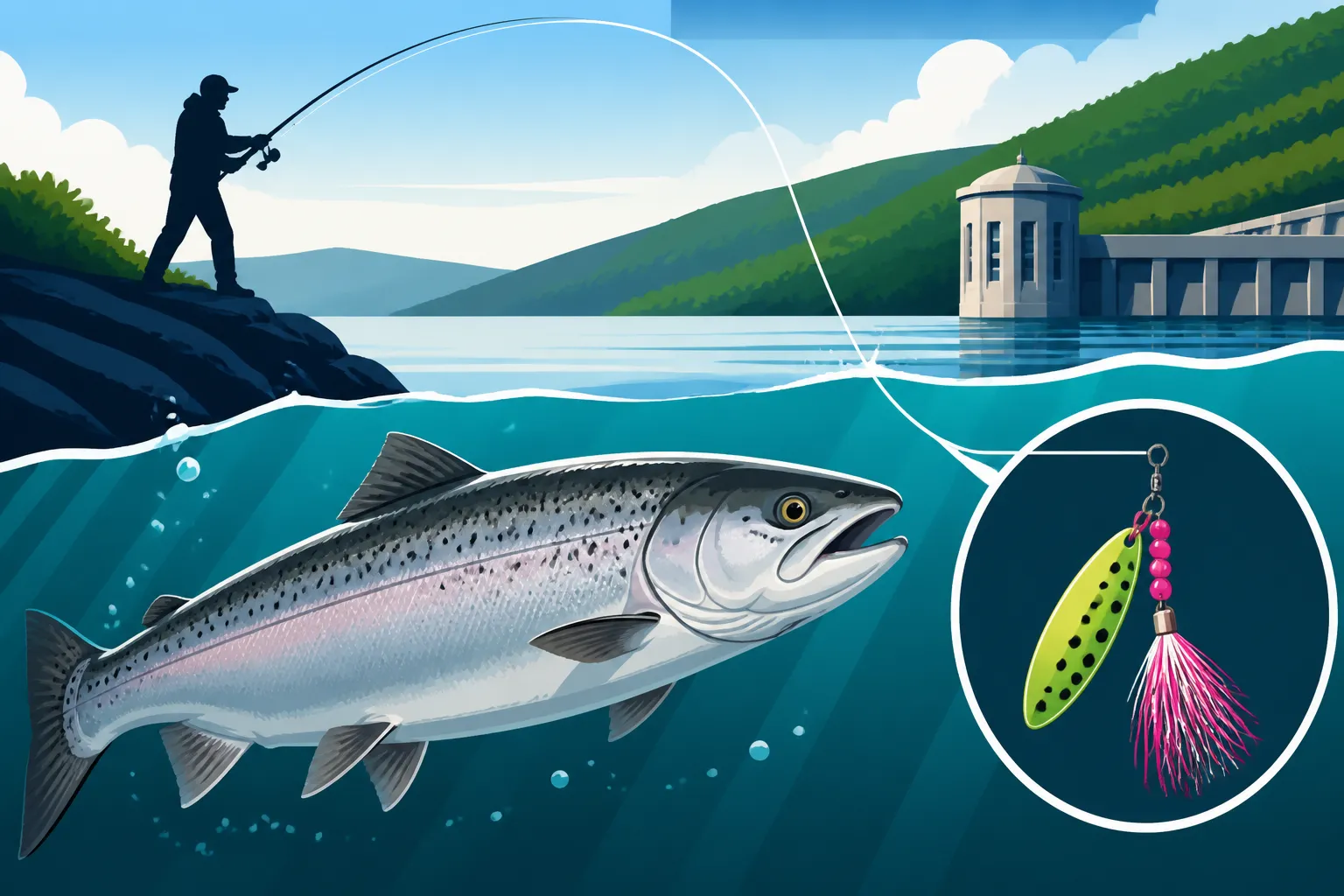
Quabbin Reservoir is truly a jewel in Massachusetts, not just for its breathtaking beauty but also as a premier cold-water fishery. The landlocked salmon here, primarily Atlantic salmon that are landlocked, are a challenging and rewarding species to pursue. They are powerful, fast, and incredibly sensitive to changes in water temperature and light. They thrive in the deep, cold, oxygen-rich waters that Quabbin provides, often preferring temperatures in the low 50s.
These fish are primarily piscivorous, meaning they feed on other fish. In Quabbin, their main forage is the abundant rainbow smelt, which are small, silvery baitfish that school in large numbers. This reliance on smelt means that successful salmon techniques often involve imitating these baitfish in terms of size, color, and action. They are typically found patrolling drop-offs, deep points, and open water where schools of smelt congregate. The sheer size and depth of Quabbin make finding these schools a critical first step.
Seasonal Movements and Feeding Patterns
Understanding the seasonal ebb and flow of salmon activity in Quabbin is paramount. They aren't in the same spots or feeding with the same intensity year-round. Thinking you can fish the same way in July as you do in April will lead to a lot of skunked trips. Each season presents a unique set of challenges and opportunities that you need to adapt to.
In the spring, after the ice has melted and the water is still cold, salmon will often be found in the upper water column and in shallower areas. They're recovering from the colder months, actively feeding on smelt that might also be moving into shallower waters for spawning. This is often when you'll see more aggressive strikes and, occasionally, fish closer to shore or near inflows. As the water warms, they'll start to descend into deeper, cooler zones.
Summer fishing for salmon in Quabbin becomes a deep-water game. The surface waters become too warm for these cold-loving fish, forcing them to retreat to the thermocline – that distinct layer where warm surface water meets cold deep water. Locating this thermocline, and the baitfish that also seek refuge there, is crucial. This is when electronic fish finders become indispensable. They'll be tightly schooled and often less active, requiring precise presentations.
As fall approaches and water temperatures begin to drop again, salmon often become more active and aggressive, moving out of the deepest haunts. This pre-spawn period sees them packing on weight, and they may be found higher in the water column again, especially during overcast days or early mornings and late evenings. This can be a fantastic time for both trolling and casting, as the fish are more willing to chase. Always remember to check the specific regulations for Quabbin, as they can differ from general state rules, especially concerning seasonal closures or specific access.
Top Techniques for Quabbin Reservoir Salmon
Okay, so you know what you're after and when to find them. Now, let's talk about the how. Catching salmon in Quabbin isn't about blind luck; it's about employing tried-and-true techniques that consistently get your lure in front of these elusive fish at the correct depth and speed.
Trolling with Downriggers and Lead Core Line
When you're dealing with a massive body of water like Quabbin, and fish that often hold at specific depths far from shore, trolling is king. To effectively troll for salmon, you need a way to get your lures down to where the fish are holding, which can often be 30, 40, or even 60 feet deep, especially in summer.
Downriggers are specialized tools that allow you to precisely control the depth of your lure. They consist of a heavy cannonball weight attached to a cable, which is then lowered into the water. Your fishing line, with the lure attached, is clipped to this cable with a release clip. When a fish strikes, the line pops free from the clip, allowing you to fight the fish directly without the weight of the cannonball. This precision is critical when salmon are holding tight to a thermocline. Pairing your downrigger with a good fish finder is essential; you want to see bait schools and salmon arches on your screen and then deploy your downrigger to that exact depth.
Lead core line offers another effective way to get your lures deep, though with less precise depth control than a downrigger. This specialized line has a lead core wrapped in a braided sheath, causing it to sink. It's often color-coded, with each color representing a certain length (e.g., 10 yards), and each segment typically sinks a certain amount at a given trolling speed. For example, you might learn that one color gets you about 5 feet of depth at a slow troll. By deploying multiple "colors" of lead core, you can estimate your lure's depth. Many anglers will use a full spool of lead core on a large reel, or incorporate segments of it into their trolling setup. It's fantastic for covering various depths without the bulk of downriggers, especially if you're in a smaller boat. When choosing lead core line or other specialized trolling gear, many anglers find great deals and selection on platforms like Amazon.
When trolling, experimenting with speed and direction is key. Salmon often respond to subtle changes. Try S-turns to vary the speed of your lure – the lure on the inside of the turn will slow down, while the one on the outside will speed up. This erratic action can often trigger strikes. Trolling speeds typically range from 1.5 to 3 miles per hour, but let the fish tell you what they prefer on any given day. Long, slender spoons, like the popular Flutter Spoons or Sutton Spoons, in silver, blue/silver, or gold patterns, are deadly. Stickbaits that mimic smelt, such as Rapala Original Floaters or Husky Jerks, are also excellent choices, especially when fished behind a dodger or flasher for added attraction. Remember that Quabbin Reservoir Fishing Permits and Rules in Massachusetts are very specific, especially regarding motor types and bait, so always consult the latest regulations.
Jigging in Deep Water
While trolling covers a lot of water, jigging offers a more targeted approach, especially when you've pinpointed schools of salmon or baitfish on your electronics, or are fishing over specific structures like humps, submerged islands, or deep points. This technique requires a keen eye on your fish finder and a steady hand.
Vertical jigging involves dropping a heavy jig directly down to the fish or the bottom and then working it with an up-and-down motion. The idea is to imitate a wounded baitfish or one darting erratically. Metal spoons, like the Swedish Pimple or Kastmaster, are classic choices, as are more modern vertical jigs designed to flutter on the fall. The weight of the jig needs to be sufficient to get down quickly and stay vertical in deep water, even with some wind or current.
The cadence of your jigging is important. Sometimes a slow, subtle lift and drop is all it takes; other times, an aggressive rip and fall will trigger a reaction strike. Pay attention to your electronics: if you see fish appearing or reacting to your jig on the screen, you're doing something right. Often, the strike will come on the fall, so feeling for that slight slack in your line or an unexpected tick is crucial. Good braided line with a sensitive rod helps immensely in detecting these subtle bites. This technique can be especially effective during the summer months when salmon are concentrated in deep, cool water.
Fly Fishing for Salmon Shore & Boat
For the purists and those who appreciate the art of the cast, fly fishing for Quabbin salmon offers a thrilling challenge. While often associated with streams, fly fishing can be incredibly effective in Quabbin, particularly during certain times of the year when salmon are more accessible in shallower water.
Shore-based fly fishing is most productive in the spring and fall when salmon are cruising closer to the banks, often chasing smelt or other baitfish in tributaries or near shallow points. You'll want a longer fly rod, perhaps a 7 or 8-weight, to handle larger streamers and give you the casting distance needed. Sinking lines (either full sinking or sink-tip) are generally preferred to get your flies down, but floating lines can work in very shallow conditions. Streamers that imitate smelt are the go-to patterns. Think Grey Ghost, Black Ghost, Nine-Three, or similar patterns with flash and a slender profile. Stripping these flies with an erratic retrieve, mimicking a darting baitfish, is usually the most effective approach.
From a boat, fly fishing can be done by trolling flies or by casting to sighted fish or areas where you observe activity. Trolling flies behind a small lead core line or even just with a full sinking fly line can be very productive. You're effectively presenting a larger, more realistic imitation than many conventional lures. When casting from a boat, look for areas where smelt are breaking the surface or where birds are diving, indicating schooling baitfish that salmon won't be far behind. For those interested in expanding their fly-fishing knowledge, there are many resources available for learning specific techniques like Fly Fishing for Trout in Massachusetts Rivers that can be adapted for salmon.
Essential Gear and Rigging for Quabbin Salmon
Having the right gear isn't just about comfort; it's about matching your equipment to the challenge of powerful fish in a big body of water. Trying to land a Quabbin salmon on ultralight tackle is usually a recipe for disappointment.
Rods, Reels, and Line Considerations
When it comes to rods, you'll likely need a few different setups depending on your chosen technique:
- Trolling Rods: For downriggers and lead core, a medium-heavy power rod with a moderate or fast action, typically 7 to 9 feet long, is ideal. This length helps spread lines in the boat, and the moderate action absorbs the shock of strikes and surging fish.
- Jigging/Casting Rods: A medium to medium-heavy spinning rod, 6.5 to 7.5 feet, with a fast action, will give you the sensitivity to feel bites and the backbone to fight fish.
- Fly Rods: As mentioned, a 7 or 8-weight rod, 9 to 10 feet long, is a versatile choice for throwing larger streamers and handling strong fish.
Reels should be robust and capable of holding a good amount of line. For trolling, conventional reels are often preferred for their line capacity and power, but large spinning reels can also work. For jigging and casting, a quality spinning reel in the 3000-4000 size range, known for its smooth drag, is a must. Fly reels should be appropriately sized for your rod weight and have a strong, smooth disc drag system – you'll need it!
Line choices are critical. For trolling setups, a sturdy braided main line (30-50 lb test) is often used as backing, especially with lead core, or as the main line for downriggers. A monofilament or fluorocarbon leader (10-20 lb test) should always be used with your lure. For jigging and casting, 10-20 lb braided line is excellent for sensitivity and casting distance, again with a fluorocarbon leader (8-15 lb test) for invisibility and abrasion resistance. Fly lines will vary based on your technique, from floating lines to various sink rates. Quality line is an investment, and you can find a wide range of options, including braided, fluorocarbon, and monofilament lines, on sites like Amazon.
Lure and Bait Recommendations
Quabbin salmon are primarily chasing smelt, so your lures should reflect that.
- Spoons: Long, slender spoons are incredibly effective. Favorites include Sutton Spoons, Flutter Spoons, and DB Smelt in silver, blue/silver, or gold combinations. The flash and darting action are irresistible.
- Stickbaits: Trolling stickbaits, particularly those with a thin profile, are also top producers. The Rapala Original Floater or Husky Jerk, in colors mimicking smelt or perch, are excellent. Sometimes, a small dodger or flasher ahead of the stickbait can add extra attraction, but be careful not to overpower the natural action of the lure.
- Flies: For fly fishing, smelt imitations are key. Patterns like the Grey Ghost, Black Ghost, Colby Smelt, and various streamer patterns tied with Mylar and bucktail to mimic a smelt’s flash and profile. Don't forget a good selection of nymphs for potential subsurface opportunities, though streamers are usually the primary producers for salmon.
It's important to remember that strict regulations apply to bait at Quabbin Reservoir. Live baitfish from outside Quabbin are strictly prohibited to prevent the introduction of invasive species. Always check the current Massachusetts Fishing Regulations Pamphlet, Explained for specifics before you head out.
Electronics and Accessories
Modern electronics can give you a significant advantage on a water body the size of Quabbin.
- Fish Finder/Sonar: Absolutely essential. A good fish finder will help you locate baitfish schools, identify the thermocline, and mark individual salmon arches. Learning to interpret what you see on the screen will dramatically increase your success rate.
- GPS: Equally important for navigation and marking productive fishing spots. Quabbin has many hidden humps, channels, and drop-offs. Being able to return to a successful trolling pass or a jigging spot is invaluable.
- Landing Net: A large, long-handled landing net is crucial for safely landing a powerful, acrobatic salmon. Trying to hand-land these fish is risky for both you and the fish.
- Cooler: If you plan to keep your catch (within legal limits), a good quality cooler with plenty of ice is necessary to preserve the quality of the fish.
Navigating Quabbin Reservoir for Salmon Success
Quabbin isn't just any lake; it's a massive, pristine public water supply with very specific rules and unique challenges. Being prepared for these specifics is just as important as your fishing technique.
Understanding the Unique Regulations
Fishing Quabbin Reservoir is a privilege, and it comes with strict regulations designed to protect its integrity as a drinking water source and a world-class fishery. Ignoring these rules can lead to heavy fines and the loss of fishing privileges.
- Permits: You'll need a specific Quabbin Reservoir daily fishing permit cost in addition to your standard Massachusetts fishing license. These are often purchased on-site at designated gates.
- Boat Permits: If you plan to fish from a boat, you must adhere to strict guidelines on motor type (electric motors only) and launch locations. All boats must be thoroughly inspected and cleaned to prevent contamination. You'll need a separate Quabbin Reservoir Boat Permit Requirements in Massachusetts.
- Bait Restrictions: As mentioned, no live baitfish from outside the reservoir are allowed. Only artificial lures or legally sourced live bait (e.g., worms) are permitted.
- Access Points: Access to the reservoir is limited to designated gates and boat launch areas. Familiarize yourself with these locations and their operating hours before you go. The Quabbin Reservoir's William E. Pula Fishing Area is one such popular spot.
Always consult the official Massachusetts Fish & Wildlife website or acquire the most current regulations pamphlet before planning your trip. These rules are in place for good reason, and adherence is mandatory. This also applies to general Massachusetts Fishing License Guide requirements, which are separate from Quabbin's specific permits.
Reading the Water and Interpreting Sonar
Beyond the regulations, understanding the water itself is paramount. Quabbin is incredibly deep, with a complex underwater topography.
- Thermocline: In warmer months, the thermocline is your best friend. This is where the cooler, oxygenated water meets the warmer surface water, and it's where baitfish and salmon will often congregate. Your fish finder will typically show this as a distinct band on the screen.
- Structure: Look for underwater humps, points, submerged islands, and old roadbeds. These features create current breaks and ambush points for salmon. Using your GPS to mark these spots and then thoroughly working them with trolling passes or jigging can pay off big.
- Bait Balls: Seeing dense schools of baitfish on your sonar is a huge indicator. Salmon are often not far behind. Try to troll or jig around the edges or through these bait balls.
- Patience and Observation: Sometimes, the best technique is simply to be patient and observe. Watch for surface activity (splashing bait, jumping fish), birds diving, or subtle changes in water color or temperature. These can all provide clues to where the salmon might be holding. Remember that Fishing Quabbin Reservoir by Season dictates where fish will be, so adjust your search accordingly.
Quabbin Reservoir Salmon Fishing Techniques Comparison
| Technique | Primary Depth Zone | Best Seasons | Ideal Lure/Bait | Best For |
|---|---|---|---|---|
| Trolling (Downriggers) | Deep to Mid-water (precise) | Spring, Summer, Fall | Spoons, Stickbaits (smelt patterns) | Covering large areas, precise depth targeting |
| Trolling (Lead Core) | Mid-water to Deep (approx.) | Spring, Summer, Fall | Spoons, Stickbaits | Covering varied depths without downriggers |
| Vertical Jigging | Deep Water (targeted) | Summer, Fall (when schooled) | Metal Jigs, Spoon Jigs | Pinpointing fish on sonar, specific structure |
| Fly Fishing (Casting) | Shallow to Mid-water | Spring, Fall | Streamers (smelt patterns) | Active fish near shore, visual fishing |
| Fly Fishing (Trolling) | Shallow to Mid-water | Spring, Fall | Streamers | Covering water with fly gear |
Disclaimer
This article is for general informational purposes only and does not constitute professional advice. Laws, prices and regulations vary by location and change over time. Consult a qualified professional for guidance on your specific situation.