Sharks Found in Massachusetts Waters
Anglers and beachgoers in Massachusetts often wonder, sometimes with a mix of awe and trepidation, just what finned creatures might be swimming beneath the surface of our beautiful coastal waters. The thought of sharks can certainly be intimidating, especially with all the media attention they receive, but understanding which sharks truly call Massachusetts home, and why they're here, is crucial for both personal safety and for appreciating our diverse marine ecosystem. This guide will take a deep dive into the fascinating world of sharks found in Massachusetts waters, from the well-known to the rarely seen, providing you with the knowledge to enjoy our ocean safely and respectfully.
Commonly Encountered Sharks in Massachusetts Waters
When you think of sharks in Massachusetts, especially around iconic places like Cape Cod, certain species immediately spring to mind. While the chances of a dangerous encounter are incredibly low, it's always wise to be aware of the more prominent shark residents and visitors that share our waters. These aren't just mythical creatures from movies; they are vital parts of our marine environment, each playing a unique and often misunderstood role. Knowing about them helps us coexist safely and appreciate the natural world around us.
Great White Sharks: The Apex Predator
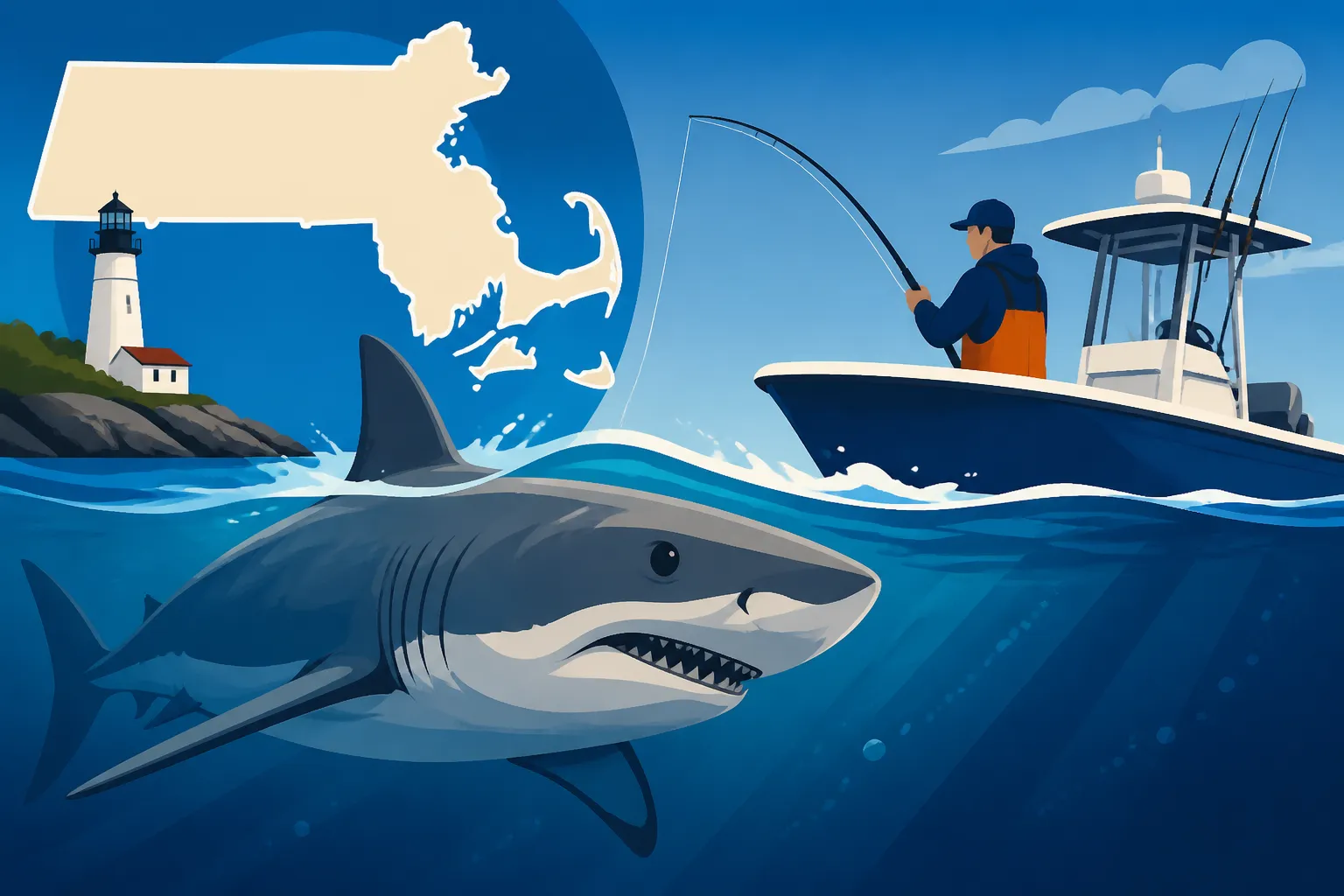
Ah, the great white. The mere mention of its name can send shivers down spines, conjuring vivid images from blockbuster movies and documentaries. But here in Massachusetts, particularly around the Outer Cape, these magnificent predators are a regular sight, primarily drawn by the burgeoning seal populations. Their consistent presence, while requiring heightened awareness for those of us who love the ocean, is actually a strong indicator of a healthy and robust marine ecosystem. They are following their food, which is a natural, ecological process.
Great white sharks typically make their appearance in our waters in late spring or early summer, closely following the warmer currents and, most crucially, their main food source: seals. They tend to patrol actively near seal haul-out areas and feeding grounds, often surprisingly close to shorelines where seals are most abundant. This means that areas like the waters off Chatham, Truro, and Orleans, particularly around popular beaches, can see increased shark activity. For recreational anglers, this translates to being particularly mindful when fishing in these specific zones. It's especially important if you're targeting species that might mimic a struggling seal or fish, or if you're cleaning your catch right at the water's edge, as scent can travel. While a direct interaction with an angler's hooked fish is rare, it's not entirely unheard of, so maintaining strong situational awareness is always key. For a deeper dive into precautions, consider reading Is It Safe to Fish Where Great White Sharks Are Seen?.
Their sheer size is truly impressive, with adult great whites commonly reaching lengths of 15 to 20 feet, and their powerfully built bodies are perfectly adapted for speed, stealth, and ambush hunting. Observing these incredible creatures from a safe distance, whether from a research vessel or through official aerial surveillance, offers a breathtaking glimpse into the raw power and majesty of nature. However, it's absolutely critical for swimmers, surfers, and kayakers to respect their territory and remember that they are sharing the ocean with a formidable predator. Always heed local warnings and advisories.
Basking Sharks: Gentle Giants of the Deep
In stark contrast to the great white's formidable predatory reputation, the basking shark is a true gentle giant of the sea. These massive creatures are the second-largest fish in the world, often growing to exceed 25 feet in length, and sometimes even larger, yet their entire diet consists exclusively of microscopic plankton. They are classic filter feeders, swimming slowly with their enormous mouths agape, efficiently straining vast quantities of these tiny organisms from the water column. They are an awe-inspiring sight for anyone fortunate enough to witness them.
You're most likely to spot basking sharks in Massachusetts during the warmer months, typically from spring through fall, when plankton blooms are most abundant and widespread. They tend to frequent both inshore and offshore waters, often swimming leisurely near the surface. Unfortunately, their large dorsal fins and tail lobes, breaking the water's surface, can be easily mistaken for those of a great white, causing understandable and often unnecessary alarm. However, their slow, deliberate swimming motion, often in predictable straight lines, and the distinct conical shape of their snout are key visual identifiers. If you observe what appears to be a large shark fin slowly moving just below the surface, but there's no frantic movement or aggressive behavior, it is highly probable that you are witnessing a magnificent basking shark peacefully feeding.
Anglers might encounter them passively while boating or fishing in certain areas. Basking sharks pose absolutely no threat to humans and are generally quite oblivious to boats and other marine activity, focused entirely on their plankton feast. It's critically important to give them plenty of space, not only for their safety and to avoid disturbing their natural behavior but also to prevent any accidental collisions or interference with their feeding patterns. These sharks are a protected species under state and federal law, so any interaction should be kept to an absolute minimum – simply observe from a respectful distance, appreciate their presence, and continue on your way.
Blue Sharks: Pelagic Wanderers
Blue sharks are arguably one of the most elegant and beautiful sharks found in Massachusetts waters, instantly recognizable by their striking indigo blue coloration and their slender, graceful, almost ethereal bodies. These truly pelagic (open-ocean dwelling) sharks are frequent visitors to our offshore regions, especially during the summer and early fall months when warmer ocean currents push northward into our area. They are highly migratory animals, capable of traversing vast stretches of the Atlantic Ocean, following food sources and favorable water temperatures across continents.
Anglers targeting larger offshore species like tuna or other sharks frequently encounter blue sharks. They are opportunistic and active feeders, preying on a wide variety of small fish, squid, and even scavenging carrion. While generally not considered a significant threat to humans unless severely provoked or injured, their natural curiosity can sometimes lead them to investigate boats, fishing lines, or hooked fish. If you're deep-sea fishing and a blue shark comes calling, it's best to handle the situation with extreme caution and respect. They possess sharp teeth and can be surprisingly agile and powerful when agitated. Many responsible anglers choose to practice catch and release with blue sharks, given their important role in the oceanic ecosystem and, in some areas, their status as a species of concern.
Blue sharks can reach impressive lengths of 10 to 12 feet, and their remarkably long, scythe-shaped pectoral fins are a distinctive characteristic, allowing them to glide with incredible efficiency and grace through the water. While they don't typically frequent shallow coastal areas like great whites, they are certainly a species you should be aware of if your angling adventures take you miles offshore. Understanding their migratory patterns and dietary habits is an integral part of the deep-sea angling experience here in Massachusetts. When gearing up for offshore expeditions, many anglers turn to platforms like Amazon for essential items such as heavy-duty line, specialized leader materials, and robust hooks, all crucial for targeting these powerful pelagic species.
Less Common, but Present, Sharks in Massachusetts
While the "big three" sharks often capture the most public attention and media headlines, Massachusetts waters are actually home to a wider, more diverse array of shark species. Some of these are less frequently seen by the average person, either because they inhabit deeper waters, are primarily seasonal visitors, or simply maintain a lower profile closer to the seabed. Nevertheless, they are important components of our rich marine biodiversity and contribute to the health of our ocean.
Mako and Thresher Sharks: Offshore Hunters
For the truly adventurous and dedicated offshore anglers in Massachusetts, mako and thresher sharks represent prized catches, renowned for their incredible fighting spirit, impressive size, and often spectacular acrobatic displays. These are true pelagic speedsters and powerhouses, living far from the immediate shoreline in the warmer, deeper waters of the Atlantic, typically encountered when targeting larger game fish during specialized trips.
Shortfin mako sharks are widely recognized as one of the fastest shark species in the entire ocean, capable of achieving blistering bursts of speed and performing spectacular, airborne leaps out of the water when hooked. Their sleek, perfectly torpedo-shaped bodies and rows of razor-sharp, dagger-like teeth are exquisitely adapted for hunting fast-moving prey such as tuna, swordfish, and other pelagic fish. They are seasonal visitors to our offshore banks and canyons, typically arriving during the peak summer and early fall months. Hooking into a mako shark is an intense test of strength, skill, and endurance for any angler, and strict regulations often govern their harvest to ensure sustainable populations. Thresher sharks, on the other hand, are instantly recognizable by their incredibly long, scythe-like upper tail lobe, which can astonishingly be as long as their entire body. They uniquely use this elongated tail to stun schools of smaller fish, making them easier to catch. While not as explosively fast as makos, they are powerful and enduring fighters on the line. Both mako and thresher sharks are immensely important species in the offshore ecosystem, and their regular presence highlights the incredible richness and diversity of Massachusetts' deep-sea environment.
Sand Tiger and Dogfish: Nearshore Bottom Dwellers
Moving slightly closer to shore, but often overlooked by casual observers, are species like the sand tiger shark and various dogfish species. These sharks typically prefer to inhabit the seabed or slightly deeper, cooler bottom waters, making them less likely to be encountered by recreational swimmers but very familiar to bottom fishermen. They are a common sight on many a fishing trip.
Sand tiger sharks possess a fearsome and somewhat prehistoric appearance, characterized by their rows of jagged, needle-sharp teeth that often protrude visibly even when their mouths are closed. Despite this intimidating look, they are generally considered quite docile towards humans. They are frequently found lurking near wrecks, artificial reefs, and natural rocky bottom structures where they primarily feed on smaller fish, crustaceans, and squid. While they are indeed a coastal species, they tend to stay in deeper, often murkier waters, making direct surface encounters relatively rare. Anglers fishing for groundfish or other bottom dwellers might occasionally hook a sand tiger, and their appearance can be quite a surprise when brought to the boat! They are a federally protected species, so if you do happen to catch one, responsible catch-and-release practices, ensuring minimal harm and a quick return to the water, are paramount.
Dogfish, particularly the spiny dogfish, are far more common and perhaps the most frequently encountered shark by recreational anglers throughout Massachusetts. These are relatively smaller sharks, usually only growing to about 2-4 feet long, and they often travel in incredibly large, dense schools. They are voracious bottom feeders, opportunistic and abundant, and are sometimes seen as a nuisance by anglers targeting other species because they can quickly devour bait. Spiny dogfish get their name from the sharp spines located immediately in front of each of their two dorsal fins, which can deliver a mild venom. While not dangerous in a life-threatening way, a poke from these spines can be quite painful, so handling them requires careful attention and appropriate gear, which you can often find listed on platforms like Amazon. Whether you're considering Do You Need a License to Fish in Massachusetts Ponds? or coastal areas, knowing the rules for all species, including dogfish, is essential. Despite their reputation with some anglers, they are a vital and numerous part of the marine food web, serving as an important prey source for larger sharks and marine mammals.
Understanding Shark Behavior and Safety in Massachusetts
While the mere thought of sharks can understandably trigger ancient, primal fears, it's important to remember that the vast majority of interactions between humans and sharks are benign. Understanding their natural behavior and ecological roles is actually the very first and most crucial step toward promoting safety for both humans and sharks. Massachusetts has made significant strides in educating the public about shark presence, particularly around those areas most frequented by great white sharks on Cape Cod.
Understanding Shark Behavior
Sharks are not mindless, aggressive eating machines, as they are sometimes portrayed in sensational media; rather, they are highly evolved, sophisticated predators responding to complex environmental cues and innate instincts. Their primary focus, like any wild animal, is finding food to survive and thrive. For great white sharks in Massachusetts, this food source predominantly means seals. Therefore, nearly all documented human-shark interactions are almost certainly cases of mistaken identity, where a swimmer, surfer, or kayaker on a board might be perceived as a seal from the shark's perspective, especially from below against a bright surface. Various environmental factors, such as water clarity, the time of day, and the presence of schooling baitfish or marine mammals, can all significantly influence shark activity and their hunting behaviors.
Great white sharks, for example, often choose to hunt during dawn and dusk hours when visibility is naturally lower, giving them a significant advantage over their prey. They also tend to prefer cooler waters and deeper channels, although they will readily venture into shallower areas where seals congregate for feeding or resting. Blue sharks, by their pelagic nature, are typically found far offshore, where they are keenly interested in schooling fish and squid. Basking sharks, as we've discussed, are simply filter-feeding, completely uninterested in anything but microscopic plankton. Knowing these general patterns and preferences helps us to understand why and when certain sharks might be present in particular areas, empowering us to make more informed and responsible decisions about our ocean activities.
Staying Safe in Massachusetts Waters
Safety when recreating around sharks isn't about eliminating risk entirely – that's an impossible endeavor when entering the ocean – but rather about proactively minimizing it. The absolute key is constant awareness of your surroundings and consistently making smart, informed choices. This is especially true along the Outer Cape, where great white sharks are now a common and expected presence during certain times of the year.
Here are some crucial safety tips to keep in mind, applicable to all who venture into Massachusetts' beautiful coastal waters:
- Stay Informed: Always, without exception, check for current advisories, warnings, and conditions reports from local authorities, beach lifeguards, and the National Seashore before you even consider entering the water. Many beaches now prominently display flags or signs indicating recent shark sightings or increased activity.
- Avoid Solo Swims: Whenever possible, swim, paddle, or surf with a buddy or in a group. There's significant safety in numbers, and someone can quickly call for help or render assistance if an unexpected situation arises.
- Steer Clear of Seals: If you see seals in the water or hauling out on the beach, actively avoid those areas. Seals are the primary prey for great white sharks, and where seals are present, sharks are highly likely to be nearby, actively hunting.
- Don't Go at Dawn/Dusk: These low-light periods are known as prime hunting times for many shark species, as their prey is often less vigilant. Midday hours generally offer better visibility for both you and any potential observers on shore or in the water.
- Avoid Murky Water: Sharks, especially great whites, often rely on ambush tactics. Murky water, or areas where rivers or estuaries meet the ocean, significantly reduce visibility, increasing the chance of a mistaken identity interaction.
- No Shiny Jewelry: Bright, reflective objects worn in the water can inadvertently mimic the flash of fish scales, potentially attracting curious sharks who might investigate.
- Don't Agitate Fish or Clean Catch Near Swimmers: If you're fishing, always clean your catch away from designated swimming areas. Avoid actively attracting schools of baitfish close to where people are swimming, as this can draw in larger predators.
- Understand Rip Currents: Be vigilant about rip currents. These powerful currents can quickly carry you away from shore and potentially into deeper water where sharks might be present. Familiarizing yourself with general beach conditions and Massachusetts Surf Fishing Techniques can help you better understand and identify dangerous currents.
Always remember that when you enter the ocean, you are entering their natural home. Respecting the marine environment and being constantly mindful of your surroundings is your absolute best defense and the cornerstone of responsible ocean enjoyment.
Dispelling Common Shark Myths
Unfortunately, much of the widespread fear and apprehension surrounding sharks is fueled by persistent myths and widespread misinformation that is often perpetuated by sensationalized media. It's time to debunk a few common misconceptions that might circulate, even here in Massachusetts.
Myth 1: Sharks actively hunt humans. This is overwhelmingly untrue. As previously mentioned, the vast majority of human-shark interactions are almost certainly cases of mistaken identity. Humans are simply not a natural or preferred food source for any shark species. A shark's instinct is to hunt and consume animals they recognize as natural prey, not something completely foreign like a human being. A shark that bites a human typically realizes its mistake and releases.
Myth 2: All sharks are dangerous. This is far from the truth! The vast majority of the over 500 known species of sharks worldwide pose absolutely no threat to humans whatsoever. Even within Massachusetts waters, the immense basking sharks are gentle filter feeders, and the numerous dogfish are small and generally harmless if handled carefully. Only a very small handful of shark species worldwide are considered potentially dangerous to humans, and of those, only great whites are a regular and notable concern in Massachusetts' coastal environment.
Myth 3: You're safe in shallow water. While it's true that many shark species prefer deeper water, this is not a universally applicable rule. Great white sharks, particularly when actively hunting seals, can and do venture into surprisingly shallow water, especially if there's a nearby drop-off, channel, or a concentration of their prey. Always maintain vigilance regardless of the water's depth.
Myth 4: A single shark attack means the water is teeming with aggressive sharks. Not necessarily. A single shark sighting or an isolated incident doesn't automatically mean that a large, aggressive population of sharks is lurking just offshore. It often simply means that one shark was in one particular place at one specific time. However, it does mean you should be extra cautious in that specific area for a period, as conditions might be favorable for shark activity, or more individuals might be present. Understanding specific details from resources like Sharks Commonly Seen Off Cape Cod can help put individual incidents into proper perspective and provide accurate context.
Conservation, Research, and Angling Responsibility
Beyond the natural human emotions of fear and fascination, sharks hold an absolutely critical and irreplaceable place in our marine ecosystems. Their ongoing conservation, coupled with the dedicated scientific research aimed at understanding them, are vital endeavors. Similarly, responsible angling practices play a significant role in protecting these magnificent creatures.
Why Sharks Matter to the Ecosystem
Sharks are, by definition, apex predators in many marine environments, which means they occupy the very top of the food chain. This isn't just an interesting biological fact; it makes them incredibly important and indispensable for maintaining healthy, balanced, and resilient ecosystems. Think of them, quite accurately, as the ocean's crucial "clean-up crew" and its "quality control managers."
By naturally preying on sick, weak, or old fish and marine mammals, sharks help ensure that only the healthiest and most robust populations of their prey species thrive. This natural selection process prevents the overpopulation of certain species, which could otherwise lead to the depletion of essential resources and potentially cause widespread ecosystem collapse. For instance, the presence of great white sharks keeping seal populations in check around Cape Cod helps ensure that the seals don't overgraze specific fish stocks, which could harm commercial and recreational fisheries. Similarly, blue sharks in the open ocean play a crucial role in regulating populations of smaller pelagic fish and squid. The disappearance or severe decline of shark populations would undoubtedly have devastating cascading negative effects throughout the entire marine food web, impacting everything from the health and abundance of commercial fisheries to the vitality of coral reefs and other delicate habitats. Therefore, protecting sharks isn't just about protecting a single species; it's fundamentally about protecting the health and future of the entire ocean itself.
Massachusetts Research Efforts
Massachusetts has firmly established itself as a leading hub for shark research, particularly concerning the great white shark. Esteemed organizations like the Atlantic White Shark Conservancy, working in close collaboration with various state agencies such as the Massachusetts Division of Marine Fisheries, conduct extensive and groundbreaking research to better understand these magnificent creatures. This critical research includes advanced tagging and tracking of individual sharks, which provides invaluable data on their movements, migration patterns, preferred habitats, and even their daily behaviors.
This vital scientific work isn't purely for academic interest; it has profound and direct implications for public safety. By meticulously understanding where and when great white sharks are most active, researchers can provide timely, evidence-based information to lifeguards, beach managers, and the general public, enabling better and more informed decision-making regarding ocean access and recreational activities. Furthermore, the extensive data collected also directly informs crucial conservation strategies, ensuring that these vital apex predators are protected and managed sustainably for future generations. For anyone interested in delving deeper into these fascinating efforts, a wealth of educational materials, books, and even merchandise supporting shark research can often be found on platforms like Amazon, with many purchases directly contributing to funding ongoing studies and conservation initiatives.
Responsible Angling Practices
For the many anglers who regularly venture into Massachusetts waters, especially those targeting larger game fish, responsible and ethical practices are absolutely crucial when it comes to any interactions with sharks. Many shark species are protected by state and federal law, or are subject to strict catch limits and seasons, and even those that are not should always be treated with respect and care.
If you accidentally hook a shark, or are intentionally targeting a species like a blue shark, always prioritize the animal's welfare above all else. Use appropriate and adequately heavy gear that can handle the shark quickly and efficiently, minimizing the fight time and, consequently, the stress and exhaustion placed upon the fish. Circle hooks are highly recommended for shark fishing, as they tend to hook sharks cleanly in the corner of the mouth, significantly reducing the likelihood of gut-hooking and making a safe release much easier. Avoid removing the shark completely from the water if at all possible, especially larger species, as this causes immense physical stress and can lead to internal organ damage. If you must bring it alongside the boat, do so carefully and quickly, and release it as soon as safely possible. Always cut the line as close to the hook as possible if you cannot safely retrieve the hook, and ensure the shark swims off strongly and vigorously. Knowing the Massachusetts Recreational Fishing Rules and Bag Limits for all marine species, including any specific shark regulations, is not just a legal requirement but a fundamental part of being a responsible and ethical angler.
Identifying Sharks: Key Features for Anglers
Being able to accurately identify the shark species you encounter can be incredibly useful and enriching, whether it's for personal safety, ensuring compliance with fishing regulations, or simply for the pure thrill and appreciation of recognizing a magnificent creature. While distinguishing between some closely related species can sometimes be tricky, focusing on a few distinct key characteristics can significantly help in accurate identification.
Size and Shape Indicators
The overall size and the specific body shape are often the very first and most obvious clues to a shark's identity. For instance, the sheer bulk, robust build, and distinctive conical snout of a great white shark are highly characteristic and almost unmistakable, especially when compared to the more slender, graceful, and streamlined form of a blue shark. Basking sharks are quite literally unmistakable due to their truly massive size, their enormous, gaping mouth, and the prominent, almost floppy dorsal fin that often breaks the surface as they leisurely filter-feed.
Consider the general silhouette and proportions:
- Great White Shark: Heavy-bodied, powerful build, typically grey-to-bronze on the dorsal (top) side with a distinct, crisp white belly. Features a large, conical snout.
- Basking Shark: Immense size, often appearing sluggish as it feeds, characterized by an enormous mouth and a very large, prominent dorsal fin. Generally dark grey-brown in color.
- Blue Shark: Long, remarkably slender body, featuring a striking indigo-blue back that fades gracefully into a brilliant white belly. Known for its exceptionally long pectoral fins.
- Mako Shark: Highly streamlined, distinctly torpedo-shaped body, typically dark blue-grey on top with a white belly. Possesses a pointed, almost spear-like snout.
- Thresher Shark: Uniquely identifiable by its incredibly long, scythe-like upper caudal (tail) lobe, which can be as long as its entire body. Has a relatively smaller body, dark grey-brown in color.
- Spiny Dogfish: Small, relatively slender body, grey-brown coloration, distinguished by two dorsal fins, each conspicuously preceded by a sharp spine.
- Sand Tiger Shark: Stout-bodied appearance, pointed snout, with prominent, jagged teeth that are often visible even when its mouth is closed. Typically brownish-grey, sometimes with darker spots.
Keeping a marine species identification guide on hand, perhaps a durable, waterproof version you could easily acquire from Amazon, can be an invaluable resource to quickly confirm sightings and improve your identification skills while out on the water.
Fin and Tail Characteristics
The precise shape, size, and anatomical position of a shark's fins and tail can be absolutely crucial for accurate identification. Pay very close attention to the dorsal fins (located on the back), the pectoral fins (analogous to arms or wings on the sides), and the caudal fin (the tail). Each species often has distinct features here.
- Dorsal Fins: Great white sharks possess a single, very large, triangular first dorsal fin that is often famously compared to a "sail." Basking sharks also have a very tall, sometimes floppy, first dorsal fin that is quite noticeable. Blue sharks, in contrast, have a relatively small first dorsal fin that is positioned noticeably far back on their body. Spiny dogfish uniquely have two relatively small dorsal fins, each distinctly preceded by a sharp, venomous spine.
- Pectoral Fins: Blue sharks are renowned for their exceptionally long, narrow, and graceful pectoral fins, which they expertly use to glide with minimal effort through the open ocean. Mako sharks have shorter, more pointed, and powerful pectoral fins, indicative of their high speed.
- Caudal Fin (Tail): The thresher shark's tail is undoubtedly its most defining and iconic feature, with the upper lobe being astonishingly long and whip-like. Mako sharks possess a crescent-shaped, almost perfectly symmetrical tail, which is a classic adaptation for sustained high-speed swimming. Great white sharks also have a powerful, symmetrical caudal fin that is notably crescent-shaped, providing immense propulsion.
Observing these specific details can significantly help in differentiating between shark species that might otherwise appear similar at a quick, cursory glance. For example, distinguishing a great white from a very large blue shark offshore often comes down to careful observation of body girth, overall robust build, and the specific shapes of their fins.
Coloration and Markings
While coloration can exhibit slight variations due to factors like water conditions, lighting, or individual differences within a species, it generally provides another highly useful clue for identification.
- Great White Sharks: Famous for their distinct countershading – a dark grey or bronze-grey on their dorsal (top) side that sharply transitions to a crisp, bright white on their ventral (belly) side. This effective camouflage helps them blend against the dark ocean bottom when viewed from above, and against the bright, sunlit surface when viewed from below, aiding in ambush.
- Blue Sharks: Their name is a perfect description! They exhibit a vibrant indigo or dark, metallic blue on their back, fading gracefully to pure white underneath. This striking and beautiful coloration makes them quite a sight to behold.
- Mako Sharks: Typically possess a brilliant, metallic blue-grey on their top side, smoothly fading to white on their undersides, further emphasizing their sleek, fast nature.
- Thresher Sharks: Generally appear dark grey to a brownish-grey on their dorsal surfaces, with noticeably lighter undersides.
- Spiny Dogfish: Characterized by a rather plain grey-brown coloration with lighter bellies, and sometimes display faint white spots or markings along their flanks, although these can fade with age.
- Sand Tiger Sharks: Typically brownish-grey in color, often with distinctive darker spots scattered along their flanks, although, like the dogfish, these spots can become less prominent in older individuals.
Understanding and practicing with these visual cues, combined with a general knowledge of where and when different shark species are typically found in Massachusetts waters, will undoubtedly make you a much more informed, confident, and appreciative observer of our incredible marine life. Remember that adhering to regulations like those outlined in Massachusetts Saltwater Recreational Fishing Permit Explained is crucial for anyone venturing into these waters, regardless of the species you hope to encounter.
Here's a quick comparison of some common Massachusetts sharks:
| Feature | Great White Shark | Basking Shark | Blue Shark | Spiny Dogfish | Sand Tiger Shark | Shortfin Mako Shark |
|---|---|---|---|---|---|---|
| Max Length | 20+ feet | 30+ feet | 12 feet | 4 feet | 10 feet | 12 feet |
| Diet | Seals, large fish, marine mammals | Plankton (filter feeder) | Small fish, squid, carrion | Small fish, invertebrates | Small fish, crustaceans | Tuna, swordfish, mackerel |
| Habitat | Coastal, near seal colonies | Pelagic, coastal (plankton blooms) | Pelagic, offshore | Bottom dweller, nearshore | Coastal, near wrecks/reefs | Pelagic, offshore |
| Distinctive | Large, conical snout, robust body | Enormous mouth, huge dorsal fin | Slender, indigo color, long pectorals | Spines before dorsal fins, small | Jagged teeth always visible | Fast, streamlined, pointed snout |
| Threat to Humans | Potential (mistaken identity) | None | Low (curious, can be aggressive if provoked) | Low (spines can sting) | Low (docile despite appearance) | Moderate (speed, teeth, size) |
| MA Season | Late Spring – Fall | Spring – Fall | Summer – Fall | Year-round | Year-round (deeper) | Summer – Fall |
Disclaimer
This article is for general informational purposes only and does not constitute professional advice. Laws, prices and regulations vary by location and change over time. Consult a qualified professional for guidance on your specific situation.