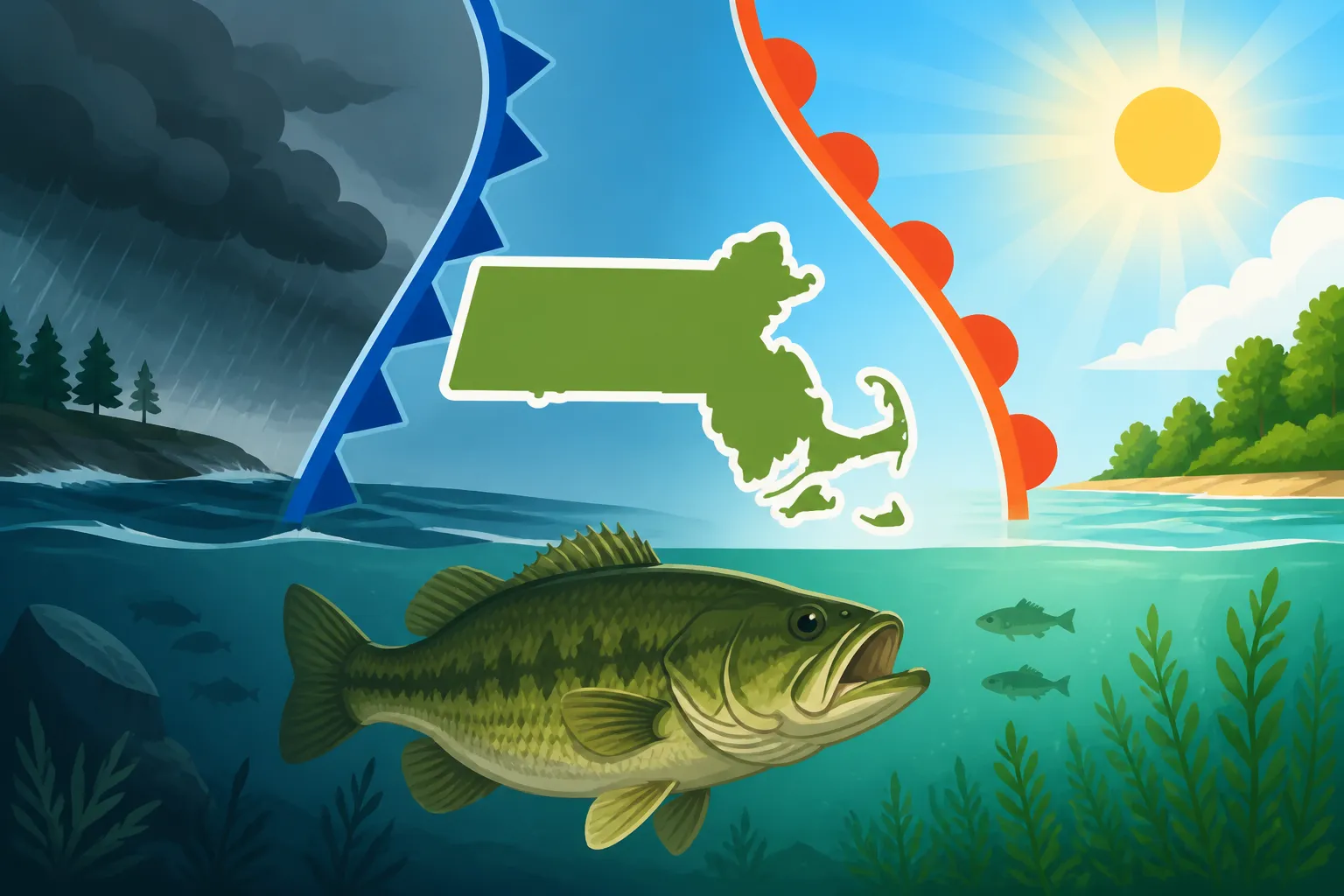
How weather fronts affect bass fishing in Massachusetts
We've all been there: you wake up with a burning desire to hit your favorite Massachusetts bass spot, only to find the weather has completely flipped overnight. One day it's sunny and calm, the next a storm rolls in or a cold snap hits, leaving you wondering if the bass even know how to bite anymore. It’s frustrating when you’re ready to cast, but the fish seem to have vanished. This guide is here to unravel the mysteries of how those shifting weather fronts impact bass fishing in our great state, helping you understand what's happening beneath the surface and how to adapt your strategy for more success.
Understanding Weather Fronts and Their Impact on Bass
When we talk about weather fronts, it's not just about whether it's raining or sunny. These atmospheric shifts have profound effects on everything from water temperature to barometric pressure, and believe me, bass are highly attuned to these changes. It's like their internal forecast system, guiding their feeding patterns and where they choose to hang out.
What Exactly is a Weather Front?
Think of a weather front as a boundary between two masses of air with different temperatures and humidity levels. As these air masses move and collide, they create the weather patterns we experience. In Massachusetts, we're particularly familiar with a few key types:
- Cold Fronts: This is when a mass of colder, denser air pushes out a warmer air mass. They often bring sudden drops in temperature, strong winds, clear skies after the front passes, and a rapid rise in barometric pressure. For us anglers, these are often the trickiest.
- Warm Fronts: The opposite of a cold front, a warm air mass moves in and overrides a colder air mass. These typically bring gradual temperature increases, often with light rain or drizzle, and a slow, steady drop in barometric pressure. Bass often respond well to these warming trends.
- Stationary Fronts: Sometimes, two air masses meet, but neither is strong enough to displace the other. They just sit there, creating prolonged periods of similar weather – often cloudy and drizzly – with stable barometric pressure, which can sometimes lead to consistent fishing, albeit not necessarily spectacular.
- Occluded Fronts: These are a bit more complex, occurring when a cold front overtakes a warm front. They can bring a mix of weather, often with widespread rain, and can cause significant pressure drops followed by stabilization. While not as common a term for anglers as cold or warm fronts, their effects are still felt by the fish.
Understanding these basic definitions is the first step in decoding how they'll influence your fishing day. It’s not just about the rain — it’s about the atmospheric mechanics.
The Immediate Effects on Water and Fish Behavior
It’s crucial to remember that what happens in the air quickly affects the water, and therefore, the bass. Three main factors are at play here:
- Barometric Pressure: This is arguably the most significant factor. Fish have an air bladder that helps them maintain buoyancy, and it's highly sensitive to changes in atmospheric pressure. Before a front, as pressure drops, bass often feel more comfortable and active, moving shallower and feeding aggressively. After a cold front, as pressure rises sharply, their air bladders can become uncomfortable, causing them to seek deeper water or dense cover to equalize. This is a common reason why Best barometric pressure for catching bass is a frequent topic of discussion among anglers.
- Water Temperature: Air temperature directly influences water temperature, especially in shallower areas. A rapid drop in air temperature from a cold front can quickly cool down the shallows, pushing bass to seek warmer, deeper water or areas with thermal stability. Conversely, a warm front can invigorate bass by slowly raising water temperatures, making them more active and willing to chase bait. This is similar to How water temperature affects trout fishing in spring, where temperature directly dictates activity.
- Light Levels and Clarity: Fronts often bring changes in cloud cover and precipitation. Cloudy, rainy days leading up to a front can reduce light penetration, making bass feel bolder and more likely to hunt in open water. After a cold front, clear, bluebird skies might make bass more skittish and prone to hiding in cover. Heavy rains can also muddy up the water, which impacts visibility for both you and the fish.
All these factors combine to create a dynamic environment for bass. Your ability to anticipate and react to these shifts is what separates a frustrating day from a successful one.
Fishing Before, During, and After a Cold Front
Cold fronts are often the bane of many bass anglers' existence. That feeling when the fish just "shut off" is real, and it’s usually tied to a passing cold front. But it doesn't mean you have to pack up and go home; it just means you need to adjust your approach.
The Pre-Frontal Feeding Frenzy
This is the sweet spot! As a cold front approaches, barometric pressure typically begins to drop. For bass, this often signals an impending change in conditions and a prime opportunity to feed. They sense the storm coming and instinctively know that feeding opportunities might be scarce afterward.
During this period, bass are often highly active and aggressive. They'll move into shallower waters, around weed lines, submerged structures, and ambush points, eager to strike at anything that looks like a meal. This is when your power fishing techniques, like throwing spinnerbaits, crankbaits, or topwater lures, can really shine. If you can time your trip to coincide with the hours leading up to a cold front, you might just experience some of the best fishing Massachusetts has to offer. Keep an eye on those weather apps for pressure drops!
The Post-Frontal Shut Down
Ah, the dreaded post-frontal conditions. The front has passed, the skies are often crystal clear, the wind might have died down, and the temperature has dropped significantly. While it might look beautiful on the surface, beneath the water, the bass are usually experiencing a dramatic shift. The rising barometric pressure often makes them uncomfortable and lethargic.
Bass tend to become very inactive, moving deeper or burying themselves into the densest cover they can find – thick weeds, brush piles, fallen trees, or rocky crevices. Their metabolism slows, and they become much less willing to chase a lure. This is the scenario that often leads to anglers feeling like the fish have completely disappeared. It’s not that they’re gone; they’re just hunkering down, trying to ride out the uncomfortable pressure changes.
Strategies for Surviving the Cold Front Aftermath
Don't let the post-frontal blues get you down. While it's tough, it's not impossible to catch bass. It just requires a complete change in strategy.
- Slow Down, Way Down: Forget your fast retrieves and power lures. This is the time for finesse. Think soft plastics, small jigs, and very slow presentations. Let your lure sit on the bottom for extended periods, barely twitching it. A weightless Senko or a small jig fished painstakingly slowly can often coax a bite from a reluctant bass. Many experienced anglers fishing for Largemouth Bass Fishing in Massachusetts swear by this tactic.
- Target Heavy Cover and Deeper Water: Bass will be seeking refuge and stable conditions. Look for thick, submerged vegetation, dense laydowns, rock piles, or deeper humps and ledges. They won't be actively cruising; they'll be buried in structure. Use baits that can penetrate cover without snagging, like Texas-rigged worms or jigs with brush guards.
- Go Smaller and Natural: Bass are less aggressive, so they're less likely to chase a big, flashy meal. Downsize your lures. Smaller worms, creature baits, or even a tiny jig with a finesse trailer can be more appealing. Natural colors that mimic local baitfish or crawfish are also often more effective.
- Consider Water Clarity: If the front brought rain and muddied the water, you might need to use lures with more vibration or scent. If the water is gin-clear (common after a cold front), subtle, natural presentations are even more critical.
- Timing is Everything: Often, the first 24-48 hours after a severe cold front are the toughest. Fishing can sometimes improve slightly on the second or third day as fish begin to acclimate, or if there's a slight warming trend. Early morning and late evening can still be prime times, even in tough conditions, as bass may briefly become more active.
Remember, patience is your best friend during these challenging conditions. It’s a grind, but those bites you do get are hard-earned and incredibly rewarding.
Fishing Warm Fronts and Stable High-Pressure Systems
While cold fronts often make us groan, warm fronts usually bring a sense of optimism to bass anglers. They signify a period of increasing activity and better fishing opportunities. But even stable, high-pressure systems have their nuances.
Warm Front Warm-Up
When a warm front moves into Massachusetts, it brings with it warmer air, often accompanied by clouds and precipitation. This typically means a gradual decrease in barometric pressure, followed by stable, lower pressure once the front has passed. More importantly, it leads to a slow, steady increase in water temperature.
Bass, being cold-blooded, thrive on rising water temperatures. Their metabolism speeds up, making them more active and hungry. They'll start to move out of their deep, winter or post-frontal refuges and begin to cruise shallower areas, seeking baitfish and warmer sun-soaked spots. This is a fantastic time for anglers, as bass become more predictable and willing to strike. You'll often find them congregating near sun-exposed banks, rock structures that absorb heat, and the edges of emerging weed beds. This period is a prime opportunity to apply knowledge from guides like How to Catch Largemouth Bass in Massachusetts.
Stable High Pressure: A Mixed Bag
Once a weather system has settled in, particularly a high-pressure system that follows a cold front, conditions can stabilize. While initial post-frontal high pressure is tough, a stable high-pressure system that has been in place for a few days, especially if accompanied by consistent sunshine, can lead to surprisingly good fishing.
In these conditions, bass have had time to adjust to the pressure. They might still prefer deeper water or dense cover, but they will venture out to feed. Clear skies and abundant sunlight can still make them a bit skittish in open, shallow water, but they'll often hold tight to cover or patrol deeper structure. This is when understanding specific locations, like Best largemouth bass lake near Worcester, becomes vital, as knowing where fish tend to hold in stable conditions can make all the difference.
Adapting to Changing Conditions
The key to consistently catching bass, regardless of the front, is constant adaptation. No two fronts are exactly alike, and conditions on a pond in the Berkshires might be different from a lake on Cape Cod.
- Bait Choice: During warm fronts and stable periods, you have more flexibility. Reaction baits like crankbaits, spinnerbaits, and chatterbaits are excellent for covering water and triggering strikes from active fish. If bass are less active under stable high pressure, you might transition to jigs, Texas-rigged worms, or even topwater early and late in the day when fish are more confident. You can find a huge variety of these lures on Amazon.
- Retrieve Speed: When bass are aggressive, don't be afraid to speed up your retrieve. A fast-moving bait can provoke a reflex strike. As conditions get tougher, or if fish are less active, a slower, more methodical retrieve is often necessary. Vary your retrieve until you find what the fish prefer.
- Location, Location, Location: Pay attention to where the fish are holding relative to cover, depth, and temperature. After a warm front, they might be shallow. After a cold front, they'll be deep or tucked into the thickest stuff. Understanding the Massachusetts Freshwater Fishing Season Calendar can also give you clues about where bass are likely to be throughout the year, further aiding your location choices.
- Consider the Whole Picture: Don't just focus on one factor. Think about how the barometric pressure, water temperature, wind, and light levels are all interacting. The more variables you consider, the better you'll be able to predict bass behavior.
Gear and Techniques for Massachusetts Bass Fishing in Changing Weather
Having the right tools and knowing how to use them effectively can greatly increase your chances of success, especially when Mother Nature throws a curveball. Being prepared for any condition means you spend less time fussing with your tackle and more time fishing.
Essential Gear for Weather Resilience
It's not just about what lures you use; it's also about the fundamental tools that allow you to fish effectively through various conditions.
- Rods and Reels: You'll want a versatile setup. A medium-heavy fast-action baitcasting rod (7' to 7'6") paired with a reliable baitcasting reel is a workhorse for many bass techniques, from pitching jigs to throwing crankbaits. For lighter presentations, especially after a cold front, a medium-light or medium spinning rod (6'6" to 7') with a matching spinning reel is invaluable for finesse techniques with lighter lines. Having both options on hand is ideal for quick adaptation. Many anglers stock up on these versatile rods and reels, often searching for good deals on Amazon.
- Fishing Line: The right line can make a huge difference. For power fishing in heavier cover, consider braided line (30-50 lb test) for its strength and sensitivity, often with a fluorocarbon leader. For finesse techniques, straight fluorocarbon (8-12 lb test) offers low visibility and good sensitivity, while monofilament (10-17 lb test) is a good all-around choice with some stretch, useful for topwater or reaction baits. Carry spools of different types and tests so you can change as conditions demand.
- Weather-Appropriate Clothing: This might seem obvious, but it's crucial. Layers are your friend in Massachusetts, where a spring morning can start chilly and turn warm, or a sunny day can quickly become windy and cold with a frontal passage. A good waterproof and windproof jacket, easily found on Amazon, is non-negotiable for those days when fronts bring precipitation. Don't forget polarized sunglasses for cutting glare and seeing into the water, and a hat for sun protection.
Lure Selection for Frontal Changes
Your tackle box needs to be a chameleon, ready to change colors and tactics at a moment's notice.
- Pre-Front/Warm Front Active Bass:
- Crankbaits: Deep-diving or shallow-diving, depending on where the fish are holding. Mimic baitfish.
- Spinnerbaits/Chatterbaits: Excellent for covering water, especially around grass or sparse cover. Their vibration attracts aggressive fish.
- Topwater Lures: Poppers, walk-the-dogs, frogs. Use when bass are active and feeding on the surface, often during low light or cloudy conditions.
- Swimbaits: Mimic larger baitfish, enticing bigger, actively feeding bass.
- Post-Front/Tough Conditions:
- Jigs (Rubber Skirted or Finesse): Mimic crawfish or baitfish. Excellent for pitching into heavy cover or slowly dragging on the bottom. Pair with a matching trailer.
- Soft Plastics (Texas-rigged or Carolina-rigged): Worms, creature baits, Senkos, stick baits. Versatile for fishing cover, deeper water, or open areas with a slow, natural fall. How to fish plastic worms for largemouth bass offers great insights here.
- Drop Shot Rigs: Perfect for suspended bass or those clinging tightly to structure. Presents a small bait just off the bottom.
- Ned Rigs: A super finesse technique with a small mushroom-head jig and a short, buoyant plastic. Irresistible to finicky bass.
- Small Swimbaits/Grubs: Rigged on a small jig head, can be subtly retrieved near cover or on deeper breaks.
A varied tackle box ensures you're prepared for whatever mood the bass are in.
Mastering Presentation and Retrieve
It's not enough to have the right lure; you have to present it in a way that tempts the fish to bite.
- Slow and Subtle (Post-Front/Tough Conditions): When bass are lethargic, a slow, deliberate presentation is key. Think about fishing your bait as slowly as possible without getting snagged. Use long pauses, subtle twitches, and let the lure's natural action do the work. Imagine the bait as an injured or dying forage item that requires minimal energy to grab. When fishing for Massachusetts Freshwater Daily Catch Limits, you'll appreciate any fish you can get, so don't be afraid to slow down!
- Fast and Erratic (Pre-Front/Active Conditions): When bass are fired up, they often react to erratic movements and faster retrieves. Rip a spinnerbait through the water, twitch a topwater bait quickly, or crank a lure with sudden changes in speed. These actions mimic fleeing prey and can trigger aggressive strikes. For those Best time of day to catch largemouth bass in summer moments when the fish are active, speeding up can be highly effective.
- Depth Control: Always be mindful of the depth you're fishing. If a cold front has pushed fish deeper, ensure your lures are getting down to them. If a warm front has brought them shallow, adjust accordingly. Use your electronics to find structure and depth contours, and pay attention to how deep your lures are running.
- Cover Considerations: Always fish the available cover. Bass, especially during frontal changes, are almost always associated with some form of structure or cover. Whether it's lily pads, docks, submerged brush, rock piles, or weed lines, present your lure to these fish magnets. For more insights on where to find these spots, exploring Best Freshwater Ponds and Lakes in Massachusetts might give you some ideas.
By understanding the subtle interplay of weather, gear, and technique, you can become a more adaptable and successful bass angler, no matter what Massachusetts weather throws your way.
| Weather Phase | Barometric Pressure Change | Bass Behavior | Recommended Tactics | Preferred Lures |
|---|---|---|---|---|
| Approaching Front | Falling | Highly active, feeding aggressively, shallow | Power fishing, cover water quickly, fast retrieves | Crankbaits, Spinnerbaits, Chatterbaits, Topwater |
| During Front/Storm | Unstable/Low | Active but seeking cover, less aggressive | Target cover edges, slightly slower retrieves | Jigs, Bladed Jigs, Swim Jigs, Texas-rigged plastics |
| Post-Cold Front | Rising rapidly | Inactive, lethargic, deep, tight to cover | Finesse fishing, extremely slow, target dense cover | Jigs (finesse), Soft Plastics (Senkos, worms), Ned Rigs, Drop Shot |
| Post-Warm Front/Stable | Stabilizing/Slightly Rising | Increasingly active, moving shallower to feed | Vary retrieves, explore shallow and mid-depth cover | Crankbaits, Jerkbaits, Jigs, Swimbaits, Carolina Rigs |
Disclaimer
This article is for general informational purposes only and does not constitute professional advice. Laws, prices and regulations vary by location and change over time. Consult a qualified professional for guidance on your specific situation.