Best rig for black sea bass fishing
Oh, the elusive black sea bass! If you've spent any time fishing the rich coastal waters of Massachusetts, you know that trying to consistently hook these feisty, delicious fish can sometimes feel like a puzzle. One day they're biting everything you throw at them, and the next, it's crickets. This guide is all about cutting through that frustration, helping you understand the best rigs, baits, and techniques to make your black sea bass fishing trips in the Bay State far more successful and enjoyable.
The Frustration of Black Sea Bass Fishing
It’s a common scenario for many anglers: you head out, excited for a day of bottom fishing, maybe around some rocky structure or a promising wreck, only to come back with a few scup and a couple of undersized sea bass, while the boat next to you seems to be pulling them in hand over fist. It’s enough to make you scratch your head and wonder what secret they know that you don't! The truth is, while black sea bass can be plentiful, getting them to commit to your offering often comes down to the right presentation.
Why Black Sea Bass Can Be Tricky
Black sea bass, or "knotheads" as some old-timers affectionately call them, are aggressive predators, but they're also incredibly structure-oriented and often have a keen eye. They love to ambush their prey from rocky ledges, wrecks, mussel beds, and even submerged bridge pilings. This means if your bait or lure isn't right in their strike zone, or isn't presented naturally, they'll simply ignore it. The sheer number of available hiding spots can make it challenging to pinpoint exactly where they're holding, and then, how to get your offering down to them effectively. Plus, with varying regulations each season, it’s crucial to understand the rules, like the specific Massachusetts Black Sea Bass Season Dates and Massachusetts Saltwater Bag Limits by Species.
Think about it: you've got current, wind, depth, and the ever-present snags that come with fishing rocky bottom. All these factors conspire to make a simple rig deployment feel like a high-stakes engineering project. One wrong move and you're re-tying, losing precious fishing time. It’s enough to test the patience of even the most seasoned angler, especially when you know those tasty fillets are just out of reach.
Common Mistakes Anglers Make
One of the biggest blunders I see people make is overcomplicating things or using gear that's simply too heavy. Black sea bass have excellent eyesight, and while they'll attack aggressively, they can be surprisingly wary of heavy, clunky tackle, especially in clearer waters. Using lines that are too thick or excessive hardware can definitely deter bites. Another common mistake is not staying "in touch" with your rig. If you're not feeling the bottom, feeling the subtle taps, or knowing exactly where your bait is in the water column, you're missing opportunities.
Many anglers also underestimate the importance of bait presentation. A dead, lifeless piece of squid or clam that’s just sitting there might get ignored, especially if there are livelier options around. Conversely, using overly large baits can lead to lots of nibbles and bait theft without any solid hookups. It's a fine balance, and hitting that sweet spot is what we're going to dive into. Don't forget, these fish are often found in the same spots as other bottom dwellers, so having a good Massachusetts Fish Identification Guide handy can help differentiate your catch.
Understanding Black Sea Bass Behavior and Habitat
Before we talk about specific rigs, let's get into the mindset of a black sea bass. Understanding their preferences for habitat and diet is key to choosing the right rig and technique to tempt them. After all, if you know where they live and what they like to eat, you’re already halfway to success.
Where Black Sea Bass Hang Out in Massachusetts
In Massachusetts, black sea bass are primarily a saltwater species found in nearshore and offshore waters, typically from late spring through fall. They absolutely love structure. We're talking about rocky reefs, wrecks, mussel beds, jetties, bridge pilings, and even artificial reefs. If it offers shelter, an ambush point, and a place to hide from predators, they'll be there. You'll find them in relatively shallow waters of 10-20 feet, especially early in the season, and then moving to deeper spots up to 100 feet or more as the water warms and the season progresses.
Prime black sea bass locations around Massachusetts include the shoals and rocky bottoms of Buzzards Bay, Nantucket Sound, Vineyard Sound, and even some spots in Boston Harbor and along the outer Cape. You can often target them effectively by fishing from shore on rocky jetties, or even from piers. But for the biggest hauls, most anglers head out in boats to known wrecks or rocky ledges. For example, some excellent spots can be found among the Best Saltwater Fishing Spots on Cape Cod, Massachusetts.
What They Eat and How They Strike
Black sea bass are opportunistic feeders with a varied diet. Their primary menu items include crabs, shrimp, squid, clams, mussels, and small baitfish like sand eels, silversides, and even juvenile scup. They have a strong crushing mouth, perfect for crunching on crustaceans, which is why crabs are often such a deadly bait. They also have a habit of nipping at baits before fully committing, which can be maddening if you’re not set up correctly.
When a black sea bass strikes, it can be anything from a subtle tap-tap-tap, especially with smaller fish, to a solid thump that nearly rips the rod out of your hand. Larger "humpbacks" (big male sea bass) often hit with surprising power, immediately trying to dive back into structure to break you off. This aggressive, yet sometimes cautious, feeding behavior dictates that your rig needs to be sensitive enough to detect those initial nibbles but strong enough to withstand a powerful, quick run to cover.
The Top Rigs for Massachusetts Black Sea Bass
Alright, let's get down to brass tacks: the actual rigs. While there are countless variations, three main types of rigs consistently outperform others for black sea bass in Massachusetts. Each has its strengths, and knowing when to use which one will greatly improve your success rate.
The Classic Dropper Loop or High-Low Rig
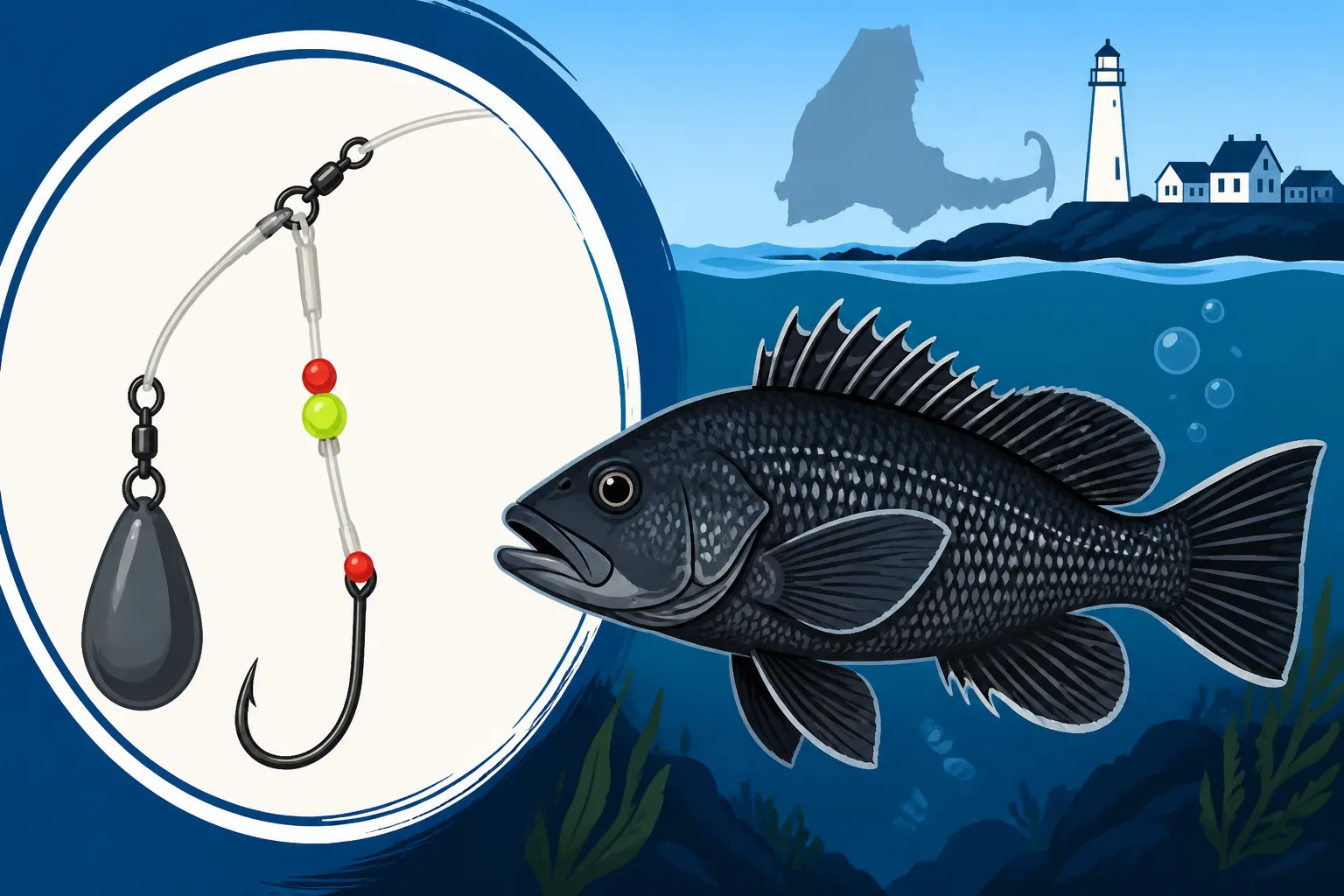
This is arguably the most popular and effective rig for black sea bass, and for good reason. It’s incredibly versatile, easy to tie, and allows you to present multiple baits at different depths off the bottom.
How to Tie It:
- Start with a section of fluorocarbon or monofilament leader, about 2-4 feet long, depending on how many hooks you want and the depth you're fishing. (I usually go for 2-3 feet).
- Tie a small surgeon's loop or swivel to one end, which will connect to your main line.
- About 8-10 inches up from where your sinker will be, create your first dropper loop. To do this, make a loop in your line, then pass one side of the loop through the center 3-5 times. Moisten and pull tight. This forms a small loop standing perpendicular to your main leader.
- Repeat this process for your second dropper loop, another 8-10 inches above the first. You can add a third if permitted and if you have a longer leader, but two is generally sufficient.
- At the very end of your leader, tie on a sinker loop or a heavy-duty swivel to attach your sinker.
Components:
- Leader: 20-40 lb fluorocarbon or monofilament. Fluorocarbon is less visible underwater and more abrasion-resistant, which is crucial when fishing around rocks. You can find excellent spools of fluorocarbon leader on platforms like Amazon, offering a good balance of strength and stealth.
- Hooks: Size 1/0 to 3/0 Octopus or Kahle style hooks are ideal. Octopus hooks are strong and have a wide gap for good hooksets. Circle hooks are also excellent for black sea bass, promoting lip hooks and easy release of undersized fish.
- Sinker: Bank sinkers or pyramid sinkers, typically 1-6 ounces, depending on current and depth. You need enough weight to hold the bottom, but not so much that you can't feel the bites.
Why it Works:
The high-low rig allows your baits to flutter enticingly off the main leader, mimicking natural prey. Having two or more hooks means you can try different baits, target multiple fish, or simply increase your chances of a bite. It keeps your bait just above the snags while still being in the strike zone. This rig is particularly effective when you're anchored over structure, or slowly drifting.
The Simple and Effective Jigging Setup
Sometimes, artificial lures can outfish bait, especially for aggressive black sea bass. A simple jigging setup is incredibly effective and allows for a more active style of fishing. This is a personal favorite for many who prefer to feel every bump and run.
How to Set It Up:
- Tie a short section (18-36 inches) of 20-40 lb fluorocarbon leader directly to your main braided line using a strong knot like an FG knot or an Alberto knot.
- At the end of your leader, tie on your jig using a loop knot (like a Rapala knot) or a strong, compact snap swivel. A loop knot gives the jig maximum action.
Components:
- Main Line: 15-30 lb braided line. Braid offers incredible sensitivity, zero stretch for solid hooksets, and a thinner diameter for less current resistance.
- Leader: 20-40 lb fluorocarbon. Again, stealth and abrasion resistance are key.
- Jigs: Metal jigs (like Aquadream, Hogy, or Crippled Herring) in weights from 1/2 oz to 3 oz are excellent. Soft plastic paddle tail jigs rigged on jig heads (e.g., Z-Man, Berkley Gulp! rigged on a 1/2 oz to 1 oz jig head) are also deadly. Choose colors like white, chartreuse, pink, or natural baitfish patterns.
Why it Works:
Jigging allows you to actively work the water column and trigger reaction strikes. The motion of the jig mimics a fleeing baitfish or an injured creature, which black sea bass find irresistible. The sensitivity of braided line allows you to feel even the slightest tap, and a direct connection to the jig means you have more control over its action. It's an active and engaging way to fish, and often brings in larger, more aggressive fish. This method is often preferred for targeting species like tautog, which shares similar habitat, as discussed in Bottom Fishing for Tautog in Massachusetts.
Specialty Rigs for Tougher Conditions
While the dropper loop and jigging cover most bases, sometimes you need something a little different for specific situations.
The Carolina Rig (for finesse or current)
When fish are finicky, or if there's a strong current, a modified Carolina rig can be surprisingly effective.
How to Tie It:
- Slide an egg sinker (1/2 oz to 2 oz) onto your main line.
- Tie a small barrel swivel to your main line. The swivel stops the sinker from sliding down to the hook.
- To the other end of the swivel, tie a 12-24 inch piece of fluorocarbon leader (20-30 lb).
- Tie your hook (size 1/0 to 2/0 Octopus or circle hook) to the end of the leader.
Why it Works:
The sliding sinker allows the fish to pick up the bait without feeling the weight immediately, which can be crucial for shy biters. The longer leader allows the bait to drift more naturally, making it appear less suspicious. This rig is great for fishing slightly less snaggy bottom or when you want a more subtle presentation.
The "Fish Finder" Rig (for a natural drift)
This rig is similar to a Carolina rig but uses a specialized clip or slider that allows your sinker to slide freely on your main line, with your leader and hook tied off a swivel. It's often used when fishing live bait or larger cut baits that you want to drift naturally with the current.
How to Tie It:
- Slide a fish finder clip or a large barrel swivel onto your main line. You can then attach a pyramid or bank sinker to this clip.
- Tie a strong barrel swivel to the end of your main line.
- Attach a 2-4 foot section of fluorocarbon leader (30-50 lb) to the other end of the swivel.
- Tie a large, strong hook (2/0 to 4/0 circle or Octopus hook) to the end of the leader.
Why it Works:
This rig is excellent for offering a very natural bait presentation. The sinker holds the bottom, but the bait is free to drift with the current within the length of the leader. This makes it ideal for live baits or larger chunks that you want to present as naturally as possible. It's a fantastic option when black sea bass are feeding on larger baitfish or crabs.
Bait, Lure, and Technique Considerations
Having the right rig is only half the battle. What you put on the hook and how you present it are equally vital. Pairing your chosen rig with the perfect bait or lure and executing the right technique will significantly boost your catch rate.
Best Baits and Lures to Pair with Your Rig
Black sea bass aren't overly picky, but certain offerings stand out as their absolute favorites.
Natural Baits
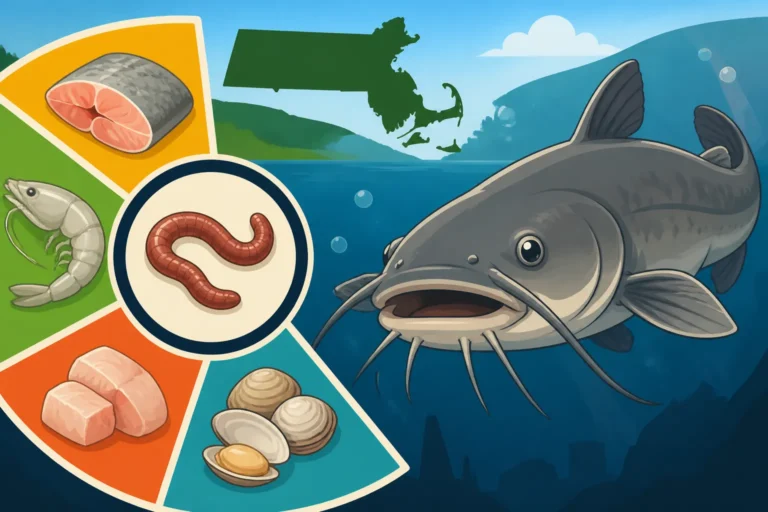
- Squid: This is the universal currency for bottom fish. Cut squid into strips or small squares. Longer strips (calamari style) tend to flutter more and attract attention.
- Clams: Fresh shucked clams are incredibly effective, especially for larger sea bass. The scent trail they put out is irresistible. Just be sure to "milk" them a bit to release more scent.
- Crabs: Green crabs, fiddler crabs, or small pieces of blue crab are deadly. Black sea bass love crabs. If you can get your hands on them, they often outfish everything else.
- Mussels: Similar to clams, shucked mussels are a great option.
- Cut Bait: Small pieces of mackerel, bunker, or even scup can work well, especially if black sea bass are keying in on baitfish.
For all these natural baits, especially when using a dropper loop rig, ensure your bait pieces are appropriately sized for the hook. You want to fully expose the hook point for optimal hooksets. Many of these baits are also fantastic for Best Bait for Tautog Fishing in Massachusetts, showing the overlap in bottom-feeding preferences.
Artificial Lures
- Metal Jigs: As mentioned earlier, jigs like Aquadream, Hogy, and Crippled Herring are fantastic. Drop them to the bottom, then jig them up and down sharply with a quick retrieve, letting them flutter back down. Experiment with retrieve speed and cadence.
- Soft Plastics: Paddle tail grubs and Gulp! shrimp or swimming mullet on jig heads are incredibly effective. The scent and action of Gulp! products are a game-changer. Cast them out, let them sink, and retrieve with a twitching motion, allowing them to hit bottom frequently. You can find a huge variety of these soft plastics, including popular brands, readily available on Amazon.
- Bucktail Jigs: These classic jigs, often tipped with a piece of squid or a Gulp! trailer, are another black sea bass killer. Their natural hair pulsates in the water, mimicking bait.
Mastering the Presentation: Techniques for Success
Even with the perfect rig and bait, how you present it makes all the difference.
- Anchor and Fan Cast: If you're on a boat over known structure, anchor upcurrent and cast your rig in a fan pattern to cover a wide area. Let your rig hit the bottom, then lift it slowly, letting it drop back down. This "lift and drop" motion is key to imitating injured prey.
- Controlled Drift: Drifting is a great way to cover ground and find fish. Use your engine to control your drift speed, aiming to keep your line as vertical as possible. This minimizes snags and keeps you in touch with your rig. When you feel a bite, pause for a second, then set the hook with a firm, upward sweep.
- Shore Fishing from Structure: If fishing from a jetty or pier, cast out and let your rig sink. Slowly retrieve, bumping the bottom occasionally. Pay attention to structure near the pilings or rocks, as sea bass will often hold tight to these areas. A short, sharp jigging motion can be effective here too.
- "Feeling" the Bite: Black sea bass bites can be subtle. Don't be fooled by small taps; these could be smaller fish or the larger ones testing the bait. Wait for a solid thud or a steady pull before setting the hook. Always keep a slight bend in your rod and a finger on the line for maximum sensitivity.
- Keep it Moving (Sometimes): While bottom fishing often implies stationary bait, black sea bass respond well to motion. Whether it's the gentle lift and drop of a dropper rig or the aggressive jigging of an artificial lure, imparting some action often triggers the strike.
Essential Gear Beyond the Rig
While the rig is central to your success, it’s part of a larger system. The rod, reel, and line you choose, along with a few crucial accessories, will complete your setup and significantly enhance your black sea bass fishing experience in Massachusetts. Remember, proper gear ensures you can handle the fight and the varied conditions of Massachusetts Fishing Seasons Explained.
Rod, Reel, and Line for Black Sea Bass
Having the right rod and reel combo makes fishing for black sea bass both more effective and more enjoyable.
- Rod: Look for a medium-light to medium power rod, typically 6'6" to 7'6" in length, with a fast action tip. The fast action tip is critical because it gives you the sensitivity to feel those subtle bites, while the backbone of the rod provides the power needed to pull a strong sea bass away from structure. A rod with a soft enough tip for detecting light bites but enough power to handle a 1-6 ounce sinker is ideal. Many popular brands like Ugly Stik or St. Croix offer great options that can be easily found.
- Reel: A spinning reel in the 3000 to 4000 series is usually perfect. It should have a smooth drag system, as even moderate-sized black sea bass can pull hard when trying to get back into rocky cover. A good retrieve ratio is helpful for quickly taking up slack and setting the hook. Brands like Penn, Shimano, or Daiwa are reliable choices that will stand up to saltwater abuse.
- Line: As touched on earlier, braided line is a game-changer for black sea bass. A 15-20 lb test braided mainline offers incredible sensitivity and strength with a very thin diameter, which helps cut through current. The lack of stretch means you'll feel every tap and get much more direct hooksets. Always use a fluorocarbon leader (20-40 lb) connected to your braid with a strong knot like an FG knot or an Alberto knot. The leader provides invisibility to the fish and essential abrasion resistance against rocks and the sea bass's rough mouth.
Must-Have Accessories for a Successful Trip
Don't let small oversight ruin a potentially great day on the water. A few key accessories can make your black sea bass trip smoother and more productive.
- Pliers/Forceps: Black sea bass have small, sharp teeth and often swallow hooks deeply. A good pair of long-nosed pliers or forceps is absolutely essential for safely removing hooks, especially if you're practicing catch and release for undersized fish.
- De-hooker: Even better than pliers for quick and efficient release, a de-hooking tool minimizes harm to the fish.
- Measuring Device: You must know the current size limits for black sea bass in Massachusetts to stay legal. Carry a tape measure or a marked ruler on your boat or in your tackle bag. This is crucial for adhering to Massachusetts Recreational Fishing Rules and Bag Limits.
- Sharp Knife: For cutting bait and other general tasks. A good quality, sharp knife is invaluable.
- Tackle Box/Bag: Keep your extra hooks, sinkers, swivels, and leader material organized. Fishing around structure often means losing tackle, so having replacements handy is a must. You can stock up on a variety of tackle components, from hooks to sinkers, on Amazon before your next trip.
- Cooler with Ice: Not just for drinks! If you're keeping your legal limit of black sea bass, you want to get them on ice immediately to preserve their quality for the dinner table.
- Sun Protection: Sunscreen, a wide-brimmed hat, and polarized sunglasses are not just about comfort; they protect you from the intense sun exposure on the water. Polarized sunglasses also help you see subtle changes in water depth and even structure near the surface.
- Fishing License/Permit: Last but certainly not least, make sure you have your Massachusetts Recreational Fishing Permit in hand, or accessible on your phone, as required by law. Conservation is everyone's responsibility!
When you combine the right rig, the freshest bait (or most enticing lure), a refined technique, and a well-equipped tackle box, your chances of success for black sea bass fishing in Massachusetts will skyrocket. It's about being prepared and understanding the nuances of these fantastic bottom dwellers.
Disclaimer
Fishing conditions and regulations in Massachusetts can change frequently. Always consult the latest Massachusetts Division of Marine Fisheries (DMF) rules and regulations before heading out. This guide is for informational purposes only and does not supersede official government regulations. Always prioritize safety on the water.