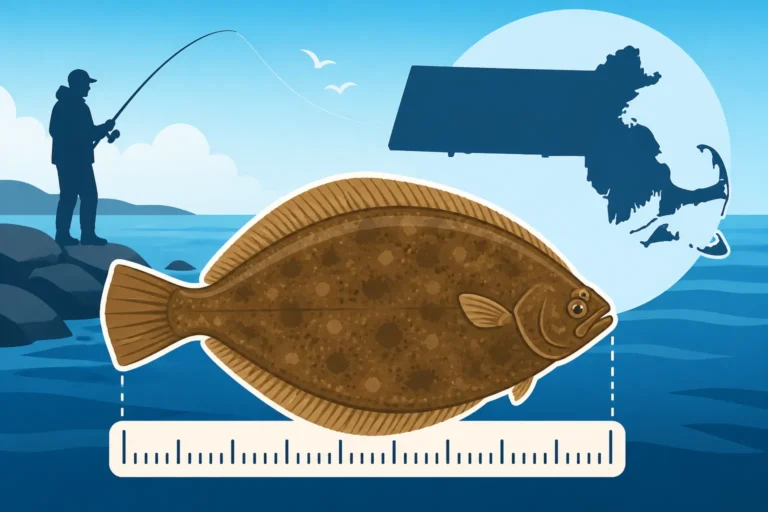
How to Identify a Keeper Striped Bass in Massachusetts
It can be incredibly frustrating to reel in a magnificent striped bass from the waters of Massachusetts, only to stand there wondering if it's actually legal to keep. With changing regulations and the specific "slot limit" rules, many anglers feel anxious about accidentally breaking the law. This guide is here to alleviate that stress by providing a clear, step-by-step approach to properly identify and measure a keeper striped bass, ensuring you can confidently enjoy your catch and stay compliant with Massachusetts fishing regulations.
Understanding Massachusetts Striped Bass Regulations
Let's be honest, fishing regulations can sometimes feel like a maze, and the rules for striped bass in Massachusetts are no exception. But understanding these rules isn't just about avoiding a fine; it's about being a responsible angler and contributing to the health of our beloved fishery.
The Concept of a Slot Limit
For striped bass, Massachusetts often employs what's known as a "slot limit." This means you can't keep just any fish you catch; it has to fall within a specific size range – not too small, and not too big. Imagine a slot in a machine where only certain coins fit; it's a similar idea for fish. The reasoning behind this approach is pretty smart: it aims to protect both the younger, immature fish that haven't had a chance to reproduce yet, and the large, mature breeding stock (the "cows" of the striper world) that are vital for future generations. It allows anglers to keep a certain portion of the population for consumption while safeguarding the critical parts of the life cycle. This approach helps ensure a sustainable population for years to come, balancing recreational fishing with conservation needs. It's a key part of why we can still enjoy such incredible Striped Bass Fishing in Massachusetts.
Why Regulations Matter for Conservation
Every rule, every size limit, every season closure in fishing is put in place for a reason, and that reason is almost always conservation. Our striped bass fishery has seen its ups and downs over the years, and dedicated efforts from MassWildlife and other agencies, informed by scientific data, are what keep it viable. When we follow these regulations, we're doing our part to manage fish populations responsibly. It's about more than just catching a fish today; it's about ensuring our children and grandchildren will have the same opportunities to experience the thrill of a striper tugging on their line. Ignoring regulations, even accidentally, can chip away at these conservation efforts, impacting the very resource we cherish.
Where to Find the Official Rules
Feeling overwhelmed by all the information out there? I totally get it. The best and most reliable source for current Massachusetts fishing regulations is always the official MassWildlife website or their printed regulations pamphlet. It's easy to get caught up in hearsay or outdated information, especially with how frequently rules can be adjusted. Make it a habit to check the official site before your first trip of the season, and even periodically throughout the year, just in case. They also often have helpful summaries and FAQs. Remember, ignorance of the law is generally not considered an excuse, so staying informed is your best defense. You can often find a current Massachusetts Fishing Regulations Pamphlet, Explained on their site.
Essential Tools for Measuring Your Striped Bass
You've got the fish, you've got the regulations in mind – now what? You need the right tools and the know-how to use them accurately. Don't let a simple measurement mistake turn a great day into a regrettable one.
The Right Measuring Device
First things first: you need a reliable measuring device. While a standard tape measure from your toolbox could work, it's often not ideal for slippery, thrashing fish. Purpose-built fishing rulers or bump boards are much better. These often feature a fixed "bump" at one end against which you can press the fish's nose, ensuring you start your measurement from the absolute tip. Many are made from durable, waterproof materials, and some even float! You can find a wide variety of these on platforms like Amazon, often with clear, easy-to-read markings. Having a sturdy, flat measuring device helps keep the fish calm, which is good for both the fish and your accuracy. A flexible cloth tape measure, while convenient for some things, can be prone to stretching or curling, leading to errors.
Ensuring Accuracy with Proper Technique
It's not enough to just have a ruler; you need to use it correctly. The key to accurate measurement in Massachusetts (and most places) is measuring the fork length. This means from the tip of the fish's snout to the fork in its tail, with the tail compressed. This isn't always intuitive, especially with a lively fish. Think of it like this: lay the fish flat, with its mouth closed and its nose against the bump. Then, gently but firmly, pinch or squeeze the two lobes of the tail together so they are as close as possible, extending back as far as they can go. The measurement is taken to the absolute furthest point of that compressed tail. Practice makes perfect, and trying it on a less-stressful catch-and-release fish can build your confidence before you encounter a potential keeper.
What to Do If You Don't Have a Ruler
Okay, let's be realistic. We've all been there: you're out on the water, excited, and realize you forgot your measuring tape. It happens! In this situation, the absolute safest bet, if you're unsure, is to immediately release the fish. It's far better to let a potential keeper go than to risk a citation for an undersized fish. However, for future trips, consider keeping a small, inexpensive measuring tape or a stick-on ruler on your tackle box or boat. You can even find flexible, self-adhesive rulers online at Amazon that you can stick to a cooler lid or boat gunwale, ensuring you always have a measurement device handy. Some experienced anglers use their rod butt, a specific cooler, or a marked portion of their boat as a makeshift ruler, but this requires precise pre-measurement and isn't recommended for beginners due to the high margin for error.
Step-by-Step Guide to Measuring Your Striped Bass
Now for the practical part! Let's walk through exactly how to measure that striped bass to ensure it falls within the legal slot limit. This process needs to be quick, efficient, and as stress-free for the fish as possible.
Positioning the Fish Correctly
Once you've landed your striped bass, the first step is to get it into a position where you can measure it quickly and accurately. Ideally, you want to lay the fish flat on its side on a wet, smooth surface. A wet measuring board or a damp cooler lid works perfectly. Avoid laying it directly on hot, dry pavement or rough boat deck carpet, as this can remove the fish's protective slime layer and cause injury if you plan to release it. Make sure the fish is calm and still as much as possible. Using a wet rag to gently cover its eyes can sometimes help settle it down, or if you're using a lip grip, hold it steady but without excessive force. The goal is a stable, flat surface where you can clearly see the entire length of the fish.
Locating the Measuring Points
This is where the "fork length" rule comes into play. You need to measure from the very tip of the fish's snout (its closed mouth) to the absolute furthest point of the tail, with the tail pinched together.
- Start at the Snout: Place the fish with its closed mouth pressed firmly against the zero end of your measuring device (a bump board is fantastic for this). Ensure the fish's head isn't angled up or down, but perfectly horizontal along the ruler.
- Extend to the Tail: Gently extend the fish's body along the ruler.
- Compress the Tail: This is critical. Using your hand, gently but firmly pinch the two lobes of the tail fin together. This "compresses" the tail, ensuring you get the maximum possible length. Don't bend the tail unnecessarily, just bring the two points together.
Many anglers find it helpful to have a second person assist, with one person holding the head firmly against the bump and the other compressing the tail and reading the measurement. This two-person approach minimizes stress on the fish and increases accuracy.
Reading the Measurement Accurately
With the fish properly positioned and the tail compressed, you can now read the measurement. Look at the line on your ruler that aligns with the furthest point of the compressed tail.
Let's use a hypothetical example. Suppose the Massachusetts slot limit for striped bass is currently 28 to 31 inches, one fish per angler per day.
If your fish measures:
- 27 inches: It's undersized. You must release it immediately.
- 29.5 inches: It's within the slot! This is a keeper.
- 32 inches: It's oversized. You must release it immediately.
It’s truly that simple once you get the hang of it, but those few inches can make all the difference. Always round down if you're between markings and in doubt about an oversized fish, or up if you're questioning an undersized one – err on the side of caution to protect the fishery. A quick glance at the official rules (check Massachusetts Striped Bass Size and Bag Limit) before you head out will solidify the exact numbers in your mind.
Here's a quick overview of what you're looking for with the current Massachusetts recreational striped bass regulations:
| Category | Regulation |
|---|---|
| Size Limit | Fish must fall within a specific "slot limit," meaning it cannot be shorter than the minimum legal length nor longer than the maximum legal length. This protects both juvenile and large breeding fish. Always check current regulations for exact numbers. |
| Bag Limit | Typically, anglers are allowed to keep one striped bass per day. This limit is per person, per calendar day. |
| Measurement | Fork length, measured from the tip of the snout to the fork in the tail, with the tail compressed. The fish must be measured on a flat surface. |
| Seasons | Striped bass have open and closed seasons. Fishing for or possessing striped bass during a closed season is illegal. |
| Permit Needed | Anglers fishing for striped bass in saltwater (which includes tidal rivers, estuaries, and the ocean) need a Massachusetts Saltwater Recreational Fishing Permit Explained. Even if you’re fishing from shore, a pier, or a boat, this permit is generally required for anyone 16 years of age or older. |
| Release Rules | Any fish that does not meet the legal size or bag limits must be immediately released back into the water with as little harm as possible. This means minimizing handling time and using proper release techniques. |
| Gear Rules | Specific gear restrictions may apply, such as circle hook requirements when fishing with bait for striped bass. Always refer to current MassWildlife regulations for details. |
Please remember that regulations can change. Always consult the official MassWildlife website or pamphlet for the most up-to-date information before heading out.
What to Do with Your Catch: Keeper vs. Release
So, you've measured your striped bass. Now comes the moment of truth: is it a keeper, or does it need to go back? The actions you take next are crucial, both for following the law and for the health of the fish.
Handling a Keeper Striped Bass
If your striped bass falls perfectly within the legal slot limit, congratulations! You've got a keeper. The next step is to dispatch the fish humanely and quickly, if you intend to keep it for consumption. Many anglers use a blunt instrument (like a priest or a small bat) to strike the fish firmly on the head, just behind the eyes. This method, often called "braining," is considered the most humane way to kill a fish, reducing stress and improving meat quality. After dispatching, you'll want to get it on ice as soon as possible. A cooler filled with ice water is ideal for rapidly cooling the fish, which again helps preserve its freshness. Don't just toss it in a dry cooler; direct contact with ice and cold water is key. Remember that Massachusetts Recreational Fishing Rules and Bag Limits state you're limited to one fish per day, so plan accordingly!
Best Practices for Releasing Undersized or Oversized Fish
More often than not, the fish you catch won't be a keeper, and that's perfectly okay! Releasing a fish properly is just as important as knowing how to catch one. The goal is to minimize stress and injury so the fish has the best chance of survival.
- Minimize Air Exposure: Fish can't breathe air. Keep them in the water as much as possible, especially during measurement and hook removal. If you must lift them, do so quickly.
- Wet Hands: Always wet your hands before touching a fish. Dry hands can remove the protective slime layer, leaving the fish vulnerable to disease.
- Support the Body: If lifting a large fish, support its belly. Don't just hold it by the jaw, as this can damage its internal organs or jaw structure.
- Use Dehookers: Carry a dehooking tool to remove hooks quickly and cleanly. If a hook is deep, consider cutting the line as close to the hook as possible; the hook will often rust out.
- Revive if Necessary: If a fish looks sluggish, hold it gently in the water, facing into the current, until it regains its strength and swims away on its own.
Taking the time to release fish properly shows respect for the resource and contributes directly to the sustainability of the fishery. After all, those small fish will grow into tomorrow's keepers and breeders.
The Importance of Quick Action
Whether you're keeping or releasing, speed is of the essence. A fish that's been on the line is already stressed. Prolonged handling, especially out of water, increases that stress and reduces its chances of survival if released, or degrades its meat quality if kept. Have your measuring device ready, your camera (if you want a quick photo, keep it brief!), and your dehooker or priest within arm's reach. Develop a routine for landing, measuring, and either releasing or dispatching. This efficiency not only benefits the fish but also gets you back to fishing faster! You want to handle the fish with care and intention, but also with purpose and speed.
Common Mistakes and How to Avoid Them
Even experienced anglers can slip up sometimes, especially when the fishing action is hot. Being aware of common measurement pitfalls can save you a lot of hassle and ensure you're always fishing responsibly.
Misinterpreting the Slot Limit
One of the most common mistakes is a fundamental misunderstanding of the slot limit itself. Some anglers mistakenly think it means they can keep any fish over the minimum, or that they can keep one fish from the slot and one trophy fish over the maximum. This is incorrect. The slot limit means the fish must be within that specific range – not shorter, not longer. If the regulation is, say, 28 to 31 inches, then a 27.5-inch fish is illegal, and so is a 31.5-inch fish. Both must be released. Always remember the two-sided nature of the slot limit. If you're ever in doubt about how to precisely measure, or what the specific numbers are, a quick look at official sources like MassWildlife's website (which often explains Striped bass slot limit in Massachusetts) can clear things right up.
Inaccurate Measurement Errors
Another frequent issue stems from poor measurement technique. This includes:
- Not compressing the tail: This is probably the biggest culprit for under-measuring a fish, leading to inadvertently keeping an undersized fish. Always pinch the tail together.
- Measuring from the lower jaw: Some fish are measured from the tip of the lower jaw, but striped bass typically use the tip of the snout. Always confirm the specific measurement method for the species.
- Angling the fish: If the fish's head or tail is angled up or down, your measurement will be inaccurate. Keep it flat.
- Using a flimsy measuring device: A soft tape measure can stretch, leading to errors, especially on a struggling fish. Invest in a rigid ruler or bump board. You can find robust, easy-to-read measuring tapes and bump boards perfect for fishing trips on Amazon.
The pressure of landing a big fish can make even simple tasks challenging, so practicing your measurement technique calmly on a smaller fish can build muscle memory.
Panicking Under Pressure
It's easy to get flustered when you've just landed a decent striped bass, especially if it's thrashing around. This panic can lead to rushed, inaccurate measurements or poor handling practices. My best advice here is to take a breath. Develop a mental checklist:
- Wet hands.
- Calmly unhook the fish (while it's still in the water if possible).
- Support the fish gently.
- Place it on the measuring device.
- Take a precise measurement from snout to compressed tail.
- Make the decision: keep or release.
Having a clear plan helps you act purposefully rather than react impulsively. Remember, fishing should be enjoyable, not stressful. Knowing your rules and having a routine helps keep the fun in the experience.
Beyond the Tape Measure: Other Considerations
While the slot limit is critical for striped bass, it's not the only piece of the puzzle. Being a well-rounded, responsible angler means understanding the broader context of fishing regulations and fish behavior.
Understanding Daily Bag Limits
Beyond the specific size, there's also a daily bag limit. For striped bass, this typically means you can only keep one fish per angler per day. This limit is separate from the size restriction. So, even if you catch three legal-sized striped bass in a single outing, you can only keep one of them. The other two must be released. It's not uncommon for anglers to excitedly keep their first legal fish, only to catch an even bigger one later. The temptation to swap out that first fish for a larger one might be strong, but most regulations consider this illegal. Once you've kept your "one fish," that's it for the day. Make sure you know How many striped bass anglers can keep in one day in Massachusetts before you hit the water.
Species Identification: Striped Bass vs. Lookalikes
While generally distinct, some less experienced anglers might occasionally confuse striped bass with other species, particularly white perch or even sometimes a small bluefish. While bluefish have teeth and a different body shape, small white perch can sometimes be mistaken for juvenile stripers. Striped bass are distinguished by their prominent, unbroken horizontal stripes running along their silver bodies, usually seven or eight in number. White perch, while also having stripes, are typically smaller, have fewer, fainter stripes, and a more pronounced hump behind their head. Knowing your target species is fundamental to ensuring you're applying the correct regulations. The Massachusetts Fish Identification Guide from MassWildlife is an excellent resource if you're ever unsure.
Catch and Release for Future Generations
Finally, let's talk about the spirit of catch and release. Even for fish within the slot limit, many anglers choose to release their catch, especially if they're not going to eat it. This practice is a cornerstone of modern conservation and ensures that more fish remain in the population to grow, spawn, and be caught another day. Using proper handling techniques, circle hooks (which are often required when fishing with bait for striped bass in Massachusetts anyway), and minimizing fight time all contribute to a successful release. Every fish released responsibly is an investment in the future of Massachusetts fishing. Whether you decide to keep or release, do it ethically and with conservation in mind. This dedication to the resource helps sustain fantastic fishing opportunities like those found at Cape Cod Canal Fishing Guide for Massachusetts Anglers for everyone.
Disclaimer
This article is for general informational purposes only and does not constitute professional advice. Laws, prices and regulations vary by location and change over time. Consult a qualified professional for guidance on your specific situation.