Yellowfin and Bigeye Tuna off Massachusetts
For many anglers dreaming of big game, the thought of heading offshore to battle powerful tuna off the coast of Massachusetts can feel daunting. There's a lot of confusion about which tuna species roam our waters, when and where to find them, and what it truly takes to bring one of these magnificent fish to the boat. This guide will demystify the world of yellowfin and bigeye tuna, helping you understand their characteristics, habitats, and the specialized techniques needed to target them in the vast ocean playground of Massachusetts.
Understanding Yellowfin and Bigeye Tuna: Distinguishing Features
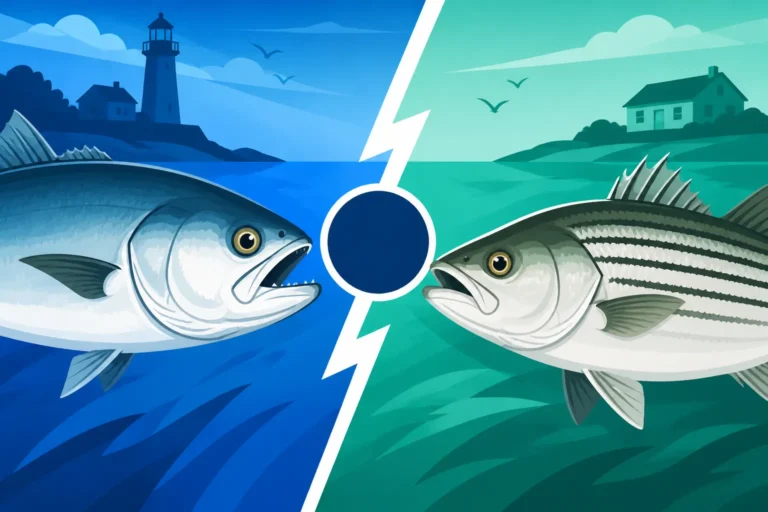
When you're out on the deep blue, the difference between a yellowfin and a bigeye can mean a lot, not just for bragging rights, but sometimes for specific regulations or the fighting experience itself. While both are highly sought-after, fast-swimming pelagic predators, they have distinct characteristics that seasoned captains and keen-eyed anglers learn to recognize. Understanding these nuances is key to appreciating these incredible fish.
Yellowfin Tuna: The Athletic Sprinter
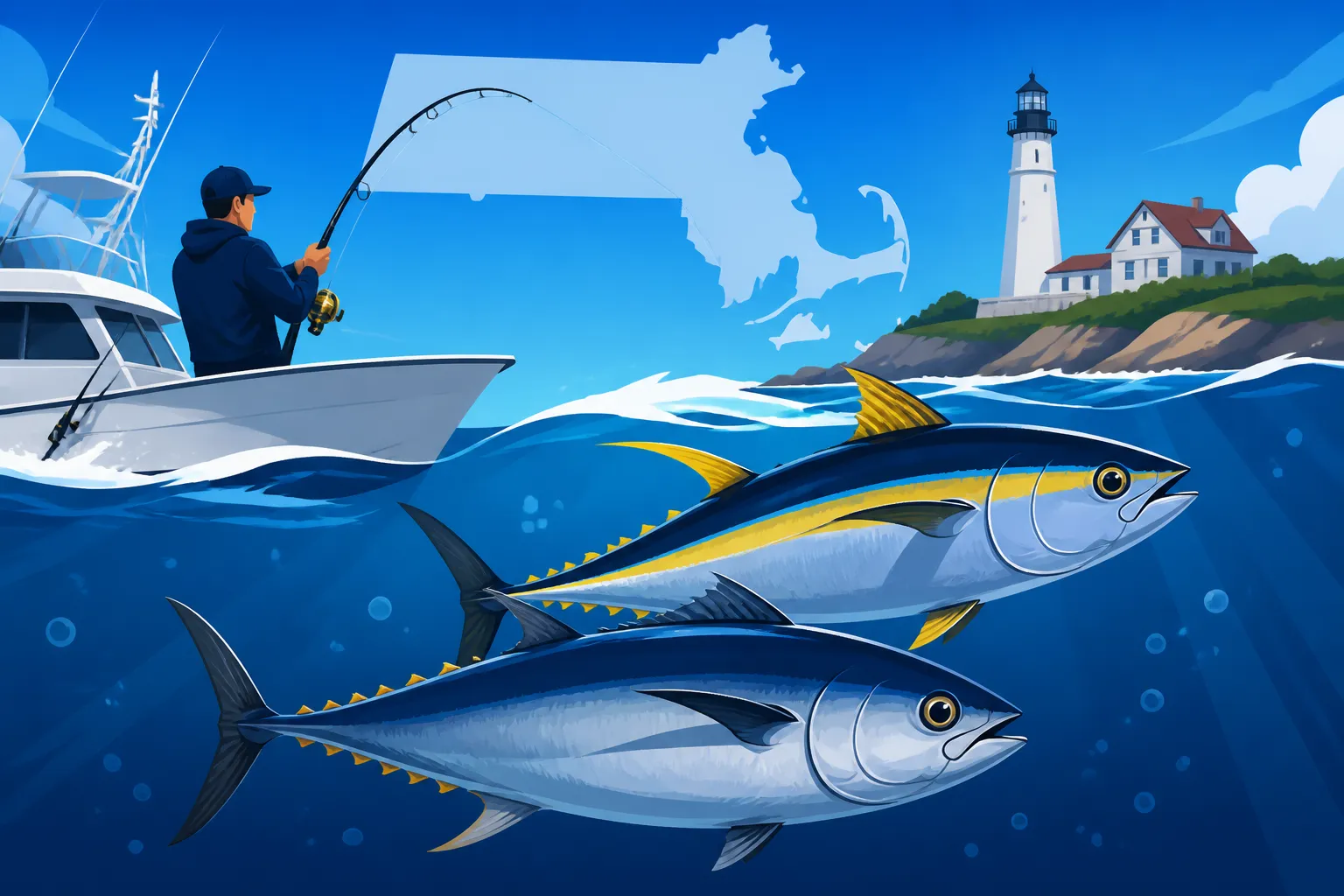
Yellowfin tuna (Thunnus albacares) are renowned for their incredible speed and stamina. Their name, of course, comes from their bright yellow finlets along the back and belly, which are often quite striking. Their body shape is typically more slender and torpedo-like compared to other tuna species, built for rapid pursuit of baitfish. They also possess a rather pointed snout.
One of the most defining features of a mature yellowfin is its exceptionally long second dorsal fin and anal fin, which can extend almost to the tail, sometimes appearing like flowing streamers. This is a dead giveaway for larger specimens and really sets them apart in the water. These fish are powerful fighters, known for long, searing runs that will test every inch of your tackle and every ounce of your strength. They are often found in warmer offshore waters and are incredibly popular targets for recreational and commercial anglers alike.
Bigeye Tuna: The Deepwater Powerhouse
Bigeye tuna (Thunnus obesus), as their name strongly suggests, have noticeably larger eyes than yellowfin, relative to their head size. This adaptation is believed to assist them in hunting in deeper, dimmer waters where they often feed. Their body is generally stockier and rounder, with a more robust build, especially around the midsection. They might not have the long, streaming fins of a large yellowfin, but their fins are still substantial and powerful.
Bigeye tuna also tend to have a slightly darker overall body color, often a deeper blue-black on the back, fading to a silvery white on the belly, sometimes with a distinctive iridescent sheen. Their finlets might not be as vividly yellow as their yellowfin cousins, sometimes appearing more muted or even yellowish-grey. These fish are known for their deep-diving, brute strength during a fight, often pulling down hard and putting immense pressure on the angler and gear.
| Feature | Yellowfin Tuna | Bigeye Tuna |
|---|---|---|
| Eye Size | Relatively smaller, proportional to head | Noticeably larger relative to head |
| Body Shape | More slender, torpedo-like, built for speed | Stockier, rounder, more robust |
| Dorsal/Anal Fins | Long, often streaming in larger specimens | Shorter, more triangular, robust |
| Finlet Color | Bright yellow, often very vibrant | Yellowish-grey to muted yellow |
| Overall Color | Dark metallic blue-black on back, silvery belly | Deeper blue-black on back, iridescent, silvery belly |
| Fight Style | Long, searing runs, athletic | Deep, powerful dives, brute strength |
| Typical Habitat | Warmer surface waters, offshore | Deeper, cooler waters, offshore |
Prime Seasons and Locations for Tuna Fishing
Finding yellowfin and bigeye tuna off Massachusetts is a highly seasonal and location-dependent endeavor. These are migratory pelagic fish, meaning they travel vast distances in the open ocean, following baitfish and favorable water temperatures. You won't typically find these species in shallow, inshore waters; they require a journey offshore, often a significant one, into the Atlantic's expansive fishing grounds.
When to Target Yellowfin and Bigeye in Massachusetts
The prime window for targeting yellowfin and bigeye tuna in Massachusetts generally runs from late spring through early fall. The exact timing can shift year to year based on oceanographic conditions, water temperatures, and the migration patterns of their forage. Typically, late May or early June sees the first arrival of these tuna, with activity building through July and August.
August and September are often considered the peak months for both species, as warmer offshore waters attract abundant bait, leading to more consistent tuna activity. As the water temperatures begin to drop in October, these fish usually start their southward migration, though some stragglers can be caught into November, especially if the warm Gulf Stream eddies linger. Keeping an eye on fishing reports and reputable charter captains' logs is crucial for understanding the current season's trends. You might want to check out Massachusetts Bluefin Tuna Charters to get an idea of what local captains are seeing.
Key Offshore Fishing Grounds
The waters off Massachusetts offer several renowned offshore locations where anglers target yellowfin and bigeye tuna. These areas are characterized by deep water, significant bottom structure, and nutrient-rich currents that concentrate baitfish. Preparing for a trip to these grounds requires proper navigation and safety equipment, as you'll be far from shore.
One of the most famous areas is the Canyon fishing grounds, which are actually a series of deep underwater canyons stretching southeast from Cape Cod. Places like Veatch Canyon, Hydrographer Canyon, and Block Canyon (though Block is technically further south) are hotspots where warm eddies from the Gulf Stream collide with colder shelf waters, creating incredibly rich feeding grounds. Here, you'll find everything from squid to mackerel, attracting the tuna. Another productive area is the Fingers or Starboard, which are shallower lumps and bumps further inshore from the canyons, but still a significant run from land. These structures also hold bait and, consequently, tuna. Finally, don't overlook areas like Georges Bank and the Continental Shelf breaks, which are vast, rich ecosystems that often host migratory tuna. Best Time of Year to Fish in Massachusetts can give you a general overview of seasonal patterns that affect offshore fishing.
Essential Gear and Tackle for Tuna
Tackling yellowfin and bigeye tuna is not for the faint of heart, nor for the underprepared. These are incredibly powerful fish that demand heavy-duty, reliable gear. Trying to save a few bucks on tackle when offshore tuna fishing is a recipe for heartbreak and lost fish. Investing in quality equipment that can withstand immense pressure and prolonged fights is paramount.
Rods and Reels: Power and Capacity
When it comes to rods, you'll want something specifically designed for offshore big game fishing. Look for heavy-action conventional rods in the 50-80 lb class, or even 100-130 lb class for the bigger bigeye. These rods need strong backbone to horse a powerful fish, but also enough tip flexibility to absorb shocks and protect your line. The guides should be robust, typically roller guides or heavy-duty ceramic. Many anglers find great deals on reputable brands when they are browsing online, for example, on Amazon.
For reels, conventional lever drag reels are the standard. You'll need reels with serious line capacity – often 500-800 yards or more of braided line, topped with a monofilament or fluorocarbon leader. Think reels in the 50W, 80W, or even 130W class. These reels need powerful drag systems that can deliver smooth, consistent pressure under extreme load without seizing or overheating. A good drag is your best friend when a tuna decides to make a blistering 300-yard run. Consider options like the Shimano Tiagra or Penn International series.
Line, Leaders, and Terminal Tackle
Your main line will almost certainly be braided superline, typically in the 80 lb to 130 lb test range. Braid offers incredible strength-to-diameter ratio and virtually no stretch, allowing for solid hooksets and direct connection to the fish. However, braid is visible in the water and lacks abrasion resistance, so it's always followed by a leader.
The leader system is critical. This usually involves a long top shot of heavy monofilament (80-150 lb test) spliced or knotted to your braid, followed by a fluorocarbon leader (80-200 lb test) tied directly to your hook or lure. Fluorocarbon is less visible to fish and more abrasion-resistant than mono. Connections should be strong, reliable knots like the Bimini Twist for loop creation and the FG knot or a solid crimp for leader attachments. Hooks must be heavy-duty, razor-sharp offshore-grade circles or J-hooks, depending on your bait or lure choice. Again, Amazon is a great place to research different brands and read reviews before making a purchase.
Essential Accessories and Safety Gear
Beyond rods, reels, and tackle, a successful and safe offshore tuna trip requires a host of other essentials. A reliable GPS/chartplotter and sonar unit are non-negotiable for finding fishing grounds and locating fish. Satellite communication devices or EPIRBs are crucial for safety when miles offshore. You’ll also need a sturdy fighting belt and harness to help distribute the immense pressure during a long fight. A gaff and a large cooler or fish bag are necessary for securing your catch. Don't forget ample water, food, sunscreen, and appropriate foul-weather gear. Preparing for these trips is key, and articles like What to Bring on a Massachusetts Fishing Charter can provide a helpful checklist.
Effective Tuna Fishing Techniques
Tuna fishing offshore is a dynamic game that often requires a combination of techniques, adapting to what the fish are doing on any given day. It's rarely a "one-size-fits-all" scenario, and success often hinges on an angler's willingness to switch tactics based on conditions and observations. Whether you're trolling, chunking, or jigging, understanding the nuances of each method is crucial.
Trolling for Cruising Tuna
Trolling is perhaps the most common and often effective method for locating and catching yellowfin and bigeye tuna. This involves dragging multiple lines behind a moving boat at various depths and distances, mimicking schools of baitfish. Spreader bars, daisy chains, cedar plugs, plastic squids, and ballyhoo rigged with skirts are all popular trolling lures. The idea is to cover a lot of water until you find where the fish are actively feeding.
When trolling, boat speed, lure placement, and lure action are paramount. Different lures perform best at different speeds, and a well-spread pattern reduces tangles and presents a more natural-looking school. Keep an eye on your sonar for bait schools and marked fish, and watch for signs of surface activity like birds diving or splashing tuna. Once a fish hits, the fight is on, and often other lines will get hit as well, leading to chaotic but exciting multiple hookups.
Chunking and Drifting
Chunking involves drifting over a productive area while consistently deploying small pieces ("chunks") of bait into the water, creating a chum line that draws tuna to your boat. Mackerel, butterfish, and sardines are common choices. As the tuna follow the chum line, you present a "free-lined" bait (a chunk with a hook inside, drifting naturally with the other chunks) or a weighted bait at a specific depth. This method requires patience and a good supply of bait, but it can be incredibly effective when tuna are feeding subsurface.
When chunking, it’s vital to match your hooked bait to the size and type of chunk you're deploying. Presentation must be as natural as possible. Light leaders, strong sharp hooks, and a stealthy approach are key. Many anglers will also drop jigs or soft plastics into the chum line, hoping to entice a bite from a tuna that might be shying away from a static bait. This active engagement can sometimes be the ticket to success.
Jigging and Popping
For more active and physical fishing, jigging and popping offer thrilling encounters with tuna. Jigging involves rapidly working a metal jig up and down through the water column, mimicking a wounded baitfish. Heavy-duty vertical jigs (butterfly jigs) are most common, often dropped deep and then retrieved with a violent, rhythmic action. This technique is highly effective when tuna are marked on the sonar but not responding to trolled baits or chunks.
Popping involves casting large topwater lures (poppers or stickbaits) to surfacing tuna or areas where you see activity. The lure is then retrieved with an aggressive "pop and pause" action, creating a commotion on the surface that mimics a fleeing baitfish. The visual strike of a tuna exploding on a topwater lure is one of the most exciting experiences in fishing. Both jigging and popping require specialized rods and reels that can handle the strenuous work and the immense power of a tuna strike. For more specific tuna tactics, you might want to look into Bluefin Tuna Fishing Techniques Near Cape Cod, as many techniques overlap for different tuna species.
Handling Your Tuna Catch
Catching a yellowfin or bigeye tuna is a remarkable achievement, but the work isn't over once the fish is boat-side. Proper handling of your catch is essential, both for safety on the boat and for ensuring the highest quality of the meat for consumption. These powerful fish can cause injury if not handled carefully, and their meat can degrade quickly if not treated right.
Landing and Securing the Fish
Once a tuna is brought to the boat, the first priority is to land it safely and efficiently. A large, strong gaff is typically used to secure the fish. Aim for the head or shoulders to minimize damage to the prime meat. Once gaffed, it's often a team effort to haul the fish over the gunwale. Be aware of the tuna's powerful tail, which can cause serious injury if it slaps you.
After the fish is on deck, the next step is often to subdue it completely to prevent injury to anglers and damage to the boat. This is typically done by bleeding the fish immediately and, for larger specimens, brain-spiking (iki-jime) to ensure a swift, humane death and preserve meat quality. Bleeding is critical for flavor and shelf life; make a cut to sever the main artery just behind the pectoral fin. You'll then want to wash the area thoroughly to keep the deck clean.
Proper Storage and Care of the Meat
Once the tuna is bled, immediate chilling is paramount. Tuna meat degrades rapidly in heat, so get it into an ice-filled cooler or fish bag as quickly as possible. For best results, use a slurry of ice and saltwater to cool the fish's core temperature down rapidly. Some serious offshore anglers will even pack the body cavity with ice once bled. The goal is to get the fish as cold as possible, as fast as possible.
Back at the dock, proper filleting and portioning will ensure you get the most out of your catch. Many marinas offer filleting services, or you can do it yourself if you have the right tools and experience. Vacuum sealing and freezing are excellent ways to preserve your tuna for later enjoyment. Remember, a well-handled tuna not only tastes better but also honors the effort put into catching such a magnificent creature. If you're wondering about general catch limits, Massachusetts Saltwater Bag Limits by Species can provide valuable information, though always double-check specific tuna regulations which can change.
Disclaimer
This article is for general informational purposes only and does not constitute professional advice. Laws, prices and regulations vary by location and change over time. Consult a qualified professional for guidance on your specific situation.