Massachusetts state record brook trout
The dream of every angler in Massachusetts is to hook into that once-in-a-lifetime fish, a true trophy that stands as a testament to skill, patience, and a little bit of luck. For many, especially those who cherish the pristine freshwater streams and ponds of our Commonwealth, that dream centers around the brook trout. There's something undeniably captivating about a brook trout – their vibrant colors, their preference for untouched waters, and the challenge they present. But what about the biggest brook trout? The legendary one that holds the state record? This guide delves into the esteemed Massachusetts state record brook trout, exploring its history, the kind of waters that produce such giants, and what it takes to even dream of matching such a monumental catch.
The Illustrious Massachusetts State Record Brook Trout
When we talk about state records, we're not just discussing a big fish; we're talking about a true anomaly, a creature that defied the odds to grow to an incredible size. For the brook trout in Massachusetts, the record stands as a benchmark of what's possible in our waters, inspiring anglers to cast their lines with renewed hope and determination.
Unveiling the Record Holder and Its History
The Massachusetts state record brook trout is a fish of legend. Weighing in at an astounding 6 pounds, 8 ounces, this behemoth was caught back in 1916. Imagine that! Over a century ago, an angler pulled a brook trout out of our state waters that still holds the title today. This particular fish was caught in the East Waushacum Pond in Sterling. It wasn't just a big fish; it was an absolute monster, especially for a species that typically tops out at a few pounds in most wild settings. The fact that this record has stood for so long speaks volumes about its exceptional size and the historical quality of our fisheries. Catching a brook trout even half that size today would be considered an incredible achievement, making the original record all the more impressive. It truly represents a pinnacle of natural growth and a bygone era of untouched potential in our ponds and streams.
What Makes a Brook Trout a True Trophy
Beyond just sheer weight, what truly defines a trophy brook trout? It's a combination of factors that resonate with anglers. First, there's the vibrant coloration – the stunning vermiculation (worm-like markings) on its back, the brilliant red spots surrounded by blue halos along its sides, and the crisp white leading edges on its fins. A trophy brook trout often displays these colors with an intensity that seems almost painted on. Then there's the condition of the fish; a healthy, plump brook trout shows that it's been thriving in its environment. While the state record was likely a product of its time in a productive pond, today, anglers often differentiate between wild, native brook trout and those that are stocked. Catching a large, wild brook trout, often found in remote, pristine headwater streams, is a profoundly rewarding experience, even if it doesn't challenge the state record in terms of size. These fish are typically smaller but are revered for their genetic purity and resilience. For those chasing size, however, stocked fish, particularly those that have "held over" for several seasons in fertile ponds or reservoirs, often have the opportunity to grow significantly larger due to abundant food sources.
Where to Find Massachusetts' Trophy Brook Trout
Finding a brook trout large enough to even be considered a "trophy" is a challenge, let alone one that might touch the state record. These fish have very specific environmental needs, and knowing where to focus your efforts is paramount.
Understanding Brook Trout Habitat in Massachusetts
Brook trout, members of the char family, are incredibly sensitive to water quality. They demand cold, clear, well-oxygenated water, which is why you'll often find them in spring-fed streams, mountain brooks, and the deeper, cooler sections of certain ponds and reservoirs. In Massachusetts, this means focusing on areas with good tree cover to maintain water temperature, rocky bottoms for cover and insect habitat, and areas with plenty of natural structure like fallen logs or undercut banks. These are the places where they can ambush prey and seek refuge from predators and warmer temperatures. While some larger ponds and reservoirs are stocked with brook trout and can grow them to impressive sizes, the truly wild, native brook trout populations tend to thrive in the smaller, less disturbed tributaries and headwater streams, particularly in the western and central parts of the state. Understanding these micro-habitats is crucial for any angler hoping to connect with a quality brook trout. For more on what these fish need, you might want to read about Brook Trout in Massachusetts Streams.
Targeting Wild vs. Stocked Brook Trout for Size
When the goal is a truly large brook trout, it's important to understand the distinction between wild and stocked fish. Wild brook trout, while genetically unique and incredibly beautiful, rarely reach the massive sizes seen in the state record. Their growth is often limited by food availability and the sometimes harsh conditions of their native stream environments. A wild brook trout over 12 inches is often considered a fantastic catch.
Stocked brook trout, on the other hand, particularly those that have been released into nutrient-rich ponds and reservoirs and survived for several years, have the potential to put on significant weight. These "holdover" trout benefit from a more abundant food supply and less competition than in some wild streams. While they might not possess the same inherent wildness, they offer the best chance for anglers hoping to land a brook trout that truly pushes the tape. MassWildlife often stocks adult-sized brook trout, and some of these can quickly grow even larger. If you're looking for sheer size, these fertile, well-managed stocked waters are often your best bet, though you should always consult the Massachusetts Trout Stocking Schedule to know when and where these fish are being released.
Key Massachusetts Waters Known for Potential Big Brookies
While pinpointing a single "best" spot for a record brook trout is like looking for a needle in a haystack, certain types of Massachusetts waters are historically known to produce larger specimens. East Waushacum Pond, where the record was caught, continues to be a stocked pond with good potential. Reservoirs like Wachusett Reservoir, while known more for its landlocked salmon and lake trout, can occasionally produce very large brook trout that have grown significantly from stocking efforts. Even some of the larger, deeper ponds on Cape Cod or in Southeastern Massachusetts, which receive regular trout stockings, can have holdover brook trout that reach impressive sizes.
Smaller, colder ponds and streams, especially those in the Berkshires or central Massachusetts that are fed by cold springs, are also prime areas. These are the places where brook trout can thrive year-round. It's not just about finding a body of water that has brook trout, but one that has the right conditions (cold, clean water, ample food, and good cover) to allow them to grow to an exceptional size. Always check specific regulations for any body of water you plan to fish, as rules can vary greatly. For instance, some ponds might have special regulations aimed at managing trout populations, including different size and bag limits.
Strategies for Pursuing Your Own Record Brook Trout
Chasing a record is a monumental task, but even pursuing a personal best brook trout requires a thoughtful approach, the right gear, and an understanding of trout behavior.
Essential Gear for Targeting Big Brookies
To effectively target larger brook trout, you need gear that's sensitive enough for delicate presentations but strong enough to handle a powerful fish.
- Rods and Reels: A light to medium-light spinning rod, typically 6 to 7 feet in length, paired with a small spinning reel (size 1000-2000) is a versatile choice. For fly anglers, a 4- to 5-weight fly rod, 8 to 9 feet long, is ideal. The key is balance and sensitivity. You want to feel those subtle takes.
- Line: Opt for a good quality monofilament or fluorocarbon line in the 4- to 6-pound test range for spinning setups. Fly lines should match your rod weight, with leaders tapered down to 4x or 5x for stealth.
- Lures and Baits: While smaller brook trout might hit almost anything, larger, more cautious fish often require specific presentations.
- Spinning: Small inline spinners (Mepps, Panther Martin), tiny spoons (Kastmaster), or small crankbaits are effective. You might find a great selection of these on Amazon.
- Bait: Live worms, mealworms, or PowerBait can be incredibly effective, especially in stocked waters or when fished slowly along the bottom.
- Flies: For fly fishing, traditional wet flies, nymphs (like Hare's Ear, Pheasant Tail), streamers (Woolly Bugger), and dry flies (Elk Hair Caddis, Adams) should all be in your arsenal, depending on the hatch.
- Accessories: A small landing net with a rubberized mesh (to protect the fish if you're practicing catch and release), forceps for hook removal, and a thermometer to check water temperature are invaluable. Waders can be crucial for accessing prime spots in streams.
Having the right tools means you're prepared for the fight and can maximize your chances of success.
Advanced Techniques for Elusive Trout
Trophy brook trout are rarely caught by accident; they're often the result of careful planning and refined techniques.
- Stealth and Approach: Brook trout are incredibly wary. Approach fishing spots quietly, staying low and out of sight as much as possible. Wear drab clothing. Long casts are often necessary to avoid spooking fish in clear, shallow water.
- Reading the Water: Learn to identify key holding areas: seams where fast and slow water meet, current breaks behind rocks, deep pools, undercut banks, and fallen timber. These structures offer cover, reduced current, and ambush points.
- Presentation: This is arguably the most critical aspect. Whether you're casting a spinner, drifting a worm, or presenting a fly, it must look natural. Avoid unnatural jerks or splashes. For spinning, cast upstream and retrieve just faster than the current. For bait, use minimal weight to allow a natural drift. Fly anglers must focus on drag-free drifts.
- Timing: Early morning and late evening often provide the best fishing, especially during warmer months, as trout are more active and light levels are lower. Overcast days can also be productive. Understanding Best Time of Day to Catch Stocked Trout in Massachusetts can make a real difference.
- Seasonal Adaptations: In spring and fall, trout might be more active throughout the day. In summer, focus on the coldest parts of the day and water. In winter, deeper, slower pools are key for Ice Fishing in Massachusetts.
The Importance of Conservation and Responsible Angling
Chasing a record or even just a memorable catch comes with a responsibility to protect our fisheries. Brook trout, especially native populations, are sensitive.
- Catch and Release: For any trophy-sized fish, especially wild brook trout, practicing careful catch and release is highly encouraged. This ensures these valuable fish can continue to spawn and contribute to the population. Minimize handling, keep the fish in the water as much as possible, and use barbless hooks.
- Respecting Regulations: Always be aware of and strictly adhere to all Massachusetts Recreational Fishing Rules and Bag Limits, including size limits, bag limits, and specific gear restrictions for the waters you're fishing. These rules are in place to ensure sustainable fishing for everyone.
- Leave No Trace: Pack out everything you pack in. Avoid disturbing stream banks or vegetation. Our natural resources are precious, and responsible angling ensures future generations can enjoy them too. For those interested in deeper conservation topics, exploring Massachusetts Fishing License How Fees Fund Conservation Programs provides valuable insight.
Understanding Massachusetts Fishing Regulations for Brook Trout
Navigating fishing regulations can sometimes feel like a puzzle, but it's absolutely essential, especially when targeting prized species like brook trout. These rules are in place for a good reason: to protect fish populations and ensure healthy angling opportunities for years to come.
Massachusetts Brook Trout Size and Bag Limits
Massachusetts has specific regulations that govern the taking of brook trout, and these can vary depending on the type of water body and even the time of year. Generally, in most lakes, ponds, rivers, and streams, there's a daily creel (bag) limit, and often a minimum size limit. For example, some waters might have a 9-inch minimum size for trout, while others might allow you to keep smaller fish. There are also designated "catch and release only" waters or fly-fishing-only sections where all trout must be immediately returned.
It's crucial to consult the most current Massachusetts fishing regulations pamphlet, which you can usually find online via MassWildlife or at bait and tackle shops. This pamphlet will detail any specific restrictions for trout, including season dates (though many waters are open year-round for trout, certain rules apply to certain species during specific times). Understanding these nuances is vital to avoid penalties for fishing without a license in Massachusetts or for violating specific trout regulations.
| Water Body Type | Typical Daily Bag Limit | Typical Minimum Size Limit | Notes |
|---|---|---|---|
| General Lakes/Ponds | Varies, e.g., 3-8 | Often 9 inches | Subject to specific water body rules and stocking programs. |
| General Rivers/Streams | Varies, e.g., 3-8 | Often 9 inches | Check for special "catch and release" or "fly-fishing-only" sections. |
| Designated Trout Management Waters | Often more restrictive | Can be higher, or "catch and release" | Designed to foster wild trout populations or trophy fish. |
Note: The numbers in this table are illustrative. Always check current MassWildlife regulations for precise and up-to-date figures.
Distinguishing Brook Trout from Other Salmonids
When you're out on the water, especially in areas where different trout species might coexist, it's important to be able to correctly identify your catch. This is not just for bragging rights; it's critical for adhering to species-specific regulations. Brook trout, while commonly called "trout," are actually char. They can sometimes be confused with brown trout or even small lake trout.
Here are some key identification markers for brook trout:
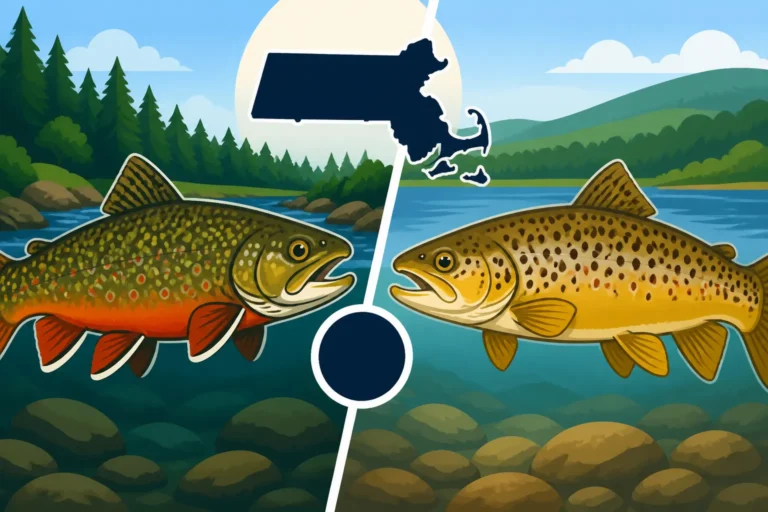
- Coloration: Very distinctive. Their backs are covered with dark, worm-like markings (vermiculation) on a lighter background. Their sides have scattered red spots, many surrounded by blue halos. The lower fins (pelvic, anal, caudal) have a prominent white leading edge, followed by a black stripe, and then orange or reddish coloration.
- Tail Fin: Square or slightly forked.
- Mouth: Relatively large, extending back to below the eye.
- Body Shape: Generally more streamlined and slender than a brown trout of similar size.
Brown trout, in contrast, typically have dark spots with light halos (often red-orange) on a golden-brown body, and their lower fins usually lack the distinct white leading edge. Lake trout have a deeply forked tail and usually white spots on a darker background. Being able to confidently identify a brook trout helps ensure you're complying with the right rules for your catch.
The Role of MassWildlife in Trout Management
MassWildlife plays an incredibly important role in maintaining and enhancing Massachusetts' trout fisheries. They are responsible for everything from operating state fish hatcheries where millions of trout, including brook trout, are raised and stocked, to conducting scientific research on wild trout populations, and setting the regulations we all follow.
Their stocking program is critical for providing ample fishing opportunities, especially for those pursuing larger fish in ponds and rivers that might not support robust wild populations. Beyond stocking, MassWildlife actively works on habitat restoration projects, ensuring that the streams and rivers where native brook trout thrive remain healthy and productive. They also provide valuable resources, like online access to Massachusetts Fishing Regulations Pamphlet, Explained and detailed maps of fishing access points. Their efforts are a cornerstone of keeping our Massachusetts waters full of vibrant, catchable trout, supporting both recreational angling and ecosystem health.
Disclaimer
This article is for general informational purposes only and does not constitute professional advice. Laws, prices and regulations vary by location and change over time. Consult a qualified professional for guidance on your specific situation.