Best spots for bluefin tuna off Cape Cod
Oh, the legendary bluefin tuna! Just hearing those words gets an angler's heart pounding a little faster, doesn't it? Chasing these magnificent, powerful fish off the coast of Cape Cod isn't just a fishing trip; it's an epic adventure, a true test of skill and endurance. But let's be real, finding these elusive giants in the vast expanse of the Atlantic can feel like searching for a needle in a haystack, especially if you're not clued into their favorite haunts. This guide is going to peel back the curtain and reveal some of the absolute best spots for bluefin tuna off Cape Cod, helping you zero in on where these pelagic powerhouses are most likely to be.
Understanding the Bluefin Tuna Migration and Habitat Around Cape Cod
Before we dive into specific coordinates, it's crucial to understand why bluefin tuna even bother gracing our Massachusetts waters. These aren't just random visitors; their presence is driven by very specific environmental factors and, most importantly, the availability of their favorite meals. Knowing their habits is half the battle won, and it makes pinpointing those hotspots a lot more logical.
Why Bluefin Love Cape Cod Waters
Cape Cod sits at a truly unique intersection, a geographic sweet spot where warm Gulf Stream waters meet cooler currents from the north. This dynamic collision creates incredibly rich, nutrient-dense waters that are a magnet for a huge variety of baitfish. Think vast schools of mackerel, herring, sand eels, and even squid – basically, a floating buffet for hungry tuna. These baitfish gather in massive numbers, especially around underwater structures, temperature breaks, and current seams, which in turn draws in the predators that feed on them.
What many anglers might not realize is just how much the underwater topography plays a role. The continental shelf drops off dramatically not too far from Cape Cod, creating canyons, ledges, and humps that are perfect ambush points for tuna. It's like an underwater highway with plenty of rest stops and diners, and bluefin are just cruising through looking for their next meal. They’re constantly on the move, following these bait schools, and the Cape provides an excellent staging ground or transit lane for their migrations.
Key Foraging Areas and Depth Zones
Bluefin tuna are highly intelligent and opportunistic predators. They don't just hang out anywhere; they actively seek out areas where bait is concentrated and easy to attack. This often means they’ll be found along sharp depth changes, known as "breaks," where baitfish get funneled. For instance, a sudden drop-off from 100 feet to 300 feet creates an ideal hunting ground. They also love areas with upwellings, where nutrient-rich water from the deep is pushed to the surface, bringing baitfish with it.
Water temperature is another critical factor. While bluefin are incredibly adaptable, they generally prefer waters between 55°F and 70°F. Slight temperature differences, even just a degree or two, can create distinct "edges" in the open ocean where bait congregates, and where tuna will inevitably follow. Satellite imagery showing sea surface temperatures and chlorophyll levels (indicating bait presence) can be invaluable tools for experienced captains trying to locate these fish. Understanding these patterns is key to finding them. For a comprehensive look at the fish you might encounter, check out our guide on Massachusetts Saltwater Fish Species.
Top Bluefin Tuna Fishing Grounds Off Cape Cod
Alright, now for the good stuff – the actual places where these giants are known to roam. While tuna are pelagic and can show up almost anywhere, there are certain legendary areas that consistently produce big fish year after year. These aren't secrets, but knowing why they're so good will help you appreciate the hunt even more.
The Waters East of Chatham: Tuna Alley and Beyond
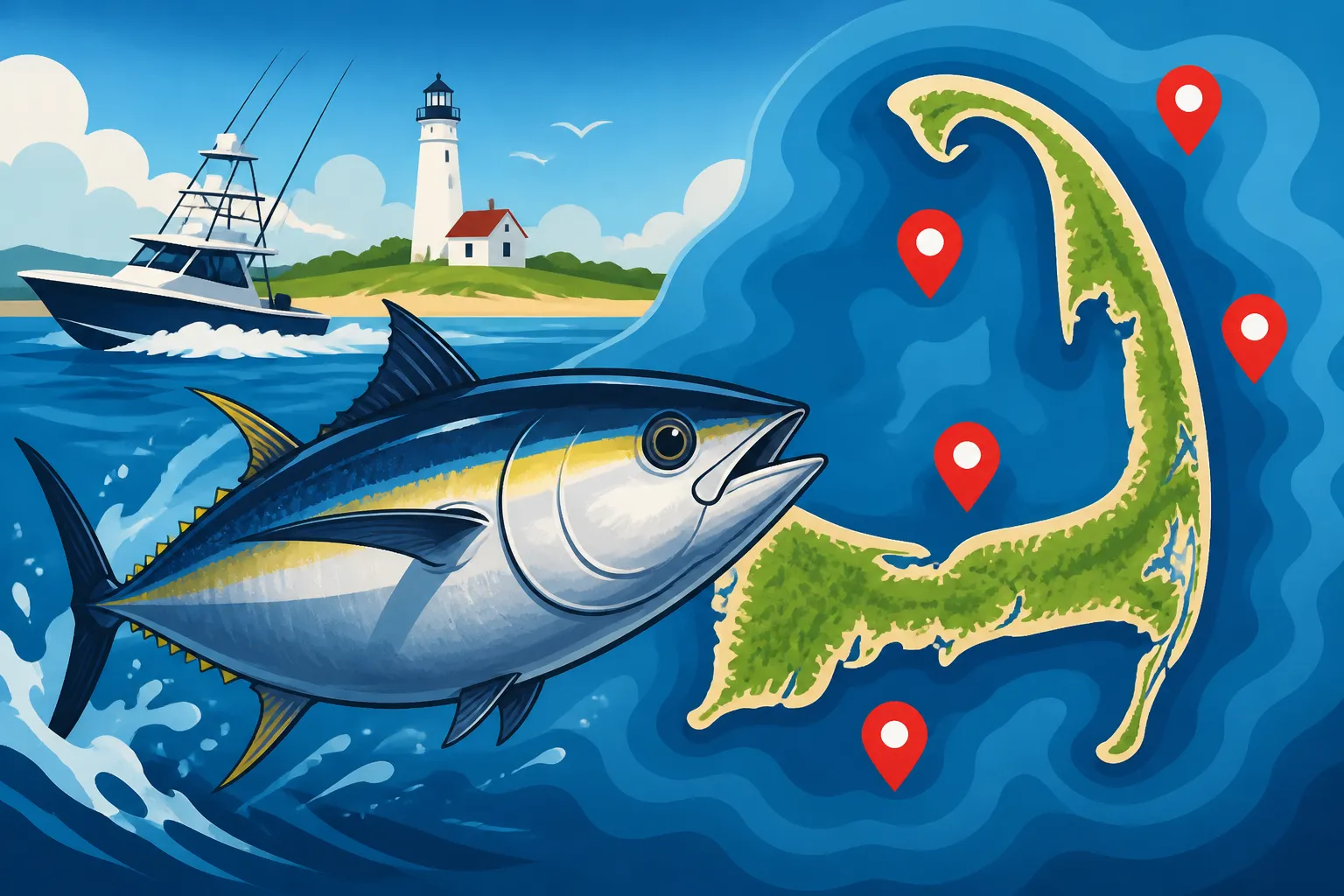
When people talk about bluefin tuna fishing off Cape Cod, the area east of Chatham often comes up first, and for good reason. This vast stretch of water, often affectionately called "Tuna Alley," is arguably the most famous and productive bluefin hotspot in Massachusetts. It encompasses a broad region, but generally refers to the fishing grounds starting anywhere from 10 to 40 miles southeast of Chatham.
What makes this area so special? It's a combination of proximity to the continental shelf and the constant flow of currents bringing in migratory bait. Anglers here often target tuna over specific ledges, humps, and shoals like Crab Ledge, the Regal Sword, or even further out towards the shipping lanes and the edge of the canyons. The depths here can vary wildly, from 150 feet all the way down to several hundred feet, offering diverse hunting grounds for bluefin of all sizes, from footballs to true giants. Many local charters, which you can easily find through platforms like FishingBooker, make this their primary hunting ground. If you're considering a trip, our Massachusetts Bluefin Tuna Charters guide can give you a lot more detail on what to expect.
Stellwagen Bank and Surrounding Areas
Moving north, another incredible bluefin destination is Stellwagen Bank, a vast underwater plateau roughly 6 miles wide and 19 miles long, located between Cape Ann and Cape Cod. This National Marine Sanctuary is an ecological powerhouse, known for its incredible biodiversity, including a thriving whale population – and where there are whales, there's usually a ton of bait, and often, tuna.
Stellwagen Bank acts like a massive magnet for baitfish such as mackerel, herring, and sand eels, which congregate over its relatively shallow waters (often 100-200 feet deep) and along its steep edges where the bank drops off into deeper troughs. While Stellwagen is famous for its smaller "football" bluefin early in the season, it can also hold some absolute behemoths, especially later in the summer and into the fall. The bank's unique topography and nutrient-rich waters make it a consistent feeding ground, attracting tuna that range from schoolie size to the giant class.
South of Martha's Vineyard and Nantucket
For those willing to venture a bit further offshore, the waters south of Martha's Vineyard and Nantucket offer another phenomenal opportunity for bluefin, particularly the bigger ones, and often later in the season when they move further south. This region includes several notable offshore banks and canyons like the Veatch Canyon, Hydrographer Canyon, and Block Canyon. These are true deep-sea fishing destinations, often requiring multi-day trips due to the distance.
These canyons are known for holding pelagic species like swordfish and marlin, but they are also prime territory for giant bluefin tuna, especially as they move along the continental shelf edge. The fishing here is typically done by trolling large spreads of lures or baits, often involving complex techniques like spreader bars and green machines. If you're planning a trip to these far-flung waters, a skilled captain is absolutely essential. Many excellent charter captains on FishingBooker specialize in these longer, more intense offshore trips, and they'll know precisely where to look for those migrating giants. For a general overview of offshore trips, our Massachusetts Deep Sea Fishing Charters article is a great resource.
Strategies for Targeting Bluefin in These Productive Zones
Finding the spots is one thing, but knowing how and when to fish them effectively is where the real skill comes in. Bluefin tuna fishing requires a combination of robust gear, specific techniques, and a deep understanding of marine conditions.
Seasonal Timing and Best Conditions
Bluefin tuna are migratory, so their presence off Cape Cod is seasonal. Generally, the season kicks off in late May or early June when the first waves of smaller "football" bluefin arrive, often chasing mackerel and herring. The action really heats up from July through September, which is often considered the peak for both medium and giant bluefin. As fall progresses into October and even November, the giants can still be found as they make their way south, gorging themselves before their long migration. This is an exciting time to be out on the water, often with fewer boats around. To get a better sense of the overall fishing calendar, check out our guide to Massachusetts Fishing Seasons Explained.
Beyond the calendar, daily conditions are paramount. Tuna prefer stable weather, often with light to moderate winds that create a manageable drift or allow for smooth trolling. Pay close attention to current breaks, temperature shifts, and any visible signs of baitfish or feeding activity – diving birds, jumping bait, or even porpoises and whales can all indicate tuna are nearby. The best time of year to fish in Massachusetts varies greatly by species, but for bluefin, the summer and fall are undeniable highlights.
Essential Techniques for Cape Cod Bluefin
Successfully hooking a bluefin tuna requires specialized techniques, and the best approach often depends on the size of the tuna you're targeting and the conditions of the day.
- Trolling: This is one of the most popular methods, especially for covering a lot of ground in areas like Tuna Alley or the canyons. Boats drag a spread of lures or natural baits (like ballyhoo or mackerel) at various depths and distances behind the boat. Heavy-duty gear is a must, as these fish hit hard and fight dirty. If you're keen to learn more about this method, our guide on Trolling for Bluefin Tuna offers an in-depth look.
- Jigging: When tuna are marked on the sonar or seen feeding on the surface, jigging can be incredibly effective. This involves dropping heavy metal jigs down to the depth of the fish and then working them aggressively through the water column. It's a very active form of fishing and can be exhilarating when a tuna strikes.
- Chunking: This method involves drifting and continuously throwing out cut pieces of bait (chum) to create a scent trail that draws tuna to the boat. Once fish are in the chum slick, live baits or chunk baits are presented on hooks. This technique is often used for larger, more finicky tuna.
Understanding the Bluefin Tuna Fishing Techniques Near Cape Cod is crucial for any angler hoping to land one of these incredible fish.
Finding Reputable Charters and Guides
Let's be honest: Unless you own a purpose-built offshore boat, have all the specialized gear, and possess years of experience navigating the open ocean, the best way to target bluefin tuna off Cape Cod is by booking a reputable charter. These captains live and breathe tuna fishing. They have the boats, the gear, the knowledge of current regulations, and most importantly, they know the specific spots and techniques that are working right now.
Websites like FishingBooker are fantastic resources for finding experienced captains. You can browse different boats, compare prices, read reviews from other anglers, and see what types of trips they specialize in. A good charter captain will not only put you on fish but will also ensure your safety and provide all the necessary equipment. They're also your best bet for understanding complex regulations like the Bluefin Tuna Size Limits off Massachusetts and ensuring you're compliant. For a comprehensive guide on selecting the right trip, our Cape Cod Fishing Charters Guide for Massachusetts Anglers is an excellent place to start. And if you're wondering about timing, our article on the Best Month for Bluefin Tuna Charters off Massachusetts can help you plan.
Navigating Regulations and Ensuring a Successful Trip
Fishing for bluefin tuna isn't just about finding the fish; it's also about respecting the resource and understanding the rules. Bluefin tuna are a highly regulated species, and for good reason—conservation is paramount.
Bluefin Tuna Size Limits and Federal Regulations
Bluefin tuna fishing in the United States is managed by the National Oceanic and Atmospheric Administration (NOAA) Fisheries, in conjunction with state agencies. The rules are complex and can change, sometimes even within a season, so it's absolutely vital to stay informed. There are different size categories (e.g., school, large school/small medium, large medium, giant), and each category often has specific bag limits, retention limits, and seasons that can vary by area and even by permit.
For recreational anglers, you'll typically be concerned with specific slot limits (e.g., tuna between 27 and 47 inches, or larger categories). Often, vessels need a specific Highly Migratory Species (HMS) Angling permit, and there are strict reporting requirements for any tuna harvested. Always, always confirm the latest regulations before you head out. A good charter captain will handle all the permitting and reporting, ensuring you're fishing legally. Knowing How big bluefin tuna get off Cape Cod and the associated rules will prevent any unwelcome surprises.
Preparing for an Offshore Adventure
A bluefin tuna trip is not your casual pond fishing excursion. It requires preparation to ensure comfort and safety, especially when you're 20, 30, or even 60 miles offshore.
Here’s a quick checklist of things to consider:
- Dress in Layers: The weather can change dramatically on the open ocean. Always bring more layers than you think you’ll need.
- Sun Protection: Sunscreen, a wide-brimmed hat, and polarized sunglasses are non-negotiable. The sun's reflection off the water can be brutal.
- Food and Drink: Bring plenty of water and snacks. Offshore trips can be long, and you'll burn a lot of energy.
- Motion Sickness Medication: If you're prone to seasickness, take preventative medication before you get on the boat.
- Cooler: Have a cooler ready in your vehicle for any fish you might be lucky enough to keep. Remember, tuna is delicious!
The table below summarizes some of the key bluefin tuna fishing grounds off Cape Cod, their characteristics, and general peak seasons.
| Fishing Ground | Characteristics | Typical Depths (Feet) | Primary Target Size | Peak Season |
|---|---|---|---|---|
| East of Chatham (Tuna Alley) | Continental shelf edge, ledges, humps, strong currents | 150 – 500+ | All sizes, esp. giants | July – October |
| Stellwagen Bank | Underwater plateau, rich baitfish concentrations | 100 – 250 | Footballs to Giants | June – September |
| South of Martha's Vineyard / Nantucket (Canyons) | Deep offshore canyons, warm water eddies | 600 – 1500+ | Large to Giants | August – November |
Remember, fishing reports are dynamic, and conditions can change rapidly. Always consult with local bait shops, marina staff, or, ideally, an experienced charter captain on platforms like FishingBooker for the most up-to-date information before planning your trip. The thrill of hooking into a Massachusetts bluefin is unlike anything else, and with the right knowledge and preparation, you're well on your way to an unforgettable experience.
Disclaimer
Always remember that fishing regulations, including size limits, bag limits, and seasons, can change. It is your responsibility to check the latest rules and regulations published by the Massachusetts Division of Marine Fisheries (MassDMF) and NOAA Fisheries before heading out on the water. This guide is for informational purposes only and should not be considered a substitute for official regulations or expert advice.