Trolling for Striped Bass in Massachusetts
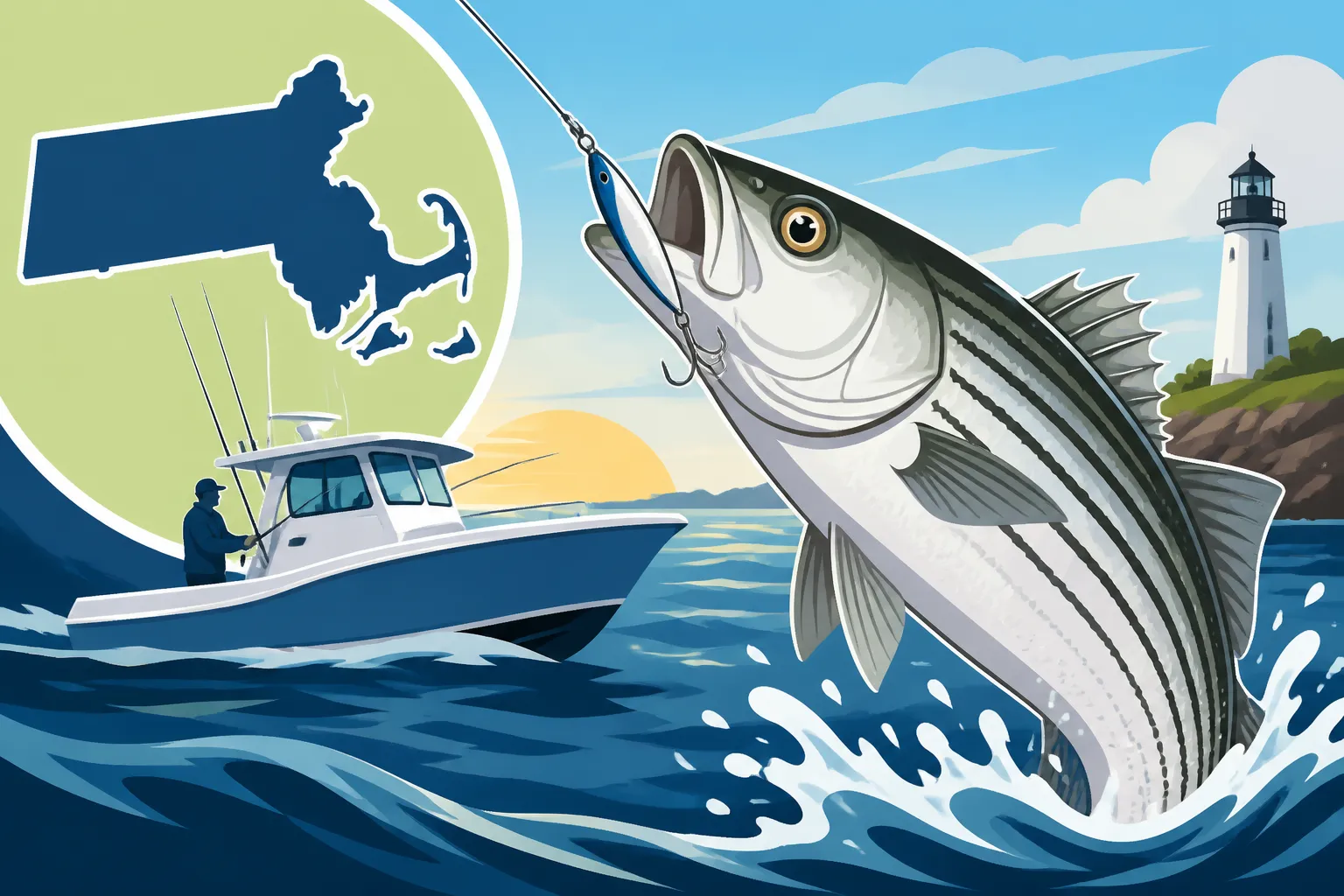
The dream of hooking into a powerful striped bass is what draws so many of us to the Massachusetts coast, but let's be honest, casting from shore or jigging in a single spot can often feel like hitting a lottery. When the fish are spread out, picky, or holding in deeper water, it can be incredibly frustrating. That’s where trolling comes in – it’s a systematic, highly effective method that allows you to cover vast stretches of water and consistently present your baits where the stripers are. If you're looking to turn those "maybe next time" moments into "fish on!" shouts, this guide is your comprehensive playbook to mastering trolling for striped bass right here in the Bay State.
Why Trolling for Striped Bass is a Game Changer
Trolling for striped bass isn't just another technique; it's a strategic approach that dramatically increases your chances of success, especially when traditional methods fall short. It's about efficiency, stealth, and presenting your offering in a way that stripers find irresistible.
Covering More Water Effectively
Imagine trying to find a needle in a haystack – that's often what it feels like when trying to locate scattered schools of striped bass in a large body of water. Trolling eliminates much of that guesswork by allowing you to systematically sweep through vast areas that would be impossible to cover by casting alone. Instead of hoping a fish swims by your stationary offering, you’re actively seeking them out. This method is particularly potent in expansive areas like Massachusetts Bay, Buzzards Bay, or even along the edges of the shipping lanes where stripers might be spread out, feeding on schools of baitfish that are constantly on the move. You can cover miles of coastline or open water, increasing the odds of intersecting with a hungry striper.
Think about those days when you're out on the water, and the fish finders are showing scattered marks, or you're just not seeing any surface activity. Instead of getting discouraged and staying put, trolling allows you to keep moving, exploring different depths and structures until you hit a productive zone. This is especially true during the mid-day doldrums or when fish are holding deeper to escape warm surface temperatures. It’s a proactive rather than reactive fishing style, putting you in control of the hunt.
Presenting Baits Naturally
One of the biggest advantages of trolling is its ability to mimic natural baitfish movement. A properly trolled lure or bait isn't just sitting there; it's swimming, darting, and pulsating through the water, looking like a distressed or unaware baitfish trying to escape. This natural presentation can be incredibly effective, especially for wary, larger stripers that might ignore a static offering. You control the speed, the depth, and the action, making your bait look like a genuine meal on the move.
When you slow troll a live mackerel or a rigged eel, for example, the bait moves with a natural swimming motion that's hard for a predatory striper to resist. Similarly, a deep-diving plug or a tube and worm rig, when trolled correctly, has an enticing wiggle and vibration that mimics an easy meal. This controlled presentation is key. You can adjust your speed to make a plug dive deeper or swim more erratically, or slow down to allow a tube and worm rig to really pulsate. The goal is to make your offering appear as alive and vulnerable as possible, triggering that instinctual strike from a passing striper.
Essential Gear for Trolling Striped Bass
To become a successful striper troller in Massachusetts, having the right equipment isn't just a suggestion, it's a necessity. The right rod, reel, line, and depth control mechanisms will not only make your experience more enjoyable but also significantly increase your chances of landing that elusive fish.
Rod and Reel Setup
When it comes to trolling for striped bass, you'll want gear that can handle the sustained pressure of pulling lures through the water, as well as the powerful runs of a big striper. Forget your light freshwater spinning gear; we're talking about robust setups built for the saltwater environment.
For rods, look for something in the 7 to 8-foot range, with a medium-heavy to heavy power and a moderate-fast action. This combination provides enough backbone to manage heavy lures or fight strong currents, while still offering enough tip sensitivity to detect subtle strikes or the snagging of weed. Fiberglass rods are often favored for their durability and parabolic bend, which acts as a shock absorber when a big fish hits. Brands like Ugly Stik or Penn offer excellent, budget-friendly options that can take a beating.
As for reels, conventional (baitcasting) reels are the workhorses of trolling. They excel at managing heavier lines, offering incredible cranking power, and have a more robust drag system compared to most spinning reels of comparable size. A reel in the 300 to 500 size range, like a Penn Squall or a Shimano Tekota, is a great choice. Look for models with a strong, smooth drag, a reliable line counter (which is invaluable for knowing how much line you have out), and corrosion-resistant components. While some anglers might opt for heavy-duty spinning reels, especially when casting lighter lures and then slow-trolling, the sheer power and control of a conventional reel for sustained trolling efforts are hard to beat. You can often find great deals on these setups on platforms like Amazon, ensuring you get quality gear delivered right to your door.
Line Selection and Leader Material
The choice of fishing line is paramount in trolling, influencing everything from lure depth to strike detection. Most serious striper trollers will carry a variety of setups, each spooled with a different type of line.
- Braided Line: For many applications, braided line is king. Its thin diameter for its breaking strength, minimal stretch, and incredible sensitivity make it ideal for transmitting information directly from your lure to your hands. With 30-50 lb test braid, you can feel every bump, weed, and even the subtle vibrations of your lure. However, braid floats, so it requires additional weight or specialized systems to get lures to depth. When using braid, a short top shot or leader of monofilament or fluorocarbon is essential to absorb shock and provide some invisibility near the lure.
- Monofilament Line: Traditional monofilament line still has its place, especially for its inherent stretch, which can be forgiving when a striper hits hard. Its slight buoyancy also makes it suitable for topwater or shallow-running plugs. However, its thicker diameter means more water resistance and less sensitivity than braid.
- Lead Core Line: This is a specialized line designed specifically for trolling to depth without the need for additional weights or downriggers. Lead core line consists of a braided nylon sheath with a lead wire core. Each color change (typically every 10 yards) represents roughly 5-7 feet of depth at a typical trolling speed of 2-3 knots. This allows for precise depth control – if you want your lure at 20 feet, you might let out 3-4 colors. Lead core is commonly spooled onto conventional reels, often with a monofilament or fluorocarbon backing and a fluorocarbon leader. It's fantastic for fishing tube and worm rigs or spoons at specific depths where stripers are suspended.
Regardless of your main line choice, a good leader is non-negotiable. Fluorocarbon leader material, typically 40-80 lb test, is preferred due to its excellent abrasion resistance (crucial around structure or against a striper's rough mouth) and its near invisibility underwater. A leader of about 6-10 feet should be tied directly to your main line using a strong knot like a FG knot or an Albright knot, and then to your lure or bait.
Mastering Depth Control: Downriggers, Planer Boards, and Lead Core
One of the greatest challenges and triumphs in trolling is consistently presenting your offering at the correct depth where the fish are holding. Striped bass often stack up along specific thermoclines, structure, or schools of bait at precise depths, and if your lure isn't there, you're just dragging it for a ride. Luckily, several tools help us achieve this precision.
- Downriggers: For pinpoint accuracy in depth, downriggers are unmatched. These devices use a heavy weight (often a cannonball) attached to a cable, which is lowered to a desired depth. Your fishing line, with a lure attached, is then clipped to a release mechanism on the downrigger cable. When a fish strikes, the line pops free from the clip, allowing you to fight the fish directly on your rod and reel, unencumbered by the heavy weight. Downriggers are excellent for targeting fish suspended over deep water or along distinct depth contours. They require a dedicated setup on your boat, but for serious deep-water trolling, they are incredibly effective.
- Planer Boards: These innovative devices are designed to spread your fishing lines out to the sides of your boat, covering a much wider swath of water than would otherwise be possible. This is particularly useful for avoiding prop wash, presenting multiple lures without tangles, and reaching fish that might be spooked by the boat's presence directly overhead. Planer boards come in various sizes, from smaller in-line boards that attach directly to your fishing line to larger mast-mounted systems that can tow multiple lines simultaneously. They're fantastic for covering shallow flats or broad areas where fish are widely distributed. You simply deploy your lure, clip your line to the board, and let it run out to the side. When a fish hits, the board may trip or release, allowing you to reel in your catch.
- Lead Core Line: As mentioned earlier, lead core is an all-in-one solution for depth control that doesn't require extra hardware on your boat. Its heavy lead core sinks at a consistent rate, allowing you to calculate your lure's depth based on the number of "colors" (10-yard sections) you let out. This makes it incredibly versatile for fishing tube and worm rigs, spoons, or deep-diving crankbaits at specific depths. It's often the go-to for anglers looking for a simpler, yet effective, depth control method without investing in downriggers or large planer board systems. Mastering lead core takes a little practice to understand the exact depth per color at different trolling speeds, but once you do, it becomes an invaluable tool.
Understanding the strengths of each depth control method allows you to tailor your approach to the specific conditions and locations you’re fishing. Often, a combination of these methods is employed to maximize coverage and depth versatility.
Top Lures and Baits for Trolling Striped Bass
Striped bass are opportunistic predators, and a variety of lures and baits can be incredibly effective when trolled. The key is to select offerings that match the prevalent baitfish in the area and present them at the right depth and speed.
Productive Artificial Lures
Artificial lures are a staple for any serious striper troller. Their consistent action, durability, and wide range of colors and sizes make them incredibly versatile.
- Deep-Diving Plugs: These are some of the most popular and effective trolling lures. Brands like Rapala X-Raps, Bomber Long A’s, and Yo-Zuri Crystal Minnows are renowned for their enticing wobble and ability to reach significant depths without additional weight. Choose plugs that dive to the depth you’re targeting, typically between 10-30 feet. Colors that mimic local baitfish such as mackerel, herring, or bunker are often deadly. Experiment with natural patterns (blue/silver, green/silver) and brighter options (chartreuse, firetiger) on overcast days or in stained water. The bigger the plug, often the bigger the striper it attracts, so don't be afraid to go with larger sizes (6-9 inches) when targeting trophy fish.
- Spoons: Classic metal spoons, like the Crippled Herring or Tony Accetta Pet Spoon, are fantastic for mimicking wounded baitfish. Their flash and erratic flutter are irresistible to stripers, especially when trolled at moderate speeds. They can be trolled directly, or behind a drail weight or inline sinker to get them deeper. Silver and gold are standard, but blue/silver and green/silver combinations can also be very effective.
- Jigs: While often associated with vertical jigging, certain jigs, particularly bucktail jigs or soft plastic swim shads rigged on jig heads, can be effective when trolled slowly, especially in areas with strong current or structure. Add a strip of pork rind or a soft plastic trailer for added enticement. This technique is often combined with lead core line to maintain depth.
- Umbrella Rigs: These are truly a force multiplier. An umbrella rig consists of a main line with several wire arms, each ending in a teaser or a small swimming lure, often culminating in a larger "target" lure in the center. They create the illusion of a small school of baitfish, making them incredibly attractive to stripers. Umbrella rigs can be trolled effectively at various depths by adjusting the weight on the main line. Many anglers will purchase these from specialized tackle shops or online retailers like Amazon to get high-quality, pre-rigged options.
The Effectiveness of Tube and Worm Rigs
If there's one classic Massachusetts trolling presentation that consistently puts stripers in the boat, it's the tube and worm. This simple yet incredibly effective rig is legendary for a reason. It excels at attracting large, wary stripers that might ignore faster-moving artificials.
A typical tube and worm rig consists of a weighted plastic or metal tube (usually 18-36 inches long, often red, black, or blue) with a single hook trailing behind it. The magic happens when a fresh chunk of sandworm (or occasionally a bloodworm) is threaded onto that trailing hook, allowing the worm to undulate enticingly behind the slow-moving tube. The combination of the tube's subtle wobble and the natural scent and action of the worm is often irresistible.
These rigs are best trolled very slowly, typically between 1.5 to 2.5 knots. This slow speed allows the tube to swim with a lifelike snake-like motion, and the worm to dance naturally. Lead core line is the perfect partner for tube and worm rigs, as it allows you to consistently present the rig at precise depths without adding clunky weights directly to your leader. Many anglers will run multiple tube and worm rigs at different depths using lead core or even light downriggers, covering various strata of the water column until they find where the fish are holding. This is a must-have in your striper trolling arsenal.
Trolling with Live and Dead Baits
While artificial lures are highly effective, nothing quite beats the natural appeal of live bait. For trolling, live mackerel, menhaden (pogies), and eels are often the most productive, though dead bait can also shine under the right circumstances.
- Live Mackerel: If you can catch them, live mackerel are arguably the best bait for big striped bass. They are a primary food source for stripers in Massachusetts, and trolling a lively mackerel is a surefire way to tempt a trophy. Rig them through the nose or dorsal fin with a large circle hook (6/0-8/0) to keep them swimming naturally. Troll them slowly, just enough to keep them alive and swimming enticingly. You might use a light sinker or a planer to get them to the desired depth.
- Live Menhaden (Pogies): Similar to mackerel, pogies are a massive calorie boost for stripers. When large schools of menhaden are present, trolling a live one on a sturdy circle hook can be incredibly effective. They're larger than mackerel, so they tend to attract bigger fish.
- Live Eels: Eels are another top-tier striper bait, particularly favored for night fishing, but they can be very effective trolled during the day as well, especially over rocky bottom or around structure. Rig them through the jaw with a large circle hook. Their slithering action is hard for stripers to ignore. Like the tube and worm, eels are best trolled slowly.
- Dead Baits: Don't underestimate the power of dead baits, especially when current is present. Freshly dead mackerel, herring, or even chunks of bunker can be very effective when trolled on a simple three-way swivel rig with a sinker, or behind a planer. The scent trail they leave is a huge draw. Rig them to swim straight, using a bridal rig or by sewing the hook into the bait, to prevent spinning. Trolling dead bait can be a great option when live bait is hard to come by, or when you want to target lazy, deep-feeding fish.
Using live or dead bait requires a bit more finesse than artificials, but the payoff in terms of quality fish can be immense. Remember to check the regulations regarding Massachusetts Recreational Fishing Rules and Bag Limits for baitfish collection and use.
Where and When to Troll for Striped Bass in Massachusetts
Successful trolling for striped bass isn't just about technique and gear; it's crucially about knowing where the fish are and when they are most likely to bite. Massachusetts offers a diverse range of environments, each with its own prime trolling opportunities.
Prime Trolling Locations Across Massachusetts
Massachusetts is blessed with an abundance of striper habitat, and many of these areas are fantastic for trolling. The key is to look for structure, current, and concentrations of baitfish.
- Cape Cod Canal Approaches and Buzzards Bay: While the Cape Cod Canal itself is renowned for its intense current and shore fishing, the waters leading up to it, particularly on the Buzzards Bay side, offer excellent trolling opportunities. Buzzards Bay is relatively shallow in many areas but has numerous reefs, rock piles, and channels that hold baitfish and, consequently, stripers. Trolling deep-diving plugs or tube and worm rigs along channel edges or over rocky humps can be incredibly productive. For a comprehensive overview, check out our Cape Cod Canal Fishing Guide for Massachusetts Anglers.
- Massachusetts Bay and Boston Harbor: The vast expanse of Massachusetts Bay, from Stellwagen Bank to the shorelines, is a striper trolling paradise. Look for areas with current breaks, underwater humps, and schools of mackerel or herring. Boston Harbor, surprisingly, also offers great opportunities. The outer harbor islands, ledges, and channels hold a significant number of stripers throughout the season. Trolling a mix of umbrella rigs, deep-diving plugs, and tube and worm rigs can be very effective here, especially around the countless islands and rocky structures.
- Offshore Humps and Rips: Further offshore, areas with significant depth changes, humps, and rips are magnets for bait and stripers. These areas might require longer runs, but the reward can be substantial, often producing larger, migrating fish. Keep an eye on your electronics for bait balls and fish holding tight to structure.
- North Shore and South Shore Coastlines: From Plum Island down to the South Shore towns like Scituate and Plymouth, the coastline offers numerous shallow water trolling opportunities, particularly during low light conditions or when stripers are actively chasing bait near the beach. Consider areas near river mouths, rocky points, and sandy beaches where baitfish congregate.
Remember, stripers are often found near structure, whether it's submerged rocks, wrecks, channel edges, or even just subtle changes in bottom contour. Your fish finder and GPS are invaluable tools for locating these areas and marking them for future reference.
Seasonal Strategies and Timing
The striper season in Massachusetts typically kicks off in late spring, heats up in summer, and offers a glorious fall run. Your trolling approach should adapt to these seasonal changes.
- Spring (May-June): As the waters warm and baitfish like herring and mackerel return, so do the first waves of migrating striped bass. Early season trolling should focus on warmer, shallower waters, especially near river mouths and estuaries where smaller stripers might be feeding on herring runs. Fish will be shallower and more active in cooler water. Trolling tube and worm rigs or smaller plugs can be very effective. This is When striped bass season starts in Massachusetts is on every angler's mind.
- Summer (July-August): During the peak summer months, especially when surface water temperatures rise, stripers often move into deeper, cooler water. They might be found around offshore ledges, deep channels, or suspended over open water, gorging on mackerel or squid. This is prime time for using downriggers to get larger plugs, spoons, or umbrella rigs down to where the fish are holding, often 20-50 feet deep or more. Early morning and late evening, or even night trolling, can also be particularly productive in shallower areas as stripers move up to feed under the cover of darkness.
- Fall (September-October): The fall run is a spectacular time for striper trolling. As temperatures drop, stripers embark on their southward migration, feeding aggressively to bulk up for the journey. They can be found almost anywhere, from shallow rips to offshore schools. Often, they'll be chasing massive schools of baitfish, creating incredible surface blitzes. Trolling can be excellent for covering broad areas to locate these schools, or for picking off larger fish that hang below the main feeding frenzy. Both deep and shallow tactics can work, depending on where the bait and fish are concentrated. Our guide to Massachusetts Fishing Seasons Explained offers more detail on these yearly patterns.
Understanding Tides and Currents
Tides and currents are perhaps the most critical factor for successful striped bass fishing in Massachusetts, and trolling is no exception. Stripers are ambush predators that use current to their advantage, allowing baitfish to be swept past them while expending minimal energy.
- Rip Lines and Current Seams: Look for areas where currents collide or create distinct "rip lines" – these are natural feeding zones. Trolling along the edges of these rips can be incredibly productive, as stripers will often position themselves just out of the main current, waiting for an easy meal.
- Trolling with or Against the Current: Many anglers find success by trolling against the current, as this makes your lures appear to be swimming upstream, a very natural movement for baitfish struggling in the flow. However, trolling with the current at a slower speed can also be effective, mimicking injured or exhausted bait. Experiment with both to see what the fish prefer on any given day. The important thing is to maintain control of your boat and lure speed relative to the water.
- Slack Tide vs. Moving Water: While some fish can be caught during slack tide, the moving water of incoming or outgoing tides is generally far more productive for stripers. The current concentrates bait and triggers the stripers' feeding instincts. Pay close attention to the tidal charts and plan your trolling efforts around the strongest periods of current flow. Understanding the Best Tides for Striped Bass Fishing in Massachusetts is crucial for maximizing your time on the water.
Trolling Techniques and Best Practices
Trolling might seem as simple as dragging a lure behind a boat, but there’s a real art and science to doing it effectively. Mastering boat control, utilizing electronics, and adhering to safety and regulations are all part of the equation for consistent success.
Optimal Boat Speed and Pattern Considerations
Your trolling speed and the patterns you run with your boat are critical factors that directly influence your lure's action and its appeal to striped bass. There isn't a single "perfect" speed; it varies based on the lure, bait, and conditions.
- Boat Speed: Generally, trolling speeds for striped bass range from 1.5 to 4 knots.
- Slower Speeds (1.5-2.5 knots): Ideal for live baits (mackerel, eels), tube and worm rigs, and larger soft plastics. These baits shine when presented with a slower, more natural swimming motion. If your lure has a wide wobble, a slower speed often enhances its action.
- Moderate Speeds (2.5-3.5 knots): This is the sweet spot for many deep-diving plugs, spoons, and umbrella rigs. It allows plugs to dive to their advertised depths and spoons to flash and flutter effectively.
- Faster Speeds (3.5-4+ knots): Sometimes, a faster presentation is what triggers a strike, especially when fish are highly aggressive or chasing fast-moving bait like sand eels. It can also be useful for covering ground quickly to locate schools.
You'll want to experiment. Watch your rod tips – they should have a consistent bend and pulse, indicating your lure is swimming correctly. If it's erratic or there's no pulse, your speed might be off or there's weed on your lure.
- Pattern Considerations: Just driving in a straight line isn't always the most effective strategy.
- Zig-Zag or S-Curves: This is a fantastic technique. As your boat turns, the lures on the inside of the turn slow down and drop slightly, while the lures on the outside speed up and rise. This change in speed and depth can often be enough to trigger a reluctant striper. Many strikes occur right as the boat completes a turn.
- Contouring: When fishing over structure, such as a ledge or a drop-off, try to follow the contour lines with your boat. This keeps your lures in the strike zone for longer.
- Figure Eights: If you get a strike in a particular area, immediately turn the boat into a wide figure-eight pattern. This keeps your lures in the productive zone and allows any other fish in the school to potentially hit.
- Prop Wash: Be mindful of your prop wash. Some lures can be trolled directly in the wash, as it can attract fish by mimicking a feeding frenzy. Others might need to be run outside of it using planer boards.
Don't be afraid to change speeds and patterns frequently until you find what the fish are responding to on a given day. Consistency comes from adaptability.
Reading Your Electronics: Fish Finders and GPS
Modern marine electronics are indispensable tools for striped bass trolling. They are your eyes and memory on the water, showing you what's beneath the surface and helping you navigate back to productive spots.
- Fish Finder (Sonar): Your fish finder is crucial for identifying several key elements:
- Bait Balls: Look for dense clouds on your screen – these are often schools of baitfish, and where there's bait, there are usually stripers. Trolling through or around these bait balls is a high-percentage tactic.
- Structure: Rock piles, ledges, wrecks, and channel edges will show up clearly. Stripers often relate tightly to structure, using it for ambush points or cover.
- Individual Fish/Schools: Stripers will appear as distinct arches or blobs, often near the bottom or suspended in the water column. Pay attention to the depth at which you mark fish and adjust your lure depth accordingly. If you see fish at 30 feet, make sure your lures are running at or near that depth using your downriggers, lead core, or deep-diving plugs.
- Thermoclines: In deeper water, your fish finder might show a distinct layer where the water temperature changes dramatically. Stripers often hold just above or below these thermoclines.
Learn to interpret what your sonar is showing you. It takes practice, but understanding these visual cues will make you a much more effective troller.
- GPS (Global Positioning System): Your GPS is equally important for navigation and strategy:
- Marking Waypoints: When you catch a fish, mark the exact spot as a waypoint. This allows you to return to that precise location later or troll over it again.
- Tracking Trolling Paths: Use the track function on your GPS to monitor the path you've trolled. If you had success on a particular pass, you can try to replicate that exact path.
- Identifying Productive Areas: Over time, your marked waypoints and tracks will build a map of your most productive fishing spots, helping you focus your efforts on future trips.
- Navigation and Safety: Beyond fishing, GPS is vital for safe navigation, especially in fog or low light conditions, and for avoiding hazards like shoals or unmarked rocks.
A good chartplotter that integrates both sonar and GPS is a powerful tool for any Massachusetts striper angler. Brands like Garmin, Lowrance, and Raymarine offer excellent units that can drastically improve your trolling success.
Safety and Regulations on the Water
As much as we love chasing striped bass, safety and adherence to regulations must always be our top priority. The waters around Massachusetts can be unpredictable, and responsible angling ensures everyone has a good time and that our fisheries remain healthy.
- Know Your Vessel and Weather: Before heading out, always check the marine weather forecast. Conditions can change rapidly, especially offshore or around Cape Cod. Ensure your boat is in good working order, with all required safety gear aboard, including PFDs (personal flotation devices) for everyone, a VHF radio, flares, and a first-aid kit. Let someone know your float plan. Trolling requires slow, sustained boat operation, so understanding your boat's handling characteristics at low speeds and in various sea conditions is important.
- Massachusetts Fishing Regulations: It's absolutely crucial to be familiar with and abide by all Massachusetts fishing regulations, particularly concerning striped bass. These regulations, which include minimum and maximum size limits (slot limits), daily bag limits, and gear restrictions, are subject to change. For instance, understanding the Massachusetts Striped Bass Slot Limit Explained is vital, as keeping a fish outside the legal slot can result in hefty fines. You'll also need a valid Massachusetts Saltwater Recreational Fishing Permit Explained to fish for stripers. Always refer to the latest regulations published by MassWildlife or NOAA Fisheries before each trip. Keep a measuring device handy, and know how to accurately measure your catch. If you're using a charter, they'll handle the licenses for their passengers, but it's always good to be informed yourself.
- Respect Other Anglers and Boaters: The waters can get crowded, especially in popular striper spots. Maintain a safe distance from other boats, particularly those that are also trolling or anchored. If you hook a big fish and need to maneuver, communicate with those around you via VHF radio. Be mindful of prop wash and don't cut off other boats. Good etiquette ensures a pleasant experience for everyone.
- Conservation: Practice good catch-and-release techniques for any fish you don't intend to keep or that fall outside the legal slot limit. Handle fish gently, minimize their time out of water, and use circle hooks when possible, as they reduce gut-hooking. Our collective efforts in conservation help ensure that future generations can also enjoy the thrill of How to Catch Striped Bass in Massachusetts.
Comparing Popular Striped Bass Trolling Lures and Rigs
To help you choose the right tools for your next trolling adventure, here's a quick comparison of some of the most effective lures and rigs for striped bass in Massachusetts.
| Lure/Rig Type | Ideal Trolling Speed (Knots) | Target Depth (Feet) | Key Features / Notes |
|---|---|---|---|
| Deep-Diving Plugs | 2.5 – 4 | 10 – 30+ | Mimics large baitfish (mackerel, herring). Excellent for covering mid-depths over structure or open water. Bright colors for stained water, natural for clear. Brands like Rapala, Bomber. |
| Tube and Worm | 1.5 – 2.5 | 5 – 20 | Classic, slow, enticing action. Extremely effective for larger, wary stripers. Best with fresh sandworms. Often fished with lead core line. |
| Umbrella Rigs | 2 – 3.5 | Variable (with added weight) | Mimics a school of baitfish, creating a large profile. Can be very effective when stripers are focused on schools of smaller bait. Often requires heavier tackle. |
| Spoons | 2.5 – 4.5 | Variable (with added weight) | Flashy, erratic flutter mimics wounded bait. Good for attracting active fish. Silver/blue for sunny days, gold/green for overcast. Can be trolled behind planers or drails. |
| Live Mackerel/Eels | 1 – 2 | Variable | Unmatched natural presentation. Requires careful rigging to keep bait alive and swimming straight. Ideal for targeting trophy-sized stripers. Requires live bait well. |
| Soft Plastic Swim Shads | 2 – 3.5 | 5 – 25 | Mimics baitfish with subtle tail kick. Can be rigged on jig heads of varying weights to control depth. Very versatile and cost-effective. Often trolled behind lead core. |
Disclaimer
Fishing involves inherent risks. Always prioritize safety, understand and follow all local, state, and federal fishing regulations, and be aware of your surroundings. This guide is for informational purposes only and does not constitute professional advice.