How to fly fish small streams in central Massachusetts
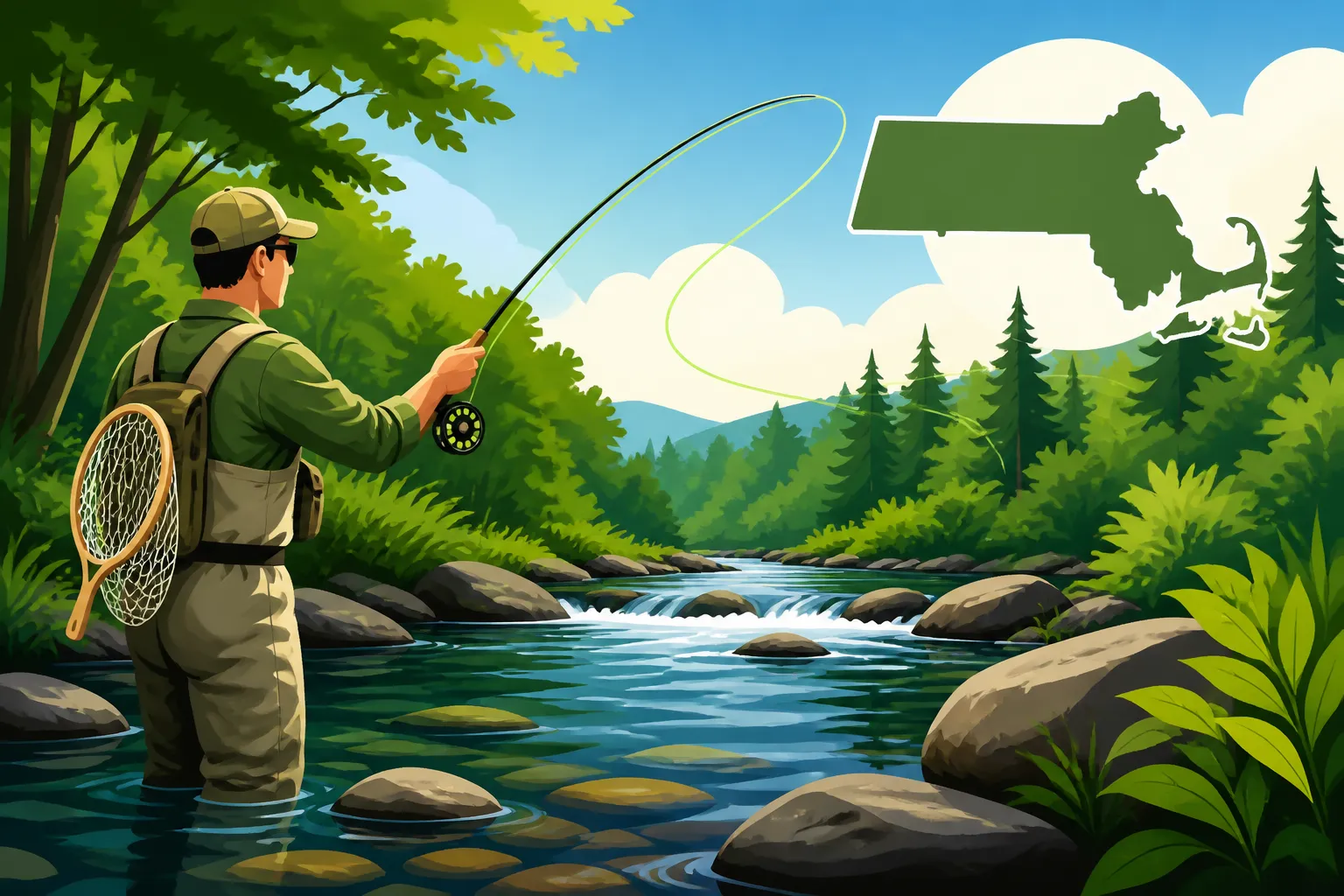
It’s easy to think that fly fishing is reserved for grand, sprawling rivers or vast, open lakes, but trust me, there's a whole world of magic waiting in the smaller, more intimate streams weaving through central Massachusetts. Many anglers overlook these hidden gems, assuming they're too small or too challenging, leading to missed opportunities for incredible, peaceful fishing experiences right in our backyard. This guide is here to unravel the secrets of fly fishing these charming, often overlooked waterways, helping you discover the joy and unique challenges they offer.
The Undeniable Allure of Central Massachusetts' Small Streams
Fly fishing small streams in central Massachusetts isn't just a different experience; it's a completely different mindset. You're not casting huge lines into wide-open spaces; instead, it's a game of finesse, stealth, and a deep understanding of trout behavior in confined environments. This is where the true art of fly fishing, the delicate dance between angler and fish, truly shines.
Why Small Streams Capture the Fly Angler's Heart
For many, the appeal of a smaller stream lies in its intimacy. You're often surrounded by dense foliage, feeling a true connection to nature that you might not get on a larger, more popular river. These streams, winding through wooded areas and past old stone walls, offer a sense of discovery. Each bend holds a new secret, a new pocket where a hungry trout might be lurking. The pressure on these smaller waters is typically much lower than on famous rivers, meaning the fish can be less wary and more willing to investigate a well-presented fly. It's a fantastic place to practice your skills without the crowds, honing your casting and presentation in a truly wild setting.
Think about it: instead of seeing a dozen other anglers, you might have an entire stretch of river to yourself, hearing nothing but the rustle of leaves and the gentle murmur of the water. This solitude is priceless. It's also an excellent proving ground for your fly fishing prowess. You'll learn to adapt, to make quick, accurate casts, and to read the water in intricate detail. Plus, many of these smaller streams are home to healthy populations of wild brook trout, those beautiful, feisty natives that are a thrill to catch on a fly rod. If you're looking for a quieter, more personal fishing journey, Trout Fishing in Massachusetts on these smaller waterways is absolutely for you.
Scouting for Your Next Secret Spot
Finding these hidden gems often requires a bit of detective work and a willingness to explore. MassWildlife's website is an invaluable resource, offering detailed maps and stocking reports that can point you towards promising areas. However, for truly small, off-the-beaten-path streams, you might need to combine that with some good old-fashioned satellite map exploration and even a bit of hiking. Look for thin blue lines on topographical maps that indicate consistent water flow, especially in areas with public access or adjacent conservation land.
Don't be afraid to walk a little! Many of the best small streams aren't accessible directly from a main road. Parking your car and taking a short hike through the woods can lead you to pristine stretches of water that rarely see an angler. Always be respectful of private property boundaries, of course. Local tackle shops, even those focused on bigger waters, can sometimes offer subtle hints or confirm suspicions about smaller, productive tributaries. Sometimes, just driving around and keeping an eye out for bridges over small waterways can lead to a new discovery. Once you find a spot, treat it with care and respect – that’s how we keep these special places wild for everyone.
Essential Gear for Navigating Tight Spaces
The gear you choose for small stream fly fishing in central Massachusetts is crucial. You're not going to want a powerful 9-foot rod designed for big western rivers. Instead, think lighter, shorter, and more nimble. It's about precision and delicate presentation rather than sheer casting distance.
Rods, Reels, and Lines Designed for Finesse
When it comes to your rod, shorter is definitely better for these tight quarters. A fly rod in the 6-foot to 7.5-foot range, ideally a 2-weight to 4-weight, will be your best friend. This lighter setup allows for delicate presentations, protects lighter tippets, and makes fighting smaller trout feel like a true battle. You'll appreciate the shorter length when you're trying to cast under overhanging branches or navigate through dense brush. Many anglers even opt for fiberglass rods for their softer action, which can be delightful on small streams. As for the reel, a simple click-and-pawl reel or a small, lightweight disc drag reel that balances your rod is perfect. Its primary job is to hold your line, not to fight big fish.
Your fly line choice is equally important. A weight-forward (WF) line is generally preferred as it helps load the rod quickly for short casts. For small stream work, you'll want a line that’s easy to cast accurately in tight spaces. You can often find excellent options for rods, reels, and lines on platforms like Amazon, offering a wide selection to match your budget and needs. Just remember, a lighter, more forgiving setup will make your experience far more enjoyable and productive on these smaller waterways.
Waders, Boots, and Navigating the Terrain
Navigating small streams means getting wet, and sometimes even getting a little muddy. Breathable chest waders are essential, protecting you from cold water and allowing you to access prime fishing spots that would otherwise be out of reach. Pair them with sturdy wading boots that offer good ankle support and grip. Felt soles are fantastic for slippery rocks, but rubber soles with studs or a good aggressive tread can also work well, especially if you're doing a lot of hiking to reach your spots. Be mindful of felt-soled waders if you’re crossing dry land frequently, as they can pick up invasive species.
Beyond waders and boots, consider a lightweight fishing vest or a sling pack to carry your essentials – fly boxes, nippers, forceps, and a water bottle. A hat and polarized sunglasses are non-negotiable for sun protection and spotting fish underwater. Don't forget a small net, preferably one with a rubber mesh to protect the fish's slime coat if you're practicing catch and release. You can easily find a suitable vest or pack, as well as essential tools, on Amazon. Having the right gear not only keeps you comfortable but also allows you to focus on the fishing, which is what it's all about.
Fly Selection: Matching the Micro-Hatch
When fly fishing small streams, the phrase "less is more" often applies to your fly box. While bigger rivers might demand a vast array of patterns, smaller streams often have more localized hatches and less discerning fish. Focus on smaller, generalist patterns that imitate common aquatic insects. Think about tiny dry flies like Parachute Adams, Elk Hair Caddis, or Griffiths Gnat in sizes 16-20. For subsurface fishing, small Pheasant Tail nymphs, Hare's Ear nymphs, or a simple Copper John in similar sizes will often do the trick. A few small attractor patterns, like a Royal Wulff, can also be useful.
The key is often presentation over pattern. A perfectly drifted small nymph or a delicate dry fly landing softly on the water will often entice a strike even if it's not an exact match for the current hatch. It’s also wise to have a few smaller terrestrial patterns, like ant or beetle imitations, for late summer when trout might be looking up for insects falling from streamside vegetation. You don't need dozens of patterns; a well-chosen selection of a few proven flies in various small sizes will serve you well. Many anglers buy fly assortments from Amazon to build up their initial collection of general-purpose patterns.
Here's a quick guide to some go-to small stream flies:
| Fly Type | Imitates | Common Sizes | Best Use |
|---|---|---|---|
| Parachute Adams | Mayflies (general) | 16-20 | All-around dry fly, especially during hatches |
| Elk Hair Caddis | Caddisflies (general) | 14-18 | Skating or dead drifting on surface |
| Griffiths Gnat | Midges, clusters of gnats | 18-22 | Finicky fish, slow water, tiny insects |
| Pheasant Tail Nymph | Mayfly nymphs | 16-20 | Subsurface, dead drift, prospecting |
| Hare's Ear Nymph | Stonefly/Caddis nymphs | 14-18 | General subsurface, good attractor |
| Copper John | Attractor nymph, weighted | 14-18 | Getting down quickly, flashy |
| Black Ant | Ants, terrestrials | 16-20 | Late summer, under trees |
Mastering Techniques for Tight Waters
Fly fishing small streams isn't about power casting; it's about control, subtlety, and adaptability. You'll quickly discover that your usual casting routine might need a significant overhaul to succeed in these intimate environments.
The Art of the Roll Cast and the Short Game
Forget those long, graceful backcasts you see in magazines. On small streams, you're constantly battling overhanging branches, dense bushes, and narrow casting lanes. This is where the roll cast becomes your best friend. It allows you to cast forward without needing any backcast room, simply rolling the line out from the water in front of you. Mastering a good roll cast is transformative for small stream angling. Practice making accurate roll casts at various distances, aiming for precision rather than distance.
Beyond the roll cast, you'll rely heavily on "the short game" – making accurate casts of 10-25 feet. Often, the fish are closer than you think. Learn to make short, precise presentations, sometimes even just flipping the leader and fly to a promising pocket. Bow-and-arrow casts, where you pinch the fly and bend the rod to launch the fly like an arrow, can also be incredibly useful for extremely tight spots. The goal isn't to launch a mile of line, but to gently place your fly exactly where you want it, with minimal disturbance. A good selection of leader and tippet material, easily found on Amazon, will help you create a fine, delicate presentation.
Reading the Riffles, Runs, and Pools
Just like on larger rivers, trout in small streams have preferred holding lies, but they're often more concentrated. Learning to "read the water" is paramount. Riffles are those shallow, fast-moving sections, often oxygen-rich, but rarely holding larger fish for long. The real gems are usually in the "runs" – deeper, smoother water immediately downstream from a riffle, where trout can feed easily without fighting heavy current.
"Pools" are the deeper, slower sections, often found after a drop or at a bend in the stream. These are classic holding lies for larger trout, especially those with undercut banks, submerged logs, or large rocks that offer cover and a break from the current. Pay close attention to current seams, where faster and slower water meet; these are prime feeding lanes. Look for any irregularities in the flow or structure that could provide a trout with shelter and a consistent food supply. Understanding these dynamics will significantly increase your chances of finding fish, whether you're fly fishing for a wild brook trout or a freshly stocked rainbow.
Stealth and Presentation: The Golden Rules
Trout in small streams, especially wild ones, are incredibly wary. Any sudden movement, loud noise, or shadow cast over the water can send them scattering. Stealth is your most powerful weapon. Approach the stream cautiously, keeping a low profile and moving slowly. Often, it's best to fish upstream, presenting your fly to undisturbed fish. This also allows you to wade upstream without kicking up sediment that could spook fish ahead of you.
Your presentation needs to be delicate. The goal is a "dead drift" – making your fly float naturally downstream at the same speed as the current, without any drag from your line. This requires careful line management and mending (adjusting your line on the water to eliminate drag). Practice identifying drag – when your fly moves unnaturally fast or pulls sideways – and learn to correct it. A perfect dead drift, combined with a quiet approach, is often the difference between a frustrating outing and a memorable day of catching fish.
Responsible Angling and Conservation for These Fragile Waters
Fly fishing small streams in central Massachusetts isn't just about catching fish; it's about connecting with nature and being a steward of these precious resources. Our actions on the stream directly impact the health of the ecosystem and the quality of fishing for everyone.
Embracing Catch and Release
Many of the smaller streams, particularly those holding wild brook trout, thrive because anglers practice catch and release. These fish are often smaller, slower-growing, and critical to maintaining a healthy, self-sustaining population. While regulations might allow you to keep a certain number of fish, consciously choosing to release them ensures that these populations can continue to flourish. This is especially true for the truly pristine, wilder streams that aren't regularly stocked.
When practicing catch and release, handle the fish as little as possible. Keep them in the water while unhooking them. Use barbless hooks, or pinch down the barbs on your regular hooks with a pair of pliers – this makes removal much easier and less traumatic for the fish. If you need to take a photo, do it quickly, holding the fish horizontally with wet hands, and return it gently to the water as soon as possible. Observing the Massachusetts Freshwater Daily Catch Limits is essential, but choosing to release goes a step further in supporting conservation.
Treading Lightly and Leaving No Trace
These small stream environments are often delicate. Stay on established paths where possible, and avoid trampling streamside vegetation, which helps prevent erosion and provides crucial habitat. When wading, move carefully and intentionally to avoid disturbing the streambed or kicking up excessive sediment.
It goes without saying, but pack out everything you pack in. This includes any broken tippet, fly packaging, or discarded leader material. Even small pieces of monofilament can be deadly to wildlife. Respect any posted signs regarding private property and access points. By being mindful of your impact, you help preserve the natural beauty and ecological integrity of these special places for future generations of anglers. It's about enjoying the solitude while ensuring that solitude remains for others.
Understanding and Adhering to Regulations
Even in the most remote small streams, regulations are in place to protect the fishery. Before heading out, always check the current MassWildlife freshwater fishing regulations pamphlet. This will inform you about species-specific rules, such as size limits and daily bag limits, for different fish. For example, knowing the Massachusetts Freshwater Fishing Season Calendar is vital, as certain species may have closed seasons in particular waters.
Some streams might have special regulations, such as "catch and release only" or specific gear restrictions. Always double-check if a Wildlands Conservation Stamp is required for certain licenses, and ensure you have your Massachusetts Fishing License Guide with you. These rules are not arbitrary; they are designed by fisheries biologists to manage and protect our state's fish populations. Being informed and compliant is a fundamental part of responsible angling and ensures these small stream fisheries remain healthy and vibrant for years to come.
Disclaimer
This article is for general informational purposes only and does not constitute professional advice. Laws, prices and regulations vary by location and change over time. Consult a qualified professional for guidance on your specific situation.