How to fly fish for trout in the Berkshires
Oh, the Berkshires! If you've ever dreamt of fly fishing, but felt intimidated by the perceived complexity or just weren't sure where to start in Massachusetts' western hills, you're not alone. Many aspiring anglers look at those crystal-clear streams and think it's a world only for seasoned pros. This guide is here to tell you that with a little know-how and the right approach, you can absolutely learn how to fly fish for trout in the Berkshires and enjoy some of the most serene and rewarding angling experiences our state has to offer.
The Allure of Berkshire Trout Fishing
There’s something truly special about casting a line in the Berkshires. It's not just about the fish, although the trout here are beautiful and feisty; it’s about the entire experience. Imagine the crisp mountain air, the gentle gurgle of a stream, and the subtle flick of your wrist as a tiny fly lands precisely where you intended. It’s a meditative dance between angler, water, and fish, far removed from the hustle and bustle of everyday life. This region boasts a diverse array of trout waters, from classic freestone rivers to smaller, intimate brooks, each offering its own unique challenges and rewards. For many, it's more than just a hobby; it's a way to connect with nature on a deeper level.
You might be used to other forms of fishing, perhaps bait fishing or spin casting in larger lakes, and wonder if fly fishing is truly worth the learning curve. The answer, for many of us who have fallen in love with it, is a resounding yes. The delicate presentation, the art of "matching the hatch," and the intimate connection you develop with the aquatic ecosystem make it a profoundly satisfying pursuit. Plus, the Berkshires provide the perfect backdrop for this elegant sport, with its rolling hills, dense forests, and picturesque towns. It truly is a slice of angling heaven, and it's much more accessible than you might think.
Understanding the Berkshire Fishery: Rivers and Resident Trout
Before you even think about tying a fly, it's crucial to understand the waters you'll be fishing and the magnificent creatures that call them home. The Berkshires are blessed with an abundance of excellent trout streams, each with its own character and opportunities.
Key Rivers and Streams in the Berkshires
When we talk about fly fishing for trout in the Berkshires, a few names immediately come to mind. These waterways are legendary for a reason, offering consistent action and stunning scenery. Knowing which rivers to target and their general characteristics will give you a significant advantage.
One of the most renowned is the Deerfield River Trout Fishing Spots in Massachusetts. This river is a powerhouse, offering both wild and stocked trout, including impressive brown trout and rainbow trout. Its diverse sections range from larger, wider stretches that demand longer casts to more intimate pockets and riffles. The Deerfield is also famous for its regulated flows from dams, which means water levels can fluctuate, adding an interesting dynamic to your fishing plans. You'll often find anglers wading its gravel bottoms or drifting from drift boats, especially in the more open sections. It's a fantastic place to test your skills against strong, healthy fish that fight hard.
Another gem is the Housatonic River Fishing in the Massachusetts Berkshires. While perhaps less famous than the Deerfield for its trout, the "Housie" still offers incredible opportunities, particularly for wild brown trout and brook trout. The upper sections, flowing through towns like Lee and Stockbridge, can be very productive. It’s often characterized by classic pool-and-riffle formations, undercut banks, and plenty of structure where trout love to hide. Unlike the Deerfield, the Housatonic is less impacted by dam releases in its trout sections, making for more stable conditions. It's a river that rewards careful wading, precise casting, and a keen eye for subtle takes.
Beyond these major players, the Berkshires are dotted with countless smaller streams and tributaries. These often provide exceptional fishing for wild brook trout, especially if you're willing to hike a bit and explore. Think of places like the Green River, the Westfield River branches, and many unnamed feeder creeks. These smaller waters typically require a different approach – shorter rods, more stealth, and an appreciation for the wild beauty of smaller, unspoiled habitats. They are perfect for those days when you want to escape the crowds and truly immerse yourself in nature's quietude, often finding the most vibrant, jewel-toned brook trout.
Trout Species You'll Encounter
The Berkshires are home to several species of trout, each with its own beauty and typical behaviors. Understanding these differences can help you tailor your approach and appreciate each catch.
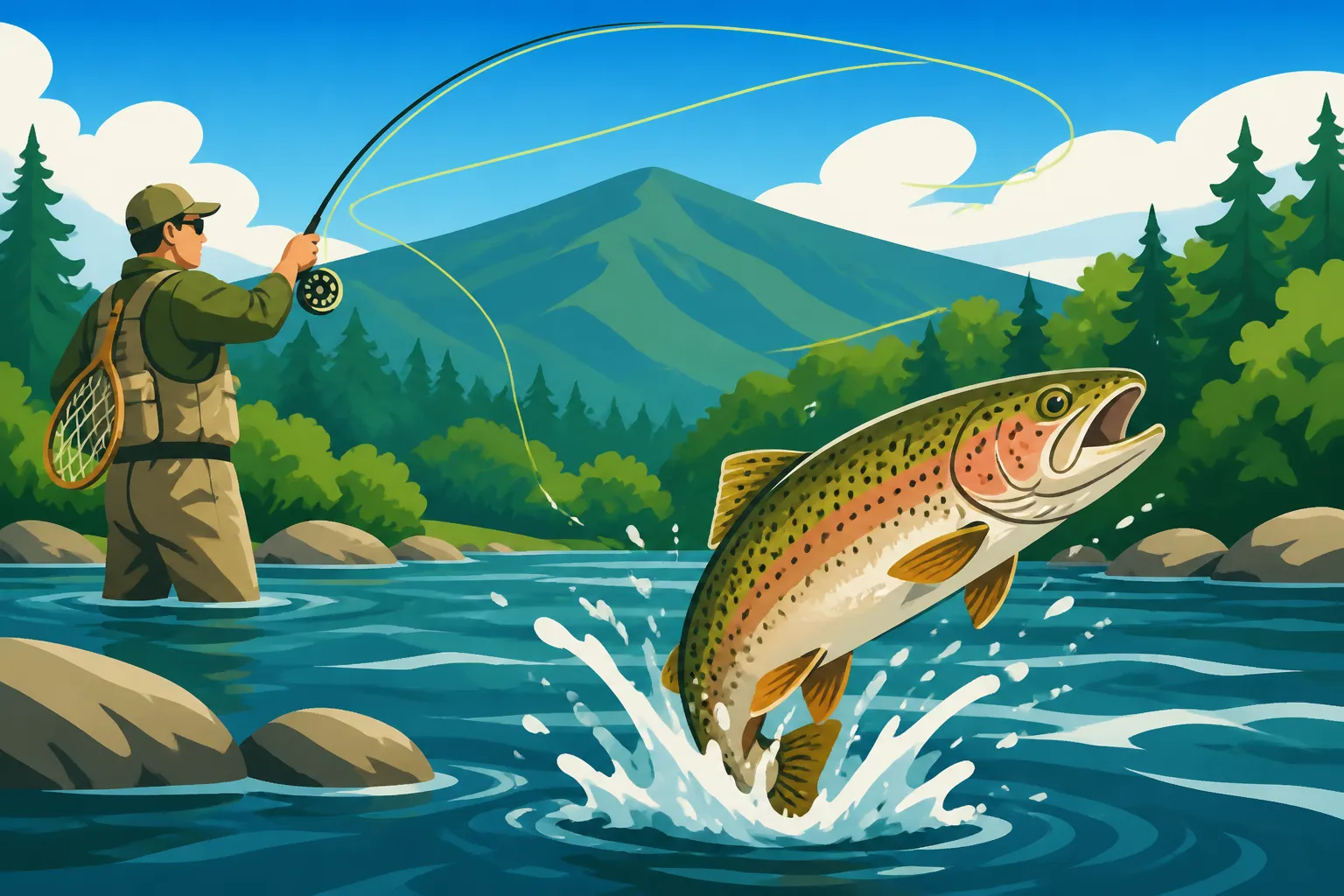
The Rainbow Trout (Oncorhynchus mykiss) is a favorite among anglers due to its spirited fight and often acrobatic leaps. These fish, both wild and stocked, are abundant in many Berkshire waters, particularly the Deerfield River. They are often stocked by MassWildlife as part of the Massachusetts Trout Stocking Schedule, providing ample opportunities for anglers throughout the spring and fall. Rainbows are known to feed on a wide variety of aquatic insects, making them receptive to many different fly patterns. They thrive in cooler, well-oxygenated water and can grow to impressive sizes, especially in rivers with a good food source.
Brown Trout (Salmo trutta) are often considered the most cunning of the trout species. Known for their beautiful golden-brown coloring with distinct spots, they can be a challenge to catch, making them highly prized by fly anglers. While MassWildlife does stock brown trout, the Berkshires also boast some excellent populations of wild browns, particularly in the Housatonic and Deerfield rivers. These fish are more nocturnal and predatory than rainbows, often preferring larger meals like baitfish, crayfish, or even mice. This means that while they'll eat nymphs and dry flies, don't shy away from throwing a streamer pattern, especially during low light conditions or when targeting bigger fish. They are masters of their environment, often holding in deep pools, undercuts, and log jams.
Then there's the beloved Brook Trout (Salvelinus fontinalis), Massachusetts's state fish. These native beauties, with their vibrant red spots, blue halos, and worm-like markings (vermiculations) on their backs, are a true joy to catch. You'll typically find Brook Trout in Massachusetts Streams, particularly in the colder, cleaner, and often smaller headwater streams of the Berkshires. They are rarely stocked in larger numbers but thrive in their native habitat, making a wild brook trout a truly special catch. They are less wary than browns or rainbows and will often readily take a well-presented dry fly. Their smaller size doesn't diminish their beauty or the thrill of catching a truly wild fish in a pristine environment.
You might also hear talk of Tiger Trout, which are a sterile hybrid of brown and brook trout, occasionally stocked by MassWildlife. While rarer, catching one is a unique experience due to their striking, maze-like patterns. Knowing your target species helps with choosing the right flies and techniques, though often, all three will inhabit the same waters, providing a delightful mix for the eager angler. Remember, before you hit the water, always ensure you have a valid Massachusetts Freshwater Fishing License Costs and Rules.
Gearing Up for Success: Essential Fly Fishing Equipment
One of the initial hurdles for many aspiring fly anglers is the sheer amount of specialized gear. It can feel overwhelming, but breaking it down makes it much simpler. You don't need the most expensive equipment to start, but having the right tools for the job makes a world of difference.
Rod, Reel, and Line Selection
The "big three" of fly fishing equipment are your rod, reel, and line, and choosing them wisely will significantly impact your experience on Berkshire waters.
For most of the streams and rivers in the Berkshires, a fly rod in the 7.5 to 9-foot range, with a weight of 3-weight to 5-weight, will serve you well. A 4-weight rod is often considered a great all-around choice. It's light enough to present small dry flies delicately for brook trout in smaller streams, yet has enough backbone to handle a feisty rainbow or brown trout in a larger river like the Deerfield. If you're focusing exclusively on smaller brook trout streams with heavy canopy, a shorter 7.5-foot 3-weight might be ideal for navigating tight spaces. For the larger Deerfield, especially if you plan to throw streamers, a 9-foot 5-weight or even 6-weight can offer more casting distance and fighting power.
Your fly reel primarily serves to hold your line and provide drag when a fish runs. For trout fishing, a simple, reliable click-and-pawl or disc drag reel that balances well with your chosen rod is perfect. Don't feel the need to break the bank here; the reel isn't as critical as the rod or line for presentation, but a smooth drag system is essential for protecting lighter tippets when you hook a big fish. Ensure it's rated for the same line weight as your rod.
The fly line is arguably the most important component after the rod itself. For general trout fishing, a weight-forward (WF) floating line is the standard. The "weight-forward" taper helps you cast further and turn over heavier flies, while "floating" keeps your line on the surface, crucial for dry fly fishing and easy mending. The line's weight must match your rod's rating (e.g., a 4-weight line for a 4-weight rod). Consider a high-visibility line color for easier line tracking, especially when nymphing. For specialized techniques like deep nymphing or streamer fishing, you might explore sinking tip lines, but start with a floating line. You'll also need a backing line (usually 20lb dacron) to fill the reel spool before the fly line, and a leader and tippet that taper down to your fly. These allow for a subtle presentation and absorb the shock of a take.
Fly Selection for Different Seasons and Hatches
Knowing which flies to use is part science, part art, and a big part of the fly fishing puzzle. The key is often "matching the hatch," meaning using a fly pattern that imitates the insects currently emerging or present in the water.
In the Berkshires, you'll encounter a variety of aquatic insects throughout the year. Mayflies, caddisflies, and stoneflies are the primary food sources, along with terrestrials (land-based insects) in the warmer months.
- Dry Flies: These flies float on the surface and imitate adult insects. Classic patterns like the Elk Hair Caddis, Adams, Parachute Adams, Light Cahill, and Blue-Winged Olive (BWO) are staples. For the Berkshires, having a range of sizes (from tiny #18-22 for BWOs to larger #12-16 for Caddis or Stimulators) is wise. During the summer, don't forget terrestrial patterns like grasshoppers, ants, and beetles; trout will readily gorge on these if they fall into the water.
- Nymphs: These flies imitate the immature aquatic insect forms that live underwater. Trout feed on nymphs year-round, making them incredibly effective, especially when no surface activity is visible. Popular Berkshire nymphs include the Pheasant Tail, Hare's Ear, Prince Nymph, and Squirmy Wormy. Zebra Midges are also deadly, especially in cooler months. Having these in various sizes and with or without beadheads (for added weight to sink faster) is essential. Nymphing is often the most productive method, especially in deeper runs and pockets.
- Streamers: These larger flies imitate baitfish, leeches, or crayfish. They are excellent for targeting larger, more aggressive trout, particularly brown trout. Patterns like the Woolly Bugger (black, olive, brown), Clouser Minnow, and Muddler Minnow are highly effective. Streamers are often fished with an active retrieve, mimicking a darting baitfish, and can provoke powerful strikes.
A good starting point is to have a small fly box with a selection of these general patterns. As you gain experience, you'll start to notice specific hatches on the water and can refine your collection. Local fly shops in towns like Lenox or Great Barrington are invaluable resources for up-to-date hatch information and local fly recommendations.
| Fly Type | Imitates | When to Use | Example Patterns |
|---|---|---|---|
| Dry Flies | Adult Mayflies, Caddis, Stoneflies, Terrestrials | When trout are rising to surface insects | Elk Hair Caddis, Parachute Adams, Stimulator, Hopper |
| Nymphs | Larvae/Pupae of aquatic insects | Year-round, especially when no surface activity | Pheasant Tail, Hare's Ear, Prince Nymph, Zebra Midge |
| Streamers | Baitfish, Leeches, Crayfish | For aggressive trout, low light, high water | Woolly Bugger, Clouser Minnow, Muddler Minnow |
Waders, Boots, and Accessories
Comfort and safety are paramount, especially when you're spending hours wading in cold water.
Waders are a must-have for trout fishing in Massachusetts. Chest waders made from breathable Gore-Tex or similar materials are highly recommended. They keep you dry and comfortable, allowing you to stay on the water longer. Neoprene waders are warmer but less breathable. Make sure they fit well, allowing for layering underneath during colder months. A good pair of wading boots provides crucial ankle support and grip on slippery river bottoms. Felt soles offer excellent traction on slick rocks, but rubber soles with studs are becoming increasingly popular, especially where felt is restricted (check local regulations) or for hiking.
Beyond these essentials, a few accessories will significantly improve your day on the water:
- Vest or Pack: A fly fishing vest, chest pack, or sling pack keeps your flies, tippet spools, forceps, nippers, and other small tools organized and easily accessible.
- Forceps or Hemostats: Absolutely vital for safely removing hooks from a fish's mouth, especially if you're practicing catch and release.
- Nippers: Small clippers for trimming line and tippet.
- Tippet Spools: Carry various sizes (e.g., 4X, 5X, 6X) to match your fly size and target fish.
- Polarized Sunglasses: Crucial for seeing into the water, spotting fish, and protecting your eyes from errant hooks and UV rays.
- Hat: For sun protection and additional eye shade.
- Landing Net: A net with a rubberized mesh is best for protecting the fish's slime coat if you plan to release them.
- Stream Thermometer: Water temperature is a critical factor in trout activity and health, especially in summer.
You can find a wide range of quality gear from reputable brands like Orvis, Simms, Patagonia, and Redington, and often discover great deals on platforms like Amazon for smaller accessories or entry-level combos. Investing in quality items, especially waders and boots, will pay dividends in comfort and durability.
Mastering Techniques for Berkshire Trout Waters
Fly fishing isn't just about throwing a line; it's about understanding the environment and presenting your fly in the most natural way possible. These techniques are fundamental to success in the Berkshires.
Reading the Water
This is perhaps the most critical skill for any fly angler. Trout are not randomly distributed in a stream; they hold in specific locations where they can conserve energy and find food. Learning to "read the water" means identifying these prime holding lies.
Look for areas that offer a combination of shelter, food, and favorable current.
- Riffles: These are shallow, fast-moving sections of water. Trout often position themselves at the very head or tail of a riffle, where the broken surface provides cover, and food is delivered by the current. Look for subtle seams where faster water meets slower water.
- Runs: Deeper, smoother sections of water, often downstream from a riffle. Trout will hold along the bottom, darting up to intercept food. The edges of runs, where currents slow, are often productive.
- Pools: Deeper, slower areas, usually found below rapids or bends in the river. Trout will congregate here, especially larger ones. Look for current seams, drop-offs, and submerged structure within the pool. The head and tail of a pool are often the most productive.
- Pocket Water: Found in boulder-strewn streams, these are small, calmer pockets of water behind or in front of rocks. Each pocket can hold a fish, and they require precise, short casts. This is particularly common in the smaller, wilder Berkshire streams.
- Undercut Banks and Log Jams: These provide excellent cover and shade, acting as prime ambush points for trout. Always approach these areas stealthily, as fish can be spooky.
- Seams: These are lines where two different currents meet. Trout often sit in the slower current, waiting for food to drift by in the faster current. These are high-percentage spots for both nymphing and dry fly fishing.
By systematically working through these types of water, you increase your chances of finding fish. Pay attention to changes in depth, current speed, and bottom structure. The more you observe, the better you'll become at anticipating where a trout might be hiding.
Casting and Presentation
While a perfect cast isn't always necessary, good casting and precise presentation are key to consistently catching fish. The goal is to deliver your fly gently and accurately, making it appear as natural as possible.
The basic overhead cast is your foundation. It involves a smooth backcast, allowing the line to fully extend behind you, followed by an equally smooth forward cast, propelling the line and fly toward your target. Avoid jerky movements or trying to "muscle" the cast; let the rod do the work. The key is smooth acceleration and a crisp stop at the end of both the back and forward strokes. On many of the tighter Berkshire streams, you'll find that a long, graceful cast isn't always possible or even desirable. Here, techniques like the roll cast (useful for launching a line forward when you have obstructions behind you) or sidearm casts (to get under overhanging branches) become incredibly valuable. Practice these in your yard before hitting the water.
Presentation is about how your fly lands and drifts. The most natural presentation is often a "drag-free drift," where your fly floats at the same speed as the natural current, without being pulled or pushed by your fly line. This is achieved through proper casting, line mending (making small adjustments to your line on the water to correct its drift), and positioning. A trout is much more likely to take a fly that looks like it's drifting freely rather than one being unnaturally dragged across the surface. This is where the skill of Fly Fishing for Trout in Massachusetts Rivers truly comes into play. Learning to read the currents and anticipate how they will affect your line and fly is a continuous learning process.
Nymphing, Dry Fly, and Streamer Strategies
Different situations call for different tactics. Mastering these three primary methods will make you a versatile and effective fly angler in the Berkshires.
Nymphing is often the most productive technique because trout feed underwater about 90% of the time. The goal is to drift a weighted nymph naturally along the bottom, mimicking an insect larvae. You'll typically use an indicator (a small bobber) on your leader to detect subtle strikes, as trout often take nymphs very gently. Setting up a "leader to tippet" connection with a few feet of tippet below your indicator, and possibly adding a small split shot for extra weight, is common. Look for deeper runs, pools, and the seams of currents where trout hold. When your indicator twitches, dips, or stops, set the hook! Focus on getting a good, drag-free drift with your nymph.
Dry fly fishing is arguably the most exciting and visually rewarding method. It involves casting a floating fly to rising trout or to likely holding water, mimicking an adult insect on the surface. The thrill comes from seeing a trout come up and sip or smash your fly. For this, stealth is paramount. Approach quietly, cast accurately upstream or up-and-across, and aim for a perfectly drag-free drift. If you see a fish rising, observe its rhythm and what it's feeding on before presenting your fly. This is where "matching the hatch" becomes crucial. Pay close attention to surface activity and try to identify the emerging insects. The smaller, intimate streams of the Berkshires are fantastic places for dry fly action, especially for wild brook trout.
Streamer fishing is a more aggressive technique, ideal for larger trout and when water levels are higher or slightly off-color. It involves casting a larger fly that imitates a baitfish or leech and actively retrieving it to create movement. This often provokes an aggressive, reactionary strike. You can strip the line in short, erratic pulls, or use longer, steady retrieves. Streamers are particularly effective when cast towards undercut banks, log jams, deep pools, or during low light conditions (dawn, dusk, or overcast days). Many seasoned anglers employ streamers when searching for a trophy brown trout. This technique is less about subtle presentation and more about eliciting an aggressive chase and strike from a predatory fish.
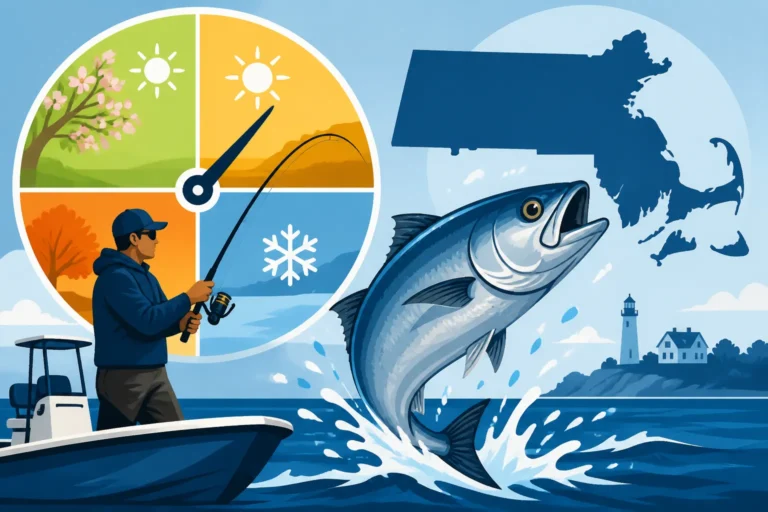
Seasonal Strategies and Fly Selection
The Berkshires offer trout fishing opportunities throughout the year, but your approach will need to shift with the seasons as water temperatures, insect activity, and fish behavior change.
Spring: Hatches and High Water
Spring is often considered the prime time for trout fishing in the Berkshires, starting around April when the When Massachusetts trout stocking starts in 2026. The warming weather triggers massive insect hatches, and trout become very active after the long winter. This is when you'll see prolific hatches of Blue-Winged Olives (BWOs), Quill Gordons, Hendricksons, and various caddisflies.
- Strategies: During early spring, water levels can be high and cold due to snowmelt and rain. Focus on nymphing in slower currents, eddies, and seams closer to the banks where trout seek refuge from the main current. As water temperatures rise and hatches become consistent, dry fly fishing can be exceptional, especially on overcast days. Look for rising fish in calmer sections of rivers like the Deerfield. Streamers can also be highly effective in high, slightly off-color water, as they present a large, easy meal for opportunistic trout.
- Fly Selection:
- Nymphs: Large Stonefly nymphs (#8-12), Caddis larvae (Pupa), Pheasant Tail (#12-18), Hare's Ear (#12-18).
- Dry Flies: Quill Gordon (#12-14), Hendrickson (#12-14), Blue-Winged Olive (#16-20), Elk Hair Caddis (#14-18).
- Streamers: Black or Olive Woolly Bugger (#6-10), Sculpzilla.
Remember, spring can bring unpredictable weather, so be prepared for cold mornings, warm afternoons, and sudden showers. Always wear layers and check local river conditions before heading out.
Summer: Low Water, Terrestrials, and Early/Late Fishing
Summer fishing in the Berkshires can be challenging but incredibly rewarding. Water levels generally drop, and temperatures rise, making mid-day fishing tough for trout, which prefer cooler water.
- Strategies: During the heat of summer, trout often become less active during the brightest parts of the day. Your best bets are to fish during the cooler hours of early morning or late evening. Concentrate on deep pools, shaded runs, and areas with spring-fed tributaries that introduce colder water. Dry fly fishing with terrestrial patterns (imitating land insects) becomes very effective, as grasshoppers, ants, and beetles are abundant. Nymphing in shaded, oxygenated areas can still produce. Small, wild brook trout in shaded, high-gradient mountain streams can provide consistent action even in summer, as these waters stay cooler.
- Fly Selection:
- Nymphs: Small Pheasant Tail (#18-22), Zebra Midge (#18-22), Green Caddis Larva.
- Dry Flies: Terrestrials (Hopper, Ant, Beetle patterns #10-16), small Parachute Adams (#18-22), Trico Spinner (very small #22-26) in early mornings.
- Streamers: Smaller Woolly Buggers (#10-12) or small Sculpin patterns fished in low light.
Always carry a stream thermometer in summer. If water temperatures hit 68-70°F, it's best to stop fishing for trout, as the stress of being caught can be lethal in warm water. Focus on alternative species or give the trout a break.
Fall: Spawning Runs and Active Feeding
Fall is another fantastic time to fly fish in the Berkshires, often offering beautiful foliage and aggressive trout. As water temperatures cool and trout prepare for winter, they feed heavily. Brown trout and brook trout often engage in their spawning runs, making them highly visible and active.
- Strategies: The cooling water invigorates trout, leading to strong feeding activity. Brown trout will often migrate upstream to spawn, and they become very aggressive and territorial. This is an excellent time for streamers, especially on the larger rivers. Nymphing remains highly effective, particularly with larger stonefly imitations and egg patterns if you're fishing near spawning redds (though avoid actively targeting fish on redds). Fall hatches of Blue-Winged Olives can also provide excellent dry fly opportunities on milder days. The vibrant colors of the Berkshires during this season add an extra layer of enjoyment to every fishing trip.
- Fly Selection:
- Nymphs: Stonefly nymphs (#8-12), Egg patterns (pink, orange), Pheasant Tail (#14-18), Copper John (#14-18).
- Dry Flies: Blue-Winged Olive (#18-22), October Caddis (#10-14).
- Streamers: Large Woolly Buggers (olive, brown, black #4-8), Zonkers, articulated streamers.
Remember, while trout are active, it's crucial to respect their spawning process. Avoid wading through or directly fishing over visible redds (spawning beds), which appear as clean, gravelly depressions in the streambed. Harassing spawning fish can negatively impact future generations. Observing the Massachusetts Freshwater Daily Catch Limits is also important year-round.
Conservation and Etiquette on the Water
As anglers, we are stewards of the environment. Practicing responsible angling is essential to preserve the beauty and productivity of Berkshire's trout waters for generations to come.
Catch and Release Practices
While Massachusetts does allow for keeping a certain number of trout, many fly anglers in the Berkshires choose to practice catch and release, especially for wild trout or larger, trophy-sized fish. This ensures these fish can continue to grow, spawn, and provide sport for others.
To maximize a fish's survival rate when releasing:
- Minimize Fight Time: Bring the fish in as quickly as possible without over-stressing it or breaking your line.
- Keep it Wet: Try to keep the fish in the water as much as possible, especially its gills. If you must lift it for a quick photo, do so quickly and support its body horizontally with both hands.
- Handle Gently: Avoid squeezing the fish, especially its belly. Use wet hands to minimize the removal of its protective slime coat.
- Use Barbless Hooks: Pinching down the barb on your hooks with pliers makes removal much easier and less damaging to the fish's mouth. This is a simple yet incredibly effective practice.
- Remove Hook Promptly: Use forceps or hemostats to carefully remove the hook. If the fish is deeply hooked (which is rare with flies, especially barbless ones), cut the line as close to the hook as possible rather than trying to rip it out.
- Revive Properly: If the fish seems sluggish, hold it gently in the current, facing upstream, until it can swim away under its own power. Do not "saw" it back and forth in the water; simply hold it steady until it kicks off.
Remember, the goal is for the fish to swim away strong and healthy, ready to be caught another day.
Treading Lightly: Minimizing Impact on Riverbanks and Wildlife
Our presence on the river can impact the delicate ecosystem. By being mindful of our actions, we can ensure our sport remains sustainable and enjoyable for all.
- Stay on Trails: When accessing streams, stick to established paths to prevent erosion of delicate riverbanks. Avoid trampling vegetation, as this can lead to unstable banks and harm insect habitats.
- Wade Carefully: When wading, move slowly and deliberately to avoid disturbing the streambed and dislodging rocks, which can impact aquatic insect life and fish habitat. Pay extra attention during spawning seasons to avoid disturbing redds. Wearing appropriate wading boots provides not only safety for you but also minimizes impact compared to less stable footwear.
- Pack It In, Pack It Out: This is a golden rule for any outdoor activity. Carry out everything you bring in, including all trash, broken leader, and old tippet. Even small pieces of monofilament can be deadly to wildlife. Let's leave the natural environment cleaner than we found it.
- Respect Private Property: Always be aware of property boundaries and respect landowners' rights. Access rivers only through designated public access points or with explicit permission. Many river sections might flow through private land, even if the stream itself is public. Knowing your access points is part of a comprehensive Massachusetts Fishing License Guide.
- Be Mindful of Other Anglers: The Berkshires can attract a good number of anglers. Give fellow fishermen plenty of space, especially when approaching a stretch of water where someone is already fishing. A friendly wave or simple "how's it going?" goes a long way. If someone is already in a spot you wanted to fish, either move on or ask if you can fish a respectable distance away.
By adhering to these principles, we contribute to the health of our fisheries and ensure that the peaceful, rewarding experience of fly fishing in the Berkshires can be enjoyed by all, now and in the future.
Disclaimer
Please remember that fishing regulations, seasons, and access can change. Always consult the latest Massachusetts Division of Fisheries and Wildlife (MassWildlife) regulations before heading out to fish. This guide provides general information and recommendations but is not a substitute for official sources.