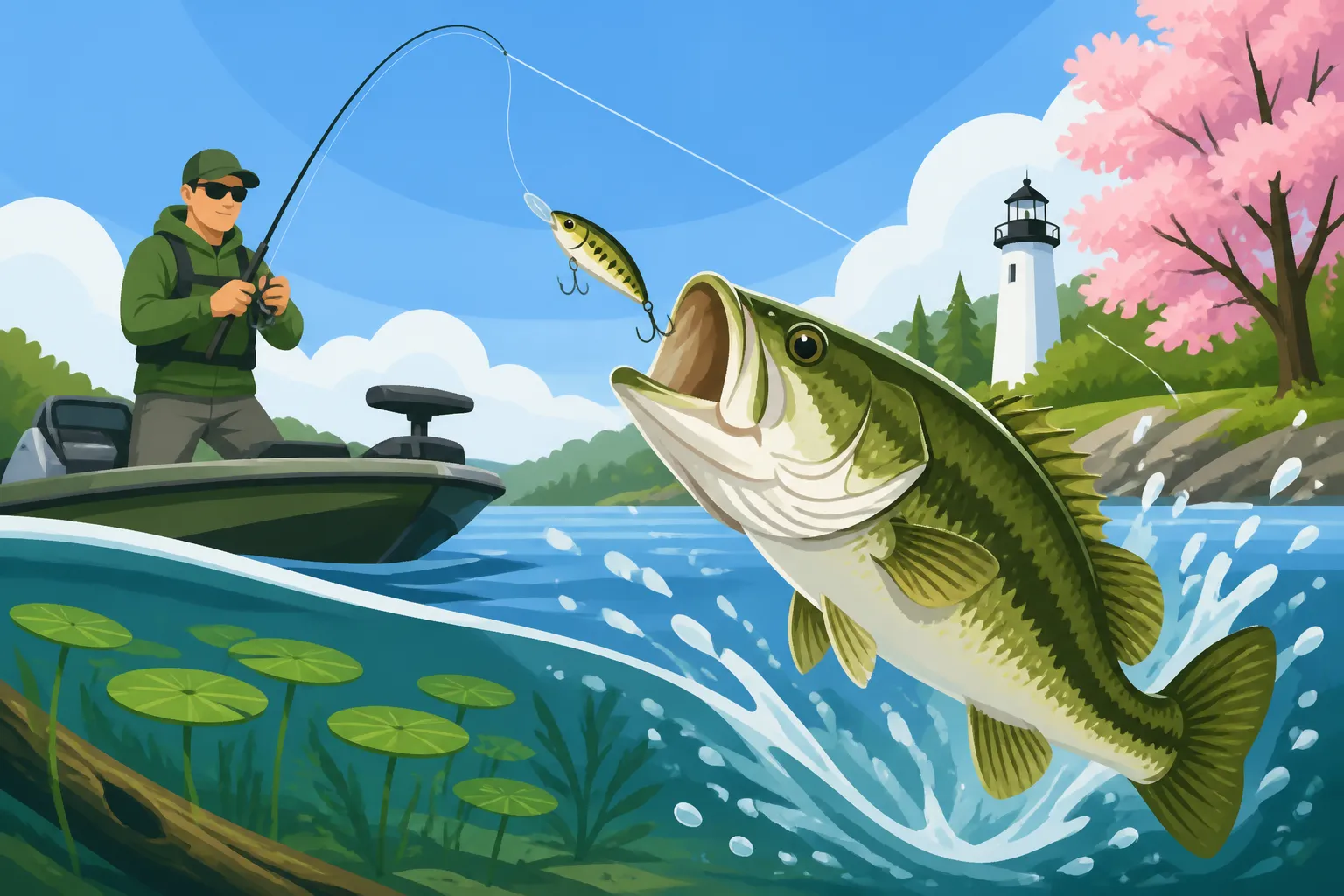
How to catch largemouth bass in spring in Massachusetts
Spring in Massachusetts, right? The snow has finally melted, the crocuses are popping, and the longer days call us back to the water. But for us largemouth bass anglers, early spring can be a real head-scratcher. You're eager to feel that tug, but those big bucketmouths aren't always cooperative in the chilly, post-winter waters. It’s definitely not like summer when they're actively chasing everything in sight! This guide is all about peeling back the layers of spring bass behavior in the Bay State, helping you understand their patterns, the best spots to find them, and the most effective tactics to land them, even when they're playing hard to get.
Understanding Spring Largemouth Bass Behavior in Massachusetts
Fishing for largemouth bass in Massachusetts during the spring isn't just about casting a line; it's about understanding the seasonal rhythms of these incredible fish. Their behavior is intrinsically linked to water temperature, and our variable New England spring weather means these stages can stretch out or rapidly change. You might be fishing one way in early April and then completely switch your approach by late May.
The Cold Water Challenge and Pre-Spawn Period
When the ice finally melts off our ponds and lakes, the water is still incredibly cold, often in the low to mid-40s Fahrenheit. At these temperatures, largemouth bass are quite sluggish. Think about yourself after a long winter – you're probably not in peak sprint form, right? Bass are much the same. Their metabolism is slow, and they're conserving energy. This early spring period is often referred to as the "pre-spawn," and it's a critical time when bass begin to transition from their deeper winter haunts to shallower feeding areas. They're trying to feed up, but they're not going to chase a fast-moving bait very far.
This is where the frustration often sets in for anglers. You know the fish are there, but locating them can feel like a game of hide-and-seek. They might be staging on a deep break, or sneaking into a shallow, sun-warmed pocket for a brief feeding window. These fish are looking for easy meals, something that moves slowly enough for them to intercept without expending too much energy. They're still somewhat grouped up, but they haven't committed to their spawning grounds yet. It’s a transitional period, which means you have to think like a bass and consider where they would find comfort and food in these still-chilly conditions.
The Spawn and Post-Spawn Phases
As spring progresses and water temperatures climb into the mid-50s and 60s Fahrenheit, the bass enter their spawning phase. This is when the magic really happens for reproduction, but it can be a tricky time for fishing. Male bass will move into very shallow, protected areas, often creating circular nests (beds) by fanning out the bottom debris with their tails. Females then join them to lay eggs. While females are on the beds, they are primarily focused on the act of spawning, and while they can be caught, many ethical anglers choose to avoid targeting them directly during this vulnerable time. Removing a female from her nest, even briefly, can leave the eggs exposed to predators and lead to a significant loss of future bass.
Once the spawning is complete, and the water temperatures push even higher into the mid-60s and 70s, the bass transition into the "post-spawn" phase. This is when the fish, especially the females, are often recovering from the strenuous act of spawning. They might be a bit lethargic immediately after leaving the beds, but they quickly become aggressive feeders as they look to replenish their energy stores. The males, having guarded the fry for a period, will also resume more active feeding. Our Massachusetts spring weather, with its unpredictable swings from warm sunny days to sudden cold fronts, can extend or compress these phases, making it crucial to pay attention to water temperatures and local conditions.
Key Factors Affecting Spring Bass Fishing Success
Being successful in spring bass fishing in Massachusetts hinges on understanding the environmental cues that dictate bass behavior. It's not just about what lure you throw, but where and when you throw it. These factors work in concert to create the ideal conditions for bass to feed or move.
Water Temperature and Sunlight Penetration
If there's one thing you take away from spring bass fishing, it's that water temperature is king. Even a fluctuation of a few degrees can dramatically alter where bass are holding and how willing they are to bite. In early spring, look for the warmest water you can find. This often means focusing on shallow coves, north-facing banks that receive direct sunlight for longer periods, or areas with dark, mucky bottoms that absorb more solar radiation. These pockets of slightly warmer water act like magnets for bass looking for comfort and to kickstart their metabolism.
On bright, sunny days, sunlight penetrates the shallow water, warming it more quickly. This can draw bass up from deeper water to sunbathe and feed. Conversely, on cloudy or rainy days, the water temperature might not rise as much, and bass could remain deeper or tucked into more substantial cover for longer. Knowing that even a 2-3 degree difference can wake up lethargic fish is a game-changer. Carrying a simple water thermometer is a smart move; it takes the guesswork out of it and helps you pinpoint prime areas.
Locating Springtime Bass Habitat
Finding spring bass means understanding their preferred hangouts as they transition from winter to spawn and beyond. In early spring, after ice-out, you'll want to focus on areas that offer both deeper water access and shallow, warming flats. Think about creek channels leading into larger bays, rocky points that drop off quickly, or the edges of dense weed beds (even if they're still dormant). These "transition areas" allow bass to move easily between warm, shallow feeding zones and the security of deeper, more stable water. If you want to dive deeper into general bass fishing spots, check out our guide on How to Catch Largemouth Bass in Massachusetts Ponds.
As the water warms and the pre-spawn progresses, bass will move into increasingly shallower areas. Look for submerged wood, rock piles, docks, and the emerging growth of lily pads or cattails. These structures offer cover, ambush points for baitfish, and potential spawning sites. Shallow, protected coves are absolute hotspots, especially if they have some form of structure or dark bottom. When the spawn is on, bass will be found on hard bottoms in depths ranging from a few inches to several feet, often near protected banks or points. For those fishing in the central part of the state, our resource on Best Largemouth Bass Lakes in Central Massachusetts might offer some great starting points. The key is to cover water methodically, paying close attention to any changes in bottom composition, depth, or cover.
| Feature | Early Spring (Cold Water) | Late Spring (Warmer Water) |
|---|---|---|
| Water Temperature | Below 55°F (13°C) | Above 60°F (16°C) |
| Bass Activity | Sluggish, pre-spawn, conserving energy | Active, spawning/post-spawn, more aggressive feeding |
| Key Locations | Sun-exposed shallow coves, dark bottoms, structure edges | Shallower flats, submerged vegetation, docks, lily pads |
| Best Lure Types | Suspending jerkbaits, jigs, Ned rigs, slow soft plastics | Topwater, faster crankbaits, spinnerbaits, creature baits |
| Retrieval Speed | Very slow, pause-and-go | Moderate to fast, varied retrieves |
| Best Time of Day | Mid-day, when water has warmed slightly | Early morning, late evening, cloudy days also good |
Top Techniques and Lures for Spring Largemouth in Massachusetts
The right technique and lure choice can make all the difference when fishing for spring largemouth bass, which often requires a more nuanced approach than the aggressive bites of summer. Your strategy needs to adapt to the water temperature and the bass's current energy levels.
Slow and Steady Presentations
In the early spring, when water temperatures are still quite low, bass are reluctant to chase. This means your best bet is a slow, deliberate presentation. Lures that can suspend or be worked with long pauses are incredibly effective. Suspending jerkbaits, for example, are a spring staple. You can twitch them, let them sit motionless in the water column for several seconds, and then twitch again. That long pause often triggers a strike from a hesitant bass. Bladed jigs, like a Chatterbait, retrieved at a snail's pace, or lipless crankbaits slowly bumped along the bottom, can also elicit strikes by offering subtle vibration and flash without demanding a lot of energy from the bass to pursue.
Spinnerbaits, particularly those with Colorado or Indiana blades for maximum throb at slow speeds, are another excellent choice when slow-rolled along submerged structure or weed lines. The key here is not to rush. Many anglers, myself included, often retrieve too quickly, especially when we’re excited to cover water. But in cold water, think "slow motion." Let the lure do the work, and be patient with your pauses. Natural, subtle colors often outperform flashy ones in clear, cold water, mimicking the lethargic baitfish that bass are targeting.
Soft Plastics and Finesse Tactics
When bass are particularly finicky, perhaps during a cold front or when they're transitioning through the spawn, soft plastics and finesse tactics truly shine. Texas-rigged or Carolina-rigged senkos and creature baits are fantastic for probing heavy cover like submerged wood or rock piles. The subtle shimmy of a senko as it falls, or a creature bait slowly dragged along the bottom, can be irresistible. Jigs with a pork or soft plastic trailer, allowed to sink and then gently hopped or dragged, are also deadly. These mimic crayfish or other bottom-dwelling prey that bass are accustomed to finding.
For an even more subtle approach, consider the Ned rig. This small jig head paired with a short, buoyant soft plastic stands upright on the bottom, offering a very natural, non-threatening profile. It’s perfect for when bass are pressured or just not very active. Using lighter fluorocarbon line, which is nearly invisible underwater and incredibly sensitive, can help detect those subtle taps. You can find a huge variety of these soft plastics, along with suitable jig heads, on platforms like Amazon, allowing you to experiment with different colors and shapes to see what the bass prefer on any given day. Remember, the goal is to make the bass's decision to eat as easy as possible. For more general advice, check out How to Catch Largemouth Bass in Massachusetts.
Topwater and Reaction Baits (Late Spring)
As spring progresses into late spring and the water consistently warms up, bass become much more active and aggressive. This is when you can start to enjoy the explosive strikes of topwater fishing! Poppers, walking baits, and soft plastic frogs retrieved over lily pads or dense submerged vegetation can lead to some truly heart-stopping action. There’s nothing quite like watching a largemouth ambush your bait on the surface.
In these warmer conditions, reaction baits like faster crankbaits and spinnerbaits also become incredibly effective. Bass are more willing to chase down a rapidly retrieved lure, and the erratic movement of these baits can trigger an impulse strike. Squarebill crankbaits, bounced off submerged wood or rocks, are excellent for this. The key is to pay attention to baitfish activity – if you see shad or other forage schooling or busting the surface, bass are likely in a chasing mood, and faster, more aggressive presentations will work wonders. This period of increased activity often coincides with the general opening of the Massachusetts Freshwater Fishing Season Calendar, offering ample opportunities.
Essential Gear and Conservation Practices
Having the right equipment not only makes your fishing more enjoyable but also more effective. Beyond the gear, understanding and practicing good conservation habits ensures that Massachusetts’s bass fisheries remain healthy for years to come.
Rods, Reels, Line, and Terminal Tackle
For spring largemouth in Massachusetts, a versatile setup is key. I typically recommend two rod and reel combos. A medium-heavy power, fast action casting rod (around 7 feet) paired with a baitcasting reel is perfect for throwing jigs, creature baits, and heavier spinnerbaits. This setup gives you the backbone to pull fish out of cover and the sensitivity to feel subtle bites. For lighter lures, jerkbaits, or finesse tactics like Ned rigs, a medium power, fast action spinning rod (also around 7 feet) with a corresponding spinning reel is ideal. This allows for lighter line and more delicate presentations.
When it comes to line, fluorocarbon is excellent for its low visibility and sensitivity, especially for bottom-contact baits. You might opt for 10-15 lb test. If you're fishing extremely heavy cover, braid (20-30 lb test) can be advantageous due to its strength and abrasion resistance, but consider tying on a fluorocarbon leader. Monofilament, with its stretch and buoyancy, can be a good choice for topwater lures. Don’t forget essential terminal tackle: a variety of hooks (EWG worm hooks, straight shank, jig heads), sinkers (bullet weights, drop shot weights), and swivels if needed. Always make sure your hooks are sharp; a dull hook can cost you a prized fish. Stocking up on these items from reputable sellers, which you can easily find on Amazon, ensures you're prepared for any scenario.
Spring Bass Fishing Safety and Conservation
Safety on the water, especially in early spring, cannot be overstated. Even on a warm spring day, the water itself can still be dangerously cold. Always wear a personal flotation device (PFD), and dress in layers that can be shed or added as the weather changes. Be mindful of sudden weather shifts, which are common in Massachusetts. Cold water immersion can quickly lead to hypothermia, so knowing your limits and telling someone where you're going are paramount.
Conservation is another critical aspect of responsible angling. Always respect Massachusetts Freshwater Daily Catch Limits and any specific regulations for the body of water you're fishing. During the spawning season, many anglers choose to avoid targeting bass directly on their beds. If you do catch a bass during this time, handle it gently and release it quickly. Minimizing the fish's time out of the water, supporting its body properly, and reviving it before release are essential practices. Always consult the most current Massachusetts Fishing Regulations Pamphlet, Explained to ensure you're up-to-date on all rules. By following these guidelines, you're not just enjoying the sport; you're helping to preserve it for future generations of anglers.
Disclaimer
This article is for general informational purposes only and does not constitute professional advice. Laws, prices and regulations vary by location and change over time. Consult a qualified professional for guidance on your specific situation.