How to dry fly fish the Deerfield River
Oh, the Deerfield River! If you've ever stood on its banks with a fly rod in hand, you know it's a truly special place, but also one that can humble even experienced anglers. Many of us dream of those perfect dry fly days, watching trout rise eagerly to our presentations, only to find the reality a bit more challenging. This guide is here to unravel the secrets of dry fly fishing on the Deerfield River, offering practical advice to help you experience those unforgettable moments when a wild trout sips your carefully floated imitation off the surface.
Understanding the Deerfield River for Dry Fly Success
The Deerfield River, stretching through western Massachusetts, is a gem for fly anglers, but it's far from a static, easy-to-read waterway. It's a tailwater fishery, meaning its flows are heavily influenced by dam releases from the Fife Brook Dam and the Bear Swamp Pumping Generating Station. This dynamic environment creates both incredible opportunities and unique challenges for those of us who love to cast dry flies. It's not just a river; it's a living, breathing entity that demands respect and a keen understanding of its moods.
The Unique Challenges and Charms of Deerfield Drifts
One of the biggest hurdles on the Deerfield is its varied flow. You can arrive one morning to find a gentle, meandering stream, only for the water to rise significantly later in the day due to a power generation release. This rapid change can scatter fish, alter feeding lanes, and make wading tricky, if not downright dangerous. It's why checking the hydro-power generation schedule is crucial before you even pack your bags. When the water is high, dry fly fishing can be tough, as the current moves too fast for delicate presentations, and trout tend to hold deeper. However, during periods of stable, lower flows, particularly in the catch-and-release sections, the river becomes a textbook dry fly haven. The slower currents allow for longer, more natural drifts, and the trout feel more comfortable looking up for insects. The Deerfield's bottom is often stony and slick, so good wading boots with felt or stud soles are non-negotiable for safety and confidence.
Beyond the flows, the Deerfield boasts a rich aquatic insect life, which is precisely what makes it such a phenomenal dry fly destination. From early season midges to robust caddis and mayfly hatches, there's almost always something on the menu for a hungry trout. The challenge often lies in presenting your fly in a way that mimics these natural insects perfectly, combating drag and tricky currents. Knowing where trout hold in these varied conditions – in softer seams, behind boulders, or along undercut banks – is paramount to success. It's a puzzle, but one that offers immense satisfaction when you put the pieces together.
Key Trout Species and Their Dry Fly Preferences
The Deerfield River is primarily known for its thriving populations of wild brown trout and rainbow trout, with some brook trout also present, especially in its colder tributaries. Each species has its own personality when it comes to taking a dry fly, and understanding these nuances can significantly improve your hook-up rate.
Brown trout, often the most elusive and challenging, are incredible predators. When they're on a dry fly, it's typically with a deliberate, confident sip or a powerful subsurface grab. They tend to be more wary of poor presentations or unnatural drifts, making perfect line management crucial. You'll often find brown trout holding in prime lies: behind structure, along bankside cover, or in deeper pockets where they feel secure. A well-placed dry fly, especially during a heavy hatch, can coax a truly magnificent brown trout to the surface. Rainbow trout, on the other hand, are generally more aggressive and opportunistic. They'll often rise with a splashier take, especially during a strong hatch, and are sometimes a bit more forgiving of less-than-perfect drifts. They love faster, oxygenated water, and you'll frequently find them in riffles and runs. For more general insights into trout, you might enjoy our guide on Trout Fishing in Massachusetts. Brook trout, while less common in the main stem of the Deerfield, are abundant in its colder feeder streams. These native beauties are often eager to rise to a dry fly, even in challenging conditions, and their brilliant colors make every catch a true reward. Understanding these different temperaments helps you adjust your approach, from your casting stroke to your choice of fly, for each encounter.
Essential Gear for Your Deerfield Dry Fly Adventure
Preparing your tackle for a day of dry fly fishing on the Deerfield River requires a thoughtful approach. You want gear that offers precision, sensitivity, and the ability to handle potentially larger-than-average trout. It’s not about having the most expensive stuff, but rather the right tools for the job. Often, you can find great deals and a wide selection on sites like Amazon for everything from rods to waders.
Rod and Reel Selection for Delicate Presentations
For dry fly fishing on the Deerfield, a fly rod in the 8.5 to 9.5-foot range, in a 4 or 5-weight, is often the sweet spot. A 4-weight offers incredible delicacy for those subtle presentations and smaller flies, making it ideal for targeting choosy trout in clear, slow water. It's fantastic for protecting light tippets when you're casting tiny tricos or blue-winged olives. However, if you anticipate larger fish, wind, or need to cast slightly heavier dry flies or dry-dropper rigs, a 5-weight will provide a bit more backbone and versatility. The extra power comes in handy when battling a strong brown trout in a swift current.
Your reel doesn't need to be a high-tech marvel with an intricate drag system for dry fly fishing, as you'll primarily be fighting fish off the reel, using your rod to absorb shocks and your hand to manage the line. A lightweight, simple click-and-pawl or a basic disc drag reel that balances well with your chosen rod is perfectly adequate. The key is balance; you want a setup that feels comfortable and effortless to cast all day long. This balance reduces fatigue and allows for more precise and delicate presentations, which are critical on a river like the Deerfield.
Leader, Tippet, and Fly Line for Optimal Drift
When it comes to fly line, a weight-forward floating line (WF-F) is the standard for dry fly fishing. Look for lines with a longer front taper, as these are designed to facilitate softer landings and more delicate presentations, which are crucial for not spooking wary Deerfield trout. A good quality fly line will also have a low-stretch core for better sensitivity and hook sets.
Leaders are where many anglers can make a big difference in their dry fly success. For the Deerfield, a longer leader, typically 9 to 12 feet, is highly recommended. A longer leader helps keep the brightly colored fly line further away from the fish, making your presentation more stealthy. It also aids in achieving a more natural, drag-free drift. Tapered leaders, ranging from 5X to 7X, are excellent starting points. For those particularly challenging days with tiny flies and spooky fish, you'll want to extend your leader with a fluorocarbon tippet. Fluorocarbon sinks slightly, which isn't ideal for the dry fly itself, but it’s less visible to fish and helps extend the life of your tapered leader. It also offers excellent abrasion resistance, which is a plus when fishing around rocky bottoms. Keeping a spool of 5X, 6X, and 7X tippet material on hand is a must. If you're wondering about other fundamental gear, checking out a guide on Fly Fishing in Massachusetts could offer broader insights.
Waders, Boots, and Safety on the River
Safety should always be your top priority, especially on a dynamic river like the Deerfield. Quality breathable waders are essential for comfort, allowing you to stay cool in summer and layer up in colder months. Look for waders with good durability to withstand bushwhacking along the banks and navigating rocky stretches. Neoprene booties are usually built into breathable waders, offering a snug fit.
Paired with your waders, a sturdy pair of wading boots is an absolute must. The Deerfield's bottom can be treacherous – slippery rocks, uneven terrain, and sudden drop-offs are common. Boots with felt soles provide excellent grip on slimy rocks, while rubber soles with studs offer a fantastic compromise for varied terrain, including muddy banks and slick riverbeds. Some anglers even prefer a combination, depending on their preferred wading areas. Don't forget a wading belt, which is crucial for safety as it prevents your waders from filling completely with water should you take an unexpected plunge. A good wading staff, whether collapsible or fixed, provides invaluable stability and allows you to probe the bottom before taking a step. You can easily find highly-rated wading boots and staffs on Amazon to ensure you're well-equipped.
Mastering Dry Fly Techniques on the Deerfield
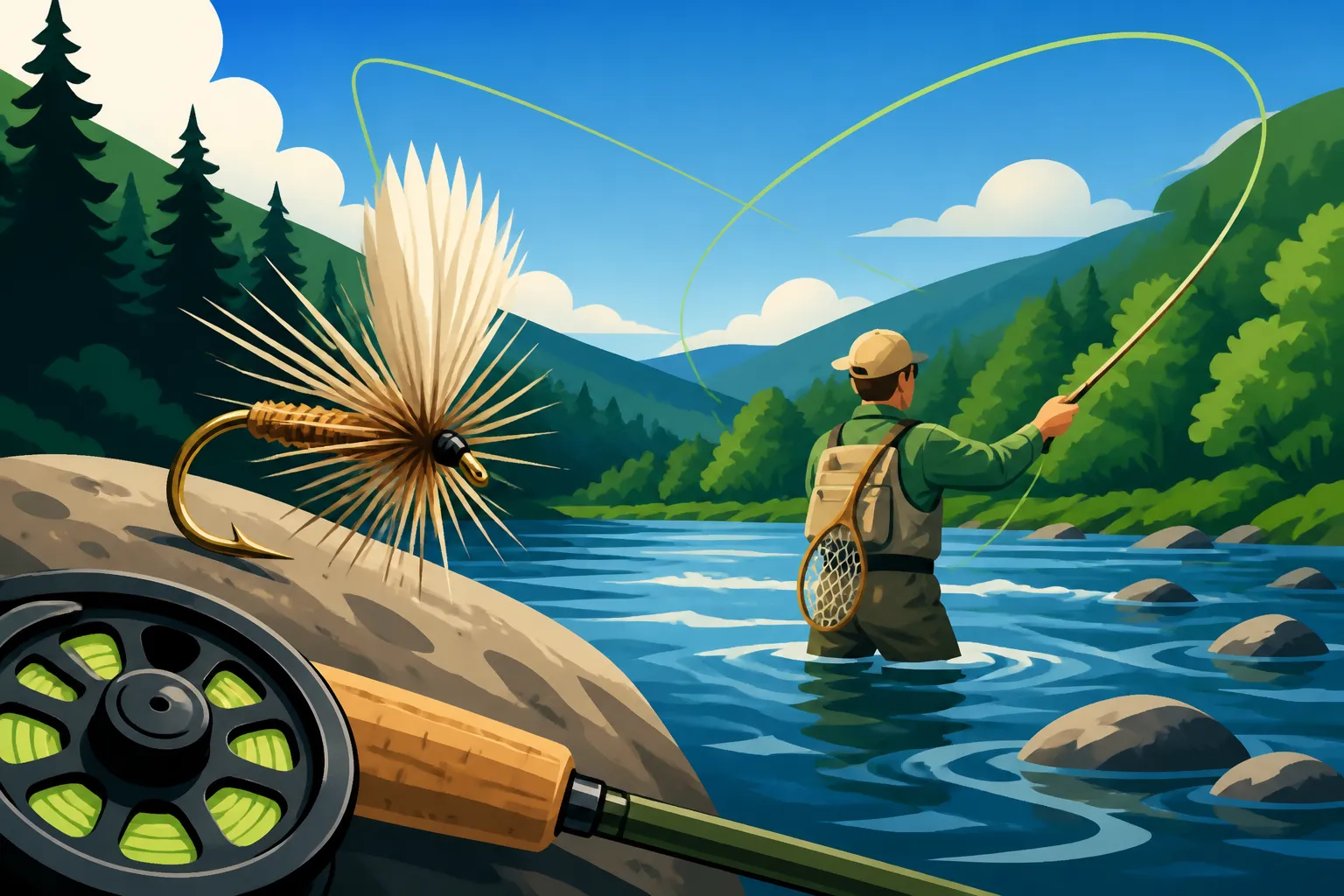
Dry fly fishing is an art form, especially on a river as demanding and rewarding as the Deerfield. It's a dance between angler, fly, and fish, where precision and observation are your best partners. The ultimate goal is to present your artificial fly in a way that perfectly mimics the natural insect, making it irresistible to a feeding trout.
Reading the Water: Where Trout Hold for Dries
Before you even make a cast, the most crucial skill is learning to "read the water." This means understanding where trout are likely to hold and feed, especially when they're looking up for dry flies. Trout are opportunistic and energy-conscious; they'll position themselves in spots where food drifts by with minimal effort on their part.
Look for seams where faster current meets slower water, as these are natural feeding lanes. Trout will often sit in the slower water, darting into the faster current to grab a passing insect. The edges of riffles, the quiet water behind large boulders, or log jams, and especially undercut banks provide excellent cover and prime feeding lies. Don't overlook the softer water at the head or tail of a pool, or the calm eddies that form along the river's edge. During a strong hatch, trout might move into shallower, more exposed areas, confidently rising to the surface. Observe the rises: are they subtle sips (often mayflies) or splashy grabs (perhaps caddis)? This tells you not only where the fish are but also potentially what they're eating. Understanding these holding patterns will guide your approach and maximize your chances. For details on local regulations and specific spots, you might want to look into Deerfield River Trout Fishing Spots in Massachusetts.
Casting and Presentation for a Natural Drift
Achieving a natural, drag-free drift is the holy grail of dry fly fishing, and it’s especially vital on the Deerfield. Drag occurs when your fly line, leader, or tippet is pulled by different currents than your fly, causing the fly to skate unnaturally across the surface, rather than float freely. Trout are incredibly sensitive to this and will often refuse a fly that's "dragging."
Your casting technique is the first step. Practice casting with an open loop to allow your leader and fly to land softly. Techniques like the parachute cast, where your line lands in an S-shape, or various mends (reach casts, stack mends, aerial mends) are indispensable for extending your drift and counteracting conflicting currents. The goal is to cast upstream of your target, allowing the fly to drift naturally over the fish. As the fly floats downstream, you'll need to mend your line – picking up and repositioning sections of your fly line and leader on the water – to ensure the fly continues its drag-free journey. This requires constant attention and subtle adjustments. Too much mend, and you'll disturb the water; too little, and drag sets in. It's a constant, active process that keeps you engaged with the river. When a fish takes your fly, set the hook with a gentle upward sweep of the rod, rather than a hard strip, to avoid breaking fine tippet.
Essential Dry Flies for the Deerfield's Hatches
Matching the hatch is often touted as the ultimate strategy, and while it's important, having a selection of general attractor patterns is equally valuable, especially when no specific hatch is obvious. For the Deerfield, you'll want a well-stocked fly box with imitations for the major hatches.
Mayflies:
- Blue-Winged Olives (BWOs): Sizes #18-22. These are prolific, especially in cooler weather and on overcast days, making them a staple in spring and fall.
- Hendricksons/March Browns: Sizes #12-14. Larger mayflies that appear in spring, often bringing larger fish to the surface.
- Sulphurs: Sizes #14-16. A classic summer hatch, often in the evenings, with beautiful pale yellow bodies.
- Light Cahills: Sizes #14-16. Another important summer mayfly, typically cream-colored.
- Tricos: Sizes #20-24. These tiny black-bodied mayflies hatch in enormous numbers on calm summer mornings, requiring delicate presentations and fine tippets.
Caddisflies:
- Elk Hair Caddis: Sizes #12-18. A versatile and buoyant pattern that works almost year-round. Caddis often skitter on the surface after emerging, so a gentle twitch can sometimes entice a strike.
- Grannom Caddis: Sizes #14-16. A dark-bodied caddis that hatches in spring.
Stoneflies:
- Yellow Sallies: Sizes #14-18. Smaller stoneflies that hatch in summer and can be productive on warmer days.
Terrestrials:
- Ants, Beetles, Grasshoppers, Crickets: Sizes #12-18. In summer and early fall, when aquatic hatches might be sparse, terrestrials become a crucial food source, especially along grassy banks.
Attractor Patterns:
- Parachute Adams: Sizes #12-20. A fantastic all-around dry fly that imitates many different mayflies and is highly visible.
- Stimulator: Sizes #10-16. A bushy, high-floating fly that can imitate larger stoneflies or caddis, or simply act as a general attractor.
It’s always a good idea to scout the water and observe what insects are present before tying on your first fly. Sometimes, just sitting quietly and watching the water can reveal the "perfect" fly to use. You might even find some unique patterns on Amazon crafted by smaller fly-tying outfits.
Timing Your Deerfield Dry Fly Outings for Peak Action
Knowing when to fish the Deerfield River with dry flies is almost as important as how you fish it. The river's character changes dramatically with the seasons, and so do the opportunities for surface action. Being in the right place at the right time, with the right fly, is the recipe for success.
Seasonal Strategies: Spring, Summer, and Fall Dry Fly Opportunities
Each season on the Deerfield offers its own unique dry fly appeal and challenges.
Spring (April-May): This is prime time for larger mayfly hatches like Hendricksons and March Browns. The water is often cold, but as air temperatures rise, so does insect activity. Keep an eye out for early caddis as well, particularly Grannoms. The key is to hit those warmer, sunny days right after a cold snap, as hatches can be explosive. This season often presents the first real opportunities for consistent dry fly action after the long winter, and trout are eager to feed. Don't be discouraged by cooler mornings; mid-day to late afternoon often sees the best hatches. You can find useful information on Massachusetts Freshwater Fishing Season Calendar to align your spring trips.
Summer (June-August): Summer can be fantastic, especially in the early mornings and late evenings. Midday can be slower due to bright sun and warmer water, but sulphurs, light cahills, and particularly tricos provide incredible dry fly opportunities. The trico hatch on a calm summer morning, though requiring tiny flies and delicate presentations, can be truly epic. This is also when terrestrials like ants, beetles, and grasshoppers become important. Casting a hopper pattern along grassy banks or under overhanging branches can be incredibly productive. Pay close attention to water temperatures; if they climb too high, focus on the cooler parts of the day or seek out colder tributaries, or simply give the fish a break.
Fall (September-November): Many consider fall the absolute best time for dry fly fishing on the Deerfield. The water cools, trout become more active, and reliable hatches of Blue-Winged Olives (BWOs) often occur in large numbers. The vibrant fall foliage provides a stunning backdrop, making every cast a picturesque moment. Brown trout, in particular, become very aggressive as they prepare for spawning, and can be fooled by both BWO imitations and larger attractor patterns. Even if no hatch is apparent, throwing a visible Parachute Adams can often bring fish to the surface. Stable water flows are often more common in the fall, contributing to better fishing conditions.
Matching the Hatch: Key Insect Hatches on the Deerfield
Successful dry fly fishing often hinges on correctly identifying the natural insects the trout are feeding on. This "matching the hatch" isn't about perfectly replicating every detail, but rather about presenting a fly that generally matches the size, shape, and color of the naturals.
- Observe: When you arrive at the river, take some time to simply observe. Are there insects flying? Are they on the water? Are fish rising? What do they look like? What size are they?
- Collect: If possible and legal, gently net a few insects or observe them closely on the water to get a better look at their key characteristics: body color, wing color, size, and profile.
- Imitate: Select a fly from your box that best mimics these features. Sometimes it's the specific pattern, other times it's just getting the size and general color right.
- Presentation is King: Even with the perfect match, a bad drift will typically be refused. Focus on presenting that perfectly matched fly with a natural, drag-free float.
- Beyond the Hatch: Don't be afraid to try an attractor pattern, especially if you're not seeing a specific hatch. Sometimes, a high-riding Stimulator or a classic Parachute Adams is all it takes to trigger a strike.
A small magnifying glass or even just a keen eye can help you identify tiny insects. Remember that different life stages of an insect (emergers, duns, spinners) can also be important, and having patterns for these stages will give you an edge.
Weather and Water Conditions: When to Go, When to Stay Home
The Deerfield River, being a tailwater, is particularly sensitive to both weather and dam releases. Paying attention to these factors can save you a wasted trip or lead you to an incredible day.
- Dam Releases: This is paramount. Always check the hydro-power generation schedule for the Fife Brook Dam and Bear Swamp Pumping Generating Station before you head out. High, surging water makes dry fly fishing extremely difficult and wading dangerous. Ideal dry fly conditions are stable, lower flows where fish can comfortably rise.
- Cloud Cover vs. Sunshine: Overcast, drizzly days are often fantastic for mayfly hatches, especially BWOs. The diffused light encourages insects to emerge and makes trout feel less exposed. Sunny days can be good, but often push hatches to early morning or late evening. Midday bright sun can make fish wary.
- Temperature: Air and water temperatures directly influence insect activity. Cold water (below 45-50°F) generally means fewer surface hatches, though midges can still be active. As water temperatures rise into the 50s and 60s, hatches become more robust. Extremely warm water (mid-70s and above) can stress trout, so it's best to avoid fishing during these times.
- Wind: A gentle breeze can be helpful, aiding in casting and masking your presence. Strong winds, however, make casting tiny dry flies nearly impossible and can blow insects off the water, reducing surface feeding.
- Rain: Light rain can often spark a great hatch, particularly of caddis, and can also bring terrestrials like ants onto the water. Heavy, cold rain, however, can make fishing uncomfortable and impact water clarity.
Planning your trip around favorable conditions and checking the latest flow information will dramatically increase your chances of a memorable dry fly experience on the beautiful Deerfield River. For broader regulatory details, consider reading Massachusetts Recreational Fishing Rules and Bag Limits.
| Dry Fly Pattern | Imitates (Hatch) | Key Seasons | Sizes (Approx.) | Notes |
|---|---|---|---|---|
| Parachute Adams | General Mayfly / Attractor | Year-round | #12-20 | Excellent all-rounder, very visible, great for diverse hatches. |
| Elk Hair Caddis | Caddis (Adult) | Spring, Summer, Fall | #12-18 | Buoyant, skittering action can attract aggressive fish. |
| Blue-Winged Olive (BWO) | Mayfly (Adult) | Spring, Fall, Winter | #18-22 | Crucial for overcast/drizzly days, prolific hatch. |
| Sulphur Dun | Mayfly (Adult) | Summer | #14-16 | Important evening hatch, pale yellow body. |
| Trico Spinner | Mayfly (Spinner) | Summer (Mornings) | #20-24 | Tiny, black-bodied; challenging but rewarding during mass falls. |
| Stimulator | Large Caddis / Stonefly | Summer, Fall | #10-16 | High-floating attractor, good for searching or dry-dropper. |
| Foam Hopper / Cricket | Terrestrial (Adult) | Summer, Early Fall | #10-14 | Great along grassy banks when aquatic hatches are slow. |
Disclaimer
This article is for general informational purposes only and does not constitute professional advice. Laws, prices and regulations vary by location and change over time. Consult a qualified professional for guidance on your specific situation.