Best bait for yellow perch
There's nothing quite like the subtle tug on your line when a yellow perch decides to bite. It's a thrill, isn't it? But if you're like many anglers, you've probably stood by the water's edge, scratching your head, wondering which bait will really get those finicky perch interested. It can be frustrating to see others pulling them in while your cooler stays empty. This guide is here to unravel that mystery, offering a comprehensive look at the best baits and techniques to help you consistently hook into Massachusetts' abundant yellow perch.
Understanding Yellow Perch Behavior and Diet
Before we even talk about specific baits, it's crucial to understand the fish you're targeting. Yellow perch are fascinating creatures, found throughout many of Massachusetts' freshwater bodies. They're often schooling fish, meaning where you find one, you're likely to find more. This social behavior is a huge advantage for anglers, as once you locate a school, the action can be fast and furious.
Yellow Perch Habitat Preferences
Yellow perch generally prefer cooler waters, making them active year-round, including through the ice in winter. They're not overly picky about water type, thriving in everything from small ponds and larger lakes to slow-moving rivers and even brackish estuaries. You'll typically find them in areas with some sort of structure – think weed beds, submerged logs, rock piles, or even dock pilings. These spots offer both cover from predators and ambush points for their own prey. They also tend to hang out near the bottom or in the mid-water column, depending on the availability of food and water temperature. Knowing this helps you present your bait in the right zone. For more on where to find them, check out our Freshwater Fish Species in Massachusetts guide.
What Yellow Perch Eat Naturally
Their diet is quite varied, which is good news for us anglers! Yellow perch are opportunistic feeders, meaning they'll eat whatever is readily available and easy to catch. Young perch primarily feed on zooplankton and aquatic insects. As they grow larger, their diet expands significantly to include insect larvae, small crustaceans like crayfish, snails, and perhaps most importantly for bait selection, small minnows and the fry of other fish species. This diverse natural diet gives us a lot of options when it comes to choosing what to put on our hooks.
Top Live Baits for Yellow Perch
When it comes to yellow perch, nothing quite beats the appeal of live bait. The natural movement, scent, and texture are often irresistible to these opportunistic feeders.
Worms: The Universal Perch Magnet
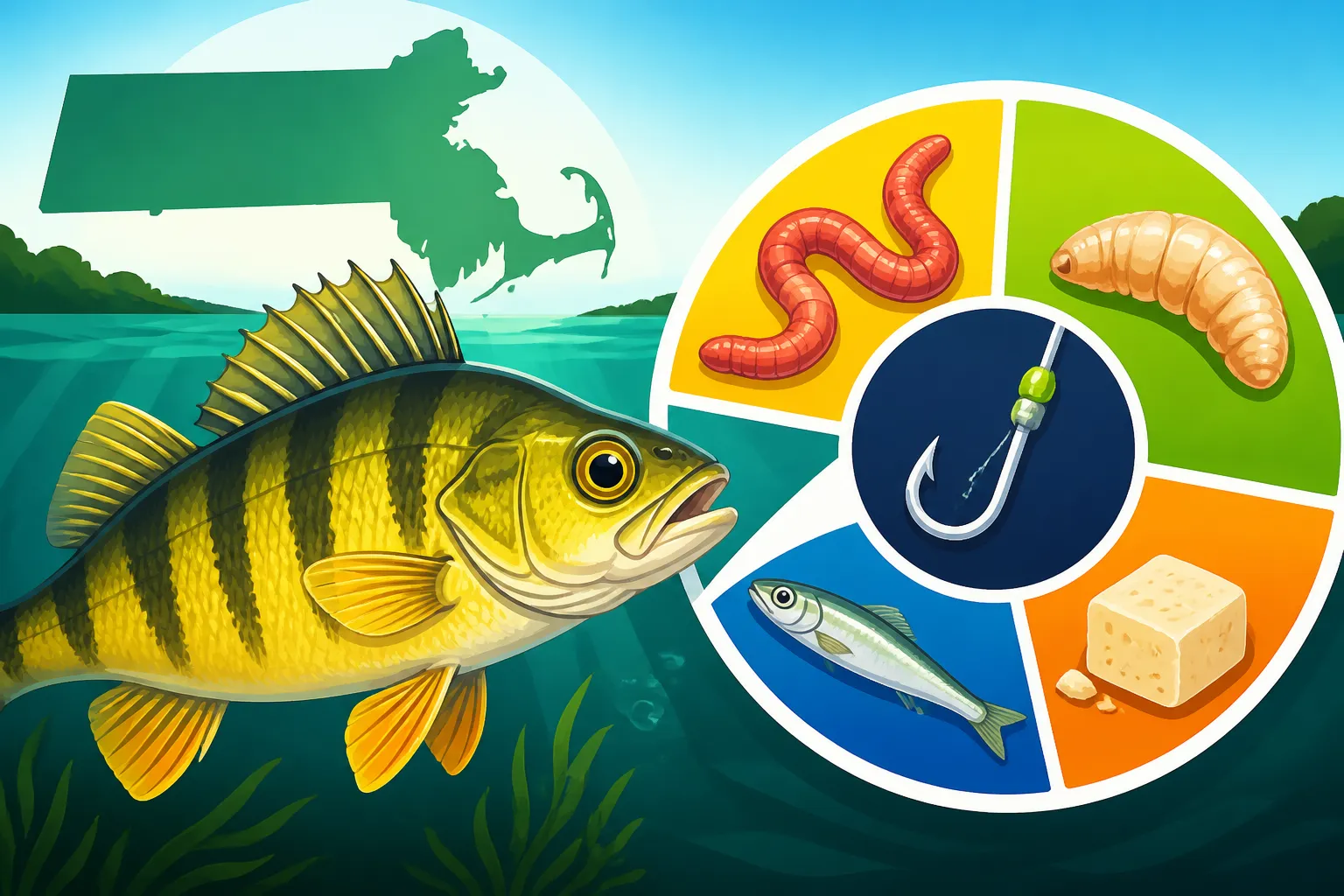
Ah, the humble worm! It's practically synonymous with freshwater fishing, and for good reason. Worms are perhaps the most effective and readily available bait for yellow perch. Their wiggling action and earthy scent mimic many of the invertebrates that perch naturally feed on.
- Nightcrawlers: These are the big boys of the worm world, and while sometimes a bit large for smaller perch, they can be cut into smaller, more manageable pieces. A half or quarter of a nightcrawler, threaded onto a small hook, is often deadly. The pieces still squirm enticingly.
- Red Worms/Garden Worms: These smaller worms are perfect for yellow perch. They're easier to fit onto a small hook, and their constant wriggling drives perch wild. You can often find these in your garden after a rain or purchase them from bait shops.
- Dendrobaenas: A popular choice for panfish, these worms are tougher than red worms, staying on the hook better, and they have excellent action in the water.
When fishing with worms, a simple rig often works best: a small hook (size 6-10 is usually good), a split shot or two a few inches above the hook to get it down, and a bobber to suspend it at the desired depth. You can often find small hooks and split shot in convenient multi-packs on Amazon, making it easy to stock up.
Minnows: Mimicking Their Preferred Prey
For bigger yellow perch, small live minnows are often the absolute best bait. Perch, especially larger ones, are predators, and a struggling minnow is a beacon for an easy meal.
- Golden Shiners: These are common baitfish and work very well. Choose smaller ones, ideally 1-3 inches in length, to match the perch's mouth size.
- Fathead Minnows: Another excellent choice, fatheads are hardy and active, making them great for attracting attention.
- Emerald Shiners: Known for their flash, these can be very effective in clearer water conditions.
Hook minnows lightly through the back, just behind the dorsal fin, being careful not to hit the spine. This allows them to swim naturally and present themselves as an easy target. Alternatively, you can hook them through both lips from the bottom up, which also allows for good movement. Fish them under a bobber or on a small jig head for a controlled descent. Remember to keep your minnows lively in a bait bucket with an aerator; a sickly minnow won't attract much attention.
Other Live Options: Crustaceans and Insects
While worms and minnows are kings, don't overlook other live offerings, especially if you're in an area where perch might be feeding on them naturally.
- Crayfish: Small crayfish or even just pieces of larger ones can be fantastic, particularly in lakes and ponds where crayfish are prevalent. Perch will readily snap them up.
- Grubs and Larvae: Wax worms, mealworms, and even corn borers can be incredibly effective, especially for ice fishing or when perch are keying in on smaller insect life. Their subtle movement and soft bodies are very appealing. You can buy these from many bait shops, and some fishing tackle sections on Amazon might even offer them for delivery.
- Leeches: While not as common for perch as they are for walleye or bass, small leeches can sometimes work, particularly if perch are feeling particularly aggressive.
Best Artificial Lures for Yellow Perch
While live bait often reigns supreme, artificial lures can be incredibly effective, especially when you need to cover more water or when fish are aggressively feeding. Plus, they're always ready, no bait shop trip needed!
Small Jigs: Versatility and Action
Jigs are arguably the most versatile artificial lure for yellow perch. Their ability to imitate injured baitfish or small crustaceans, combined with various colors and sizes, makes them a must-have in any perch angler's tackle box.
- Marabou Jigs: The soft, natural fibers of marabou breathe in the water, creating an irresistible pulsing action even with minimal retrieve. Sizes from 1/32 to 1/8 ounce are ideal. White, chartreuse, black, and olive are classic colors.
- Tube Jigs: These soft plastic tubes, often rigged with an internal lead head, spiral and dart when jigged, mimicking small minnows or crayfish. Small sizes (1-2 inches) in white, smoke, or watermelon are excellent.
- Soft Plastic Grubs/Micro Swimbaits: Pairing a tiny curly-tail grub or a micro swimbait (like those from Berkley or Rapala) on a small jig head can be deadly. The tail action provides constant motion, and you can vary colors to match conditions – bright colors for stained water, natural colors for clear.
- Blade Baits: For deeper water or when perch are hugging the bottom, small blade baits (e.g., from Reef Runner or Vibe) can be fantastic. Their vibration and flash call fish in, and they're great for vertical jigging.
When jigging, use light line and a sensitive rod to feel those subtle perch bites. A slow lift-and-drop retrieve, or simply twitching the rod tip, is often all it takes. For deeper insights into jigging, consider our article on Ice Fishing Techniques for Massachusetts Ponds, as many jigging strategies apply to open water as well.
Spoons: Flash and Vibration
Spoons are another artificial lure that can be very effective for yellow perch, particularly in open water or when the fish are suspended. Their wobbling action and reflective flash imitate a dying or injured baitfish.
- Small Casting Spoons: Think tiny Kastmasters or Little Cleos. Sizes from 1/16 to 1/4 ounce are usually best. Silver and gold are always good choices, but try colors with some orange or red accents. Cast them out and retrieve steadily, letting them wobble.
- Jigging Spoons: These are designed for vertical fishing, often used for ice fishing or boat fishing in deeper water. Drop them to the bottom, then lift and drop them, letting them flutter on the fall. The flash and erratic movement are often too much for curious perch to resist. Look for brands like Swedish Pimple or Acme Tackle.
Spoons are great for attracting perch from a distance due to their flash. If you're struggling to locate a school, casting a small spoon can sometimes help you find them before switching to a more subtle bait.
Spinners: Attraction with a Twist
Spinners, like the classic Mepps or Rooster Tail, are effective at covering water and generating both flash and vibration, which can be very appealing to yellow perch.
- Inline Spinners: These consist of a blade that rotates around a central shaft, creating flash and vibration. Small sizes (0 or 1) are perfect for perch. Silver, gold, and brass blades with bright or natural colored dressings work well. Cast and retrieve at a steady pace, just fast enough to get the blade spinning.
- Spinnerbaits (Micro): While more commonly associated with bass, very small spinnerbaits, sometimes called "micro spinnerbaits" or "panfish spinnerbaits," can be surprisingly effective for larger perch. They combine the flash of a blade with the bulk and action of a skirt.
Spinners are particularly good for targeting perch that might be scattered or when you're exploring new areas to find where the schools are holding.
Presentation and Technique Tips
It's not just about what bait you use, but how you use it. Mastering a few simple presentation techniques can significantly increase your catch rate.
Depth Control is Key
As mentioned, yellow perch often relate to the bottom or specific depths within the water column. Being able to consistently present your bait at their preferred depth is crucial.
- Bobber Fishing: For live bait, a slip bobber or fixed bobber allows you to suspend your bait at a precise depth. Experiment with different depths until you find where the fish are holding. If you're fishing over a weed bed, try to keep your bait just above the weeds.
- Bottom Bouncing: Using a weight that allows your bait to stay near the bottom while still moving (like a walking sinker rig or a drop shot rig) can be very effective, especially for minnows or worms.
- Electronic Fish Finders: If you have access to a boat or are ice fishing, a fish finder can instantly tell you the depth of fish and structure, allowing you to get your bait right in front of them.
Varying Your Retrieve and Action
Fish aren't always looking for the same thing. Sometimes they want an aggressive chase, other times a subtle, easy meal.
- Slow and Steady: Often, a slow, methodical retrieve is best for perch, especially in cooler water. They'll follow a bait for a bit before committing.
- Twitch and Pause: For jigs and soft plastics, impart small twitches with your rod tip, then let the lure fall on a slack line. Many bites happen on the pause.
- Vertical Jigging: When fishing directly over a school, whether from a boat or through the ice, a sharp lift-and-drop of your jig or spoon can trigger a reaction strike.
- Dead Sticking: Sometimes, doing nothing at all is the best technique. Let a live worm or minnow sit motionless, or allow a small jig to rest on the bottom. The subtle movements of live bait, or the current's effect on an artificial, can be enough.
Matching the Hatch
While yellow perch aren't always finicky, paying attention to what they might be feeding on at a particular time can give you an edge. If you see tiny baitfish darting around, small minnows or micro swimbaits might be best. If there are lots of insect hatches, then smaller worms, grubs, or even tiny fly-fishing nymphs could be very effective. This idea of Best Time of Year to Fish in Massachusetts can often involve seasonal changes in what fish are eating.
Essential Gear for Yellow Perch Fishing
Having the right gear makes a huge difference in enjoying your time on the water and successfully catching yellow perch. You don't need anything fancy, but a few key items will serve you well.
Rod and Reel Setup
For yellow perch, light tackle is the way to go. It maximizes the fun and allows you to feel those subtle bites.
- Rod: A light to ultralight spinning rod, 5 to 6.5 feet long, with a fast action tip, is ideal. This sensitive tip will help you detect even the lightest taps.
- Reel: A small spinning reel (size 1000 or 2000) balanced with your rod will be perfect. You want something smooth but lightweight.
- Line: Spool your reel with 2-4 pound test monofilament or fluorocarbon line. Monofilament is forgiving and easy to tie, while fluorocarbon offers greater sensitivity and is nearly invisible underwater. Braided line as a main line with a fluorocarbon leader is also a popular choice for sensitivity and strength.
You can find excellent, affordable light tackle combos that include rod and reel on Amazon, perfect for getting started or upgrading your current setup.
Hooks, Weights, and Bobbers
These are the unsung heroes of your tackle box. For yellow perch, think small.
- Hooks: Sizes 6-10 are generally appropriate for perch, depending on the bait size. Aberdeen hooks are popular for live bait because their thin wire allows live bait to stay lively longer, and they're less likely to snag excessively in fish.
- Weights: Small split shot weights are usually all you need to get your bait down. Have a variety of sizes on hand.
- Bobbers: Both fixed (clip-on) and slip bobbers are useful. Fixed bobbers are great for shallower water, while slip bobbers allow you to fish deeper without having a huge amount of line hanging off your rod tip.
- Swivels: Tiny barrel swivels can prevent line twist, especially when using spinners or fishing with live minnows that might spin.
A small tackle box or a compact lure case will help you keep all these small components organized and accessible.
Fishing for Perch Through the Seasons
Yellow perch are a fantastic year-round target, and your bait choices and techniques might shift slightly depending on the season.
Spring and Fall: Prime Time
These are often considered the prime seasons for yellow perch. As water temperatures are moderate, perch are actively feeding to bulk up for spawning (spring) or winter (fall).
- Spring: Perch move into shallower areas to spawn, making them more accessible from shore. Live minnows, worms, and small jigs are incredibly effective. Look for them in bays, coves, and near emergent vegetation.
- Fall: As water cools, perch will feed aggressively. They often school up in deeper main lake basins or channel edges but will move into shallower feeding flats during low-light periods. Again, live minnows, worms, and small spoons or jigs are excellent choices.
For specific timing on when fishing picks up, consult our Massachusetts Freshwater Fishing Season Calendar.
Summer: Deeper and Dawn/Dusk
During the heat of summer, yellow perch often retreat to deeper, cooler waters during the day.
- Summer: Your best bet is to target them early in the morning or late in the evening when they might move shallower to feed. Otherwise, focus on deeper water structures like humps, drop-offs, or the edges of deep weed lines. Live minnows, small jigs tipped with plastic, or even bottom-fished worms can be effective.
- Night Fishing: While not as common for perch as for other species, sometimes a quiet night outing with a light stick on your bobber can yield good results, especially if perch are feeding on insects attracted to light.
Winter: Ice Fishing Fun
Massachusetts offers fantastic ice fishing opportunities for yellow perch, and they are one of the most popular species to target through the hard water.
- Ice Fishing: Small jigging spoons, tiny tipped jigs (with a wax worm, grub, or a piece of a minnow), and tip-ups rigged with small live minnows are killer combinations. Perch often school tightly under the ice, so once you find them, you can catch quite a few. Drill multiple holes and move around until you locate the active schools. For more in-depth advice, our Ice Fishing in Massachusetts article is a great resource, along with Best Ice Fishing Ponds in Massachusetts for finding locations.
| Bait Type | Pros | Cons | Ideal Conditions | Yellow Perch Size Targeted |
|---|---|---|---|---|
| Nightcrawlers | Readily available, strong scent, active | Can be too large, less durable | All-around, good for attracting | Medium to Large |
| Red Worms | Perfect size, very active, natural scent | Easily ripped off hook | All-around, subtle presentation | Small to Medium |
| Live Minnows | Irresistible natural action, larger prey | Requires careful handling, cost | Aggressive fish, larger perch | Medium to Large |
| Wax Worms | Small, lively, easy to hook, clean | Less durable than other baits | Ice fishing, slow bites | Small to Medium |
| Small Jigs | Versatile, reusable, various colors | Requires active presentation, technique | Active fish, covering water, clear water | All Sizes |
| Jigging Spoons | Flash and vibration, attracts from afar | Less natural presentation, can snag | Deeper water, aggressive fish, ice fishing | Medium to Large |
| Inline Spinners | Covers water, visual and vibration appeal | Can cause line twist, retrieve required | Searching for fish, flowing water | Small to Medium |
Final Thoughts on Catching Yellow Perch
Catching yellow perch in Massachusetts is an incredibly rewarding experience, whether you're a seasoned angler or just starting out. They're abundant, relatively easy to catch once you understand their habits, and fantastic table fare. Don't be afraid to experiment with different baits and techniques on any given day. What worked yesterday might not work today, and that's part of the fun and challenge of fishing! Remember that staying mobile, especially when trying to locate schools, can make a huge difference. Sometimes, the best bait in the world won't catch fish if there are no fish to begin with! So pack your gear, grab your Massachusetts Fishing License Guide, and get out there and explore the incredible freshwater fishing Massachusetts has to offer.
Disclaimer
This article is for general informational purposes only and does not constitute professional advice. Laws, prices and regulations vary by location and change over time. Consult a qualified professional for guidance on your specific situation.