What scup is and where to catch it
Have you ever been out fishing in Massachusetts, maybe pulling up a decent size panfish, and wondered exactly what it was? Perhaps you heard someone on the pier excitedly call out "Porgy!" or "Scup!" and felt a little lost. It's totally common to encounter these lively bottom dwellers in our waters, but sometimes knowing precisely what you've got on the line, and more importantly, where to consistently find them and how to catch them, can be a bit of a mystery. This guide is here to unravel all those questions, helping you become a pro at identifying, locating, and landing scup in the Bay State.
Understanding Scup: A Massachusetts Angler's Guide
Scup are one of those fish that are incredibly fun to catch, surprisingly delicious to eat, and yet often overlooked in favor of their larger, flashier saltwater cousins. But once you get to know them, you'll realize what a fantastic target they are for anglers of all skill levels right here in Massachusetts. They're abundant, they put up a respectable fight, and they're perfect for a family fishing outing.
What Exactly is Scup?
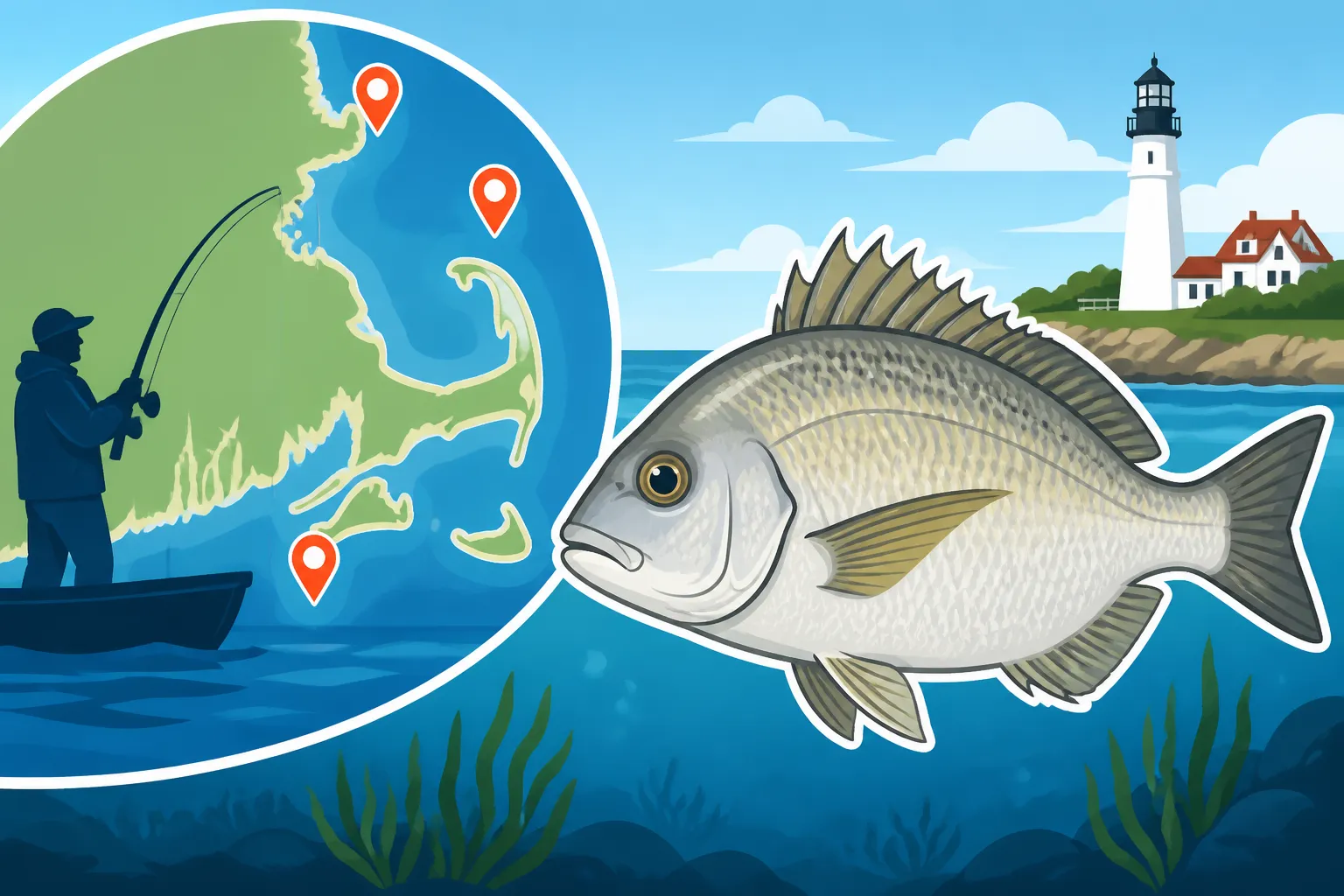
Let's get down to basics. What exactly is a scup? Sometimes called "porgy" by older generations or in other regions, Stenotomus chrysops is its scientific name, and it's a member of the porgy family (Sparidae). Visually, scup are distinctive with their silvery, sometimes iridescent bodies that can have a hint of bronze or pink. They have a relatively deep, compressed body shape, large eyes, and a small mouth with sharp, incisor-like teeth in the front and molars in the back. Those teeth are perfect for crushing shellfish and small crustaceans, which make up a big part of their diet.
Typically, scup you'll encounter in Massachusetts waters range from about 8 to 14 inches, though "hubcap" size scup (as some call the larger ones) can certainly push past 16 or even 18 inches, especially offshore. They're a schooling fish, which means where you find one, you're likely to find many more – a dream scenario for any angler looking for consistent action! Their relatively small size and prolific numbers make them a great target for light tackle and beginners, but don't let their size fool you; they can pull hard, especially the bigger ones.
Where Scup Fit into the Massachusetts Ecosystem
Scup are incredibly important players in the marine ecosystem of Massachusetts. They're opportunistic feeders, primarily bottom dwelling, and their diet consists of a wide array of invertebrates such as marine worms, small crabs, shrimp, and juvenile shellfish. This makes them crucial for controlling populations of these creatures. In turn, scup themselves are a significant food source for larger predatory fish like striped bass, bluefish, and even some species of tuna when they are further offshore. You might not always think about it when you're reeling one in, but that scup could very well be a vital link in the food chain for a much larger, prized game fish that's also swimming in our waters!
Scup are migratory, spending their winters offshore in deeper, warmer waters to the south, typically south of Massachusetts, often around the Mid-Atlantic canyons. As spring arrives and water temperatures begin to climb, they make their way north and into shallower inshore waters, including the sounds, bays, and estuaries of Massachusetts. This migration pattern means they are a seasonal visitor for us, providing excellent fishing opportunities from late spring through early fall. Their arrival is often eagerly anticipated by local anglers, signifying the true start of the warm-water fishing season.
Common Misconceptions About Scup
It's easy to confuse scup with other fish, especially if you're not familiar with their specific characteristics. One common misconception is mixing them up with other porgy species or even some types of small flounder. While "porgy" is often used interchangeably with scup, particularly by those from other regions, in Massachusetts, when people say "porgy," they are almost always referring to scup. The key visual identifiers are their distinctive deep body, large eyes, and those small, crushing teeth. Flounder, for instance, are flatfish, lying on their sides, which is a clear difference.
Another myth is that scup aren't "sporting" fish. While they might not breach like a striped bass or pull line like a tuna, a good-sized scup on light tackle provides plenty of bend in the rod and a spirited fight all the way to the boat or shore. They are tenacious, and when you hook into a school, the action can be non-stop and incredibly engaging. They're also often underrated as table fare. Many anglers consider scup to be one of the finest eating fish in our waters, with firm, white, flaky meat that's excellent baked, fried, or broiled. Don't let anyone tell you they're not worth keeping; they absolutely are!
Prime Locations to Catch Scup in Massachusetts
Knowing what scup are is one thing; knowing where to find them consistently is the real key to success. Massachusetts offers a fantastic array of habitats that scup love, making them accessible to both shore-bound and boat anglers across the state.
Identifying Scup Hotspots from Shore
For those without a boat, Massachusetts boasts numerous shore-based locations where scup congregate. The key is to look for structure and areas where the bottom isn't just flat sand. Scup love rocky bottoms, mussel beds, jetties, piers, and breakwaters, as these areas provide both food and shelter.
Think about places like the granite jetties that line many of our harbors and inlets, or the robust public piers found in coastal towns. These structures are often encrusted with barnacles and mussels, creating a natural buffet for scup. The deeper water at the end of a pier or alongside a jetty can be incredibly productive. For instance, the fishing piers around Boston Harbor or some of the rocky shorelines on Cape Cod are prime examples. Places with strong tidal currents, especially where those currents sweep food over rocky patches, will also hold scup. A perfect example of this can be found in some of the quieter coves and channels off the main flow of the Cape Cod Canal Fishing Guide for Massachusetts Anglers, where the current isn't quite as fierce but still brings in plenty of forage. Even simple bridges with riprap around their pilings can concentrate scup.
When you're shore fishing, focus on spots where you can cast out to areas with a bit of depth, or where you know there's structure below. Sometimes just a few extra feet of depth or the edge of a submerged rock pile can make all the difference. Remember, scup are bottom feeders, so you need to get your bait down to them.
Finding Scup from a Boat in Massachusetts Waters
If you have a boat, your options for targeting scup open up dramatically. You can reach those offshore humps, ledges, and wrecks that are absolutely teeming with scup. These deeper structures, often a little further out from shore, act like magnets for baitfish and, consequently, for scup.
Regions like Buzzards Bay are renowned for their scup fishing, with countless rocky areas, old wrecks, and uneven bottoms that scup call home. Vineyard Sound also offers excellent opportunities, particularly around the many reefs and shoals. Even in areas like Nantucket Sound, where the bottom is predominantly sand, you can find isolated rocky patches or mussel beds that hold large schools.
When boating, a good fish finder is your best friend. Look for clusters of marks on the bottom, especially over irregular terrain. Scup often appear as dense schools hugging the bottom. Anchoring up-current from a promising piece of structure and letting your bait drift back into the strike zone is a classic and effective strategy. Many anglers will head out on a Massachusetts Party Boat and Head Boat Fishing trip specifically to target scup, as these boats often know the exact coordinates of productive offshore spots.
Best Times and Conditions for Scup Fishing
Timing is everything in fishing, and scup are no exception. Their season in Massachusetts generally runs from late spring (think May or early June, depending on water temps) through early fall (October). The peak months for consistent action are usually July, August, and September when the water is warmest, and scup are actively feeding in large schools.
When it comes to daily conditions, scup are often most active during daylight hours. While you can catch them at night, the daytime typically offers more consistent action. Tidal movement is also a factor. A moving tide, whether incoming or outgoing, tends to stir up the bottom and bring food past the scup, making them more inclined to feed. However, some anglers report good success during slack tide in deeper holes where scup might be resting.
Water temperature plays a crucial role. Scup prefer warmer waters, generally above 55-60°F. If the water is too cold, they'll either be deeper offshore or simply less active. Clear to moderately clear water is usually preferred, but they can be caught in slightly turbid conditions as well. Pay attention to local marine forecasts and water temperature reports, and you'll put yourself in a much better position to intercept these eager biters.
Essential Techniques and Tackle for Scup Fishing
You don't need highly specialized gear to catch scup, which is part of their appeal. A basic setup that most anglers already own will work wonderfully, but having the right terminal tackle and bait makes a huge difference.
Recommended Gear for Scup
For scup fishing, I always recommend a light to medium-light spinning rod and reel combo. A rod between 6 to 7.5 feet in length with a fast or moderate-fast action is ideal, allowing you to feel those subtle bites and cast lighter rigs effectively. Pair it with a spinning reel in the 2500 to 4000 size range, spooled with 10-20 lb braided line. Braided line offers excellent sensitivity, which is crucial for detecting scup bites, and it allows you to use a thinner diameter line for better casting distance.
You'll definitely want to tie on a fluorocarbon leader of about 15-20 lb test, roughly 2 to 3 feet long. This helps with abrasion resistance against rocky bottoms and makes your presentation a bit more stealthy in clear water. For hooks, small but strong baitholder hooks in sizes #2 to #1/0 are perfect. And don't forget your sinkers! Depending on the current and depth, you'll need bank sinkers or pyramid sinkers ranging from 1 to 4 ounces. You can find a wide variety of these essential tackle components, from hooks to lines, readily available on Amazon for convenient delivery right to your door. Having a good selection of sinker weights is key, as conditions can change quickly.
Best Baits and Lures for Scup
Scup are not particularly picky eaters, which is another reason they are so much fun to target. However, certain baits definitely outperform others.
Natural Baits:
- Clams: Fresh shucked clams are arguably the most effective bait for scup. Their strong scent and soft texture are irresistible. Just a small piece on a hook is all you need.
- Squid: Strips of fresh or frozen squid are also excellent. They're tougher than clams, so they stay on the hook better, which is great when you're getting pecked at by smaller fish.
- Worms: Bloodworms, sandworms, or even common garden worms (though less common for saltwater scup) can be very effective, especially for smaller scup.
- Small pieces of fish: Cut bait from mackerel, herring, or even a small piece of a scup you've already caught can entice larger scup.
Artificial Baits:
While natural baits usually reign supreme, small jigs tipped with a piece of bait can work, especially when the scup are aggressive. Scented soft plastics designed for bottom fishing can also be effective, mimicking small crabs or worms. However, for consistent numbers, natural bait is your best bet.
Rigging Techniques:
The most common and effective rig for scup is a simple two-hook hi-lo rig (also known as a bottom rig or dropper rig). This rig consists of a sinker at the bottom, with two snelled hooks tied on dropper loops above it. This allows you to present two baits at different depths just off the bottom. You can buy these pre-tied, or easily tie them yourself. Another option is a fish-finder rig with a sliding sinker and a single hook, particularly useful if you're fishing a very soft bottom to avoid snagging. Make sure your knots are strong; a good knot is essential when you're bringing up multiple fish or a larger "hubcap" scup!
Fishing Strategies for Consistent Catches
Once you've got your gear and bait ready, it's time to talk strategy. Scup fishing is generally a game of getting your bait to the bottom and waiting for the telltale tap-tap-tap.
- Anchoring vs. Drifting: If you're fishing from a boat over a known piece of structure, anchoring is often the most effective method. It allows you to precisely position yourself over the fish and concentrate your chum (if you're using it). If you're exploring new ground or the fish are scattered, drifting slowly with the current or wind can help you cover more area and locate schools. Just make sure your sinker is heavy enough to keep your bait on the bottom during the drift.
- Bottom Fishing: As bottom dwellers, scup require your bait to be presented right on or very near the seafloor. Cast your rig out, let the sinker hit the bottom, and then reel in any slack line until your rod tip is slightly bent from the weight of the sinker. Keep your rod tip high enough to stay out of the water, but low enough that you can easily drop it to set the hook.
- Chumming Tactics: Chumming can be incredibly effective for scup, especially from an anchored boat or a pier. A simple chum pot filled with crushed clams, ground fish, or even oats mixed with fish oil, deployed up-current from your fishing spot, will create a scent trail that draws scup to your area. Just make sure it's legal in your specific fishing location, as rules can vary.
- The Importance of Feel and Subtle Bites: Scup bites can range from a violent tug to a very subtle series of taps. With braided line, you'll feel every bump and nibble. Don't be too quick to set the hook on the first few taps; often, these are just smaller fish or scup mouthing the bait. Wait for a more solid pull or steady pressure before sweeping the rod back to set the hook. If you miss a bite, leave your bait down; often, the scup will come back for another try!
Massachusetts Scup Regulations and Conservation
Fishing responsibly means understanding and adhering to the local regulations. Massachusetts, like many states, has specific rules in place to ensure the health and sustainability of its scup populations.
Understanding Scup Size and Bag Limits
It's absolutely critical to be aware of the current recreational size and bag limits for scup in Massachusetts. These regulations are subject to change based on scientific assessments of the stock and conservation needs, so always check the latest rules before you head out. You can usually find the most up-to-date information on the Massachusetts Division of Marine Fisheries (DMF) website. Generally, there will be a minimum length that a scup must meet to be considered a "keeper," and a daily bag limit dictating how many scup you can keep per person per day. These rules are put in place to ensure that enough scup survive to reproduce, maintaining healthy populations for future generations of anglers. For example, the rules regarding Massachusetts Saltwater Bag Limits by Species will always include scup, so it's a good idea to review those before your trip. Always carry a measuring device with you so you can quickly and accurately determine if your catch meets the legal size.
| Characteristic | Description | Fishing Tip |
|---|---|---|
| Appearance | Silvery, deep-bodied, large eyes, small mouth with crushing teeth. | Easily identifiable, avoid confusing with flatfish. |
| Habitat | Rocky bottoms, mussel beds, jetties, piers, wrecks, reefs. | Target areas with structure, especially where current flows over them. |
| Season | Late spring (May/June) to early fall (October) in MA. | Best fishing is typically mid-summer through early fall when water is warmest. |
| Best Bait | Fresh clams, squid strips, marine worms. | Natural baits are highly effective; use small pieces to match scup's mouth size. |
| Rigging | Hi-lo rig (two hooks above a sinker) is most common. | Present two baits at different depths near the bottom; check Amazon for pre-tied rigs. |
| Technique | Bottom fishing; sensitive rod tip to detect subtle bites. | Maintain contact with the bottom; wait for a steady pull before setting the hook. |
| Regulations | Check current MA DMF for size and bag limits; they change seasonally/yearly. | Always know the legal minimum size and daily catch limit before keeping fish. Refer to the Massachusetts Recreational Fishing Rules and Bag Limits. |
Responsible Angling for Scup
Practicing responsible angling is paramount, especially when targeting prolific species like scup. This means being mindful of how you handle fish, particularly those you intend to release. If you catch an undersized scup, handle it as little as possible with wet hands to protect its slime coat, and release it quickly and gently back into the water. Avoid excessive fighting of undersized fish, which can exhaust them. Barbless hooks can also make for easier and less damaging releases.
When keeping legal-sized fish, consider only taking what you will realistically eat. While scup are abundant, their populations are still managed, and taking only what you need contributes to the overall health of the fishery. Good sportsmanship and respect for the resource are hallmarks of a great angler.
Protecting Scup Populations in Massachusetts
The continued abundance of scup in Massachusetts waters is not just by chance; it's a result of ongoing fisheries management efforts and the cooperation of anglers. The Massachusetts Division of Marine Fisheries (DMF) works tirelessly to monitor scup stocks, conduct scientific research, and implement regulations that support healthy populations. These regulations, which you find outlined in the Massachusetts Fishing Regulations Pamphlet, Explained, are based on scientific data and are designed to balance recreational and commercial fishing interests with long-term conservation goals.
Anglers play a vital role in this conservation effort. By adhering to size and bag limits, reporting any unusual catches or observations, and participating in angler surveys when asked, we contribute valuable data that helps inform management decisions. Protecting critical habitats, such as eelgrass beds and rocky reefs where scup forage and find shelter, is also essential. By understanding the importance of scup within our marine ecosystem and fishing responsibly, we help ensure that future generations will continue to enjoy the thrill of catching these delightful Massachusetts fish.
Disclaimer
This article is for general informational purposes only and does not constitute professional advice. Laws, prices and regulations vary by location and change over time. Consult a qualified professional for guidance on your specific situation.