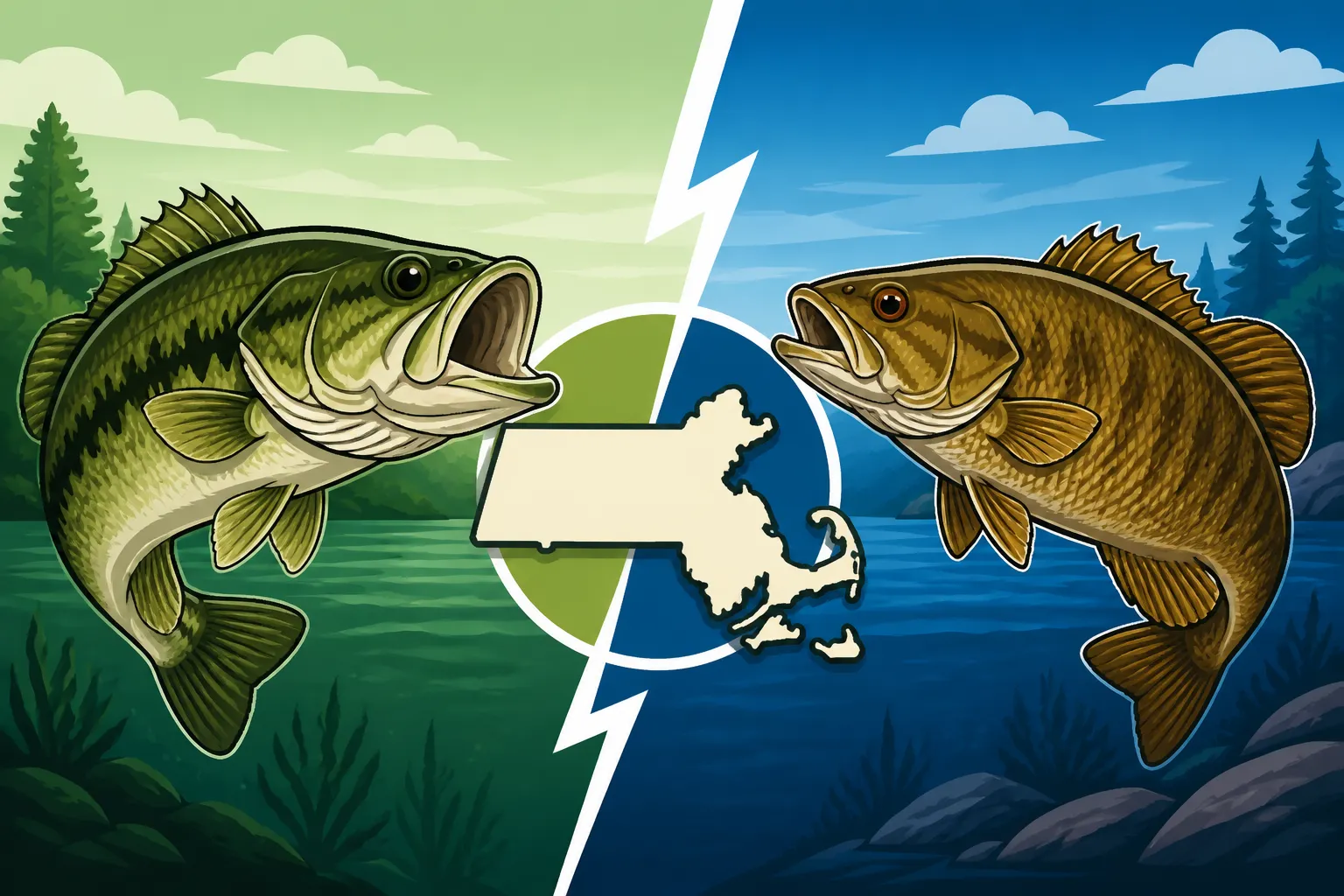
Largemouth vs Smallmouth Bass in Massachusetts
It’s a common scenario out on the water in Massachusetts: you’ve hooked into a feisty bass, and as it breaks the surface, you find yourself squinting, trying to figure out if it’s a largemouth or a smallmouth. While both are incredible game fish, beloved by anglers across the Commonwealth, they have distinct personalities, preferred hangouts, and even fight differently on the line. This guide will dive deep into the fascinating world of these two iconic bass species, helping you understand their differences, where to find them, and how to best target each one in Massachusetts waters.
The Tale of Two Bass: Visual Distinctions
Before you even wet a line, being able to visually differentiate between a largemouth and a smallmouth bass can give you a significant advantage in understanding their behavior and habitat. While they both share the "bass" moniker, their physical characteristics are quite different, almost like comparing two distant cousins rather than siblings. These distinctions are not just for scientific classification; they tell a story about how each fish lives and thrives in its environment.
Mouth Size and Jawline Clues
The most obvious and often cited difference between these two bass species lies right in their name: their mouths. A largemouth bass truly lives up to its name. If you gently hold a largemouth horizontally, you’ll notice that its jaw extends significantly beyond the rear edge of its eye. It's almost comically large, a gaping maw perfectly adapted for engulfing larger prey whole. This wide-gaping mouth is a tell-tale sign, allowing them to grab frogs, small birds, or even small mammals that fall into the water.
In stark contrast, the smallmouth bass has a more proportionate mouth. Its upper jaw typically aligns with or just barely extends past the middle of its eye. It's a noticeable difference when you put them side-by-side. This smaller mouth isn't a disadvantage, however; it's simply adapted for a different diet, often consisting of smaller, quicker prey items. Looking at the jawline is the quickest and most reliable way to make an initial identification, especially for anglers new to bass fishing in Massachusetts.
Body Shape and Fin Characteristics
Beyond the mouth, their overall body shape and fin structures also offer key identification points. Largemouth bass tend to have a more elongated, somewhat thicker body, almost like a football, especially when they're well-fed. Their dorsal fin, the fin on their back, is distinctly separated into two parts: a spiny front section and a softer, rayed rear section, often with a noticeable dip or separation between the two. This gives them a slightly less streamlined appearance.
Smallmouth bass, on the other hand, typically possess a more compact, muscular, and torpedo-shaped body. They often appear sleeker and more athletic, perfectly built for powerful bursts of speed in current. Their dorsal fin, while also having a spiny and soft-rayed section, is usually connected or only very slightly notched, appearing as one continuous fin. This subtle difference in their dorsal fin structure is another good indicator, especially if you're trying to identify a fish that's still in the water or only partially visible.
Coloration and Lateral Line Patterns
The coloration of both species can vary depending on water clarity, diet, and habitat, but there are some general patterns to look for. Largemouth bass are usually characterized by their dark green backs fading to lighter green or white bellies, with a prominent, often broken, dark horizontal stripe or blotchy pattern running down their lateral line. This stripe can sometimes be very distinct, acting as a natural camouflage in the weedy, murky waters they prefer.
Smallmouth bass typically sport a bronze, brown, or golden-brown coloration on their backs and sides, fading to a creamy white belly. Instead of a single horizontal stripe, they often display several vertical bars or blotches along their sides, giving them a "tiger stripe" appearance. These vertical markings help them blend into rocky riverbeds or gravelly lake bottoms. Sometimes, their eyes can also appear red, giving them a fierce, almost fiery look. Observing these color and pattern differences, combined with the mouth and body shape, will usually confirm your identification.
Where They Call Home: Habitat Preferences
Knowing where to find largemouth versus smallmouth bass is half the battle when you're out fishing. While both can occasionally be found in the same waters, they generally prefer very different environments, driven by their natural instincts and physiological adaptations. Understanding these preferences will help you narrow down your search and maximize your chances of success, whether you're exploring a quiet pond or a bustling river in Massachusetts.
Largemouth: The Lover of Cover
The largemouth bass is undeniably a creature of structure and cover. They thrive in warmer, often shallower water, making them the dominant bass species in many of Massachusetts’ ponds, lakes, and slower-moving rivers. Think about those classic bass fishing spots: lily pads, submerged logs, thick weed beds, brush piles, docks, and even flooded timber. These features provide ambush points for their prey and offer protection from predators and harsh sunlight. They love to sit hidden, patiently waiting for an unsuspecting meal to swim by.
You'll often find largemouth bass cruising the edges of these types of cover, especially during dawn and dusk. During the hotter parts of the day, they'll retreat deep into the thickest cover, seeking cooler water and shade. If you're fishing in a murky pond with lots of vegetation, chances are good you're in largemouth territory. Many of the Best Freshwater Ponds and Lakes in Massachusetts are prime examples of this kind of habitat.
Smallmouth: The Clearwater Crusader
Smallmouth bass, conversely, are true clearwater enthusiasts. They prefer cooler, cleaner, and often deeper water, favoring environments with rocky bottoms, gravel shoals, current, and ledges. You'll find them predominantly in Massachusetts' larger, deeper lakes and rivers, particularly those with noticeable flow and structure like the Connecticut River or portions of the Quabbin Reservoir. Unlike their largemouth cousins who hide in cover, smallmouth often relate to cover around it, using rocks, boulders, and drops-offs as hunting grounds.
Their streamlined bodies are perfectly adapted for navigating currents and pursuing agile prey in open water. While they appreciate structure, it's usually hard, rocky structure rather than dense vegetation. If you're fishing a clear lake with a rocky shoreline, or a river with a gravelly bottom and some current, you're likely in a smallmouth hotspot. Places where you might be looking into Where smallmouth bass live in Massachusetts will often guide you to these types of locations.
Overlapping Territories and Hybrid Zones
It's not always a black-and-white situation, however. There are many bodies of water in Massachusetts where both largemouth and smallmouth bass coexist. These "overlapping territories" often occur in large, diverse lakes that offer a mix of both habitat types. For instance, a large lake might have shallow, weedy coves ideal for largemouth, but also deep, rocky main lake basins or points that smallmouth find irresistible.
In such scenarios, you might find yourself catching both species on the same outing, though perhaps in different areas of the lake. It's a fantastic opportunity to observe their distinct preferences firsthand. Occasionally, environmental factors or stocking efforts can lead to more unusual distributions. Understanding that these zones exist is key for anglers, as it means you need to be versatile in your approach and prepared for either species, often requiring a mix of tactics.
What's On The Menu: Diet and Foraging Strategies
Just as their mouths and habitats differ, so do the dining habits of largemouth and smallmouth bass. Their diets are intricately linked to their environment and physical adaptations, influencing what lures and baits work best when trying to entice them. Knowing what they're likely to be munching on can significantly improve your fishing strategy, giving you an edge in mimicking natural prey.
Largemouth's Opportunistic Appetite
The largemouth bass is, without a doubt, a supremely opportunistic predator. Their large mouths allow them to consume a wide variety of prey, often larger items than a smallmouth would attempt. Their diet commonly includes smaller fish like minnows, shiners, bluegill, and even smaller bass. But their menu extends far beyond that, encompassing frogs, crayfish, snakes, ducklings, and even mice or other small rodents that happen to fall into the water. If it fits in their mouth and looks like a meal, a largemouth will usually try to eat it.
They are ambush predators, often hiding in dense cover and exploding out to strike unsuspecting prey. This makes them highly susceptible to reaction baits that simulate a struggling creature. Topwater lures, spinnerbaits, and swimbaits that imitate baitfish or frogs are incredibly effective. When fishing for Largemouth Bass Fishing in Massachusetts, don't be afraid to throw something big and bold; these fish aren't shy about a substantial meal.
Smallmouth's Preference for Smaller Prey
Smallmouth bass, with their more modest mouth size, typically focus on smaller, faster-moving prey. Crayfish are a staple in their diet, especially in rocky river and lake environments where these crustaceans thrive. Beyond crayfish, smallmouth will aggressively pursue insects – both aquatic larvae and terrestrial insects that fall into the water – as well as various minnow species, sculpins, and other small forage fish. They are highly active hunters, often chasing down their meals in open water or along rocky ledges.
Their diet leads to a preference for lures that imitate these smaller, agile food sources. Jigs, tubes, spinnerbaits, and crankbaits designed to mimic crayfish or baitfish are often highly productive. Fly anglers also have great success with streamers and poppers. For those exploring a Massachusetts Smallmouth Bass Fishing Guide, remember that finesse presentations and lures that accurately imitate their natural forage are often the most effective.
Seasonal Shifts and Prey Availability
It's important to remember that the diet of both bass species can shift throughout the year based on what's abundant and accessible. In the spring, after spawning, both species are often aggressively feeding to recover, and whatever prey is easiest to catch will be targeted. During the summer, as water temperatures rise, largemouth might spend more time deeper in cover, striking at whatever passes by, while smallmouth will chase schools of baitfish in open water.
In the fall, both species enter a pre-winter feeding frenzy, trying to pack on calories. This is a time when they can be less picky and more aggressive. Understanding these seasonal patterns helps anglers choose the right lures and presentations. For instance, if you know crayfish are actively molting in early summer, a crayfish-imitating jig from a brand found on Amazon could be exceptionally effective for smallmouth, while a frog imitation might be deadly for largemouth in lily pad fields.
The Angler's Approach: Best Fishing Techniques
Catching bass in Massachusetts is a rewarding experience, but successful angling often comes down to tailoring your techniques to the specific species you're targeting. While a general bass lure might occasionally catch either, maximizing your chances means understanding the nuances of how each bass species interacts with its environment and its food.
Targeting Largemouth: Lures and Tactics
When it comes to largemouth bass, the name of the game is often targeting cover and presenting baits that elicit a reaction strike. Because largemouth tend to hide in thick vegetation, submerged timber, or under docks, lures that can penetrate or work around these obstacles are key. Weedless jigs, Texas-rigged plastic worms, and soft plastic creatures are fantastic for pitching into dense cover without snagging. These can be found in a huge variety on Amazon. For open water around cover, spinnerbaits and bladed jigs are excellent for covering water and mimicking baitfish.
Topwater lures like frogs, poppers, and walking baits are incredibly exciting when largemouth are active on the surface, especially during low light conditions or over shallow weeds. The key is to get your lure as close to the cover as possible, allowing it to drop or pass right by a hidden bass. Patience is also a virtue; often a bass will wait for the lure to settle before striking. This is often covered in guides like How to Catch Largemouth Bass in Massachusetts Ponds.
Enticing Smallmouth: Finesse and Presentation
Smallmouth bass, with their preference for clear water and rocky environments, often require a more subtle approach, though they can be incredibly aggressive once hooked. Since they often chase down prey in open water or along edges, lures that mimic smaller, agile baitfish or crayfish are highly effective. Tubes, grubs, drop-shot rigs with small worms, and Ned rigs are excellent finesse techniques for smallmouth, especially in pressured waters or when the bite is tough.
Crankbaits that dive to different depths and imitate baitfish are also very popular, especially when retrieved over rocky bottoms or along ledges. Jigs dressed with soft plastics that mimic crayfish are another go-to, bounced along the bottom. Unlike largemouth that often hit with a violent strike, smallmouth bites can sometimes be very subtle, feeling like a slight "tick" on the line. Being observant and feeling for those subtle takes is critical for Massachusetts Smallmouth Bass Fishing Guide.
Gear Considerations for Each Species
While you can certainly catch both bass species on general-purpose medium-heavy spinning or casting gear, optimizing your setup can enhance your experience. For largemouth, especially when fishing heavy cover, a heavier action rod (medium-heavy to heavy) with a fast tip and a baitcasting reel spooled with strong braided line (often 30-50 lb test) or heavy fluorocarbon (15-20 lb) is ideal. This setup provides the power to pull fish out of dense weeds and handle larger lures.
For smallmouth, particularly with finesse techniques in clear water, a medium-light to medium action spinning rod with a fast tip is often preferred. This allows for lighter line (6-10 lb fluorocarbon or monofilament) and lighter lures, enabling longer casts and better sensitivity for detecting subtle bites. A good quality spinning reel with a smooth drag system is essential for handling the powerful runs of a smallmouth. While some anglers use baitcasting gear for smallmouth, especially when throwing crankbaits or larger jigs, spinning gear is generally more versatile for the finesse presentations they often require. You can find a vast array of rods, reels, and lines suitable for either species on Amazon.
The Fight and The Flavor: Behavioral and Culinary Notes
Beyond their physical differences and preferred habitats, largemouth and smallmouth bass each offer a unique experience to the angler, both in terms of the fight they put up and their potential as table fare. These aspects contribute significantly to their popularity and why anglers often develop a strong preference for one over the other.
The Battle On the Line: Jumpers vs. Divers
When you hook into a largemouth bass, particularly a spirited one, be prepared for an explosive, often acrobatic fight. Largemouth are renowned for their powerful head shakes and dramatic jumps out of the water, attempting to throw the hook. They will often bulldog their way into the nearest cover, trying to snag your line on weeds or logs. This makes for a thrilling, sometimes chaotic battle that keeps anglers on their toes. Their fighting style is often characterized by short, powerful bursts and surface antics, making them a favorite for topwater enthusiasts.
Smallmouth bass, conversely, are often described as pound-for-pound one of the hardest fighting freshwater fish. While they might jump, their signature move is typically a deep, powerful dive, pulling hard and making long, sustained runs. They utilize their streamlined bodies and strong tails to fight aggressively in current, often circling the boat or peeling line off the reel. The fight of a smallmouth is more of a relentless, drawn-out tug-of-war, testing your tackle and your patience. Both provide incredible sport, just in different, equally exciting ways.
Sporting Qualities and Angler Appeal
Both species hold a revered place in the hearts of Massachusetts anglers, and debates about which one is "better" are as old as fishing itself. Largemouth bass are often seen as the gateway fish for many beginners due to their widespread availability and willingness to strike a variety of lures. Their explosive strikes and jumps are undeniably exciting, and their tendency to hold in obvious cover makes them somewhat easier to locate for newer anglers. The pursuit of a trophy largemouth, especially those giant "bucketmouths" from weed-choked ponds, is a lifetime quest for many. How big largemouth bass get in Massachusetts ponds can be a huge motivator for targeting these giants.
Smallmouth bass, while perhaps requiring a bit more finesse and search effort, are often celebrated for their incredible fighting prowess and the beauty of their bronze coloration. Many seasoned anglers consider the smallmouth to be the ultimate freshwater game fish, appreciating their powerful runs and relentless spirit. The challenge of deciphering their patterns in clear, rocky waters, and then experiencing that intense fight, is what keeps many coming back for more.
Culinary Considerations: Which Bass to Keep
When it comes to eating, both largemouth and smallmouth bass are generally considered good table fare, though their quality can vary depending on the water body, diet, and time of year. Both have flaky, white meat. However, many anglers feel that smallmouth bass, due to their preference for colder, clearer water and a diet heavy in crustaceans, tend to have a slightly firmer, sweeter, and less "muddy" taste than largemouth. They are often perceived as having a cleaner flavor profile.
Largemouth bass can sometimes have a softer flesh or a slightly stronger flavor, especially if caught from warmer, muddier waters or areas with a diet heavily dominated by certain baitfish. If you do plan to keep bass for the table, it’s always best to consume them fresh. Filleting them quickly and cooling the meat thoroughly will help preserve their quality. Always be sure to check Massachusetts Freshwater Daily Catch Limits and any local consumption advisories before keeping fish from any particular body of water.
Protecting Our Waters: Conservation and Regulations
As passionate anglers, we all have a responsibility to help maintain healthy fish populations and vibrant ecosystems. Understanding and adhering to conservation practices and fishing regulations is not just about avoiding penalties; it's about ensuring that future generations can enjoy the same incredible fishing opportunities we do in Massachusetts.
Massachusetts Regulations for Bass Species
Massachusetts has specific regulations in place for both largemouth and smallmouth bass, designed to protect their populations and promote sustainable fishing. These regulations typically cover minimum size limits, daily bag limits (the number of fish you can keep per day), and sometimes specific seasons or tackle restrictions. For instance, Is There a Size Limit for Largemouth Bass in Massachusetts? is a common question, and yes, there usually is one. These rules can change, so it is absolutely crucial to consult the most current Massachusetts fishing regulations pamphlet provided by MassWildlife before heading out.
The regulations are often similar for both species, but it's important not to assume. Always check to be certain. These rules are put in place based on scientific data about bass spawning cycles, growth rates, and overall population health. Following them is a fundamental part of responsible angling and contributes directly to the long-term health of our fisheries.
Catch and Release Best Practices
Many bass anglers, especially those targeting larger fish or fishing in high-pressure areas, practice catch and release. This is a fantastic way to minimize impact on fish populations while still enjoying the thrill of the catch. If you choose to release a bass, follow these best practices to give the fish the best chance of survival:
- Minimize handling: Try to keep the fish in the water as much as possible.
- Wet hands: Always wet your hands before touching a fish to protect its delicate slime coat.
- Support the fish: Support the fish horizontally, especially larger ones, to avoid damaging its internal organs or jaw. Avoid holding it vertically by the jaw if it's a large fish.
- Use appropriate tackle: Barbless hooks can make unhooking easier and less damaging.
- Quick release: Unhook the fish quickly and gently. If the hook is deeply swallowed, cut the line as close to the hook as possible rather than trying to remove it, as this can cause more harm.
- Revive if needed: If the fish seems stressed or lethargic, hold it gently in the water, facing into a mild current, until it swims away under its own power.
Adopting these practices ensures that the fish you release can go on to spawn and contribute to healthy future populations.
Supporting Healthy Bass Populations
Beyond following regulations and practicing catch and release, there are other ways anglers can contribute to healthy bass populations in Massachusetts. Participating in local conservation efforts, such as shoreline cleanups or habitat restoration projects, can make a real difference. Educating fellow anglers about responsible fishing practices is also invaluable. Being mindful of invasive species by cleaning your boat, trailer, and gear between water bodies helps prevent their spread, which can be detrimental to native bass populations and their forage.
Your fishing license fees and the purchase of fishing gear, like that found on Amazon, also play a vital role. A portion of these funds often goes directly to state fish and wildlife agencies, funding programs for fisheries management, habitat protection, and fish stocking efforts. So, every time you buy a Massachusetts Fishing License Guide or a new lure, you're indirectly supporting the future of bass fishing in the Commonwealth.
| Feature / Species | Largemouth Bass | Smallmouth Bass |
|---|---|---|
| Mouth Size | Jaw extends past rear of eye | Jaw aligns with or slightly past middle of eye |
| Body Shape | More elongated, thicker; football-shaped | More compact, muscular; torpedo-shaped |
| Dorsal Fin | Clearly separated or deeply notched | Connected or only slightly notched |
| Coloration | Dark green back, lighter sides, prominent horizontal stripe/blotches | Bronze/brown back, lighter sides, vertical bars/blotches |
| Preferred Habitat | Warm, shallow, vegetated, murky water (ponds, lakes, slow rivers) | Cooler, clear water, rocky bottoms, current (deep lakes, rivers) |
| Common Diet | Fish, frogs, crayfish, snakes, rodents, ducklings | Crayfish, insects, minnows, sculpins |
| Fighting Style | Explosive jumps, head shakes, seeks cover | Deep dives, powerful runs, pulls hard |
| Typical Lures | Jigs, plastic worms, topwater, spinnerbaits, swimbaits | Tubes, grubs, drop-shot, Ned rig, crankbaits, jigs |
| Best Gear | Medium-heavy to heavy casting rod, braided/heavy fluoro | Medium-light to medium spinning rod, lighter fluoro/mono |
Disclaimer
This article is for general informational purposes only and does not constitute professional advice. Laws, prices and regulations vary by location and change over time. Consult a qualified professional for guidance on your specific situation.