Crappie Fishing in Massachusetts Ponds
It's a common frustration for anglers in Massachusetts: you want to find a fun, accessible fishing experience that's rewarding for all skill levels, but sometimes the big game species can feel intimidating or require specialized gear. Many of us are looking for a reliable panfish opportunity, something that offers consistent action and a delicious reward. This comprehensive guide is here to unravel the secrets of crappie fishing in Massachusetts ponds, helping you locate these eager biters, understand their habits, and equip you with the knowledge to bring home a fantastic catch.
Understanding Crappie in Massachusetts Ponds
Crappie are truly a gem of the freshwater fishing world, offering exciting action and fine table fare. In Massachusetts, we're fortunate to have populations of these speckled beauties in many of our public waters. But before you cast your line, it helps to understand a bit about these fascinating fish – what kind are we talking about, where do they like to hide, and how do their habits change with the seasons? Knowing these fundamentals is key to consistent success.
Black Crappie vs. White Crappie: What's the Difference?
When we talk about crappie in Massachusetts, we're primarily talking about black crappie, though white crappie can also be found in some waters. While they share a similar name and many characteristics, there are subtle differences that can sometimes help you identify your catch and even inform your fishing strategy. If you're wondering, Are There Crappie in Massachusetts Lakes?, the answer is a resounding yes!
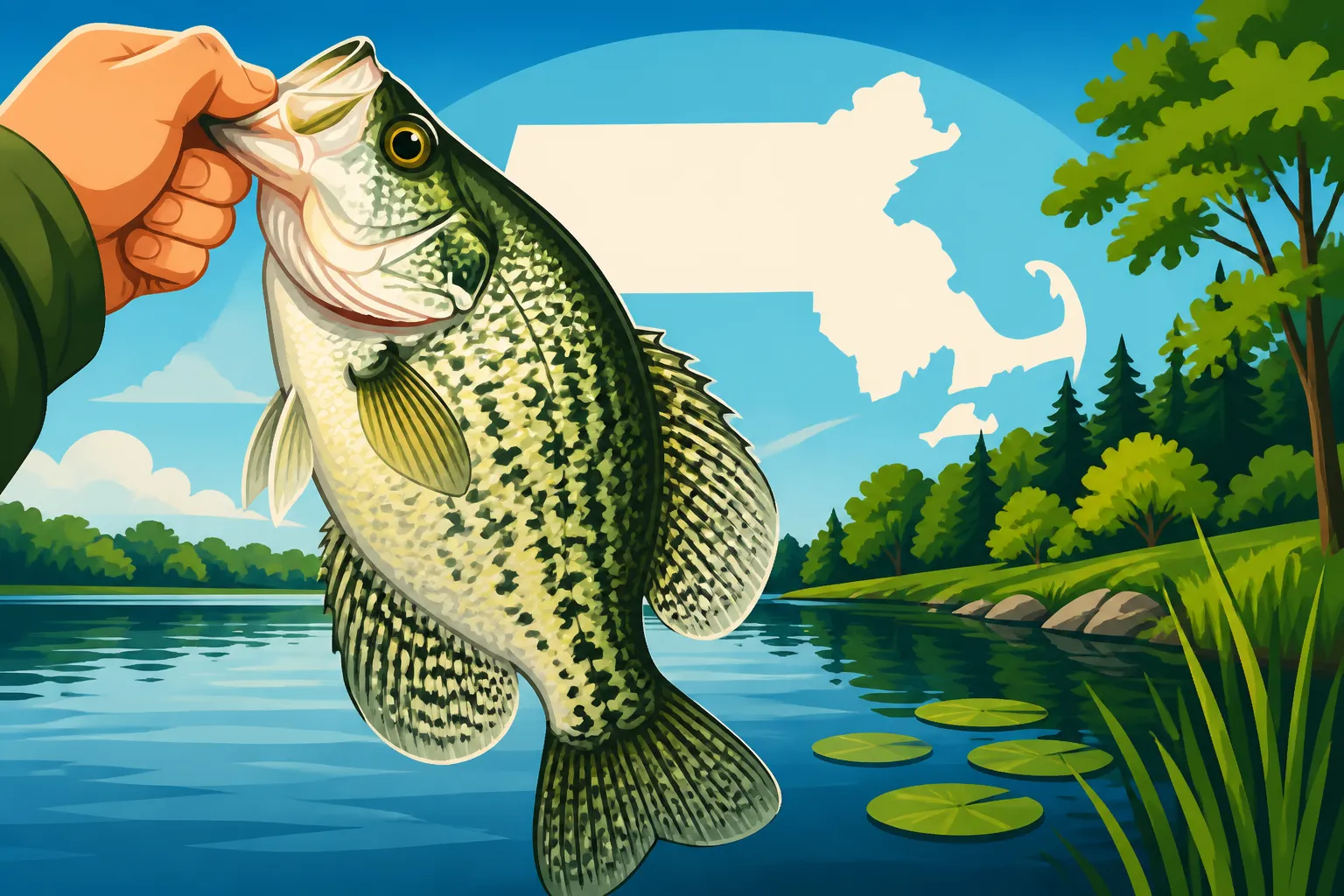
Black crappie tend to have a deeper, more compressed body shape, almost like a dinner plate. Their most distinguishing feature is often the irregular, scattered black spots covering their silvery-green bodies. Count the dorsal fin spines, and you'll usually find 7 or 8 on a black crappie. They generally prefer clearer, cooler water with abundant vegetation and structure. They are often the more common of the two species in our region.
White crappie, on the other hand, typically have a slightly more elongated body and their dark spots usually form vertical bars along their sides, although this can be variable. They typically possess 5 or 6 dorsal fin spines. White crappie are often more tolerant of turbid (murky) water and slightly warmer conditions, sometimes found in larger rivers and their backwaters. While both are fantastic fish to catch, recognizing which species you're targeting can give you an edge, especially when fishing a new body of water. To dive deeper into these distinctions, check out Difference between black and white crappie.
Where Crappie Hang Out: Habitat and Structure
Crappie are masters of hiding, preferring to relate to some form of underwater cover or structure. This is perhaps the most crucial piece of information for any crappie angler. They aren't usually found swimming aimlessly in open water; instead, they cling to anything that offers shelter, shade, and ambush points for their prey. Think of them as aquatic homebodies who love their creature comforts.
In Massachusetts ponds, this means you'll often find crappie around submerged brush piles, fallen trees, weed lines, docks, bridge pilings, and even old submerged foundations. Any kind of vertical structure that extends from the bottom towards the surface is a prime target. During sunny days, they'll often hold in the shade of these structures or deeper weed beds. Even subtle changes in bottom contour, like a drop-off or a channel edge, can concentrate crappie. Knowing how to "read" the water for these structural cues is a huge part of the puzzle.
They are ambush predators, and these hiding spots allow them to dart out and snatch small minnows, insects, and crustaceans that swim by. Therefore, fishing directly into or very close to these structures is almost always the most productive approach. Don't be afraid to put your bait or lure right in the thick of it – that's where the crappie feel safest and most inclined to feed.
Crappie Behavior Through the Seasons
Just like us, crappie's behavior changes dramatically with the seasons, driven primarily by water temperature and their biological urges like spawning. Understanding these seasonal shifts is fundamental to being in the right place at the right time. They're not going to be in the same spots in April as they are in August or January.
In the spring, as water temperatures rise into the 50s and 60s Fahrenheit, crappie move into shallower waters to spawn. This is arguably the most popular time for crappie fishing, as they become highly concentrated and aggressive. They'll be found in bays, coves, and along shorelines with submerged brush, reeds, or docks, often in water just a few feet deep. Post-spawn, they might retreat slightly deeper but often remain relatively shallow as they recover and feed.
Summer sees crappie often moving to deeper, cooler water, though they'll still relate strongly to structure. They might suspend over deeper brush piles or gather around thermoclines. Early mornings, late evenings, and even night fishing can be productive as they move shallower to feed under the cover of darkness. As fall approaches and water temperatures begin to drop, crappie often have a renewed feeding frenzy, similar to their spring behavior. They'll actively chase baitfish, fattening up for the lean winter months. You can often find them in predictable patterns around creek channels and deeper weed lines. Finally, in winter, crappie will school up in deep, stable water, often suspended over the deepest parts of the pond or reservoir, requiring very precise presentations for ice fishing. This general knowledge will dramatically improve your chances of success, no matter the time of year.
Prime Locations for Crappie Fishing in Massachusetts
Massachusetts is blessed with an abundance of freshwater ponds and lakes, many of which hold thriving crappie populations. It's not always about finding the "secret spot" as much as it is understanding the types of spots crappie prefer within any given body of water. Knowing how to identify these features, whether from a boat, kayak, or the shore, will dramatically boost your success rate.
Identifying Crappie-Rich Ponds and Lakes
Not every pond is a crappie paradise, but many of our beautiful Massachusetts waters offer excellent opportunities. Generally, crappie thrive in ponds that have a good mix of characteristics: a decent average depth, plenty of submerged structure (like timber, docks, or rock piles), and ample aquatic vegetation for cover and food. Waters that are somewhat fertile, supporting a healthy baitfish population, are usually prime candidates. MassWildlife often provides stocking and survey data that can indicate where good populations of panfish, including crappie, exist.
Look for ponds and larger lakes known for their panfish populations. Often, where you find healthy populations of sunfish, perch, or pickerel, crappie won't be far behind. Some general areas to investigate include the network of ponds in southeastern Massachusetts, many of the smaller lakes in Central Mass, and even some of the larger reservoirs. For a broader look at potential spots, consult resources like Best Freshwater Ponds and Lakes in Massachusetts and then research specific access points or known features. Don't be afraid to try a new spot; sometimes, the less-pressured waters can hold some real surprises.
Public Access and Hidden Gems
One of the great things about fishing for crappie in Massachusetts is the accessibility. Many ponds offer fantastic public access, whether it's through state parks, municipal boat ramps, or designated fishing areas. Shore anglers can find plenty of opportunities around public docks, bridge crossings, or shoreline paths that allow access to productive structures. For example, some ponds accessible via state forests or wildlife management areas often have undeveloped shorelines that offer excellent crappie habitat near the banks.
Beyond the well-known spots, there are always those "hidden gems"—smaller, less-pressured ponds that might not be prominently featured on fishing maps but hold robust crappie populations. These often require a bit more exploration, perhaps by consulting local bait shops, online forums, or even just driving around and looking for promising water bodies. When you do find a lesser-known spot, remember to practice good conservation and leave no trace. Just because it's a hidden gem doesn't mean it should be kept entirely secret, but it certainly means treating it with respect. Always double-check if Do You Need a License to Fish in Massachusetts Ponds? before casting a line, even in seemingly private-looking waters, as public access rules can be tricky.
Targeting Specific Structures for Success
Once you've picked your pond, the real work (and fun!) begins: pinpointing the crappie. As we discussed, they love structure. Here's how to focus your efforts:
- Docks and Piers: These are crappie magnets, especially during the spring and fall. Crappie will hold underneath them for shade and cover. Fish around the pilings, under the dock, and along the edges of any boat lifts.
- Fallen Trees and Brush Piles: These natural structures provide excellent cover. Cast your bait or lure right into the submerged branches. You'll likely get snagged sometimes, but that's where the fish are!
- Weed Lines and Lily Pads: The edges of dense weed beds are prime ambush points. Crappie will patrol these edges, darting out to grab unsuspecting baitfish.
- Bridge Pilings and Culverts: Man-made structures that extend into the water are essentially vertical cover. Current breaks around these can also concentrate baitfish, making them doubly attractive to crappie.
- Drop-offs and Ledges: In deeper water, crappie will often suspend along contour changes, especially if there's also some submerged timber or brush. This is where electronics like a fish finder can really shine, showing you schools of suspended fish.
The key is to present your bait slowly and precisely near these features. Crappie aren't usually fast-chasing predators; they prefer to ambush. So, a gentle drop, a slow retrieve, or a subtle jigging motion right in their strike zone will often be more effective than a fast, erratic presentation.
Essential Gear for Massachusetts Crappie Fishing
You don't need a boatload of expensive gear to catch crappie in Massachusetts, which is another reason they're such a popular target. In fact, keeping things simple and light is often the most effective approach. However, having the right basic setup can make a huge difference in your enjoyment and success. Think "light and sensitive" when it comes to crappie gear.
Rods, Reels, and Line: The Ultralight Advantage
For crappie, an ultralight or light-action spinning rod and reel combo is your best friend. These setups offer the sensitivity needed to detect subtle crappie bites, which can sometimes feel like nothing more than a slight tap or just a little extra weight on your line. A rod between 5 and 7 feet long with a fast or moderate-fast action is ideal. The softer tip allows for lighter presentations and protects light lines, while the backbone helps you control the fish once hooked.
Pair your rod with a small spinning reel (typically a 500 or 1000 size) spooled with light line. Monofilament fishing line in 2 to 6 lb test is usually perfect. It's inexpensive, offers some stretch, and is easy to handle. Fluorocarbon line in the same range can also be effective, offering less stretch for more sensitivity and being nearly invisible underwater. Braided line, while super sensitive, can sometimes be overkill and cause hooks to tear out of crappie's delicate mouths if you're not careful. If using braid, a short fluorocarbon leader is a good idea. You can find excellent ultralight combos or individual components on platforms like Amazon, offering a wide range of options for every budget.
Hooks, Sinkers, and Floats: Setting Up Your Rig
The tackle for crappie fishing is wonderfully minimalistic. You'll mainly be using small hooks, light sinkers, and often, a bobber or float.
- Hooks: Size matters. Crappie have relatively small mouths, so hooks from size 6 to size 10 are generally appropriate. If you're using live minnows, a thin-wire Aberdeen hook is popular because it's less likely to harm the minnow and has a good gap for hooksets. For artificials, the hook comes pre-attached to the jig head.
- Sinkers: You'll want split-shot sinkers or small bullet weights, just enough to get your bait down to the desired depth. Crappie are often very sensitive to presentation, and heavy weights can make your bait look unnatural. Start with the lightest weight possible that still allows you to cast effectively and feel your bite.
- Floats/Bobbers: A small, sensitive bobber is incredibly effective for crappie. Thill, Betts, and other brands make excellent slip bobbers that allow you to easily adjust your depth, which is crucial when crappie are suspended. A fixed clip-on bobber can work in very shallow water, but a slip bobber offers far more versatility. The goal is a bobber that offers just enough buoyancy to support your bait and show the subtlest of bites, not a large, heavy one that creates a big splash.
A simple rig often involves tying your hook directly to your main line, adding one or two small split shots a few inches above the hook, and then attaching a slip bobber above that. This allows your bait to fall naturally and suspend at a precise depth.
Specialty Gear for Ice Fishing and Boat Anglers
While the basic ultralight setup is versatile, certain situations call for specialized gear.
For ice fishing in Massachusetts, your approach changes significantly. You'll need short, sensitive ice fishing rods (typically 24-36 inches), often paired with small spinning reels or inline ice reels. Spool these with lighter line, typically 2-4 lb test monofilament or fluorocarbon, or even specialized ice fishing braid. Small jigs, often tipped with a grub or a wax worm, are key. A good ice auger is non-negotiable, and a flasher or portable fish finder (like those from Garmin or Humminbird, widely available on Amazon) can be a game-changer for locating suspended crappie beneath the ice. A comfortable sled, an insulated pail for your catch, and proper winter clothing are also crucial for a successful and safe day on the hardwater. Many anglers find the intense focus of ice fishing for crappie to be incredibly rewarding. You can learn more about this exciting winter pursuit in Ice Fishing in Massachusetts and Ice Fishing Techniques for Massachusetts Ponds.
For boat anglers, having a trolling motor can be a huge advantage for stealthily moving around structures. A good fish finder (again, check out brands like Lowrance or Garmin on Amazon for robust units) allows you to spot schools of crappie and submerged structure, which is invaluable in deeper water. Rod holders are also a nice addition if you plan to troll or simply want to keep multiple lines in the water at different depths. A decent anchor will help you stay put over productive brush piles, allowing you to thoroughly work an area.
Effective Crappie Fishing Techniques by Season
Crappie fishing isn't a one-size-fits-all endeavor. To consistently catch these schooling panfish, you need to adapt your techniques to their seasonal movements and feeding patterns. What works in April might be completely ineffective in August. Becoming a master crappie angler means understanding these nuances and being flexible with your approach.
Spring Spawning and Post-Spawn Strategies
Spring is prime time for crappie in Massachusetts. As ice melts and water temperatures climb, crappie move into the shallows to spawn. This typically happens when water temperatures reach the upper 50s to mid-60s Fahrenheit. During this period, crappie are often concentrated and aggressive, making them relatively easy to locate and catch.
Look for them in shallow coves, protected bays, and along shorelines that warm up quickly. They'll be found around submerged brush, lily pad stems, cattails, and even old docks or fallen trees, often in water just 2-6 feet deep. A popular technique is simply to use a small jig (1/32 to 1/16 oz) suspended under a sensitive bobber. Tip your jig with a small plastic grub, a live minnow, or a wax worm. Cast it near cover and let it sit for a few moments, then give it a very subtle twitch. Another effective method is tight-lining, where you cast your jig without a bobber and retrieve it slowly, feeling for the tell-tale tap or just a sudden heaviness on your line. After the spawn, crappie might retreat slightly deeper to recover, but they typically remain close to shallow cover for easy access to food. This is often the best time of year to catch large numbers of crappie.
Summer Deep Water and Night Fishing Tactics
Once summer truly sets in and water temperatures soar, crappie often move out of the very shallow water to seek cooler, more comfortable depths. They'll often suspend over deep water, sometimes relating to thermoclines (layers of water with different temperatures), or gathering around deep-water structures like brush piles, submerged humps, or channel bends. This is when a fish finder becomes an invaluable tool for identifying these schools of suspended fish.
Techniques shift towards targeting these deeper zones. Slow trolling with small jigs or minnows at various depths can be effective, allowing you to cover water until you find a school. Once located, vertical jigging directly over the school with a small jig or a minnow on a drop-shot rig can be deadly. Another fantastic summer tactic, especially on warm nights, is night fishing. Crappie often move shallower after dark to feed under the cover of low light. Anglers use submersible lights to attract plankton, which in turn attracts baitfish, and then crappie. Fishing under lighted docks can also be very productive. The key here is to slow down your presentation considerably and experiment with different depths until you find where the fish are holding.
Fall Feeding Frenzy and Winter Ice Fishing
As the cooler air of autumn arrives and water temperatures begin to drop, crappie often experience a "fall feeding frenzy." This period can rival spring for its productivity. Crappie are actively trying to bulk up for winter, aggressively chasing baitfish. They'll often move back into shallower to mid-depth ranges, congregating around creek channels, deeper weed lines, and brush piles.
During fall, focus on fishing those key structural elements we discussed earlier, but now consider slightly deeper presentations than in spring. Small crankbaits, spinnerbaits, and larger jigs can be effective as crappie are more willing to chase. Trolling can also be a great way to locate active schools. As fall transitions to winter, crappie will begin to school up even tighter and move to their deep wintering holes.
When the ice covers Massachusetts ponds, it's time for Ice Fishing in Massachusetts. Crappie are a top target for ice anglers. They typically suspend in schools over the deepest parts of the pond or around deep-water brush piles. A flasher or sonar is almost essential here to locate these suspended schools and to see your jig in relation to the fish. Very small jigs (1/64 to 1/100 oz), often tipped with a single wax worm, mouser, or a piece of Berkley PowerBait, are lowered directly to the crappie's depth. Subtle jigging, barely moving the rod tip, is often the most effective retrieve. A light tap is all you'll feel when a crappie bites, so extreme sensitivity in your rod and line is crucial. It’s a rewarding way to battle the winter blues and still enjoy some fantastic fishing.
Best Baits and Lures for Massachusetts Crappie
When it comes to tempting a crappie, you have a plethora of options, both natural and artificial. The most successful anglers are those who aren't afraid to experiment, paying attention to what the fish are telling them on any given day. Sometimes they want live bait, other times they're hammering a tiny jig. Having a diverse tackle box will put you ahead of the game.
The Allure of Live Bait: Minnows and Worms
There's something undeniably effective about live bait, especially for crappie. Their natural movements and scent can often entice even the most finicky fish.
- Minnows: Small live minnows, often called "crappie minnows" or "shiners," are arguably the most consistently effective bait for crappie. Crappie are largely piscivorous (fish-eating), and a lively minnow is hard for them to resist. Hook them lightly through the lips or just behind the dorsal fin with a small Aberdeen hook (size 6 or 8) to keep them active. Fish them suspended under a bobber or on a simple tight-line rig. They are particularly effective when crappie are in deeper water or when they are less aggressive. Many local bait shops will carry minnows, and you can also find minnow traps and aerators for keeping them lively at stores like Amazon.
- Worms and Grubs: While minnows are often king, small pieces of nightcrawler, redworms, or even specialized wax worms can be very effective, especially for smaller crappie or when fishing through the ice. These baits offer a different scent and profile, sometimes appealing to crappie that might be ignoring minnows. They're also great for tipping small jigs to add extra appeal. Consider checking out brands like Berkley for scented grubs or PowerBait, which can provide an extra edge for trout, but also for crappie as well, as discussed in Best Bait for Trout Fishing in Massachusetts.
When using live bait, remember that presentation is key. You want your bait to look as natural as possible. Use light line, small hooks, and just enough weight to get your bait to the strike zone.
Artificial Baits: Jigs, Spinners, and Plastics
Artificial baits offer the advantage of durability, variety, and the ability to cover more water. They are a staple in any serious crappie angler's tackle box.
- Jigs: Small jigs are perhaps the most popular and versatile artificial bait for crappie. They come in various sizes (1/32 oz, 1/16 oz, 1/8 oz being most common), head shapes, and colors. The jig head provides the weight, and you'll tip it with a soft plastic body.
- Soft Plastics: These are the bodies you put on your jig. Popular styles include:
- Grubs/Curl-tail grubs: These have a tail that wiggles on the retrieve, creating enticing action.
- Tube jigs: These mimic small baitfish or invertebrates and have a subtle pulsing action.
- Minnow imitations: Small, realistic plastic minnows that can be very effective.
- Spider jigs: These have multiple legs that quiver with movement.
You can find a huge array of these plastics from brands like Bobby Garland, Berkley, and Mister Twister, readily available through retailers including Amazon.
- Spinners: Small inline spinners or spinnerbaits (often called "Road Runners" or "Beetle Spins") can be very effective, especially when crappie are active and chasing baitfish. The flash and vibration of the spinning blade can attract fish from a distance. They work well when retrieved slowly along weed edges or through open water where crappie are suspended.
- Small Crankbaits: Micro-crankbaits or small lipless crankbaits that dive only a few feet can be surprisingly effective for active crappie, particularly in spring and fall. These lures mimic a fleeing baitfish and can draw aggressive strikes.
Experiment with different sizes, shapes, and actions until you find what the crappie are responding to. Just like with live bait, light line and sensitive tackle make a huge difference in how well these artificials perform and how many bites you detect. Some of the same principles for lure selection found in Best Lures for Stocked Trout in Massachusetts can be applied to crappie, focusing on size and subtle action.
Color Choices and Presentation Tips
Color choice can be critical for crappie, often depending on water clarity, light conditions, and even the forage present in the particular pond.
- Natural Colors: In clear water, natural colors like smoke, clear with silver flake, white, or light green often work best as they mimic small baitfish or insects.
- Bright Colors: In murky or stained water, or on overcast days, brighter colors like chartreuse, pink, orange, or electric chicken (a mix of chartreuse and pink/orange) can be highly effective as they offer better visibility.
- Darker Colors: Sometimes, black or dark blue jigs can create a strong silhouette against a bright sky, triggering strikes. Don't overlook these, especially on bright, sunny days.
The best presentation is almost always a slow, subtle one. Crappie aren't usually going to chase a fast-moving lure.
- Slow Retrieve: Whether you're casting a jig or a spinner, a slow and steady retrieve with occasional pauses is often best.
- Vertical Jigging: When fishing directly over a school of suspended crappie (especially through the ice or from a boat with a fish finder), simply lowering your jig to their depth and giving it tiny twitches is incredibly effective.
- Dead Sticking: Sometimes, the best presentation is no presentation at all. Letting a live minnow or a jig under a bobber sit perfectly still can be what triggers a bite from finicky crappie.
- Tipping Jigs: Always consider tipping your artificial jigs with a piece of live bait (like a minnow head, grub, or wax worm) to add scent and an extra visual attractant. This combination can be irresistible.
Remember the Massachusetts Freshwater Daily Catch Limits for crappie and other panfish. While crappie fishing often yields good numbers, it's important to be mindful of regulations and practice responsible harvesting.
| Crappie Fishing Essentials | Best Use Case | Key Features | Typical Cost Shape |
|---|---|---|---|
| Ultralight Rod | All-around, sensitive bite detection | 5-7 ft, fast/moderate-fast action, light power | Very accessible to mid |
| Small Spinning Reel | Paired with ultralight rod | 500-1000 size, smooth drag | Very accessible to mid |
| 2-6 lb Monofilament Line | All-around, forgiving | Some stretch, easy to tie | Very affordable |
| Small Jigs (1/32-1/8 oz) | Versatile, year-round lure | Various head shapes, colors | Highly affordable |
| Soft Plastic Grubs/Tubes | Jig trailers, variety of colors | Curl-tails, solid bodies, minnow imitations | Highly affordable |
| Live Minnows | Most effective natural bait | Lively, natural scent and action | Low to mid (per dozen) |
| Slip Bobber | Precise depth control | Sensitive, easy to adjust | Very affordable |
| Small Aberdeen Hooks | Live bait, thin wire | Size 6-10, prevents minnow injury | Highly affordable |
| Split Shot Sinkers | Adjust casting weight/depth | Various small sizes | Highly affordable |
| Fish Finder (Optional) | Locating suspended fish, structure | Sonar, flasher, GPS capabilities | Mid to high |
| Ice Fishing Rod (Winter) | Specific for hardwater fishing | Short, sensitive, ergonomic handle | Accessible to mid |
| Ice Auger (Winter) | Drilling holes | Manual, hand-powered, electric | Mid to high |
This table provides a general overview, and actual costs can vary widely depending on brand, quality, and retailer. Always check current pricing directly from the manufacturer or a reputable retailer like Amazon.
Disclaimer
This article is for general informational purposes only and does not constitute professional advice. Laws, prices and regulations vary by location and change over time. Consult a qualified professional for guidance on your specific situation.