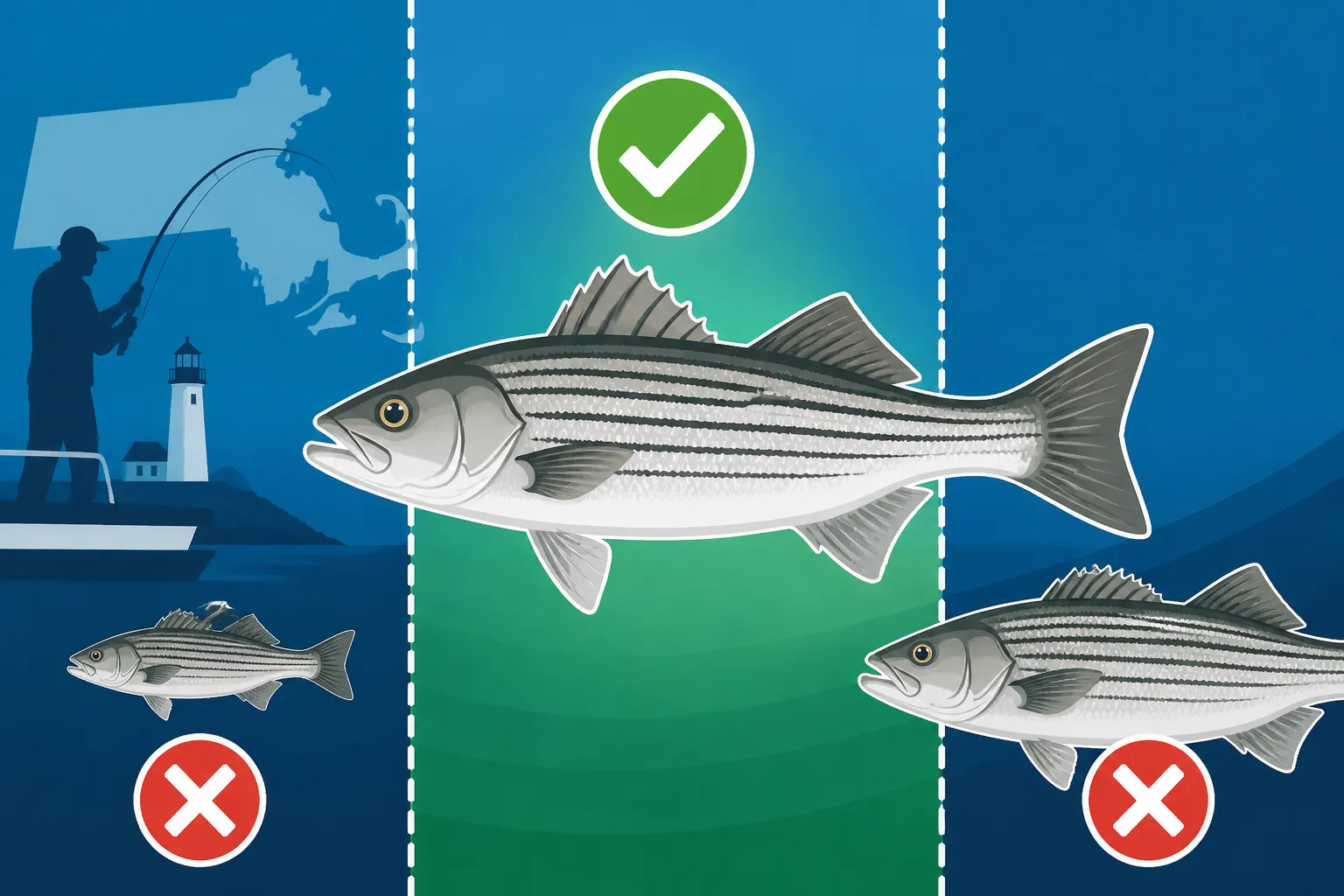
How to tell if a striped bass is in the legal slot
You’ve just hooked into a beautiful striped bass, that unmistakable pull on your line, the fight… and then it hits you: Is this fish a keeper? The Massachusetts slot limit for striped bass can feel like a moving target, adding a layer of stress to what should be a pure moment of joy on the water. It’s a moment every angler faces, heart pounding, wondering if that magnificent fish will make the cut or needs to be released. This guide is here to untangle the confusion, helping you confidently determine if your striper falls within the legal slot, ensuring you stay compliant and protect this incredible fishery for generations to come.
Understanding the Massachusetts Striped Bass Slot Limit
For years, many anglers just focused on a minimum size limit, but times change, and so do the regulations designed to protect our precious fish stocks. The slot limit for striped bass in Massachusetts is a prime example of this evolution. It's not just about how big a fish has to be; it's also about how big it can't be. This approach can be a bit of a head-scratcher if you're used to simpler rules, but once you understand the "why" behind it, it makes a lot more sense. It's all about balancing recreational fishing opportunities with conservation efforts, ensuring there are enough breeding fish to keep populations healthy.
Why Slot Limits Matter for Stripers
The slot limit isn't some arbitrary rule designed to make your life harder, I promise. It's a scientifically-backed conservation strategy aimed at protecting the reproductive core of the striped bass population. Think about it: the smaller, younger fish haven't had a chance to spawn yet, so keeping them in the water allows them to mature. On the other end, the very large, older fish are often the most prolific breeders, producing the most eggs. If we only targeted the biggest fish, we'd quickly deplete the strongest breeders, impacting future generations.
By creating a "slot" – a specific length range – regulations ensure that anglers are harvesting fish that have already had a chance to spawn at least once, but aren't yet the truly massive, super-spawning individuals. It's a delicate balance, allowing us to enjoy fishing while also doing our part to sustain the resource. This is a critical part of Massachusetts Recreational Fishing Rules and Bag Limits and helps ensure a future for our beloved striped bass. It’s about being a responsible steward of the marine environment, which, as a fellow angler, I know is something we all care deeply about.
The General Range: What to Expect in Massachusetts
While I can't give you exact numbers that might change with the tides and new regulations, the fundamental principle of the Massachusetts striped bass slot limit remains consistent. You're generally looking for a fish that is neither too small nor too large. This means there's a minimum length, below which the fish must be immediately released, and a maximum length, above which the fish also must be released. Any fish that falls between these two lengths is considered a keeper, provided you're within your daily bag limit.
This specific range is crucial, and it’s why understanding Massachusetts Striped Bass Slot Limit Explained is so important. When you're out on the water, whether you're surfcasting off Cape Cod or fishing the estuaries, this slot is what you'll be constantly thinking about. It requires a bit more active participation than simply measuring for a minimum, but it’s a good challenge that ultimately benefits the fish. Always check the most current regulations before heading out, as these limits can be updated by wildlife management agencies to respond to stock assessments.
Step-by-Step: How to Accurately Measure Your Striped Bass
So, you’ve got a striper at the boat or on the beach. Now comes the moment of truth: the measurement. This isn't a task to be rushed or guessed at. An inaccurate measurement can lead to either illegally keeping an undersized or oversized fish, or unnecessarily releasing a perfectly legal one. Neither is ideal! Getting it right involves a few key steps and a bit of practice. It's a skill every dedicated striper angler needs to master.
Positioning the Fish Correctly
This is where many anglers make their first mistake. For a proper measurement, the fish needs to be laid flat on a measuring device, such as a bump board or a flexible tape measure. The crucial part is that the fish's mouth must be closed and resting against a solid, fixed point. Many measuring devices have a "bump" at the zero mark specifically for this purpose.
Imagine trying to measure a squirming toddler – it's tough! A fish can be just as uncooperative. Try to cradle the fish gently, minimizing its time out of the water. Lay it on its side, belly down, with its snout touching the bump. Make sure its body is straightened out, not curled or bent, as this will shorten the perceived length and give you an inaccurate reading. Some anglers find it helpful to wet the measuring device first to reduce stress on the fish's slime coat. Quick, gentle handling is key for the fish's health, especially if it's going to be released.
Taking the Measurement: Nose to Tail Fork
Once your fish is positioned correctly with its mouth closed and against the bump, you need to measure to the "fork" of the tail. This means you'll look at where the two lobes of the tail fin meet, forming a V-shape. That's your endpoint. Don't measure to the tip of the upper lobe or the lower lobe – it's specifically the fork. This is outlined in detail in guides like How to Measure a Striped Bass for the Slot Limit.
Carefully extend the tape or slide your finger along the bump board to the deepest part of that V in the tail. Read the measurement there. Double-check. Does it fall within the current Massachusetts slot limit? If it's too small, or too big, it goes back. If it's in the slot and you want to keep it (and are within your bag limit), then you're all set. Remember, this applies whether you're keeping one for dinner or just checking before a quick release.
What to Do with Your Measured Fish
Once you've got your measurement, a decision needs to be made quickly. If the fish is outside the legal slot – either too short or too long – it needs to be released immediately and carefully. Minimizing its time out of the water is paramount. Hold it upright in the water, supporting its belly, and allow it to revive before letting it swim away. Don't just toss it back; give it a fighting chance.
If your fish is within the legal slot, you still have a choice. Do you need it for dinner? Are you going to keep it? Or are you practicing catch and release? Even if it's a legal keeper, there's no obligation to harvest it. Many anglers choose to release fish, especially if they already have enough, or if they prefer to keep fish for specific culinary reasons. Always be mindful of the Massachusetts Striped Bass Size and Bag Limit to avoid accidental violations. For those times you decide to keep a fish, make sure it's promptly and humanely dispatched, and placed on ice to preserve its quality.
Common Measurement Mistakes and How to Avoid Them
It's easy to get excited when you land a striper, and in that excitement, mistakes can happen. But these mistakes can cost you, either in terms of a citation or, more importantly, the health of the fish. Being aware of common pitfalls can help you avoid them and ensure your fishing experience is both enjoyable and compliant. We've all been there, second-guessing ourselves on the water, so don't feel bad – just learn and improve!
The "Stretch" and Other Misinterpretations
One of the most frequent mistakes is the "stretch" – accidentally or intentionally pulling the fish's tail to make it seem longer than it actually is. This might seem like a small cheat, but it's a definite no-no and can lead to serious penalties. The fish must be laid flat and natural, not stretched or manipulated. The tail should be gently squeezed to bring the lobes together at the fork, if necessary, but never pulled to extend the overall length.
Another common error is measuring to the tip of the tail, rather than the fork. Some fish species are measured this way, but not striped bass in Massachusetts. Make sure you're consistently measuring to the deepest part of that V in the tail. Also, trying to measure a fish while it's still flopping wildly can lead to an inaccurate reading and unnecessary stress on the fish. Patience and gentle handling are your best friends here. Don't forget that using a flexible tape measure on a curved surface can also introduce errors, so aim for as flat a surface as possible.
Keeping Up with Current Regulations
Regulations change. It’s a fact of life for anglers. What was legal last year might not be legal this year. This is arguably the biggest mistake an angler can make – assuming the rules haven’t changed. Fisheries management is dynamic, constantly responding to population shifts, environmental factors, and scientific assessments. Massachusetts Fishing Seasons Explained covers the broader picture, but the specific length regulations for striped bass are often among the most frequently adjusted.
Before every fishing trip, especially at the start of a new season, take a moment to double-check the current regulations. The Massachusetts Division of Marine Fisheries (MassDMF) website is your best source for the latest official information. You can often find a handy pamphlet at bait shops or sporting goods stores, or even download it as a PDF. Ignorance of the law is not an excuse, and game wardens are out there doing their job to enforce these rules. A quick check can save you a lot of headache (and potential fines).
Essential Tools for Every Striper Angler
Having the right tools on hand makes the measurement process smooth, accurate, and stress-free for both you and the fish. Trying to eyeball it or use a makeshift ruler is a recipe for disaster. Invest in good quality measuring tools; they're a small price to pay for compliance and responsible angling. You don't need fancy gadgets, just reliable basics that stand up to the marine environment.
Reliable Measuring Devices
For measuring striped bass, your best bet is either a rigid bump board or a durable, waterproof tape measure. Bump boards are fantastic because they provide that crucial fixed point for the fish's snout, making accurate measurement much easier. They usually have clear, easy-to-read markings. Many are made of durable plastic or treated wood and can withstand saltwater conditions. You can find a good selection of these on Amazon, often specifically designed for fishing and marine environments.
If a bump board isn't practical for your setup (say, if you're kayak fishing or have limited space), a high-quality, flexible tape measure is the next best thing. Look for one that's specifically designed for fishing – typically made of fiberglass or another non-stretching, waterproof material. Avoid standard metal construction tapes, as they'll quickly rust in saltwater. Ensure the markings are clear and easy to read, even when wet. It's always a good idea to have one securely attached to your tackle bag or boat where it's easily accessible.
Digital Resources and Regulation Apps
In this modern age, technology can be a huge help in staying informed. While nothing beats checking the official MassDMF website, many fishing apps and websites offer quick access to current regulations. Some even have built-in measurement guides or can help you identify species. While I can't recommend specific live apps, a quick search on your app store or Amazon for "fishing regulations Massachusetts" might yield some helpful results. Just be sure to cross-reference with official sources, as third-party apps might not always be instantly updated.
Beyond apps, consider having a laminated copy of the current regulations tucked into your tackle box or boat. Even if you rely on your phone, a physical backup is invaluable if your battery dies or you lose signal. Some anglers even mark the legal slot lengths directly onto their boat deck or a cooler with a permanent, waterproof marker. Whatever method you choose, the key is consistency and ensuring you always have accurate, up-to-date information at your fingertips.
| Measurement Do's | Measurement Don'ts |
|---|---|
| Lay fish flat on a wet surface | Measure a flopping, stressed fish |
| Close fish's mouth against "bump" | Stretch the fish's tail |
| Measure to the tail fork | Measure to the tip of the tail |
| Straighten the fish's body | Allow the fish to be curled or bent |
| Use a rigid bump board or fishing tape | Use a flimsy, inaccurate ruler |
| Keep fish out of water briefly | Keep fish out of water for extended time |
| Check regulations before each trip | Assume regulations haven't changed |
| Release oversized/undersized fish gently | Toss fish back without revival |
Remember, the goal isn't just to catch fish, but to catch them responsibly and ensure the sport continues for everyone. Understanding and respecting the Massachusetts striped bass slot limit is a big part of that. Now go out there, measure wisely, and enjoy those incredible Massachusetts waters! Best Fishing Spots in Massachusetts are calling!
Disclaimer
This article is for general informational purposes only and does not constitute professional advice. Laws, prices and regulations vary by location and change over time. Consult a qualified professional for guidance on your specific situation.