Difference between a tiger trout and a brown trout
When you're out on the water in Massachusetts, casting a line into a cool stream or a serene pond, you're hoping for that telltale tug. Often, the joy is not just in the catch, but in identifying the beautiful fish at the end of your line. Among the various trout species that grace our waters, two can sometimes cause a moment of pause for identification: the brown trout and the tiger trout. It's easy to get them mixed up at first glance, but they have some fascinating differences in their appearance, where they live, and even how they behave. This guide is here to clear up that confusion, helping you confidently distinguish between these two magnificent fish and understand what makes each one special in the Bay State's fishing scene.
The Trout Landscape in Massachusetts: More Than Just Rainbows
Massachusetts offers some truly fantastic trout fishing, from the swift currents of the Deerfield River to the quiet depths of our many stocked ponds. While rainbow trout are often the most common species encountered due to extensive stocking efforts, savvy anglers know there's a wider world of trout out there. Understanding the nuances between species like brown trout and tiger trout not only makes you a more knowledgeable angler but can also inform your fishing strategy, leading to more successful and enjoyable outings.
Brown Trout: Massachusetts' Resilient Survivor
Brown trout ( Salmo trutta ) are a bit of a legend in Massachusetts. While they're not native to North America – they were actually introduced from Europe in the late 19th century – they've made themselves quite at home here. What makes brown trout so special is their incredible resilience and adaptability. You'll find them thriving in a wide range of habitats, from cold, clear mountain streams in the Berkshires to larger rivers like the Connecticut, and even in some of our larger ponds and lakes. They're known for being a bit more elusive and wary than their rainbow trout cousins, which makes catching a good-sized brown a real trophy for many anglers.
These fish are tough cookies, able to tolerate slightly warmer water temperatures than brook trout and often surviving and growing year after year, sometimes even reproducing naturally in our state's waterways. This naturalized population is why you might find a wild, stream-born brown trout right alongside a stocked one. They're intelligent and can be incredibly selective, often requiring a more subtle approach with flies or very natural baits. I've spent countless hours trying to outsmart a big brown, and every time I succeed, it feels like a true accomplishment. If you're looking for where to find these beauties, check out our guide on Brown Trout Fishing in Massachusetts.
The Enigma of the Tiger Trout: A Unique Hybrid
Now, let's talk about the tiger trout. This isn't a naturally occurring species in the wild, at least not commonly. The tiger trout is a sterile, intergeneric hybrid, meaning it's a cross between two different genera: a female brown trout and a male brook trout ( Salvelinus fontinalis ). It's a fascinating creation, and its existence in our waters is entirely due to careful hatchery work by MassWildlife and similar agencies in other states. They're essentially a special treat for anglers! Because they are sterile, they put all their energy into growing larger, rather than reproducing, which can make for some impressive catches.
The reason for stocking these hybrids often boils down to management goals. They offer a unique angling experience, and because they're sterile, they won't compete with or impact native fish populations through reproduction. They're often stocked in waters where traditional trout species might struggle or where MassWildlife wants to add a bit of variety for anglers. Imagine landing a fish that looks like a piece of living art – that's often the tiger trout experience. Their distinct markings are really what sets them apart, making them a true standout fish. You can learn more about where these unique fish might be found in Trout Fishing in Massachusetts.
Unraveling the Visual Cues: How to Tell Them Apart
Alright, let's get down to brass tacks: how do you actually tell these two apart when you've got one flopping in your net? While both are beautiful fish with unique patterns, there are some clear visual distinctions that, once you know them, make identification much easier. It's like learning to spot different constellations in the night sky – once you see the pattern, you can't unsee it.
Distinctive Patterns and Markings
This is probably the easiest and most reliable way to differentiate between a brown trout and a tiger trout.
-
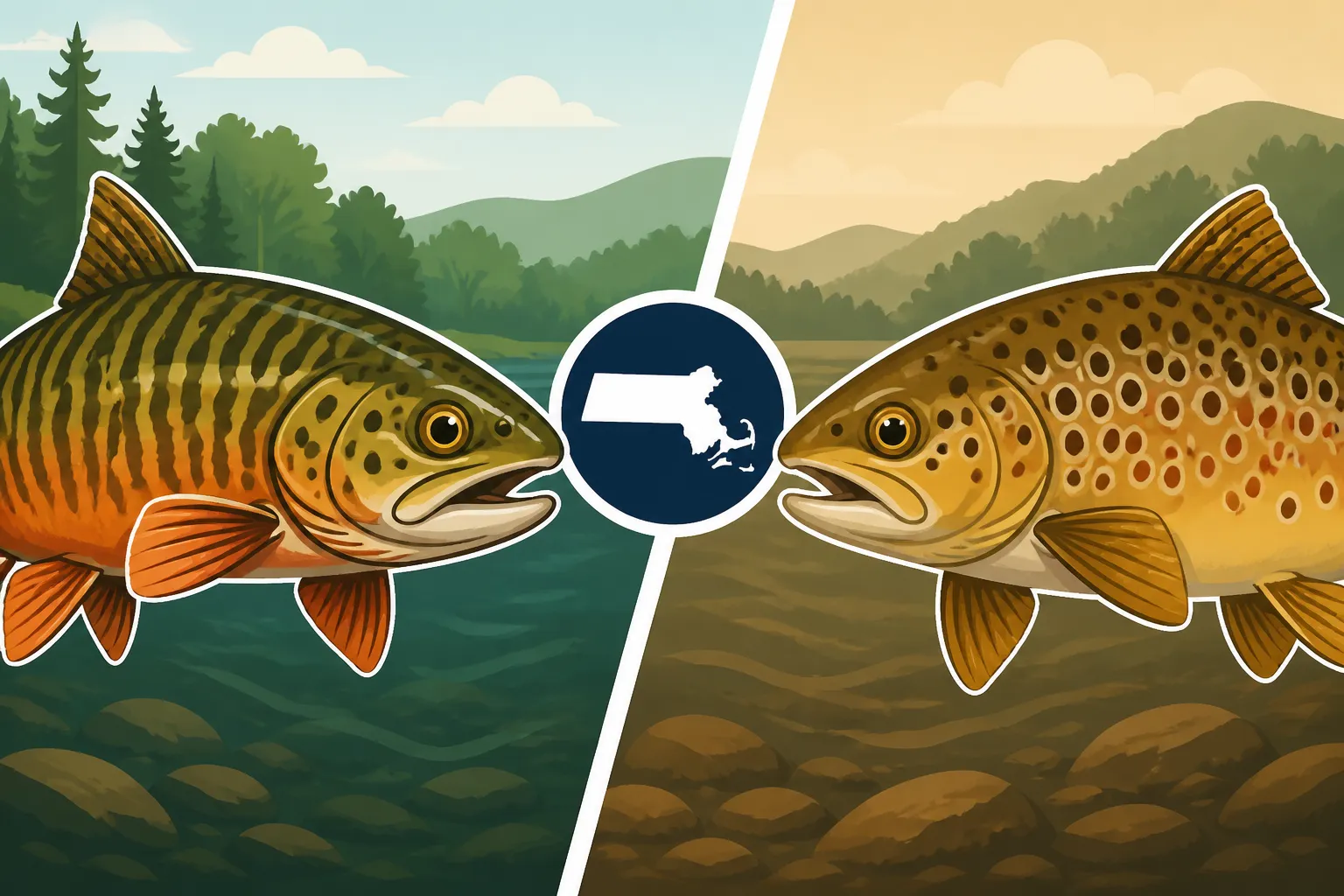
Brown Trout: Brown trout are typically, well, brown! Their base color can range from a golden-brown to a darker olive-brown on their backs, fading to a creamy white or yellowish belly. What truly defines their look are the dark spots (sometimes haloed with a lighter ring) that are scattered along their sides and back, often extending onto their dorsal fin. They also frequently have red or orange spots, typically surrounded by a pale halo, which are usually more prominent on their lower sides. These spots are irregular in shape and distribution, adding to their rugged charm. Each brown trout has its own unique "fingerprint" of spots, making them all individual works of art. If you catch one and it's covered in these distinct red and dark spots, you've likely got a brown.
-
Tiger Trout: Now, the tiger trout is where things get really interesting visually. Their most striking feature is their vermiculated, worm-like pattern that covers their entire body, from head to tail. This pattern consists of intricate, labyrinthine markings of dark, almost black, wavy lines against a lighter, often greenish-yellow or brownish-grey background. Think of the stripes on a tiger, but instead of straight lines, they're wildly winding and interconnected, creating a marbled or maze-like effect. These markings are truly unique and instantly recognizable. They typically lack the distinct red or black spots you see on a brown trout. When you look at a tiger trout, it's almost as if someone took a dark marker and drew a complex, swirling design all over its body. It's a truly stunning fish, and once you've seen those "tiger stripes," you won't mistake it for anything else.
Let's put it in a handy table for quick comparison:
| Feature | Brown Trout | Tiger Trout |
|---|---|---|
| Base Color | Golden-brown to olive-brown back, lighter belly | Greenish-yellow to brownish-grey |
| Spotting | Distinct dark spots (often haloed), red/orange spots with halos on sides | Generally lacks distinct spots |
| Primary Pattern | Irregular, scattered spots | Distinctive, interlocking, worm-like (vermiculated) patterns |
| Overall Look | Earthy, often with a "classic" trout speckled appearance | Striking, marbled, "tiger-striped" appearance |
Body Shape and Fin Characteristics
While the markings are the giveaway, there are some subtle differences in body shape and fin coloration that can also help, especially if you're still a bit unsure.
-
Brown Trout: Brown trout tend to have a slightly more robust, torpedo-shaped body. Their caudal (tail) fin is usually square or only very slightly forked. The adipose fin (the small fleshy fin between the dorsal and tail fins) is typically unspotted or has very subtle spotting. Their pectoral, pelvic, and anal fins can sometimes have a yellowish or orange tint, especially closer to their bodies, and might have a leading white edge followed by a dark margin. Their head can sometimes appear a bit larger in proportion to their body, particularly on older, larger specimens.
-
Tiger Trout: Tiger trout often have a more streamlined, slender body shape, reminiscent of a brook trout, though they can grow quite substantial. Their caudal fin is usually squarish, much like a brook trout, and often has the vermiculated pattern extending onto it. A key identifying feature carried over from their brook trout parentage is that their lower fins (pectoral, pelvic, and anal) often have distinct white leading edges, followed by a black stripe, and then the main fin color. This "white-black-color" pattern on the fins is very characteristic of brook trout and, by extension, tiger trout. Their adipose fin will usually have some of the same vermiculated patterns as the rest of their body.
So, while the stunning patterns are your primary clue, keep an eye on those fins – especially the lower ones – for that telling white and black stripe if you're trying to make a definitive call! For a broader understanding of different fish, you might also find our Massachusetts Fish Identification Guide helpful.
Beyond Appearance: Habitat, Behavior, and Angling Strategies
Identifying a fish is one thing, but understanding where it lives, how it behaves, and what it prefers to eat is what truly elevates you from a casual angler to a skilled one. Both brown trout and tiger trout have distinct preferences and personalities that are worth exploring. Knowing these traits can save you a lot of time and lead to more productive fishing trips in Massachusetts.
Where You'll Find Them: Preferred Environments
Just like us, fish have their favorite spots to hang out, eat, and avoid trouble. Their preferred habitats are often dictated by their biology and how they were raised.
-
Brown Trout: As mentioned, brown trout are incredibly adaptable. You'll find them in a wide variety of freshwater environments across Massachusetts. They excel in cool to cold water but can tolerate slightly warmer temperatures and more turbid (cloudy) conditions than brook trout. They often prefer waters with structure: undercut banks, fallen trees, large boulders, deep pools, and riffles where they can find cover from predators and ambush prey. In streams and rivers, they'll often hold in deeper runs or eddies. In lakes and ponds, they'll seek out cool pockets, especially near springs or where tributaries flow in. Their ability to survive and thrive in many different conditions means they can be found in many of MassWildlife's stocked rivers and ponds, and also in more remote, wilder streams where they might reproduce naturally. They're resilient survivors.
-
Tiger Trout: Because tiger trout are a stocked hybrid, their presence is entirely dependent on where MassWildlife chooses to release them. They generally prefer cool to cold water environments, similar to their parent species. You won't typically find them reproducing in the wild; if you catch one, it's almost certainly from a stocking program. MassWildlife often stocks tiger trout in lakes and ponds that have good holding water for trout, sometimes even in waters that might be marginal for other species but where they want to add a unique angling opportunity. They're less common than brown or rainbow trout, making them a rarer and more exciting catch. To find out if any specific local waters are stocked with tiger trout, keeping an eye on the Massachusetts Trout Stocking Schedule can be incredibly useful.
Their Temperament and What They Eat
Fish, much like people, have varying "personalities" when it comes to how aggressive they are and what they'll munch on. This directly impacts your bait and lure choices.
-
Brown Trout: Brown trout are renowned for their wariness and intelligence. They can be incredibly shy and are often considered one of the hardest trout species to consistently catch. They're opportunistic feeders, meaning they'll eat whatever is available, but they can be very selective. Their diet includes a wide range of invertebrates (aquatic insects, worms, crayfish), smaller fish (including minnows and even other trout), and sometimes even small rodents or frogs that fall into the water. Larger brown trout are particularly predatory and will readily strike at larger lures or flies mimicking baitfish. This makes them a fantastic target for fly anglers trying to "match the hatch" or spin anglers using realistic swimbaits.
-
Tiger Trout: Tiger trout are often described as being more aggressive and voracious than their parent species, particularly in the immediate aftermath of stocking. Their hybrid vigor often translates into a strong feeding drive. They'll readily take a variety of baits and lures. Their diet, like brown trout, is broad and includes insects, worms, and small fish. Due to their aggressive nature, they can be very exciting to catch, often striking hard and putting up a spirited fight. They're a great target if you're looking for consistent action, especially shortly after they've been stocked.
Fishing Techniques: Lures, Baits, and Approaches
Knowing the temperament and diet of each species naturally leads to tailoring your fishing approach. While there's always overlap, certain techniques tend to shine for one over the other. If you're pondering what lures to pack, Best Lures for Stocked Trout in Massachusetts is an excellent resource.
-
For Brown Trout: Given their wariness and predatory nature, a more subtle or realistic approach often works best.
- Fly Fishing: This is often the preferred method for many dedicated brown trout anglers. Matching the local insect hatches with dry flies, nymphs, or emergers can be incredibly effective. For larger browns, streamers mimicking baitfish are also deadly. Fly Fishing for Trout in Massachusetts Rivers delves deep into this.
- Spin Fishing: Small spinners (like Mepps or Rooster Tail), spoons (such as Kastmasters or Little Cleos), and minnow-imitating crankbaits (like Rapalas or stick baits you can find on Amazon) are excellent choices. Vary your retrieve speed and depth, especially around structure.
- Bait Fishing: Live worms (nightcrawlers, mealworms), shiners, or even powerbait can be effective, particularly in deeper pools or slower moving water. Present your bait naturally, with minimal weight if possible.
-
For Tiger Trout: Their aggressive nature means they can be a bit more forgiving, making them a fantastic target for anglers of all skill levels.
- Spin Fishing: Tiger trout are often very receptive to bright, flashy spinners and spoons. Experiment with different colors and sizes. Small crankbaits and jigs can also be very effective. These are readily available on Amazon and at most local tackle shops.
- Bait Fishing: Just like brown trout, live worms, shiners, or trout dough baits (PowerBait, Gulp!) will often entice a tiger trout. Their aggressive feeding behavior often means they'll hit bait more readily.
- Fly Fishing: While perhaps not as selective as a large wild brown, tiger trout will certainly take flies. Streamers and larger nymphs can be very effective, especially if mimicking their natural food sources. Don't be afraid to try some more aggressive retrieves to trigger a strike.
The beauty of trout fishing in Massachusetts is the opportunity to encounter both these species. Being prepared for either, with a versatile tackle box and an understanding of their unique traits, will significantly increase your chances of a memorable day on the water.
Equipping Yourself for Massachusetts Trout Success
No matter if you're chasing the wily brown trout or the aggressive tiger trout, having the right gear can make all the difference. It's not about having the most expensive equipment, but rather having reliable tools that suit your fishing style and the conditions you'll encounter. Getting your kit together is part of the fun, and knowing you're prepared only adds to the anticipation of a day on the water.
Essential Gear for Trout Anglers
Whether you're a seasoned pro or just starting your journey into trout fishing, a well-thought-out gear list is crucial. You don't want to be caught off guard by a spirited fight or a sudden change in conditions.
- Rod and Reel: For most trout fishing in Massachusetts, a light to medium-light spinning rod (5'6" to 7' in length) paired with a small spinning reel (size 1000-2500) spooled with 4-8 pound test monofilament or fluorocarbon line is ideal. This setup provides enough sensitivity for subtle bites and sufficient backbone for fighting feisty trout. If you're into fly fishing, a 4-weight or 5-weight fly rod with a matching reel and floating line is a versatile choice for most trout situations. You can find excellent starter kits for both spinning and fly fishing on Amazon that offer great value.
- Lures and Baits: As discussed, a variety is key.
- Spinners: Mepps, Rooster Tail, Panther Martin in sizes #0 to #3.
- Spoons: Kastmaster, Little Cleo in small sizes.
- Crankbaits/Stickbaits: Small Rapalas (like the floating minnow or countdown series), or similar imitations.
- Soft Plastics: Small trout worms, grub tails, or minnow imitations, often fished on a jig head.
- Natural Baits: Live worms (nightcrawlers, mealworms), small shiners (where legal), and trout dough baits (PowerBait, Gulp!) are incredibly effective. Make sure to check Best Bait for Trout Fishing in Massachusetts for more specific recommendations.
- Terminal Tackle: A selection of small swivels, snap swivels, hooks (size 8-12 for bait, various for flies), split shot weights, and small bobbers or strike indicators. Keep it light and unobtrusive for trout.
- Waders and Boots: If you plan on wading streams or getting into the shallows of ponds, a good pair of waders and wading boots is essential for comfort and safety, especially in colder months.
- Net: A small, soft-mesh landing net is invaluable for safely landing and releasing trout, minimizing stress on the fish.
- Essentials: Don't forget polarized sunglasses (to spot fish and protect your eyes), a hat, sunscreen, insect repellent, a small tackle box or vest to organize your gear, and a multi-tool. A good pair of pliers or forceps for hook removal is also a must-have to ensure fish welfare. You can put together a really solid tackle kit by browsing the fishing section of Amazon.
Remember, the goal is to be prepared without being overloaded. A small backpack or fishing vest should be enough to carry your essentials for a day trip.
Protecting Our Fisheries: Responsible Practices
As passionate anglers, we all share a responsibility to protect the incredible fisheries we have in Massachusetts. Enjoying the sport goes hand-in-hand with ensuring its sustainability for future generations.
- Know the Regulations: Before you even cast a line, make sure you understand the current Massachusetts Fishing License Guide and Massachusetts Freshwater Daily Catch Limits for trout. Regulations can change, so always consult the latest MassWildlife guide. This includes knowing minimum sizes, bag limits, and any special regulations for specific bodies of water. For example, some ponds may have "catch and release only" rules, or restrictions on bait use.
- Practice Catch and Release Responsibly: If you plan to release fish, handle them with care.
- Minimize air exposure. Keep the fish in the water as much as possible.
- Use wet hands when handling fish to protect their slime coat, which is their natural defense against disease.
- Remove hooks quickly and gently. Barbless hooks can make this much easier. If a fish is deeply hooked, cut the line as close to the hook as possible rather than tearing at its gills or throat.
- Revive the fish by holding it gently in the water, facing upstream in a current, until it can swim away on its own.
- Leave No Trace: Pack out everything you pack in, and perhaps even pick up any litter you find. Our fishing spots are precious, and it's up to all of us to keep them clean and healthy.
- Report Poaching or Violations: If you witness any illegal fishing activity, report it to MassWildlife. It's crucial for protecting our fish populations.
By understanding the differences between these incredible trout species and practicing responsible angling, you'll not only have more rewarding fishing experiences but also contribute to the health and vitality of Massachusetts' beautiful waterways for years to come. Happy fishing!
Disclaimer
This article is for general informational purposes only and does not constitute professional advice. Laws, prices and regulations vary by location and change over time. Consult a qualified professional for guidance on your specific situation.