Where to find wild brook trout in Massachusetts
Ah, the pursuit of wild brook trout in Massachusetts! It's a quest many anglers embark on, often with visions of pristine streams and vibrant, jewel-toned fish. But let's be honest, finding these elusive beauties isn't always easy. They don't hang out in easily accessible, well-known ponds like their stocked cousins. Instead, wild brookies thrive in specific, often remote, environments that require a bit more effort and understanding to locate. This guide is all about helping you uncover those hidden gems and connect with Massachusetts' native trout.
The Allure of Wild Brook Trout in Massachusetts
There's something truly magical about catching a wild brook trout. It’s more than just the act of fishing; it’s an experience that connects you with the wild heart of Massachusetts. These fish are a testament to healthy ecosystems, and finding them is like finding a secret kept by the woods themselves.
What Makes Wild Brook Trout Special?
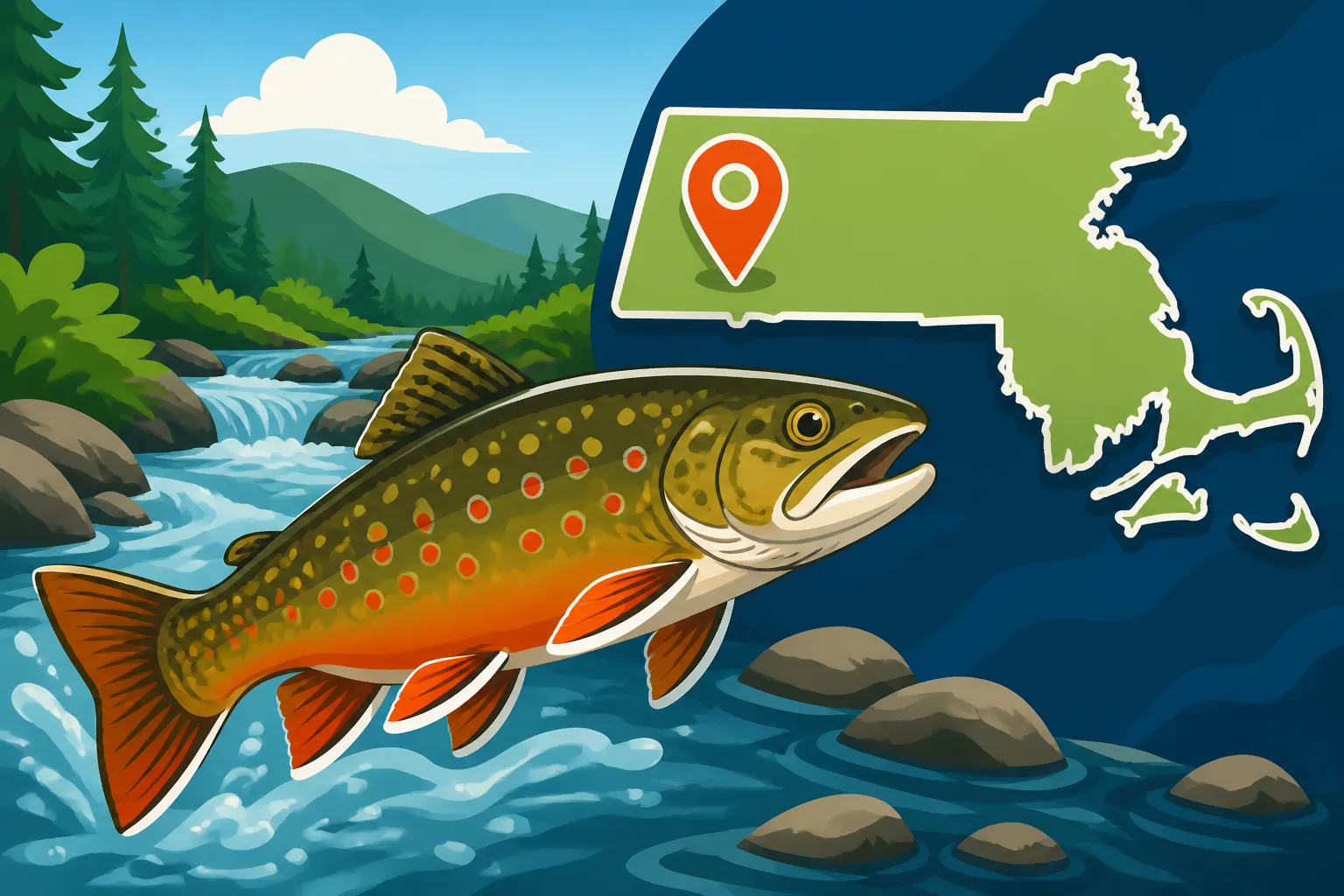
Unlike the hatchery-raised rainbow and brown trout that are regularly introduced into many of our rivers and ponds as part of the Massachusetts Trout Stocking Schedule, wild brook trout are native to these lands. They've been here for millennia, surviving and thriving through countless seasons. Their beauty is undeniable, with iridescent flanks, a vibrant orange belly, and those distinctive worm-like markings (vermiforms) on their backs. Each one is a tiny, living piece of art. Beyond their striking appearance, wild brook trout are incredibly hardy and sensitive indicators of environmental health. Where you find them, you generally find clean, cold water and a robust ecosystem, free from excessive pollution or habitat degradation. They represent a wildness that we, as anglers, cherish and strive to protect. It's a deeply satisfying feeling to know that the fish you've just admired and released grew up entirely on its own, a product of its natural surroundings.
Why They're Hard to Find
So, if they're so special, why aren't they everywhere? The truth is, wild brook trout are delicate creatures with very specific needs, which makes them quite challenging to locate and catch. They demand exceptionally cold, clean, and well-oxygenated water, often with plenty of cover like fallen logs, undercut banks, and overhanging vegetation to hide from predators and harsh sunlight. They also face intense competition from introduced species like brown trout and rainbow trout, which are often more aggressive and tolerant of slightly warmer or less pristine conditions. Furthermore, wild brook trout typically don't grow to the massive sizes of some stocked fish, meaning they're smaller, quicker, and incredibly wary. A shadow, a loud step, or an errant cast can send them darting for cover. Many of the streams they inhabit are small, brushy, and difficult to navigate, demanding stealth and patience rather than long casts and heavy tackle. It's a game of finesse and keen observation.
Prime Habitats for Wild Brook Trout
If you're serious about finding wild brook trout, you need to think like one. Their preferred habitats are distinct and understanding them is the first step in your journey.
Cold, Clear Headwater Streams and Tributaries
This is the bread and butter of wild brook trout country. Think about the very uppermost reaches of rivers, where the water is born from springs and seeps, high up in the hills and mountains. These are the small, often unnamed rivulets and feeder streams, sometimes no more than a few feet wide, that flow into larger rivers. The water here stays incredibly cold, even during the dog days of summer, thanks to abundant shade from dense forest canopies and groundwater seepage. The streambeds are typically rocky or gravelly, providing vital spawning habitat and countless nooks and crannies for hiding. You'll often find these streams in heavily forested areas, far from human development, where the water runs clear and unpolluted. Look for areas with steep gradients, which help oxygenate the water, and lots of natural structure – fallen trees, boulders, and undercut banks are all prime brook trout real estate. These tiny streams are often overgrown, requiring you to bushwhack your way through dense vegetation, but the reward is worth the effort.
Remote Ponds and High-Elevation Lakes
While less common, some remote, high-elevation ponds and small lakes in Massachusetts also hold populations of wild brook trout. These are usually spring-fed or fed by cold mountain streams, maintaining the critical water temperatures these fish need. These ponds are typically found deep within state forests or wildlife management areas, often requiring a hike to reach. They are essentially isolated pockets where brook trout populations have persisted, often due to natural barriers preventing other fish species from encroaching. Fishing these spots can be a unique experience, offering a sense of solitude and discovery. The challenge here is less about navigating dense brush (though that might still be part of the hike in) and more about covering water effectively in a larger, but still pristine, environment. Just remember, these spots are often fragile ecosystems, so practice extreme care and catch and release practices to ensure their continued health.
The Importance of Undisturbed Watersheds
The common thread uniting all these prime habitats is the presence of an undisturbed watershed. A healthy forest canopy is crucial, providing shade that keeps water temperatures low and preventing excessive erosion that can silt up spawning beds. Minimal human impact means less pollution, less habitat alteration, and fewer invasive species. Look for areas designated as protected lands, state forests, or specific wildlife management areas known for their pristine nature. The absence of roads, clear-cuts, or significant agricultural runoff is a strong indicator that you're in the right kind of territory. These untouched areas often have complex aquatic insect life, which forms the base of the brook trout's diet. Understanding this connection to the broader ecosystem is key to successful wild brook trout hunting.
Regions in Massachusetts Known for Wild Brook Trout
While wild brook trout are found across the state in pockets, certain regions are definitely more renowned for their populations. Knowing where to focus your efforts can save you a lot of fruitless searching.
The Berkshire Mountains
When most anglers think of wild trout in Massachusetts, their minds often drift to the rolling hills and deep forests of the Berkshire Mountains in Western Massachusetts. This region is a stronghold for brook trout due to its abundant cold springs, high elevations, and extensive forest cover. Many of the tributaries feeding larger rivers like the Housatonic River Fishing in the Massachusetts Berkshires and the Deerfield River Trout Fishing Spots in Massachusetts hold thriving wild populations. The streams here are often characterized by their steep descent, rocky bottoms, and dense riparian vegetation, providing ideal conditions. Towns like Savoy, Florida, Peru, and Hawley, tucked away in the more mountainous parts of the Berkshires, contain countless small streams that are worth exploring. You'll need to be prepared for some hiking and bushwhacking, but the solitude and the beauty of these areas are unmatched. This is where you really put your stealth and observation skills to the test.
Central Massachusetts Uplands
Don't overlook Central Massachusetts! While not as mountainous as the Berkshires, the uplands and higher elevations, particularly around the Quabbin and Wachusett Reservoir watersheds, are fantastic areas for wild brook trout. The Quabbin Reservoir itself is a massive body of water, but it's the countless feeder streams and tributaries that flow into it, often protected within the vast watershed lands, that harbor these native fish. Similarly, the streams flowing into Wachusett Reservoir Fishing Guide for Massachusetts Anglers and other central Massachusetts rivers can hold surprises. These areas benefit from protected land status and mature forests, which keep water temperatures cool. You might find smaller, more isolated populations here, often in stream sections that are barely wider than a jump. Exploring map details around the Quabbin and Wachusett protection zones, identifying any small blue lines (streams) that aren't typically stocked, can lead to incredible discoveries. Always check local regulations, as access to certain watershed lands might be restricted.
Southeastern Massachusetts & Cape Cod
It might sound counterintuitive to look for cold-water species in Southeastern Massachusetts or on Cape Cod, but surprisingly, isolated pockets of wild brook trout do exist. These are far less common and often restricted to very specific, spring-fed streams that maintain consistently cold temperatures year-round, even as they flow through sandy or less elevated terrain. These streams are usually very small, highly susceptible to environmental changes, and often run through protected bog or swamp environments that keep them cool. Think of small, clear trickles that might flow into larger ponds or estuaries but maintain their cold identity. Finding them here is truly a needle-in-a-haystack endeavor, requiring meticulous research and a deep understanding of local hydrology. Anglers in these regions who find them often keep their locations a closely guarded secret due to the fragility of these isolated populations. It's a testament to the brook trout's resilience that they can survive in such unexpected places.
How to Research and Locate Wild Brook Trout Waters
Finding wild brook trout isn't about luck; it's about smart research and a willingness to explore. You need to become a detective of the aquatic world.
Consulting MassWildlife Resources
The Massachusetts Division of Fisheries and Wildlife (MassWildlife) is your primary resource, but you need to know how to interpret their information for wild trout. While their Massachusetts Trout Stocking Schedule will tell you where they've put hatchery fish, what you're looking for are stream surveys, coldwater fishery resource (CFR) designations, and even official watershed maps. MassWildlife often conducts electrofishing surveys to assess fish populations, and these reports, when publicly available, can be goldmines of information. Pay close attention to maps that highlight perennial streams, as these are more likely to have consistent cold water flow. You'll want to look beyond the heavily stocked rivers and focus on the smaller, often unlabeled tributaries. If a stream is listed as a Coldwater Fishery Resource, it means it's recognized for its ability to support coldwater fish, and often, wild brook trout are a key part of that designation. Remember to carry proof of your Massachusetts Fishing License Guide and always adhere to specific regulations for these sensitive areas.
Utilizing Topographical Maps and Satellite Imagery
This is where your inner cartographer comes alive! Modern tools like Google Maps, other satellite imagery platforms, and topographical maps (such as those from the USGS) are invaluable.
- Topographical Maps: Look for closely spaced contour lines, indicating steep terrain. Steep terrain usually means faster flowing water and often, colder headwater streams. Identify areas with dense tree cover that would provide shade. Look for blue lines representing streams; pay attention to those that appear to originate from springs or high-elevation areas rather than larger, warmer bodies of water. The less human development (roads, houses, agriculture) around a stream, the better the chances of finding wild fish.
- Satellite Imagery: Use this to confirm what you see on topo maps. Look for dense, unbroken forest canopies over streams, indicating good shade. Trace the path of streams, looking for areas with minimal disturbance, healthy riparian zones, and clear water. You can often spot fallen trees or larger boulders that create excellent brook trout habitat from above. This combination of tools allows you to scout potential locations from your armchair before ever setting foot in the woods. You might even find some useful maps or gear, like a waterproof map case, on Amazon.
On-the-Ground Reconnaissance
No amount of map study replaces boots on the ground. Once you've identified a few promising spots, it's time to explore. This often means hiking into areas where there are no established trails, following faint deer paths, or simply bushwhacking along the banks of a small stream. Look for clear, cold water, abundant natural cover, and signs of insect life. Test the water temperature if you have a thermometer; anything consistently below 60°F (15°C) is promising. Observe the stream structure: undercut banks, deep pools behind boulders, and log jams are all excellent holding spots. Pay attention to the subtle cues – the presence of salamanders, small aquatic insects, or even the distinct calls of certain birds can indicate a healthy, wild ecosystem. Be prepared for varied terrain, from muddy banks to slippery rocks, and always prioritize safety, letting someone know your plans before heading into remote areas.
Essential Gear and Techniques for Wild Brook Trout
Tackling wild brook trout requires a different approach than what you might use for their larger, less wary stocked relatives. It's about subtlety, light tackle, and a respectful connection with your surroundings.
Light Tackle and Fly Fishing
For wild brook trout, going light is almost always the best strategy. These fish are often small, sometimes just 6-8 inches, but they fight with surprising vigor for their size.
- Spin Fishing: If you prefer spinning gear, opt for an ultralight rod (4-6 foot range) with a fast action, paired with a small spinning reel spooled with 2-4 pound test monofilament or fluorocarbon line. Small spinners (like Panther Martins or Mepps Aglias in sizes 0-2) or tiny spoons (like Kastmasters) are incredibly effective. Small plastic worms or grubs on a tiny jig head, retrieved slowly, can also produce. The key is to present small offerings with minimal splash.
- Fly Fishing: This is arguably the most rewarding method for wild brook trout. A 2- or 3-weight fly rod, 6-7 feet long, with a weight-forward floating line, is perfect. Leaders should be tapered down to 5x or 6x tippet for delicate presentations. Dry flies, especially small terrestrials (ants, beetles, hoppers) or attractor patterns (like Royal Wulffs or Adams), are thrilling when brookies rise. Small nymphs (Pheasant Tail, Hare's Ear, Prince Nymph) or wet flies fished sub-surface are also highly effective, especially in deeper pockets. Whatever your preference, having a small net with a rubber bag is crucial for safely handling these delicate fish. You can find a great selection of these specialized items, like a compact wading net or ultralight reels, on Amazon.
Stealth and Approach
Wild brook trout are exceptionally wary. Your approach is often more important than your cast.
- Keep a Low Profile: Avoid standing tall on the bank. Crouch, kneel, or even crawl into position. Use trees, bushes, and stream banks as natural cover to break up your silhouette.
- Move Slowly and Deliberately: Fast movements send vibrations through the bank and water, instantly spooking fish. Shuffle your feet, take slow steps, and avoid splashing.
- Cast from Downstream: Whenever possible, approach and cast from downstream, working your way upstream. This allows you to present your fly or lure to undisturbed fish, as their natural feeding orientation is typically facing upstream, waiting for food to drift down. It also helps prevent silt from drifting down into the pool you're about to fish.
- Accuracy is Key: Often, the prime lies for brook trout are small, precise pockets of water behind rocks, under undercut banks, or at the edge of log jams. You'll need to make accurate casts, sometimes under challenging overhead cover, to get your offering into the strike zone without spooking the fish. Practice your roll casts and bow-and-arrow casts for tight spots. The less disturbance your cast creates, the better your chances.
Catch and Release Practices
Because wild brook trout populations are often fragile and localized, catch and release is not just encouraged, it's often essential for their survival.
- Minimize Handling: Handle fish as little as possible. If you must touch them, wet your hands first to protect their delicate slime coat.
- Keep Them Wet: Try to keep the fish in the water as much as possible, especially during unhooking and photography. Their gills need water to breathe, and prolonged air exposure is stressful and damaging.
- Use Barbless Hooks: Crimp down the barbs on your hooks or use barbless hooks. This makes removal much easier and reduces injury to the fish.
- Revive Carefully: If a fish seems sluggish, hold it gently in the water, facing upstream, allowing water to flow over its gills. Don't pump it back and forth; this can actually inhibit gill function. Release it only when it swims away under its own power.
- No Fish Stringers: Never use a stringer or keep sack for wild brook trout unless you intend to keep a legal limit (which is generally discouraged for these populations).
- Clean Up: Always pack out everything you pack in, and leave no trace behind. These pristine environments deserve our utmost respect. Following these guidelines helps ensure that future generations of anglers can also experience the joy of finding these magnificent native fish. For more on conservation, refer to Brook Trout in Massachusetts Streams.
Challenges and Conservation of Wild Brook Trout
The existence of wild brook trout in Massachusetts is a delicate balance, constantly facing threats from various sources. Understanding these challenges helps us appreciate the importance of conservation.
Environmental Threats
Wild brook trout, being highly sensitive, are often the first species to show signs of environmental stress.
- Climate Change: Perhaps the most significant long-term threat is rising water temperatures due to climate change. As air temperatures climb, so do water temperatures, pushing brook trout out of their preferred cold-water zones. Even a few degrees can make a stream uninhabitable for them, forcing them into ever-smaller, higher-elevation refugia. This fragmentation of habitat makes populations more vulnerable.
- Habitat Degradation: Development, logging, and agricultural runoff can severely degrade stream habitats. Erosion from construction or clear-cutting silts up spawning beds and fills in the deep pools that fish rely on for cover. Chemical runoff from lawns and farms introduces pollutants that are toxic to aquatic life. Even seemingly minor alterations, like culverts that block fish passage, can isolate populations and prevent them from accessing critical spawning or feeding grounds.
- Invasive Species: The introduction of non-native species can also pose a serious threat. More tolerant fish like brown trout can outcompete brook trout for food and space. Invasive plants can destabilize stream banks and alter water chemistry. Even the spread of certain diseases can decimate localized brook trout populations. It's a constant battle to protect these vulnerable ecosystems from a multitude of pressures.
Angler Responsibility
As anglers, we play a crucial role in the conservation of wild brook trout. Our actions, both on and off the water, have a direct impact on their future.
- Ethical Angling Practices: Adhering strictly to catch and release guidelines, especially the ones mentioned above, is paramount. Every wild brook trout we release unharmed is a chance for that fish to spawn and contribute to the population. Avoiding overfishing in small, easily accessible wild trout streams is also important, as even careful catch and release can stress fish if done excessively.
- Reporting Issues: If you notice signs of pollution, habitat destruction, or illegal fishing activity (like fishing without a Massachusetts Fishing License Requirements by Age or exceeding limits in sensitive areas), report it to MassWildlife or other relevant environmental agencies. Being an observant and responsible steward of these resources is critical.
- Supporting Conservation Efforts: Many organizations are dedicated to protecting coldwater fisheries and wild brook trout habitats. Supporting groups like Trout Unlimited or local watershed associations through membership, donations, or volunteering can make a tangible difference. These organizations often work on stream restoration projects, advocate for protective legislation, and educate the public on the importance of these ecosystems. By being mindful and proactive, we can all contribute to ensuring that wild brook trout continue to grace the pristine waters of Massachusetts for generations to come.
Remember, finding wild brook trout is as much about the journey and the experience of connecting with nature as it is about catching fish. Embrace the challenge, respect the environment, and enjoy the unparalleled beauty of Massachusetts' native treasures.
Massachusetts Wild Brook Trout Habitat Characteristics
| Characteristic | Ideal Wild Brook Trout Habitat | Less Suitable Habitat (Commonly Stocked Waters) |
|---|---|---|
| Water Temperature | Consistently cold (typically below 60°F/15°C) year-round | Fluctuates, warmer in summer |
| Water Clarity | Crystal clear | Can be turbid or murky, especially after rain |
| Stream Size | Small headwater streams, narrow tributaries | Larger rivers, ponds, lakes, wider mainstem rivers |
| Habitat Cover | Abundant undercut banks, log jams, boulders, vegetation | Less natural cover, more open stretches, defined banks |
| Stream Bed | Rocky, gravelly, sand in smaller pockets | Siltier bottoms, less diverse substrate |
| Flow | Consistent flow from springs and groundwater | More reliant on rainfall, prone to low flows |
| Riparian Zone | Dense, intact forest canopy for shade and stability | Less tree cover, agricultural or urban development |
| Connectivity | Unobstructed upstream and downstream passage | Culverts, dams, or impoundments often present |
| Human Impact | Minimal to none, remote wilderness areas | Moderate to high, easily accessible, developed areas |
Disclaimer
This article is for general informational purposes only and does not constitute professional advice. Laws, prices and regulations vary by location and change over time. Consult a qualified professional for guidance on your specific situation.