Whether you can keep river herring in Massachusetts
It can be incredibly confusing to keep up with all the different fishing regulations here in Massachusetts, especially when it comes to baitfish and forage species that are so vital to our ecosystems. Many anglers wonder if they can keep river herring, a common sight during their spring runs, for bait or consumption. This guide will clarify the rules around river herring in Massachusetts, explain why these regulations are in place, and offer practical advice for responsible angling.
The Strict Rules on Keeping River Herring in Massachusetts
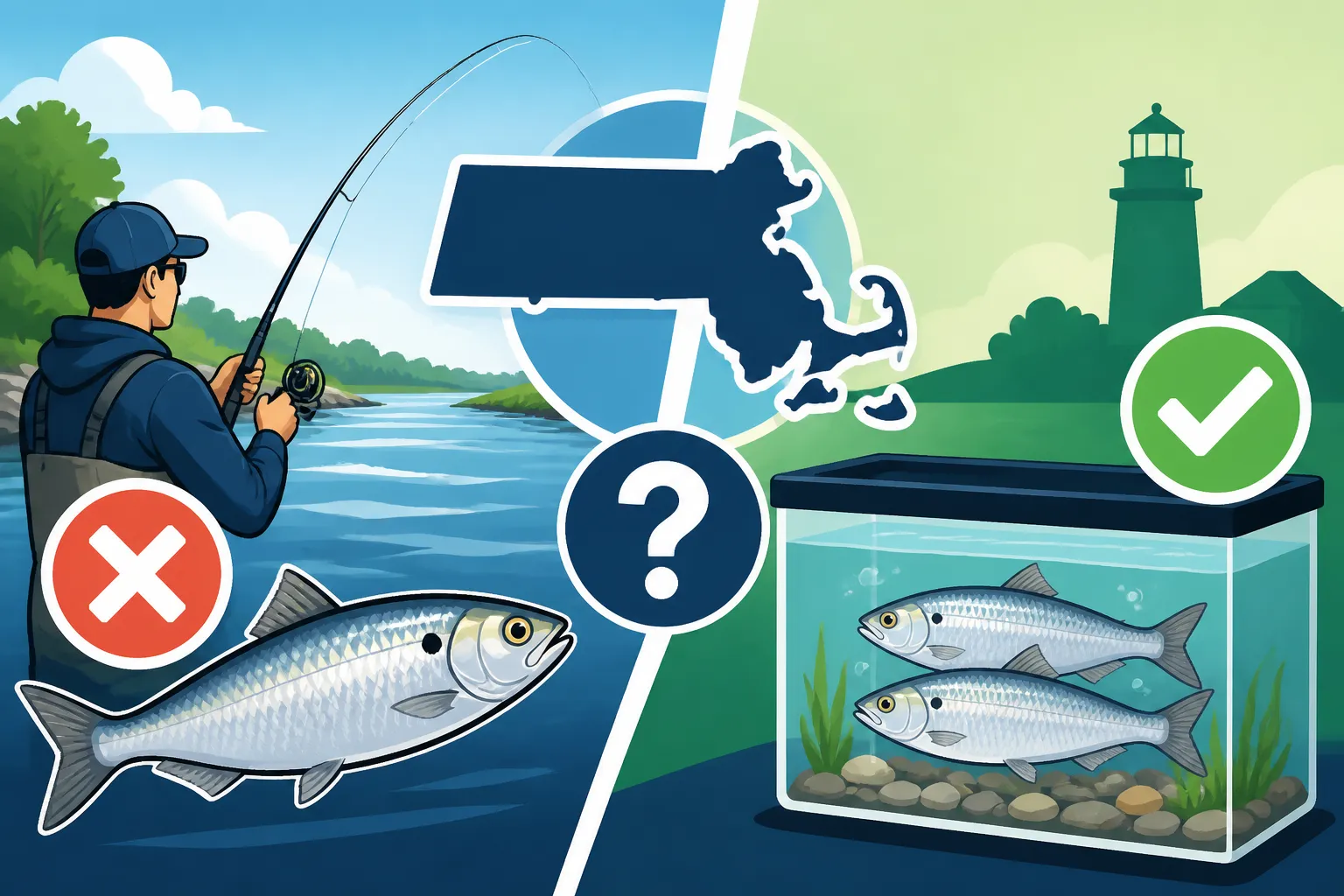
Let's get straight to it: no, you generally cannot keep river herring in Massachusetts. This is a critical regulation that many anglers, especially those new to our waters or visiting from out of state, might not be aware of. The Massachusetts Division of Marine Fisheries (DMF) and MassWildlife have very clear, strict rules prohibiting the possession of river herring for recreational purposes. This includes both Alewife (Alosa pseudoharengus) and Blueback Herring (Alosa aestivalis), the two species commonly referred to as "river herring."
You might be standing by a beautiful stream or river during their impressive spring migration, seeing thousands of these fish making their way upstream to spawn, and think, "What's the harm in taking a few?" The truth is, there's a big harm, and our state agencies have enacted these rules to protect a species that has faced significant declines over the years. These aren't just minor rules; they're enforced, and violating them can lead to serious penalties. It's not uncommon to see environmental police patrolling during the runs specifically to ensure compliance. You might be able to find some excellent catch-and-release fishing gear on Amazon that will help you handle these delicate fish safely.
Understanding the Moratorium
The prohibition on keeping river herring isn't a new, fleeting rule; it's part of a long-standing moratorium. A moratorium, in this context, means a temporary prohibition of an activity. While it's called a "moratorium," it has been in place for so long and is so critical for conservation that it essentially acts as a permanent ban on recreational harvest.
This ban applies statewide to all coastal waters, inland waters, and tributaries where river herring might be found. It covers all methods of fishing, whether you're using a cast net, hook and line, or any other gear. The intent is to allow as many of these fish as possible to reach their spawning grounds and reproduce, helping to rebuild their populations without additional pressure from recreational harvesting. So, if you're out fishing and accidentally catch one, the rule is simple: release it immediately and unharmed. If you're looking for regulations on other common species, be sure to check out Massachusetts Recreational Fishing Rules and Bag Limits.
Exceptions and Nuances
While the general rule is "no keeping," it's worth noting that regulations around baitfish can sometimes be complex. However, for river herring specifically, the recreational possession ban is quite clear. There are instances where certain commercial harvest programs or scientific research permits might allow for the take of river herring under very specific, controlled conditions, but these are highly regulated and do not apply to the average recreational angler.
It's also important not to confuse river herring with other types of herring, such as Atlantic Sea Herring, which are an entirely different species with different regulations. Atlantic Sea Herring are generally found offshore and have different rules for possession, often pertaining to commercial fisheries. However, when you're fishing in rivers, estuaries, or near shore during the spring, assume any "herring" you encounter are river herring and handle them with care, preparing for immediate release. You can learn more about general regulations in the Massachusetts Fishing Regulations Pamphlet, Explained.
Why River Herring Are So Strictly Protected
The strict regulations protecting river herring aren't arbitrary; they are the result of decades of concern over dramatic declines in their populations. These fish play an absolutely critical role in our marine and freshwater ecosystems, and their dwindling numbers have serious ripple effects throughout the food web. When a foundational species like river herring struggles, many other species feel the impact.
Vital Forage Fish
River herring are what we call "forage fish." This means they are a primary food source for a vast array of other animals, both in the ocean and in freshwater. Think of them as the unsung heroes of the aquatic buffet. In their freshwater spawning grounds, their eggs and young provide sustenance for everything from trout and bass to ospreys, eagles, and even bears. Once they migrate back to the ocean, adult river herring become a crucial food source for highly sought-after species like striped bass, bluefish, cod, and tuna, as well as marine mammals and seabirds.
Without a healthy population of river herring, these larger predatory fish would struggle to find enough food, potentially leading to declines in their own numbers. This connection is a huge reason why anglers, who often target these larger species, should care deeply about river herring conservation. Protecting the herring directly contributes to the health and abundance of the fish they want to catch. If you're interested in targeting species that rely on river herring, you might want to read our guide on How to Catch Striped Bass in Massachusetts.
Historical Decline and Restoration Efforts
For centuries, river herring runs in Massachusetts were incredibly abundant, a vital resource for Native American tribes and early European settlers. However, factors like dam construction, pollution, and overfishing in both freshwater and marine environments led to catastrophic declines by the late 20th and early 21st centuries. Many rivers that once boasted massive runs saw their herring populations vanish entirely or drop to dangerously low levels.
Recognizing this ecological crisis, state and federal agencies, along with countless local conservation groups, have invested heavily in restoration efforts. These efforts include dam removals and fish ladder construction to improve access to spawning habitats, habitat restoration projects, and strict harvest prohibitions. The goal is to allow these fish to rebound naturally, rebuilding their populations one generation at a time. The moratorium on recreational take is a cornerstone of this larger, ongoing effort. Learning about species like river herring can help you appreciate other protected species, such as those discussed in Why herring runs are protected in Massachusetts.
The Anadromous Life Cycle
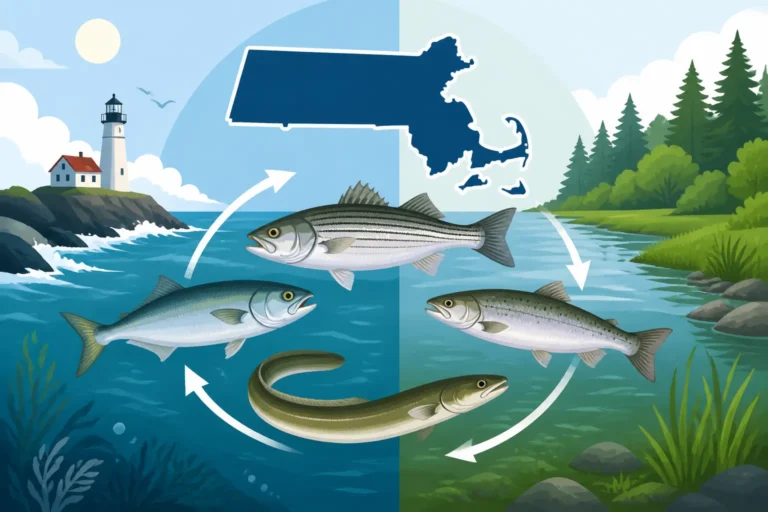
Understanding their life cycle helps explain why they're so vulnerable. River herring are anadromous, meaning they spend most of their adult lives in saltwater but migrate to freshwater to spawn. This means they face threats in both environments. In the spring, they leave the ocean and swim upstream into rivers, streams, and ponds to lay their eggs. After hatching, the juvenile herring spend the summer in freshwater, growing before migrating back to the ocean in the fall.
This migratory journey is fraught with perils, from natural predators to obstacles like dams. By restricting human harvest, we remove one significant source of mortality during a crucial and vulnerable period of their lives. Every fish that successfully spawns contributes to the next generation, bolstering the efforts to bring these populations back to healthy levels.
Identifying River Herring on the Water
Given that keeping river herring is prohibited, it's absolutely essential for anglers to be able to identify them accurately. While they might look like other small, silvery fish, there are key characteristics that distinguish them. Misidentifying a river herring could lead to an accidental violation of fishing regulations.
Key Identification Features
Both Alewife and Blueback Herring share many similar features, but here’s how to generally identify them and distinguish them from other look-alikes:
- Coloration: They are typically silvery on their sides and belly, with a darker, bluish-green back. This countershading helps them blend in with their environment from above and below.
- Body Shape: They have a streamlined, somewhat compressed body, typical of fast-swimming schooling fish.
- Size: Adult river herring usually range from 8 to 12 inches in length.
- Scale Texture: Their scales are relatively large and smooth to the touch.
- Eye Size: They have noticeably large eyes, adapted for foraging in various light conditions.
- Single Dorsal Fin: They possess a single dorsal fin on their back.
- No Lateral Line: Unlike many other fish species, river herring do not have a prominent lateral line running along their sides.
Distinguishing between Alewives and Blueback Herring can be a bit trickier, even for experienced anglers. The most reliable way involves examining eye position relative to the jaw, and the color of the peritoneum (the lining of the gut cavity, which is typically visible if the fish is dissected). However, for practical purposes on the water, if it fits the general description of a river herring in freshwater during the spring run, it's safest to assume it's protected and release it.
| Feature | River Herring (Alewife/Blueback) | Atlantic Sea Herring (Look-alike) | American Shad (Look-alike) |
|---|---|---|---|
| Habitat | Anadromous; freshwater to spawn, ocean otherwise | Primarily marine/oceanic | Anadromous; freshwater to spawn, ocean otherwise |
| Size | 8-12 inches | 12-18 inches (can be larger) | 18-24 inches (much larger) |
| Body Shape | Compressed, slender | More robust, rounded | Deep-bodied, distinctively larger |
| Color | Silvery sides, bluish-green back | Silvery, darker blue-green back | Silvery, sometimes with dark spots |
| Spot behind Gill | Often a faint dark spot behind gill plate | No distinct spot | Often 1-5 distinct dark spots along flank |
| Jaw | Upper jaw barely extends past eye | Upper jaw extends to middle of eye | Upper jaw extends to middle of eye |
| Mouth | Small, terminal | Small, terminal | Terminal, slightly larger |
| Scales | Large, easily shed | Smaller, firmly attached | Medium-sized, easily shed |
| Conservation Status | Protected (no recreational harvest) | Regulated commercial/recreational harvest | Recreational harvest allowed (with limits) |
Remember, when in doubt, it's always best to err on the side of caution and release the fish. A good fish identification guide, which you can easily find on Amazon, can be a valuable tool to keep in your tackle box or boat bag.
Avoiding Accidental Catches
While direct targeting of river herring is prohibited, it's not uncommon to accidentally catch them, especially if you're fishing with small lures or bait in areas where they are migrating. Here are a few tips to minimize accidental catches:
- Vary Your Lures: If you're repeatedly hooking herring, try switching to larger lures or bait that are less appealing to smaller fish.
- Fish Deeper: River herring often hold in the upper to middle water column during their runs. Fishing deeper, closer to the bottom, can sometimes help avoid them.
- Target Different Areas: If a specific spot is thick with herring, consider moving to an area known for your target species, away from the main migration path.
- Understand Their Habits: Knowing when and where herring run can help you plan your fishing trips to either observe them (without disturbing them) or avoid them if you're not specifically targeting other predators feeding on them.
Handling and Releasing River Herring Responsibly
Since you can't keep river herring, the focus shifts entirely to safe and responsible catch-and-release practices. These fish are delicate, and improper handling can lead to injury or mortality, undermining the conservation efforts. Your goal, if you accidentally catch one, is to release it quickly and with as little harm as possible.
Minimizing Stress and Injury
The moment you realize you've hooked a river herring, start thinking about its safe return to the water.
- Use Barbless Hooks (or Crimp Barbs): Barbless hooks make removal much easier and reduce tissue damage. If you don't have barbless hooks, you can use pliers to crimp down the barb on your existing hooks. This is a fantastic practice for any catch-and-release fishing, not just for river herring.
- Use Appropriate Gear: Light tackle can make landing a fish quicker, reducing fight time and stress. However, ensure your line and rod are strong enough to control the fish without overly prolonged fights that exhaust it.
- Wet Your Hands: Always wet your hands thoroughly before touching any fish, especially if you plan to release it. Dry hands can remove the fish's protective slime coat, leaving it vulnerable to infections.
- Keep It in the Water: Try to keep the fish in the water as much as possible. If you must lift it for hook removal, do so for the shortest time possible, just enough to quickly and gently dislodge the hook.
- Support Its Body: If you lift the fish, support its body horizontally. Avoid holding it vertically by the jaw or tail, which can damage its internal organs or spine.
Investing in a good pair of long-nose pliers or a dehooker, easily found on Amazon, is crucial for ethical catch-and-release. These tools allow you to remove hooks quickly and efficiently, often without even needing to touch the fish directly.
The Release Process
A successful release is just as important as gentle handling.
- Quick Hook Removal: Using your pliers or dehooker, carefully grasp the hook and twist it free. If the hook is deeply embedded and cannot be removed without causing significant trauma, it's often better to cut the line as close to the hook as possible. Hooks made of carbon steel will eventually rust out, giving the fish a chance to survive.
- Revive If Necessary: If the fish seems sluggish or disoriented after being unhooked, gently hold it upright in the water, facing into the current. Move it back and forth slightly to help water flow over its gills. This helps oxygenate its blood. Wait until the fish shows strong signs of recovery, such as attempting to swim away on its own, before fully releasing it.
- Observe Before Departure: After release, take a moment to observe the fish. Make sure it swims off strongly and doesn't float upside down or act erratically. A strong swim away indicates a higher chance of survival.
By following these practices, you're not just complying with regulations; you're actively participating in the conservation of a vital species and supporting the health of our overall Massachusetts fisheries. Your actions, collectively with other anglers, make a real difference. For more on protecting our natural resources, you might be interested in Massachusetts Fishing License Requirements by Age.
River Herring's Broader Ecological Impact
The importance of river herring extends far beyond just being food for other fish. They are true ecological engineers, influencing nutrient cycling, providing a crucial link between marine and freshwater environments, and signaling the health of our waterways. Their presence, or absence, tells us a lot about the state of our rivers and coastal waters.
Role in Nutrient Cycling
When river herring migrate upstream to spawn, they bring with them marine-derived nutrients, which are essential for enriching freshwater ecosystems. As adults spawn and eventually die (some species die after spawning, others may return to the ocean), their bodies decompose, releasing these nutrients into the river and stream beds. This fertilization benefits everything from microscopic organisms to aquatic insects and plants, boosting the productivity of the entire freshwater food web. The juveniles, in turn, carry some of these freshwater nutrients back to the ocean when they migrate downstream.
This constant exchange of nutrients between fresh and saltwater environments, facilitated by anadromous fish like river herring, is a fundamental ecological process. Without it, both systems can become less productive and less resilient.
Indicators of Environmental Health
Because river herring are sensitive to changes in water quality, habitat disruption, and blockages to their migration routes, they serve as excellent "indicator species." A healthy, robust run of river herring in a particular river often signals that the waterway is relatively clean, has good flow, and provides accessible spawning grounds. Conversely, a dwindling or absent run can be a red flag, indicating problems like pollution, impassable dams, or habitat degradation.
Conservationists and scientists closely monitor river herring populations as a way to assess the overall health of our aquatic environments. Efforts to restore river herring runs, therefore, often lead to improvements in water quality and habitat for many other species as well. This integrated approach to conservation ensures that the benefits ripple throughout the entire ecosystem. You can learn more about general fishing spots, which can also be indicators of healthy ecosystems, in our Best Fishing Spots in Massachusetts guide.
Connection to Other Species and Fisheries
The fate of river herring is intrinsically linked to the success of many of Massachusetts' most popular fisheries. As mentioned, they are a primary food source for striped bass, bluefish, cod, and tuna. If river herring populations suffer, it can impact the growth rates, abundance, and migratory patterns of these larger, commercially and recreationally important species.
Think about the iconic Cape Cod Canal Fishing Guide for Massachusetts Anglers – a huge draw for striped bass fishermen. The success of stripers in the Canal is often directly related to the availability of baitfish, including river herring, which get funneled through the narrow waterway. Similarly, offshore tuna populations depend on vast schools of forage fish. Protecting river herring isn't just about protecting one species; it's about safeguarding the entire interconnected web of marine life that makes Massachusetts fishing so incredible. By understanding the intricate connections, we can become more responsible and effective stewards of our natural resources.
Conclusion: Be a Steward of Our Fisheries
It's clear that while the question "can you keep river herring in Massachusetts?" has a simple "no" answer for recreational anglers, the reasons behind that answer are deeply complex and ecologically significant. River herring are more than just another fish; they are a keystone species, vital forage, and indicators of environmental health. Their protection is a testament to ongoing conservation efforts and a critical component in ensuring the long-term health and abundance of our diverse Massachusetts fisheries.
As anglers, we have a responsibility to understand and abide by these regulations. Educating ourselves and others about the importance of river herring and practicing careful catch-and-release is how we contribute to a thriving ecosystem for generations to come. So, the next time you're fishing our beautiful rivers and estuaries, and you encounter these silvery travelers, take a moment to appreciate their journey, release them gently, and be proud that you're playing a part in their recovery. It truly makes a difference.
Disclaimer
This article is for general informational purposes only and does not constitute professional advice. Laws, prices and regulations vary by location and change over time. Consult a qualified professional for guidance on your specific situation.