Whether Nantucket charter fishing costs more than Cape Cod
It's a common question among anglers dreaming of casting lines in Massachusetts: does charter fishing off Nantucket really cost more than a trip out of Cape Cod? It's easy to assume an island destination automatically means a higher price tag, and let's be honest, nobody wants to feel like they're paying more just because of a zip code. This guide is here to untangle the real factors that go into charter pricing in both these beloved Massachusetts fishing havens, so you can make an informed decision and plan your perfect angling adventure.
The Core Question: Why Nantucket Charters Generally Cost More Than Cape Cod
When you start comparing charter prices, you'll quickly notice a trend: Nantucket often sits at a higher price point than many comparable trips departing from Cape Cod. This isn't just a random markup; it's rooted in some very real economic and logistical realities that define the island experience. Understanding these foundational differences is key to appreciating the value you're getting, no matter which location you choose.
The Island's Isolation and Logistical Hurdles
Think about what it takes to operate a business on an island that's only accessible by ferry or plane for most goods and services. Nantucket, while stunningly beautiful, is inherently more expensive to live and work on. For a charter captain, this translates directly into higher operational costs across the board. Fuel alone is often more expensive on the island compared to mainland Massachusetts. Dockage fees, securing slips, and general boat maintenance can also carry a premium simply due to limited infrastructure and specialized service availability. Imagine needing a particular part for an engine; getting it to Nantucket can involve extra shipping costs and time, all of which trickle down to the business's overhead. Even something as simple as stocking up on bait, ice, or provisions for a trip means paying higher prices at local stores or incurring significant costs to transport them from the mainland. All these small, incremental costs add up, making the baseline for running a charter business considerably steeper on Nantucket.
Supply, Demand, and the "Nantucket Premium"
Beyond pure logistics, the economic principle of supply and demand plays a huge role in the perceived "Nantucket premium." Nantucket is a popular, exclusive vacation destination, particularly during the peak summer months. This means there's a consistently high demand for recreational activities, including fishing charters, from a large influx of visitors. However, the supply of available charter boats on Nantucket is relatively limited compared to the vast and diverse charter fleet operating across Cape Cod. There are fewer captains and boats based directly on Nantucket due to the aforementioned operational costs and the overall smaller scale of the island's commercial fishing infrastructure. This imbalance—high demand and more constrained supply—naturally drives prices upward. Anglers keen on experiencing Nantucket's legendary fishing, whether it's for striped bass in Nantucket Sound or venturing to the shoals for tuna, often find themselves competing for a limited number of slots, which allows captains to command higher rates for their unique services and expertise in these specific waters. It's not about gouging; it's simply how market forces work in a desirable, somewhat exclusive location.
Diving Deeper into Cape Cod's Charter Landscape
Cape Cod, on the other hand, presents a vastly different economic and logistical picture for charter fishing. Its connection to the mainland and its extensive coastline offer a diverse array of options that contribute to a more competitive and, often, more accessible pricing structure for anglers. The sheer volume and variety of choices available make it a fantastic hub for all kinds of fishing adventures.
A Plethora of Options and Competitive Pricing
One of the biggest advantages of booking a fishing charter from Cape Cod is the sheer number of boats and captains available. From bustling harbors like Falmouth and Hyannis to the more northern ports like Barnstable and Provincetown, you'll find a massive fleet of vessels of all shapes and sizes. This abundance creates a highly competitive market. Captains know they need to offer attractive rates and excellent service to stand out, which can benefit the angler looking for value. You'll find everything from smaller inshore boats specializing in near-shore Striped Bass Fishing in Massachusetts to larger, faster offshore rigs designed for Massachusetts Bluefin Tuna Charters. This wide spectrum means that you have a much better chance of finding a charter that fits both your budget and your fishing aspirations. You're not limited to a handful of operators; instead, you can compare multiple captains, their boats, their specialties, and their pricing, ensuring you get a good deal. Websites like FishingBooker are excellent resources for comparing these various options side-by-side, helping you sift through the many choices available on the Cape.
Diverse Fishing Grounds and Departure Points
Cape Cod's unique geography offers an incredible variety of fishing grounds, all easily accessible from different departure points along its extensive coastline. Depending on what you want to target, you can choose a port that minimizes travel time and fuel costs to your desired fishing spot. For example, if you're keen on fishing Nantucket Sound for fluke or sea bass, a charter out of Falmouth or Hyannis might be ideal, offering quick access. If massive bluefin tuna are on your mind, boats departing from Provincetown or the Outer Cape might be closer to the deep waters of Stellwagen Bank or the tuna grounds east of Chatham. Anglers interested in Cape Cod Canal Fishing Guide for Massachusetts Anglers might opt for a guide service specific to that area. This geographic flexibility means captains can specialize and optimize their operations, running shorter distances to prime spots, which can translate into more efficient, and often less expensive, trips for the angler. You're not paying for a long run to reach the fishing grounds if you're already departing from a port close to the action. This contrasts with Nantucket, where the island itself is the departure point, requiring travel to any distant fishing grounds regardless.
Key Factors Influencing Pricing Beyond Location
While location undeniably plays a significant role in the overall cost of a fishing charter, it's not the only factor at play. Many other variables contribute to the final price tag, and understanding these can help you better compare apples to apples (or perhaps, striped bass trips to striped bass trips) when looking at options from both Nantucket and Cape Cod. These elements determine the scope and nature of your experience, and consequently, its cost.
Trip Type, Target Species, and Duration
The specific kind of fishing trip you want to undertake will profoundly influence the price, regardless of your departure point. A quick, half-day inshore trip targeting bottom fish or smaller Massachusetts Freshwater Fish Species will almost always be less expensive than a full-day offshore excursion chasing elusive bluefin tuna. Why? Primarily because of the time commitment and the resources required. Longer trips mean more fuel consumption, more bait, more wear and tear on the vessel, and more hours for the captain and crew. Targeting specific species can also impact cost. Tuna fishing, for example, often requires specialized heavy-duty gear that is expensive to maintain and replace, larger amounts of bait (like chum or live mackerel), and significantly more fuel to reach distant offshore banks. In contrast, a striped bass trip might involve lighter tackle and less travel. When you're browsing options, whether on Cape Cod or Martha's Vineyard and Nantucket Fishing Charters in Massachusetts, always consider the trip duration and the target species. A "full day" can mean anywhere from 6 to 10 hours, and a "half day" from 4 to 5 hours, with prices adjusting accordingly. For example, some charters might offer specific Massachusetts Striped Bass Charters that are priced differently than general bottom fishing excursions.
Vessel Size, Amenities, and Crew Expertise
The boat itself, and the people running it, are major determinants of charter cost. Larger, more comfortable vessels with advanced electronics, spacious cabins, and onboard restrooms typically come at a higher price point. These boats are more expensive to purchase, insure, fuel, and maintain. They offer a premium experience, often with more space per angler and better amenities for longer trips. Similarly, the experience and reputation of the captain and crew play a huge role. Highly sought-after captains with decades of local knowledge, a proven track record of finding fish, and perhaps even tournament wins, can (and often do) charge more for their expertise. Their rates reflect the value they bring in maximizing your chances of a successful and enjoyable day on the water. A charter might offer a more basic fishing experience on a smaller, no-frills boat with a less experienced crew at a lower price, which is perfectly fine for many anglers, especially families or beginners. But if you're looking for a top-tier vessel with a seasoned professional who can put you on trophy fish, you should expect to pay a premium for that level of service and equipment. Always ask about the boat's features and the crew's background when inquiring about prices, as this will help you understand the value proposition.
Making Your Massachusetts Charter Choice and Maximizing Value
Deciding between Nantucket and Cape Cod for your fishing charter involves weighing your budget against your desired experience. While Nantucket generally comes with a higher price tag due to its unique island economics, there are smart ways to approach booking and manage costs, no matter where you choose to drop your line. The goal is always to find the best possible trip for your money and expectations.
Smart Booking Strategies and Off-Peak Opportunities
Being strategic about when and how you book your charter can significantly impact the cost. Firstly, booking well in advance is always a good idea, especially for popular summer dates on both Nantucket and Cape Cod. Last-minute bookings might leave you with fewer options and potentially higher prices if demand is high. Secondly, consider the "shoulder seasons" – late spring (May, early June) and early fall (September, early October). During these times, the weather can still be fantastic, the fishing can be excellent, and charter rates might be slightly lower than the peak summer months dueably to reduced tourist traffic. For instance, the Best Time of Year to Fish in Massachusetts isn't always mid-July! If you're flexible with your dates, you could land a great deal and still enjoy prime fishing. Also, don't hesitate to use platforms like FishingBooker to compare different charters. These sites allow you to see various options, read reviews, and often filter by price, helping you find captains who fit your budget. Some captains might offer discounts for group bookings or multi-day trips, so it never hurts to ask if you're planning a larger outing.
Understanding What Your Charter Fee Covers
Before you commit to a charter, always get a clear understanding of what is and isn't included in the quoted price. This is crucial for avoiding unexpected costs and ensuring you're truly comparing equivalent services. Most reputable charters, whether on Cape Cod or Nantucket, will include:
- Fishing license: For most recreational saltwater trips, the boat's federal permit covers all passengers, so you usually don't need to purchase a separate Massachusetts Saltwater Recreational Fishing Permit Explained. However, always confirm this. For freshwater, rules can differ, so ask if you need a Massachusetts Fishing License Guide.
- Rods, reels, and tackle: Quality gear should be provided.
- Bait and ice: Live or fresh bait is usually included, as is ice for your catch.
- Fish cleaning: Many captains will clean and fillet your catch at the end of the trip, but confirm this service.
What might not be included, and where extra costs can creep in, are things like:
- Gratuity for the crew: Tipping is customary and expected in the charter fishing industry, usually a percentage of the trip cost. Don't forget this!
- Food and drinks: You'll typically need to bring your own snacks and beverages.
- Specialized gear: If you have very specific gear requests beyond what's standard, there might be an additional charge.
- Massachusetts Wildlands Conservation Stamp: This is often required for freshwater licenses, but again, clarify if applicable to your trip.
Having a clear understanding upfront allows you to budget accurately and make a fair comparison between different charter options. Don't be shy about asking questions; a good captain will be happy to explain their pricing structure and what services are encompassed. For example, if you're looking for specific Massachusetts Fishing Charter Costs for different trip lengths, inquire about what exactly is covered in a "half-day" versus a "full-day" rate.
Comparing Key Cost Factors: Nantucket vs. Cape Cod Charters
Let's break down some of the general influences on charter costs in both locations. Keep in mind these are generalizations, and specific captains or unique trip offerings can always differ.
| Factor | Nantucket Charters (General Tendency) | Cape Cod Charters (General Tendency) |
|---|---|---|
| Base Price | Often higher | Generally more competitive |
| Operational Costs | Higher (fuel, dockage, provisions, logistics) | Lower (easier access to resources, larger market) |
| Demand vs. Supply | High demand, limited supply = higher prices | High demand, ample supply = competitive pricing |
| Accessibility | Island-based, requires ferry/air access for travel | Mainland-based, easier to drive to |
| Fleet Size/Variety | Smaller, more specialized fleet | Large, diverse fleet with many options |
| Trip Distance (Avg) | Can involve longer runs to prime spots | Varies greatly, many close-to-shore options |
| Target Species | Often high-value species (tuna, offshore bass) | Wide range from inshore to offshore |
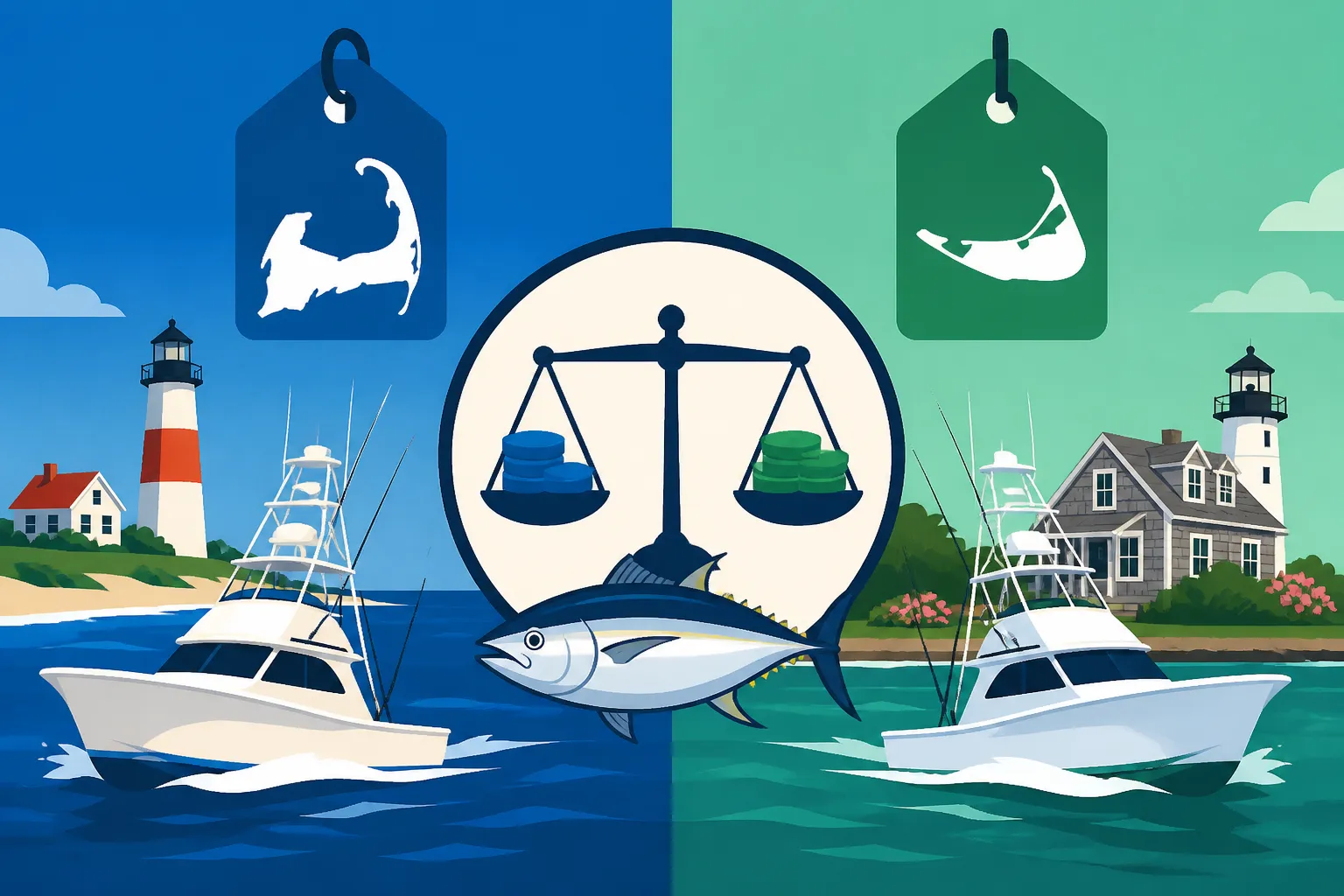
Ultimately, while Nantucket charters do generally cost more than their Cape Cod counterparts, this isn't necessarily a bad thing if the experience is what you're looking for. The premium reflects the unique island environment, the logistical challenges, and the exclusivity of fishing those particular waters. Both destinations offer incredible angling opportunities, and by understanding the factors at play, you can choose the one that best aligns with your fishing goals and budget.
Disclaimer
This article is for general informational purposes only and does not constitute professional advice. Laws, prices and regulations vary by location and change over time. Consult a qualified professional for guidance on your specific situation.