Whether a captain’s license is required to run charters in Massachusetts
For anyone dreaming of running a fishing charter out of a picturesque Massachusetts port like Gloucester, Provincetown, or the bustling docks of Boston Harbor, there's a common and very important question that comes up: "Do I actually need a captain's license for this?" The answer, in short, is almost always yes, and this guide is here to unravel the complexities, outlining exactly why and what type of certification you'll need to legally and safely operate a for-hire fishing business in the Bay State.
Understanding the Basics: Do You Even Need a Captain's License for Fishing Charters in Massachusetts?
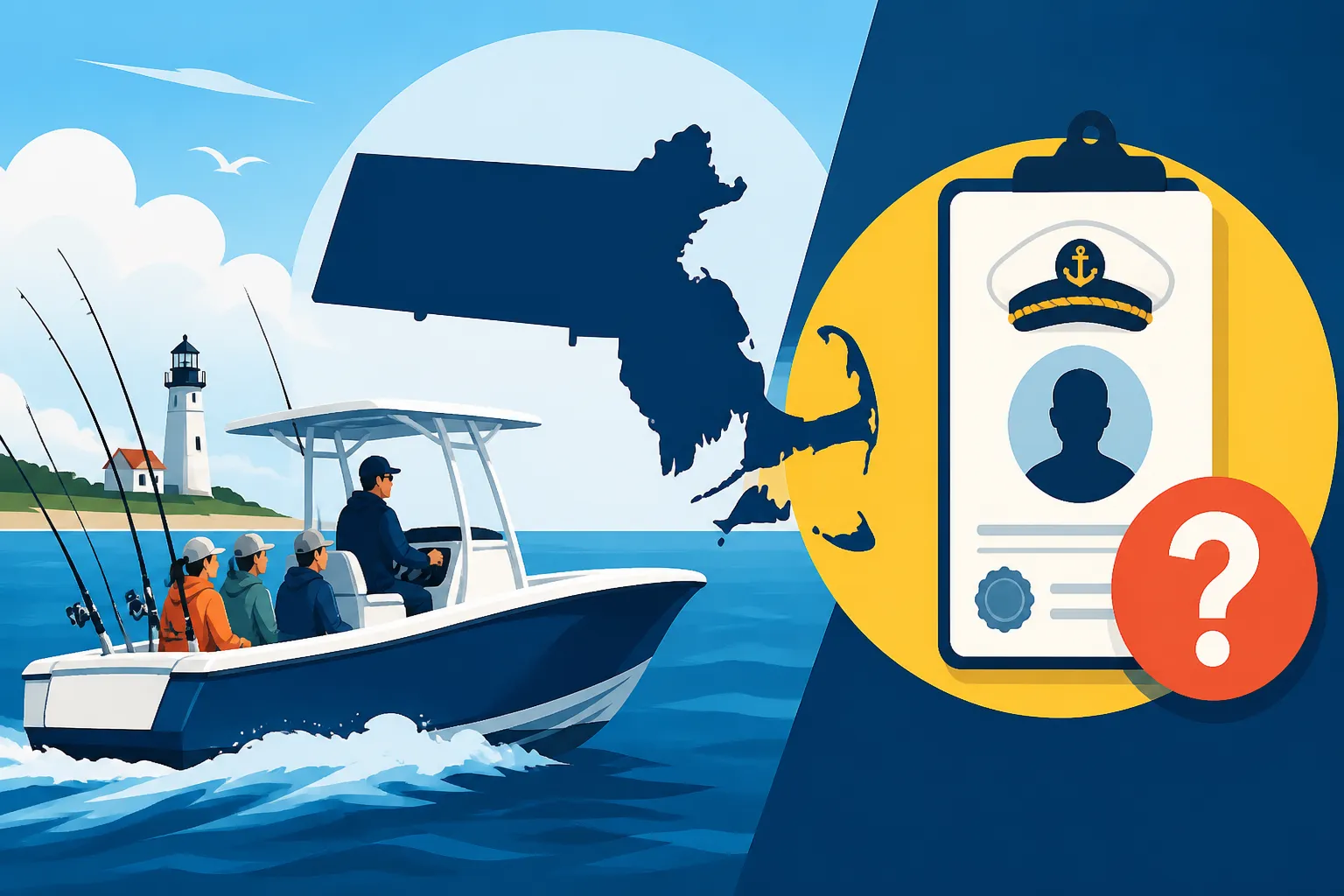
It's a question that often causes confusion, especially for passionate anglers who might take friends out regularly and wonder if turning that hobby into a business changes anything. The short, unequivocal answer for anyone taking passengers fishing for money in Massachusetts waters is yes, you absolutely need a specific captain's license issued by the U.S. Coast Guard (USCG). This isn't just a suggestion; it's a legal requirement designed to ensure the safety of passengers and protect the marine environment.
The Fundamental Rule: Carrying Passengers for Hire
The core principle boils down to "carrying passengers for hire." If you are accepting any form of payment—whether it's cash, a Venmo transfer, or even a bartered service—in exchange for taking people fishing on your boat, you are operating a commercial venture. This immediately puts you under the jurisdiction of the U.S. Coast Guard, which mandates specific licenses for anyone serving as master of a vessel carrying paying passengers. It's not about the size of your boat or how far offshore you go initially; it's about the commercial transaction. Think of it like this: if someone is paying you to be on your boat for a fishing trip, you're responsible for their safety in a professional capacity, and the USCG wants to ensure you have the proper training and qualifications for that weighty responsibility.
This rule applies whether you're taking a single angler out for a private session to target Massachusetts Striped Bass Charters or a small group on a recreational trip to chase bluefish. Even if you're just charging for fuel and bait, if it's considered compensation for a trip that you're guiding, you're likely falling under the "for hire" umbrella. Ignoring this requirement can lead to severe penalties, including hefty fines and even imprisonment, not to mention the potential for serious liability issues if an incident occurs on board.
Differentiating Private Trips from Commercial Ventures
So, what exactly constitutes "for hire" versus just a casual outing with friends? The line can sometimes feel blurry, but the intent and transaction are key. If you're going fishing with your buddies, splitting the cost of gas and bait, and no one is profiting from the trip, that's typically considered a recreational, private trip. You might still need your own Massachusetts Fishing License Guide or a Massachusetts Saltwater Recreational Fishing Permit Explained, depending on where and what you're fishing for, but you wouldn't need a captain's license.
However, once money changes hands for your service as a guide or master of the vessel, it's a commercial operation. This includes booking platforms like FishingBooker, where anglers find and pay for charter services. When your trip is listed on such a platform, or advertised through your own website or social media with a price attached, you are explicitly offering a commercial service. There's no gray area here. The USCG's definition is quite broad to cover various scenarios, making it critical for aspiring charter captains to understand that earning money from taking people fishing necessitates proper licensing. It's about accountability and proving you have met specific standards for navigation, safety, and seamanship.
Delving Deeper: Types of USCG Captain's Licenses Relevant to Massachusetts Charters
Once you understand that a captain's license is indeed required, the next step is figuring out which one. The USCG offers several types of licenses, each with different scopes and limitations, based on factors like the size of the vessel, the number of passengers, and the waters of operation. For most recreational fishing charters in Massachusetts, you'll be looking at one of two primary types.
The OUPV/Six-Pack License: Your Entry Point
For many aspiring charter captains running smaller fishing boats, the Operator of Uninspected Passenger Vessels (OUPV) license, commonly known as the "Six-Pack" license, is the typical starting point. This license permits you to operate uninspected vessels (which includes most recreational fishing boats) that are up to 100 gross tons and carry no more than six paying passengers. The "Six-Pack" designation refers to the passenger limit, which is crucial for recreational charters.
This license is typically endorsed for "Near Coastal" or "Inland" waters. For a Massachusetts fishing charter, a "Near Coastal" endorsement is usually what you'll need, as it allows you to operate on oceans and coastal waters up to 100 miles offshore. An "Inland" endorsement, while useful for specific freshwater bodies like major rivers or large lakes, would be too restrictive for most saltwater fishing charters along the Massachusetts coastline or out to Nantucket Sound. This is the bread and butter license for guides operating day trips, targeting anything from striped bass in Boston Harbor to bottom fish off Cape Cod. It's the standard for many of the listings you might see on platforms like FishingBooker that cater to small groups.
Master Licenses: For Larger Vessels and Further Offshore
If your ambitions extend beyond a six-passenger limit, or if you plan to operate larger vessels (over 100 gross tons), you'll need to pursue a Master license. Master licenses allow you to carry more than six passengers and typically cover vessels up to specific gross tonnage limits (e.g., Master 100 Ton, Master 200 Ton). These licenses are more intensive to obtain, requiring greater sea service (experience on the water) and more comprehensive examinations.
For example, if you envision running a larger party boat out of a port like Gloucester or Plymouth, taking dozens of anglers out for a full day of deep-sea fishing, a Master license would be absolutely essential. These vessels often fall into the "inspected" category, meaning they are subject to more rigorous safety inspections by the Coast Guard, a level of scrutiny not applied to "uninspected" vessels covered by the OUPV license. The decision between an OUPV and a Master license largely depends on your business model and the type of fishing experiences you aim to provide.
Ancillary Endorsements and Requirements
Beyond the core captain's license, there are other important endorsements and requirements that a Massachusetts charter captain might need to consider:
- Radar Endorsement: If your vessel is equipped with radar and you plan to use it for navigation, a radar endorsement is generally required. While not always mandatory for an OUPV, it's highly recommended for safety and navigation, especially in fog-prone New England waters.
- Medical Certificate: All USCG-licensed mariners must pass a physical examination and obtain a medical certificate, ensuring they are physically fit to perform their duties. This includes vision, hearing, and general health screenings.
- CPR and First Aid Certification: Demonstrating proficiency in CPR and basic first aid is a standard requirement for all USCG licenses. This critical training equips captains to handle medical emergencies that might arise miles offshore.
- TWIC Card: A Transportation Worker Identification Credential (TWIC) is a federal requirement for mariners needing unescorted access to secure areas of maritime facilities and vessels. Many ports and marinas fall under this, so a TWIC card is often necessary.
It's a lot to keep track of, but these additional certifications are all part of ensuring a professional and safe operation. Think of it as a comprehensive safety net for both you and your paying customers.
The Road to Certification: How to Obtain a USCG Captain's License
Getting your captain's license isn't an overnight process. It requires dedication, time on the water, and formal training. While it might seem daunting, breaking it down into manageable steps makes the journey clearer.
Eligibility Requirements: Age, Experience, and Health
Before you even think about studying, you need to meet the fundamental eligibility criteria set by the USCG:
- Age: You must be at least 18 years old to apply for an OUPV/Six-Pack license. For a Master license, the minimum age is usually 19 or 21, depending on the specific tonnage.
- Citizenship/Residency: You must be a U.S. citizen or a permanent resident alien.
- Sea Service (Experience): This is perhaps the most significant hurdle for many. You need documented sea service – time spent on a boat.
- For an OUPV Near Coastal license, you'll need at least 360 days of documented experience on the water, with at least 90 of those days occurring in the last three years. Crucially, 90 of the total days must be on Near Coastal waters (outside the Boundary Line), and 90 days must be on the specific type of vessel you intend to operate. Each "day" of sea service is typically defined as at least 4 hours on the water.
- The sea service requirements are significantly higher for Master licenses, often requiring 720 or more days, depending on the tonnage and endorsements.
- This "sea time" needs to be meticulously documented, often through a USCG-approved form (CG-719S) signed by you and verified by the vessel owner or operator. Keeping a detailed logbook from day one of your boating experience is invaluable.
- Health and Character: As mentioned, a satisfactory physical examination is required for a medical certificate. You also need a clean record regarding drug and alcohol offenses, and a general background check is conducted. Any past convictions, especially maritime-related ones, can complicate or prevent licensing.
It's a testament to the seriousness of the role that the USCG sets such high standards for both experience and personal conduct. They want to know you're not just skilled with a boat but also responsible and trustworthy.
Training and Examination: Classroom or Self-Study
Once you've confirmed your eligibility, it's time to prepare for the exams. You have a couple of routes here:
- USCG-Approved Courses: This is the most popular and often recommended path. Many maritime training schools across the country (and some in Massachusetts) offer USCG-approved courses for OUPV and Master licenses. These courses cover all the required topics, including navigation, rules of the road, safety, fire fighting, first aid, and marine pollution. The biggest advantage? If you pass the school's final exam, you are generally exempt from taking the USCG's regional exam. This can be a huge relief, as the USCG exams are notoriously comprehensive and challenging. These schools often provide valuable practical training and insights from experienced instructors.
- Self-Study and USCG Examination: You can choose to self-study using textbooks and online resources. However, if you go this route, you will need to sit for and pass the official USCG examination at a Regional Exam Center (REC). This path requires a high degree of self-discipline and a thorough understanding of all the material. While it might save on tuition costs, many find the structured environment of a formal course to be more effective for retaining the vast amount of information.
Regardless of your chosen path, the goal is to master a broad range of maritime knowledge to ensure you can safely navigate and operate a vessel under various conditions. This is essential, whether you're taking clients out for Massachusetts Bluefin Tuna Charters far offshore or keeping them safe while reeling in groundfish closer to shore.
Application Process and Documentation
After you've met the sea service requirements and passed your exams (either through a school or the USCG REC), you'll compile all your documentation and submit it to a USCG Regional Exam Center. This packet typically includes:
- Application Form (CG-719B): The official application for a Mariner Credential.
- Sea Service Form(s) (CG-719S): Your meticulously documented sea time.
- Medical Certificate: Proof of passing your physical.
- Drug Test Results: A negative drug test within the past six months is required.
- CPR/First Aid Card: Proof of current certification.
- TWIC Card: Copy of your Transportation Worker Identification Credential.
- Exam Results: Certificates from your approved course or results from the USCG REC exam.
- Appropriate Fees: There are various application, evaluation, and issuance fees associated with the license.
The USCG will review your entire application. This review process can take some time, so patience is key. Once approved, you'll receive your shiny new captain's license, officially authorizing you to operate your fishing charter business! Remember to always have proof of your license on board when operating your vessel, whether it's a physical card or, in some cases, a digital copy as permitted by regulations. For more on what licenses might be needed, a topic like Massachusetts Fishing Guide License Requirements could offer further insights, although this specific article focuses on the captain's license for the vessel.
Beyond the USCG: Additional Massachusetts State Requirements for Charter Operations
While the USCG captain's license covers the federal requirements for operating a commercial vessel, running a fishing charter in Massachusetts also involves state-level regulations and business requirements. It's not enough to be a federally licensed captain; you also need to comply with the Commonwealth's specific rules.
Massachusetts Marine Fisheries Requirements
Massachusetts has its own set of rules for commercial fishing, and while a recreational charter isn't typically considered commercial fishing in the same vein as a lobster boat, there are specific regulations that apply to "for-hire" recreational fishing vessels.
- For-Hire Permit: You will likely need a specific For-Hire Recreational Fishing Permit issued by the Massachusetts Division of Marine Fisheries (DMF). This state permit is separate from your USCG license and your personal fishing license. It allows you to take paying passengers to fish in Massachusetts waters. This permit often comes with reporting requirements, where you might need to log your catch data, number of anglers, and fishing effort. These reports are crucial for fisheries management, helping Massachusetts monitor fish stocks and implement regulations like Massachusetts Recreational Fishing Rules and Bag Limits and Massachusetts Striped Bass Slot Limit Explained.
- Federal Permits for Certain Species: If your charter targets certain federally managed species, such as highly migratory species like tuna or certain groundfish, you might also need additional federal permits issued by the National Marine Fisheries Service (NMFS). These permits are specific to the vessel and often require strict reporting. Even if your clients have their own Massachusetts Fishing License for Nonresidents, your vessel's operational permits are a separate layer of regulation.
Always check the latest regulations with the Massachusetts Division of Marine Fisheries as these rules can change frequently based on conservation efforts and stock assessments. Being caught without the correct state or federal permits can lead to fines and suspension of your ability to operate your charter.
Local Permitting and Business Regulations
Beyond the marine-specific regulations, remember that you are running a business. This means complying with general business laws at both the state and local levels.
- Business Registration: You'll need to register your business with the Commonwealth of Massachusetts. This might involve choosing a business structure (e.g., sole proprietorship, LLC), obtaining a Federal Employer Identification Number (EIN), and filing appropriate state tax registrations.
- Local Bylaws and Permits: Depending on where your home port is located (e.g., Boston, Falmouth, Provincetown), you might need local business licenses, permits to dock or moor your commercial vessel, or specific permits for operating in town waters. Some towns might have specific regulations regarding noise, waste disposal, or operating hours for commercial vessels.
- Insurance: Comprehensive marine liability insurance is absolutely non-negotiable for a charter business. This protects you, your vessel, and your passengers in case of an accident, injury, or property damage. No reputable charter captain operates without adequate insurance coverage. While Massachusetts Fishing Charter Costs might seem high, a significant portion of that often covers the captain's extensive insurance. This is a critical aspect that platforms like FishingBooker often verify before listing a captain's services, ensuring a baseline of professionalism and protection for their users.
The Importance of Insurance
Let's really hit this home: insurance is vital. Imagine a scenario where a passenger slips on a wet deck and breaks an ankle, or your vessel unexpectedly collides with another boat. Without proper marine liability insurance, you could face devastating financial repercussions. Even a seemingly minor incident could result in significant medical bills or repair costs.
A comprehensive policy for a commercial fishing charter typically covers:
- Protection and Indemnity (P&I): This is the core liability coverage for maritime operations, covering injury to passengers, crew, or third parties, as well as damage to other vessels or property.
- Hull and Machinery: This covers damage to your own vessel.
- Pollution Liability: Important for any vessel, covering potential oil or fuel spills.
Discussing your specific charter operations with a marine insurance specialist is crucial to ensure you have adequate coverage tailored to your vessel, passenger capacity, and areas of operation. It's an investment in peace of mind and the long-term viability of your business. While topics like What to Bring on a Massachusetts Fishing Charter focus on the angler's preparedness, ensuring your business is legally and financially prepared is your ultimate responsibility as a captain. You also need to understand policies around cancellations, which are important for both you and your clients. For example, knowing the typical Massachusetts Charter Fishing Cancellation Policies helps manage expectations and protects your business from last-minute changes.
| License/Permit Type | Issuing Authority | Purpose | Key Takeaway |
|---|---|---|---|
| USCG OUPV/Six-Pack | U.S. Coast Guard | Operate uninspected vessels for hire (<= 6 pax) | Federal requirement for carrying paying passengers on small boats. |
| USCG Master License | U.S. Coast Guard | Operate larger/inspected vessels for hire (> 6 pax) | For bigger operations or more passengers, higher tonnage vessels. |
| For-Hire Permit | MA DMF | State authorization for recreational charters | Required by Massachusetts for operating a fishing charter within state waters. |
| Federal NMFS Permits | NMFS | Target federally managed species (e.g., tuna) | Species-specific permits needed in addition to general charter permits. |
| Business Registration | MA Secretary | Legal operation as a business entity | Standard business requirements for taxation and legal structure. |
| Local Permits | City/Town Hall | Compliance with municipal regulations | Docking, mooring, or specific operational permits may be required by local towns. |
| Marine Insurance | Private Insurer | Liability and vessel protection | Absolutely essential for protecting against accidents, injuries, and damages. |
Disclaimer
This article is for general informational purposes only and does not constitute professional advice. Laws, prices and regulations vary by location and change over time. Consult a qualified professional for guidance on your specific situation.