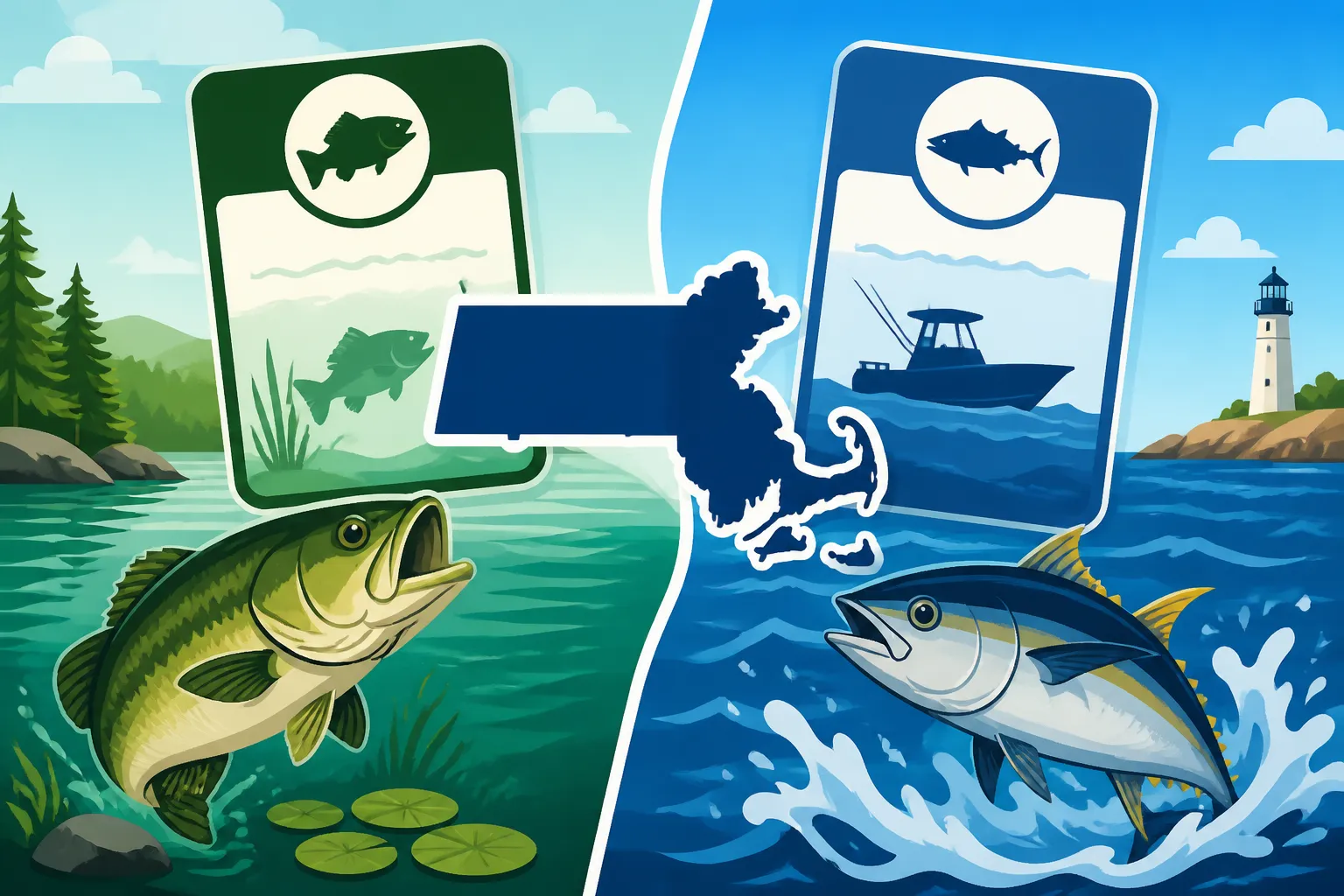
What a Massachusetts freshwater license covers versus a saltwater permit
Trying to figure out which fishing license you need in Massachusetts can feel like navigating a maze blindfolded. You've heard whispers of "freshwater licenses" and "saltwater permits," but what do they actually mean? Do you need both? Just one? It's a common headache for anglers, old and new, and it often leads to unnecessary confusion or, worse, unintended violations. This comprehensive guide is here to clear the waters, breaking down the specific coverage of a Massachusetts freshwater fishing license versus a saltwater recreational fishing permit, so you can spend less time worrying about paperwork and more time casting a line.
Demystifying the Massachusetts Freshwater Fishing License
Let's start with the basics. If your fishing adventures take you to tranquil ponds, winding rivers, or sprawling lakes within the Commonwealth, you're looking at needing a freshwater fishing license. It's the cornerstone for anyone pursuing species that call these inland waters home.
What "Freshwater" Really Means in Massachusetts
When we talk about "freshwater" in Massachusetts, we're referring to any inland water body that isn't significantly influenced by tides or doesn't have a direct, open connection to the ocean that allows for regular tidal flow. This includes all the glorious ponds, lakes, reservoirs, rivers, and streams that dot our landscape, from the Berkshires to the Cape's interior. Think about places like Lake Quinsigamond near Worcester, the majestic Connecticut River flowing through the western part of the state, or even the numerous small, unnamed brooks where you might find a brook trout darting about. The key differentiator is the absence of a noticeable tidal rise and fall and, generally, a lower salinity level compared to the ocean. It's a vast and varied environment, offering everything from trophy bass to feisty panfish.
Who Needs a Freshwater License and When
Generally, if you're 15 years of age or older and plan to fish in any of these freshwater bodies, you need a Massachusetts freshwater fishing license. This isn't just for catching and keeping; even if you're practicing catch-and-release, the act of fishing itself requires the license. There are very few exceptions, such as on "free fishing days in Massachusetts" which are rare events, usually occurring once or twice a year, where residents and non-residents can fish without a license. However, even on these special days, all other fishing regulations, like Massachusetts Freshwater Daily Catch Limits, still apply. For most of the year, if you're fishing in freshwater, plan on having your license in hand. It's also worth noting that the requirements can vary by age, so it's always good to check the specific Massachusetts Fishing License Requirements by Age to avoid any surprises, especially if you're an adult accompanying a younger angler or are a senior yourself.
What Species and Waters Are Covered
Your Massachusetts freshwater fishing license is your golden ticket to pursuing a wide array of fish species. We're talking about the popular largemouth and smallmouth bass that inhabit countless ponds and rivers, the various trout species (rainbow, brown, brook, and even the occasional tiger trout) that are regularly stocked by MassWildlife, and a whole host of panfish like perch, crappie, and sunfish. Chain pickerel, catfish, and northern pike are also on the menu for those seeking a different kind of fight.
The waters covered are expansive. From the famous Quabbin Reservoir (though this magnificent body of water has its own specific permit requirements, which are in addition to a state freshwater license – a detail many anglers initially miss, and which you can learn more about in the Quabbin Reservoir Fishing Permits and Rules in Massachusetts guide) to the peaceful Nashua River, and countless smaller ponds like Long Pond or Assawompset Pond, your freshwater license grants you access. Essentially, if it's not explicitly tidal or part of the open ocean, your freshwater license covers you. You can generally purchase your Massachusetts Freshwater Fishing License Costs and Rules easily online through the MassFishHunt system, a platform that makes getting licensed a breeze.
Understanding the Massachusetts Saltwater Recreational Fishing Permit
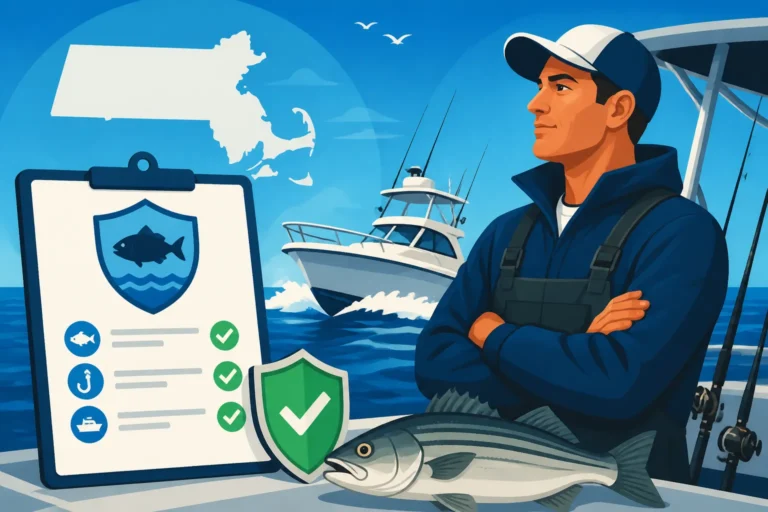
Now, let's cast our gaze toward the magnificent coastline and marine environments of Massachusetts. If the salty air and the vast expanse of the ocean call to you, you'll need a saltwater recreational fishing permit.
Defining "Saltwater" for Anglers in Massachusetts
"Saltwater" in the context of a Massachusetts recreational fishing permit refers to all coastal waters, bays, sounds, and estuaries that are subject to the ebb and flow of the tide, up to the first upstream barrier impassable to marine species. This means everything from the shoreline of Cape Cod Bay, the rugged coast of Cape Ann, the bustling waters of Boston Harbor, and the beautiful stretches of Nantucket Sound. Even brackish waters, where fresh and saltwater mix, are generally considered saltwater for licensing purposes if they are tidally influenced. If you're standing on a beach surfcasting, fishing from a pier, or heading out on a boat into the Atlantic, you're in saltwater territory.
Who Needs a Saltwater Permit and Why
Similar to the freshwater license, any angler 16 years of age or older needs a Massachusetts saltwater recreational fishing permit to fish in the Commonwealth's marine waters. Again, this isn't just for keeping your catch; engaging in any recreational fishing activity in saltwater requires this permit. Unlike some states, Massachusetts doesn't have a state-level "free fishing day" specifically for saltwater, although some federal initiatives might occasionally create exceptions.
The purpose of this permit, much like its freshwater counterpart, is crucial for conservation. The funds generated through permit sales go directly back into managing marine fisheries, conducting research, and enforcing regulations that protect our precious marine resources for future generations. While the federal government requires all states to register recreational saltwater anglers, Massachusetts chose to implement its own state-specific permit program, which also offers a crucial source of state funding for marine conservation. The Massachusetts Saltwater Recreational Fishing Permit Explained delves deeper into why this permit is so vital and its overall structure.
The Permit's Reach: Species, Locations, and Reciprocity
With a Massachusetts saltwater permit, you're equipped to target an incredible variety of marine species. The iconic striped bass is a primary draw, along with bluefish, summer flounder (fluke), winter flounder, black sea bass, tautog, scup (porgy), and even offshore species like cod and haddock (though specific regulations apply, especially for cod). Further offshore, the permit is your gateway to pursuing pelagic giants like bluefin tuna.
The locations are, of course, all Massachusetts marine waters. This includes popular spots like the Cape Cod Canal (a special mention here, as it's a tidal waterway, making it saltwater for permit purposes), the harbor islands, and hundreds of miles of coastline. For those wondering about neighboring states, Massachusetts does have limited reciprocity agreements. For instance, a valid saltwater fishing license or permit from New Hampshire, Rhode Island, or Connecticut might be recognized in Massachusetts waters under certain conditions, primarily for non-commercial marine species. However, it's always safest to check current regulations before relying on reciprocity, especially if you're fishing near state lines or targeting specific species. This is generally covered within the broader context of a Massachusetts Fishing License Guide.
One common frustration for new anglers is understanding how to obtain this permit. The good news is that you can often add the saltwater permit to your existing MassFishHunt profile, making it a fairly seamless process if you already have a freshwater license. Learning How MassFishHunt Works for Buying a Massachusetts License can save you a lot of time and hassle.
Navigating the Overlap: When You Need Both (or Neither)
This is where the rubber meets the road, and where most of the confusion arises. Many anglers assume one license covers everything, but Massachusetts' diverse aquatic environments mean it's not always that simple.
The Intertidal Zone: A Common Confusion Point
Imagine yourself on a beautiful beach, surfcasting where a small stream meets the ocean. Are you in freshwater or saltwater? This is the "intertidal zone," a prime example of where the lines blur and confusion reigns supreme. For regulatory purposes, if the water is tidally influenced, it generally falls under saltwater rules, even if it might appear fresh at certain times of the day or in certain areas. This means if you're fishing in a tidal river, estuary, or even a pond that has a direct, unrestricted connection to the ocean and experiences tidal changes, you likely need a saltwater permit.
The easiest way to think about it is this: if the tide goes out and exposes a section of the riverbed or marsh, or if you can see a noticeable rise and fall of water levels due to ocean tides, you're in saltwater territory. This can be particularly tricky in some of our larger tidal rivers, where the influence of the ocean extends quite a distance inland. Anglers often get caught out here, not realizing that what looks like a freshwater river can be legally considered saltwater for permitting purposes. Always err on the side of caution or consult local regulations for specific areas.
Combination Licenses and Practical Scenarios
Massachusetts does offer a solution for those who love both environments: a combination hunting and fishing license. While it doesn't merge the concepts of freshwater and saltwater into a single permit, it does streamline the purchasing process and can sometimes offer a slight cost saving compared to buying each component separately. For example, a "Massachusetts Combination Hunting and Fishing License" will grant you both freshwater fishing privileges and hunting privileges. However, remember, the saltwater recreational fishing permit is still a separate endorsement that you add to your profile. So, you would essentially be purchasing a freshwater fishing license (part of the combo) and then adding the saltwater permit. Many anglers who frequent both environments find this a convenient way to manage their licenses through the MassFishHunt system.
Let's look at some practical scenarios:
- Scenario 1: You fish exclusively for trout in small, non-tidal streams in the Berkshires. You only need a freshwater fishing license.
- Scenario 2: You love surfcasting for striped bass on Cape Cod beaches. You only need a saltwater recreational fishing permit.
- Scenario 3: You spend spring chasing bass in local ponds and summer targeting bluefish from a boat in Buzzards Bay. You will need both a freshwater fishing license and a saltwater recreational fishing permit. You can purchase them separately or get a freshwater license and add the saltwater permit to your MassFishHunt account.
- Scenario 4: You plan a weekend trip to Quabbin Reservoir to fish for salmon and lake trout, and then spend a day fishing for flounder in Boston Harbor. You'll need a state freshwater fishing license, a specific Quabbin Reservoir Fishing Permits and Rules in Massachusetts, and a Massachusetts saltwater recreational fishing permit. It sounds like a lot, but it's manageable once you understand the system.
Exemptions and Special Cases
While most adults need a license, there are a few notable exemptions:
- Children: In Massachusetts, children under 15 years of age generally do not need a freshwater fishing license. For saltwater, individuals under 16 years of age are exempt from the state permit requirement. This is fantastic news for families wanting to introduce kids to the joys of fishing without extra paperwork. You can find more details on Do Kids Need a Fishing License in Massachusetts?.
- Disabled Veterans & Military Personnel: Massachusetts offers specific accommodations and sometimes free licenses for certain disabled veterans and active military personnel. These are important benefits for those who have served our country. More information can be found under the Massachusetts Fishing License for Disabled Veterans or Massachusetts Fishing License for Military Members.
- Private Ponds: A common question is, "Do you need a license to fish a private pond in Massachusetts?" Generally, no, if the pond is entirely enclosed within private land and has no outlet to public waters that allows for the free passage of fish. However, this definition can be tricky. If there's any public access, or if fish can move freely in and out of the pond via streams or culverts connected to public waterways, a license is required. Always verify the specific circumstances of a private pond to be sure.
Understanding these nuances is key to staying compliant. It's not about being a legal expert, but about knowing the common scenarios where confusion might arise.
Costs, Acquisition, and Staying Compliant
Understanding what licenses cover is one thing, but knowing how to get them and what they cost is equally important for a stress-free fishing experience.
Breaking Down the Price Tag and Where to Buy
The cost of both freshwater licenses and saltwater permits can vary based on residency status (resident vs. nonresident) and age (youth, adult, senior). For Massachusetts residents, an annual freshwater fishing license is quite affordable, usually around $30 for an adult. The saltwater recreational fishing permit, if purchased separately, is typically around $10 for residents. Nonresidents will pay a higher fee for an annual freshwater license, often around $65, and a similar fee for the saltwater permit. There are also short-term options, like a 3-day or 7-day freshwater license for visitors, which can be perfect for a quick trip, as detailed in Short-Term Massachusetts Fishing License Options and Massachusetts Nonresident Fishing License Cost. Keep in mind that when you purchase these, there's usually a small online processing or vendor fee added to the base price.
The easiest way to purchase your license is online through the MassFishHunt licensing system. This platform is operated by the Massachusetts Division of Fisheries and Wildlife (MassWildlife) and allows you to buy, renew, and print your licenses and permits from the comfort of your home. You can pay with a credit card, and the process is usually quick and intuitive. If you prefer to buy in person, many sporting goods stores, bait and tackle shops, and town clerk offices across the state are authorized vendors. These locations can be helpful if you have questions or prefer a physical transaction. Just search for "where to buy a Massachusetts fishing license in person" to find a vendor near you.
Carrying Your License and Proving Compliance
Once you have your license, you absolutely must carry proof of it while fishing. This is a non-negotiable rule. While a physical, printed license is always the safest bet, MassWildlife generally accepts a clear digital image of your license on your smartphone. However, relying solely on your phone can be risky if your battery dies or your screen breaks. Many savvy anglers purchase a waterproof license holder from places like Amazon to keep their paper license protected and accessible, clipped to a vest or tackle box. It’s a small investment that can save a big headache if a MassWildlife Environmental Police Officer requests to see your documentation. Remember, if you're asked to present your license and cannot, you could face penalties for fishing without a license in Massachusetts. It’s always better to be prepared.
The Importance of Knowing Your Regulations
Beyond just the license, understanding the specific regulations for the species you're targeting is paramount. Bag limits, size restrictions, and season dates change frequently based on conservation needs, so what was legal last year might not be this year. These rules apply whether you have a freshwater license, a saltwater permit, or both. For instance, specific rules apply to Massachusetts Striped Bass Slot Limit Explained which are critical to know if you're targeting stripers. You can usually find the most up-to-date regulations on the MassWildlife website or by picking up a copy of the official regulations pamphlet, often available at license vendors or for download online. While a freshwater license covers a wide range of species and locations, and a saltwater permit does the same for marine waters, being an informed angler means going a step further to understand the specific rules for the fish you’re after. Being prepared not only keeps you compliant but also contributes to the sustainable future of Massachusetts fishing, ensuring that our waters remain vibrant for generations of anglers to come.
| Feature | Massachusetts Freshwater Fishing License | Massachusetts Saltwater Recreational Fishing Permit |
|---|---|---|
| Waters Covered | Inland lakes, ponds, rivers, streams (non-tidal, non-saline) | Coastal waters, bays, estuaries, tidal rivers (tidally influenced) |
| Minimum Age | 15 years old and older | 16 years old and older |
| Key Species | Trout (Rainbow, Brown, Brook), Largemouth/Smallmouth Bass, Perch, Pickerel | Striped Bass, Bluefish, Flounder, Black Sea Bass, Tautog, Cod, Tuna |
| Acquisition | MassFishHunt online, authorized vendors | MassFishHunt online, authorized vendors |
| Cost (Resident) | Approx. $30 (annual adult) | Approx. $10 (annual adult) |
| Reciprocity | No (generally not with other states for freshwater) | Limited with NH, RI, CT (check current regulations) |
| Conservation Stamp | Required for many freshwater license holders (Wildlands Conservation Stamp) | Not required for saltwater permit alone |
| Examples | Quabbin Reservoir (with additional permit), Connecticut River (inland) | Cape Cod Canal, Boston Harbor, Buzzards Bay |
Disclaimer
Please remember that fishing regulations and license requirements can change. Always consult the official Massachusetts Division of Fisheries and Wildlife (MassWildlife) website or the current year's fishing regulations guide for the most up-to-date and accurate information before heading out to fish. This article is intended for informational purposes only.