Live-Lining Eels for Massachusetts Striped Bass
There's nothing quite like the thrill of chasing big striped bass in Massachusetts, but sometimes, those trophy fish seem to have a sixth sense, ignoring everything you throw at them. If you've been feeling frustrated by finicky stripers, especially when they're keyed in on a specific forage, it might be time to unlock the secret weapon of many seasoned anglers: live-lining eels. This comprehensive guide will walk you through everything you need to know to successfully use eels and land some truly memorable bass, both from shore and from a boat.
Why Eels are the Ultimate Striper Bait in Massachusetts
When it comes to enticing large, wary striped bass, eels hold a legendary status in Massachusetts fishing circles. They're not just another bait; they're often the bait, especially when conventional lures and other live offerings fall short. Understanding their natural appeal and when they perform best is the first step toward incorporating them into your striper arsenal.
The Natural Appeal of Eels to Striped Bass
Eels are a fundamental part of the striper's diet along the Massachusetts coast and within its estuaries. Striped bass are opportunistic predators, and eels represent a significant, high-calorie meal that's relatively easy to ambush. The erratic, serpentine movement of a live eel in the water is almost irresistible to a hungry striper. Unlike a baitfish that might dart away quickly, an eel’s slithering motion, especially when injured or stressed, triggers a primal predatory instinct. It looks like an easy, satisfying meal.
Beyond their captivating movement, eels also emit a unique scent trail that bass can detect from a distance. This combination of visual appeal and olfactory attraction makes them incredibly effective. Many anglers swear by the confidence that comes with sending a lively eel into a striper-rich area; you just know it's going to get hit. This confidence is often justified by results, as eels consistently account for some of the largest striped bass caught in the region each year.
When and Where Eels Shine Brightest
While eels are generally effective throughout the striper season, there are specific times and locations where they truly excel. Night fishing, for instance, is prime time for live-lining eels. Stripers are often more active and less wary under the cloak of darkness, and an eel's silhouette and movement are particularly enticing in low light conditions. Spots with strong currents, like the infamous Cape Cod Canal, are legendary for eel fishing. The current allows the eel to drift naturally, mimicking a disoriented prey item, and large stripers often stack up in these rips, waiting to ambush. You can learn more about fishing this iconic waterway in our Cape Cod Canal Fishing Guide for Massachusetts Anglers.
Rocky shorelines, jetties, bridge abutments, and even open rips in deeper water are all excellent places to deploy live eels. Anywhere stripers might hide and ambush prey is a potential hot spot. Think about areas where structure provides cover, or where currents create feeding lanes. Many veteran anglers will tell you that if there's a big striper around that's looking for a meal, a live eel is often the only thing that will seal the deal. This method becomes particularly potent during the cooler months of the fall run when stripers are actively gorging before their southward migration.
Sourcing and Caring for Your Live Eels
Using live eels means, well, having live eels. And that's not always as straightforward as it sounds. These critters are slippery, require specific care, and you need to know where to find healthy specimens if you want your bait to be effective. A lively eel is a productive eel!
Where to Buy Quality Eels
For most recreational anglers, the best place to source live eels is from a local bait and tackle shop. Shops like Goose Hummock Shop on Cape Cod or Belsan Bait & Tackle on the South Shore often have fresh shipments of eels during peak striper season. These shops are usually meticulous about keeping their bait healthy, ensuring you get vigorous eels that will perform well in the water. Buying locally also means supporting small businesses that are vital to the Massachusetts fishing community.
You might occasionally see eels for sale online, but direct purchase for live bait can be tricky due to shipping live animals. However, for specialized gear to handle and store your eels, online retailers like Amazon are fantastic for finding eel tubes, aerators, and robust coolers. When picking out eels, look for ones that are active, shiny, and free of visible injuries or dullness. A good eel will be difficult to hold onto, squirming and fighting to get away—that's exactly the kind of energy you want your bait to have in the water.
Keeping Eels Alive and Kicking
Once you've got your eels, the real challenge for many anglers begins: keeping them alive and lively until they hit the water. Eels are surprisingly resilient, but they do require specific conditions. The most common method for storage is using a dedicated eel tube or a large cooler with a quality aerator. You'll want to fill the container with fresh saltwater (if fishing saltwater, which is likely for stripers) and keep it cool, especially during warmer months. Think of it like keeping a fancy pet – temperature is critical!
Changing the water frequently, or at least ensuring proper aeration, is crucial to prevent ammonia buildup, which can quickly kill your bait. Many anglers will add a small amount of ice (frozen freshwater in a sealed bag, or frozen saltwater bottles) to their cooler to keep the water temperature down, especially on hot summer days. A cool, clean environment ensures your eels stay vigorous, swim strongly, and, most importantly, entice those big stripers. Without proper care, you'll end up with sluggish, ineffective bait, and that's just a waste of time and effort.
Essential Gear for Live-Lining Eels
Using live eels for striped bass isn't a delicate operation. These fish hit hard, often in challenging conditions, and eels are tough to handle. You need robust gear that can withstand the power of a large striper and the rigors of deploying live, squirming bait. Skimping on tackle here will almost certainly lead to heartbreak.
Rods, Reels, and Line for the Fight
For live-lining eels, you'll want a stout rod and reel combo that can handle powerful fish and heavy casting (if fishing from shore). A medium-heavy to heavy action spinning rod, typically 7 to 9 feet in length for shore-based applications or 6.5 to 7.5 feet for boat fishing, is ideal. Look for rods with a strong backbone that can set a hook into a big striper's jaw and turn its head away from structure. Popular choices include rods from companies like St. Croix or Ugly Stik, which offer excellent durability.
Matching your rod with a reliable spinning or conventional reel, sized 5000-8000 for spinning or a conventional reel capable of holding 250-300 yards of 40-50 lb braid, is paramount. Brands like Penn, Shimano, and Daiwa are often favored for their robust drag systems and overall reliability. Your line choice is equally important. Many anglers opt for braided line, typically 40-65 lb test, due to its incredible strength-to-diameter ratio and sensitivity. Braid allows you to feel even the most subtle takes from a striper. However, you'll always want to use a strong leader, usually 40-80 lb fluorocarbon or heavy monofilament, to prevent break-offs from the striper's abrasive mouth or sharp rocks. This leader also offers a bit of stretch, absorbing some of the shock of a sudden strike. Remember to check out our How to Catch Striped Bass in Massachusetts guide for more general tips on tackle.
Hooks and Rigs that Hold Strong
When it comes to terminal tackle, simplicity and strength are key. For live-lining eels, circle hooks are not just a good choice; they are often a legal requirement for striped bass in many areas to promote conservation through safe catch and release. Circle hooks, typically in sizes ranging from 7/0 to 10/0, are designed to hook the fish in the corner of the mouth, minimizing gut-hooking and increasing survival rates. Brands like Gamakatsu or Owner offer exceptionally sharp and strong circle hooks that will stand up to the fight.
Rigging an eel is fairly straightforward. Most anglers will lip-hook the eel, passing the hook gently through both lips from the bottom up. This allows the eel to swim naturally and stay alive longer. Some prefer to hook the eel through the eye socket, which can be even more secure, especially in heavy currents. Avoid hooking deeply into the body, as this can injure the eel and reduce its liveliness. Below the hook, you'll typically use a small swivel to prevent line twist, followed by an appropriately weighted sinker. The sinker size will vary greatly depending on the current—you might use a light egg sinker in calm water or a heavy bank sinker (up to 8 ounces or more) in raging currents like the Cape Cod Canal. It's often helpful to keep a variety of sinker weights on hand. You can find robust swivels and sinkers on Amazon, alongside other essential rigging components.
Here's a quick comparison of popular eel rigging components:
| Component | Description | Common Sizes/Weights | Best For |
|---|---|---|---|
| Rod | Medium-Heavy to Heavy Action, Fast Tip | 6.5 – 9 feet | Shore casting, boat fishing, powerful hooksets |
| Reel | Durable Spinning or Conventional, High Drag Capability | 5000-8000 (spinning), 250-300yds (conv.) | Handling large fish, heavy line |
| Main Line | Braided Line, High Strength, Low Stretch | 40-65 lb test | Sensitivity, casting distance |
| Leader | Fluorocarbon or Heavy Monofilament, Abrasion Resistant | 40-80 lb test | Protecting braid from teeth/structure, shock absorption |
| Hooks | Circle Hooks (inline is often mandatory for stripers) | 7/0 – 10/0 | Mouth hooking, conservation, strong penetration |
| Swivel | High-Quality Ball Bearing or Barrel Swivel | 100-200 lb test | Preventing line twist, strong connection |
| Sinker | Egg, Bank, or Pyramid Sinker | 1 oz – 12+ oz | Holding bait in current, adjusting depth |
Mastering Live-Lining Techniques from Shore and Boat
Live-lining eels is as much an art as it is a science. While the gear is important, understanding how to present your bait effectively, whether you're standing on a rock or drifting in a boat, will make all the difference between a successful outing and going home empty-handed.
Shoreline Strategies: Jetties, Piers, and Beaches
Fishing from shore with eels requires precision and stealth. When targeting jetties, piers, or rocky outcrops, your goal is to cast your eel into areas where stripers are likely to ambush prey, such as along current seams, near drop-offs, or around submerged structure. A moderate cast is usually all that's needed; you don't want to throw the eel so far that you lose control or injure it. Once cast, allow the current to naturally work your eel. This isn't a technique for constant reeling; instead, you're letting the eel do the work, swimming and squirming in the water as naturally as possible.
Many successful shore anglers prefer to fish at night, when stripers move closer to shore and are less wary. The low light conditions allow you to approach prime spots without spooking fish. Keep your rod tip up, maintain a slight bend in your line to feel for strikes, and be ready. Stripers often hit eels hard, but sometimes it's a subtle tug as they mouth the bait. The Cape Cod Canal, especially during the tide changes, is a prime example of where this technique shines. Anglers line its banks, casting eels into the churning waters, patiently waiting for the tell-tale pull of a massive striper. Remember, a valid Massachusetts Fishing License Guide is always required, no matter where you fish from shore.
Boat-Based Tactics: Drifting and Slow Trolling
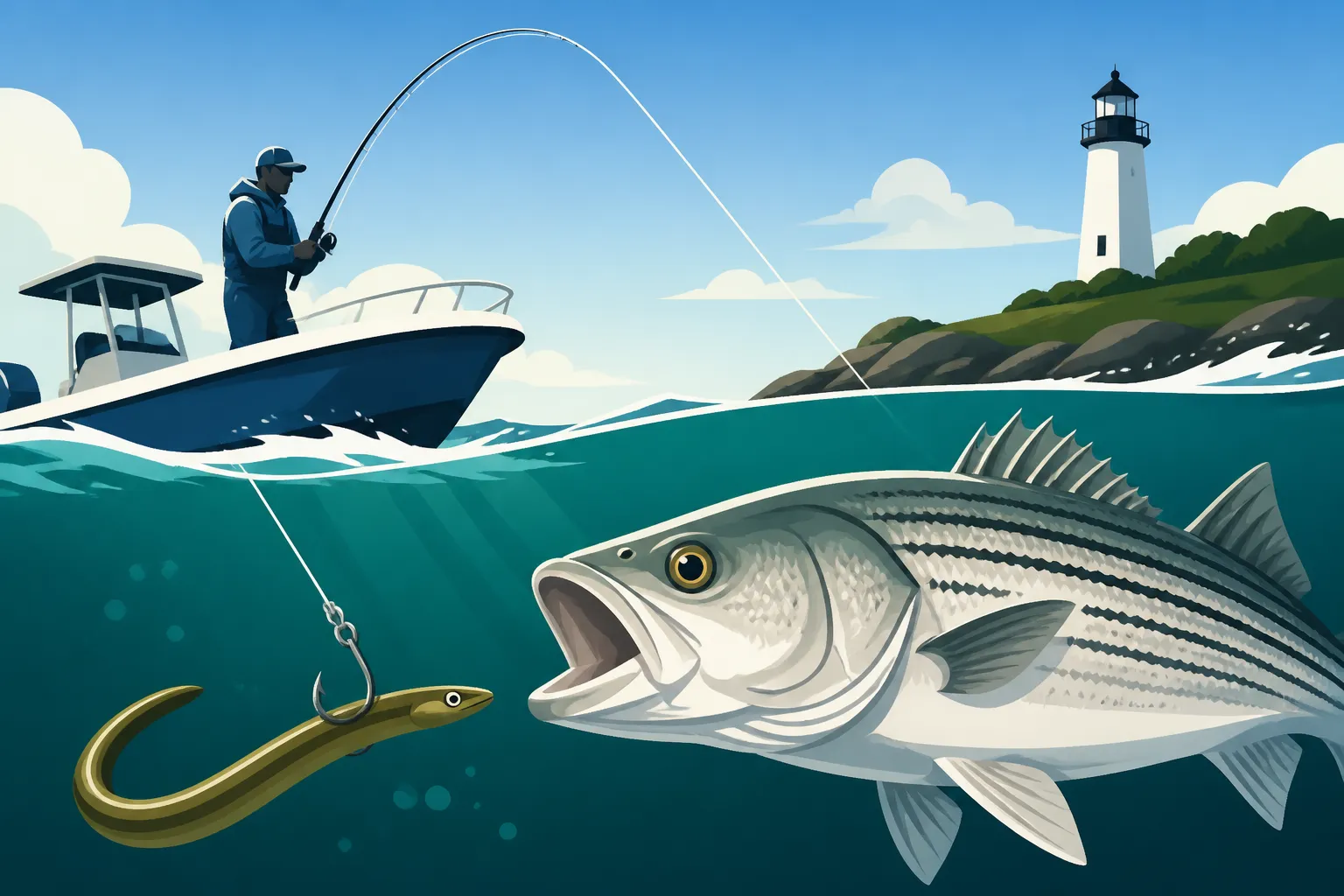
From a boat, you have the advantage of mobility and the ability to cover more ground, targeting deeper water and specific structures that might be inaccessible from shore. Drifting is a highly effective boat-based technique for live-lining eels. Using a fish finder, you can locate bait schools, structure, or even individual large fish, then position your boat to drift over these areas. The key is to match your boat's drift speed to the current, allowing your eel to move as naturally as possible, just above the bottom or through the water column where fish are holding.
Slow trolling, often just above idle speed, can also be effective, especially when searching for scattered fish over a larger area. When drifting or slow trolling, pay close attention to your rod tip and line. Keep an eye on the best fishing spots in Boston Harbor, Massachusetts or Buzzards Bay, as these are excellent areas for boat-based eel fishing. The beauty of boat fishing is the control it offers; you can adjust your depth, drift, and location to present your eel exactly where you believe the fish are. Having multiple rods out with different weights can help you pinpoint the preferred depth on a given day. Ensure all your Massachusetts recreational fishing rules and bag limits are clear before you head out. You can find comprehensive information in the Massachusetts Recreational Fishing Rules and Bag Limits guide.
The Art of the Hookset and Battle
You've got the perfect eel, presented it just right, and suddenly, you feel that unmistakable thump. Now what? The moments between the strike and landing the fish are critical, and they require a specific approach, especially when using circle hooks.
Patience is Key: Waiting for the Take
Unlike traditional J-hooks where you might "strike" hard and immediately, circle hooks work differently. When a striper takes an eel with a circle hook, the key is patience. The fish needs time to fully engulf the bait and turn away. As the line tightens and the fish swims off, the hook will naturally slide into the corner of its mouth and set itself. A common mistake is to try and set the hook too early, pulling the bait right out of the fish's mouth.
Instead, when you feel the strike, resist the urge to yank. Let the fish take the rod tip down, allow a few seconds for the line to come tight, and then simply apply steady pressure by lifting the rod slowly or engaging the reel. The fish will hook itself. This method not only leads to more successful hook-ups but, as mentioned, results in safer, lip-hooked fish that are easier to release if they don't meet the size requirements or if you choose to practice catch and release. This technique is especially important for adhering to the Massachusetts Striped Bass Size and Bag Limit.
Fighting and Landing Big Massachusetts Stripers
Once the hook is set, the battle begins! Striped bass, especially large ones, are powerful fighters. Maintain a good stance, keep the rod tip up, and use your reel's drag system to your advantage. Don't try to winch the fish in; instead, use a "pump and reel" motion. Lift the rod tip to gain line, then drop it quickly while reeling down to recover slack. Repeat this process, letting the drag do its job when the fish makes a strong run.
It's crucial to understand your reel's drag settings. You want it tight enough to put pressure on the fish but loose enough to prevent snapped lines or pulled hooks. Fighting a large striper requires patience and endurance, especially in strong currents or around structure. When the fish is close to the boat or shore, use a large, rubber-coated landing net to minimize damage to the fish, or if you're experienced, a BogaGrip can be used to secure its jaw for quick unhooking. Always be mindful of the powerful tail of a striper, which can inflict a surprising amount of force. For those considering booking a guided trip, many Massachusetts Striped Bass Charters specialize in live-lining eels and can offer expert guidance in real-time.
Regulations and Conservation Considerations
Massachusetts has a thriving striped bass fishery, but it's one that requires careful management and responsible angling practices to ensure its longevity. Understanding and adhering to regulations is not just about avoiding penalties; it's about being a good steward of the resource.
Massachusetts Striped Bass Regulations
Striped bass regulations in Massachusetts are subject to change, often annually, based on conservation needs. Currently, anglers must possess a valid Massachusetts Fishing License Guide (or a Massachusetts Saltwater Recreational Fishing Permit Explained if only saltwater fishing) and adhere to specific slot limits, bag limits, and seasons for striped bass. A slot limit means you can only keep fish within a certain size range, designed to protect both the smaller, juvenile fish and the larger, spawning-potential adults. For example, in recent years, the slot limit has been 28 to 31 inches, with a bag limit of one fish per angler per day.
It is absolutely essential to check the most current regulations published by MassWildlife before every fishing trip. You can find this information on the MassWildlife website or by picking up a copy of the regulations pamphlet at most bait and tackle shops. Violating these rules can result in significant fines and even license suspension, so staying informed is paramount. Our detailed guide on Massachusetts Fishing Seasons Explained can provide a broader overview, but always double-check for specific species like striped bass.
Practicing Responsible Catch and Release
Even if you intend to keep a legal-sized striper, many anglers choose to release some or all of their catch, particularly the larger breeding females. Practicing responsible catch and release significantly contributes to the health of the striped bass population. Here are some key tips:
- Use Circle Hooks: As discussed, circle hooks greatly reduce the incidence of gut-hooking, leading to higher survival rates for released fish.
- Minimize Handling: Try to keep the fish in the water as much as possible. If you must remove it for a quick photo, support its entire body horizontally to avoid internal organ damage. Avoid holding large fish vertically by the jaw or tail.
- Wet Your Hands: Always wet your hands before touching the fish to protect its protective slime coat, which guards against infection.
- Quick Release: Have your camera ready, your measuring tape handy, and your de-hooking tool accessible so that the fish spends minimal time out of the water.
- Revive If Necessary: If a fish seems sluggish before release, hold it gently in the water, facing into the current, until it regains its strength and can swim off on its own.
By following these guidelines and respecting the regulations, you're not just ensuring great fishing for yourself, but helping to preserve this incredible fishery for future generations of Massachusetts anglers. Remember, knowledge is your most powerful tool on the water, whether it's understanding the tides or the latest Massachusetts Fishing License Requirements by Age. For a seamless licensing experience, understanding How MassFishHunt Works for Buying a Massachusetts License is also incredibly beneficial.
Disclaimer
Please be aware that fishing regulations, including size and bag limits, seasons, and licensing requirements, are subject to change. Always consult the most current regulations issued by the Massachusetts Division of Fisheries and Wildlife (MassWildlife) or the Massachusetts Division of Marine Fisheries (DMF) before you head out on the water. This guide is for informational purposes only and should not be considered a substitute for official regulatory information.