Best Bait for Tautog Fishing in Massachusetts
There's nothing quite like the subtle, yet powerful, strike of a tautog on the end of your line. But let's be honest, figuring out what these notoriously picky fish want to eat can feel like trying to solve a cryptic puzzle, especially in the diverse waters of Massachusetts. Many anglers get frustrated, burning through bait without a single solid hookup, leaving them wondering if they're using the wrong stuff or presenting it all wrong. This guide is here to cut through the confusion, helping you master the art of selecting, preparing, and presenting the best baits for tautog fishing in Massachusetts, so you can turn those elusive nibbles into memorable catches.
The Challenge of Tautog Fishing in Massachusetts
Fishing for tautog, affectionately known as "tog" by many, is a unique experience that tests an angler's patience, skill, and understanding of their quarry. Unlike other fish that might aggressively strike at anything that moves, tautog are often more cautious, precise, and even downright finicky eaters. This makes bait selection and presentation absolutely crucial to success, leading to many head-scratching moments for even seasoned anglers on Massachusetts' rocky shores and wrecks.
Why Tautog are So Finicky
Tautog are primarily bottom feeders with powerful, almost human-like teeth designed to crush shellfish and crustaceans. This specialized diet means they have a natural preference for certain food sources, and they're not easily fooled by imitations or improperly presented baits. They live in rugged, structure-rich environments, which means they're constantly foraging for crabs, mussels, and barnacles, making them experts at extracting food from difficult spots. Their cautious nature is also a survival mechanism in these areas, as they often live in tight quarters with plenty of places to hide and ambush prey or quickly retreat.
Furthermore, tautog possess excellent eyesight and a keen sense of smell. If your bait doesn't look, smell, or feel natural, they're likely to ignore it or pick at it without committing to a full bite. The water clarity, current, and even pressure can all influence their mood, making a bait that worked yesterday completely ineffective today. It's a constant game of adaptation, but one that becomes incredibly rewarding once you crack the code.
The "Tog" Bite: Feel it or Miss It
One of the most distinctive and challenging aspects of tautog fishing is identifying their bite. It's rarely a violent tug; instead, it's often described as a series of subtle "taps" or "nudges" before a definitive pull. Many beginners mistake these initial taps for small baitfish or the bait hitting the bottom, leading them to miss the critical moment to set the hook. Tautog will mouth the bait, trying to crush it in their powerful jaws, and if they feel too much resistance or sense something is off, they'll simply spit it out.
Mastering the tog bite requires immense focus and a sensitive rod. You need to feel every slight vibration, differentiating between the current moving your line, your sinker bouncing, and the actual fish. The key is to wait for that distinct pull after the taps—the moment they truly commit. Often, by the time you feel that solid pull, the hook is already in their crushing plates, and you have to react instantly with a strong hookset to pull them away from the structure they call home. It's a learned skill, and the right bait can often encourage a more confident bite, making it slightly easier to detect.
Top Natural Baits for Massachusetts Tautog
When it comes to tautog fishing in Massachusetts, natural baits are almost always the way to go. These fish are not typically fooled by artificial lures, and their diet consists almost entirely of crustaceans and shellfish. Knowing which natural baits are most effective, and when to use them, can drastically improve your catch rate.
Green Crabs: The Undisputed Champion
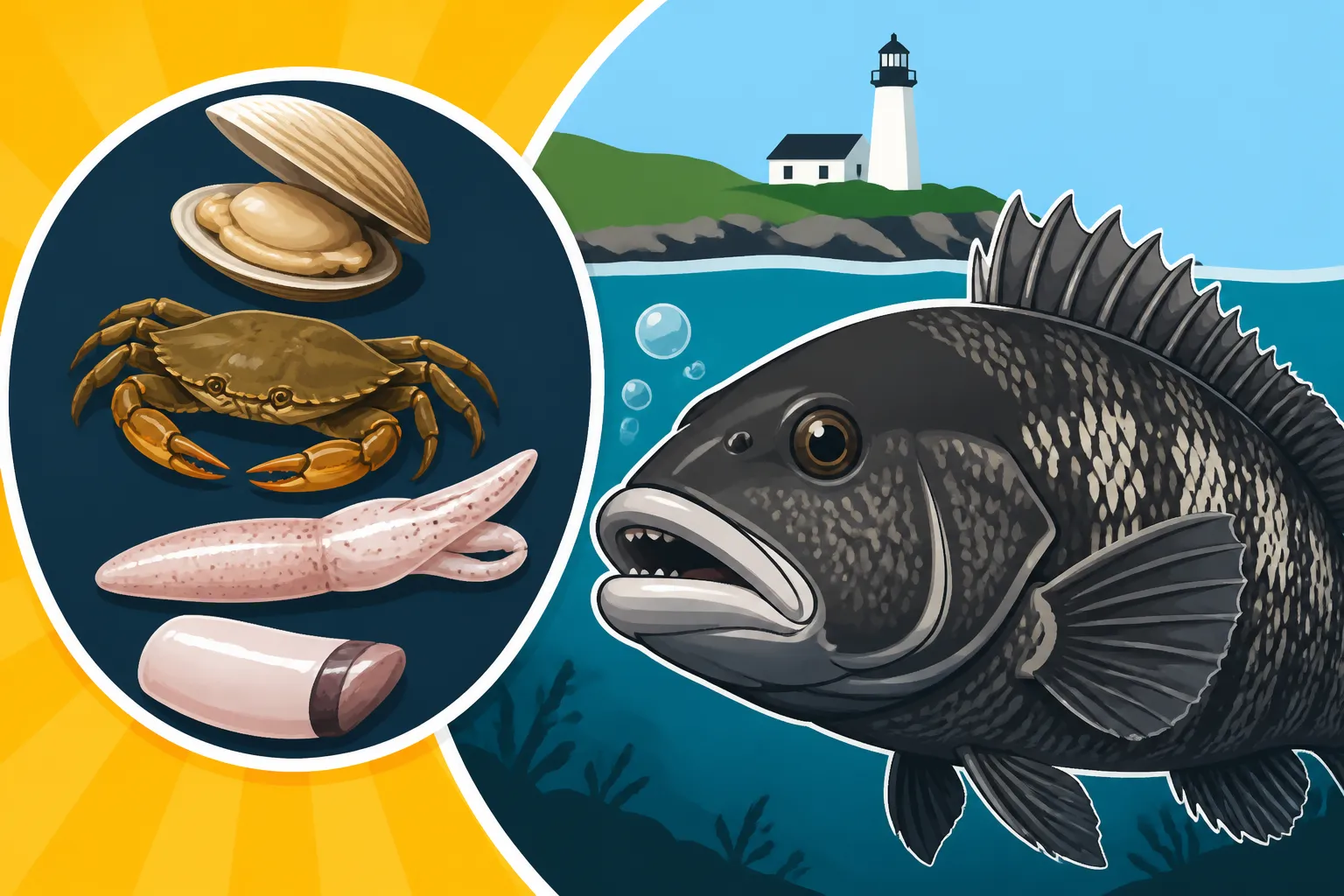
Without a doubt, green crabs are the absolute king of tautog baits in Massachusetts. These hardy, invasive crabs are abundant along the rocky shores, jetties, and estuaries of the state, making them a readily available and familiar food source for tautog. Their tough shells and meaty interiors are exactly what a tog's powerful jaws are designed to crush, and their natural scent is irresistible.
Anglers typically use green crabs whole, halved, or quartered, depending on their size and the desired presentation. Smaller crabs, about silver dollar to golf ball size, are often fished whole. Larger crabs are usually broken into halves or quarters to expose more meat and scent, which can be particularly effective when the bite is slow or in murky water. The best way to get them is often to trap them yourself in shallow, rocky areas, or purchase them from local bait shops along the coast. Remember, healthy, lively green crabs are always preferred, as their movement on the hook can sometimes entice a bite.
Asian Shore Crabs: A Local Delicacy for Tog
While green crabs might be the most common, Asian shore crabs have quickly risen in popularity and effectiveness, especially in recent years. These smaller, more agile crabs are also an invasive species that have proliferated along the Massachusetts coastline. Tautog absolutely love them, often seeming to prefer their softer shells and sweeter meat over green crabs in certain situations.
Asian shore crabs are typically fished whole, as they are rarely larger than a quarter. Their smaller size means they fit perfectly into a tog's mouth, often leading to a more confident bite. They're particularly deadly in areas where they are abundant, as tautog will be accustomed to feeding on them. You can often find them by flipping over rocks and seaweed at low tide along rocky shorelines. Due to their smaller size and more delicate nature, they are excellent for jigging presentations or when you suspect the tog are being particularly subtle and want a bait that's easy for them to engulf.
Hermit Crabs and Fiddler Crabs: Niche but Effective
Beyond green and Asian shore crabs, other crab species can also be highly effective, albeit sometimes harder to acquire. Hermit crabs, for instance, are a fantastic bait. Tautog relish cracking open their borrowed shells to get at the soft, succulent meat inside. If you can find a good supply of hermit crabs, they can often outperform other baits, especially on days when the tog are being particularly picky. They are tough to find in large quantities, however, and require a bit more effort to collect.
Fiddler crabs, with their distinctive large claw on the males, are another excellent, though regional, option. They are most common in marshy areas and muddy flats. If you're fishing in an area where fiddler crabs are prevalent, using them as bait can be incredibly productive. Like Asian shore crabs, their smaller size often encourages a quick and confident bite. When using these smaller crabs, make sure your hook size is appropriate so the crab isn't completely dwarfed, but still allows for a solid hookset.
Clams and Mussels: When Crabs Aren't Cutting It
While crabs are usually the first choice, sometimes tautog will key in on other shellfish, especially if crabs are scarce or the fishing pressure is high. Clams and mussels can be excellent alternative baits, particularly in areas where these shellfish are naturally abundant on the bottom structure.
Sea clams or surf clams, opened and presented as a piece of meat, release a strong scent trail that can attract tog from a distance. Similarly, mussels, cracked open to expose the meat, can be very effective. The key with these softer baits is to rig them carefully to prevent them from washing off the hook too easily. Sometimes, wrapping a small piece of clam or mussel around a crab-baited hook can create a "cocktail" that offers both scent and a hearty meal, making it irresistible to a hungry tog. These softer baits might attract more unwanted attention from bait stealers, but when the tog are on them, they can be exceptionally productive.
Preparing and Presenting Your Tautog Baits
Having the best bait is only half the battle; knowing how to prepare and present it effectively is just as vital for consistent tautog success. These fish are masters of pilfering bait, and a poorly rigged offering will often result in a stripped hook and a frustrated angler.
Crushing and Cutting Crabs for Maximum Scent
When using green crabs, or larger Asian shore crabs, the preparation begins with maximizing their appeal. For smaller crabs, like those the size of a half-dollar, you might use them whole. However, for larger green crabs, breaking them up is usually the way to go. You want to expose the inner meat and guts, which release a potent scent into the water, acting like a beacon for hungry tautog.
To do this, simply use a sturdy knife or even stomp on the crab (carefully!) to crack its shell. Then, cut it into halves or quarters. Don't worry about being too neat; a ragged, exposed piece of crab often works best. The goal is to create as much scent as possible. When you have multiple crab pieces, it’s a good idea to keep them fresh in a cooler. You can find excellent, durable bait coolers on Amazon that are perfect for keeping your crabs lively and fresh throughout your fishing trip, which is crucial for optimal scent and presentation.
Rigging Crabs for a Solid Hookset
Properly rigging your crab bait is paramount. A common mistake is to simply hook the crab once, leaving it vulnerable to being easily picked off. For whole crabs, push the hook point through one of the leg sockets, then out through the top of the shell, ensuring the hook point is fully exposed. For halved or quartered crabs, thread the hook through the harder shell side first, then through the meat, and make sure the hook point exits cleanly through the shell again, leaving the point clear to penetrate a tog's tough mouth.
The idea is to secure the bait firmly while ensuring the hook point is completely clear for a solid hookset. Some anglers even use small zip ties or elastic thread to secure larger pieces of crab to the hook, especially if the current is strong or if they are getting a lot of bait-stealers. Experiment with where you position the hook in the crab piece – sometimes a subtle change can make a big difference in hookup ratio. When fishing for Tautog Fishing in Massachusetts, this small detail can determine success.
The Art of Hooking Clams and Mussels
Clams and mussels, being much softer than crabs, require a different rigging strategy. These baits are notorious for coming off the hook easily, especially with the gentle "taps" of a tautog. The key is to use a smaller, sharper hook and to thread the clam or mussel meat onto the hook multiple times, completely covering the shank.
For clams, take a piece of the tough foot or the collar and thread it onto the hook, then wrap the softer belly meat around it, effectively "balling" the clam onto the hook. For mussels, crack the shell and remove the entire body. Thread the mussel meat through itself on the hook, creating a compact bundle. Some anglers use a very small amount of bait thread (like a fine elastic string) to secure the clam or mussel tightly to the hook. This not only keeps the bait on longer but also makes it harder for the tog to simply pull off a piece without getting hooked. You want the bait to be securely attached but still appear natural and appetizing.
Understanding Tautog Feeding Habits and Habitat
To consistently catch tautog, it's not enough to just have the right bait and rig; you also need to understand where they live, what makes them tick, and when they're most likely to bite. Their entire existence revolves around structure, tides, and seasonal patterns, all of which influence their feeding behavior.
Structure, Structure, Structure: Where Tog Live
Tautog are absolute structure fanatics. If there's a rock pile, a sunken wreck, an old pier piling, a mussel bed, or any other kind of underwater obstruction, chances are there are tautog calling it home. They use these structures for protection from predators, as ambush points for prey, and as sources of food like crabs, barnacles, and mussels. Fishing "sticky" spots – those areas where you're constantly getting snagged – is often where the biggest tog reside.
This means you need to fish tight to the structure. Whether you're fishing from a boat, a pier, or Best Shore Fishing Spots in Massachusetts, getting your bait right down into the cracks, crevices, and ledges where tog hide is crucial. A good fishfinder can help identify these prime locations offshore, while a keen eye for shoreline features and knowledge of local submerged structures are key for inshore anglers. Remember, the tog won't stray far from their rocky homes to feed, so putting your bait in their living room is essential.
Tidal Influences and Optimal Feeding Times
Tautog feeding activity is heavily influenced by the tides, particularly in shallower, inshore waters. Generally, a moving tide, whether incoming or outgoing, is better than slack tide. The moving water dislodges food from the structure and carries scent, making it easier for tautog to locate their next meal.
Many experienced tautog anglers will tell you that the last two hours of the incoming tide and the first two hours of the outgoing tide are often the most productive. During these periods, the current is typically strong enough to stir up the bottom but not so strong that it makes holding bottom with your rig impossible. However, local knowledge is king; some specific spots may fish better on a particular tide cycle. Observing your chosen spot over several trips will help you identify its unique tidal patterns. Just like knowing When tautog season opens in Massachusetts, understanding the tides is part of the secret sauce.
Seasonal Bait Preferences for Tautog
While crabs are a year-round favorite, tautog can show some seasonal preferences, often driven by the availability of their natural food sources. In the early spring and late fall, when water temperatures are cooler, tautog might be less aggressive and more focused on larger, meatier baits that offer more caloric value. This is when a big green crab half or whole hermit crab can really shine.
As the water warms up in late spring and early summer, smaller crabs like Asian shore crabs and fiddler crabs become more abundant, and tautog will readily feed on them. This is also a good time to experiment with combining baits, like a small piece of clam with a crab, to see what they prefer. Understanding these subtle shifts and adapting your bait choice accordingly can give you a significant edge throughout the Massachusetts Fishing Seasons Explained.
Essential Gear for Successful Tautog Bait Fishing
Having the right tackle is just as important as having the right bait for tautog fishing. These are powerful fish that live in unforgiving environments, and your gear needs to be up to the challenge. Compromising on tackle will lead to lost fish, snagged rigs, and frustration.
Rods, Reels, and Line: Power and Sensitivity
For tautog, you need a rod that offers a delicate balance of sensitivity and brute strength. A medium-heavy to heavy action rod, typically 7 to 8 feet long, with a fast tip is ideal. The sensitive tip allows you to feel those subtle "taps," while the powerful backbone is necessary to wrench a tog out of the structure before it can dive back into the rocks. Look for rods specifically designed for bottom fishing or inshore jigging.
Pair your rod with a robust conventional reel or a high-quality spinning reel capable of handling heavy drag. A reel with a good retrieve ratio and strong gears is essential for battling these fish. For line, braided line is almost universally preferred for tautog. Its zero stretch properties transmit every subtle bump and bite directly to your hands, and its incredible strength-to-diameter ratio helps immensely when fishing around abrasive structure. A 30-50 lb braid is a good starting point. You'll then attach a fluorocarbon leader of 30-50 lb test, typically 2-4 feet long, which offers excellent abrasion resistance and is virtually invisible underwater.
Hooks, Sinkers, and Rigs: The Business End
The business end of your tautog rig requires careful consideration. Sharp, strong hooks are non-negotiable. Circle hooks are highly recommended as they reduce gut-hooking and are very effective for tog; a 3/0 to 6/0 size is usually appropriate depending on your bait size. Some anglers prefer J-hooks, but require more precise hooksets. No matter the type, choose a hook with a stout wire that won't straighten under pressure.
Sinkers will vary wildly depending on current, depth, and wind. You'll need an assortment ranging from 2 to 8 ounces, sometimes even heavier in strong currents like those found around the Cape Cod Canal. Bank sinkers or bell sinkers are common. As for rigs, a simple dropper loop rig or a standard bottom fishing rig with a snelled hook and a sinker below is often all you need. The key is to keep it simple, minimize tangles, and ensure your bait is presented right on the bottom. When fishing near Best Fishing Spots on the Boston Harbor Islands, you'll likely need heavier sinkers due to current.
The Importance of a Good Bait Knife and Cooler
Beyond the main tackle, a few accessories are absolutely essential for a successful tautog trip. A sharp, sturdy bait knife is critical for preparing crabs and other baits. You'll be cracking shells, cutting meat, and possibly even dispatching fish, so a reliable knife with a comfortable grip is a must. Many anglers keep a small sharpening stone or file handy to maintain a razor edge throughout the day.
Secondly, a good cooler is indispensable. Not just for keeping your catch fresh, but for keeping your bait lively and in prime condition. Crabs will die quickly if they get too warm or dry out. A cooler with ice, or even just some damp seaweed, will prolong the life of your bait, ensuring it retains its scent and appeal. You can find a wide range of insulated coolers on Amazon that are perfect for keeping your bait and catch at optimal temperatures. Investing in quality accessories will make your time on the water more productive and enjoyable.
Troubleshooting Common Tautog Bait Fishing Problems
Even with the best bait and gear, tautog fishing can present its fair share of challenges. It's rare to have a day without some kind of snag, bait-stealing nuisance, or just plain slow fishing. Knowing how to adapt and overcome these common problems is what separates a consistent tog angler from a frustrated one.
Dealing with Bait Stealers and Nuisance Fish
One of the most annoying aspects of tautog fishing is the prevalence of bait stealers. Cunner, bergalls, small sea bass, and even crabs will often peck away at your expensive bait, leaving you with an empty hook and no tog. This is where proper bait presentation and hook selection become even more critical.
Firstly, make sure your hook point is exposed and the bait is securely fastened. For smaller crabs, a smaller, sharper hook might be necessary. For softer baits like clams, using bait thread can help keep the bait on longer. Secondly, try to present your bait as close to the desired structure as possible, as tog often inhabit the densest parts where smaller fish might be hesitant to venture. Sometimes, a slightly heavier sinker to hold bottom more firmly can help, or even moving your boat or position slightly to avoid known nuisance fish schools. Patience is also key – sometimes you just have to wait out the pickers until a larger tog pushes them away.
When Tautog Just Won't Bite Your Chosen Bait
You've got green crabs, you've got Asian shore crabs, you've tried clams, but the tog just aren't biting. It's a common scenario. This is when it's time to become a detective and experiment. The first thing to consider is your presentation: Is your bait right on the bottom? Is it getting snagged too often? Sometimes, simply adjusting your sinker weight or the length of your leader can make a difference.
Next, consider the size and condition of your bait. Are you using whole crabs when the fish might prefer halves for more scent? Or perhaps they want smaller, easier-to-eat Asian shore crabs if they're being finicky. Don't be afraid to try a "cocktail" rig, combining a piece of crab with a strip of clam for extra scent and appeal. Sometimes, the subtle change of a fresh, lively crab can be the deciding factor. Keep a variety of baits on hand and be willing to switch things up. Remember to always check the Massachusetts Recreational Fishing Rules and Bag Limits for tautog, as limits can change by season.
Adapting Your Bait Presentation to Conditions
Fishing conditions in Massachusetts can change rapidly, from strong currents to clear, calm water. Your bait presentation needs to adapt. On days with a swift current, you'll need heavier sinkers to hold bottom, and more securely rigged baits to prevent them from washing off. A shorter leader might also help reduce tangles in strong currents.
In very clear water, tautog can be exceptionally wary. This is when fluorocarbon leaders are crucial, and a more natural, less bulky bait presentation can be more effective. Consider using smaller, whole crabs or perfectly rigged clam pieces. Conversely, in murky water, maximizing scent is key, so exposing more of the crab meat or using strongly scented clam can be advantageous. Always pay attention to what the fish are telling you through your rod tip, and don't be afraid to make adjustments. The fish are always right, and adapting to their preferences is the mark of a truly successful tautog angler. If you need a Massachusetts Saltwater Recreational Fishing Permit Explained, be sure to grab one before you head out!
Disclaimer
Please be aware that fishing regulations, including bag limits, size restrictions, and seasons, are subject to change by the Massachusetts Division of Marine Fisheries (DMF). Always consult the most current regulations before heading out to fish. This guide is for informational purposes only and does not supersede official state fishing laws.