Best surfcasting beaches on Martha’s Vineyard
Finding the perfect surfcasting spot on Martha's Vineyard can feel like searching for a hidden treasure, especially with so many beautiful beaches and varying access rules. It's frustrating to drive around, guessing where the fish might be biting, or to arrive only to find a private beach you can't access. This comprehensive guide is here to cut through that confusion, giving you the insider scoop on the best surfcasting beaches on Martha's Vineyard, along with crucial tips to make your next fishing trip a true success.
Why Martha's Vineyard is a Surfcasting Paradise
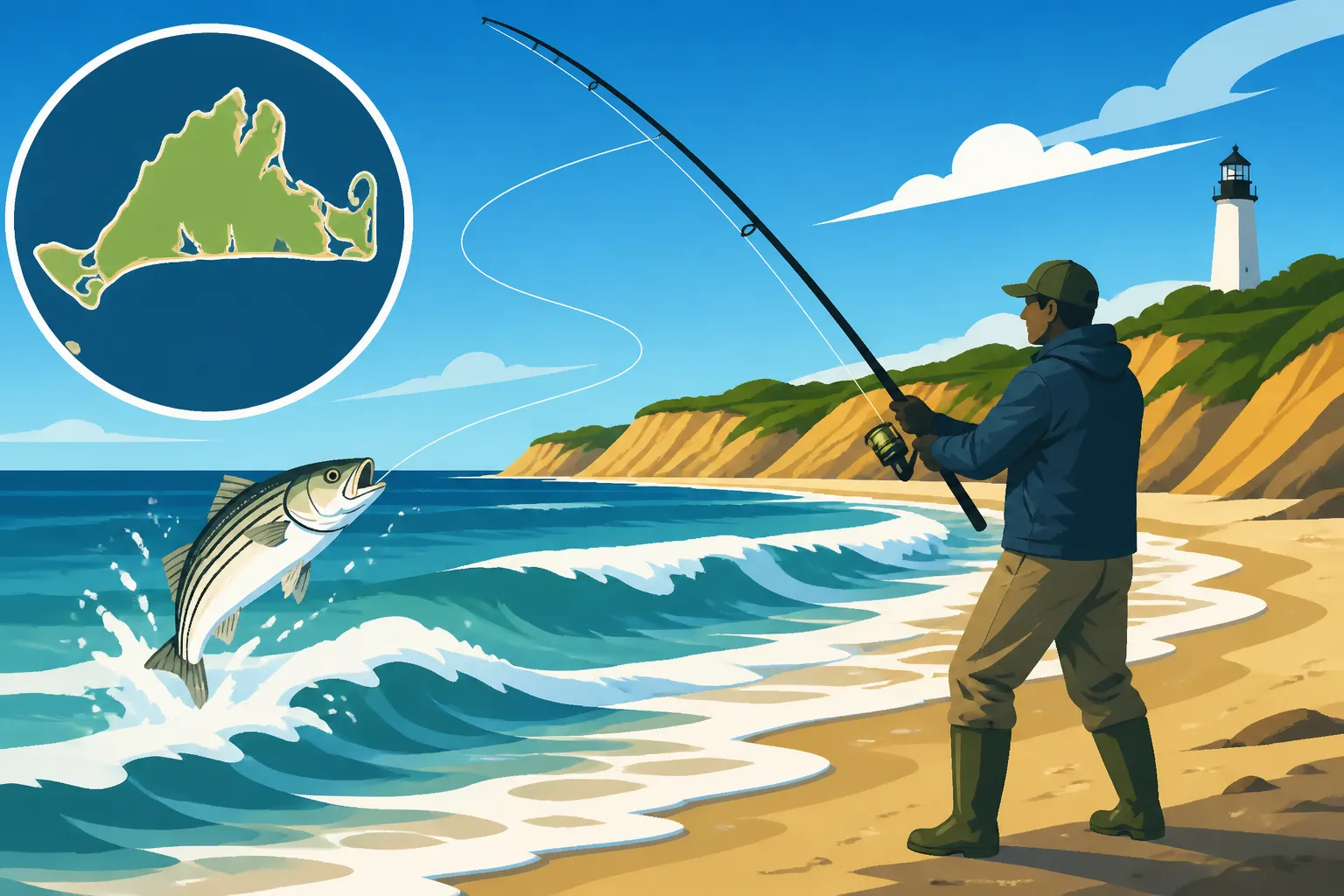
Martha's Vineyard isn't just a charming summer getaway; it's a dynamic and incredibly productive fishing destination, particularly for those of us who love the challenge and thrill of surfcasting. The island’s unique geology and position in the Atlantic create a perfect storm, so to speak, of conditions that attract a wide variety of sought-after fish species right to its shores. It's a place where the next cast could genuinely be the one you tell stories about for years.
The Island's Unique Geography for Anglers
Picture this: Martha's Vineyard, an ancient glacial outwash plain, is constantly reshaped by powerful ocean currents, tides, and storms. This isn't just pretty scenery; it creates an incredibly diverse and rich underwater topography crucial for prime fishing. You'll find everything from vast, shifting sand flats to rocky ledges, deep channels, and churning rips that carve out feeding lanes for hungry predators. These features act like natural fish magnets, concentrating baitfish and in turn, attracting larger game fish like striped bass and bluefish. The south side of the island, in particular, is exposed to the open Atlantic, which brings cooler, nutrient-rich waters and migrating baitfish closer to shore.
The intricate dance of the tides around the Vineyard also plays a huge role. Strong tidal currents funnel bait through various channels and points, creating predictable ambush points for larger fish. Understanding these currents, and how they interact with the bottom structure, is key to unlocking the island's surfcasting potential. It's not just about casting far; it's about casting smart, into those areas where the fish are actively feeding or holding.
Prime Seasons and Target Species for Vineyard Surfcasting
Knowing when to cast your line and what to expect is half the battle when you're surfcasting on Martha's Vineyard. The fishing here is incredibly seasonal, mirroring the migration patterns of the baitfish and the predators that follow them. Generally, the season kicks off in spring and runs strong through the fall.
The spring run, typically from May into June, sees the arrival of migratory striped bass and bluefish. These fish are hungry after their long journey north, and they'll aggressively hit a variety of lures and baits. They often hug the shoreline, making them perfect targets for surfcasters. As the waters warm into summer, you'll still find stripers and bluefish, though they might move into deeper rips during the day, often becoming more active during dawn, dusk, or at night. Summer also brings in other exciting species like fluke (summer flounder), bonito, and false albacore, especially towards the late summer and early fall. The "albie run" in September and October is a phenomenon that every light-tackle enthusiast dreams of, with these speedsters chasing bait right into the shallowest cuts.
Then comes the fall blitz, usually from September through November, which is arguably the most exciting time for surfcasting. As water temperatures drop, baitfish like mullet and silversides begin their migration south, and striped bass and bluefish gorge themselves in preparation for their own journey. This period can offer non-stop action, with massive schools of fish pushing bait right up onto the beaches. Understanding When striped bass arrive in Massachusetts waters and when they leave is crucial for planning your trip to Martha's Vineyard. Always check the current Massachusetts Recreational Fishing Rules and Bag Limits for the species you're targeting, as these can change year to year.
Top Surfcasting Beaches on Martha's Vineyard
Martha's Vineyard boasts an array of stunning beaches, but not all are created equal when it comes to surfcasting. Some are renowned for their rugged, productive rips, while others offer vast stretches of sand perfect for long casts. It's important to know the characteristics of each spot, as well as their access requirements, to maximize your fishing time. And remember, you'll want to ensure you have a valid Massachusetts Fishing License Guide, along with a Massachusetts Saltwater Recreational Fishing Permit Explained before you head out!
Wasque Point and Cape Poge Wildlife Refuge (Chappaquiddick)
Oh, Chappy! The mere mention of it gets many serious surfcasters dreaming. Located on the eastern end of Martha's Vineyard, specifically on Chappaquiddick Island, Wasque Point and the Cape Poge Wildlife Refuge are legendary for their incredible surfcasting opportunities. This area is a true wilderness experience, known for its pristine beauty and its strong, often unpredictable currents that make it a magnet for big fish.
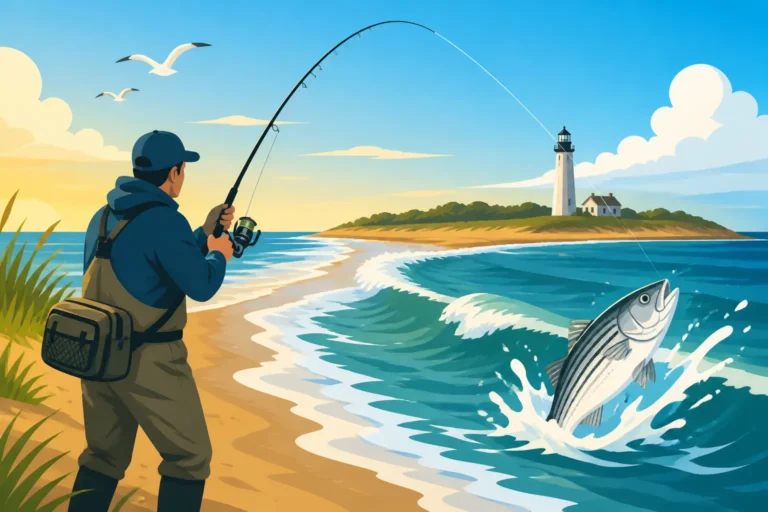
Access to these areas requires a bit more planning. You'll need a 4×4 vehicle and an Oversand Vehicle (OSV) permit from The Trustees of Reservations. Without one, you'll be hoofing it quite a distance, which is doable but tough with all your gear. Once you're out there, however, the reward is immense. The shifting sands and deep channels at Wasque Point create powerful rips where huge striped bass and aggressive bluefish congregate to ambush bait. Cape Poge, with its iconic lighthouse, offers a similar wild experience, often with a slightly calmer but still highly productive surf. These spots are particularly good during strong tidal movements, especially around the new and full moons. Night fishing here can be truly epic for trophy stripers. If you're looking for guidance on catching these powerful fish, check out our guide on How to Catch Striped Bass in Massachusetts.
South Beach (Katama Beach, Edgartown)
South Beach, also known as Katama Beach, in Edgartown, is probably the most famous and accessible surfcasting spot on Martha's Vineyard. This isn't just one beach; it's miles of expansive, sandy shoreline facing the full force of the Atlantic. What makes South Beach so fantastic for surfcasting is its sheer size and its dynamic sandbar and trough system. These underwater features change constantly, creating ideal holding areas and feeding channels for game fish.
While popular, its vastness means you can almost always find a stretch of sand to call your own, even during peak season. You can easily access it via paved roads, and there's ample parking, though it fills up fast on summer weekends. Anglers here regularly hook into striped bass and bluefish, and in late summer, it's a prime location for fluke. The outer bars can hold fish during all tides, but the troughs between the bars often become hotspots during the incoming and outgoing tides as bait gets pushed through. It’s a great spot for throwing metal lures, poppers, and even chunk bait. Just be prepared for strong waves and sometimes significant undertows, which are part of what makes it so productive.
Lucy Vincent Beach & Squibnocket Beach (Chilmark)
Moving to the more rugged and picturesque western end of the island, Lucy Vincent Beach and Squibnocket Beach in Chilmark offer a different surfcasting experience. These beaches are known for their dramatic clay cliffs, scattered boulders, and more intimate, cove-like settings compared to the vastness of South Beach. However, access can be a bit more exclusive. During the summer months, both beaches are typically restricted to Chilmark residents or those with specific permits, which can be a bummer for visiting anglers.
That said, if you can gain access, or during the off-season when restrictions are often relaxed, these spots can be incredibly rewarding. The rocky bottom and deeper water close to shore attract different forage and provide excellent structure for fish. Striped bass and bluefish are common catches, and the rocky areas can also hold tautog and other bottom dwellers. Squibnocket, in particular, has some fantastic rocky points and jetties that create strong currents and eddies where fish love to ambush prey. These spots are often best fished with bucktails, jigs, or even live bait around the rocky structure. Always double-check current access rules before you plan your trip.
Menemsha Beach (Chilmark)
Menemsha Beach, nestled next to the picturesque Menemsha Harbor, offers a unique surfcasting experience on the Vineyard. While it might not have the same reputation for wide-open, big-surf action as South Beach or Wasque, it provides excellent opportunities, especially during the evening and night. The beach itself is a mix of sand and pebbles, and its proximity to the harbor entrance means constant tidal flow and a funnel for baitfish.
One of the highlights of Menemsha is fishing around the jetties that flank the harbor entrance. These jetties provide structure that attracts striped bass, particularly at night when they feed under the cover of darkness. Bluefish are also commonly caught here. In the fall, Menemsha can be a hot spot for false albacore as they chase baitfish into the harbor mouth and along the beach. It’s also a fantastic spot for families, with easy access and amenities nearby, making it a comfortable place to fish for a few hours. Just remember that fishing directly in the harbor channel itself might have specific regulations, so always be aware of your surroundings and local signage.
Norton Point Beach (Edgartown/Katama)
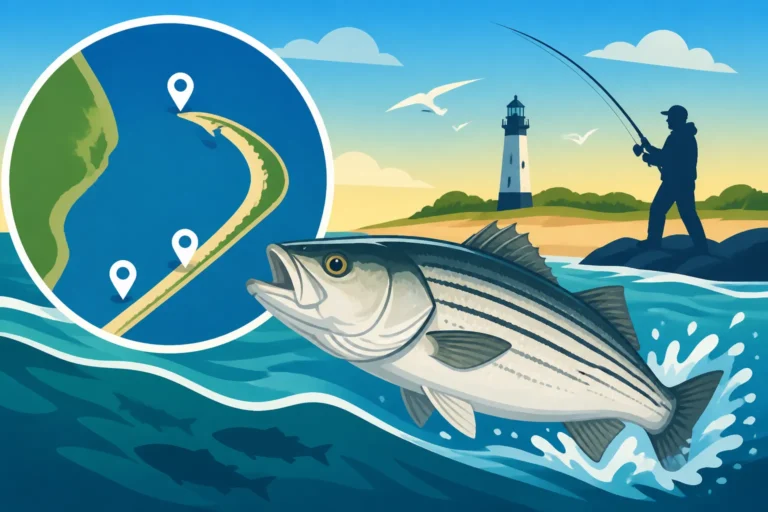
Norton Point Beach is a fascinating and often highly productive surfcasting destination that connects Chappaquiddick Island to Martha's Vineyard mainland, essentially acting as an extension of South Beach. However, this connection is dynamic – it's prone to breaching during severe storms, creating a temporary inlet that eventually fills in again, only to breach somewhere else. This ever-changing landscape creates incredibly rich and diverse fishing grounds.
Similar to Wasque, 4×4 access is typically required for Norton Point, and you'll need an OSV permit from The Trustees of Reservations. The breach, when it's open, is a legendary spot for its strong currents and the way it funnels baitfish, attracting large striped bass and bluefish. Even when the breach isn't open, the extensive sandbars, troughs, and rips along Norton Point make it prime territory for these species. Because of its dynamic nature, fishing here often means adapting to the conditions and exploring different stretches of the beach to find where the fish are holding. It can be a truly wild and rewarding experience for those willing to venture out. For specific techniques to conquer the surf, take a look at our guide on Massachusetts Surf Fishing Techniques.
Here's a quick rundown of these top spots:
| Beach/Location | Key Features | Target Species | Access Notes |
|---|---|---|---|
| Wasque Point/Cape Poge (Chappaquiddick) | Strong rips, deep channels, shifting sand, remote wilderness | Striped Bass, Bluefish | 4×4 & OSV permit required (Trustees of Reservations) |
| South Beach (Katama, Edgartown) | Vast sandy expanse, dynamic sandbars & troughs, exposed to open Atlantic | Striped Bass, Bluefish, Fluke | Paved road access, ample parking |
| Lucy Vincent & Squibnocket (Chilmark) | Rugged, rocky structure, clay cliffs, deeper water close to shore | Striped Bass, Bluefish, Tautog | Seasonal resident-only access (check current rules), rocky terrain |
| Menemsha Beach (Chilmark) | Harbor jetties, sand/pebble mix, tidal flow near harbor entrance | Striped Bass, Bluefish, False Albacore | Easy public access, amenities nearby |
| Norton Point Beach (Edgartown/Katama) | Dynamic breach potential, extensive sandbars, exposed to open Atlantic | Striped Bass, Bluefish | 4×4 & OSV permit required (Trustees of Reservations) |
Essential Tips for Successful Martha's Vineyard Surfcasting
Surfcasting on Martha's Vineyard is an art and a science. It's not just about throwing a line into the ocean; it's about understanding the environment, having the right tools, and respecting the local ecosystem. With a little preparation and knowledge, you can significantly increase your chances of a memorable catch.
Gearing Up for Island Conditions
You wouldn't bring a butter knife to a sword fight, and the same goes for surfcasting on the Vineyard. The conditions can be rugged, and the fish powerful, so having the right gear is non-negotiable. For rods, think long and strong – a 10-foot to 12-foot surf rod with a medium-heavy to heavy action is ideal for casting heavy lures and baits a good distance and handling strong fish in challenging surf. Pair this with a robust, corrosion-resistant spinning reel (size 6000-10000) spooled with 30-50 lb braided line. Braid offers sensitivity and casting distance, but always add a monofilament or fluorocarbon leader to absorb shock and resist abrasion.
When it comes to lures, variety is key. Poppers and surface swimmers are fantastic for aggressive bluefish and stripers busting on bait. Subsurface swimmers and metal lip swimmers work wonders when fish are feeding just below the surface. Jigs and bucktails are versatile and can be fished effectively in various conditions. And don't forget soft plastics like Slug-Gos or paddle tails, especially rigged weedless in shallower, rocky areas. For bait, fresh bunker (pogies), mackerel, or eels are local favorites, particularly for larger striped bass. Beyond the rod and reel, invest in a good pair of chest waders and sturdy wading boots for comfort and safety in the waves. A surf bag to carry your tackle, a fishing belt, and a reliable headlamp (for those prime night fishing sessions) are also essential. Knowing How to Catch Striped Bass in Massachusetts often starts with having the right lure for the job.
Understanding Tides, Currents, and Reading the Beach
This is where the "science" part of surfcasting comes in. Martha's Vineyard's dynamic environment means that tides and currents dictate where and when fish will feed. Simply put, fishing at the wrong tide can mean a completely barren outing, while hitting the right tide can lead to non-stop action. Always consult a local tide chart for the specific area you plan to fish. Often, the incoming or outgoing tides, especially around the peak of the tide change, are most productive as currents stir up bait and create ambush points.
"Reading the beach" involves observing the water and understanding its features. Look for rips (areas of disturbed water where currents collide), deep troughs (darker, calmer water running parallel to the beach, often between sandbars), and points or cuts in sandbars. These are all prime locations where baitfish gather or get funneled, and where predators lie in wait. Pay attention to bird activity – diving gulls or terns often indicate baitfish, and where there's bait, there are usually game fish. Fishing just before dawn or after dusk often yields the best results, as low light conditions make predators bolder and less wary. This knowledge is crucial for productive Best Time of Year to Fish in Massachusetts and even the best time of day for certain species.
Access and Conservation on Martha's Vineyard
Respecting the island's natural beauty and private property is paramount. As mentioned, some areas, especially in Chilmark, have seasonal resident-only access restrictions. Always look for signage and obey local rules to avoid fines or upsetting locals. For OSV access to spots like Wasque Point or Norton Point, you must have a valid permit from The Trustees of Reservations. These permits typically involve a fee and often sell out, so plan well in advance if you intend to drive on the beach.
Conservation is also a huge part of responsible angling. Always adhere to the current slot limits for striped bass – currently, the Massachusetts Striped Bass Slot Limit Explained is 28 to 31 inches, meaning you must release any fish under or over this range. For bluefish, be mindful of the Massachusetts Bluefish Bag Limit and Season. It’s also good practice to learn How to Identify a Keeper Striped Bass in Massachusetts to ensure you're compliant. Practice catch and release, especially for larger breeding-size fish, and handle all fish with care to ensure their survival. Use circle hooks when fishing with bait to minimize gut hooking, and properly dispose of all trash, lines, and bait containers. We are visitors in these beautiful ecosystems, and it's our responsibility to leave them as pristine as we found them.
Beyond the Beach: Other Fishing Opportunities
While surfcasting offers a thrilling, hands-on experience, Martha's Vineyard provides a wealth of other fantastic fishing opportunities if you're looking to expand your horizons or try something different. Sometimes, the fish just aren't hitting the surf, or you might be seeking species that prefer deeper waters.
Charter Fishing and Guided Trips
If you're eager to explore the deeper waters around the Vineyard, or simply want to learn from a local expert, booking a fishing charter is an excellent option. Charter captains have years of experience navigating the local waters, knowing exactly where the fish are holding and what they're biting on. They provide all the necessary gear, bait, and most importantly, the local knowledge that can make all the difference. Many charters specialize in specific species, from striped bass and bluefish to offshore tuna and shark trips, or bottom fishing for fluke and black sea bass.
Booking a charter also takes the hassle out of things like boat maintenance, trailering, and even needing your own personal fishing license, as you're typically covered under the vessel's permit, though it's always good to confirm. Websites like FishingBooker make it incredibly easy to browse available charters and guides on Martha's Vineyard, compare prices, and read reviews from other anglers. It’s a fantastic way to ensure a productive and enjoyable day on the water, whether you're a seasoned angler or a complete beginner. You can explore various options by checking out our guide on Martha's Vineyard and Nantucket Fishing Charters in Massachusetts for more information.
Disclaimer
The information provided in this guide is for general informational purposes only. Fishing regulations, access rules, and environmental conditions on Martha's Vineyard can change frequently. Always consult the official Massachusetts Division of Marine Fisheries (MassDMF) website, The Trustees of Reservations, and local signage for the most up-to-date rules and regulations before you go fishing. Your safety is your responsibility; always be aware of weather conditions, tides, and potential hazards when surfcasting.