How to catch striped bass during the fall run
The crisp air of autumn in Massachusetts brings a unique excitement to the angling community, but finding those elusive striped bass during their frenzied fall run can feel like searching for a needle in a haystack if you don't know where to look or what to use. This comprehensive guide is here to unravel the mysteries of the fall run, helping you understand the stripers' movements, pinpoint prime locations, and master the techniques that will put more fish on your line before winter fully sets in.
Decoding the Massachusetts Fall Run for Striped Bass
There's nothing quite like the energy of the striped bass fall run in Massachusetts. It’s a period of intense feeding and migration, a dramatic shift from the more predictable patterns of summer. Anglers often describe it as a frantic, sometimes frustrating, but ultimately rewarding pursuit. Understanding why this happens is the first step to truly capitalizing on it. Essentially, it's the stripers' instinctual drive to pack on calories before their long journey south to warmer waters, primarily the Mid-Atlantic states, where they'll eventually spawn.
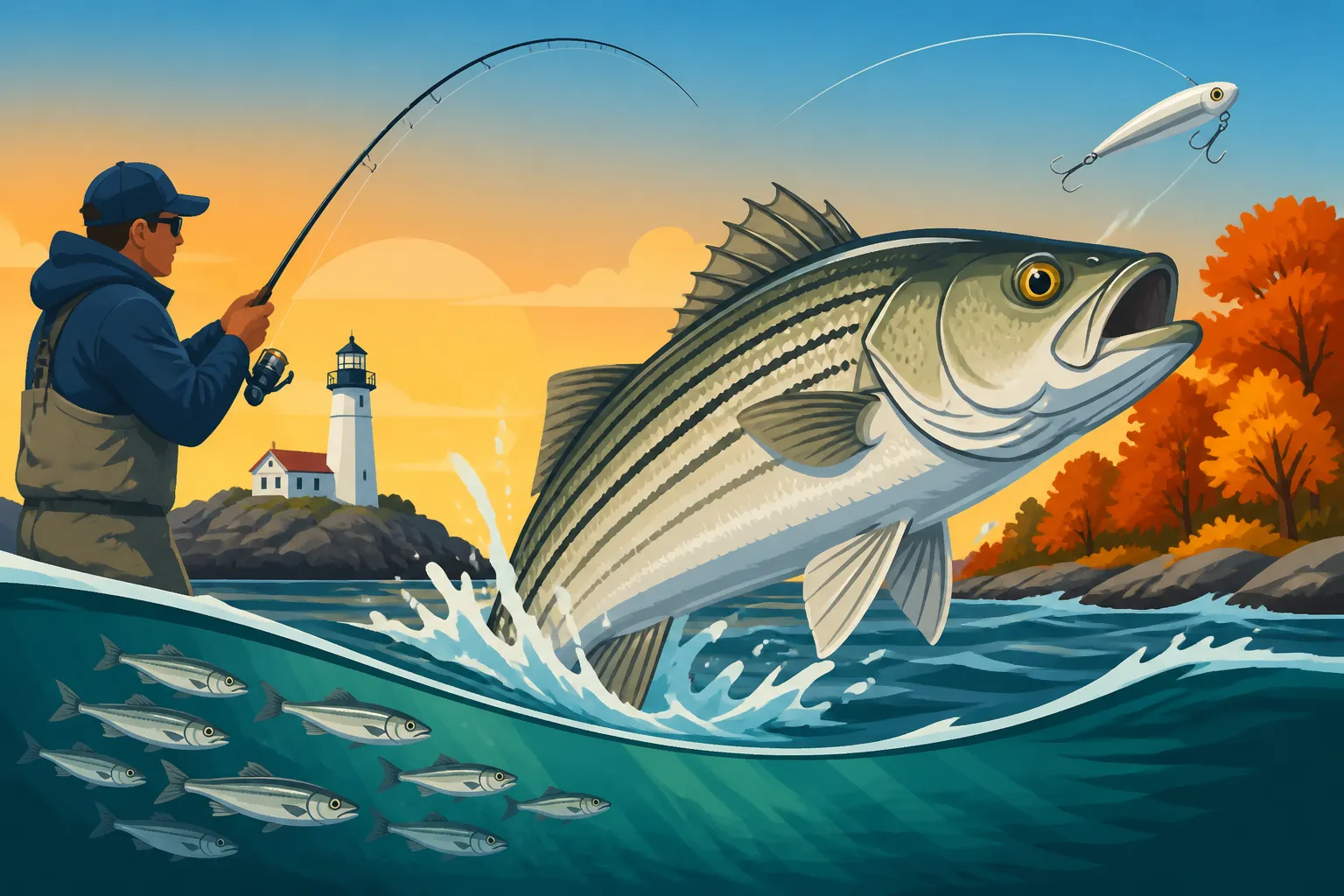
As water temperatures in the bays and along the coast begin to drop through September, October, and into November, the baitfish that stripers gorge on also start to move. Herring, menhaden (pogies), mackerel, and sand eels begin their migration out of the shallower estuaries and bays and head for deeper, warmer offshore waters. This exodus creates a natural corridor of food along the coast, turning certain stretches of Massachusetts into a superhighway for migrating stripers. These fish aren't just casually swimming; they are actively hunting, often in large schools, creating what we call "blitzes" when they erupt on bait at the surface. Knowing When striped bass leave Massachusetts in the fall can help you plan your final trips.
This intense feeding behavior means that stripers, particularly the larger ones, are often less finicky than they might be during other times of the year. They are driven by hunger and the biological imperative to migrate, making them more aggressive and often willing to strike at a wider variety of baits and lures. However, their transient nature means you often need to be mobile, following the bait and the fish. The conditions can change hourly, with a hot bite turning cold just as quickly, so patience and adaptability are key virtues during this exhilarating season.
Strategic Locations for Intercepting Fall Run Stripers
Massachusetts offers an incredible array of fishing grounds, and the fall run amplifies the potential of many of them. While stripers can pop up almost anywhere along the coast during their migration, certain locations consistently offer better opportunities due to their geography, depth, and concentration of bait. These are the spots where you’ll want to focus your efforts.
Coastal Beaches and Estuary Mouths
Long sandy beaches and the mouths of estuaries are classic fall run hotspots. As baitfish funnel out of rivers and protected bays, they pass through these choke points, creating perfect ambush opportunities for striped bass. Think about places like Duxbury Beach, Horseneck Beach in Westport, or the stretch of coastline along Plum Island. These areas offer vast expanses for surfcasting and can produce incredible action when the bait and bass align. The ebb tide, in particular, often flushes bait out, concentrating it for waiting stripers. You can find detailed tips on How to surf cast on Cape Cod beaches, which are applicable across many Massachusetts coastal areas.
Look for signs of life: diving birds, especially gulls and terns, are often the best indicators of baitfish schools being driven to the surface by predatory fish below. Often, you'll see small splashes or "nervous water" indicating baitfish skipping across the surface. Don't be afraid to cover ground; walk the beach and cast in different directions until you find a promising seam or rip current where bait might be concentrated. Sometimes, even a subtle change in bottom contour or a submerged rock pile can hold a school of stripers.
The Cape Cod Canal: A Fall Run Powerhouse
No discussion of Massachusetts striped bass fishing, especially during the fall run, is complete without mentioning the Cape Cod Canal. This iconic waterway acts as a natural funnel for migrating baitfish and, consequently, for striped bass. The sheer volume of water moving through the Canal, coupled with its deep channels and rocky structure, makes it a premier destination. The fish here are often larger, drawn to the powerful currents and abundant food.
Fishing the Canal during the fall run is a unique experience that requires specific techniques and a keen understanding of the tides. Both the strong incoming and outgoing tides can be productive, but many anglers swear by a moving tide, especially a How to fish a falling tide at the Cape Cod Canal, which sweeps bait from Buzzards Bay into Cape Cod Bay or vice-versa. Expect strong currents and be prepared to cast heavy lures to get down to the fish. The key to success here often lies in timing your trips with the specific phases of the tide and being prepared for large crowds, particularly on weekends when the bite is hot. Access points along the Canal, like those at Scusset Beach or the various parking areas, allow anglers to spread out, though popular spots can still get quite busy.
Rocky Shorelines and Inshore Reefs
Beyond sandy beaches and the Canal, rocky shorelines and shallow inshore reefs can be incredibly productive. These areas offer structure where stripers can hide and ambush prey. Places like the rocky points of the North Shore, sections of the Outer Cape, and the islands of Boston Harbor provide excellent opportunities. These spots might not see the massive blitzes of open water, but they often hold resident fish or smaller schools that are just as hungry.
When fishing these areas, you're often looking for current seams, eddies behind rocks, or deeper pockets close to shore. Topwater lures can be incredibly effective here, especially during low light conditions or when stripers are actively busting on bait. The cover provided by the rocks also means fish feel more secure and might stay in an area longer. Always be mindful of submerged rocks and snags when casting and retrieving, as lost tackle can be a real frustration in these prime locations.
Mastering Your Tackle: Rods, Reels, and Lures for the Fall Run
Equipping yourself properly for the Massachusetts fall run is crucial. The fish are often aggressive, and the conditions can be demanding, especially if you're battling strong currents or casting heavy lures into a stiff breeze. A well-matched rod and reel, coupled with the right selection of lures, can make all the difference.
Rods and Reels: Power and Precision
For surfcasting along beaches or the Cape Cod Canal, you'll generally want a medium-heavy to heavy surf rod, typically between 9 and 11 feet in length. This length provides the leverage needed to cast heavier lures long distances and to fight larger fish in strong currents. Brands like St. Croix, Tsunami, and Lamiglas are popular choices among seasoned surfcasters. Pairing this with a robust spinning reel in the 6000 to 10000 size range, capable of holding 250-350 yards of 30-50 lb braided line, is ideal. Look for reels with strong drag systems, as fall run stripers can really pull. Many anglers find great deals on braid or fluorocarbon leaders on Amazon, which can significantly enhance your setup without breaking the bank.
If you're fishing from a boat or kayak, lighter tackle is often preferred, though still powerful. A 7 to 8-foot medium-heavy fast-action spinning rod with a 4000 to 5000 size reel is versatile for jigging, casting, and even live-lining. This setup offers more sensitivity and less fatigue, which is great for a full day on the water. Regardless of your fishing platform, always use a strong leader, typically 30-60 lb fluorocarbon, to prevent cut-offs from sharp teeth or abrasive structures.
Lures and Baits: Matching the Hatch
The "matching the hatch" principle is never more important than during the fall run. Striped bass are often keyed in on specific baitfish. Your lure choice should mimic the size, shape, and swimming action of the prevalent bait.
Topwater Plugs: When stripers are actively feeding on the surface, driving bait up, nothing beats the excitement of a topwater plug. Pencil poppers, spook-style walkers, and poppers in white, bone, or natural baitfish colors can trigger explosive strikes. Seeing a big striper crash a topwater lure is an unforgettable experience.
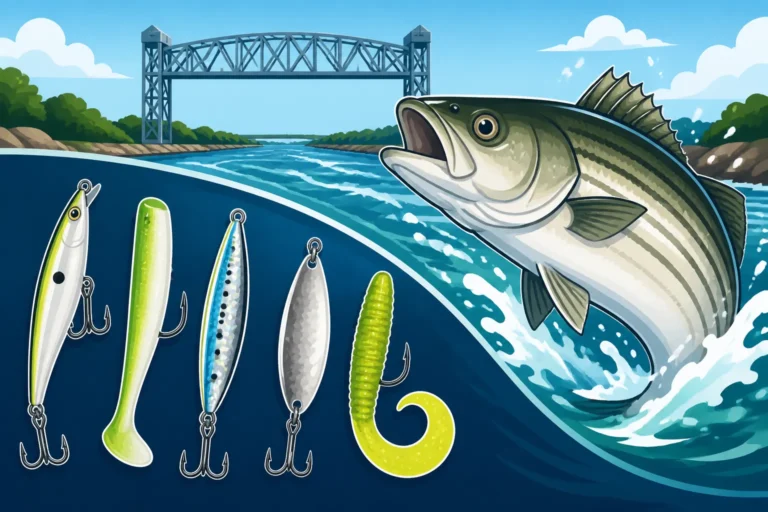
Swimming Plugs: These are workhorses for the fall run. Darter plugs, minnow-style swimmers, and shallow-diving plugs are excellent for imitating fleeing baitfish just below the surface. They work well in currents and can be cast long distances. Look for options in silver, blue, green, and black, mimicking herring or mackerel. Bomber, Daiwa, and Yo-Zuri are reputable brands that offer a wide array of effective swimming plugs, many of which are readily available on Amazon.
Soft Plastics and Jigs: Soft plastic paddle tails rigged on jig heads are incredibly versatile. They can be fished shallow or deep, slowly retrieved, or jigged aggressively. Colors like chartreuse, white, and bunker (dark green/black back with silver sides) are often deadly. Bucktail jigs, especially when tipped with a pork rind or a soft plastic trailer, are also highly effective, particularly in areas with strong current like the Canal or around rocky structure. These can imitate squid or bottom-dwelling bait.
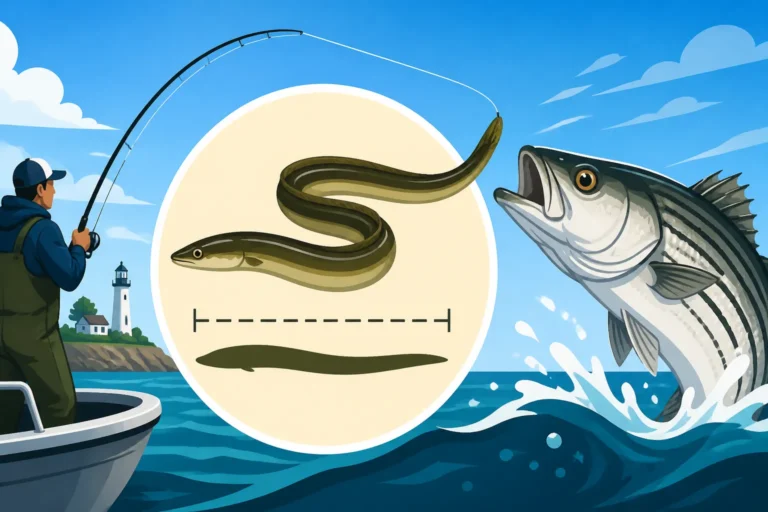
Live Bait: If conditions allow and you can acquire it, live bait is often irresistible to fall run stripers. Live eels are legendary for enticing larger fish, particularly at night or in moving water. Other effective live baits include menhaden (pogies), mackerel, and herring, if regulations permit their use and you can catch them. Live-Lining Eels for Massachusetts Striped Bass is a technique worth mastering for trophy fish.
Here's a quick reference for common fall run lures:
| Lure Type | Best Conditions | Common Colors | Target Depth | Notes |
|---|---|---|---|---|
| Topwater Plugs | Surface blitzes, low light, calm water | White, Bone, Chrome, Yellow | Surface | Exciting strikes, mimics fleeing bait |
| Swimming Plugs | Active feeding, current, varied depths | Silver, Blue, Green, Bunker | Sub-surface | Versatile, long casting, mimics baitfish |
| Soft Plastics | Versatile, can mimic various bait, strong currents | Chartreuse, White, Bunker | All depths | Great for jigging, paddle tail action |
| Bucktail Jigs | Deep water, strong current, bottom structure | White, Yellow, Green, Chartreuse | Mid to bottom | Effective with trailers, mimics squid/bait |
| Live Eels | Night fishing, targeting large stripers | N/A | All depths | Highly effective for trophy fish |
Effective Techniques to Hook Fall Run Striped Bass
Having the right gear is only half the battle; knowing how to present it effectively is where experience and technique come into play. The fall run demands adaptability, as stripers can be found in various environments and might prefer different presentations depending on the day, tide, or available bait.
Surfcasting for Migrating Schools
Surfcasting is perhaps the most iconic way to target fall run stripers from shore. The goal is often to cast far enough to reach deeper channels or the outer edges of breaking waves where baitfish might be congregating. Long casts with heavy lures are often necessary. After casting, vary your retrieve speed. Sometimes a slow, steady retrieve is best, mimicking a wounded baitfish, while other times a faster, erratic retrieve can trigger a reaction strike, especially when fish are aggressively chasing.
Pay close attention to wave action and currents. Rip currents, where water flows back out to sea, are prime ambush points for stripers. Casting into these rips and allowing your lure to drift through them can be incredibly productive. Remember to keep your rod tip up during the retrieve to maintain proper lure action and sensitivity, especially with swimming plugs. Practicing your casting technique beforehand can really pay off in maximizing your time on the water.
Boat and Kayak Strategies
For those with access to a boat or kayak, the fall run opens up many possibilities beyond the shore. You can easily access offshore reefs, follow bird activity, and cover vast amounts of water to locate schools of migrating stripers. Trolling with swimming plugs or umbrella rigs is a popular technique for covering ground, especially in areas like Nantucket Sound or off the Outer Cape. Adjust your trolling speed to match the bait and lure action.
When you locate a blitz – a situation where stripers are actively busting on bait at the surface – stealth is paramount. Approach cautiously from upwind or upcurrent, cut your engine early, and drift into casting range. Avoid motoring directly into the blitz, as this can scatter the fish. Once in range, casting soft plastics or topwater lures into the melee can lead to constant action. For more mobile anglers, learning how to catch striped bass from a kayak safely offers an incredible advantage for stealthily getting close to the action in calmer waters.
Live-Lining and Chunking
When stripers are feeding aggressively but not necessarily busting on the surface, live-lining can be a devastatingly effective technique. This involves hooking a live baitfish (like a pogie or mackerel) and letting it swim naturally in an area where stripers are known to be. The natural swimming action is often irresistible. This is particularly effective near structure or in areas with strong current. Make sure to use a circle hook to minimize gut-hooking and ensure a healthy release if you plan to let fish go, especially if you're trying to abide by the Massachusetts Striped Bass Slot Limit Explained.
Chunking, on the other hand, involves cutting up baitfish into pieces and drifting them in a chum slick or casting them into likely holding areas. This technique works well from both shore and boat, attracting stripers with the scent of cut bait. Menhaden and mackerel are excellent choices for chunk bait. Rig a piece of bait on a circle hook with a minimal weight, allowing it to drift naturally with the current.
Timing Your Fall Run Expeditions
The fall run isn't just about where you fish or what you use; when you go can often be the most critical factor. Stripers are creatures of opportunity during this migration, and certain environmental cues dictate their feeding behavior and movement patterns.
Tides and Currents: The Angler's Clock
Tides are the lifeblood of successful fall run fishing, particularly in areas like the Cape Cod Canal or estuary mouths. Moving water concentrates bait and activates stripers. Both incoming and outgoing tides can be productive, but many anglers have a preference. On the outgoing tide, baitfish are often swept out of shallow bays and rivers, creating a feeding frenzy at the choke points. Conversely, the incoming tide can push bait into new areas, attracting hungry bass. Pay attention to the moon phases as well; new and full moons typically bring stronger tides, which can mean more intense feeding periods. The Best tide for fishing the Cape Cod Canal is often debated, but a strong moving tide is almost always preferred.
However, the period of slack tide, when the current slows, can be less productive, as bait disperses and stripers become less active. It's often best to plan your trips around the peak of the tide movement, roughly two hours before and two hours after the high or low tide, to maximize your chances.
Weather and Water Temperature: Reading the Conditions
Weather plays a significant role in the fall run. Cool, crisp autumn days often bring with them brisk winds, which can be a blessing or a curse. A light chop on the water can actually help obscure your presence and make stripers less wary, while strong winds can make casting challenging and uncomfortable. Overcast days and periods of low light (dawn, dusk, and night) are often prime times, as stripers feel more confident hunting under the cloak of darkness or reduced visibility.
Water temperature is the ultimate trigger for the fall migration. As the inshore waters cool below 60 degrees Fahrenheit and continue to drop into the low 50s, the urgency for stripers to migrate and feed intensifies. A sudden cold snap can often kickstart a hot bite, as both bait and predators respond to the temperature drop. Keeping an eye on local water temperature reports can give you a significant advantage in timing your trips. Remember that When striped bass arrive in Massachusetts waters and when they leave are tied directly to these temperature fluctuations.
The Massachusetts fall run for striped bass is an incredible, albeit often challenging, time to be an angler. By understanding the stripers' motivations, targeting the right locations, employing effective techniques with appropriate tackle, and timing your efforts with the rhythms of the ocean, you can experience some of the most exciting fishing the state has to offer.
Disclaimer
This article is for general informational purposes only and does not constitute professional advice. Laws, prices and regulations vary by location and change over time. Consult a qualified professional for guidance on your specific situation.