Best rig for scup and porgy fishing
Trying to figure out the perfect fishing rig for scup and porgy in Massachusetts waters can feel like a riddle sometimes. You're out there, the fish are biting, but your usual setup just isn't cutting it, or you're getting tangled up in kelp more than you're reeling in dinner. This guide is all about simplifying your approach, helping you build and effectively use the best rigs to consistently catch scup and porgy, no matter if you're fishing from a pier, a boat, or the shore.
Understanding Scup and Porgy: Why Your Rig Matters
Before we dive into the nitty-gritty of knots and sinkers, let's chat about scup and porgy themselves. These aren't your elusive, deep-sea monsters, but they're not always simple catches either. They're found in abundance in Massachusetts's coastal waters, especially around rocky structures, mussel beds, and sandy bottoms. They have small, downturned mouths, which is a crucial detail when choosing your hooks. They're also notorious bait stealers if your rig isn't set up just right. Ignoring their feeding habits and preferred habitats when designing your rig is like trying to catch a mouse with a bear trap – it's just not going to work efficiently.
What Makes Scup and Porgy Unique Targets?
Scup, also known as porgy, are panfish of the saltwater world. They often travel in schools and are quite aggressive once they find a bait they like. They're bottom feeders, which means your bait needs to be presented near or on the seabed. Their diet typically consists of small crustaceans, worms, and mollusks. This means they're not going to chase after a flashy lure that's whizzing by; they want something small, natural, and easy to suck up from the bottom. This bottom-dwelling, schooling behavior directly influences the best rig choices, favoring multi-hook setups that keep bait close to the seafloor. You'll find them in estuaries, harbors, and along the open coast, making them accessible to many anglers.
One common frustration anglers experience is the "pecking" bite. Scup and porgy can be incredibly finicky, nibbling at the bait without fully committing. If your hooks are too large, or your bait presentation is clunky, you'll feel those taps but never get a solid hookset. This often leads to wasted bait and missed opportunities, which can be disheartening when you know the fish are there. Understanding their delicate feeding style is the first step toward building a rig that converts those light bites into hooked fish. Plus, knowing What scup is and where to catch it is key to targeting them effectively.
Common Frustrations with Subpar Rigs
Many anglers, especially those new to saltwater bottom fishing, often start with a basic single-hook bottom rig. While this can sometimes work, it's often inefficient for scup and porgy. The primary issue is presentation. A single hook might not keep the bait directly in the strike zone of a schooling fish, or it might present the bait too far off the bottom. Another major problem is tangling. Imagine dropping a rig with too many loose components or improper leader material into a rocky area. You'll spend more time re-tying than fishing, and that's just no fun.
Another frustration is hook size. Using hooks that are too large means the fish can nibble around the edges of the bait without ever getting the hook point into their mouth. They'll strip your bait clean in seconds, leaving you with an empty hook and a sigh of exasperation. Conversely, hooks that are too small can get swallowed deep, making removal difficult and potentially harming the fish if you plan to release them. Finding that sweet spot in hook size and ensuring your rig keeps the bait accessible to their small mouths is paramount for a successful outing catching Scup and Porgy Fishing in Massachusetts.
The Go-To Rig: The High-Low Top-and-Bottom Rig
When it comes to consistently catching scup and porgy, the high-low rig, also sometimes called a top-and-bottom rig, is often the undisputed champion. This rig is designed to present multiple baits at varying depths just off the bottom, maximizing your chances when fish are schooling. It's robust enough for a variety of conditions and relatively simple to tie once you get the hang of it. You'll see seasoned anglers on any Massachusetts pier or party boat relying on this classic setup for good reason. It works.
The beauty of the high-low rig is its efficiency. You're not just fishing one bait; you're fishing two, sometimes three, increasing your odds with every drop. This is especially effective when targeting schooling fish like scup and porgy, where competition for food can be high. It also allows you to experiment with different baits simultaneously, quickly identifying what the fish prefer on any given day. If you're looking to catch a good number of fish for the table, this is the rig that will help you fill your cooler.
Anatomy of a Classic High-Low Rig
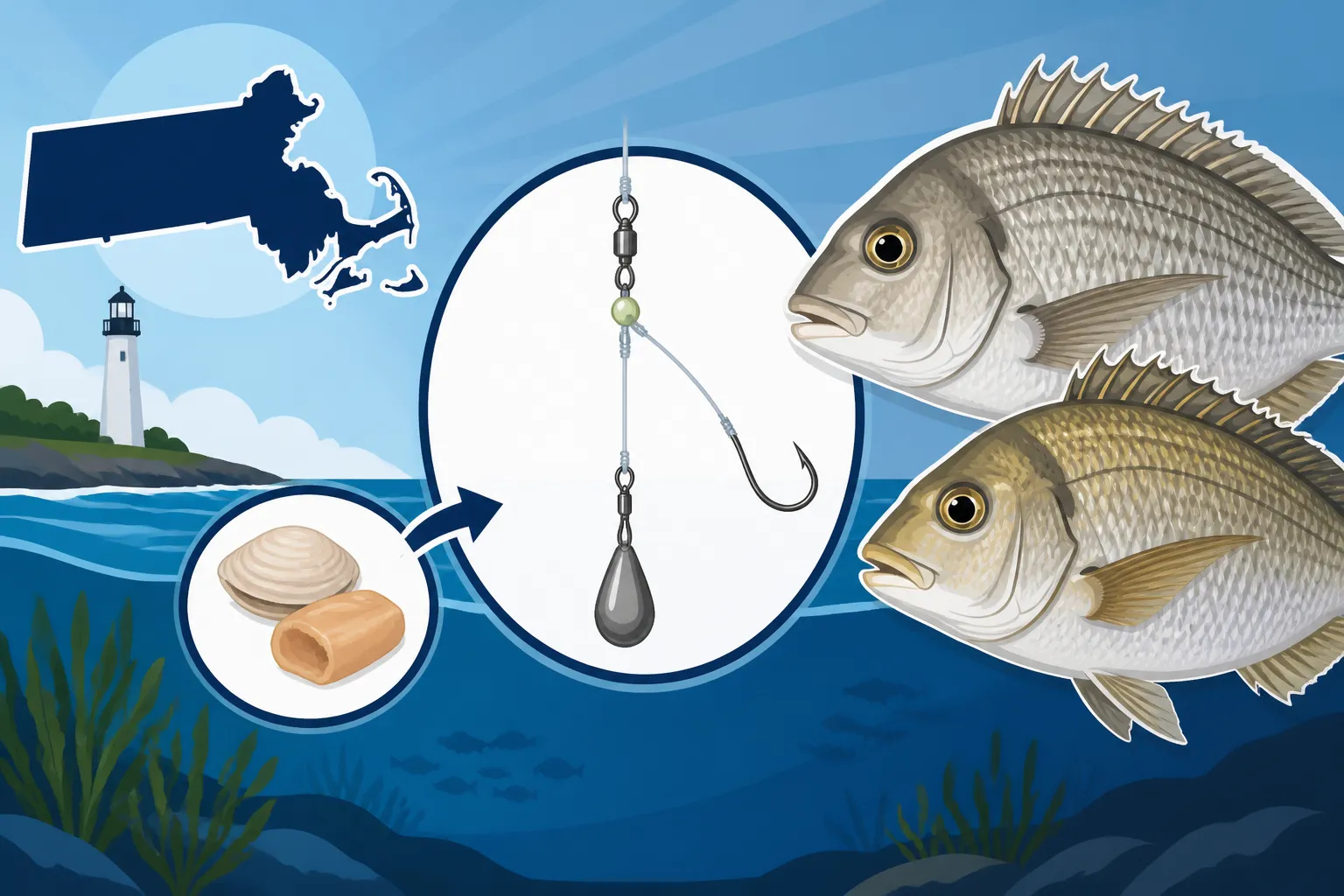
A standard high-low rig consists of a main leader line, typically monofilament or fluorocarbon, with two dropper loops (or snelled leaders tied onto swivels) spaced a foot or so apart. At the very bottom, you'll have a loop for attaching your sinker, and at the top, a swivel to connect to your main line. The hooks are usually small to medium, matching the scup's mouth size, and often snelled directly to short pieces of leader for better presentation. For scup, a #2 or #1 bait holder hook is a good starting point, but some anglers go as small as a #4, especially if the bites are very light. You can find pre-tied high-low rigs on sites like Amazon, which can be a great time-saver, but knowing how to tie your own is a valuable skill.
The key components are:
- Main Leader Line: 20-30 lb monofilament or fluorocarbon, about 3-4 feet long. Fluorocarbon offers better abrasion resistance and is less visible underwater, which can be an advantage in clear water.
- Hooks: Two (or three) #4 to #1 bait holder hooks. These hooks have barbs on the shank to hold your bait in place.
- Barrel Swivel: One at the top to prevent line twist.
- Sinker: A pyramid, bank, or Sputnik sinker, typically 1 to 4 ounces, depending on current and depth.
- Leader Material for Snells (optional): If you're snelling your own hooks, use lighter leader, perhaps 15-20 lb test, for the snells.
Step-by-Step Assembly for Success
Tying your own high-low rig might seem daunting at first, but it's really quite simple once you practice a few times. Here's a straightforward way to do it:
- Cut Your Leader: Start with a 3-4 foot section of your main leader line (e.g., 25 lb monofilament).
- Tie the Sinker Loop: At one end of your leader, tie a surgeon's loop or a simple overhand loop. This is where your sinker will attach.
- Create the First Dropper Loop: Measure up about 12-18 inches from the sinker loop. Fold the line back on itself to create a loop about 4-6 inches long. Tie a dropper loop knot (also known as a surgeon's loop with a twist). Make sure the loop stands out perpendicular to the main line. This is where your first hook will go. Some anglers prefer to tie a snelled hook directly to the main line using a triple surgeon's knot for a stiffer presentation.
- Create the Second Dropper Loop: Measure up another 12-18 inches from the first dropper loop and repeat the process to create your second dropper loop.
- Attach the Barrel Swivel: At the very top end of your leader, tie on a sturdy barrel swivel using a Palomar knot or improved clinch knot. This swivel connects your entire rig to your main fishing line and helps reduce line twist, especially important when you're reeling in fish that might spin.
- Add the Hooks: Now, attach your snelled hooks to the dropper loops. You can either use pre-snelled hooks that simply loop through your dropper loop, or you can snell your own hooks onto short lengths of leader and then tie those to your dropper loops. For scup, hooks in the #4 to #1 range are ideal. How to catch scup in Massachusetts often relies on this exact setup.
This method gives you a reliable, multi-bait presentation that keeps your offerings right in the face of hungry scup and porgy. When choosing your hooks and line, think about the local conditions; for example, if you're fishing in an area with a lot of structure, consider a slightly heavier leader to prevent break-offs.
Variations and Adaptations for Different Conditions
While the high-low rig is a workhorse, sometimes conditions or personal preference call for a slight variation. Understanding these alternatives can make you a more versatile and successful angler, especially when the fish are finicky or the environment demands a different approach. Whether you need more sensitivity, a stealthier presentation, or simply want to try something new, there's a rig for that.
Remember, the best rig isn't always one-size-fits-all. Being able to adapt on the fly is a hallmark of a great angler. Having a few different rigs pre-tied or knowing how to quickly adjust your setup can make all the difference on a slow day.
The Dropper Loop Rig: Simplicity and Sensitivity
The dropper loop rig is essentially a streamlined version of the high-low, often used for a single bait presentation or when you want a more direct connection to the fish. It involves creating a single loop in your leader line, off which your hook hangs. This rig can offer greater sensitivity, allowing you to feel even the lightest nibbles, which is particularly helpful if scup are being shy. It's also less prone to tangling in lighter currents or when casting shorter distances from shore.
To tie a simple dropper loop rig:
- Start with Leader: Take a 2-3 foot section of leader material.
- Tie Dropper Loop: Create a single dropper loop about 12-18 inches from one end.
- Attach Hook: Slip a snelled hook through the dropper loop.
- Attach Sinker: At the very bottom, tie a loop for your sinker.
- Attach Swivel: At the top, tie a barrel swivel to connect to your main line.
This rig is excellent for targeting individual fish you see on your sonar, or when you're fishing in very clear waters where a more subtle presentation is needed. It’s also a good choice if you're trying to avoid snags in rocky bottoms, as a single hook is less likely to get hung up than multiple. For those days where you're fishing with lighter tackle or in calm waters, the dropper loop rig can give you the edge you need.
The Carolina Rig for a Single Bait Presentation
While not as common for multiple scup as the high-low, a Carolina rig can be surprisingly effective when you want a single, natural presentation right on the bottom. This rig is particularly good for presenting a small piece of bait that drifts freely near the seabed, which can be irresistible to a cautious scup. It’s also a great option if you’re fishing a soft, sandy bottom where you want your bait to settle naturally, mimicking a bottom-dwelling critter.
The Carolina rig consists of:
- Sinker: A sliding egg sinker (or bullet weight) threaded directly onto your main line.
- Bead (optional): A small plastic or glass bead placed behind the sinker to protect your knot.
- Swivel: A small barrel swivel tied to your main line, which stops the sinker and bead.
- Leader: A 12-24 inch length of fluorocarbon leader tied to the other end of the swivel.
- Hook: A small bait holder hook (#4 to #1) tied to the end of the leader.
The beauty of the Carolina rig is that the fish can pick up the bait and run with it without feeling the weight of the sinker, leading to more confident bites. This is a subtle yet powerful rig when targeting picky fish or when you want to avoid giving them any resistance. It’s a fantastic choice for areas with calmer currents or when fishing from shore where long, smooth casts are important.
Terminal Tackle Choices: Hooks, Sinkers, and Swivels
The effectiveness of any rig hinges on the quality and appropriate selection of its terminal tackle. These small but mighty components are your direct link to the fish.
Hooks: Size and Style for Scup
As mentioned, scup and porgy have relatively small mouths. Therefore, using hooks that are too large will result in missed bites and stolen bait. For scup, bait holder hooks in sizes #4 to #1 are typically the sweet spot. A #2 hook is a very popular all-around choice. The "bait holder" aspect is crucial because the small barbs on the shank help keep your soft baits, like clam or squid, securely in place, even with those aggressive pecking bites. Circle hooks can also be effective, especially if you're practicing catch and release, as they tend to hook in the corner of the fish's mouth. Ensure your hooks are sharp, as scup can have somewhat tough mouths. You can find a good selection of these hooks on Amazon.
Sinkers: Anchoring Your Bait
Your sinker choice depends heavily on current, depth, and bottom structure.
- Pyramid Sinkers: Excellent for holding bottom in current, especially on sandy or muddy bottoms. Their flat sides prevent them from rolling.
- Bank Sinkers: A versatile, tear-drop shape that works well in many conditions, but can roll in strong currents.
- Sputnik Sinkers: These are ideal for very strong currents or rough bottoms, as their wires dig into the sand to prevent movement. They can be a lifesaver in places like the Cape Cod Canal Fishing Guide for Massachusetts Anglers where currents can rip.
- Egg Sinkers: Primarily used for Carolina rigs, they slide freely on the line, offering less resistance to biting fish.
Always carry a range of sinker weights (from 1 to 4 ounces) to adapt to changing conditions. You want just enough weight to hold bottom without being excessively heavy.
Swivels: Preventing Line Twist
Swivels are the unsung heroes of many fishing rigs, especially those that involve bait spinning in the current. A high-quality barrel swivel, or even a ball-bearing swivel for more demanding situations, prevents your main line from twisting. Line twist weakens your line and can lead to tangles and frustrating break-offs. Use small, strong swivels that don't add unnecessary bulk to your rig. Connecting your main line to your leader via a swivel is always a good practice, particularly when Fishing License Rules for Massachusetts Boaters require specific gear setups.
| Rig Type | Key Features | Best Use Case | Pros | Cons |
|---|---|---|---|---|
| High-Low Rig | 2-3 hooks, sinker at bottom, dropper loops | Schooling fish, varying depths near bottom | Maximizes chances, multiple baits | More prone to tangles if not tied well |
| Dropper Loop Rig | 1 hook, sinker at bottom, single dropper loop | Finesse presentation, sensitive bite, lighter current | High sensitivity, less prone to snags | Only one bait presented |
| Carolina Rig | Sliding sinker, bead, swivel, leader, 1 hook | Natural bait presentation on sandy bottom, shy fish | Less resistance to fish, stealthy | Can be less direct control over bait |
Baiting and Fishing Strategies for Massachusetts Waters
Having the perfect rig is only half the battle. Knowing what bait to use and how to present it effectively, along with understanding prime fishing locations and techniques, will significantly increase your success when targeting scup and porgy in Massachusetts. These fish are generally not too picky, but certain baits consistently outperform others.
Many anglers overlook the importance of fresh bait and proper presentation. A well-constructed rig with old, improperly hooked bait is still going to yield poor results. Pay attention to the details, and you'll be rewarded with a cooler full of delicious scup.
Best Baits to Present on Your Rig
Scup and porgy are opportunistic feeders, but they have their favorites. The fresher the bait, the better your chances!
- Clam: Without a doubt, fresh clam (surf clam or sea clam) is the reigning champion for scup and porgy. It's soft, releases a strong scent, and is a natural food source for them. Cut small strips that cover your hook point but aren't so large that the fish can easily strip it off. You can often buy fresh clam at local bait shops along the coast.
- Squid: Small strips of fresh squid are another excellent choice. Squid is tougher than clam, making it more resistant to bait stealers and allowing you to catch multiple fish on one piece of bait. It also has a good scent and visible appeal.
- Worms: Bloodworms or sandworms can be incredibly effective, especially for smaller scup or when they're being particularly finicky. Thread them onto your hook, leaving a bit of tail to wiggle. These can be pricey, but sometimes they are exactly what the fish want.
- Mackerel/Herring Chunks: While less common for scup, small chunks of fresh mackerel or herring can sometimes attract larger porgy, especially when they're feeding aggressively. Ensure the pieces are small enough for their mouths.
For any bait, the key is to present it naturally. Don't overload the hook; just enough to cover the point and barb is usually sufficient. Remember, they have small mouths!
Effective Fishing Techniques and Locations
Scup and porgy are bottom dwellers, so your primary technique will involve getting your bait down to where they live.
- Drop and Wait: This is the most common technique. Cast your rig out, let your sinker hit the bottom, and then retrieve any slack until your line is taut. Keep your rod tip slightly elevated and watch for those tell-tale taps. When you feel a series of strong taps or a steady pull, set the hook with a swift, firm upward motion.
- Slow Retrieve/Drift: If you're fishing from a boat or in a gentle current, a very slow retrieve or letting your boat drift can allow your bait to cover more ground. This mimics natural movement and can entice strikes from scattered schools.
- Jigging (with bait): Sometimes, a slight jigging motion – lifting and dropping your rod tip a few inches – can stir up the bottom and attract attention to your bait. This can be especially effective if the bite is slow.
- Targeting Structure: Look for areas with rocky bottom, mussel beds, jetties, piers, and even sandy patches adjacent to structure. These are prime foraging grounds for scup. Spots like those found in Best Shore Fishing Spots in Massachusetts or Best bottom fishing spots near Provincetown are classic scup grounds. In Massachusetts, you can often find them around the rocky shores of Cape Cod and the Islands, as well as in harbors and estuaries along the coast. Remember to check Massachusetts Recreational Fishing Rules and Bag Limits for species, size, and quantity limits before heading out.
When fishing from a pier or bridge, casting out and letting your rig settle is usually sufficient. From a boat, you can anchor over known structure or drift over promising bottom. No matter where you're fishing, always be mindful of the currents and adjust your sinker weight accordingly. Scup season is usually quite long, often spanning from spring through fall, offering plenty of opportunities to use these rigs effectively. For specific regulations and season dates, be sure to consult the Massachusetts Fishing Regulations Pamphlet, Explained or the MassWildlife website.
Disclaimer
This article is for general informational purposes only and does not constitute professional advice. Laws, prices and regulations vary by location and change over time. Consult a qualified professional for guidance on your specific situation.