What a retired brood trout is
It's always a bit confusing when you hear terms like "brood trout" or "retired brood trout" popping up in conversation among Massachusetts anglers, especially if you're relatively new to the fishing scene or just trying to understand MassWildlife's stocking efforts. You might wonder if these fish are somehow different, or why they get a special designation. This guide is here to unravel that mystery, explaining exactly what a retired brood trout is, why they're so significant, and what exciting opportunities they bring to our local waters for us, the anglers!
Understanding Brood Trout in Massachusetts
Before we dive into what "retired" means, let's get a clear picture of what a "brood trout" actually is. Think of them as the unsung heroes of our state's trout stocking program. These are the parent fish, the vital foundation of MassWildlife's efforts to ensure there are plenty of trout for us to catch year after year across the Commonwealth. Without them, our beloved fishing spots wouldn't be nearly as vibrant.
What Exactly is a Brood Trout?
A brood trout is essentially a breeding-age trout that is kept in a hatchery specifically for the purpose of producing eggs. MassWildlife operates several hatcheries across Massachusetts, like the ones in Sandwich, Palmer, and Sunderland, and these facilities are where these special fish live. Their job is to mature, remain healthy, and ultimately provide the next generation of trout that will eventually find their way into our rivers, streams, and ponds. It's a highly specialized and controlled environment, ensuring the best possible genetics and health for future stockings.
These broodstock aren't just any trout; they are carefully selected specimens. Hatchery staff monitor their growth, health, and genetic lines to maintain a robust and diverse population. They're fed a specialized diet and live in optimal conditions to maximize their reproductive potential. It's a huge undertaking, requiring a lot of expertise and dedication to raise these fish from tiny eggs to magnificent breeders. The goal is to produce strong, healthy fingerlings that will thrive once stocked.
The Life Cycle of a Hatchery Trout
The journey of a hatchery trout, especially one destined to become a brood fish, is fascinating. It begins with the fertilization of eggs, which are then carefully incubated. Once hatched, these tiny fry are incredibly delicate and require constant attention. As they grow into fingerlings, they're moved to larger tanks or raceways, where their diets are meticulously controlled to promote healthy development.
For the vast majority of these trout, their destiny is to be stocked as catchable-sized fish for recreational angling. However, a select number are identified early on for their potential to become future breeders. These chosen few continue to grow in the hatchery, reaching sexual maturity, which can take a few years depending on the species. They become the "brood trout" – large, robust fish capable of producing thousands of eggs each year, perpetuating the cycle and sustaining our Massachusetts Trout Stocking Schedule.
The "Retired" Status: What It Means for Anglers
So, we know what a brood trout is. Now, let's tackle the "retired" part. This is where things get really interesting for us as anglers, because a "retired" brood trout isn't just taking it easy; it's getting a glorious second act in our local waterways, often providing some of the most exciting fishing experiences around.
Why Trout Get "Retired" from Breeding Programs
Just like professional athletes or any animal raised for production, brood trout eventually reach a point where their efficiency in the breeding program declines. This isn't because they're sick or unhealthy; quite the opposite, in fact. They've simply fulfilled their primary purpose as breeders. Common reasons for retirement include age – older fish might produce fewer eggs or their egg quality might decrease. Genetic considerations also play a role; hatcheries need to maintain genetic diversity, and continually breeding from the same fish lines isn't ideal in the long run.
Sometimes, it's also about managing hatchery space and resources. Keeping older, larger fish in a hatchery costs more in terms of feed and space, and that space can be better utilized for the next generation of prime breeding stock. So, when a brood trout is "retired," it doesn't mean it's at the end of its life, but rather the end of its breeding career. These fish are still incredibly healthy, strong, and often quite large, making them highly desirable for stocking.
The Second Life of a Retired Brood Trout
This is the truly exciting part! Instead of being culled, these retired brood trout are given a fantastic second life: they are stocked directly into public waters for recreational fishing. Imagine going out to your favorite pond and hooking into a trout that's significantly larger than the average stocked fish, often weighing several pounds! That's frequently a retired brood trout. MassWildlife recognizes the value these magnificent fish still hold and makes a point of releasing them where anglers can enjoy the thrill of catching them.
These fish are already accustomed to living in a hatchery environment, meaning they are strong and healthy when released. Their size and resilience mean they adapt well to their new surroundings, providing a fantastic bonus for anglers. It's truly a win-win situation: the hatchery efficiently manages its breeding stock, and we get the chance to tangle with some truly impressive trout. It's a prime example of Why Massachusetts stocks retired brood trout is such a great program.
Why Massachusetts Stocks Retired Brood Trout
Massachusetts has a long-standing commitment to providing excellent fishing opportunities for its residents and visitors. Stocking retired brood trout is a thoughtful and strategic part of that commitment. It's not just about putting more fish in the water; it's about enhancing the overall quality of the fishing experience in a responsible way.
Boosting Recreational Fishing Opportunities
Let's be honest, who doesn't love the idea of catching a really big fish? That's precisely what retired brood trout offer. These aren't your typical 10-12 inch stockers; they're often larger, sometimes considerably so, and they've had years to grow strong. When one of these giants hits your line, you know you're in for a real fight. This provides an elevated challenge and an immense sense of accomplishment for anglers, from seasoned veterans to excited beginners. It turns a regular fishing trip into a potential "trophy catch" adventure, creating lasting memories.
Their presence adds an extra layer of excitement to any fishing trip. Knowing that there's a chance to hook into a multi-pound rainbow or brown trout can motivate anglers to explore new spots or try different techniques. It encourages engagement with our natural resources and keeps the angling community vibrant. For families fishing together, catching a larger fish can be an unforgettable moment that sparks a lifelong passion for the outdoors.
Conservation and Resource Management
From a resource management perspective, stocking retired brood trout is an incredibly efficient and sustainable practice. These fish have already served a crucial role in the breeding program, producing thousands of eggs that contribute to the regular stocking schedules. Rather than simply discarding them once their breeding utility diminishes, they are repurposed to enhance public fishing. This responsible approach minimizes waste and maximizes the value derived from every fish raised in the state's hatcheries.
It's a testament to MassWildlife's dedication to making the most of its resources. By extending the life and utility of these fish, they provide an additional benefit to the angling public without incurring the extra costs of raising new, large fish specifically for trophy stocking. This smart management benefits both the environment and the recreational community, aligning with the broader goals of How MassWildlife Grows Bigger Stocked Trout and other conservation efforts.
The Impact on Local Fisheries
The introduction of these larger, retired brood trout has a noticeable positive impact on local fisheries and the communities surrounding them. It can draw more anglers to certain ponds and lakes, boosting local businesses such as bait shops, sporting goods stores, and even restaurants. When word gets out that a specific pond has received a stocking of these magnificent fish, you'll often see an uptick in fishing activity.
Furthermore, these larger fish can sometimes introduce new dynamics into the aquatic ecosystem, providing a larger predator presence (though they're unlikely to outcompete existing wild populations). Mostly, however, they simply add a unique draw. This strategy diversifies the fishing experience, ensuring that whether you're looking for panfish or a true lunker, Massachusetts waters offer something special. It's all part of making Massachusetts fishing truly exceptional, supplementing the regular stream and pond stockings covered in the Massachusetts Freshwater Fishing Season Calendar.
Fishing for Massachusetts' Retired Brood Trout
Alright, now that we know what these fish are and why they're stocked, the big question is: how do you actually go about catching one of these giants? Targeting retired brood trout can be incredibly rewarding, but it often requires a slightly different approach than fishing for smaller, freshly stocked trout.
Where to Find Them
Retired brood trout are typically stocked in larger ponds and lakes that can support their size and provide ample space. You're less likely to find them in small streams or rivers, though it's not impossible. MassWildlife is generally pretty transparent about their stocking efforts, so keeping an eye on their official stocking reports is your best bet. These reports will often specify which ponds receive the larger "brood stock" or "retired broodstock" fish. Many of these waters are easily accessible and popular, like those highlighted in Best Fishing Spots in Massachusetts.
Look for deeper sections of ponds or areas with good structure like submerged trees, rocks, or drop-offs. These larger fish, having spent a good portion of their lives in a controlled environment, might initially stick to areas that offer cover and a sense of security. They also might gravitate towards cooler, deeper water, especially as the season progresses and surface temperatures rise. Timing your visit soon after a reported stocking can also increase your chances.
Best Techniques and Baits
These older, wiser trout aren't always fooled by the same simple baits that attract smaller, recently stocked fish. They've seen a few things in their hatchery life! Therefore, it often pays to upgrade your gear and your strategy. For lures, consider using larger, more aggressive presentations like heavy spoons, bigger inline spinners, or even small jerkbaits. Colors that mimic natural forage, like shiners or golden shiners, can be very effective. You might even want to check out some specialized trout lures on Amazon to expand your tackle box.
When it comes to bait, live shiners or even larger worms can be excellent choices. Suspend them under a bobber or fish them on the bottom with a minimal weight to allow for natural movement. Fly fishing with larger streamers or nymphs, especially those imitating baitfish, can also be a killer technique. These fish are strong, so make sure your tackle, including your fishing line and rod, is robust enough to handle a powerful fight. Having the right rod and reel can be the difference between landing a lunker and telling a "one that got away" story! Check out our guide on Best Bait for Trout Fishing in Massachusetts for more detailed tips.
The Thrill of the Catch
Successfully hooking into a retired brood trout is an experience you won't soon forget. These fish are notorious for their strong runs and powerful head shakes. They'll test your drag, your knots, and your patience. Landing one often feels like a significant accomplishment, far more than catching a typical stocked trout. It's a moment that can redefine your perception of trout fishing in Massachusetts.
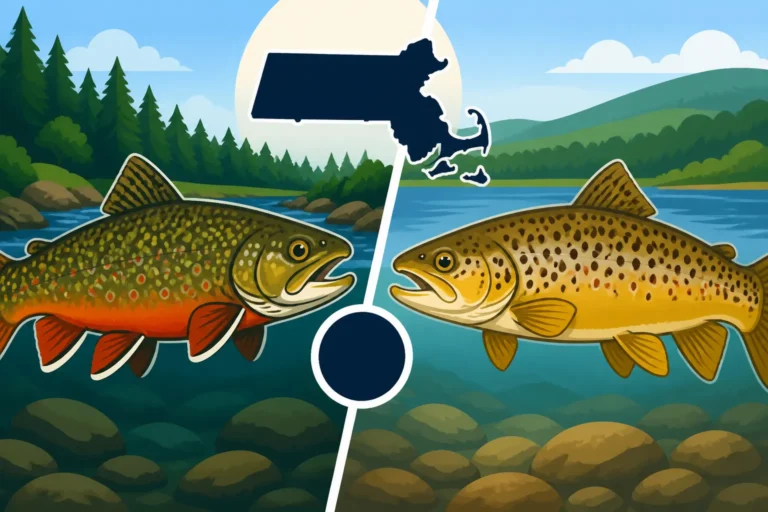
The sheer size and fighting spirit of these fish are what make them so sought after. They offer a challenge that can truly sharpen your angling skills and provide a lasting memory. So, when you're out there on the water, keep an eye on those stocking reports, gear up appropriately, and be ready for a battle – because a retired brood trout just might be waiting for you. For more insights on targeting these magnificent fish, you might find our article on Trout species Massachusetts stocks each year helpful, especially for distinguishing between different types of trout you might encounter.
Table: Brood Trout vs. Standard Stocked Trout
To help visualize the differences we've discussed, here's a quick comparison between your typical standard stocked trout and the exciting retired brood trout.
| Feature | Standard Stocked Trout | Retired Brood Trout |
|---|---|---|
| Origin | Raised from eggs specifically for recreational stocking | Bred in hatcheries for egg production, then "retired" |
| Primary Purpose | Provide immediate catchable fish for anglers | Provide eggs for future stockings; then provide trophy fish |
| Typical Size | 10-14 inches, usually 0.5-1.5 pounds | Often 18+ inches, 2-5+ pounds (can be much larger!) |
| Age | 1-2 years old | 3-5+ years old |
| Experience | Less wary, eager to bite | More experienced, can be warier and put up a stronger fight |
| Stocking Frequency | High volume, multiple times a year in many locations | Less frequent, often a special bonus stocking in select waters |
| Angler Appeal | Good for consistent action, family fishing | Exciting for trophy hunters, strong fights, memorable catches |
| Hatchery Role | The product of the brood program | The foundation of the brood program (former breeders) |
Disclaimer
This article is for general informational purposes only and does not constitute professional advice. Laws, prices and regulations vary by location and change over time. Consult a qualified professional for guidance on your specific situation.