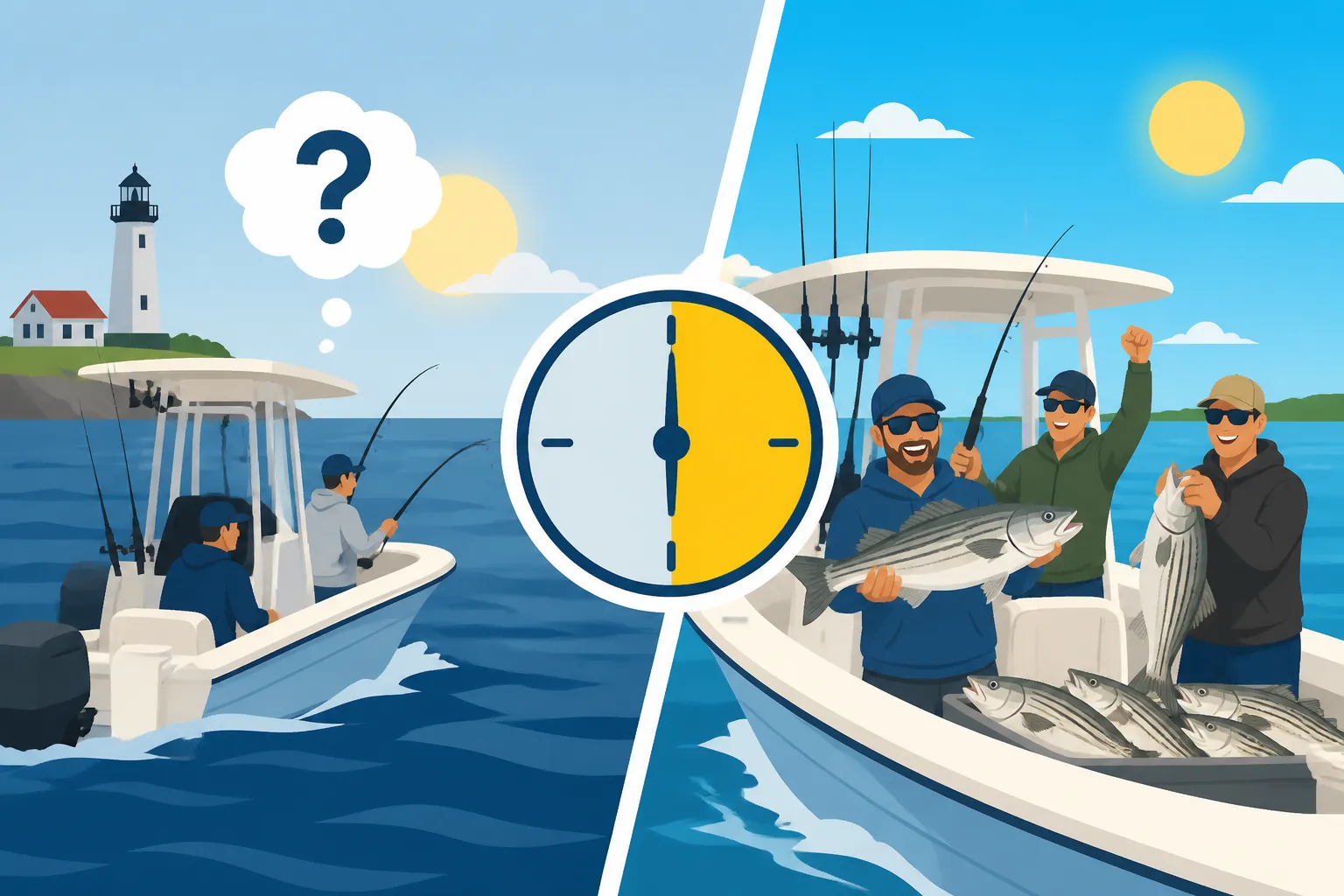
Whether a half-day charter is enough time to catch fish
It's a question many of us have wrestled with when planning a fishing trip to the rich waters of Massachusetts: is a half-day charter truly enough time to hook into some decent fish, or will it leave you feeling rushed and disappointed? It's a valid concern, especially when you're investing time and money, and the last thing you want is to spend half the trip just getting to the spot. This guide will dive deep into what you can realistically expect from a half-day charter in Massachusetts, helping you decide if it's the right choice for your angling adventure.
The Half-Day Charter Conundrum: Is It Enough Time?
The allure of a half-day charter is undeniable – it's often more budget-friendly, takes up less of your vacation day, and can be perfect for beginners or those with shorter attention spans (like kids!). But for serious anglers, there's always that nagging doubt: will it cut my fishing time short, or worse, put me on the boat when the bite is just starting to heat up? It’s a classic balancing act, and understanding what a "half-day" truly entails is the first step to making an informed decision.
Defining the "Half-Day" Experience
Generally, a half-day fishing charter in Massachusetts runs for about four hours, sometimes extending to five. This isn't just four hours of lines-in-the-water time; it includes the travel to and from the fishing grounds, any time spent baiting, re-rigging, and perhaps moving between a couple of spots. So, when you book that 8 AM to 12 PM trip, remember that a good chunk of that first hour, and the last half-hour, will likely be spent underway.
Captains are typically very efficient with these shorter trips, knowing they have a limited window to put you on fish. They've usually scouted conditions beforehand and have a plan for where they expect the best action to be. Think of it less as a leisurely cruise and more as a targeted strike mission. They're going to try to get you to productive waters as quickly and safely as possible. If you're looking to compare options, platforms like FishingBooker often list the exact duration for half-day versus full-day trips, which can help you visualize the time commitment.
The Expectations vs. Reality Divide
This is where many anglers either find joy or frustration. If your expectation for a half-day charter is to steam fifty miles offshore for bluefin tuna, you're going to be severely disappointed. The reality is that half-day trips are typically focused on inshore or nearshore species that don't require extensive travel time. This means targeting fish that are relatively close to the harbor or marina where you depart.
For instance, a half-day charter departing from a Cape Cod port might focus on the inner Cape waters, targeting striped bass in shallow bays, or bluefish along tidal rips. It's not usually the time for deep-sea excursions targeting groundfish or pelagics that require hours of travel each way. Setting realistic expectations about the type of fishing and potential catches is crucial. It’s important to understand the Massachusetts Fishing Seasons Explained and what species are abundant when you plan to go. If you go in knowing you're likely to target these closer-to-shore species, you're much more likely to have a satisfying trip.
Factors That Shape Success on Shorter Trips
Success on any fishing trip, especially a shorter one, hinges on a few key elements coming together. When you've only got a few hours, factors like the season, location, and the captain's expertise become even more critical.
Understanding Seasonal Windows and Fish Behavior
Massachusetts waters are incredibly diverse, with different fish species moving through or becoming active at various times of the year. A half-day charter in May might be fantastic for mackerel and early-season striped bass, while a similar trip in August could be prime for bluefish or scup. The success of your half-day trip is heavily tied to what fish are present and actively biting in the nearshore waters during your specific booking.
For example, during the peak summer months, striped bass can be quite active in the early morning or late evening, which aligns well with typical half-day slots. If you're going during the middle of a hot summer day, many species might be less active, seeking deeper, cooler water. A good captain will know this and adjust their strategy, but their options are constrained by the shorter trip length. Checking the Best Time of Year to Fish in Massachusetts for your target species can give you a leg up in planning. Understanding the patterns of fish migration and feeding habits for specific species like Striped Bass Fishing in Massachusetts or Bluefish Fishing in Massachusetts will significantly increase your odds on a shorter trip.
The Critical Role of Location and Run Time
As mentioned, travel time eats into fishing time on a half-day charter. This makes the departure location and the proximity of productive fishing grounds incredibly important. Charters operating out of ports with immediate access to good fishing, such as certain spots on Cape Cod or within Boston Harbor, have a distinct advantage for half-day trips. If the best fishing grounds are an hour or more away by boat, then a significant portion of your four-hour trip is spent traveling, leaving only two hours for actual fishing.
Imagine you're departing from a busy harbor that requires a long no-wake zone transit before you can even open up the throttle. That's precious time ticking away. Conversely, a captain who can have you dropping lines within 15-20 minutes of leaving the dock dramatically increases your fishing opportunities. When researching a charter, don't hesitate to ask about typical run times to their preferred spots for half-day trips. This information can be a real game-changer in managing your expectations and choosing the right Cape Cod Fishing Charters Guide for Massachusetts Anglers or Boston Fishing Charters Guide, Massachusetts.
The Captain's Local Knowledge and Adaptability
This is perhaps the most crucial factor for a successful half-day charter. An experienced captain who regularly fishes the local waters knows the tides, currents, structure, and baitfish patterns intimately. They know where the fish should be, even if recent conditions have shifted things slightly. On a short trip, there's less time for extensive searching, so the captain's ability to quickly get on fish is paramount.
A great captain will also be adaptable. If the planned spot isn't producing, they'll know a backup spot nearby that might offer a different type of action. Their ability to switch tactics, rigs, or even target species on the fly can turn a slow morning into a memorable one. This local insight and quick decision-making are what differentiate a good half-day trip from a frustrating one. When looking into Best Fishing Guides in Massachusetts, pay close attention to reviews that highlight the captain's ability to find fish quickly and make the most of limited time.
Target Species and Techniques Best Suited for a Half-Day
Not all fish species or fishing techniques are created equal when it comes to the time constraints of a half-day charter. Focusing on accessible, active species with straightforward methods will yield the best results.
Inshore Favorites: Striped Bass, Bluefish, and Bottom Dwellers
For a half-day trip, your captain will almost certainly focus on species that are reliably found in nearshore waters and don't require specialized, time-consuming techniques. Here in Massachusetts, this often means striped bass and bluefish. These are powerful, exciting fish that can be caught using a variety of methods, often close to shore, around structure, or in areas with strong tidal flows. They're typically willing biters when conditions are right.
Beyond the popular gamefish, bottom fishing for species like scup, black sea bass, and sometimes tautog can also be incredibly productive on a half-day. These fish are often found congregated around rocky bottoms, wrecks, or reefs relatively close to shore. They offer consistent action, which is fantastic for keeping everyone engaged, especially if you have beginners or kids on board. The relatively short run times to these spots make them ideal for shorter charters.
Fast-Paced Action: Focusing on Active Biters
The key to a successful half-day is often finding fast-paced action. Techniques that allow for quick deployment and quick bites are favored. This could include casting lures (plugs, soft plastics, jigs) to visible schools of fish or structure, or drift fishing with bait. Trolling can also be efficient, covering ground quickly to locate schools of fish.
What you're less likely to do on a half-day is spend hours slow-trolling for elusive tuna far offshore, or anchoring up for an extended period waiting for a deep-water bite to develop. The pace is generally quicker, aimed at maximizing hook-ups within the limited window. If you're specifically interested in Massachusetts Striped Bass Charters, many of these trips are perfectly suited for half-day excursions, as striped bass can be found in abundant numbers close to shorelines, jetties, and estuaries. Similarly, if your goal is just to get bent on a rod, a half-day bottom fishing trip for scup can offer non-stop action, proving that even a short trip can be incredibly rewarding.
Maximizing Your Time and Managing Expectations
So, you've decided a half-day charter is for you. Now, how do you make sure you get the absolute most out of it? A little preparation and clear communication can go a long way.
Pre-Trip Planning and Communication
Before you even step foot on the boat, a successful half-day trip begins with good communication. When you're booking – whether directly with a captain or through a service like FishingBooker – be clear about your primary goals. Do you want to catch fish for dinner? Are you hoping to target a specific species? Or is it simply about getting out on the water and enjoying the experience, regardless of the catch?
Tell your captain how experienced your group is. If you're bringing kids or first-timers, they might appreciate a trip focused on steady, smaller fish action rather than targeting one trophy. A good captain will listen to your preferences and advise you on what’s realistic for a half-day given the current conditions and time of year. Don't be shy about asking questions beforehand, such as what species are biting well, the typical run time to fishing spots, and what the Massachusetts Fishing Charter Costs include. The more information you share and gather, the better the captain can tailor the trip to your expectations.
Being Prepared and Efficient
When the clock is ticking, every minute counts. This means being prepared. Make sure you know What to Bring on a Massachusetts Fishing Charter beforehand – dress appropriately for the weather, bring any snacks or drinks you need, and don't forget sunscreen. Once on the boat, listen to the captain and mate's instructions. They'll show you how to use the gear, where to cast, and how to fight a fish.
Getting your lines in the water quickly and efficiently is paramount. If you're spending precious minutes untangling lines or fumbling with bait, that's less time for actual fishing. Many charters provide all necessary bait and tackle, which helps streamline the process. The less time spent on logistics, the more time you'll have with a rod in your hand. Also, consider the size of your group. On a shorter trip, a smaller group can often be more efficient, allowing the captain to dedicate more attention to each angler and move between spots with greater ease. Understand How Many People Can Join a Massachusetts Charter and if a larger group might benefit from a full day.
Weighing a Half-Day Against a Full-Day Adventure
Ultimately, the decision between a half-day and a full-day charter often comes down to your personal fishing style, goals, and budget. Here's a quick comparison to help you weigh your options:
| Feature | Half-Day Charter (Approx. 4-5 hours) | Full-Day Charter (Approx. 8-10 hours) |
|---|---|---|
| Duration | Shorter, less time commitment | Longer, more immersive experience |
| Cost | Generally more affordable | Higher investment, but often better value per fishing hour |
| Travel Time | Minimal, focused on nearby inshore/nearshore grounds | Can venture further offshore, allowing for distant spots/species |
| Target Species | Inshore gamefish (striped bass, bluefish), bottom fish (scup, tautog) | Wider range, including offshore pelagics (tuna), deep-sea groundfish |
| Flexibility | Less time for searching or changing strategies | More time to explore multiple spots, adjust tactics, or wait out a bite |
| Best For | Beginners, families with young children, quick trips, budget-conscious anglers, targeting active inshore fish | Serious anglers, targeting specific trophy fish, offshore adventures, diverse fishing experiences, Choosing Between a Charter and a Party Boat decision |
For many, a half-day charter is absolutely enough time to catch fish and have a fantastic experience, especially if you set realistic expectations and communicate effectively with your captain. It's an excellent way to get out on the water without dedicating an entire day or breaking the bank. Just remember, a positive attitude and readiness to fish from the moment you hit the water will be your best assets on any trip, short or long! And don't forget to understand Massachusetts Charter Boat Tipping Etiquette no matter the trip length. If you're curious about booking, Booking a Fishing Charter on Cape Cod offers great insights specific to that region.
Disclaimer
This article is for general informational purposes only and does not constitute professional advice. Laws, prices and regulations vary by location and change over time. Consult a qualified professional for guidance on your specific situation.