Where to fish the Charles River for bass
Fishing the Charles River in Massachusetts can feel a bit daunting for many anglers. Often overshadowed by its urban surroundings and past reputation, people wonder if it's even worth casting a line, especially for species like bass. But let me tell you, this historic river holds some fantastic opportunities for both largemouth and smallmouth bass, right in the heart of our bustling communities. This guide will take you through the best spots, effective techniques, and crucial insights to make your Charles River bass fishing experience a successful and enjoyable one.
Understanding the Charles River's Bass Potential
When you think of bass fishing, sprawling lakes and quiet, remote rivers often come to mind. The Charles River, winding through Boston and its suburbs, doesn't quite fit that idyllic picture, leading many to overlook its potential. But beneath its often-misunderstood surface lies a vibrant fishery.
Dispelling Myths: Is the Charles River Really Fishable?
For decades, the Charles River carried a stigma of being heavily polluted. And let's be honest, it was a legitimate concern for a long time. However, thanks to monumental efforts over the past few decades by state agencies, environmental groups like the Charles River Watershed Association, and dedicated community members, the river's health has dramatically improved. Today, swimming is permitted on certain days, and the water quality is consistently monitored, demonstrating a remarkable turnaround. This means the fish living in its waters, including bass, are thriving.
The primary concern for anglers should always be about making informed choices regarding consumption. While the water quality has improved significantly, advisories for certain fish species, especially bottom-feeders or older, larger fish, can still be in place due to historical contaminants. For the most up-to-date information on consumption advisories, it's always wise to check the Massachusetts Department of Public Health (DPH) guidelines. However, for those who practice catch and release, which many bass anglers do, the Charles River offers an exciting and readily accessible urban fishing experience. If you’re ever wondering, "Is the Charles River safe to fish?", rest assured, its recreational opportunities are expanding.
Primary Bass Species: Largemouth vs. Smallmouth
The Charles River is primarily known for its abundant largemouth bass population. These aggressive, hard-fighting fish love the river's varied structure, from submerged logs and lily pads in quieter stretches to the pilings and rocky edges in more developed areas. You'll find largemouth throughout the river, especially in the slower, weedier sections and back coves.
While largemouth dominate, smallmouth bass are also present, though generally in fewer numbers and concentrated in specific areas. Smallmouth tend to prefer clearer water with rockier bottoms and current, often found around bridges, dams, and faster-flowing sections of the river, particularly in the upper and middle reaches. Identifying the difference between a largemouth and smallmouth bass can sometimes be tricky, but generally, largemouth have a jaw that extends past their eye, while a smallmouth's jaw doesn't. Knowing this distinction can help you target your approach.
The River's Unique Ecosystem for Bass
What makes the Charles River such a good bass fishery, despite its urban setting, is its incredible diversity of habitat. You've got everything from wide-open, slow-moving tidal basins to narrow, winding upstream sections with more current and natural banks. This provides a smorgasbord of living conditions that bass absolutely adore.
Forage is plentiful, too. The river is home to a robust population of baitfish like alewives, shiners, and perch, along with crayfish and a variety of aquatic insects. This rich food supply allows bass to grow to impressive sizes, even within the city limits. The combination of varied structure—natural and man-made—and abundant food creates a productive environment where bass can hide, ambush prey, and reproduce successfully, making it a surprisingly vibrant ecosystem right on our doorstep.
Top Spots for Bass Fishing on the Charles River
The Charles River is long, stretching over 80 miles from its source in Hopkinton to Boston Harbor. This length means a huge variety of fishing environments. Dividing it into upper, middle, and lower sections helps break down where to find the best bass action.
Upper Charles River: Tranquil Waters and Hidden Gems
The upper stretches of the Charles, particularly in towns like Bellingham, Franklin, Medway, and Dedham, offer a much more natural, quiet fishing experience. Here, the river is narrower, often shallower, and characterized by abundant lily pads, cattails, and submerged woody debris. These areas are largemouth bass heaven.
Access often involves finding small town parks, public boat launches for kayaks or canoes, or roadside pull-offs. The currents are generally slower here, making it ideal for paddling and targeting specific cover. Look for oxbows, quiet coves, and areas where feeder creeks enter the main stem, as these spots often hold larger fish. You might not find towering skyscrapers, but you'll certainly find some fantastic fishing opportunities for impressive bass.
Middle Charles River: Navigating Urban Parks and Bridges
As the Charles flows closer to the city, through towns like Needham, Newton, Waltham, and Watertown, it widens and becomes more developed, but still retains plenty of prime bass habitat. This section is a mix of natural banks, public parks, and significant man-made structures like bridges and old mill remnants.
Shore anglers will find plenty of access points within the numerous parks along the river, such as the Charles River Reservation parks. Bridges are particularly productive, as their pilings and shadows create current breaks and ambush points for both largemouth and smallmouth bass. Look for areas with rip-rap banks, which provide rocky habitat for crayfish and baitfish, attracting hungry bass. Kayakers and canoers can launch from several public spots and explore the numerous small islands and quieter channels that are inaccessible from shore. These middle stretches offer a great blend of urban convenience and quality fishing.
Lower Charles River: The Tidal Basin and Beyond
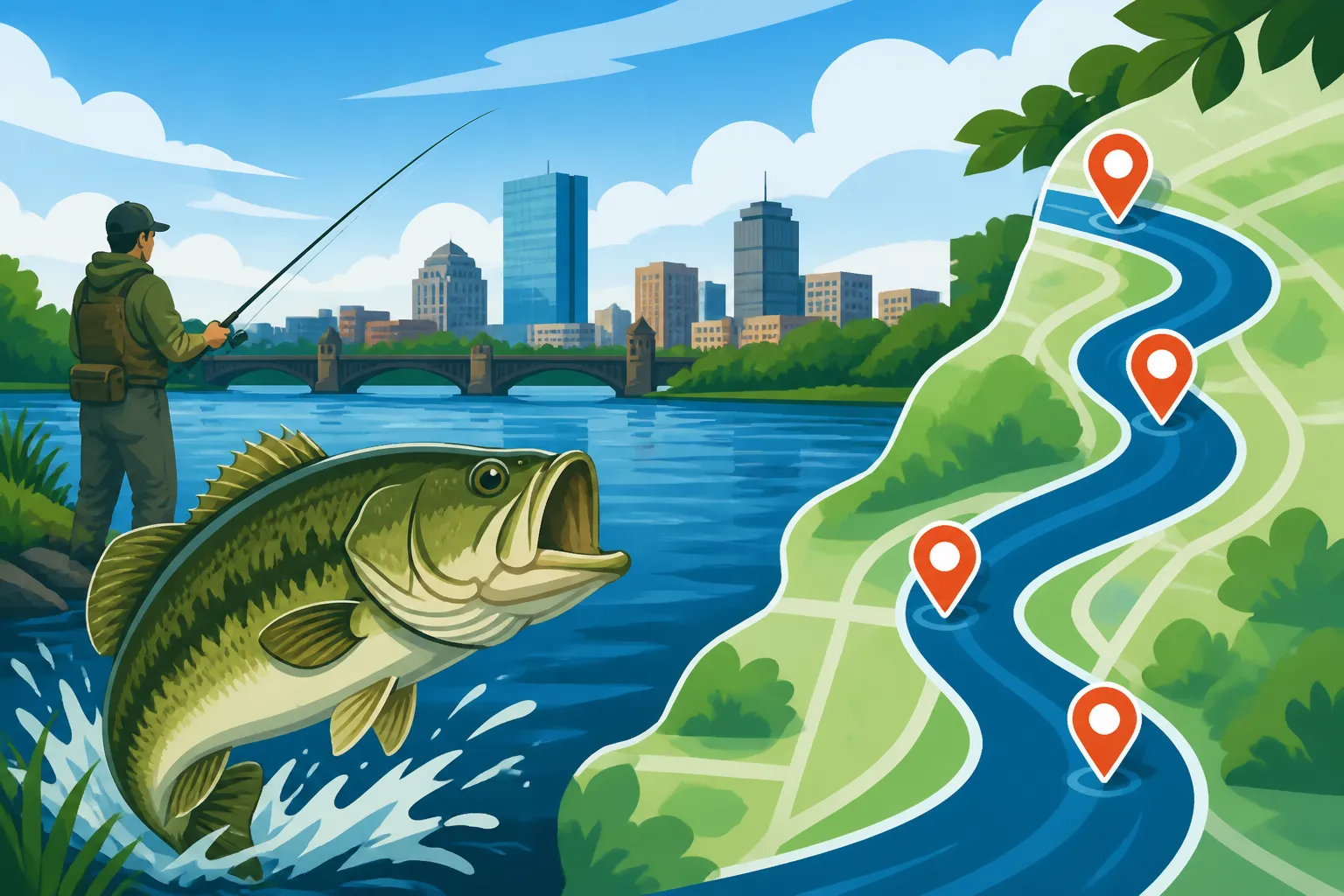
The lower Charles, particularly the Charles River Basin between Boston and Cambridge, is perhaps the most iconic and visually stunning section, with the city skylines as your backdrop. This area is mostly tidally influenced (though the Charles River Dam controls the direct saltwater intrusion) and characterized by wider, deeper waters, stone walls, bridges, and extensive docks and marinas.
While it might seem less "fishy" at first glance due to the heavy boat traffic and urban setting, the basin holds surprisingly good numbers of largemouth bass, especially around bridge abutments, submerged structures, and the edges of the esplanades. The docks and moored boats in marinas create incredible overhead cover and shaded areas that bass use as ambush points. Fishing from shore is popular along the Boston and Cambridge Esplanades. Anglers can target bass by casting parallel to seawalls and dock lines. While a boat offers more access to open water, shore fishing here is entirely viable. This section often produces some of the Charles River's biggest bass, often fat from feeding on the plentiful baitfish in the nutrient-rich basin.
Essential Techniques and Tackle for Charles River Bass
Catching bass in the Charles River isn't rocket science, but understanding the best approaches for an urban river environment can make a world of difference.
Shore Fishing Strategies
Shore fishing is perhaps the most accessible way to fish the Charles, with countless public access points. When fishing from shore, focus on casting to visible structure: bridge pilings, submerged logs, weed lines, and the edges of docks. These are natural ambush points where bass lie in wait for prey.
Soft plastic worms (like a wacky-rigged Senko or a Texas-rigged worm), jigs, and spinnerbaits are incredibly effective from shore because they can be cast accurately and retrieved slowly, allowing them to probe cover thoroughly. Pay attention to how the current moves around structure, as bass will often position themselves on the "downstream" side, out of the main flow, conserving energy. Early mornings and late evenings are often the most productive times, especially in the more open areas, as bass become more active and less wary of human presence. If you're looking for Best Shore Fishing Spots in Massachusetts, the Charles River certainly has some gems.
Kayak and Canoe Fishing Advantages
For those who want to truly explore the Charles River, a kayak or canoe is an invaluable tool. These smaller vessels allow you to access quieter coves, shallow backwaters, and dense weed beds that are unreachable from shore. You can easily paddle upstream into narrower sections or navigate through dock pilings in the basin, greatly expanding your fishing options.
Kayaks and canoes also offer a stealthier approach, allowing you to get closer to wary fish without spooking them. Look for public boat launches or designated kayak access points along the river. Pushing into areas with heavy vegetation or tight structure is where you'll often find the bigger, more reclusive bass. The ability to slowly troll or drift through prime habitat, casting at every piece of cover, gives you a significant edge. While not specific to the Charles, many of the principles found in guides like Kayak Fishing Guides on Cape Cod regarding stealth and approach apply here too.
Best Baits and Lures for Charles River Bass
When it comes to tempting Charles River bass, a versatile tackle box is your best friend. Here are some reliable options:
- Soft Plastics: Hands down, plastic worms, creature baits, and swimbaits are incredibly effective. A 5-inch Senko wacky-rigged or Texas-rigged is a classic for largemouth bass, especially when fished slowly around cover. Green pumpkin, black and blue, or junebug colors are often winners.
- Jigs: Flipping and pitching jigs (1/4 to 3/8 ounce) into heavy cover, under docks, or around bridge pilings can trigger aggressive strikes, especially from larger bass. Add a soft plastic trailer for extra bulk and action.
- Spinnerbaits & Chatterbaits: These are excellent for covering water, especially along weed lines or around submerged structure. The flash and vibration can draw bass from a distance. Chartreuse and white are reliable color patterns.
- Crankbaits & Lipless Crankbaits: For deeper sections or open water, medium-diving crankbaits can be productive. Lipless crankbaits are great for ripping through grass beds.
- Topwater Lures: During low light conditions (dawn, dusk) or overcast days, topwater lures like poppers, walking baits, and hollow-bodied frogs (fished over lily pads) can provide exhilarating surface strikes.
- Live Bait: If allowed and practical, live shiners or worms can be extremely effective, especially for more passive bass or when fishing with younger anglers. Just be sure to check local regulations regarding live bait usage.
For more general advice on how to effectively use these baits, check out resources like How to Catch Largemouth Bass in Massachusetts.
Navigating Regulations and Best Practices
Fishing the Charles River, or any Massachusetts waterway, means understanding and adhering to local regulations. Beyond the rules, adopting responsible fishing practices ensures the health of the fishery for generations to come.
Charles River Specific Regulations
While the Charles River flows through many communities, it falls under the general freshwater fishing regulations set by the Massachusetts Division of Fisheries and Wildlife (MassWildlife). This means you'll need a valid Massachusetts Fishing License Guide for freshwater fishing. This license covers the entire river. The specific costs and requirements can vary, so it's always best to check the MassWildlife website for the most current information. For instance, understanding Massachusetts Fishing License Requirements by Age is crucial, especially if you're bringing kids along.
Pay close attention to statewide Massachusetts Freshwater Daily Catch Limits and length restrictions for bass, though typically for largemouth and smallmouth, there are generous limits, and often many anglers choose to release them anyway. There aren't usually specific Charles River regulations beyond the state guidelines, but it's always prudent to check for any temporary advisories or changes. Remember that the Charles River Basin, while connected to Boston Harbor, is largely considered freshwater for licensing purposes due to the dam system, so a saltwater permit isn't generally needed unless you venture beyond the dam into the actual harbor.
Catch and Release for Healthier Fisheries
For bass fishing on the Charles River, practicing catch and release is highly recommended. Not only does it help sustain the fishery, but it's also a common practice for urban waters where consumption advisories might be in effect for larger, older fish. Releasing your catch ensures these fish can continue to grow and reproduce, contributing to a robust population that can be enjoyed by countless anglers.
When practicing catch and release, handle fish gently with wet hands, minimize their time out of water, and use de-barbed hooks or pliers to remove hooks quickly. If a fish is deeply hooked, cut the line as close to the hook as possible. These simple steps significantly increase a fish's survival rate and keep the Charles River a vibrant bass fishery.
Safety and Respect in an Urban Environment
Fishing in an urban river like the Charles means sharing the space with many other users: rowers, kayakers, joggers, cyclists, and pedestrians. Being mindful of others is paramount. Cast responsibly, be aware of overhead lines, and never leave trash or discarded fishing line behind. Pack out everything you pack in, and even a little extra if you can.
Safety is also key. While the river's health has improved, always wash your hands thoroughly after handling fish and tackle. If you're using a kayak or canoe, always wear a personal flotation device (PFD), even if you're an experienced paddler. The currents in some sections, especially around bridges or after heavy rain, can be stronger than they appear. The Charles River offers a unique opportunity to connect with nature right in the city, and by being respectful and safe, we can ensure it remains a fantastic resource for all.
Here's a quick guide to some key Charles River bass fishing spots:
| River Section | General Location (Towns) | Best for Species | Access Type (Shore/Boat) | Key Features to Target |
|---|---|---|---|---|
| Upper Charles | Bellingham, Franklin, Dedham | Largemouth Bass | Shore, Kayak/Canoe | Lily pads, downed trees, backwater coves, feeder creeks, slower current. |
| Middle Charles | Needham, Newton, Waltham, Watertown | Largemouth/Smallmouth | Shore, Kayak/Canoe | Bridge pilings, rip-rap banks, public parks (e.g., Moody St. Dam area), small islands, varied current. |
| Lower Charles | Boston, Cambridge (Tidal Basin) | Largemouth Bass | Shore, Kayak/Canoe | Dock lines, boat moorings, seawalls, bridge abutments, deeper water, Esplanade access. |
For finding guides in Massachusetts for other species or locations, resources like FishingBooker can be helpful for exploring options beyond the Charles, particularly if you're looking for offshore charters or specialty trips. However, for a DIY urban bass adventure, the Charles River is truly a gem waiting to be explored! Understanding the Massachusetts Fishing Seasons Explained can also help plan your trips for peak bass activity. Don't let the urban setting deter you; the Charles River is a vibrant and rewarding fishery.
Disclaimer
Please note that fishing regulations, advisories, and conditions can change. Always consult the official Massachusetts Division of Fisheries and Wildlife (MassWildlife) website and the Massachusetts Department of Public Health for the most current information regarding licenses, catch limits, and fish consumption advisories before you head out. This guide is for informational purposes only and should not replace official sources.