Massachusetts Fish Identification Guide
There's nothing quite like the thrill of feeling a tug on your line, reeling in your catch, and seeing that shimmer of scales break the surface. But then comes that familiar moment of hesitation: "What is this fish?" Knowing exactly what you've landed isn't just a matter of curiosity; it's crucial for legal compliance, responsible angling, and sometimes, even your personal safety. This guide is here to help you confidently identify the amazing array of fish swimming in Massachusetts's fresh and saltwater, so you can enjoy your time on the water without a second guess.
Why Accurate Fish Identification is Absolutely Essential
It might seem like a minor detail, but correctly identifying your catch is far from trivial. In Massachusetts, like many places, fishing isn't just about dropping a line in the water; it's governed by a detailed set of regulations designed to protect fish populations and ensure sustainable angling for generations to come. Misidentifying a fish can lead to legal trouble, unintentionally harm a vulnerable species, or even spoil your dinner if you keep something you shouldn't have.
Understanding Massachusetts Fishing Regulations
Imagine you're out on the Connecticut River, having a fantastic day, and you pull in a beautiful fish. Is it a largemouth bass? A smallmouth? Or perhaps a rare or protected species you need to release immediately? Massachusetts has very specific rules about what fish you can keep, how many, and at what size. These rules often vary by species, body of water, and even time of year. For instance, the Massachusetts Freshwater Daily Catch Limits are different from the Massachusetts Saltwater Bag Limits by Species, and the consequences for violating these can range from fines to loss of fishing privileges. If you accidentally keep a fish that's undersized, over the bag limit, or entirely protected, it's considered a violation, even if you didn't know any better. Ignorance of the law, as they say, is no excuse, and wardens are out there making sure everyone plays by the rules.
There are also species-specific regulations that are critical to know. Take striped bass, for example. We have a very particular Massachusetts Striped Bass Slot Limit Explained which means you can only keep fish within a certain size range, not too small and not too big. If you can't tell a striper from a bluefish, you're already in trouble. The same goes for tautog, fluke, and many other popular game fish. Having a solid grasp of identification allows you to quickly assess your catch and make an informed decision on whether to keep or release it. This helps preserve these vital fish stocks for everyone.
The Role of Conservation and Species Protection
Beyond the legal aspect, accurate fish identification is a cornerstone of responsible conservation. Our waterways are home to a delicate ecosystem, and some species are more vulnerable than others. Knowing your fish helps you participate in these conservation efforts directly. For example, if you encounter an invasive species, knowing how to identify it allows you to report it to MassWildlife, preventing its spread and protecting native populations. On the flip side, some native species are threatened or endangered, and catching one, even accidentally, requires immediate, careful release.
Consider a scenario where you're targeting brook trout in a clear mountain stream, but you accidentally hook a small, native salmon parr. These two fish can look similar to an untrained eye, but the salmon parr is a highly protected species. A quick, accurate identification would prompt you to release it unharmed, rather than mistakenly adding it to your creel. This kind of mindful angling directly supports MassWildlife's efforts to maintain healthy fish populations and biodiversity across the Commonwealth. It's about being a good steward of our natural resources, ensuring that the thrill of fishing can be enjoyed by future generations.
Decoding Freshwater Fin-Facts: Key Identification Features
When you're out on one of Massachusetts's beautiful lakes, ponds, or rivers, knowing your freshwater fish is key. They come in all shapes, sizes, and colors, but there are some fundamental features you can look at to help you narrow down your identification. Think of it like being a detective, looking for clues on the fish itself!
Body Shape and Fin Structure
The overall body shape is often the first big clue. Is the fish long and slender, like an eel or a pickerel? Or is it deep and compressed, almost disc-like, such as a crappie or sunfish? Some fish are torpedo-shaped, built for speed, like a trout, while others are more robust and squat, like a bullhead catfish. Observe how the body tapers towards the tail. Does it have a forked tail for fast swimming, or a rounded tail for more maneuverability in tight spaces?
Next, pay close attention to the fins. Every fin has a story to tell.
- Dorsal Fins: How many dorsal fins does it have on its back? One or two? Are they spiny, soft-rayed, or a combination? A fish like a yellow perch, for instance, has two distinct dorsal fins, the first being spiny, which is a key identifier. Many trout, on the other hand, have a single dorsal fin and a small, fleshy adipose fin near the tail – a hallmark of the salmonid family.
- Pectoral and Pelvic Fins: Where are these fins located? Are the pectoral fins high on the body or low? Are the pelvic fins directly under the pectoral fins or further back?
- Anal Fin: Is it long or short? Spiny or soft-rayed?
- Caudal Fin (Tail Fin): Is it rounded, square, forked, or deeply forked? A deeply forked tail often indicates a fast swimmer.
Let's say you've caught something in a local pond. If it has a long, slender body with a distinctive chain-like pattern, and its dorsal and anal fins are far back on its body, you're likely looking at a chain pickerel. If it's a deeper-bodied fish with a very prominent spiny dorsal fin followed by a softer one, and a deeply forked tail, you might have a crappie. These initial observations are crucial steps in the identification process.
Mouth Position and Teeth
The mouth of a fish can tell you a lot about how and what it eats. Is the mouth positioned at the very front (terminal), indicating it feeds in the water column? Is it upturned (superior), suggesting it feeds on the surface, sucking in insects? Or is it downturned (inferior), designed for grubbing along the bottom, like many suckers or sturgeon? Knowing this helps you understand the fish's natural behavior and its likely species.
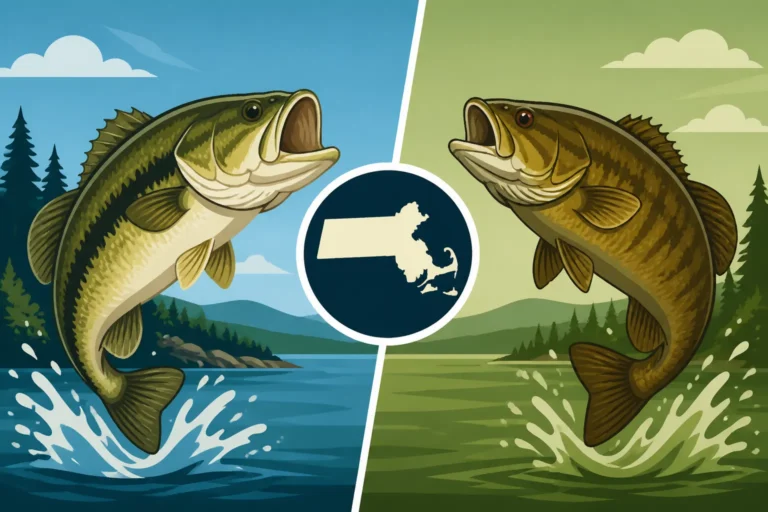
Beyond position, look at the size of the mouth. Does it extend past the eye? This is a classic distinguishing feature between largemouth and smallmouth bass. A largemouth bass, true to its name, has a jaw that typically extends past the rear edge of its eye, while a smallmouth's jaw stops before or directly under the eye. This difference is often referred to in fishing circles as a crucial way to tell the two apart. Difference between largemouth and smallmouth bass is a frequently asked question by anglers.
Finally, while you should exercise extreme caution and never put your fingers in a fish's mouth, a quick visual inspection can sometimes reveal the presence or absence of teeth, or the type of teeth. Some predatory fish, like pickerel, have rows of needle-sharp teeth, while others might have crushing plates or small, sandpaper-like teeth. This helps confirm whether you're dealing with an aggressive predator or a more docile bottom feeder.
Coloration and Markings
Fish coloration can vary widely even within the same species, depending on their habitat, diet, and even their mood. However, certain patterns and markings are often consistent and provide excellent clues for identification. Look for:
- Lateral Line: Almost all fish have a lateral line, a sensory organ running along the side of their body, but its prominence and appearance can differ. Is it dark and unbroken, or faded and patchy? For a largemouth bass, a dark, horizontal stripe running down its side is a key feature.
- Spots and Bars: Are there spots? What color are they? Do they have halos around them? Are there vertical bars or horizontal stripes? Brook trout, for example, are known for their distinctive light, worm-like markings (vermiculations) on their backs and dorsal fin, along with red spots surrounded by blue halos on their sides. Brown trout often have dark spots with light halos. Rainbow trout typically have a pink or reddish stripe along their side and many small black spots on their body and fins.
- Fin Color: The color of the fins can also be a unique identifier. Some species have distinct colorations on their pectoral, pelvic, or anal fins. For instance, the lower fins of a brook trout often have a white leading edge followed by a black stripe, then red.
- Overall Hue: Is the fish generally olive green, silver, brown, or mottled? Are there iridescent qualities?
It's important to remember that color can fade quickly once a fish is out of the water, so make your observations quickly. A good waterproof fish identification guide, which you can often find on Amazon, is invaluable here, allowing you to compare your catch to detailed illustrations or photos. The subtle differences in these markings can be the difference between correctly identifying a brown trout from a brook trout, especially in areas where both species are present.
Common Freshwater Species to Recognize in Massachusetts
Massachusetts boasts a fantastic array of freshwater fishing opportunities, from the smallest streams to vast reservoirs. Knowing the most common species you're likely to encounter will greatly enhance your fishing experience and ensure you're compliant with all regulations.
The Trout Family: Rainbow, Brown, Brook, and Tiger
The trout family (salmonids) are among the most sought-after freshwater fish in Massachusetts. They're beautiful, hard-fighting, and thrive in cold, clean water. All trout typically have a streamlined, torpedo-shaped body and a small, fleshy adipose fin between their dorsal fin and tail.
- Rainbow Trout: These are arguably the most popular stocked trout species in the state. They get their name from the iridescent, often pinkish or reddish stripe running along their lateral line, though this can be subtle in some individuals. Their bodies and fins are usually covered in small, distinct black spots. They tend to be a silvery-green to bluish-green on their backs, fading to a silvery white belly. They are prized for their fighting ability and are stocked generously by MassWildlife throughout the year. You'll find them in many of our rivers and ponds, especially after MassWildlife's Massachusetts Trout Stocking Schedule events.
- Brown Trout: Brown trout are often distinguished by their golden-brown to olive-green coloration on their back, fading to yellowish sides and a white belly. They have prominent dark spots, often with pale halos around them, scattered on their sides and sometimes on their dorsal and adipose fins. Some individuals may also have red or orange spots. They are known for being a bit more elusive and harder to catch than rainbows, often preferring larger prey as they grow. They can be found in a variety of habitats, including the Deerfield River and other colder streams.
- Brook Trout: This is Massachusetts's only native trout species, and they are truly a gem. Brook trout are recognizable by their distinctive worm-like (vermiculated) patterns of light markings on a darker, olive-green background on their back and dorsal fin. Their sides are usually dotted with vibrant red spots, often surrounded by blue halos, over a dark background that can range from greenish-brown to dark olive. Their lower fins (pectoral, pelvic, anal) have a striking white leading edge, followed by a black stripe, and then often a reddish-orange hue. They typically prefer colder, pristine streams and small ponds. Catching a native brook trout is a special experience, often requiring careful approaches to their sensitive habitats. You can learn more about finding them in Brook Trout in Massachusetts Streams.
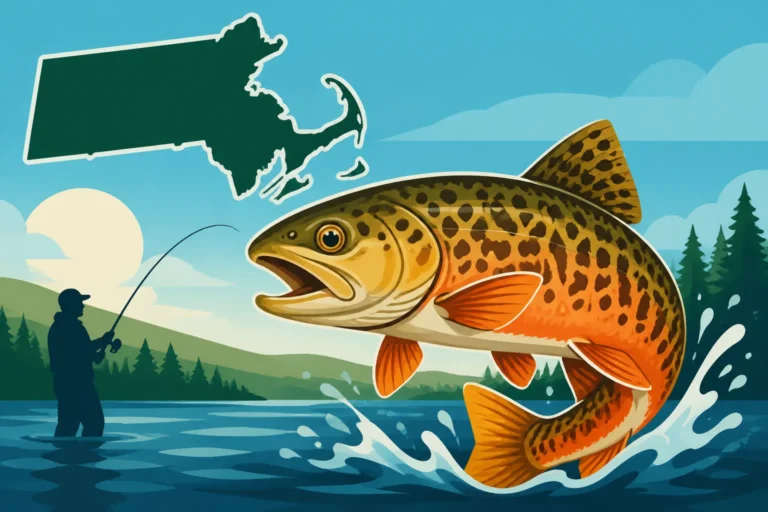
- Tiger Trout: A hybrid cross between a brown trout and a brook trout, tiger trout are easily identified by their unique, maze-like or "tiger" stripe patterns that cover their bodies, resembling the vermiculations of a brook trout but more pronounced and distinct. They are often a sterile hybrid, but they grow fast and fight hard, making them a fun catch. MassWildlife occasionally stocks them, and they are quite a prize to land due to their striking appearance. Their unique markings make them quite distinct from other trout species, preventing any confusion.
Bass Species: Largemouth and Smallmouth
Bass are immensely popular freshwater game fish in Massachusetts, known for their aggressive strikes and powerful fights. While both are "bass," they have key differences.
- Largemouth Bass: The largemouth is the quintessential freshwater game fish for many anglers. Its most defining feature is its mouth, where the upper jaw extends noticeably behind the rear edge of the eye when closed. They typically have an olive-green back and sides, fading to a white belly, with a distinct, often broken or blotchy, dark lateral line running down their side. Their body is somewhat deeper and more compressed than a smallmouth's. You'll find them in warmer, weedy, and heavily vegetated ponds and lakes across the state, such as Lake Quinsigamond or Long Pond. They love to ambush prey from cover. For tips on targeting them, check out How to Catch Largemouth Bass in Massachusetts Ponds.
- Smallmouth Bass: In contrast, the smallmouth bass has an upper jaw that does not extend beyond the center of the eye when closed. Their coloration is usually a bronze, brown, or golden-green, often with 8-16 vertical dark bars or stripes on their sides, which can be more prominent in some individuals. Their body shape is typically more streamlined and powerful, often described as more "football-shaped." Smallmouth prefer cooler, clearer water with rocky bottoms, gravel, and sparse vegetation. Excellent smallmouth fisheries can be found in large rivers like the Connecticut River or clear lakes in the Berkshires. They are notorious for their acrobatic jumps and hard fights. If you're looking for where to find these feisty fish, read up on the Massachusetts Smallmouth Bass Fishing Guide.
Panfish and Other Common Catches: Crappie, Perch, Pickerel, Catfish, and Sunfish
Beyond trout and bass, Massachusetts's freshwater bodies teem with a variety of other fish that are fun to catch, often excellent table fare, and perfect for beginners or family outings.
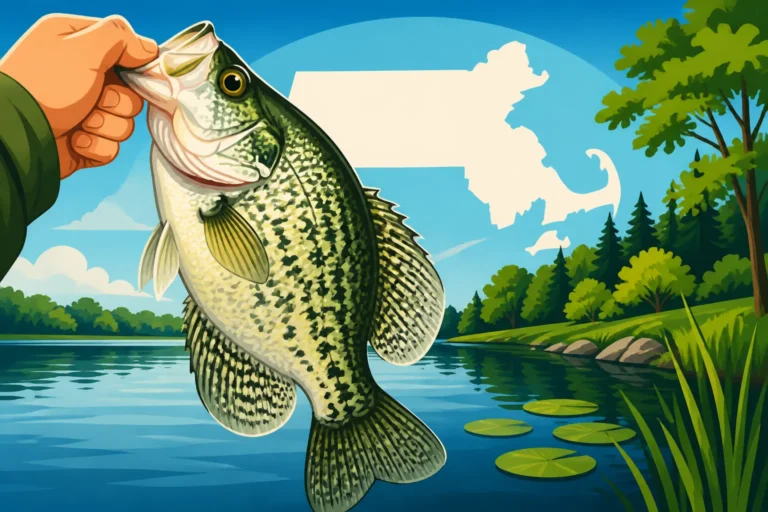
- Crappie (Black and White): Both black and white crappie are common. They have a very deep, compressed body, almost disc-like, with large dorsal and anal fins that are nearly identical in shape and size. Black crappie are usually a silvery-green to golden color with irregular black blotches and spots, giving them a "peppered" appearance. White crappie are typically lighter, silver to white, with 5-10 distinct vertical bars on their sides. Both are schooling fish often found around submerged cover like brush piles or docks. They are fantastic eating and very popular among anglers. Are There Crappie in Massachusetts Lakes? Yes, and they're delicious!
- Yellow Perch: Yellow perch are easily identifiable by their bright yellow to golden-yellow sides with 6-8 dark, vertical bars that extend from their back down to their belly. They have two distinct dorsal fins, the first being spiny and the second soft-rayed. Their anal and pelvic fins are often orange or reddish. They are schooling fish found in a wide variety of lakes and ponds, from Walden Pond to Otis Reservoir. They are a classic panfish, readily taking bait and lures, and make for excellent eating. Discover more about them in Yellow Perch Fishing in Massachusetts.
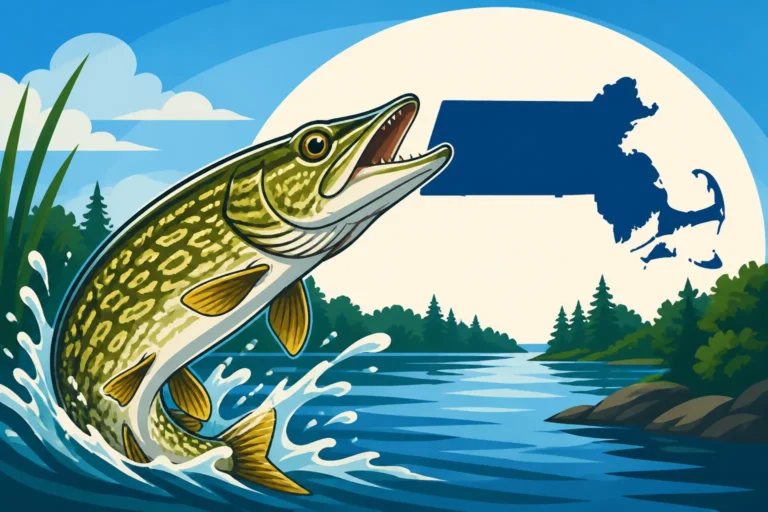
- Chain Pickerel: These are the "alligator of the pond," known for their elongated, torpedo-shaped bodies and duckbill-like snout packed with sharp teeth. Their most distinctive feature is the intricate, dark, chain-like pattern on their greenish-gold to olive-green sides. Their dorsal and anal fins are set far back on the body, close to the tail, giving them a powerful burst of speed. Pickerel are ambush predators, often found lurking in weed beds or submerged timber. While not always a target species for their eating quality, they offer an exciting fight, especially through the ice. Chain Pickerel Fishing in Massachusetts can be quite a thrill!
- Catfish (Channel Catfish, Brown Bullhead): Catfish are easily recognized by their smooth, scaleless skin and prominent barbels (whiskers) around their mouth, which they use to taste and feel.
- Channel Catfish: These are typically silver to olive-gray with scattered dark spots (though spots can fade in older fish). Their tail fin is distinctly forked. They can grow quite large and are popular for their strong fights and good eating quality.
- Brown Bullhead: Smaller than channel cats, brown bullheads are usually dark brown or olive-green, with a mottled appearance. Their tail fin is square or slightly emarginate (not deeply forked). They are very common in murky ponds and rivers and are often the first "catfish" many anglers encounter.
- Sunfish (Bluegill, Pumpkinseed, Redbreast): These are small, colorful panfish, often caught by kids, but enjoyed by all. They are generally deep-bodied and compressed.
- Bluegill: Named for the prominent dark blue or black "ear flap" on their operculum (gill cover) and a dark spot at the base of their dorsal fin. They have iridescent blue and orange markings, especially on their sides and belly.
- Pumpkinseed: Known for their incredibly vibrant colors, pumpkinseeds have wavy blue lines on their cheek and gill cover, a bright orange or red spot on the rear edge of their "ear flap," and often speckles of orange, green, and blue on their sides.
- Redbreast Sunfish: Distinguished by a very long, dark "ear flap" and a reddish-orange breast and belly. They typically have blue-green backs and sides.
A quick visual guide can be helpful for comparing these. You can often find compact, waterproof field guides for freshwater fish on Amazon that you can slip right into your tackle box.
Navigating the Coastal Waters: Saltwater Fish Identification Basics
Massachusetts's coastline is a vibrant fishery, offering exciting opportunities for anglers targeting everything from feisty striped bass to powerful tuna. Just like in freshwater, knowing your saltwater species is paramount for legal compliance and responsible angling. While some identification principles overlap with freshwater, saltwater fish often have their own unique characteristics.
Distinctive Body Shapes and Fin Arrays in Saltwater
Saltwater fish exhibit an incredible diversity of shapes, each adapted to their specific marine environment. You'll encounter torpedo-shaped predators built for speed in open water, flattened bottom dwellers perfectly camouflaged on the seabed, and deep-bodied reef inhabitants.
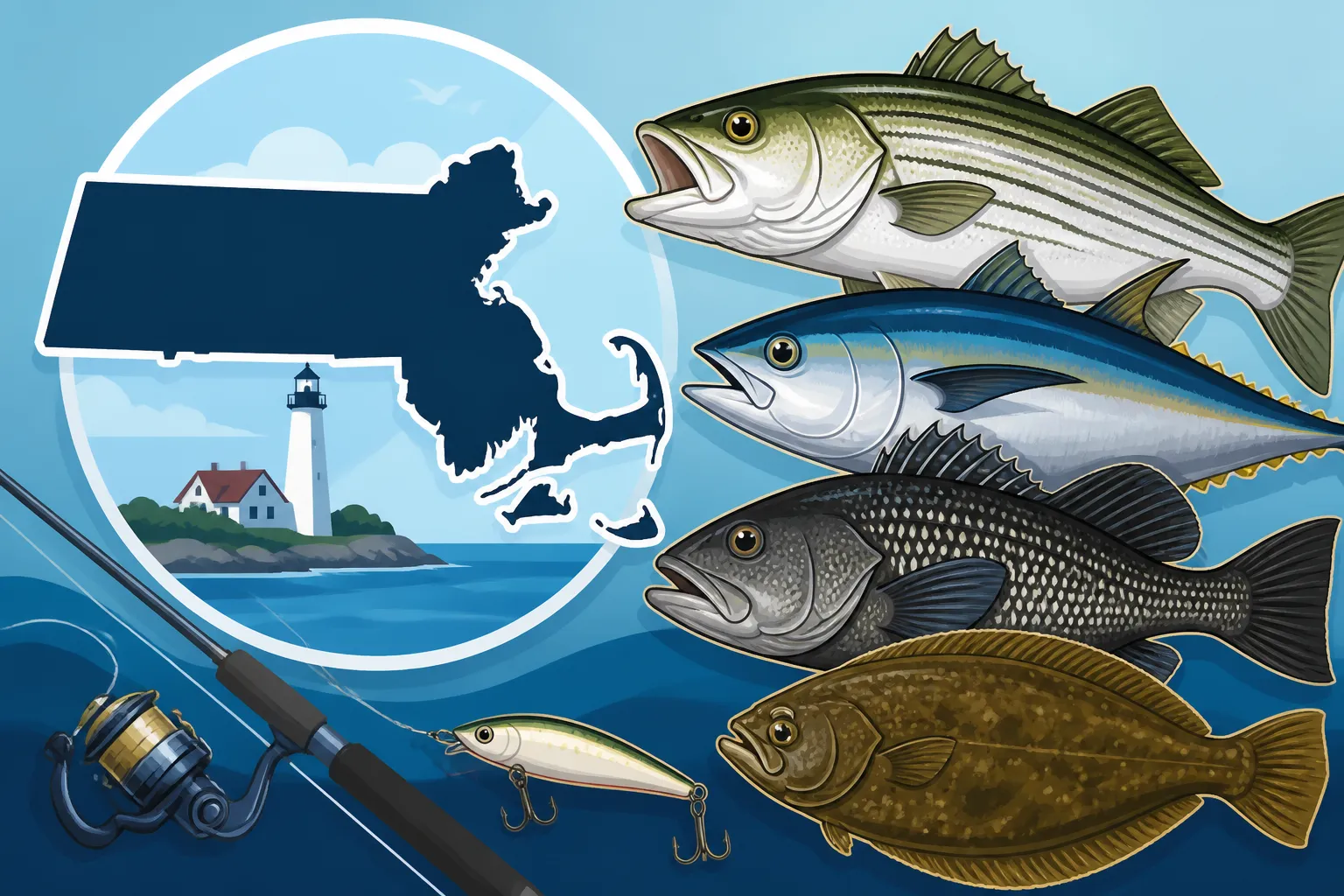
- Streamlined Pelagics: Fish like striped bass, bluefish, and tuna are classic examples of streamlined, powerful swimmers. Their bodies are built for chasing prey in open water, typically with strong, forked tails and rigid fins. A striped bass, for example, has an elongated, somewhat compressed body with distinctive horizontal stripes.
- Bottom Dwellers: Species such as fluke (summer flounder) and winter flounder are dramatically flattened, allowing them to lie camouflaged on the ocean floor. Their eyes are typically on one side of their head, adapted for this horizontal lifestyle. Tautog, on the other hand, are deep-bodied and robust, with large, powerful jaws, built for crushing shellfish among rocky structures.
- Fin Characteristics: Pay attention to the number and nature of dorsal fins. Many saltwater species have two distinct dorsal fins, sometimes connected, with the first being spiny and the second soft-rayed. Bluefish, for instance, have two dorsal fins, the first shorter and spiny, the second longer and soft-rayed, along with a deeply forked tail. The presence of finlets behind the second dorsal and anal fins is a key characteristic of tuna and mackerel. The shape of the tail fin (caudal fin) remains important: deeply forked for speed, rounded for agility in tight spaces, or truncated.
A good observation is to note the position of the fins relative to each other. Are the pectoral fins high on the body or low? Are the pelvic fins located forward, beneath the pectorals, or further back? These subtle details contribute significantly to accurate identification.
Mouth Structure and Unique Features
Just like in freshwater, the mouth of a saltwater fish is a window into its feeding habits. Predatory fish, like bluefish and striped bass, typically have large mouths, often with rows of sharp teeth designed for grabbing and tearing prey.
- Bluefish: Their mouth is large and armed with extremely sharp, conical teeth, perfect for slicing through baitfish. This is a critical feature that immediately sets them apart from most other fish, including striped bass, which have smaller, less menacing teeth. Handling bluefish requires extreme caution to avoid painful bites.
- Striped Bass: While also predatory, striped bass have a less formidable set of teeth, more like sandpaper-like pads, indicating they're more likely to engulf prey. A key anatomical feature specific to stripers is the presence of two distinct spines on their gill plate (operculum), often visible if you lift the gill cover slightly. Another important identifier is the presence of seven or eight distinct dark horizontal stripes running along their silvery-white sides. You can always tell a true striper from other similar-looking fish like white perch by these distinct stripes.
- Fluke (Summer Flounder): These flatfish have a large mouth with many sharp, conical teeth. Crucially, when looking down at a fluke with its eyes on the top side, the eyes will be on the left side of its head, and its mouth will open towards the left. This is a key distinguishing factor from other flatfish like winter flounder, which are "right-eyed."
- Tautog: Tautog have distinctive, often protruding, canine-like teeth at the front of their jaws, perfect for crushing shellfish and crabs. Their powerful jaws are a clear indicator of their diet and habitat.
Other unique features might include specialized sensory organs, barbels (like cod), or distinct markings near the gills or eyes. Every little detail helps paint a complete picture for identification.
Color Patterns and Markings in the Marine Environment
Coloration in saltwater fish can be incredibly vibrant or remarkably subdued, depending on their habitat and camouflage needs. From the iridescent blues of mackerel to the mottled browns of bottom fish, these patterns are crucial clues.
- Stripes and Bars: As mentioned, striped bass are famous for their dark horizontal stripes. Other species might have vertical bars or splotchy patterns that help them blend into rocky structures or kelp beds.
- Spots and Blotches: Cod, for instance, often have a mottled brown or greenish-gray coloration with distinct spots or blotches that help them blend into rocky bottoms.
- Overall Hue: Tuna and bluefish often display stunning iridescent blues and greens on their backs, a characteristic of fast-swimming pelagic species. Their bellies are typically silvery-white. Fluke are masters of camouflage, able to change their coloration to match the sandy or gravelly bottom they inhabit, but they generally have dark spots or ocelli (eye-like spots) on their pigmented side.
- Lateral Line Curve: For some species, the curve or path of the lateral line can be a distinguishing feature. For example, in Atlantic cod, the lateral line is noticeably paler than the body and has a distinct arch over the pectoral fin.
Just like in freshwater, having a good marine fish identification guide is invaluable. Look for durable, waterproof versions, perhaps even laminated ones, that can withstand saltwater spray and can be easily referenced on your boat. Amazon offers a wide selection of these specialized guides for East Coast fishing. These guides often feature detailed illustrations or photographs that highlight the subtle differences in fin shape, mouth structure, and coloration that are hard to remember in the heat of the moment.
Popular Saltwater Species to Encounter in Massachusetts
Massachusetts's coastline, from the rocky shores of Cape Ann to the sandy beaches of Cape Cod and the islands, is teeming with iconic saltwater species that draw anglers from near and far. Here are some of the most popular game fish you'll want to be able to identify confidently.
Striped Bass: The Northeast's Prized Gamefish
No discussion of Massachusetts saltwater fishing is complete without the striped bass, often simply called "stripers." They are the undisputed king of our coastal waters, renowned for their power and cunning.
- Identification: Stripers have an elongated, silvery body with a distinct dark olive-green to black back. Their most defining feature is the 7 or 8 prominent, unbroken dark horizontal stripes that run along their sides, from behind the gills to the tail. They have a moderately large mouth, and their gill plate (operculum) has two sharp spines. Their tail is moderately forked.
- Habitat and Behavior: Stripers are found throughout Massachusetts's estuaries, rivers, bays, and open coastlines. They are anadromous, meaning they spend most of their lives in saltwater but return to freshwater to spawn. They are opportunistic predators, feeding on baitfish like mackerel, herring, and pogies, as well as squid and crabs. They can be found in a variety of environments, from rocky shorelines and jetties to open sandy beaches and tidal rips. Best Fishing Spots in Massachusetts are often prime striper grounds.
- Regulations: Massachusetts has strict slot limits for striped bass, meaning you can only keep fish within a specific size range. This is designed to protect both juvenile fish and large breeding females. It's crucial to know the current Massachusetts Striped Bass Slot Limit Explained and practice careful measuring. Misidentifying a striper or mismeasuring it can lead to significant penalties. These regulations are a key part of ensuring the species' long-term health.
Bluefish: The Choppers of the Coast
Bluefish are another incredibly popular and exciting saltwater gamefish, known for their aggressive nature, powerful runs, and devastating bites.
- Identification: Bluefish have a robust, somewhat compressed body that is typically iridescent greenish-blue on the back, fading to silvery-white on the sides and belly. Their most distinguishing feature is their large mouth armed with very sharp, conical, razor-like teeth. They have two dorsal fins, the first being short and spiny, and the second longer and soft-rayed, along with a deeply forked tail. They lack the distinct horizontal stripes of a striped bass.
- Habitat and Behavior: Bluefish are highly migratory and predatory, often found in large schools. They will readily chase down and attack baitfish, sometimes creating chaotic feeding frenzies known as "bluefish blitzes" that can churn the water. They are found in bays, estuaries, and offshore waters throughout Massachusetts. They are fierce fighters, and due to their sharp teeth, handling them requires extreme caution, often with pliers or a de-hooker.
- Regulations: While bluefish regulations are often more lenient than striped bass, there are still bag limits in place. Knowing the Massachusetts Bluefish Bag Limit and Season is important before you decide to keep any. Their powerful jaws mean they can bite through leaders, so strong tackle is usually needed.
Fluke (Summer Flounder) and Tautog
These two species represent very different approaches to saltwater angling but are highly prized for their delicious taste and challenging fights.
-
Fluke (Summer Flounder): Fluke are flatfish, meaning they lie on their side on the bottom, with both eyes on one side of their head. When looking down at a fluke from above, its eyes will be on the left side of its head, and its mouth will open towards the left. Their pigmented side (the top) is typically brown, gray, or olive, often with distinct spots or ocelli, allowing them to camouflage with the seafloor. Their underside is white. They have a large mouth with sharp teeth.
-
Habitat and Behavior: Fluke prefer sandy or muddy bottoms, often near structures, channels, or drop-offs where they can ambush baitfish and crustaceans. They are ambush predators, lying in wait and darting out to snatch prey. They are highly sought after for their delicate white meat.
-
Regulations: Fluke have strict size and bag limits in Massachusetts, which can vary depending on whether you're fishing from shore or a boat, and by season. It's critical to know the Massachusetts Fluke Size Limits Explained before you decide to keep one. Accurate measurement is key for these fish.
-
Tautog: Tautog, or "blackfish," are a challenging and highly prized bottom-dwelling species known for their incredible pulling power and delicious meat.
-
Identification: Tautog have a robust, deep body that is typically dark gray, greenish-brown, or black, often with mottled patterns. They have a distinctive, often protruding mouth with strong, canine-like teeth at the front, followed by crushing plates in the back, perfect for eating shellfish. Their dorsal fin is long and spiny.
-
Habitat and Behavior: Tautog are almost always found around rocky structures, wrecks, jetties, and mussel beds, where they feed on crabs, mussels, and other crustaceans. They are incredibly strong fighters, often trying to "dig" into the structure once hooked, making for a challenging battle.
-
Regulations: Tautog have some of the most complex regulations in Massachusetts, with different size and bag limits depending on the month and season. Consult the Massachusetts Tautog Size and Bag Limit by Season carefully, as these rules change. A good identification guide is a must-have for tautog anglers.
Cod and Other Groundfish
While cod populations have faced challenges, they remain an important species in Massachusetts's fishing heritage and are still targeted, especially offshore.
- Cod (Atlantic Cod): Cod are recognized by their mottled brown, olive, or greenish-gray coloration, often with distinct spots or blotches that help them blend into rocky bottoms. They have a prominent white lateral line that curves noticeably above the pectoral fin. They have three distinct dorsal fins and two anal fins, and a barbel (whisker) on their chin. Their tail is square or slightly rounded.
- Habitat and Behavior: Cod are bottom dwellers, typically found in cooler, deeper waters over rocky or sandy bottoms. They feed on a variety of invertebrates and smaller fish.
- Regulations: Cod fishing is highly regulated, particularly in certain areas and at certain times. It's crucial to be aware of Massachusetts Cod Fishing Rules and Season as they are subject to change based on stock assessments.
Essential Tools and Resources for Accurate Identification
Even the most experienced anglers sometimes encounter a fish they can't immediately identify. Thankfully, there are many excellent tools and resources available to help you confirm your catch, ensuring you stay compliant with regulations and learn more about our amazing marine and freshwater life.
Field Guides and Books
Physical field guides are a classic and often indispensable tool for fish identification. They are particularly useful because they don't require battery power or cell service, which can be spotty in remote fishing locations.
- Massachusetts-Specific Guides: Look for guides specifically tailored to the fish species found in Massachusetts or the Northeast region. These will narrow down the possibilities significantly compared to a general North American guide. They often include detailed illustrations or photographs, along with descriptions of key identification features, habitat, and sometimes even eating qualities. Having a guide focused on the local ecosystem ensures that the species depicted are those you are most likely to encounter, reducing confusion.
- Waterproof and Durable: For fishing, a waterproof or laminated guide is a smart investment. It can withstand splashes, rain, and dirty hands, making it practical to use right there on the boat or shore. Imagine catching a fish, and being able to quickly flip through a few pages without worrying about ruining your guide.
- Availability: You can find an excellent selection of these guides on Amazon, ranging from comprehensive reference books to compact, pocket-sized versions perfect for a tackle box. Reading reviews from other anglers can help you choose the best fit for your needs. Consider one that highlights the common species, as well as those that might be easily confused, such as Difference between brook trout and brown trout.
Online Resources and Mobile Apps
The digital age has brought a wealth of convenient resources right to your fingertips, often providing up-to-the-minute information.
- MassWildlife and Mass.gov: The official websites for the Massachusetts Division of Fisheries and Wildlife (MassWildlife) and the Massachusetts state government are invaluable. They host comprehensive lists of fish species, regulations (which are often updated annually or seasonally), and frequently offer downloadable guides or fact sheets. Checking these sites before you go fishing is paramount for understanding current bag limits, slot limits, and open seasons for specific species. For instance, the Massachusetts Recreational Fishing Rules and Bag Limits are always available here.
- Fisheries Agencies: The National Oceanic and Atmospheric Administration (NOAA) Fisheries also provides extensive resources for saltwater species, including identification guides and information on federal regulations that apply in offshore waters.
- Mobile Apps: Many excellent fish identification apps are available for smartphones. Some allow you to upload a photo of your catch for AI-powered identification, while others are essentially digital field guides. Many apps also link directly to current regulations, making them a powerful tool for on-the-spot decisions. However, remember that app accuracy can vary, and it's always wise to double-check with official sources, especially for regulated species. Always be prepared for areas with no cell service, so a physical guide is a good backup.
Measuring Devices and Cameras
Proper identification often goes hand-in-hand with proper measurement, especially for species with length limits.
- Measuring Tapes and Boards: A sturdy, reliable measuring tape or, even better, a fish measuring board is essential. Many species have minimum or maximum length requirements, and a quick, accurate measurement is crucial to determining if your catch is a "keeper." For flatfish like fluke, a measuring board helps ensure you're measuring correctly from the tip of the snout to the end of the tail. Look for devices that are durable and easy to read. You can find a good variety of marine-grade measuring tapes and boards on Amazon.
- Digital Camera/Smartphone: Taking a clear photo of your catch before release is not only great for memories but can also be a valuable identification tool if you're unsure. Get a few shots from different angles, showing key features like mouth, fins, and markings. Later, you can compare these photos to your field guide or online resources. Just remember to handle the fish carefully and minimize its time out of the water, especially if you plan to release it. Ensure your photo clearly shows the fish's full body without obstruction. Whether a phone photo of your license is accepted in Massachusetts is a different topic, but photos of fish can be very helpful for ID.
Table of Common Massachusetts Fish and Their Key ID Features
To help summarize some of the most frequently encountered fish and their distinguishing characteristics, here's a handy table. This isn't exhaustive, but it covers many of the species you're likely to reel in.
| Fish Species | Habitat (Primary) | Body Shape | Key Mouth/Head Features | Key Color/Pattern Features | Other Distinguishing Traits |
|---|---|---|---|---|---|
| Largemouth Bass | Weedy ponds, lakes | Deep, compressed | Upper jaw extends past eye | Dark, blotchy horizontal lateral stripe | Large, dark eye; often olive-green back |
| Smallmouth Bass | Rocky rivers, clear lakes | Streamlined, more robust | Upper jaw stops before/under eye | 8-16 faint vertical bars (can vary), bronze-brown | Smaller eye; more uniformly colored |
| Rainbow Trout | Stocked rivers, ponds | Torpedo-shaped | Small mouth, blunt snout | Pink/red lateral stripe; numerous small black spots | Adipose fin present; often silvery sheen |
| Brown Trout | Cold rivers, streams | Torpedo-shaped | Small mouth, blunt snout | Dark spots w/ pale halos; often red/orange spots | Adipose fin present; more golden-brown color |
| Brook Trout | Cold, pristine streams | Torpedo-shaped | Small mouth, blunt snout | Worm-like markings (vermiculations); red spots w/ blue halos | Adipose fin present; white leading edge on lower fins |
| Chain Pickerel | Weedy ponds, shallow lakes | Long, slender | Duckbill snout, sharp teeth | Chain-like pattern on olive-green sides | Dorsal/anal fins far back on body; fully scaled cheek |
| Yellow Perch | Lakes, ponds, slow rivers | Moderate, slightly compressed | Small, terminal mouth | 6-8 distinct dark vertical bars; yellow/gold body | Two distinct dorsal fins (1 spiny, 1 soft); orange fins |
| Striped Bass | Bays, estuaries, coast | Elongated, silvery | Moderately large mouth, sandpaper teeth | 7-8 prominent dark horizontal stripes | Two sharp spines on gill cover; moderately forked tail |
| Bluefish | Bays, offshore, beaches | Robust, streamlined | Large mouth, razor-sharp teeth | Iridescent greenish-blue back, silvery sides | Deeply forked tail; aggressive chomper |
| Fluke (Summer Flounder) | Sandy/muddy bottoms | Flat, eyes on left side | Large mouth, sharp teeth | Brown/gray/olive, often w/ spots/ocelli (top side) | Eyes on left side of head; underside white |
| Tautog | Rocky structures, wrecks | Deep, robust | Protruding teeth (canines/crushers) | Dark gray to black, often mottled | Large dorsal fin; powerful fighters |
| Atlantic Cod | Deeper, cooler waters | Robust, tapered | Large mouth, chin barbel (whisker) | Mottled brown/green/gray; distinct white lateral line | Three dorsal fins, two anal fins |
Massachusetts-Specific Identification Challenges and Conservation
Even with good resources, there can be unique challenges in identifying fish in Massachusetts. Our diverse habitats, from high mountain streams to the deep ocean, support a wide array of species, and sometimes, similar-looking fish can cause confusion. Understanding these nuances and participating in conservation efforts is part of being a truly responsible angler.
Distinguishing Look-Alikes and Hybrids
Massachusetts waters are home to several "look-alike" species that can easily be confused, leading to potential regulatory violations. This is where attention to the finer details of identification becomes paramount.
- Striped Bass vs. White Perch: A classic example in brackish or tidal freshwater areas is distinguishing a juvenile striped bass from a white perch. Both are silvery fish with faint horizontal lines. However, a striped bass will have seven or eight distinct, unbroken dark stripes, and critically, two small, sharp spines on its gill plate. A white perch, by contrast, generally has fewer, fainter, and often broken horizontal lines, and only one blunt spine on its gill plate. White perch are also typically more "panfish-like" in body shape, being deeper and more compressed than the more elongated striper. Knowing this difference is crucial as they have different size and bag limits.
- Brook Trout vs. Brown Trout: As mentioned earlier, distinguishing these two beautiful trout can be tricky, especially if you're excited. Remember the key: brook trout have distinct worm-like (vermiculated) patterns on their backs and dorsal fin, and often red spots with blue halos on their sides, along with the telltale white leading edge on their lower fins. Brown trout typically have dark spots with light halos and lack the vermiculations. The subtle differences in their coloration and spot patterns are the main giveaways.
- Largemouth vs. Smallmouth Bass: The jawline rule is the easiest way to differentiate them – past the eye for largemouth, before or under the eye for smallmouth. Also, consider habitat: largemouth prefer weeds, smallmouth prefer rocks.
- Fluke vs. Winter Flounder: Both are flatfish, but their "handedness" is key. Fluke (summer flounder) are left-eyed (eyes on the left when looking down). Winter flounder are right-eyed (eyes on the right). They also have different mouth sizes, with fluke having a larger, more toothy mouth. These are distinct species with different regulations.
Beyond species that simply look alike, hybrids can also pop up. The tiger trout, a sterile cross between a brown trout and a brook trout, is a perfect example. Its distinctive maze-like pattern makes it easy to identify once you know what to look for, but without that knowledge, it could simply be seen as an oddly marked "trout."
The Importance of Catch and Release for Regulated Species
For many species in Massachusetts, particularly striped bass, tautog, and even some trout, anglers often encounter fish that are either too small, too large (for slot limits), or simply not within the legal bag limit for keeping. In these situations, responsible catch and release practices are not just recommended, they are often legally required.
- Minimizing Stress: The goal of catch and release is to ensure the fish survives unharmed. This means using appropriate tackle (matching your gear to the species), handling the fish as little as possible, keeping it in the water if feasible, and using wet hands if you must touch it. Avoid dragging the fish onto dry land or rough surfaces.
- Quick Release: Have your de-hooking tools ready. Barbless hooks can make release much easier. If the fish has swallowed the hook deeply, cut the line as close to the hook as possible rather than trying to rip it out, which can cause internal damage.
- Revival: For tired fish, especially larger ones, gently hold them upright in the water, facing into a mild current, allowing water to flow over their gills until they regain strength and can swim away on their own. This is especially important for Massachusetts Striped Bass Slot Limit Explained fish that you are legally required to release.
- Reporting Invasive Species: While not typically a catch-and-release scenario, if you accidentally catch an invasive species (like a northern snakehead, though thankfully rare in MA), it's crucial to identify it, do NOT release it, and report it to MassWildlife. This is a critical part of protecting our native ecosystems. An invasive fish species found in Massachusetts can be detrimental.
By adhering to these principles, every angler plays a vital role in the conservation of Massachusetts's precious fish resources, ensuring that the next generation can enjoy the same incredible fishing opportunities we do. It’s not just about catching fish; it’s about understanding and respecting the fish you catch.
Disclaimer
This article is for general informational purposes only and does not constitute professional advice. Laws, prices and regulations vary by location and change over time. Consult a qualified professional for guidance on your specific situation.