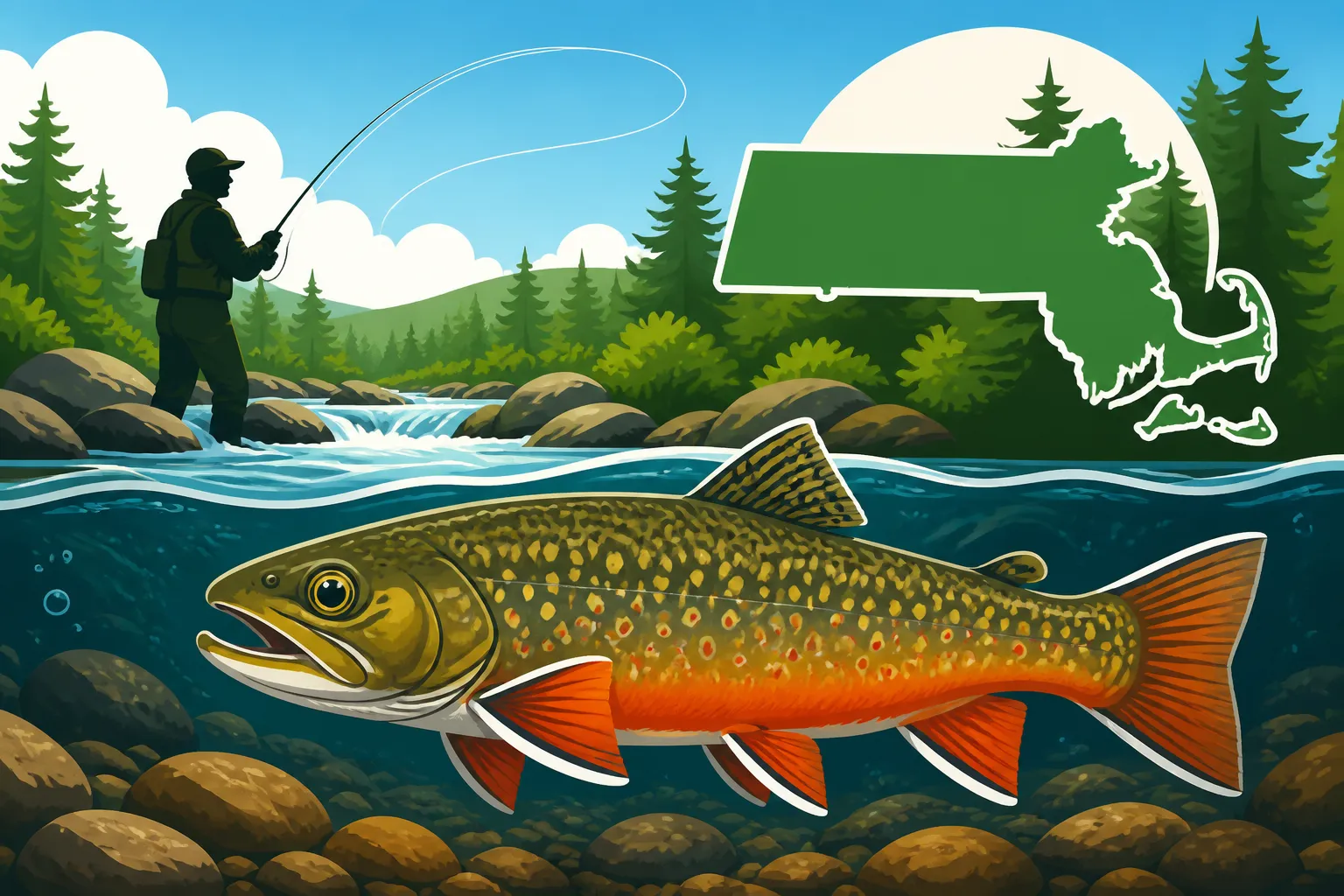
Brook Trout in Massachusetts Streams
Few fishing experiences in Massachusetts rival the quiet thrill of pursuing wild brook trout in their natural stream habitats. It's a quest that often leads anglers off the beaten path, away from the bustling rivers and ponds, into serene, shaded waters where these beautiful, native fish thrive. If you've ever felt the yearning to connect with a truly wild fish in a pristine setting, this comprehensive guide will walk you through everything you need to know about finding, catching, and appreciating brook trout in Massachusetts streams, validating the effort and patience this unique style of fishing demands.
Understanding Massachusetts Brook Trout
There's something inherently special about the brook trout, or "brookie" as many of us affectionately call them. They are more than just a fish; they are a living indicator of water quality and a beautiful symbol of Massachusetts' natural heritage. Unlike their rainbow or brown trout cousins, brook trout are actually char, and they are native to our cold, clear waters.
The Elusive Native: What Defines a Brook Trout?
The brook trout ( Salvelinus fontinalis) is Massachusetts' only native freshwater trout species. When you catch one, you're holding a piece of living history, a direct descendant of fish that have inhabited these streams for millennia. Their appearance is striking: a dark, olive-green back mottled with worm-like patterns (known as vermiculations), bright red spots with blue halos along their flanks, and distinct white leading edges on their lower fins, often with a black stripe immediately behind the white. These vibrant colors are especially pronounced in wild, stream-dwelling fish, making them a true jewel of our waterways.
What makes them truly elusive isn't just their shyness, but their specific habitat requirements. They need truly cold water, typically below 68°F (20°C), and prefer it even colder. This is why you often find them in spring-fed streams, high-elevation brooks, and the headwaters of larger river systems where water temperatures remain consistently low throughout the year. They are highly sensitive to pollution, siltation, and changes in water temperature, making their presence a testament to a healthy ecosystem.
Historical Presence and Modern Challenges
For generations, brook trout were the dominant trout species across much of Massachusetts. Early settlers and native tribes relied on them, and they were a cornerstone of recreational fishing for centuries. However, as the state developed, many of their pristine habitats were impacted by deforestation, agriculture, industrialization, and damming. This led to significant declines in wild brook trout populations, especially in more populated areas. While MassWildlife has done tremendous work in conservation and habitat restoration, wild brook trout populations remain delicate.
Today, many of the trout you'll encounter in Massachusetts are stocked fish—rainbow, brown, or even brook trout raised in hatcheries. While these stocked fish provide fantastic angling opportunities, especially for those learning the ropes, the thrill of finding and catching a wild, native brook trout in its untouched stream habitat is an entirely different experience. It’s a journey back in time, a connection to the wildness that still exists in pockets of our busy state. Understanding this distinction enriches the experience tenfold. Difference between brook trout and brown trout is a great resource if you want to learn more about identifying species.
Ideal Habitat: Cold, Clean, and Covered
If you're looking for wild brook trout, you need to think like a brook trout. Their ideal home is characterized by several key factors: cold water, excellent water quality, and plenty of cover. Think small, shaded streams, often no wider than a car, with a rocky or gravel bottom. These streams usually have a consistent flow, fed by springs or groundwater, which keeps the temperature stable even during warm summer months.
Cover is paramount for brook trout. They are prey animals, so they seek refuge from predators like birds of prey, otters, and even larger fish. This means you'll find them holding near undercut banks, submerged logs, fallen trees, large boulders, and thick overhanging vegetation. Any structure that breaks the current and offers a hiding spot is prime brook trout territory. These areas also tend to hold more insects and aquatic invertebrates, which make up a significant portion of their diet. Looking for these specific features will greatly increase your chances of locating these beautiful, elusive fish.
Where to Find Wild Brook Trout
Finding wild brook trout in Massachusetts isn't always about hitting the most popular fishing spots. Often, it's about exploring those smaller, overlooked tributaries and headwaters that don't get the same attention as the larger, stocked rivers. It requires a bit of detective work and a willingness to venture into more secluded areas, but the reward is well worth the effort.
Identifying Prime Stream Characteristics
When you're searching for wild brook trout streams, you want to look for specific characteristics that indicate a healthy, productive habitat. First and foremost, look for streams that are heavily shaded. A dense tree canopy keeps the water cool by blocking direct sunlight, which is crucial for brook trout survival, especially as air temperatures rise. Secondly, assess the stream bottom. A mix of gravel, small rocks, and larger boulders indicates a healthy substrate for insect life and spawning. Avoid streams with excessive silt or mud, as these are often signs of erosion or pollution, which brook trout cannot tolerate.
Another key indicator is the presence of clear, unpolluted water. If the water looks murky or smells off, it's likely not suitable for wild brookies. Finally, seek out streams with varied structure: riffles, runs, pools, and especially areas with undercut banks, submerged logs, or overhanging vegetation. These features provide essential cover and feeding lanes. MassWildlife's website can be a fantastic resource, sometimes offering maps or descriptions of wild trout management areas, though specific wild brook trout spots are often left for anglers to discover on their own.
Notable Massachusetts Brook Trout Streams
While I can't give you a definitive list of every secret brook trout honey hole (part of the fun is finding them yourself!), I can point you towards general regions and types of waters where wild brookies are known to exist. Western Massachusetts, particularly the Berkshires, is renowned for its numerous cold, clear streams and tributaries that tumble down from the hills. Rivers like the Deerfield River and Housatonic River have many smaller feeder streams that can hold wild populations. The central part of the state also holds pockets of these fish, especially in areas with significant forest cover and spring-fed systems. Even some smaller, lesser-known streams on the outer edges of the Cape Cod watershed can harbor brook trout if they maintain consistent cold water.
The key is to seek out streams that haven't been heavily altered by human activity. Think about areas within state forests, wildlife management areas, or protected conservation lands. These spots often have the undisturbed habitat that brook trout require. Remember, these aren't the places where MassWildlife trucks in thousands of fish; these are places where nature is doing the stocking, year after year. For specific locations, local fly shops or fishing forums can sometimes offer general guidance, but expect to put in some legwork. You can also explore Where to find wild brook trout in Massachusetts for more specific geographic pointers.
Reading the Water: Where Brookies Hold
Once you've found a promising stream, the next step is to "read the water" to pinpoint where brook trout are likely to be holding. Brook trout are ambush predators and also seek refuge from strong currents. They often position themselves in seams where faster water meets slower water, allowing food to drift by while expending minimal energy. Look for the "sweet spots" in pools, especially near the deepest sections or where an undercut bank provides a dark, sheltered lair.
Riffles and runs often have small pockets behind rocks or logjams where brook trout will lie, darting out to snatch an unsuspecting insect. Pay close attention to fallen trees or large boulders in the stream; the water flowing over and around them creates current breaks and cover that brookies love. Overhanging branches or dense brush along the banks are also prime areas, providing both shade and a hiding spot. Approach these areas slowly and cautiously, as brook trout are notoriously skittish. A sudden shadow or heavy footstep can send them darting for cover, spoiling your chances.
Essential Gear for Brook Trout Anglers
Successfully targeting wild brook trout in small Massachusetts streams demands a specific approach to gear. Forget the heavy-duty rods and reels you might use for striped bass or large lake trout; brookies require a lighter touch and often specialized equipment designed for close-quarters casting and stealth. The beauty of it is, you don't need a huge budget to get started, just the right tools for the job.
Rods, Reels, and Lines for Light Tackle
For fly fishing, a short, light rod is paramount. Think a 6 to 7.5-foot, 2 to 4-weight fly rod. This length allows you to cast effectively in tight quarters with overhanging branches, while the light weight protects fine tippets and makes even small brook trout feel like titans. Pair this with a matching small, click-and-pawl or disc-drag fly reel that balances the rod well; retrieve speed isn't usually a major concern with these small fish. A weight-forward floating line is versatile and works for most dry fly, nymph, and wet fly presentations.
If you prefer spin fishing, opt for an ultralight spinning rod, again in the 4.5 to 6-foot range, rated for 1-4 lb test line. This setup offers incredible sensitivity, allowing you to feel the lightest takes. A small, quality spinning reel spooled with 2-4 lb monofilament or fluorocarbon line is perfect. Fluorocarbon offers lower visibility and less stretch, which can be an advantage in clear streams. Remember, these are not powerhouse fish, and delicate presentation is often more important than brute strength.
Terminal Tackle: Hooks, Sinkers, and Swivels
When it comes to terminal tackle, subtlety is key. For fly fishing, you'll want a range of fine tippet materials, typically 5x to 7x, to tie on your flies. The lighter the tippet, the more natural your fly will drift, and the less visible it will be to wary brook trout. For spin fishing with bait, small, sharp hooks are essential. Size 10 or 12 Aberdeen or snelled hooks are usually perfect for bait like worms or grubs, allowing for easy hooksets without harming the fish too much.
Split shot sinkers, usually in very small sizes (BB or smaller), can be added sparingly above your hook or fly to get your offering down to the fish in deeper pockets or faster currents. The goal is to use just enough weight to get to the strike zone without hindering a natural drift. Swivels are generally less common in brook trout fishing, as they can sometimes be an unnecessary point of failure or add unnatural action, but a very small barrel swivel might be used if you're experiencing line twist with certain lures. Keeping your leader system simple and light is almost always the best strategy for these finicky fish.
Waders, Vests, and Essential Stream Accessories
Navigating small streams often means getting wet, so a good pair of chest waders is highly recommended, especially for colder months or deeper sections. Lightweight, breathable waders are ideal for covering ground, and wading boots with good grip are crucial for safely traversing slippery rocks and uneven bottoms. If you're going to be out there for a while, comfort and safety are paramount.
A fishing vest or a small sling pack is invaluable for keeping your gear organized and accessible. You'll want to carry essentials like a small pair of nippers, forceps or hemostats for hook removal, a small net with a rubber or knotless mesh (gentler on the fish), and a container for your flies or lures. Don't forget a compass or GPS app on your phone, a small first-aid kit, and plenty of water, especially if you're venturing into remote areas. Sunglasses are also a must, not just for sun protection, but for cutting glare off the water so you can spot fish or structure. You can find a fantastic selection of fishing vests, waders, and other accessories on Amazon, making it easy to prepare for your next stream adventure. Having all your gear readily at hand means you can focus on the fishing, not fumbling for a hook or fly.
| Item | Fly Fishing Recommendation | Spin Fishing Recommendation | Purpose |
|---|---|---|---|
| Rod | 6-7.5 ft, 2-4 wt, moderate action | 4.5-6 ft, Ultralight (1-4 lb line) | Delicate presentation, tight spaces |
| Reel | Small, balanced click/pawl or disc drag | Small, ultralight spinning reel | Line storage, rod balance |
| Line | WF Floating Line (matching rod wt) | 2-4 lb Monofilament or Fluorocarbon | Casting, sensitivity |
| Tippet/Leader | 5x-7x Tippet (Fly), 2-4 lb Fluorocarbon Leader (Spin) | Clear, low visibility line | Stealth, breaking strength |
| Hooks | Fly hooks (varied, small sizes) | Size 10-12 Aberdeen or snelled | Bait presentation, easy hookset |
| Sinkers | Micro split shot | Micro split shot | Get bait/fly to depth |
| Waders/Boots | Breathable chest waders, felt/rubber sole boots | Breathable chest waders, felt/rubber sole boots | Stay dry, safe footing in water |
| Accessories | Nippers, forceps, small net, fly box | Nippers, forceps, small net, lure box | Essential tools for handling fish and gear |
Effective Techniques for Catching Brook Trout
Catching wild brook trout is less about brute force and more about finesse, stealth, and understanding their behavior. Whether you prefer the elegance of fly fishing or the simplicity of spin fishing, the approach to these wary stream dwellers remains largely the same: be subtle, be accurate, and be patient.
Fly Fishing: The Classic Approach
Fly fishing is often considered the purest form of angling for wild brook trout, and for good reason. The delicate presentation of a tiny dry fly or a well-drifted nymph perfectly mimics their natural food sources. When fly fishing small streams, short, accurate casts are more important than long distances. Often, you're only casting a few feet into a pocket or under an overhanging branch. Focus on upstream presentations, allowing your fly to drift naturally back towards you without drag. This "dead drift" is crucial for fooling wary brookies.
Popular fly patterns include small dry flies like Parachute Adams, Elk Hair Caddis, or Griffiths Gnat (sizes 14-20) when fish are rising. For subsurface fishing, small Pheasant Tail Nymphs, Hare's Ear Nymphs, or Prince Nymphs (sizes 14-18) are highly effective. Don't be afraid to experiment! Often, the "best" fly is simply the one presented most naturally. Focus on stealthy approaches, staying low, and using stream-side cover to conceal yourself. A perfectly cast fly can be easily spooked if the angler's shadow falls over the water. For more dedicated advice, consider Fly Fishing for Trout in Massachusetts Rivers.
Spin Fishing: Lures and Baits
For those who prefer spin fishing, ultralight tackle offers an equally effective way to target brook trout. Small inline spinners, typically 1/32 oz to 1/8 oz, are deadly. Brands like Mepps and Panther Martin are perennial favorites, in gold, silver, or black finishes. The key is to cast accurately into the pockets and runs where brookies hide and retrieve just fast enough to get the blade spinning. The flash and vibration can trigger an aggressive strike from a territorial brook trout. Tiny spoons, like a Kastmaster or Little Cleo, also work well, mimicking small baitfish.
Natural baits, especially small worms or grubs, are incredibly effective. Thread a small piece of nightcrawler or a garden worm onto a tiny hook (size 10 or 12), add a single, tiny split shot if needed to get it down, and let it drift naturally through pools and current seams. The natural scent and action are often irresistible to hungry brook trout. PowerBait or similar scented dough baits can also work, especially in pressured streams, but many purists prefer more natural presentations. Whichever you choose, focus on precise casts and a quiet approach. Remember, brook trout are easily spooked. You can often find a wide variety of effective brook trout lures and baits for spin fishing on Amazon, ensuring you have options for different conditions and preferences. For more details on bait, check out Best Bait for Trout Fishing in Massachusetts.
Presentation Matters: Stealth and Accuracy
Regardless of whether you're fly fishing or spin fishing, presentation is arguably the most critical factor for success. Wild brook trout are not like hatchery-raised fish; they are incredibly wary and highly attuned to their environment. A poor cast, a heavy landing lure, or a line dragging unnaturally on the water will send them scattering.
- Stealth: Approach the stream carefully. Stay low, use stream-side vegetation as cover, and avoid making sudden movements or casting your shadow over the water. Move slowly and deliberately.
- Accuracy: Small streams mean small target zones. Practice casting into tight pockets, under overhanging branches, and alongside undercut banks. Often, your first cast is your best chance, so make it count.
- Natural Drift/Retrieve: Whether it's a dry fly floating effortlessly, a nymph tumbling with the current, or a spinner wobbling without a hitch, the presentation must appear natural. For flies and bait, this means eliminating drag. For lures, it means a smooth, consistent retrieve that mimics live prey.
Fishing for brook trout is a meditative practice that rewards patience and attention to detail. Don't rush it; enjoy the process of deciphering the stream and presenting your offering just right.
Conservation and Responsible Angling
When you're fishing for wild brook trout in Massachusetts streams, you're interacting with a truly precious natural resource. These fish are not only beautiful but also ecologically significant. Therefore, responsible angling practices and a strong commitment to conservation are absolutely essential to ensure these populations thrive for future generations.
Catch and Release Practices
While some streams might allow for the harvest of a limited number of brook trout, many dedicated wild brook trout anglers practice catch and release exclusively. This is particularly important for wild populations, as removing even a few mature fish can impact the reproductive success and genetic diversity of a small, isolated population. If you do choose to release a fish, handle it with the utmost care.
- Minimize Handling: Try to keep the fish in the water as much as possible. If you must remove it for a quick photo, do so quickly and gently.
- Wet Hands: Always wet your hands before touching a fish. Dry hands can remove the protective slime layer (mucus) that helps protect the fish from disease.
- Proper Hook Removal: Use forceps or pliers to quickly remove the hook. If the fish is deeply hooked, it's sometimes better to cut the line as close to the hook as possible rather than risking further injury trying to extract it. Barbless hooks greatly aid in quick and easy release, and many dedicated brook trout anglers crimp down the barbs on their hooks.
- Revive Gently: Hold the fish upright in the current, facing upstream, until it can swim away on its own. Don't toss it back into the water.
Understanding Regulations and Limits
Massachusetts has specific regulations governing fishing, including those for trout. It's crucial to understand these rules, as they can vary by water body and by species. While some streams are designated "Wild Trout Waters" with special regulations, others might fall under general statewide trout rules. These regulations cover everything from seasons to daily catch limits and minimum size requirements. Massachusetts Freshwater Daily Catch Limits will give you a good overview.
Always consult the latest Massachusetts Division of Fisheries and Wildlife (MassWildlife) fishing regulations pamphlet before you head out. These pamphlets are available online and at many tackle shops. Pay close attention to any special regulations for the specific stream or river you plan to fish. For instance, some streams may be restricted to artificial lures only, or have different length limits for wild vs. stocked trout. Knowing and adhering to these rules isn't just about avoiding a fine; it's about doing your part to manage and protect our state's fisheries. Don't forget, you'll also need a Massachusetts Fishing License Guide before you even cast a line!
Protecting Their Fragile Ecosystems
The continued existence of wild brook trout in Massachusetts streams depends entirely on the health of their aquatic environment. As anglers, we have a responsibility to be stewards of these fragile ecosystems. This means leaving no trace, and actively working to preserve the quality of the water and surrounding habitat.
- Pack It In, Pack It Out: Whatever you bring into the stream environment, take it back out. This includes fishing line, lure packaging, food wrappers, and anything else.
- Avoid Disturbing Banks: Trampling stream banks can lead to erosion, which degrades water quality by introducing sediment. Stick to established paths where possible.
- Report Pollution: If you notice any signs of pollution, such as unusual odors, discolored water, or fish kills, report it to MassWildlife or the local environmental protection agency.
- Be Mindful of Invasive Species: Clean your waders, boots, and gear between different waterways to prevent the spread of invasive plants and aquatic organisms that can harm native ecosystems.
- Support Conservation Efforts: Consider supporting organizations dedicated to coldwater conservation and habitat restoration in Massachusetts. Your efforts, no matter how small, contribute to the larger goal of preserving these unique angling opportunities.
Optimal Seasons and Conditions for Brook Trout
Timing can be everything when it comes to consistently catching wild brook trout. Their activity levels and locations within a stream are heavily influenced by water temperature, insect hatches, and their own life cycles. Understanding these seasonal changes will greatly increase your chances of a successful and rewarding outing.
Spring: Post-Spawn and Active Fish
Spring is often considered one of the prime seasons for brook trout fishing in Massachusetts, generally from April through early June. After the long winter, brook trout are eager to feed as water temperatures begin to rise slightly, activating insect activity. They’ve finished their fall spawning rituals and are looking to replenish energy stores. The cold, clear runoff from snowmelt (when not excessive) provides abundant, oxygenated water, and many of the small streams are at their fullest.
During this period, brook trout can be found throughout the stream system, from deeper pools to the edges of riffles. Insect hatches, particularly early stoneflies and caddis, can prompt feeding frenzies, making dry fly fishing particularly exciting. Spin anglers will find success with small spinners and worms drifted through pockets. Be aware of varying regulations; the Massachusetts Fishing Seasons Explained will provide general opening dates, but specific wild trout waters may have their own unique timing. The post-spawn period offers a fantastic opportunity to encounter aggressive, beautiful fish.
Summer: Seeking Cooler Waters
As the Massachusetts summer progresses and air temperatures climb, finding wild brook trout becomes more challenging but no less rewarding. Their primary concern shifts to finding consistently cold water. This means they'll retreat to the coldest parts of the stream, often congregating around spring seeps, groundwater upwellings, or in the deepest, most heavily shaded pools where the water remains cool.
Fishing during the hottest parts of the day should generally be avoided, not just because the fish are less active, but because the stress of being caught in warmer water can be lethal, even with careful catch-and-release. Early mornings and late evenings, when air and water temperatures are at their lowest, are the best times. Focus your efforts on the headwaters or any tributary known for its consistent cold flow. Small, delicate presentations are crucial, as summer brook trout can be extra wary. Best time of year to fish in Massachusetts reiterates the importance of temperature for trout. Consider using extremely light tippet and tiny flies or micro-spinners to entice them.
Fall: Pre-Spawn Aggression and Beauty
Autumn, particularly from September through November, offers another spectacular window for brook trout fishing in Massachusetts. As water temperatures begin to drop and stabilize, brook trout become increasingly active, feeding heavily in preparation for their fall spawning season. Their colors become exceptionally vibrant, with males developing striking orange and red hues, making them even more visually stunning.
During this pre-spawn and spawning period, brook trout will often move into shallower, gravelly areas to lay their eggs. They can be very aggressive, striking at nymphs, streamers, and even larger dry flies. This is a time when you might encounter some of the largest wild brook trout of the year. However, it's also a crucial time for their reproduction, so extra care with catch-and-release is vital. Avoiding disturbing active spawning redds (nests) is paramount to ensuring the next generation of brook trout. The cooler temperatures and vibrant foliage also make for an incredibly enjoyable and picturesque fishing experience, a truly magical time to be on a Massachusetts brook trout stream.
Disclaimer
This article is for general informational purposes only and does not constitute professional advice. Laws, prices and regulations vary by location and change over time. Consult a qualified professional for guidance on your specific situation.