Are There Carp in Massachusetts Lakes?
It’s a question many anglers ponder when they see a huge, powerful fish break the surface or feel a heavy tug on their line that doesn't quite feel like a bass or a trout. You might be wondering, are those big, bottom-dwelling fish known as carp actually swimming in our beloved Massachusetts lakes and ponds? The short answer is a resounding yes! This guide is here to shed light on the presence of carp in Massachusetts waters, detailing where you can find them, how to identify them, and even how to go about catching these often-underestimated giants.
Are Carp Really in Massachusetts Lakes and Ponds?
Absolutely, carp are a well-established fish species in many of Massachusetts's freshwater bodies. For many anglers, the word "carp" might bring to mind images of murky European rivers or massive, specialized fishing setups. However, these fish have a long history in North America, having been introduced over a century ago. They thrive in a variety of conditions, from slow-moving rivers to vast lakes and even smaller ponds, often adapting better to warmer, more nutrient-rich waters than some native species.
Their presence here isn't a recent phenomenon. Common carp, in particular, were deliberately introduced to the United States in the late 19th century as a food fish and a resilient aquaculture species. They were seen as a valuable resource that could survive where other fish might struggle. Over time, they spread, both intentionally and unintentionally, throughout many watersheds, including those in Massachusetts. Today, they are considered a naturalized part of many freshwater ecosystems across the Commonwealth, offering a unique and challenging angling opportunity that's often overlooked by those primarily focused on trout or bass. If you've ever felt a fish that just pulls like a freight train, chances are it might have been a carp!
While some might view them as a nuisance or an "invasive" species due to their non-native status and potential impact on habitat, many dedicated anglers have come to appreciate carp for their fighting prowess and sheer size. They represent a different kind of freshwater challenge, requiring patience, specific tactics, and often heavier gear than what you'd use for panfish. Understanding their habits and preferred environments is the first step to successfully targeting these powerful fish.
Identifying the Carp Species in Massachusetts
When we talk about "carp" in Massachusetts, we're primarily referring to the Common Carp. However, there are a few variations and other related species you might encounter. Knowing the difference can help you understand their behavior and target them more effectively.
The Common Carp: Our Most Familiar Friend
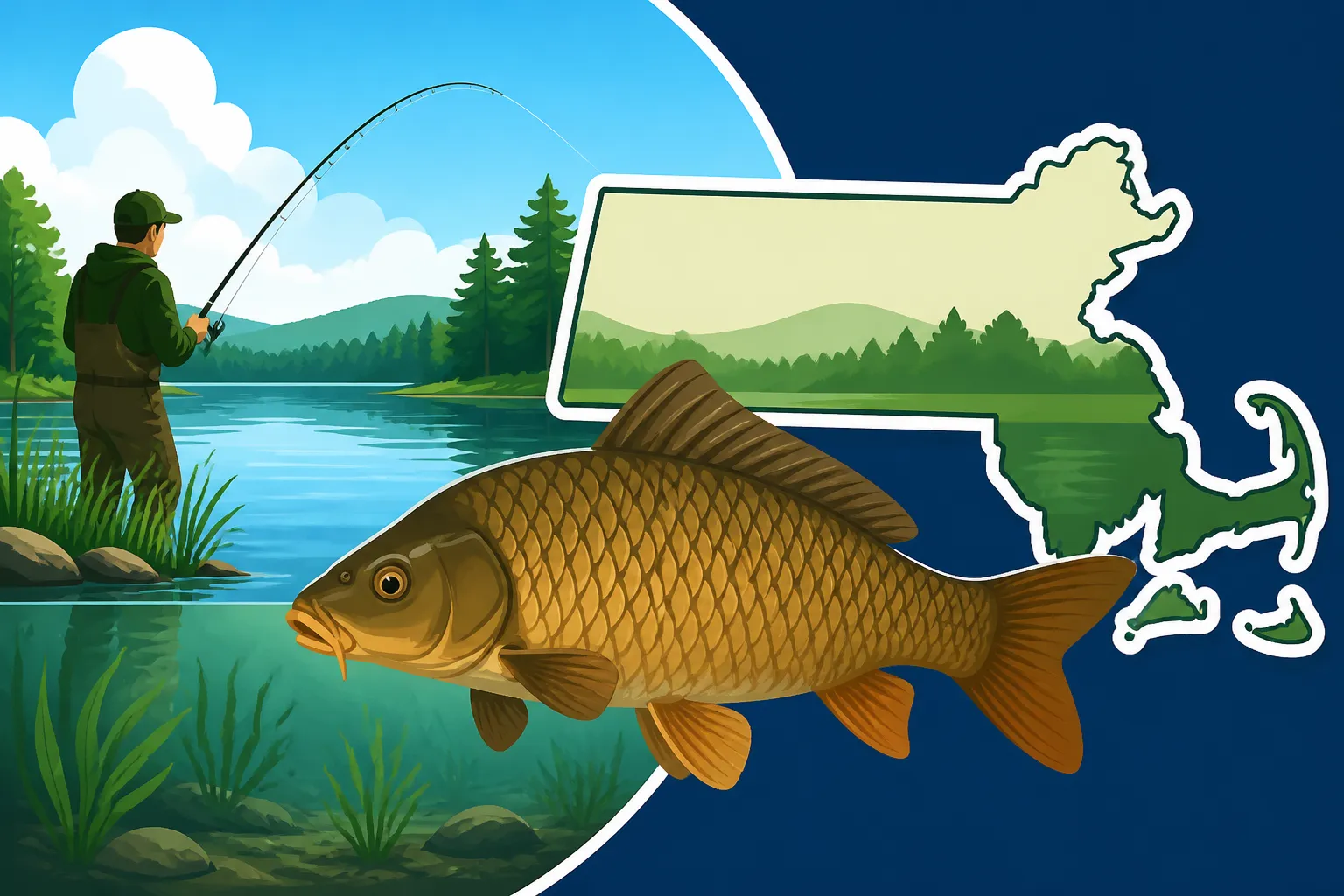
The Common Carp (Cyprinus carpio) is by far the most prevalent species you'll find. These are the fish often pictured with large, golden-bronze scales, deep bodies, and a distinctive downturned mouth with two pairs of barbels (whisker-like sensory organs) on either side. They can grow to impressive sizes in Massachusetts, with fish easily exceeding 20 pounds not uncommon, and much larger specimens being caught regularly by dedicated carp anglers.
You'll often find Common Carp rooting around on the bottom, sifting through mud and detritus for insects, worms, and plant matter. Their feeding behavior can sometimes stir up sediment, leading to localized cloudy water. They are incredibly hardy and can tolerate a wide range of water quality conditions, which is why they do so well in many of our urban ponds and larger rivers. Spotting a large tail fin slowly waving above the surface or a series of bubbles rising from the bottom are classic signs of feeding carp.
Mirror Carp and Leather Carp: Common Carp's Scaly Cousins
Within the Common Carp species, you'll also encounter fascinating variations like Mirror Carp and Leather Carp. These aren't separate species but rather genetic mutations that affect their scale patterns.
- Mirror Carp: These are perhaps the most distinctive, characterized by large, irregular scales scattered across their body, often resembling shiny "mirrors." You might see a few rows of these big scales along the lateral line and near the dorsal fin, with other parts of their body having sparse or no scales at all. They fight just as hard as their fully scaled brethren and are highly prized by many carp anglers for their unique appearance.
- Leather Carp: Taking the scale reduction even further, Leather Carp have very few scales, or sometimes none at all, giving them a smooth, leathery appearance. They are rarer to catch than common or mirror carp but share the same habitat and feeding habits. Landing a leather carp is often considered a special achievement among dedicated carp enthusiasts.
Grass Carp and Other Less Common Varieties
While less frequently encountered by the casual angler, there are other carp species to be aware of. Invasive Fish Species in Massachusetts Waters discusses some species with regulated introductions.
- Grass Carp (Ctenopharyngodon idella): These fish are primarily herbivorous, feeding on aquatic vegetation, and can sometimes be found in Massachusetts waters. They were sometimes introduced (and are now highly regulated) to control excessive plant growth in ponds. Visually, they have a more torpedo-shaped body compared to the deep-bodied common carp, with no barbels, and their mouth is terminal (at the very front of the head) rather than downturned. If you see a fish that looks like a giant chub or trout, but with a carp-like head, it might be a grass carp.
- Koi: These ornamental carp, often seen in garden ponds, are essentially domesticated Common Carp. Occasionally, escaped or released Koi can be found in wild waters. They come in a dazzling array of colors and patterns but are genetically the same species as the common carp.
Here's a quick comparison of the main carp types you might encounter:
| Feature | Common Carp | Mirror Carp | Leather Carp | Grass Carp |
|---|---|---|---|---|
| Scale Pattern | Fully scaled, even distribution | Large, irregular scales | Few to no scales, smooth skin | Fully scaled, smaller scales |
| Body Shape | Deep-bodied, somewhat chunky | Deep-bodied, somewhat chunky | Deep-bodied, somewhat chunky | Torpedo-shaped, more elongated |
| Barbels | Two pairs (on mouth) | Two pairs (on mouth) | Two pairs (on mouth) | None |
| Mouth Position | Downturned, for bottom feeding | Downturned, for bottom feeding | Downturned, for bottom feeding | Terminal, for surface/mid-water |
| Primary Diet | Omnivorous (bottom feeders) | Omnivorous (bottom feeders) | Omnivorous (bottom feeders) | Herbivorous (aquatic plants) |
| Likelihood of Encounter in MA | High | Moderate | Low | Low (often stocked for weed control) |
For accurate identification, especially if you're uncertain, you can always consult a resource like a Massachusetts Fish Identification Guide or MassWildlife's website.
Where to Cast Your Line for Carp in Massachusetts
Massachusetts offers a surprising number of excellent locations for carp fishing, from sprawling river systems to serene local ponds. Carp are incredibly adaptable, but they do have preferences that can help you narrow down your search.
Major River Systems
The larger river systems in Massachusetts are prime carp territory. These waterways often have slower-moving sections, deeper pools, and abundant food sources that carp love.
- Connecticut River: This magnificent river, as detailed in Connecticut River Fishing in Massachusetts, is a fantastic spot for carp. Its vast stretches, oxbows, and numerous tributaries offer countless opportunities. Look for areas with slower currents, muddy bottoms, and aquatic vegetation. The river's warmer sections, especially below dams or in wider stretches, can hold impressive numbers of large carp. Access points are numerous, and many bridges or public shorelines can be good starting points.
- Merrimack River: Another significant river, the Merrimack, particularly its lower reaches before it meets the ocean, can also be productive. Similar to the Connecticut, focus on calmer areas, coves, and sections where the current slows down.
- Charles River: Even in urban areas like Boston, the Charles River is known to hold good populations of carp, particularly in its wider, slower sections. It's a great option for city-dwelling anglers looking for a challenging fight close to home.
Lakes and Ponds with High Potential
While carp can be found in many freshwater bodies, some lakes and ponds are particularly renowned for their carp populations. Generally, carp prefer shallower, warmer, and more fertile waters with soft, muddy bottoms.
- Lake Quinsigamond: Located in Worcester, Lake Quinsigigamond Fishing Spots in Massachusetts are well-known for their diverse fishing opportunities, including excellent carp fishing. Its size and varying depths provide ample habitat.
- Assawompset Pond: This large pond in southeastern Massachusetts is another historically productive carp fishery. Its extensive shallow areas and rich aquatic life create ideal conditions.
- Other Large Ponds: Many of the larger, shallower ponds across central and southeastern Massachusetts, often those with abundant weed growth and public access, will hold carp. Think about the ponds that warm up quickly in spring and have a lot of natural forage. While not always listed specifically for carp, many of the Best Freshwater Ponds and Lakes in Massachusetts will certainly have them.
- Urban and Suburban Ponds: Don't overlook the local ponds right in your town! Many public parks and recreational areas feature ponds that, despite heavy recreational use, can harbor surprisingly large carp. These fish are often accustomed to human presence and can be less skittish.
When scouting a new location, look for visual signs of carp activity:
- Muddy water or disturbed bottom: Carp are bottom feeders, and their rooting around can cloud the water or create visible puffs of mud.
- Bubbles: Strings of bubbles rising to the surface can indicate carp feeding on the bottom.
- Jumping or rolling: Large carp sometimes breach the surface or "roll," revealing their distinctive backs or tail fins.
- Vegetation: Areas with submerged or emergent vegetation often hold carp, as they provide food and cover.
Remember, fishing laws and access rules apply to all waters. Make sure you have your Massachusetts Fishing License Guide and understand any local regulations before you go.
Essential Gear and Techniques for Massachusetts Carp Fishing
Successfully targeting carp in Massachusetts isn't about fancy, expensive gear, but rather about having the right tackle for these powerful fish and understanding their feeding habits.
Rods, Reels, and Line: Strength is Key
Carp are strong, and they grow large. Your ultralight trout setup won't cut it here!
- Rods: You'll want a medium-heavy to heavy action spinning or casting rod, typically 7 to 10 feet long. The extra length helps with casting heavier baits and controlling large fish. Dedicated carp rods, often available through retailers like Amazon, are specifically designed for distance casting and handling powerful runs.
- Reels: A sturdy spinning reel in the 4000-6000 size range or a baitcasting reel designed for heavy freshwater applications is ideal. Look for models with a smooth, reliable drag system, as carp will test it repeatedly. Baitrunner or free-spool reels are particularly popular for carp, allowing the fish to run with the bait without immediately feeling resistance, only engaging the main drag when you pick up the rod and turn the handle.
- Line: Monofilament line in the 12-20 pound test range is a good all-around choice. It offers good abrasion resistance and some stretch to absorb powerful head shakes. Braided line (20-40 pound test) can also be effective, offering superior sensitivity and strength for its diameter, but its lack of stretch means you'll need a rod with a softer tip to prevent hooks from pulling out. A fluorocarbon leader can be a good idea, as it's less visible underwater.
Hooks, Weights, and Rigs: Presenting the Bait
Carp are often wary, so your presentation needs to be subtle yet robust enough to handle their size.
- Hooks: Strong, sharp hooks are paramount. Circle hooks in sizes 2 to 6/0 are excellent choices for carp, as they tend to hook the fish in the corner of the mouth, reducing harm and making release easier. Barbless hooks are also gaining popularity among catch-and-release carp anglers.
- Weights: You'll need enough weight to cast your bait a good distance and hold it on the bottom. Pyramid sinkers, egg sinkers, or method feeders (more on these below) are common. The weight depends on current and casting distance, but typically ranges from 1 to 4 ounces.
- Rigs:
- Bottom Rig: A simple slip-sinker rig with a hook tied to a short leader (10-18 inches) off a swivel is very effective. The slip sinker allows the carp to pick up the bait and move off without feeling the full weight, leading to a more confident take.
- Hair Rig: This is a European carp fishing technique that has gained immense popularity here. The bait (often a boilie or corn) is attached to a "hair" (a short length of line) that hangs off the back of the hook. When the carp sucks in the bait, the hook is free to catch in its mouth, leading to excellent hook-ups. You can find pre-tied hair rigs on Amazon if you're just starting out.
- Method Feeder: This rig involves a special weighted feeder that holds a ball of groundbait (chum) around the hook bait. When it hits the water, the groundbait slowly disperses, attracting carp directly to your hook. It's an incredibly effective technique for concentrating fish.
Baits: Carp Love Their Carbs and Scents
Carp are primarily omnivores with a sweet tooth and a keen sense of smell.
- Corn: Canned sweet corn is perhaps the most famous and universally effective carp bait. It's cheap, easy to use, and carp absolutely love it. You can fish it directly on a hook or thread multiple kernels onto a hair rig.
- Boilies: These are specialized, hardened, flavored baits made from a mix of flours, eggs, and various attractants. They come in countless flavors (fruity, spicy, fishy) and sizes. Boilies are designed to be fished on a hair rig and are highly effective for targeting larger, more selective carp. Many varieties are readily available on Amazon or at specialty tackle shops.
- Bread: Dough balls made from white bread, or even just a piece of bread molded around your hook, can be very effective. It’s cheap and easy.
- Worms and Insects: While they love plant-based baits, carp will also readily take worms, grubs, and even crayfish. These can be excellent alternatives, especially if other baits aren't producing.
- Other Baits: Experiment with flavored marshmallows, cheese, or even cooked pasta. The key is to offer something that smells appealing and is easy for them to consume. Chumming with a bit of corn or oats can help attract fish to your spot.
Remember, patience is a virtue in carp fishing. Set up your rod holders, relax, and watch for those subtle taps or screaming runs. The Massachusetts Freshwater Fishing Season Calendar can give you an idea of peak times for active fish.
Understanding Carp's Place in Massachusetts Ecosystems
While carp are a popular target for many anglers, it's also important to understand their ecological role in Massachusetts waters. As a non-native species, their presence can sometimes lead to environmental considerations.
Ecological Impact: The Good and the Debated
Common carp are often referred to as "ecosystem engineers" because their bottom-feeding habits can significantly alter their environment.
- Habitat Alteration: When carp root around on the bottom, they stir up sediment. This can increase turbidity (cloudiness) in the water, which reduces light penetration. Less light means less growth for submerged aquatic vegetation, which is crucial habitat for many native fish, invertebrates, and waterfowl. This can be a concern in shallower, vegetated ponds where carp populations are high.
- Competition with Native Species: Carp consume a wide variety of food, including aquatic insects, small crustaceans, and plant matter. In some instances, this can lead to competition for food resources with native species like Largemouth Bass Fishing in Massachusetts or various panfish, especially if the ecosystem is already stressed.
- Nutrient Cycling: By disturbing the bottom, carp can release phosphorus from the sediment back into the water column, which can contribute to algal blooms.
It's important to note that the extent of carp's impact varies greatly depending on the specific water body, the size of the carp population, and other environmental factors. In many larger, deeper lakes and rivers, their impact might be minimal, while in smaller, shallower ponds, it could be more pronounced.
Management and Conservation Perspective
Massachusetts environmental agencies, like MassWildlife, acknowledge the presence of carp and manage them within the context of the state's diverse fisheries. Unlike some truly destructive invasive species, common carp are generally accepted as naturalized in many areas.
- No Active Eradication (Generally): Due for the most part to their widespread distribution and the sheer difficulty of eradicating them from large water bodies, there are typically no active eradication programs for common carp in Massachusetts. Instead, management often focuses on maintaining balanced ecosystems.
- Fishing as a Form of Management: Angling for carp can, in some cases, serve as a form of recreational management, though it's unlikely to significantly reduce overall populations in large systems. Catch-and-release is a common practice among dedicated carp anglers, but keeping fish for consumption is also permitted within general regulations.
- Regulations: While carp generally fall under broad freshwater fishing regulations, it's always wise to consult the latest Massachusetts fishing regulations pamphlet for any specific rules regarding carp or other non-native species.
Ultimately, carp are here to stay in Massachusetts. For anglers, they represent a fantastic opportunity to test their skills against a powerful, readily available game fish. By understanding their habits and ecological niche, we can appreciate them as part of the rich tapestry of Massachusetts's aquatic life. Whether you view them as a challenge, a food source, or simply another species to enjoy on the end of your line, carp certainly add an interesting dimension to the Commonwealth's fishing scene.
Disclaimer
This article is for general informational purposes only and does not constitute professional advice. Laws, prices and regulations vary by location and change over time. Consult a qualified professional for guidance on your specific situation.