Best bait for tautog around wrecks and jetties
If you've spent any time chasing tautog around Massachusetts' rugged coast, you know the feeling: that frustrating, subtle tap-tap-tap, followed by nothing but a stripped hook. These crafty bottom dwellers, affectionately known as "chiselers," can test the patience of even the most seasoned angler. The secret to consistently hooking these powerful fish, especially when they're hiding out in their preferred haunts of wrecks and jetties, often comes down to one crucial factor: your bait. This comprehensive guide will dive deep into the best baits for tautog, explaining why they work, how to rig them, and strategies to increase your success rate in these challenging environments.
Understanding Tautog: The "Chiseler" of the Deep
Before we even talk about specific baits, it's vital to understand the tautog themselves. These are not your typical aggressive feeders that will swallow anything in sight. Tautog, or blackfish as they're also known, are meticulous eaters. They use their powerful, almost human-like teeth to crush and chisel prey off structure, making their bite incredibly subtle and difficult to detect. Missing a tautog bite is a rite of passage for many anglers, a testament to their finicky nature.
Tautog's Dietary Preferences
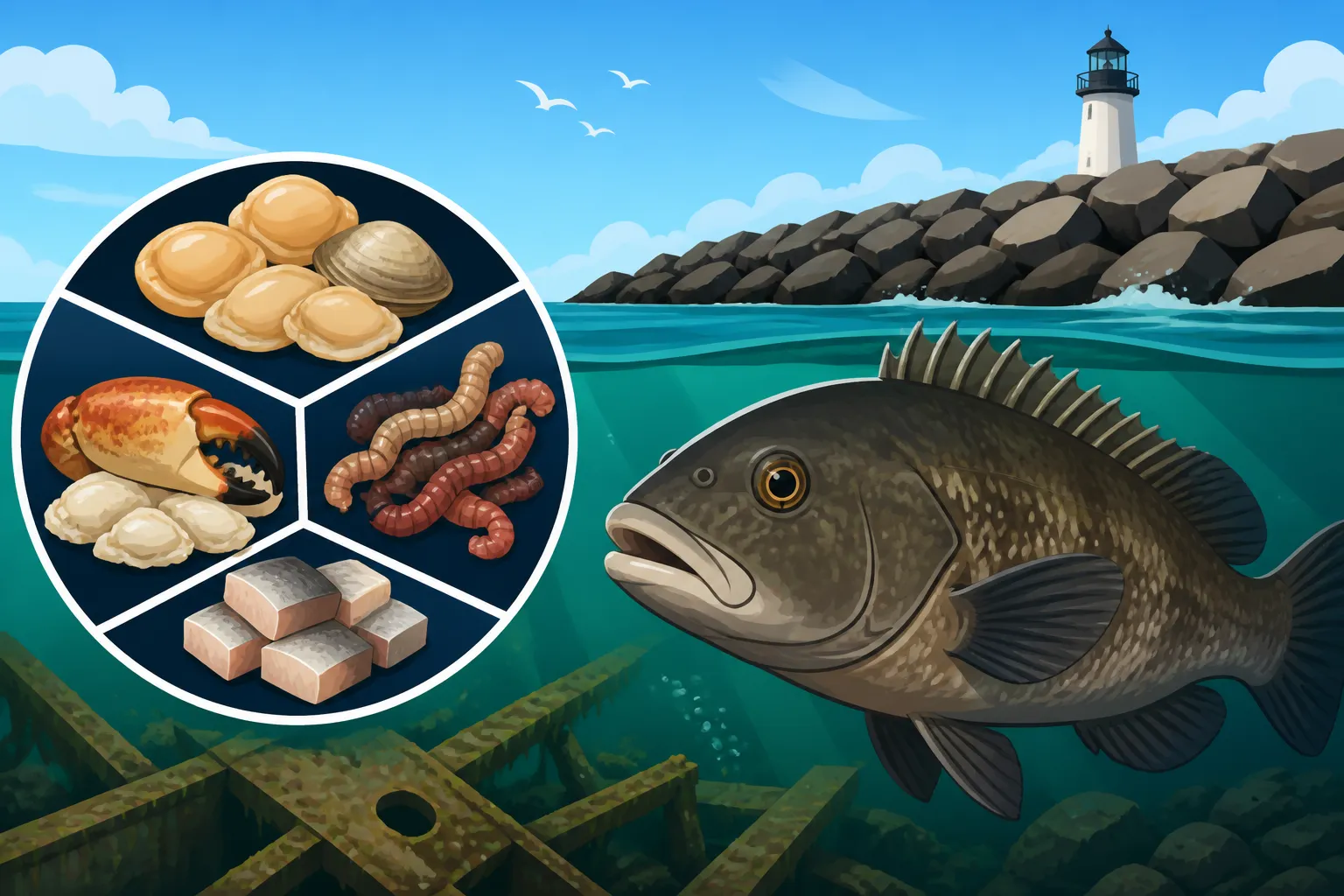
Tautog are primarily bottom feeders, and their diet consists almost exclusively of crustaceans and mollusks. Think crabs, mussels, barnacles, and small snails – anything that clings to rocks, pilings, and sunken structures. Their strong jaws and teeth are perfectly adapted for cracking shells and dislodging food. This specific diet preference is why simply throwing out a piece of fish fillet won't cut it most of the time; you need to present them with something they recognize and regularly consume in their natural habitat.
When you're fishing areas like the rocky shorelines of the North Shore or the structure-rich waters off Cape Cod, you'll find tautog meticulously picking off their meals. They're not chasing fast-moving schools of baitfish; they're patiently foraging. This means your bait needs to mimic these natural food sources in both appearance and, crucially, how it stays on the hook through their "chiseling" attempts. Understanding this natural feeding behavior is the first step in selecting the most effective bait.
Why Wrecks and Jetties?
Wrecks and jetties are not just random spots; they are prime real estate for tautog. These underwater structures provide everything a tautog needs: shelter from predators, protection from strong currents, and a cafeteria-like abundance of their favorite foods. The nooks and crannies of a sunken boat or the crevices between granite blocks on a jetty are perfect hiding spots where crabs, mussels, and barnacles thrive.
Fishing these areas, however, presents its own set of challenges. The same structure that attracts tautog also makes it incredibly easy to get snagged and lose your tackle. This is why having durable bait that can withstand multiple "taps" without falling off is so important, as is a robust rig. You're not just casting into open water; you're often dropping your bait into a labyrinth of potential snags, making every presentation count. Knowing the terrain, whether it's the rough bottom of a historical shipwreck off Gloucester or the piled rocks of the Cape Cod Canal jetties, directly influences your bait choice and rigging strategy.
Top Tautog Baits: Tried and True Classics
When it comes to tautog, some baits have earned their reputation for a reason. These are the go-to choices that consistently produce fish, provided they are presented correctly.
Green Crabs: The Unrivaled King
Ask almost any serious tautog angler in Massachusetts, and they'll likely tell you that green crabs are the absolute best bait. These common shore crabs, easily identified by their greenish-brown shells and often mottled appearance, are a staple in the tautog's diet. Their hard shells offer some resistance to the "chiselers," meaning your bait stays on the hook longer, increasing your chances of a successful hookset.
You can often find green crabs at local bait shops across the state, like Belsan's Bait & Tackle in Scituate, which is a great resource for fresh, lively bait. Alternatively, many dedicated anglers will catch their own using small traps or by simply turning over rocks at low tide in estuaries and salt marshes. When rigging, it’s often best to break the crab in half or quarters, depending on its size and the size of the tautog you're targeting. Exposing some of the meat makes it more attractive, but leaving enough shell ensures it stays on. For smaller crabs, you might even use them whole. Making sure your hook point is exposed is key. You'll want to review your options for a Massachusetts Freshwater vs Saltwater License Differences to ensure you're compliant when out harvesting your own bait.
Fiddler Crabs: A Smaller, Savory Treat
While green crabs are great for general tautog fishing, fiddler crabs shine in specific situations. These smaller crabs, easily recognizable by the male's single enlarged claw, are fantastic for finicky tautog or when the fish are concentrated in shallower, clearer water. Their softer shells mean they release more scent, and their smaller size can be more appealing to hesitant fish, especially in areas with lighter current.
Fiddler crabs can be a bit harder to source than green crabs and are often collected from mud flats and marsh edges. They are incredibly active and provide a lot of natural movement, which can entice a bite. Rigging them whole through the bottom of the shell, so the hook exits through the top, is usually the best approach. Because they are smaller and softer, you might go through them quicker, but the results can be worth it when other baits are getting ignored.
Asian Crabs: The Invasive Yet Effective Option
The Asian shore crab is an invasive species that has become incredibly prevalent along the Massachusetts coast. While their ecological impact is a concern, they have also proven to be an incredibly effective tautog bait. In fact, in many areas, tautog seem to prefer them due to their abundance. They are often smaller than green crabs and have a mottled shell that can range from reddish-brown to green.
One advantage of Asian crabs is how easy they are to collect. Simply flip over rocks along the low tide line in rocky intertidal zones, and you'll often find dozens. This makes them a free and readily available bait source. Like green crabs, you'll want to break them to expose some meat, especially the legs and gills, but ensure enough shell remains to keep them on the hook. Their prevalence means that in some spots, tautog might even be more accustomed to eating Asian crabs than green crabs, making them a top contender for your bait bucket.
Beyond Crabs: Other Effective Tautog Offerings
While crabs are undeniably king, there are other fantastic options that can be incredibly effective, especially if you're looking to mix things up or if crabs are hard to come by.
Hermit Crabs: A Hidden Gem
Hermit crabs are another excellent, albeit sometimes overlooked, bait for tautog. These interesting crustaceans live in discarded snail shells, and their soft, vulnerable bodies make them an irresistible meal once extracted. Tautog naturally seek them out, as cracking a hermit crab's shell is a straightforward task for their powerful jaws.
Sourcing hermit crabs often involves collecting them from tide pools or rocky areas, or sometimes purchasing them from specialty bait shops. The key to using them is careful preparation: you need to gently crack their shell and extract the soft body, which then needs to be threaded onto your hook. Because of their softness, they don't last long on the hook, but their natural appeal can trigger immediate strikes. Using a small piece of bait elastic (easily found on Amazon, often labeled as "bait thread") can help secure the delicate hermit crab meat to your hook, giving it a bit more durability against the "chiseling" attempts. Knowing the Massachusetts Recreational Fishing Rules and Bag Limits for tautog will help you understand what you can keep once you start landing them.
Clams: A Strong Scent Trail
Clams, especially surf clams, sea clams, or even quahogs, are fantastic secondary baits, particularly when the water is murky or currents are strong. While they lack the hard-shell crunch of a crab, their strong, natural scent trail is a major draw for tautog. This makes them an excellent choice for enticing fish that might be less active or when you're trying to attract attention from a distance.
The downside to clams is their softness. Tautog are experts at pulling soft bait off the hook without getting caught, which can lead to a lot of frustrated empty hook retrievals. To combat this, you'll need to use plenty of bait elastic to bind the clam meat tightly to your hook. You'll want to use a piece large enough to cover the hook shank and hide the point, yet leave the barb exposed. Shuck the clam, cut a piece of the tough foot or belly, and wrap it securely. Despite the challenge, a properly rigged clam can be incredibly effective, especially on slower days or when trying to locate fish. If you're wondering What a Massachusetts freshwater license covers versus a saltwater permit, remember that clamming generally falls under a different set of rules and often requires a separate local permit.
Mussels: Tougher Than Clams, Just as Tasty
Mussels are another natural food source for tautog and offer a good middle ground between the durability of crabs and the scent appeal of clams. They are abundant on rocky structures, making them a readily available food source for tautog. Their tougher shell, once cracked, provides a more substantial piece of meat that stays on the hook better than clam.
To prepare mussels, you simply need to crack the shell to expose the meat, then carefully remove the meat and thread it onto your hook. Again, bait elastic can be your friend here to ensure it stays put. The natural odor of fresh mussels in the water is a powerful attractant, drawing tautog out of their hiding spots. Mussels are particularly effective in areas where they are naturally plentiful, as tautog will already be accustomed to feeding on them. They can be harvested directly from jetties and rock piles, making them a cost-effective and natural bait option. Remember that the Massachusetts Fishing License Requirements by Age apply to recreational fishing, but shellfishing often has its own separate regulations and permits.
Rigging Your Bait for Success Around Structure
Having the best bait is only half the battle. How you rig and present that bait, especially around the unforgiving snags of wrecks and jetties, is equally important.
The Importance of a Strong Rig
When fishing for tautog, particularly in structure-heavy areas, your tackle needs to be robust. Tautog have incredible pulling power, and they'll try to dive straight back into the rocks once hooked. Using a strong fluorocarbon leader (30-50 lb test is common) is crucial. Fluorocarbon is not only nearly invisible underwater but also highly abrasion-resistant, offering a better chance against sharp barnacles and jagged rocks.
For hooks, an octopus or J-hook style is popular, typically in sizes 2/0 to 5/0, depending on your bait size and the target fish. The key is a sharp, strong hook that can penetrate their tough mouths. As for sinkers, bank or bell sinkers are common, but some anglers prefer flatter sinkers in high current or very snaggy areas to minimize rolling. Always match your sinker weight to the current and depth, ensuring your bait stays on the bottom without too much scope, which can lead to snags. You'll want to ensure you have multiple pre-tied rigs ready, because losing tackle is simply part of fishing these productive yet challenging spots. Consider checking out How to Buy a Massachusetts Fishing License Online if you need to stock up before your next trip.
Crushing and Cutting Crabs
Properly preparing your crab bait is paramount. For green crabs and Asian crabs, simply hooking them whole might work for smaller crabs, but for larger ones, or to increase scent dispersal, you'll want to break them. Using heavy-duty pliers or a sturdy knife, break the crab in half. For very large crabs, break them into quarters.
The goal is to expose some of the tender internal meat and juices, which release scent and attract the tautog. When hooking, thread the hook through a leg socket, or through the body cavity, ensuring the point exits cleanly through a harder part of the shell, or through another leg socket. This provides a secure hold against the tautog's "chiseling" and ensures good hook exposure for a solid set. If you are catching your own, remember to check Massachusetts Freshwater Daily Catch Limits or saltwater regulations depending on where you are collecting your bait, although for non-game species like crabs, rules are different.
Presenting Soft Baits Effectively
Soft baits like clams and mussels require extra care to stay on the hook. This is where bait elastic becomes indispensable. After shucking your clam or mussel, take a piece of the tougher meat (the foot of a clam works well) and thread it onto your hook, covering the shank. Then, using bait elastic, tightly wrap the bait around the hook, creating a compact, resilient bundle. The goal is to secure the bait so it doesn't easily get ripped off by a quick peck, but also to leave the hook point and barb clearly exposed for a solid hookset.
For very soft baits, some anglers will even use a combination, wrapping a small piece of clam or mussel around a tougher crab leg to create a more durable, scent-filled offering. This technique maximizes scent dispersal while improving bait retention. Mastering the art of rigging soft baits is crucial for those days when tautog prefer a smellier offering, often found after a storm or during lower light conditions. You might consider learning more about Massachusetts Recreational Saltwater Permit Renewal Deadline to make sure your paperwork is always in order.
Strategies for Fishing Wrecks and Jetties
Successfully fishing wrecks and jetties for tautog requires more than just good bait and tackle; it demands specific techniques and an understanding of the environment.
Reading the Structure
Tautog are masters of their environment. They don't just hang out anywhere on a wreck or jetty; they seek out the most advantageous spots. Look for areas with current breaks, deep crevices, or the edges of large rocks or metal plates where food might accumulate. On a jetty, this might mean fishing on the down-current side of a large boulder, or in a deep hole created by wave action. On a wreck, it could be inside a cargo hold or along the jagged edges of a broken hull.
Patience is key. Don't be afraid to move around the structure, making short drops and trying different angles. If you're not getting bites in one spot, shift ten feet over. Tautog often congregate in small pockets, and finding that sweet spot can dramatically change your luck. The best anglers spend more time "reading" the water and the structure than simply casting repeatedly in the same spot. If you're fishing from a boat, a good depth finder can reveal subtle structure changes. If you are fishing from shore, understanding Massachusetts Rules for Fishing From a Pier or Bridge will be important.
Feel for the Bite, Set the Hook Hard
This is where the "chiseler" nickname really comes into play. A tautog bite is notoriously subtle. It's rarely a hard yank like a bass or a bluefish. Instead, you'll feel a series of light taps, a slight weight, or sometimes just a feeling of something "mouthing" the bait. This is the tautog using its front teeth to pick at the bait. The window to set the hook is incredibly narrow – you need to anticipate when the fish has the hook in its mouth and then react instantly and decisively.
When you feel those taps, don't immediately set the hook. Instead, wait for a slightly heavier feel, or for the line to load up just a hair, which indicates the fish has turned and the hook is starting to enter its mouth. Then, set the hook with a sharp, upward sweep of the rod. A weak hookset will result in a missed fish almost every time. This takes practice, and you'll miss a lot of fish before you get the rhythm down, but the reward of feeling that powerful head shake is worth the frustration.
Managing Snags and Break-Offs
Fishing around wrecks and jetties means one thing: snags are inevitable. It's not a matter of if you'll get snagged, but when. The best strategy is to minimize them and be prepared for them. Use a high-quality, abrasion-resistant leader as mentioned earlier. Some anglers will tie a lighter "breakaway" line to their sinker than their main leader, so if the sinker gets snagged, they only lose the sinker, not the whole rig.
Always have plenty of pre-tied rigs on hand. This way, when a snag inevitably happens and you break off, you can quickly re-tie and get your line back in the water, maximizing your fishing time. Don't spend too much time trying to free a deeply snagged rig; often, it's a lost cause and you're better off cutting your losses and moving on. Being prepared for snags is part of the game when targeting tautog in their natural, structure-rich habitat. Having a good understanding of the local rules and regulations can also help, such as what's covered in the Massachusetts Fishing Regulations Pamphlet, Explained.
Tautog Bait Selection at a Glance
| Bait Type | Pros | Cons | Best For |
|---|---|---|---|
| Green Crabs | Highly effective, durable, good size | Can be harder to find than Asian crabs | General tautog fishing, larger fish |
| Fiddler Crabs | Excellent for finicky fish, high appeal | Small, soft, can be harder to source | Fussy bites, clearer shallow water |
| Asian Crabs | Extremely common, easy to collect, effective | Invasive species, generally smaller | Readily available, high-pressure areas |
| Hermit Crabs | Very natural, irresistible to tautog | Soft, difficult to rig, don't last long | When tautog are ignoring other baits |
| Clams | Strong scent trail, widely available | Very soft, easily pulled off, require elastic | Murky water, strong currents, attracting fish |
| Mussels | Natural food, good scent, tougher than clams | Can be tricky to harvest/prepare | Areas with natural mussel beds |
Disclaimer
Please note that fishing regulations, including licensing requirements, bag limits, and seasons, can change. Always check the latest regulations from the Massachusetts Division of Fisheries and Wildlife (MassWildlife) or the Division of Marine Fisheries (DMF) before heading out on your fishing trip. This guide is for informational purposes only and does not constitute legal advice.