Bluefish Fishing in Massachusetts
There's nothing quite like the raw, unbridled energy of a bluefish strike when you're out fishing in Massachusetts. One minute you're enjoying the salty air, and the next, your rod is nearly ripped from your hands as a toothy "chopper" makes a blistering run. This guide is dedicated to helping you master the pursuit of these aggressive, hard-fighting fish, covering everything from where and when to find them to the best gear and techniques for bringing them to hand safely.
Why Bluefish Are a Massachusetts Favorite and a Challenge!
For many anglers here in Massachusetts, bluefish represent a quintessential summer and fall fishing experience. They’re not just another fish; they're an adversary, a test of tackle, and an absolute adrenaline rush. If you've ever hooked one, you know exactly what I mean. If you haven't, prepare for a thrill!
The Thrill of the "Chopper" Fight
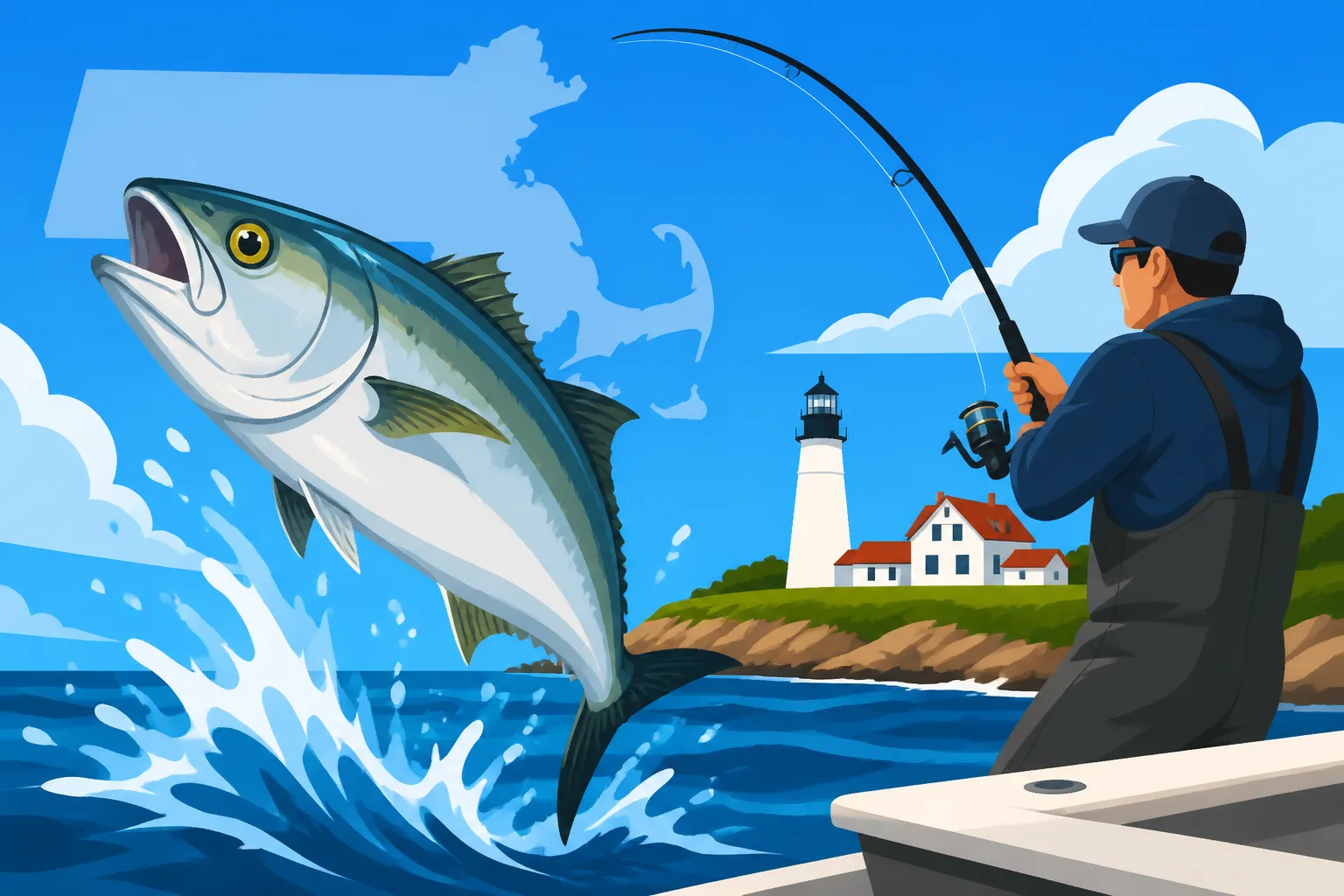
Bluefish are often affectionately, or perhaps fearfully, called "choppers" or "gators" for a very good reason: their bite is ferocious, and their fight is relentless. When a bluefish hits your lure or bait, it’s not a subtle tap; it’s usually an explosive, rod-bending smash. They hit hard, run fast, and put up a spectacular battle, often making several strong runs and even acrobatic leaps from the water.
Their aggressive nature means they'll fight all the way to the boat or shore, pulling with surprising strength for their size. This isn't a delicate dance; it's a slugfest, and you need to be ready for it. The sheer power in their tail, combined with their sharp teeth, means every bluefish encounter is an exhilarating challenge that keeps anglers coming back for more, despite the occasional frayed line or bitten-off lure. They truly test your gear and your grit!
It’s this explosive energy that makes bluefish such a beloved target. Unlike some species that might put up a good initial fight but then tire, a bluefish seems to gain energy as it nears you, thrashing and head-shaking, trying to spit the hook. This unyielding spirit is what separates them from many other game fish and solidifies their reputation as one of the most exciting catches in our Massachusetts waters.
Bluefish Characteristics: What Makes Them Unique
Beyond their fighting prowess, bluefish possess several unique characteristics that make them fascinating predators. They have a sleek, torpedo-shaped body, typically greenish-blue on the back fading to silver on the sides and belly, allowing them to cut through the water with incredible speed. But the most defining feature? Those teeth.
Their mouths are lined with rows of razor-sharp, triangular teeth, designed for slicing and dicing their prey. These teeth are incredibly efficient, capable of shearing through baitfish, and yes, even monofilament and fluorocarbon leaders if you're not careful. This dentition is why they are often seen creating "bait balls" by chopping through schools of smaller fish like mackerel or menhaden, leaving a trail of carnage in their wake. You'll often see gulls diving where the bluefish are feeding on these distressed baitfish, making it easier to spot the action.
Bluefish are also highly migratory, traveling in large, fast-moving schools. They are opportunistic feeders, eating almost any smaller fish, and sometimes even their own kind! This insatiable appetite and schooling behavior mean that when you find one bluefish, you’re very likely to find many more, leading to some truly epic fishing days. Understanding these unique traits is key to successfully targeting them and appreciating the wild power they embody. For a deeper dive into distinguishing these fighters, check out Difference Between Bluefish and Striped Bass.
Understanding Their Massachusetts Migration Patterns
Bluefish are warm-water visitors to Massachusetts, typically arriving in our coastal waters as the ocean temperatures rise in late spring and early summer. Their arrival often coincides with the abundance of baitfish like mackerel, herring, and menhaden, which form the cornerstone of their diet. As the season progresses through summer and into early fall, they become more abundant and widespread.
They tend to move north along the coast, following the warmer waters and bait schools. You'll find them initially in the southern waters around Buzzards Bay and Nantucket Sound, quickly spreading up along Cape Cod, into Boston Harbor, and even further north towards Ipswich Bay. Their presence is a clear sign that the water is alive and summer fishing is in full swing.
As autumn approaches and the water temperatures begin to drop, bluefish start their migration south again, usually departing by late October or early November. This seasonal movement means that while they're not a year-round resident, we get a fantastic several months to pursue them. Knowing these patterns helps you anticipate their arrival and plan your trips accordingly, ensuring you're there when the choppers are ready to chew.
Top Spots for Bluefish Fishing in Massachusetts
Massachusetts offers an incredible variety of environments for bluefish, from the rip-roaring currents of the Cape Cod Canal to the expansive open waters offshore. Knowing where to focus your efforts can make all the difference between a slow day and an unforgettable experience.
Coastal Hotspots and Estuaries
When it comes to bluefish, coastal hotspots and estuaries are often where the action heats up first. These areas provide abundant baitfish and natural choke points that concentrate predators. The Cape Cod Canal is legendary, with its strong currents acting like a conveyor belt for baitfish, drawing in large schools of bluefish (and striped bass). Anglers here often target them from shore, especially at points like the East End and West End, or where the canal bends and creates eddies. You can find more details in our Cape Cod Canal Fishing Guide for Massachusetts Anglers.
Beyond the Canal, other prime coastal areas include Buzzards Bay, particularly around the rips and rocky structures, and the numerous harbors and estuaries along the South Shore and Outer Cape. Places like Nantucket Sound and Vineyard Sound are also fantastic, offering a mix of shallower waters and deeper channels where bluefish cruise. These areas are rich with bait and provide plenty of opportunities for both boat and shore anglers to intercept migrating schools. The key is to look for signs of baitfish or bird activity.
Even the bustling waters of Boston Harbor can yield great bluefish action, especially around the harbor islands and structure that holds bait. The estuaries feeding into larger bays, where freshwater meets saltwater, can also be productive. These are often transient spots, so staying nimble and following local fishing reports can give you an edge. Many of the Best Saltwater Fishing Spots on Cape Cod, Massachusetts will also hold bluefish.
Shoreline and Pier Access Points
One of the great things about bluefish is that you don't always need a boat to catch them. Massachusetts boasts an impressive array of shoreline and pier access points where you can tangle with these aggressive fish. Surfcasting from the beaches of Nauset, Coast Guard Beach, or Race Point on the Outer Cape can be incredibly productive, especially during the fall run when large schools are moving south. The thrill of a bluefish hitting your plug just beyond the breaking waves is truly something special.
Jetties and rock piles, common along the Massachusetts coastline, also serve as excellent ambush points for bluefish. Places like Scusset Beach or the various jetties around Woods Hole can hold fish. These structures provide cover and concentrate baitfish, making them ideal feeding grounds. Just remember to wear appropriate footwear and be mindful of slippery rocks and waves. For specific strategies, our Plum Island Surf Fishing Guide offers great insights that can be adapted for other shoreline locations.
Piers and public docks, where fishing is permitted, also offer accessible options. While you might not find the biggest "gators" consistently from every pier, these spots are fantastic for catching smaller "snappers" or "tailors" and are perfect for introducing kids to the excitement of saltwater fishing. Always check local regulations for specific pier fishing rules, and be sure to bring a long-handled net to safely land your catch.
Offshore and Nearshore Boat Fishing Grounds
For those with access to a boat, the possibilities for bluefish fishing expand exponentially, allowing you to cover more ground and chase larger schools. Nearshore, boat anglers can patrol rips and shoals, like those found around Monomoy Island or off Martha's Vineyard and Nantucket. These areas often have strong currents and underwater structure that congregate baitfish, which in turn attracts hungry bluefish. Look for areas with breaking waves or visible schools of bait.
Moving a bit further offshore, you can often find massive schools of bluefish feeding on mackerel or herring. These open water pursuits are often visually exciting, as you'll spot diving birds, slicks on the water, or even the bluefish themselves churning the surface as they feed. Trolling or casting into these feeding frenzies can lead to non-stop action, sometimes for hours on end.
Many charter captains and experienced private boaters will use their electronics to locate bait schools and then drift or troll through them. The beauty of boat fishing is the mobility; if the bite slows in one spot, you can quickly move to another. Just remember to keep an eye on weather conditions, especially when venturing further from shore.
When to Target Massachusetts Bluefish: Seasons, Tides, and Times
Timing is everything when it comes to successful bluefish fishing. Understanding their seasonal presence, how tides influence their feeding, and even the best times of day can dramatically increase your chances of hooking into these aggressive predators.
Peak Seasons for Bluefish Activity
The bluefish season in Massachusetts generally kicks off in late spring, usually by late May or early June, as the ocean waters warm up. These early arrivals are often smaller "snappers" or "tailors," but they're just as eager to bite and provide excellent light-tackle fun. As summer progresses through July and August, the bluefish population swells, and larger fish, the true "choppers," become more prevalent throughout our coastal areas.
The bite often remains strong and consistent through early fall, typically well into October. This period can be particularly exciting, as the bluefish are fattening up for their migration south, making them even more aggressive. You might encounter some of the largest fish of the year during the fall run, especially around the Outer Cape and the Canal.
By late October and early November, as water temperatures drop significantly, the vast majority of bluefish will have moved out of Massachusetts waters. While you might still find a stray fish or two, the consistent action slows considerably. So, mark your calendars for late spring through fall for your best shot at these powerful fighters.
Tides and Currents: Unlocking Bluefish Behavior
Bluefish are creatures of current, and understanding the tides is paramount to finding them, especially in areas like the Cape Cod Canal or any tidal estuary. Moving water concentrates baitfish, pushing them through natural bottlenecks or against structure, creating prime ambush points for predators.
For many locations, a moving tide – either incoming or outgoing – is when bluefish are most active. In the Cape Cod Canal, specific tides are legendary for producing hot bluefish action, often correlating with when baitfish are being swept through. Anglers often focus on the beginning and end of the tide cycle, when the current is just starting to pick up or slow down, as these transition periods can trigger intense feeding. For strategies that also apply to bluefish, consider checking Best Tides for Striped Bass Fishing in Massachusetts.
When fishing from shore, a rising tide often pushes baitfish closer to the beach, while a falling tide can draw fish out of estuaries and channels. Pay attention to how the current is moving bait in your chosen spot. Look for rips, eddies, and current seams – these are the natural feeding lanes for bluefish, where they can expend minimal energy while waiting for their next meal. Observing water movement and how it affects bait is a skill that comes with time, but it's invaluable for bluefish success.
Best Times of Day to Hook a Bluefish
While bluefish are known for their voracious appetites and can sometimes bite throughout the day, certain times often prove to be more productive. Just like many other predatory fish, bluefish are frequently most active during the low-light periods of dawn and dusk. The reduced light gives them an advantage over their prey, making these hours prime time for explosive topwater action.
Early morning, right as the sun is coming up, can be magical. The air is cool, the water is often calm, and bluefish are typically on the hunt after a night of rest. Similarly, the hour or two leading up to sunset, and even a bit into the dark, can be incredibly productive, especially with topwater lures that create a strong silhouette against the fading light.
Overcast days can also extend the "prime time" window, as the diffused light simulates those low-light conditions. On bright, sunny days, bluefish might move into deeper water or become a bit more finicky, though they certainly can still be caught. If you're fishing during bright daylight, sometimes a slightly deeper presentation or a faster retrieve can trigger a strike. Always try to align your fishing trips with both the ideal tide and the low-light periods for your best chances.
Essential Gear for Massachusetts Bluefish Anglers
Bluefish are tough, aggressive fighters with a mouthful of sharp teeth, so you can't go after them with just any old fishing gear. Investing in the right tackle will not only increase your success rate but also prevent the frustrating loss of expensive lures and potentially trophy-sized fish.
Rod, Reel, and Line Setup
For bluefish in Massachusetts, you'll want a rod and reel setup that can handle powerful runs and aggressive strikes. A medium-heavy to heavy-action spinning rod, typically between 7 to 9 feet in length, is a versatile choice. This length provides good casting distance for shore or boat fishing and enough backbone to turn a strong fish. Pair it with a sturdy spinning reel in the 4000 to 6000 size range, known for its smooth drag and good line capacity. Brands like Penn, Shimano, or Daiwa offer excellent options that are often readily available on platforms like Amazon.
When it comes to line, braided line is a popular choice due to its incredible strength-to-diameter ratio and lack of stretch, which provides excellent sensitivity. Spool your reel with 30 to 50 lb test braided line. The no-stretch property allows you to feel even the most subtle bites and set the hook effectively, even at long distances. While braid is strong, it's virtually invisible in the water, which is why a leader is absolutely critical, as we'll discuss next.
For those who prefer conventional setups, a medium-heavy baitcasting rod paired with a robust conventional reel (like a Penn Squall or an Ambassadeur) spooled with similar strength braided line will also do the trick, especially when trolling or casting heavier plugs from a boat. The choice often comes down to personal preference, but ensure whatever you choose has a reliable drag system that can withstand the furious runs of a "chopper."
Protecting Your Investment: Leaders and Pliers
This cannot be stressed enough: you absolutely need a heavy-duty leader when bluefish fishing. Their razor-sharp teeth will slice through standard monofilament or fluorocarbon main lines in an instant, leading to lost lures and disappointed anglers. The frustration of watching your favorite plug disappear with a powerful bluefish is a lesson best learned by preparation, not experience.
For leaders, a few options exist. Heavy monofilament or fluorocarbon leaders, typically in the 50 to 80 lb test range, can work, but even these can be compromised by a bluefish's teeth if they swallow the lure deep. The most reliable choice, especially for larger fish, is a wire leader. Multi-strand steel leaders, usually 6 to 12 inches long, connected with strong swivels and snaps, provide maximum bite protection. You can find pre-made wire leaders or make your own from materials available on Amazon.
Equally essential are a good pair of long-nosed pliers or a de-hooking tool. Once you've landed a bluefish, you do NOT want to put your fingers anywhere near its mouth. Use these tools to safely remove hooks, protecting both yourself and the fish. A pair of sturdy, corrosion-resistant pliers is a non-negotiable item for your tackle box, along with a pair of cut-resistant gloves for handling. This is about safety first.
Essential Accessories for the Bluefish Hunter
Beyond the core tackle, a few key accessories will significantly improve your bluefish fishing experience and safety. First, a reliable cooler with plenty of ice is crucial, especially if you plan on keeping your catch. Bluefish are best consumed fresh, and proper cooling immediately after capture helps preserve their quality. A sharp fillet knife is also essential for processing your catch, as their bones are tough.
For handling, thick gloves can offer an extra layer of protection against those teeth, especially when dealing with a feisty fish at boatside or on the beach. A landing net with a rubberized mesh is also highly recommended; it makes landing the fish safer for both you and the bluefish, preventing them from thrashing on the deck or sand and potentially injuring themselves or you.
Don't forget the practical items like polarized sunglasses to spot fish and structure, sunscreen, and a wide-brimmed hat for protection from the Massachusetts sun. A small tackle bag or backpack to keep your lures, leaders, and tools organized is also incredibly helpful. Being prepared for anything will make your bluefish adventure much more enjoyable.
Baits and Lures That Drive Bluefish Wild
Bluefish are not picky eaters, which is fantastic news for anglers! Their aggressive nature and insatiable appetite mean they'll strike at a wide variety of offerings, making them incredibly fun to target with both natural baits and artificial lures.
Natural Baits: The Classic Approach
When bluefish are present and feeding, natural bait can be incredibly effective. One of the most popular choices is fresh mackerel. Whether live-lined, chunked, or drifted, mackerel is a natural prey item for bluefish, and they rarely pass up an easy meal. If you can catch your own baitfish before targeting bluefish, that’s often the freshest and most enticing option.
Another prime bait is menhaden, often called "pogies." These oily baitfish are a staple in the bluefish diet, and if you can find schools of them, you're likely to find bluefish close by. Chunking fresh menhaden and letting the scent drift in the current can create an irresistible scent trail that draws in hungry choppers. Other effective options include squid, especially cut into strips, or even fresh bunker.
When using natural bait, consider the presentation. Live-lining a whole mackerel or pogie under a balloon or free-lining it into a current seam can be devastatingly effective. For chunk bait, a simple fish-finder rig with a sturdy hook and a weight to hold it near the bottom or suspend it at a specific depth works well. Always use a strong leader, even with bait, to prevent those sharp teeth from cutting your line.
Topwater Thrills: Poppers and Walkers
If you're looking for heart-stopping action, there's nothing quite like a bluefish smashing a topwater lure. Poppers, with their concave faces that create a splash and gurgle when retrieved, are phenomenal for attracting aggressive bluefish from a distance. The commotion mimics a struggling baitfish on the surface, driving bluefish into a frenzy. Common colors like white, chartreuse, or bone are often effective, especially on brighter days.
Walk-the-dog lures, which glide back and forth across the surface when retrieved with a specific cadence, also elicit explosive strikes. The side-to-side sashay of these lures is incredibly enticing. Both poppers and walk-the-dog lures are particularly effective during low-light conditions like dawn and dusk, or on overcast days, when bluefish are actively hunting near the surface.
When working topwater lures, vary your retrieve speed and pause occasionally to mimic a wounded baitfish. The key is to create enticing surface commotion. Just be prepared for a violent strike; sometimes the bluefish will miss the lure entirely on the first pass, so keep working it! Many anglers will attest that the surface explosion of a bluefish hitting a popper is one of the most exciting experiences in saltwater fishing. You can find a vast selection of these types of lures on Amazon, making it easy to experiment with different sizes and colors. For more options, check out Best Lures for Bluefish.
Subsurface Attack: Plugs, Jigs, and Spoons
While topwater action is thrilling, bluefish often feed just below the surface or in deeper water, making subsurface lures indispensable. Diving plugs and swimming plugs, designed to imitate baitfish, are excellent choices. Long, slender plugs that dive to a few feet are great for casting and retrieving, especially when bluefish are holding slightly deeper or you need to cast into a strong current. Colors that mimic local baitfish, like silver/blue, green/silver, or even bright yellow, are often productive.
Metal jigs, especially diamond jigs or casting spoons, are incredibly versatile. They can be cast long distances, allowed to sink, and then retrieved with a fast, erratic jigging motion. This action perfectly mimics a frantic baitfish trying to escape, and bluefish simply can't resist. Heavier jigs are ideal for strong currents or when bluefish are holding in deeper water, allowing you to get down to them quickly.
Spoons, like a classic Kastmaster or similar casting spoon, are also highly effective. Their wobbling action on the retrieve is irresistible, and they can be fished at various depths simply by adjusting your retrieve speed and allowing them to sink. These lures are often less prone to bite-offs than soft plastics, though a strong leader is still essential. Experimenting with different weights and colors of these subsurface lures will help you dial in what the bluefish are biting on any given day.
Effective Techniques for Landing Massachusetts Bluefish
Once you've got the right gear and chosen your bait or lure, it's time to put it all into action. Bluefish respond well to a variety of techniques, and understanding them will equip you to tackle these powerful fish in different scenarios, whether you're casting from shore or trolling from a boat.
Mastering the Art of Casting and Retrieval
Casting is perhaps the most fundamental technique for bluefish, especially for shore anglers or those targeting visible schools from a boat. The goal is to cast your lure or bait into areas where bluefish are actively feeding or likely to ambush prey. For surf fishing, mastering a long-distance cast can be crucial for reaching deeper troughs or rips beyond the breakers. You may find insights in How to Catch Striped Bass from the Surf in Massachusetts helpful, as many of these principles apply to bluefish too.
Once your lure hits the water, the retrieve is key. Bluefish respond best to an erratic, fast retrieve that mimics a wounded or fleeing baitfish. Don't be afraid to vary your speed: reel quickly for a few seconds, then slow down, add a twitch or two, and then speed up again. This stop-and-go, start-and-stop action can trigger their predatory instincts, leading to a savage strike. When using topwater lures, you'll want to work them to create plenty of surface commotion, "walking the dog" or popping them aggressively.
When retrieving, always be prepared for a strike at any moment. Bluefish often follow a lure for a while before deciding to hit it, sometimes striking right at your feet or boat. Keep your rod tip up, maintain a good grip, and be ready to set the hook firmly when that explosion occurs. Consistency in your casting and a varied retrieve will often be the keys to success.
Trolling and Drifting: Covering More Water
For boat anglers, trolling and drifting are highly effective ways to locate and catch bluefish, especially when schools are scattered or holding in deeper waters. Trolling involves dragging lures or baits behind a moving boat at a consistent speed. This allows you to cover large areas of water, presenting your offering to potentially unseen schools of fish.
When trolling for bluefish, deep-diving plugs or weighted spoons are excellent choices, as they can be presented at different depths. Experiment with different speeds; bluefish often prefer a faster troll, but sometimes a slower presentation can be more enticing. You can also use planers or downriggers to get your lures even deeper if the fish are holding near the bottom. The goal is to cover ground and find where the fish are holding.
Drifting, on the other hand, involves allowing your boat to be carried by the current or wind, presenting baits or lures naturally to bluefish. This technique is particularly effective in tidal rips, over rocky bottoms, or near channels where current concentrates bait. Live bait, cut bait, or even jigs can be fished effectively while drifting. The natural presentation can be very enticing, and it allows you to thoroughly explore a specific area that shows promise.
The Power of Chumming for Bluefish
Chumming is a powerful technique that can turn a slow day into a feeding frenzy, especially when bluefish are in the area but not actively surface feeding. Chumming involves slowly introducing small pieces of bait into the water, creating a scent trail that attracts fish to your location. This can be done from a boat or even from a jetty or pier if the current is favorable.
The most common method is to use a chum bag filled with ground fish, typically mackerel or menhaden, which is then deployed off the side of your boat. As the current carries the oily scent and tiny pieces of bait away, it acts like a dinner bell for bluefish, drawing them closer. You can supplement this with occasional "chunking," throwing out small pieces of cut bait by hand to keep the fish interested and in range. More detailed information can be found in Chumming for Bluefish and Striped Bass.
Once the bluefish appear in your chum slick, you can then present your baits or lures, which can be anything from fresh cut bait on a hook to a casting plug or jig. The key is to match your offering to the chum – if you're chumming with small pieces of bait, present a similar-sized piece on your hook. The visual and olfactory stimulation created by a chum slick can make bluefish incredibly aggressive and eager to strike, offering some of the most exciting fishing moments.
Regulations, Handling, and Enjoying Your Catch
Catching bluefish is exhilarating, but it's equally important to understand the regulations that protect this valuable fishery, how to handle these toothy critters safely, and how to best prepare them for the table.
Understanding Massachusetts Bluefish Regulations
Like all recreational fishing in Massachusetts, bluefish fishing is subject to specific regulations designed to ensure sustainable populations for future generations. These rules typically include a bag limit (the maximum number of fish you can keep per day) and sometimes a minimum or maximum size limit. These regulations can change year to year based on scientific assessments of the stock, so it's absolutely crucial to stay informed.
Before you head out, always consult the most current regulations issued by the Massachusetts Division of Marine Fisheries (DMF). You can usually find this information on their website or in printed pamphlets available at bait and tackle shops. Failing to comply with these rules can result in penalties, including fines. Remember, responsible angling means knowing and following the rules. For a general overview, refer to Massachusetts Recreational Fishing Rules and Bag Limits.
It's also important to remember that all anglers over the age of 16 (and sometimes younger, depending on the specific permit) need a valid saltwater recreational fishing permit to fish in Massachusetts marine waters. This permit is separate from any freshwater licenses you might hold. You can learn more about this essential requirement in Massachusetts Saltwater Recreational Fishing Permit Explained. Knowing the rules, including the Massachusetts Bluefish Bag Limit and Season, ensures you're fishing legally and contributing to conservation efforts.
Safe Handling and Filleting Bluefish
Bluefish have earned their "chopper" nickname for a reason, and safely handling them is paramount to avoid injury. Once you've landed a bluefish, whether in a net or by hand (with extreme caution and gloves!), immediately get a firm grip on it, usually by the head or gill plate, avoiding the mouth. Use your long-nosed pliers or de-hooking tool to remove the hook promptly. If you plan to release the fish, do so quickly and gently.
If you intend to keep the fish for consumption, it's best to dispatch it quickly and humanely. The most effective way to preserve the eating quality of bluefish is to bleed them immediately after capture. Cut a gill arch or sever the tail to allow the blood to drain. This greatly improves the flavor and texture of the meat by removing enzymes that can quickly degrade the flesh. Then, place the bled fish on ice in your cooler. This quick cooling and bleeding process makes a noticeable difference.
When filleting, be mindful of those sharp teeth even after the fish is no longer alive. Use a sturdy, sharp fillet knife and work carefully. Bluefish have a rich, dark bloodline that many people prefer to remove during filleting, as it can contribute to a stronger, more "fishy" flavor. Cutting out this dark strip of meat along the lateral line often results in a milder fillet.
Culinary Delights: Cooking Your Bluefish
Bluefish often get a bad rap for being "too strong" or "too fishy" to eat, but I'm here to tell you that's a myth if handled correctly! The key, as mentioned, is immediate bleeding and icing. Freshness is everything. A properly handled bluefish, cooked fresh, can be absolutely delicious with its rich, full flavor. You can find more details if Are Bluefish Good to Eat?.
One of the most popular ways to prepare bluefish in Massachusetts is smoking. The robust flavor of bluefish stands up beautifully to smoking, resulting in a flaky, intensely flavored treat that's excellent on crackers or in dips. Many anglers also love grilling bluefish, especially if you marinate the fillets in something acidic, like lemon juice or vinegar, which can help cut through some of the oiliness.
Baking or broiling with herbs, garlic, and butter or olive oil is another simple and delicious preparation. Consider seasoning them with a blend of Old Bay, lemon pepper, or your favorite seafood rub. The firm, flaky texture holds up well to various cooking methods. Don't be afraid to experiment! With proper care from catch to kitchen, bluefish can be a fantastic culinary experience, proving that these aggressive fighters are a delight both on the line and on the plate.
Here's a quick comparison of bluefish fishing methods:
| Method | Best For | Gear Considerations | Pros | Cons |
|---|---|---|---|---|
| Surfcasting | Beaches, jetties, piers | Long rod, casting lures, bait rig | Accessible, thrilling topwater strikes | Limited range, susceptible to crowds |
| Boat Trolling | Locating schools, covering distance | Rod holders, diving plugs, spoons | Covers wide area, consistent depth | Requires boat, fuel costs, less "fight" |
| Boat Drifting | Rips, channels, specific structures | Live bait, chunk bait, jigs, sinkers | Natural presentation, focused targeting | Dependent on current/wind, may require anchor |
| Chumming | Concentrating fish, still water | Chum bag, ground bait, light tackle | Draws fish to you, exciting action | Can attract other species, messy |
| Artificials | Aggressive fish, active feeding | Poppers, plugs, jigs, spoons | Clean, exciting visual strikes | Can get cut off, requires constant retrieve |
| Natural Bait | Finicky fish, less active feeding | Live bait, cut bait, fish-finder rigs | Highly effective, strong scent trail | Can be messy, bait storage, less active fishing |
Disclaimer
This article is for general informational purposes only and does not constitute professional advice. Laws, prices and regulations vary by location and change over time. Consult a qualified professional for guidance on your specific situation.