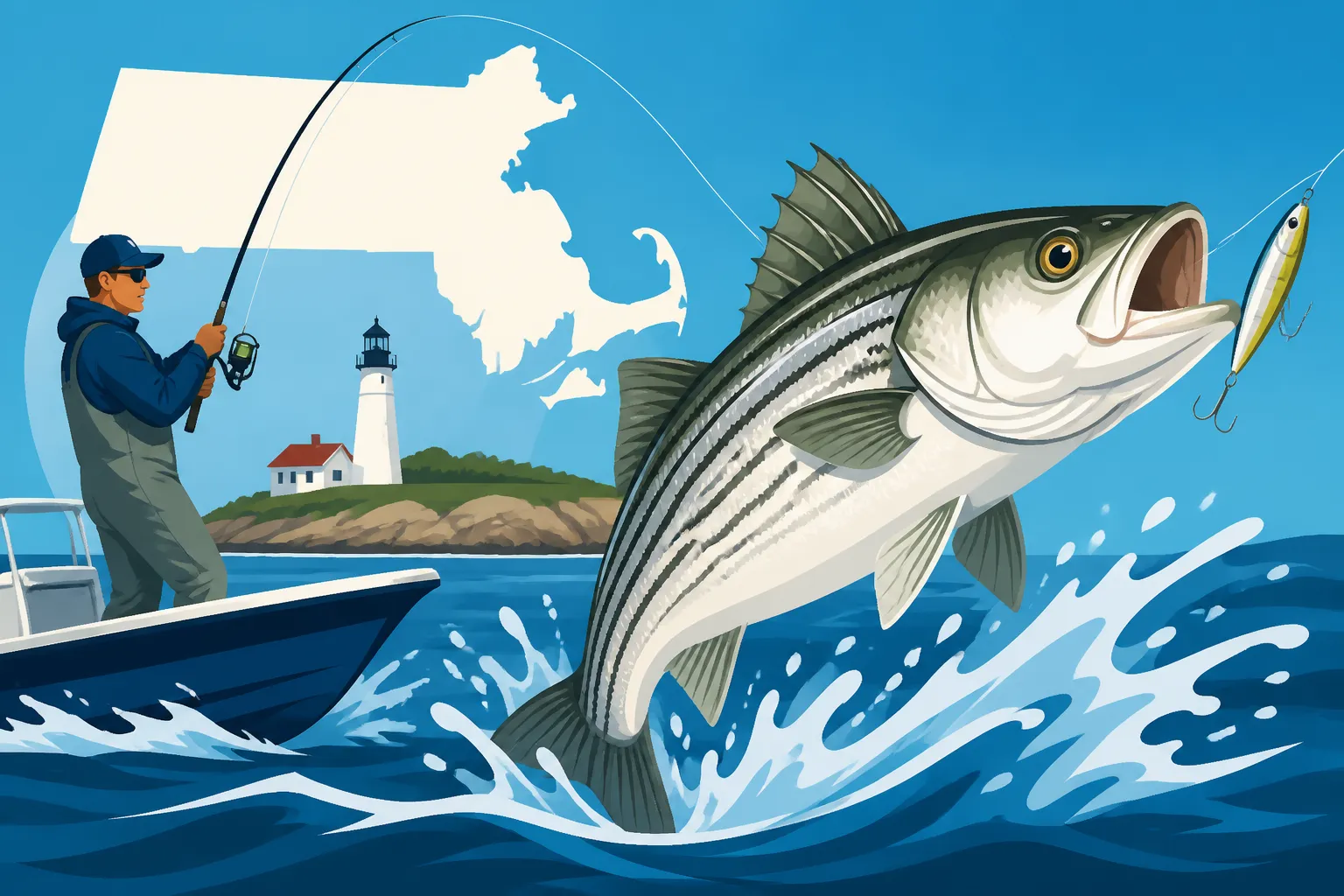
How to Catch Striped Bass in Massachusetts
If you've ever stood on a windswept Massachusetts beach, rod in hand, feeling that electric anticipation as the sun dips below the horizon, you know the allure of striped bass. These powerful, migratory fish are the ultimate prize for countless anglers, but they can also be incredibly elusive, leading to frustrating days where you feel like you're doing everything wrong. This comprehensive guide is designed to cut through that frustration, equipping you with the knowledge, techniques, and local insights you need to consistently hook into Massachusetts' most iconic game fish.
Understanding Striped Bass in Massachusetts Waters
Striped bass, often affectionately called "stripers" by local anglers, are a true legend of the New England coast. Their powerful runs, aggressive strikes, and sheer size make them an exhilarating target. To successfully catch them, it's crucial to first understand their life cycle, migration patterns, and preferred habitats in our diverse Massachusetts waters.
The Migratory Journey of Stripers
Striped bass are anadromous, meaning they spend most of their lives in saltwater but return to freshwater to spawn. For the stripers we encounter in Massachusetts, their primary spawning grounds are the Chesapeake Bay and the Hudson River. Every spring, as water temperatures begin to rise, these fish undertake a monumental migration north along the Atlantic coast. This journey brings them into our sounds, bays, rivers, and along our coastline, typically starting in late April or early May, and peaking in June and July. They spend the warmer months feeding heavily, building up reserves before their southern migration in the fall.
The timing of their arrival and departure is heavily influenced by water temperature and bait availability. Early arrivals are often smaller "schoolie" stripers, weighing just a few pounds, eager to feed after their long journey. As the season progresses, larger, more mature fish move in, following baitfish like mackerel, menhaden (pogies), squid, and herring. Understanding this seasonal movement is paramount to being in the right place at the right time. You can learn more about the overall seasonal changes by checking out our guide on Massachusetts Fishing Seasons Explained.
Identifying Their Habitat and Behavior
Striped bass are opportunistic predators, constantly on the hunt for food. They are often found in areas where baitfish congregate or where currents create ambush points. This includes rocky shorelines, jetties, estuaries, river mouths, tidal rips, shallow flats, and around submerged structures like wrecks or rock piles. They thrive in turbulent water, where baitfish become disoriented and easy targets.
Their behavior changes significantly throughout the day and with the tides. Early morning and late evening, often called "dawn patrol" and "dusk bite," are prime times as stripers move into shallower waters to feed under low light conditions. Overcast days can extend these feeding windows. During brighter parts of the day, especially in summer, they tend to move into deeper, cooler water or seek out areas with strong currents that provide cover and concentrated food. Understanding these patterns helps you select not just the right spot, but the right time to fish it. Their preference for different habitats and feeding times makes them a challenging but rewarding target.
Key Seasons and Timing for Striped Bass Success
Massachusetts offers excellent striped bass fishing from spring through fall, but each season presents unique opportunities and challenges. Knowing when and where to focus your efforts can make all the difference between a blank day and a bending rod.
The Energetic Spring Run
The arrival of the first schoolie stripers in late April and early May marks the unofficial start of the fishing season for many Bay Staters. These smaller fish, typically under 28 inches, are hungry and aggressive after their migration. They flood into our estuaries, tidal rivers, and shallow bays, pursuing herring, spearing, and other small baitfish. This is a fantastic time for light tackle fishing, using smaller soft plastics, flies, and lipped plugs. The waters around the North Shore, like the Merrimack River, and the South Shore estuaries really come alive.
As spring progresses into early June, larger fish begin to appear, often following warmer water and more substantial bait schools closer to the oceanfront. This transition period sees the fish moving from their initial staging areas to more open coastal waters, including places like Boston Harbor and Buzzards Bay. Water temperature is a critical factor; once bay temperatures consistently reach the low to mid-50s, the bite really turns on. Many anglers find this early season highly productive for sheer numbers of fish, even if the trophy-sized stripers are yet to fully arrive. For a broader view of the year's best fishing, check out our guide on the Best Time of Year to Fish in Massachusetts.
Summer and Fall Striper Strategies
Summer fishing for striped bass can be fantastic, but it often requires adapting your approach. With warmer water temperatures, stripers might become less active during midday, retreating to deeper, cooler water or areas with strong currents. Early morning, late evening, and night fishing become particularly productive, especially for larger fish. During the summer, stripers are often found around structure, deep channels, and along the open coast, feasting on mackerel, squid, and larger baitfish. This is prime time for live-lining large baits, jigging, and throwing big topwater lures at dawn and dusk. The Cape Cod Canal, the outer beaches of Cape Cod, and offshore rips can be phenomenal during these months.
The fall run, typically from September through November, is a favorite for many anglers. As water temperatures drop, stripers begin their southern migration, often forming massive schools and feeding voraciously in preparation for their long journey. This period is characterized by intense blitzes, where large schools of stripers aggressively attack baitfish on the surface, often attracting diving birds. These frenzies can happen anywhere along the coast, from the sandy beaches of Plum Island to the rocky shores of Cape Ann. Larger fish are prevalent, and anglers often catch their personal bests during this feeding frenzy. It's a time when you truly need to be ready for action, as the bite can turn on and off in an instant.
Essential Gear for Striper Fishing
Having the right gear is fundamental for tackling striped bass. These are strong fish, capable of powerful runs and headshakes, so your equipment needs to be up to the task. Investing in quality gear not only increases your chances of landing a fish but also makes the experience much more enjoyable.
Rod and Reel Combos
For most Massachusetts striped bass fishing, a medium-heavy to heavy action rod, ranging from 7 to 11 feet, is ideal. The length depends on your fishing style: shorter rods (7-8 feet) are great for boat fishing, kayak fishing, or casting lighter lures from jetties, while longer rods (9-11 feet) are essential for surfcasting to achieve maximum casting distance from the beach. Look for rods with a fast to moderate-fast action, which provides the sensitivity to feel subtle bites and the backbone to handle big fish. Rods from brands like Penn or St. Croix are popular choices among seasoned striper anglers.
Pair your rod with a durable spinning reel in the 4000 to 6000 size range, or a conventional reel if you prefer baitcasting or trolling. The reel needs a smooth drag system, capable of putting out 15-30 pounds of drag pressure, and a high line capacity to accommodate long runs. Corrosion resistance is also key, as saltwater is notoriously harsh on fishing equipment. For those just starting out, a good quality spinning combo from a reliable brand, easily found on platforms like Amazon, can offer excellent performance without breaking the bank. Always rinse your reel thoroughly with fresh water after each saltwater outing to prolong its life.
Line, Leaders, and Terminal Tackle
When it comes to fishing line, braided line is the go-to for many striper anglers due to its incredible strength-to-diameter ratio, zero stretch for superior sensitivity, and excellent casting distance. A braided line in the 30-50 lb test range is a good all-around choice. You'll want to tie a fluorocarbon leader (30-50 lb test, 3-6 feet long) to your braid using a strong knot like an FG knot or an Albright knot. Fluorocarbon is nearly invisible underwater, which can be crucial for wary stripers, and it offers excellent abrasion resistance against rocks and toothy fish.
For terminal tackle, a selection of strong, sharp hooks is vital. Circle hooks are often mandated when fishing with natural bait to promote conservation and reduce gut-hooking, so always check the latest regulations. Swivels and snaps should be heavy-duty and corrosion-resistant to prevent equipment failure when a big striper hits. Don't skimp on these smaller components; a cheap snap swivel is often the weakest link in your setup. Carrying a pair of braid scissors, pliers, and a hook remover is also essential for safe and efficient fishing.
Lures and Baits for Every Scenario
Stripers are not picky eaters, but they can be incredibly selective at times, making a varied tackle box crucial. For artificial lures, you'll want to carry a range of options:
- Topwater Plugs: Poppers and walk-the-dog lures are exhilarating to fish, especially during low light, as they create surface commotion that stripers can't resist. Think about brands like Heddon Super Spook or various poppers available on Amazon.
- Minnow/Swimmer Plugs: Lipless or lipped plugs that imitate baitfish are incredibly effective for mimicking fleeing prey. The Gibbs Casting Swimmer or Daiwa SP Minnow are classic choices.
- Soft Plastics: Paddle tails, swim shads, and stick baits rigged on jig heads are versatile and can be fished at various depths. The Hogy Pro Tail Paddle and Bass Assassins are popular in Massachusetts.
- Jigs: Bucktail jigs are old standbys that continue to catch fish, especially when tipped with a pork rind or soft plastic trailer. Lead head jigs with large soft plastic bodies (like the Ron-Z) are also deadly.
- Metal Lures: Kastmasters and A.C.E.s are great for long casting and imitating schooling baitfish.
For natural bait, mackerel, menhaden (pogies), eels, and squid are top choices. Live bait can often tempt larger, more wary stripers that might ignore artificials. Frozen bait like herring or squid can also be effective, particularly when chunked and fished on the bottom in channels or current. Remember to check regulations for specific bait restrictions or requirements, like the use of circle hooks. A diverse selection of lures and baits, tailored to the conditions and what the fish are feeding on, will significantly increase your success. Our guide to the Best Lures for Striped Bass in Massachusetts dives even deeper into lure selection.
Top Techniques for Catching Striped Bass
Successfully catching striped bass in Massachusetts often comes down to mastering a few key techniques and knowing when to deploy them. Whether you're casting from shore or drifting from a boat, having a versatile skillset will serve you well.
Mastering the Surf: Shore Fishing Prowess
Surfcasting is arguably the most iconic way to target striped bass in Massachusetts. It demands patience, perseverance, and the ability to "read" the beach. Look for cuts, troughs, sandbars, and rocky outcroppings that create current breaks or ambush points for stripers. Understanding the tides is critical here; often, the outgoing tide can be productive as bait is washed out of estuaries, and the incoming tide pushes bait towards shore. Night fishing is also incredibly effective from the surf, as large stripers move into the shallows under the cover of darkness.
Your technique involves long casts with heavy lures (like metal lips, darters, or large bucktails) or bait (chunk bait on a fish finder rig). After casting, slowly retrieve your lure, varying the retrieve speed and adding pauses to entice a strike. When using bait, let the current do the work, moving your offering naturally along the bottom. Proper footwear, a headlamp, and a sturdy surf bag for your lures are essential. For a deep dive into this exciting method, check out our guide on How to Catch Striped Bass From the Surf in Massachusetts.
Live Bait Tactics for Bigger Fish
Live bait fishing is often the most effective way to target trophy-sized striped bass. Mackerel, menhaden (pogies), and eels are prime choices. The key is to present the bait as naturally as possible, letting it swim freely or drift with the current. When fishing live mackerel or pogies, you'll often "snag" or jig them up first from deeper water, then immediately deploy them where stripers are present. This method is incredibly popular in areas where bait schools are abundant.
When fishing live eels, especially at night or in strong currents like the Cape Cod Canal, the presentation is critical. Eels can be fished weightless in light current or with a small egg sinker above the leader to get them down. Cast them out, let them swim, and be ready for a solid thump when a striper inhales it. You can learn all the ins and outs of this technique in our article on Live-Lining Eels for Massachusetts Striped Bass. Whether fishing from a boat, jetty, or even the shore, live bait can turn a slow day into an epic one, as the natural movement and scent of the bait are often irresistible to even the most finicky stripers.
Jigging and Trolling for Success
Jigging is a highly effective boat-based technique, particularly when stripers are holding in deeper water or around structure. Vertical jigging with bucktails, soft plastic paddle tails on heavy jig heads, or diamond jigs can be deadly. Drop your jig to the bottom, then retrieve it with a series of sharp snaps and pauses, mimicking a wounded baitfish. Pay close attention to your fish finder to locate schools of bait and stripers, then position your boat directly over them.
Trolling involves dragging lures or rigged baits behind a moving boat. This allows you to cover large areas and present your offering at specific depths where fish are holding. Umbrella rigs, tube-and-worm rigs, or large minnow plugs are common choices for trolling for stripers. Downriggers or weighted lines can be used to get your lures to the desired depth. Trolling speed is critical; experiment until you find what triggers a strike. Both jigging and trolling are active fishing methods that allow you to systematically search for fish, making them excellent choices when stripers aren't showing themselves on the surface.
| Fishing Technique | Primary Location | Best Conditions | Pros | Cons |
|---|---|---|---|---|
| Surfcasting | Beaches, jetties, rocky points | Low light, strong currents, incoming/outgoing tide | Highly accessible, exhilarating topwater action | Requires long casts, can be physically demanding |
| Live-lining | Boat, jetties, rips, channels | When stripers are selective, targeting larger fish | Extremely effective, highly natural presentation | Requires catching bait, can be messy |
| Jigging | Boat (deeper water, structure) | When fish are schooled up, mid-day | Active, can be very productive on specific marks | Requires boat, can be tiring |
| Trolling | Boat (open water, channels) | Covering large areas, locating scattered fish | Efficient search method, consistent depth | Requires boat, less "hands-on" feel |
Prime Fishing Locations for Striped Bass in Massachusetts
Massachusetts boasts an incredible diversity of waters, each offering unique opportunities for targeting striped bass. From the iconic Cape Cod Canal to the bustling waters of Boston Harbor, knowing the hotspots is half the battle.
Iconic Massachusetts Striper Havens
- Cape Cod Canal: This man-made waterway is legendary for its intense current and massive striped bass. Known locally as "the Ditch," it's a true test of an angler's skill and endurance. Both boat and shore anglers flock here, particularly during strong tidal movements. The deep channels and rocky banks create perfect ambush points for stripers gorging on mackerel, herring, and squid. Fishing the Canal demands heavy gear and specific techniques, as the current can rip at several knots. Check out our comprehensive Cape Cod Canal Fishing Guide for Massachusetts Anglers for detailed strategies.
- Boston Harbor: Don't let the urban setting fool you; Boston Harbor is a fantastic striper fishery. From the inner harbor channels to the outer islands, stripers thrive on abundant baitfish like herring, mackerel, and silversides. Many charter boats operate out of Boston, but shore anglers can also find success around public access points, bridges, and jetties. Early season sees schoolies entering the harbor, followed by larger fish throughout summer and fall. Our guide on the Best Fishing Spots in Boston Harbor, Massachusetts is an excellent resource.
- Plum Island & Merrimack River: Up on the North Shore, Plum Island offers miles of sandy beaches perfect for surfcasting, especially during the spring and fall migrations. The mouth of the Merrimack River, where it meets the ocean, is a phenomenal hotspot for both schoolies and large stripers, as they follow baitfish in and out of the river. The strong currents and shifting sands make it a dynamic fishery. You can find excellent detail in our Plum Island Surf Fishing Guide.
Shoreline Versus Boat Fishing Hotspots
While the above locations offer both shore and boat opportunities, some spots truly shine for one over the other.
For shoreline anglers, beyond the Cape Cod Canal and Plum Island, consider the rocky coastlines of Cape Ann (Gloucester, Rockport), particularly around Dogtown Common and Halibut Point. These areas are rife with structure, offering excellent ambush points for stripers. The beaches and jetties along the South Shore (Duxbury, Plymouth) also provide great access, especially during the spring and fall runs when baitfish move close to shore. Don't overlook the myriad of smaller estuaries and tidal creeks all along the coast, which can hold surprising numbers of fish, especially early in the season. These spots are often less crowded and can offer a more peaceful fishing experience.
For boat anglers, the options expand dramatically. Beyond the Cape Cod Canal's boat access, the vast expanses of Buzzards Bay, Vineyard Sound, and Nantucket Sound are teeming with stripers, especially when targeting them with live bait or by trolling. The numerous rips, shoals, and islands provide incredible structure. Stellwagen Bank (though primarily known for tuna) and other offshore structures can also hold migratory stripers. Fishing from a boat allows you to chase blitzing fish, access deeper channels, and explore areas inaccessible from shore. Many anglers will head out from ports like Sandwich, Falmouth, or Hyannis to fish these productive waters. Remember that fishing from a boat often requires a good understanding of navigation and marine safety, alongside your fishing knowledge.
Reading the Water and Weather for Stripers
Striped bass are highly influenced by their environment. Understanding the nuances of tides, currents, and weather patterns can significantly improve your chances of finding and catching them. It's like deciphering a secret language the ocean speaks.
Understanding Tides and Currents
For striped bass fishing in Massachusetts, understanding the tides and associated currents is paramount, especially in areas like the Cape Cod Canal or any river mouth. Stripers use current to their advantage, ambushing baitfish that are swept along or disoriented.
- Tidal Flow: In general, the moving tide (incoming or outgoing) is almost always more productive than slack tide. As the tide pushes in or out, it creates current, moves bait, and activates fish. Many anglers swear by a particular stage of the tide, but it can vary by location. For example, the Cape Cod Canal often fishes best during the hard-running outgoing or incoming tides, not during the slack periods.
- Reading Rips and Eddies: Look for rips and eddies formed by obstructions (rocks, jetties, points) or changes in bottom contour. These turbulent areas are prime feeding zones where baitfish are concentrated and disoriented, making them easy prey for waiting stripers. Casting your lure or bait into the edges of these current seams, allowing it to drift naturally into the calmer water behind the obstruction, can be incredibly effective.
- Moon Phases: The moon's gravitational pull directly influences tidal strength. During new and full moons, tides are stronger (spring tides), creating more vigorous currents and often leading to more aggressive feeding by stripers. Conversely, during quarter moons (neap tides), tides are weaker. While stripers can be caught during any moon phase, many experienced anglers prefer fishing during spring tides for potentially hotter action. Getting familiar with local tide charts and moon phase calendars is a crucial first step for any serious striper angler. Our guide on the Best Tides for Striped Bass Fishing in Massachusetts can give you a deeper understanding.
Weather's Impact on Striper Behavior
Beyond tides, various weather conditions play a significant role in how and when stripers feed.
- Water Temperature: This is perhaps the most critical factor influencing striper presence and activity. Striped bass prefer water temperatures generally ranging from 55°F to 70°F. Colder water slows their metabolism, making them less active. Warmer water can push them into deeper, cooler areas or make them feed primarily during low-light hours. Monitoring water temperature (many fish finders offer this, or you can get a simple thermometer on Amazon) can help you decide where to focus your efforts.
- Wind: A moderate wind, especially one that creates a chop on the water, can actually be beneficial. It breaks up the water's surface, making it harder for stripers to see you and easier for them to ambush bait. A chop can also stir up baitfish. However, strong winds can make casting difficult and uncomfortable, especially for shore anglers. Wind direction can also push baitfish into certain areas, so pay attention to where the wind is blowing from.
- Barometric Pressure & Fronts: While less understood than temperature and tides, changes in barometric pressure can influence fish activity. A stable or slowly falling barometer often corresponds with good fishing, while rapidly rising or falling pressure, often associated with a passing weather front, can shut down the bite. Overcast skies, especially combined with light rain, can be excellent for stripers, as the reduced light often encourages them to feed more actively throughout the day. Conversely, bright, sunny days often push them deeper or make them more cautious.
Conservation and Regulations for Striped Bass
As stewards of our natural resources, it's every angler's responsibility to understand and abide by the regulations designed to protect striped bass populations. These rules are in place to ensure healthy fisheries for generations to come.
Massachusetts Striped Bass Slot Limit Explained
One of the most important regulations to understand for striped bass in Massachusetts is the slot limit. This regulation specifies a narrow size range within which you can legally keep a striped bass. For many years, the slot limit has been 28 to 31 inches. This means any striped bass shorter than 28 inches or longer than 31 inches must be immediately released unharmed. The purpose of a slot limit is to protect both the smaller, juvenile fish so they can grow and reproduce, and the larger, older "trophy" fish which are the most prolific spawners, ensuring the future of the species.
Accurate measurement is critical. Always measure your fish from the tip of the snout to the end of the tail (fork length, though often the total length is specified for stripers) with the fish lying flat. If there's any doubt, it's always best to release the fish. Carrying a measuring tape or ruler that's clearly marked is a must. Failure to adhere to the slot limit can result in significant fines and penalties. For the most up-to-date information, it's always wise to consult the Massachusetts Division of Marine Fisheries (MassDMF) website or their current recreational fishing guide. Our article, Massachusetts Striped Bass Slot Limit Explained, provides a detailed breakdown.
Responsible Angling Practices
Beyond the slot limit, responsible angling practices are crucial for the long-term health of the striped bass fishery, especially given that many fish caught will be released.
- Daily Bag Limits: In addition to the slot limit, there is also a daily bag limit, which dictates how many legally sized striped bass you can keep per person per day. Currently, this is typically one fish per angler per day. Always verify the current bag limit before heading out, as these regulations can change. You can find all the details on Massachusetts Recreational Fishing Rules and Bag Limits.
- Catch and Release Best Practices:
- Minimize Handling: Handle fish as little as possible. Keep them in the water if you can for measurement and photos.
- Wet Hands: Always wet your hands before touching a fish to protect its slime coat, which is vital for its immune system.
- Avoid Excessive Fighting: While fighting a fish is part of the fun, don't prolong the fight unnecessarily, especially with larger fish. This exhausts them and reduces their chances of survival after release.
- Appropriate Tackle: Using tackle that is appropriately matched to the size of the fish you're targeting will help you land them quicker and with less stress.
- Circle Hooks: When using natural bait, circle hooks are often mandatory and are highly recommended even when not required. They are designed to hook fish in the corner of the mouth, making them much easier to remove and reducing gut-hooking mortality.
- Quick Release: Have your pliers or de-hooking tool ready. Unhook the fish quickly and gently. If the hook is deeply embedded, cut the line as close to the hook as possible rather than tearing at the fish's throat.
- Revive the Fish: If a fish is lethargic after the fight, hold it gently in the water, facing into the current, until it regains its strength and swims away on its own.
- Licensing: Remember, you need a Massachusetts Saltwater Recreational Fishing Permit to legally fish for striped bass in Massachusetts' marine waters. There are different requirements based on age and residency, so be sure to secure the correct permit before you cast a line. For more on the specifics, check out the Massachusetts Saltwater Recreational Fishing Permit Explained.
By understanding and adhering to these regulations and practices, we can all contribute to the conservation of this magnificent species, ensuring that future generations can experience the thrill of catching a Massachusetts striped bass.
Troubleshooting Common Striper Fishing Challenges
Even the most seasoned anglers face frustrating days where the fish just aren't biting. Striped bass fishing can be incredibly rewarding, but it also comes with its share of head-scratching moments. Knowing how to troubleshoot common challenges can help you turn a slow day around.
Overcoming Tough Fishing Days
There will be days when you do everything "right"—you're at a known hotspot, the tide is perfect, and your lures are dialed in—yet the fish are nowhere to be found. Don't despair! This is a common experience in fishing, and stripers can be particularly finicky.
- Change Up Your Presentation: If what you're doing isn't working, don't keep doing it. Try a different lure type (topwater to subsurface, soft plastic to metal), a different color, or a different retrieve speed. Sometimes, simply slowing down your retrieve or adding more pauses can trigger a strike. Conversely, if you're retrieving slowly, try speeding it up to mimic a fleeing baitfish. If fishing bait, try a different type of bait or a different rig.
- Adjust Your Depth: Stripers often hold at very specific depths. If you're casting shallow, try a heavier jig head or a deeper diving plug. If you're fishing deep, try lighter lures or topwater presentations if conditions allow. Often, a fish finder on a boat will reveal exactly where the fish are holding, but from shore, it's a matter of experimenting with different retrieve methods to cover the water column.
- Move On: If you've tried everything in your arsenal and still aren't getting any action, it might be time to move to a new spot. Stripers are migratory and can move significant distances in short periods. Sometimes, the fish just aren't in your current location, or they've temporarily shut down. Don't be afraid to explore nearby areas or even entirely different types of habitat. A short drive to another beach or jetty might put you right on the fish.
- Observe and Adapt: Pay attention to what other successful anglers are doing (respectfully, of course). What lures are they throwing? What retrieve are they using? Are they getting bites at a particular stage of the tide? Also, look for signs of baitfish or birds working the water, which often indicate stripers are nearby. Be flexible and willing to adapt your strategy based on observations.
Gear Maintenance and Preparedness
Nothing is more frustrating than having a monster striper on the line only to lose it due to equipment failure. Regular maintenance and proper preparation are key to avoiding these disheartening moments.
- Rinse Your Gear: Saltwater is corrosive. After every outing, thoroughly rinse your rods, reels, and tackle with fresh water. Pay special attention to your reel, gently rinsing it and letting it air dry. Periodically apply a light coating of reel oil and grease to moving parts, as recommended by the manufacturer. This simple step will dramatically extend the life of your equipment.
- Check Your Line and Knots: Before and during each fishing trip, inspect your fishing line for nicks, abrasions, or frayed spots, especially the first few feet near your leader. Retie your knots frequently, especially after catching a large fish or getting snagged. Even the strongest line can fail if the knot is poorly tied or weakened. For braided line, ensure your leader knot is secure; a quality knot like the FG or uni-to-uni is crucial.
- Sharpen Your Hooks: Dull hooks lead to missed strikes. Keep a small hook sharpener in your tackle box and regularly sharpen your hooks. Many lures come with decent hooks, but upgrading to stronger, sharper treble or single hooks (like those from VMC or Owner, which you can find on Amazon) can make a significant difference in hook-up ratios and reduce the chances of a hook bending or breaking during a fight.
- Organize Your Tackle: A well-organized tackle box or bag saves valuable time on the water. Know where your favorite lures, spare hooks, and essential tools are. This means less fumbling when the bite is hot and you need to make a quick change. Always carry a spare leader material, a few extra hooks, and any other critical terminal tackle you might need. Being prepared ensures you're ready for any situation, increasing your confidence and readiness when that big striper decides to strike.
Disclaimer
The information provided in this guide is for general informational purposes only. Fishing regulations, including size and bag limits, can change frequently. Always consult the latest official regulations from the Massachusetts Division of Marine Fisheries (MassDMF) before engaging in any fishing activity. Adherence to all local, state, and federal laws is the responsibility of the angler. Fishing carries inherent risks; always prioritize safety on the water.